










A private company – Clean Core Thorium Energy (CCTE) – made ‘ANEEL’, for India’s reactors. It is a commercially deployable thorium-based fuel which is specifically designed for Indian reactors.
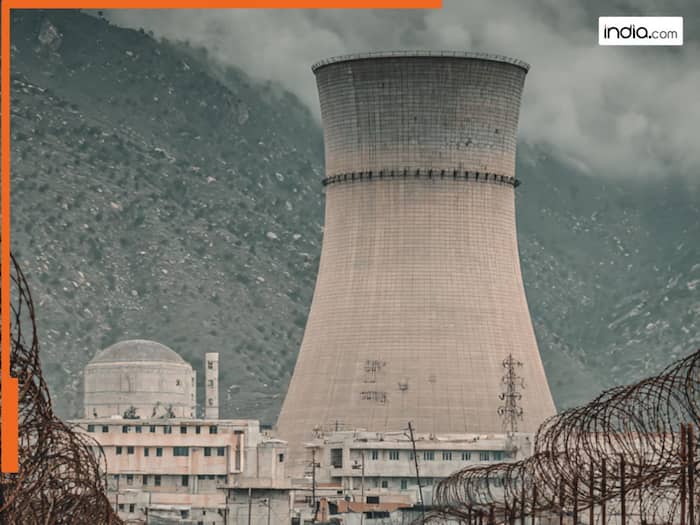
New Delhi: A silent race is going on among developed and developing countries for a clean source of power. And this is when the story of India’s hunt for thorium began. For seven decades, the country has put its efforts into thorium research, focusing on a single objective that is ‘energy independence’. It trained scientists, built reactors, and shaped its nuclear strategy around a resource found in exceptional abundance within the country.
Why Thorium Became Central to India’s Nuclear Ambitions
Even after putting so much of efforts, the world’s first commercially deployable thorium fuel for Indian reactors, in 2025, comes from a foreign company, which was founded eight years ago, rather than Bhabha Atomic Research Centre (BARC). Surprisingly, the private company originates from a country that abandoned thorium research decades ago.
It is worth mentioning that BARC was India’s historic nerve-centre of thorium programme.
The Foreign Company
A private company – Clean Core Thorium Energy (CCTE) – made ‘ANEEL’, for India’s reactors. It is a commercially deployable thorium-based fuel which is specifically designed for Indian reactors. Sadly it is a fuel that the country itself had researched for decades.

Now, the question arise is why did the first commercial thorium fuel emerge overseas?
Who Guarded Thorium, Who Sold It?
Notably, Dr Anil Kakodkar, who is a former Chairman of India’s Atomic Energy Commission and an important figure in India’s thorium programme, is an adviser to CCTE, which is a United States based company, that made the ANEEL fuel. Interestingly, the fuel—Advanced Nuclear Energy for Enriched Life—is named after Kakodhar.
Dr Anil Kakodkar’s Role
For years, Dr Anil Kakodkar was a crucial part of India’s thorium effort. Under his captaincy, the country expanded its Pressurized Heavy Water Reactors program, which is mainly operated for its nuclear power program, refined thorium fuel concepts and articulated the Advanced Heavy Water Reactor.
BARC and the Nuclear Fuel Complex have worked on thorium fuel in practice and made thorium-based fuel bundles, loaded them into PHWRs for testing and irradiation. Both the companies also used Thorium oxide pellets in early PHWR cores. This process provided real operating experience and post-irradiation data.
Notably, thorium fuels were tested in research reactors – CIRUS and Dhruva – and then scientists carefully studied the results. BARC and DAE also showed the entire thorium fuel cycle work by fabricating thoria fuel on a large scale, extracting U-2333 and then successfully using it as fuel in the KAMINI reactor.
Even after that, the country never progressed to send commercial thorium fuel in its own power reactors.
ANEEL is not the product of BARC or NPCIL, but a foreign company on whose advisory board Kakodkar now sits.
Who Funded CCTE?
In 2017, CCTE was established by Mehul Shah, who serves as its Chief Executive Officer. The company’s prime focus is to design a “drop-in” fuel for India’s Pressurised Heavy Water Reactors. Its success on ANEEL is a result of tremendous collaboration with senior nuclear engineers and US based researchers that also include academics and laboratory scientists.
A Reflection Of An Unfinished Programme
ANEEL is a thorium-based fuel doped with enriched uranium, designed as a replacement for Pressurised Heavy Water Reactors. It is this very compatibility that makes the development confusing.
India Current has:
- The reactors
- The fabrication capability
- thorium irradiation data
- Reprocessing experience with thorium-derived U-233
- And a policy framework explicitly built around thorium deployment
Despite this strong groundwork, India never reached the stage of licensing and using thorium fuel widely in its own reactors.
Topics


