










The Namo Bharat train will be operating at its highest speed of 160 kmph, thus becoming the fastest train of India.
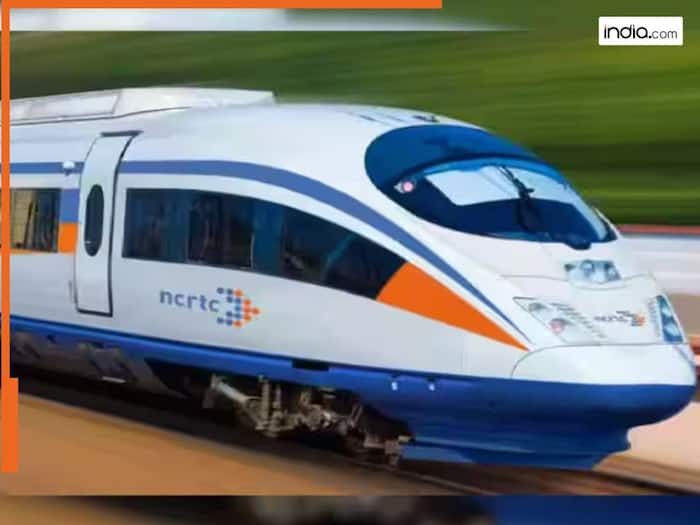
Fastest train of India: In a significant historic development for the Indian Railways, the Namo Bharat train, operating at its highest speed of 160 kmph has become the fastest running train in the country. Operating at its highest speed on the 55-km section of Delhi-Meerut Regional Rapid Transit System, the Namo Bharat train will replace the Gatiman Express which used to run at 160 kmph between Hazarat Nizamuddin and Agra on the specially-laid tracks.
Which is the fastest train of India?
Readers should note that Gatiman Express, launched in 2016, was the country’s first semi-high speed train earlier. The Gatiman Express used to run at 160 kmph between Hazarat Nizamuddin and Agra on the specially-laid tracks. Later, when semi-high speed train series Vande Bharat was introduced, it also operated at the same maximum speed but only on this route.
However, the Railway Ministry, on June 24, 2024, decided to reduce their speed from 160 to 130 kmph without specifying any reasons. At present, all trains across the Indian railway network operate with the upper speed limit of 130 kmph, a PTI report said.
Story highlights:
- The Namo Bharat train has become the fastest running train in India.
- The Namo Bharat train will be operating at its highest speed of 160 kmph.
- Earlier, the 2016 launched Gatiman Express was the fastest running train in India.
Delhi-Meerut Regional Rapid Transit System: Route Details
Thirty trainsets of Namo Bharat each having 6 cars, serving between New Ashok Nagar in East Delhi and Meerut South in Uttar Pradesh — runs with 15 minutes frequency from each station and touches its maximum 160 kmph for a few seconds between some of the 11 stations on the route.

“The entire 82.15 km long corridor with 16 stations, starting from Sarai Kale Khan in Delhi to Modipuram in Uttar Pradesh, is likely to be commissioned soon,” officials from the National Capital Regional Transport Corporation Limited (NCRTCL), said.
(With inputs from agencies)


