










Even with advancements in technology, India’s current number of fighter squadrons is still not enough.
On January 11, 2025, Hindustan Aeronautics Limited (HAL) marked a major achievement in its Combat Air Teaming System (CATS) program. The company successfully carried out the engine ground run of a full-scale model of the CATS-Warrior, an advanced unmanned aircraft designed to operate alongside fighter jets as a loyal wingman. This milestone brings HAL one step closer to enhancing India’s air combat capabilities.
HAL shared this achievement on its official X account (previously known as Twitter) before Aero India 2025. The prototype is scheduled to be showcased at the event.
In a post, HAL emphasized the teamwork among its research and development centers in achieving this milestone. The Aircraft Research and Design Centre (ARDC) in Bengaluru was responsible for aircraft designing and integrating the aircraft. The Strategic Electronics Research and Development Centre (SLRDC), Bengaluru, developed the indigenous mission computer. Meanwhile, the Aero Engine Research and Development Centre (AERDC), Bengaluru, provided the indigenous engine for the aircraft.
HAL’s CATS program is a major advancement in both unmanned and manned combat aircraft technology. The Bengaluru-based defense public sector company has been working on this project for several years to enhance India’s air combat capabilities.
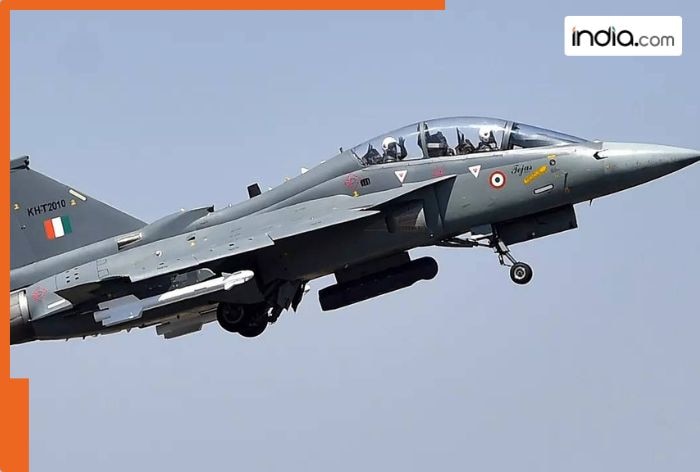
The CATS system is designed to work with the Tejas Light Combat Aircraft (LCA) as the central controlling unit, often called the “mothership.” This means that Tejas will manage and coordinate multiple unmanned aircraft, including the CATS-Warrior. The CATS-Warrior is a stealthy, unmanned combat aircraft that can fly alongside fighter jets, perform missions independently, and support pilots in battle. This system enhances the Air Force’s ability to carry out complex operations with a mix of manned and unmanned aircraft working together.
Air Force Shortfall: 42 Goal, 31 Reality
This development comes at a time when the Indian Air Force has only 31 active squadrons, while it is supposed to have 42. The shortage is due to an ageing fleet and delays in adding new aircraft.
The Indian Air Force has long aimed to maintain 42 squadrons, a goal set after the Indo-China war based on the security challenges and military technology of that time. However, the situation has changed significantly over the years. Modern aircraft now come with advanced technology, and the overall security landscape has also evolved. Despite these advancements, the current number of squadrons is still not enough to fully meet India’s defense requirements.
The target of having 42 combat squadrons for the Indian Air Force was set in the 1980s. It was based on the need to prepare for a possible war on two fronts—against both Pakistan and China at the same time. Back then, India’s defense planners believed a large number of aircraft would be necessary because the planes in service at that time had limited capabilities compared to modern jets. This goal was meant to ensure the Air Force had enough strength to handle such a scenario.
The 1962 war with China and later conflicts with Pakistan highlighted the importance of a strong air force. At that time, India’s aircraft had shorter flying ranges, could carry limited weapons, and lacked advanced technology. To protect the country’s airspace and maintain a strong presence in the region, the Indian Air Force needed a large number of planes. The goal of 42 squadrons was set to ensure enough aircraft were available for continuous air operations, regular maintenance, and replacements during combat.
Over the years, aviation technology has advanced significantly. The Indian Air Force has added modern fighter jets like the Sukhoi Su-30MKI, Dassault Rafale, and HAL Tejas, which are far more advanced than older aircraft. These jets are not only faster and more maneuverable but also come with cutting-edge radar systems, advanced avionics, and precision-guided weapons. This makes them capable of carrying out a wide range of missions with greater efficiency and effectiveness.
Modern fighter jets are designed to handle multiple roles, reducing the need for a large fleet of specialized aircraft. Unlike older jets, today’s fighters can engage in air combat, carry out ground attacks, conduct reconnaissance, and even perform electronic warfare—all in a single mission. This flexibility allows the Indian Air Force to maintain high operational efficiency with fewer aircraft while still achieving the same or even better results in combat situations.
Even with advancements in technology, India’s current number of fighter squadrons is still not enough. The Indian Air Force currently operates around 30 to 32 squadrons, which is much lower than the target of 42. The main reason for this gap is the retirement of older aircraft like the MiG-21 and MiG-27, without new replacements being introduced quickly enough to fill the void.
The delay in adding new fighter jets like the Tejas Mk1A and the slow process of acquiring more Rafales have worsened the situation. Additionally, the Indian Air Force still depends on older aircraft like the MiG-29 and Jaguar, which need frequent maintenance and upgrades to stay in service. This has put extra pressure on the Air Force, making it harder to maintain full operational strength.
Overview and Key Components of the CATS System
The main objective is to develop advanced aerial systems that act like high-altitude satellites for surveillance and can carry out precise attacks from a safe distance, all without putting human lives at risk.
To develop these advanced capabilities, HAL’s CATS program includes different platforms, each designed for a specific role in combat missions.
CATS-Warrior : This stealthy unmanned combat aircraft Vehicle (UCAV) built to fly alongside fighter jets as a loyal wingman. It is equipped with internal weapon bays to carry Smart Anti-Airfield Weapons (SAAWs) and Next-Generation Close Combat Missiles (NG CCMs), improving its ability to attack targets and defend itself during missions.
These drones are designed with stealth technology, making them hard to detect by enemy radars and air defense systems. The Warrior drone can carry out attacks deep inside enemy territory, reaching up to 700 km.
CATS-Hunter : CATS Hunter is a part of HAL’s Combat Air Teaming System (CATS) and is designed as an air-launched unmanned system. It is expected to function as a stealth cruise missile, capable of striking deep into enemy territory with precision. Similar in role to the SCALP missile used by the Indian Air Force’s Rafale jets, CATS Hunter aims to enhance India’s long-range strike capabilities while reducing risks to pilots.
ALFA-S Swarm Drones : These swarm drones are launched from carrier pods (specialized storage and launch containers) attached to the main fighter aircraft, known as the mothership. Once deployed, they can carry out both air-to-air and air-to-ground missions, including destroying enemy air defense systems. A Tejas fighter jet can carry up to three pods, each holding four drones, making a total of 12 drones. Meanwhile, the larger Su-30MKI can carry four pods, allowing it to launch up to 16 drones in a mission. This system enhances combat effectiveness by overwhelming enemy defenses with multiple drones at once.
CATS-Infinity Pseudo Satellite:The Infinity is a solar-powered aircraft designed to fly at extremely high altitudes, around 70,000 feet. It can stay in the air for up to 90 days, filling the gap between satellites and unmanned aerial vehicles (UAVs) for long-duration surveillance missions.
Fitted with advanced sensors and a synthetic aperture radar, the main role of this high-altitude system in HAL’s CATS program is to monitor targets deep inside enemy territory and assist in coordinating missions with the CATS Warrior drone. In addition to surveillance, this pseudo-satellite can also support 4G and 5G networks, enhancing military communication and connectivity over vast areas.
Importance in Military Strategy
HAL’s CATS program is designed to strengthen India’s self-reliance (Aatmanirbharta) in defense technology and boost local defense production. The Warrior, Hunter, and ALFA-S drones will help minimize the need for pilots to enter enemy airspace by carrying out high-risk missions on their own.
The introduction of the CATS-Warrior at Aero India 2025 will highlight India’s advancements in combat aviation technology. HAL is working closely with major research organizations like the Defence Research and Development Organisation (DRDO) and private companies to achieve its goal of developing the CATS system by 2025.
The program’s long-term objectives focus on precise deep-strike capabilities, better battlefield awareness, and secure communication systems to improve overall mission effectiveness.
In 2021, HAL provided a glimpse of its advanced air-teaming and autonomous mission concept through the CATS simulator. During Aero India 2021, the company showcased this simulator, which used the TEJAS-MAX cockpit as the central command platform, also known as the mothership.
The demonstration highlighted how different aircraft and drones can work together in air combat. It showcased both fully integrated and independent wingman drones, as well as drone swarms designed for coordinated missions. The setup included a large screen displaying realistic mission visuals, enhancing the experience at the TEJAS-MAX cockpit, which served as the command center for controlling these advanced systems.
(The author of this article is an award-winning Science Writer and a Defence, Aerospace & Political Analyst based in Bengaluru. He is also Director of ADD Engineering Components, India, Pvt. Ltd, a subsidiary of ADD Engineering GmbH, Germany. You can reach him at: girishlinganna@gmail.com)


