










. According to the India Met Sky Weather alert, the ash drifted in through the Jodhpur–Jaisalmer area and continued moving northeast at about 120–130 kmph.
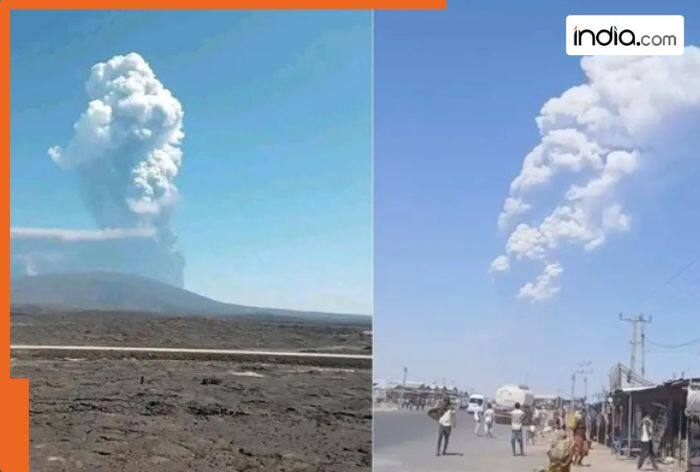
A cloud of volcanic ash from Ethiopia’s Hayli Gubbi volcano reached Delhi around 11 pm on Monday. Weather departments have been watching this ash cloud since Sunday as it travelled across the Red Sea and moved toward northwest India at nearly 130 kmph. The volcano, which had not erupted for almost 10,000 years, suddenly became active and sent a huge amount of ash and sulphur dioxide into the air. Meteorologists said the plume first entered India through western Rajasthan. According to the India Met Sky Weather alert, the ash drifted in through the Jodhpur–Jaisalmer area and continued moving northeast at about 120–130 kmph. They noted that the sky might look strange for some time, but there is little danger because the ash is floating very high, between 25,000 and 45,000 feet.
By Monday evening, the ash cloud had spread over parts of Rajasthan, Haryana and Delhi, and a smaller part of it was expected to touch Gujarat, Maharashtra. Experts also said that Punjab, the western edge of Uttar Pradesh and parts of Himachal Pradesh could experience some effects during the night.
experts explained that the ash is too high in the atmosphere to cause serious health problems, though a small amount of fine ash might fall in some places. Tuesday’s sunrise could look different because the light might reflect off the tiny particles in the air. They added that air quality will remain poor as usual, and the volcanic ash will not make much difference to pollution levels.
Airlines cancel multiple flights
Akasa Air, IndiGo and KLM cancelled several flights on Monday because of the volcanic ash in the region.

The Directorate General of Civil Aviation (DGCA) told airlines to stay away from any airspace that may contain ash. They have also been asked to change their flight routes, plans and fuel estimates based on the latest warnings. If a plane experiences anything unusual — such as engine issues, smoke, or strange smells inside the cabin — airlines must report it right away.
The DGCA also said that if ash affects an airport, the airport authority must immediately check the runways, taxiways and parking areas to make sure they are safe for use.
IndiGo posted on X that ash from Ethiopia’s Hayli Gubbi volcano was drifting toward western India. The airline said it understood passengers might be worried but stressed that safety remained its top priority.
Air India also shared an update on X, saying that ash clouds had been noticed over some areas after the eruption. The airline said it was watching the situation closely and staying in touch with its crews. For now, its flights have not been seriously affected.
SpiceJet cautioned that volcano-related ash over parts of the Arabian Peninsula could disrupt flights passing through those skies. The airline said its safety and operations teams were tracking the ash cloud and advised passengers flying to or from Dubai to confirm their flight status.
PTI reported that two international flights leaving from Kochi were cancelled as a precaution. Cochin International Airport Limited said the cancelled flights were IndiGo’s Kochi–Dubai service (6E1475) and Akasa Air’s Kochi–Jeddah flight (QP550). Airport authorities said normal operations would begin again once conditions improved.


