










In a statement, the IMD said strong upper-level winds pushed the ash from Ethiopia across the Red Sea into Yemen and Oman, and then carried it over the Arabian Sea toward western and northern India.
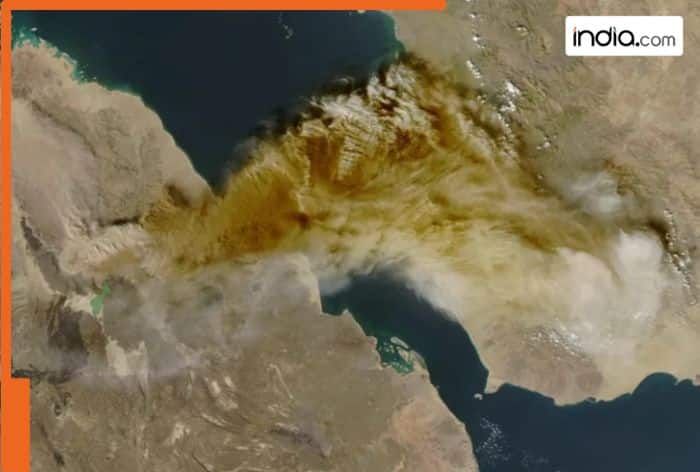
Ash from a volcanic eruption in Ethiopia is now drifting toward China and will clear out of India by about 7:30 pm on Tuesday, the India Meteorological Department (IMD) said. The eruption of the Hayli Gubbi volcano in Ethiopia caused ash clouds that affected some flights in India on Monday. The IMD said its forecast showed that the ash could influence parts of Gujarat, Delhi-NCR, Rajasthan, Punjab and Haryana on Tuesday.
IMD chief Mrutyunjay Mohapatra explained that the ash clouds are moving away from India and heading toward China, and they are expected to be out of Indian airspace by the evening.
The IMD also noted that Hayli Gubbi, a shield volcano located in Ethiopia’s Afar region, erupted on Sunday, sending a massive ash plume up to around 14 km (45,000 feet) into the sky.
The ash cloud moved eastward, crossing the Red Sea and then drifting toward the Arabian Peninsula and the Indian subcontinent.

In a statement, the IMD said strong upper-level winds pushed the ash from Ethiopia across the Red Sea into Yemen and Oman, and then carried it over the Arabian Sea toward western and northern India.
The IMD explained that it was tracking the situation closely using satellite images, updates from Volcanic Ash Advisory Centres (VAACs), and scientific models that show how ash spreads.
Its Met Watch centres in Mumbai, New Delhi and Kolkata issued SIGMET alerts — special aviation warnings used under ICAO rules — to airports in the region.
These alerts instructed pilots and airlines to stay away from the affected airspace and avoid flight levels listed in VAAC updates. The IMD also said that constant monitoring helps airlines plan their flights, including choosing new routes and adjusting fuel needs if alternate paths are required.
According to the Met office, flights in the area may have to take longer routes, spend extra time in the air, or wait in holding patterns due to the ash.


