










The air quality index of Delhi falls in the category of ‘very poor’ with 357. The affected areas include Kartavya Path, Anand Vihar, Burari, and Akshardham.
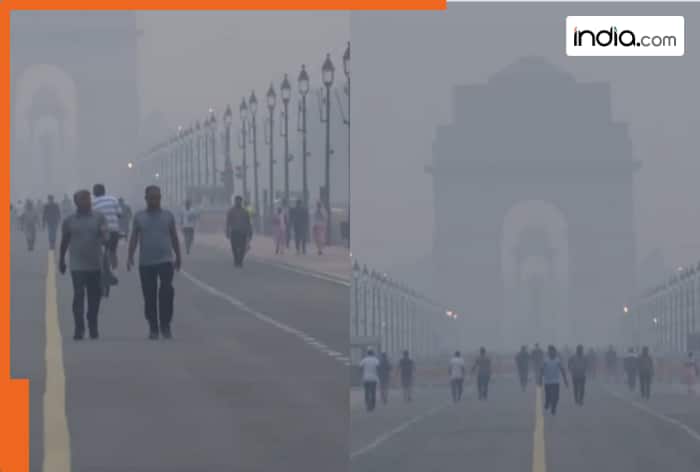
New Delhi: Delhi on Thursday witnessed a layer of haze and fog in the sky. It contained pollutants, which made the Air Quality Index (AQI) of the city ‘very poor’. It fell in the category of ‘poor’ for the last few days. In multiple areas of the city, the deteriorating air quality led to lower visibility. It’s mainly because of the thick layer of fog and still winds remaining in proximity to the ground, which starts storing the harmful pollution-causing elements. The pictures of the density in the air are making rounds on social media, highlighting commuting concerns in the capital city.
What’s the official data?
The Central Pollution Control Board (CPCB) mentioned that Delhi’s Air Quality Index (AQI) was 357, which is up from the previous day’s 279. According to the India Meteorological Department (IMD), the visibility of Palam was 1,000 metres, and that of Safdargunj was just 800 metres during the early morning hours. The still winds were under 10 kmph, developing thick fog, which kept the pollutants undispersed.
Affected areas
Several areas of the national capital remain affected due to the haze formation on Thursday. These include Kartavya Path, Anand Vihar, Burari, and Akshardham. In addition, Anand Vihar and Vivek Vihar witnessed an air quality index of 408 and 415, respectively, labelling them in the category of ‘severe.’
What’s the effect on Delhi’s temperature?
According to the IMD, the minimum temperature of the city was recorded at 20.1 degrees Celsius, and the humidity at 90 per cent in the morning, i.e., 8:30 am. On the other hand, the maximum temperature may remain around 30 degrees Celsius.

The ventilation index of the city specified the atmosphere’s capability in dispersing pollutants stood below the optimal level, i.e., 6,000 m²/s, as per the Air Quality Early Warning System for Delhi.


