










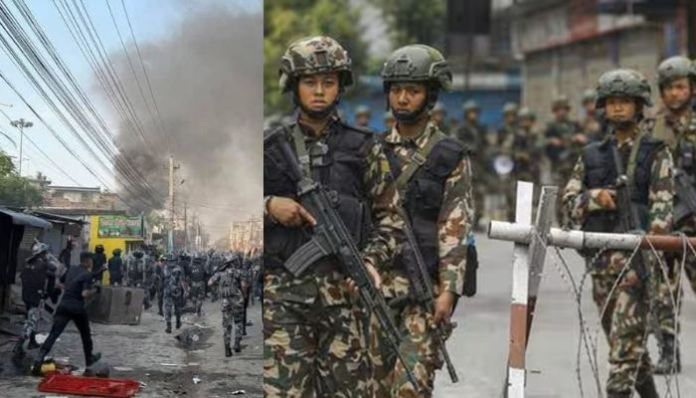
On 4th January, a social media reel triggered communal unrest in Nepal. Since then, several parts of southern Nepal, especially districts close to the Indian border, have been witnessing severe tension. The situation got tense after two Muslim youths uploaded reels abusing Hindu Gods, which angered the local Hindu community. The controversy that started online soon spread to the streets. Violent protests took place, and the Government issued curfew orders. A high-security alert was issued on both sides of the India-Nepal border.
— NDTV (@ndtv) January 6, 2026
#BREAKING | Unrest In Nepal Town After Mosque Vandalised, Border With India Sealedhttps://t.co/stIn79fS86
NDTV's @prabhakarjourno joins @VedikaS with more details pic.twitter.com/VWbhDQ98XU
What Sparked the Anger
The tension began in Kamala Municipality of Dhanusha district, where two Muslim youths, Haider Ansari and Amanat Ansari, posted reels on social media that abused Hindu Gods. The content deeply hurt Hindu sentiments and quickly spread online, triggering outrage among residents of the area.
Locals said the reels crossed all limits and damaged the peaceful relationship between communities. As anger grew, people in the area tracked down the two youths and handed them over to the police. They warned that such actions could easily lead to law-and-order problems if not dealt with firmly.
Instead of calming down after the arrests, the situation worsened further when a mosque was vandalised in the Sakhuwa Maran area of Kamala. This incident added fuel to an already tense atmosphere and led to large crowds gathering on the streets. Protests soon spread beyond Dhanusha and reached Parsa district, with visible anger in several towns and villages.
Hindu organisations stated that the reels insulting Hindu deities were the root cause of the unrest and said the vandalism incident only made matters worse by increasing fear and mistrust among communities.
Violence breaks out in Birgunj
The situation took a violent turn in Birgunj, a major commercial town located near the India–Nepal border. Protesters pelted stones at police personnel and vandalised a local police station. The clashes created panic in the area, forcing shopkeepers to shut down their businesses.
To bring the situation under control, police fired several tear gas shells to disperse the crowd. As violence escalated, the Parsa district administration imposed a curfew in Birgunj. Security agencies are continuously monitoring the ground situation to prevent further clashes and restore normalcy.
India seals the Border amid security concerns
Birgunj’s proximity to Raxaul raised serious security concerns for Indian authorities. In response, India tightened security and sealed the India-Nepal border to prevent any spillover of unrest.
The Sashastra Seema Bal stopped all normal movement of civilians across the border, allowing only emergency services. Strict checking is being carried out at the Maitri Bridge, with every person and vehicle being thoroughly inspected. Dog squads have also been deployed to strengthen security.
Patrolling has been increased in sensitive border areas such as Sahadewa, Mahadewa, Pantoka, Siwan Tola, and Musharwa. Officials said every activity along the border is under close watch, and security will remain tight until the situation fully returns to normal.


