Category: World

  • No Indian citizen killed after missile struck residential locality in Saudi Arabia’s Al-Kharj, clarifies Indian embassy: Details

    No Indian citizen killed after missile struck residential locality in Saudi Arabia’s Al-Kharj, clarifies Indian embassy: Details

    The Indian Embassy in Riyadh clarified on Monday (9th March) that no Indian citizen was killed after missiles struck Saudi Arabia’s Al-Kharj city a day earlier. The embassy also said it is in touch with Saudi authorities regarding the matter.

    Earlier reports from Saudi officials had suggested that two people who died in the incident included an Indian and a Bangladeshi national. However, the Indian mission later confirmed that there was no Indian fatality.

    “It is a matter of relief that there has been no Indian fatality in the unfortunate incident at Al Kharj yesterday evening,” the Indian Embassy in Riyadh said in a post on X.

    The embassy added that officials from the mission had already visited the location and were monitoring the situation closely.

    “Counsellor (CW) Shri Y. Sabir visited Al Kharj last night and met the injured Indian national involved in this unfortunate incident. He is currently receiving treatment at a government hospital in Al Kharj,” the embassy said.

    The mission also said it is in regular contact with Saudi authorities to stay updated on the developments related to the incident.

    The projectile fell on a residential area

    The clarification from the Indian embassy came after Saudi authorities reported that a military projectile fell on a residential area in Al-Kharj city on Sunday, 8th March.

    According to Saudi Civil Defence officials, the projectile hit a residential location belonging to a maintenance and cleaning company in the Al-Kharj Governorate, located south of the capital Riyadh.

    Earlier statements from Saudi authorities had said that the incident resulted in the deaths of two people and injuries to several others.

    “The incident resulted in the death of two individuals of Indian and Bangladeshi nationalities, and injuries to 12 Bangladeshi residents, in addition to material damage,” Saudi authorities had stated in an earlier post on social media.

    The civil defence agency described the object that hit the area as a “military projectile,” although it did not directly name any country responsible for the attack.

    Officials also strongly condemned the targeting of civilian areas.

    “The spokesperson stressed that attempts to target civilian facilities constitute a blatant violation of international humanitarian law, adding that the approved procedures in such cases have been implemented,” the statement added.

    Following the incident and the rising tensions in the region, the Indian Embassy also issued an advisory to Indian nationals living in Saudi Arabia.

  • Iran targets commercial ships, Dubai airport and oil facilities as concerns grow over global energy

    Iran targets commercial ships, Dubai airport and oil facilities as concerns grow over global energy

    DUBAI, United Arab Emirates (AP) — Iran attacked commercial ships on Wednesday across the Persian Gulf and targeted Dubai International Airport, escalating a campaign of squeezing the oil-rich region as global energy concerns mounted and American and Israeli airstrikes pounded the Islamic Republic.

    Two Iranian drones hit near Dubai International Airport, home to the long-haul carrier Emirates and the world’s busiest for international travel. Four people were wounded but flights continued, the Dubai Media Office said.

    WATCH: As Iran shows no signs of surrender, U.S. launches ‘most intense’ day of strikes

    Iran’s joint military command announced it would start targeting banks and financial institutions in the Middle East. That would put at risk particularly Dubai, in the United Arab Emirates, which is home to many international financial institutions, as well as Saudi Arabia and the island kingdom of Bahrain.

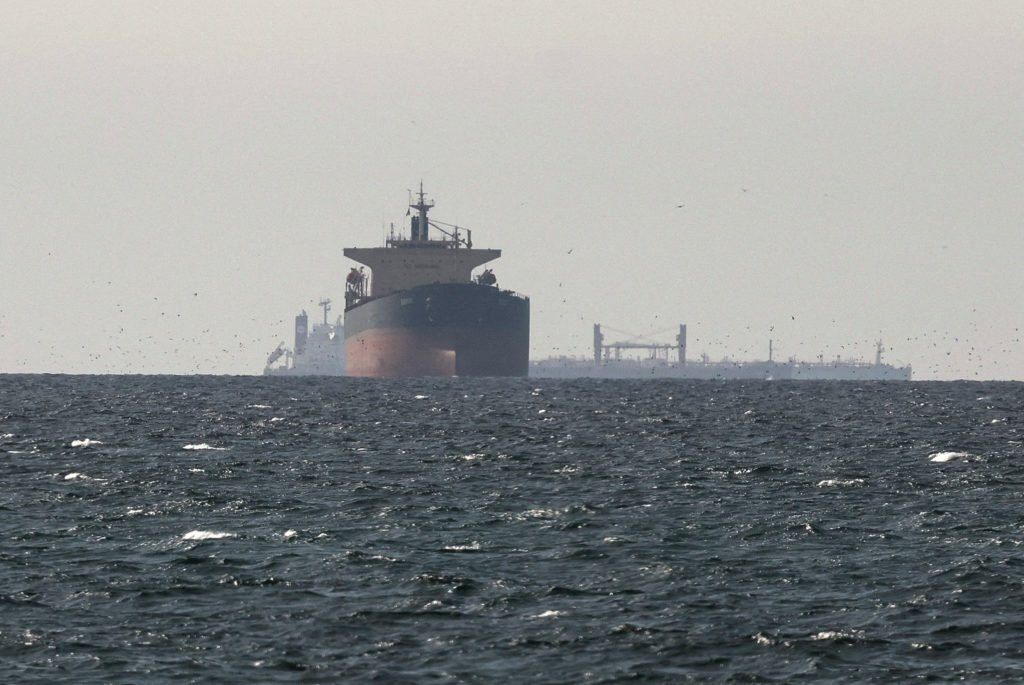
    Earlier, a projectile hit a Thai cargo ship off the coast of Oman in the Strait of Hormuz, setting it ablaze. Authorities are searching for three missing crew members from the Mayuree Naree after 20 were rescued by the Omani navy, according to Thailand’s Marine Department.

    Meanwhile, an assessment from Israeli intelligence said it believed Iran’s new supreme leader, Mojtaba Khamenei, was wounded at start of the war.

    WATCH: A look at evidence linking U.S. to Iranian school strike

    An Israeli intelligence official and a reservist with knowledge of the situation spoke on condition of anonymity because they were not authorized to discuss the matter with the media. They gave no details on the nature of the injuries.

    The 56-year-old Khamenei — the son of the late Supreme Leader Ayatollah Ali Khamenei — has not been seen since succeeding his father on Monday. His father and wife both were killed in an Israeli airstrike on the first day of the conflict.

    Separately, Kuwait said its defenses downed eight Iranian drones and Saudi Arabia said it intercepted five heading toward the kingdom’s Shaybah oil field.

    READ MORE: Fact-checking Trump’s claim that Iran has Tomahawk missiles

    Iran has effectively stopped cargo traffic in the narrow strait through which about a fifth of all oil is shipped. It has also targeted oil fields and refineries in Gulf Arab nations, aiming at generating enough global economic pain to pressure the United States and Israel to end their strikes.

    The U.N. Security Council was to vote later Wednesday on a resolution sponsored by the Gulf Cooperation Council demanding Iran stop attacking its Arab neighbors.

    Witnesses reported continuous airstrikes hitting Tehran after Israel said it had renewed its attacks. Explosions were also heard in Beirut and in southern Lebanon after Israel said it was hitting targets connected to Iran-backed Hezbollah militants.

    Israel launches new strikes on Lebanon

    The attacks set a building ablaze in central Beirut’s densely populated Aicha Bakkar area, engulfing the top two floors. Lebanon’s Health Ministry said four people were wounded.

    Other Israeli strikes on southern and eastern Lebanon killed 14 people, and a Red Cross worker also died Wednesday of wounds sustained Monday, when his team was hit by an Israeli strike while they were rescuing people from an earlier attack.

    READ MORE: Polls show what Americans think about the war in Iran

    Lebanon’s Health Ministry said Wednesday that 570 people have been killed in the country since that latest fighting began. Hezbollah fired rockets at Israel after the United States and Israel began the wider war with their surprise bombardment of Iran.

    Iran launches multiple salvos at Israel and Gulf Arab nations

    Israel warned of Iranian attacks and sirens rang out in Tel Aviv and elsewhere, but there were no immediate reports of casualties.

    Saudi Arabia said it had destroyed six ballistic missiles launched toward Prince Sultan Air Base, a major U.S.- and Saudi-operated facility, and intercepted two drones over the eastern city of Hafar al-Batin.

    The United Kingdom Maritime Trade Operations center, run by the British military, reported an attack on a container ship off the United Arab Emirates, saying the “extent of the damage is currently unknown but under investigation by the crew.” Another ship was hit by a projectile in the Persian Gulf, it said. The crew was reported safe.

    The ship attacks follow intense American airstrikes targeting Iranian navy assets and the port city of Bandar Abbas on Tuesday.

    The Iranian threat against financial institutions did not identify any specifically. It came after a Tehran location of Bank Sepah, the state-owned financial institution sanctioned by the U.S. over funding its armed forces, came under attack early Wednesday, killing staffers there, the state-run IRNA news agency reported.

    At the United Nations, the Security Council was to vote Wednesday afternoon on the Gulf Cooperation Council resolution, according to three diplomats speaking on condition of anonymity ahead of an official announcement.

    The draft resolution, obtained by The Associated Press, condemns Iran’s attacks on Bahrain, Kuwait, Oman, Qatar, Saudi Arabia, the UAE and Jordan. The measure calls for an immediate end to all strikes and threats against neighboring states, including through proxies.

    It would be the first Security Council resolution considered since the start of the war on Feb. 28.

    Oil prices stay high on fears of prolonged shipping disruption

    Oil prices remained well below Monday’s peaks but the price of Brent crude, the international standard, was still up some 20% Wednesday from when the war began, and consumers around the world are already feeling the pain at the pump.

    Germany and Austria said they are releasing parts of their oil reserves following an International Energy Agency request for its members to release 400 million barrels to help temper energy price spikes.

    The largest-ever previous collective release of emergency stocks by IEA member countries was 182.7 million barrels, in the wake of Russia’s full-scale invasion of Ukraine in 2022.

    Japan also said it will release some of its reserves starting Monday.

    The U.S. military said Tuesday it had destroyed 16 Iranian minelayers near the Strait of Hormuz, though U.S. President Donald Trump said in social media posts that there were no reports yet of Iran mining the passage.

    If the strait is mined, it could take at least weeks to clean it up once the conflict is over.

    Some tankers, believed linked to Iran, are continuing to get through the strait making so-called “dark” transits — meaning they aren’t turning on their Automatic Identification System trackers, which show where vessels are. Vessels carrying sanctioned Iranian crude often turn off their AIS trackers.

    The security firm Neptune P2P Group said Wednesday there had been seven ships pass through the strait since March 8. Of them, five were linked to Iranian-associated shipping, it said. In ordinary times the strait typically sees 100 ships or more transit daily from the Persian Gulf into the Gulf of Oman.

    Meanwhile, the commodity-tracking firm Kpler said Iran has restarted crude exports through its Jask oil terminal on the Gulf of Oman. A tanker loaded roughly 2 million barrels at Jask on March 7, it said.

    In addition to the 570 killed in Lebanon, Iran has said that more than 1,300 people have been killed there and Israel has reported 12 people dead.

    The U.S. has lost seven soldiers while another eight have suffered severe injuries.

    Magdy reported from Cairo, and Rising from Bangkok. Associated Press writers Sally Abou AIJoud in Beirut, Giovanna Dell’Orto in Miami, Jamey Keaten in Geneva, Jintamas Saksornchai in Bangkok, Kirsten Grieshaber in Berlin and Edith M. Lederer at the United Nations contributed to this story.

    A free press is a cornerstone of a healthy democracy.

    Support trusted journalism and civil dialogue.


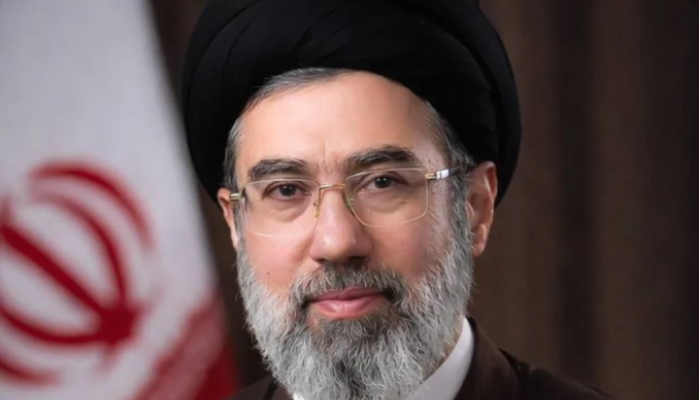
  • Meet the new Supreme Leader of Iran

    Meet the new Supreme Leader of Iran

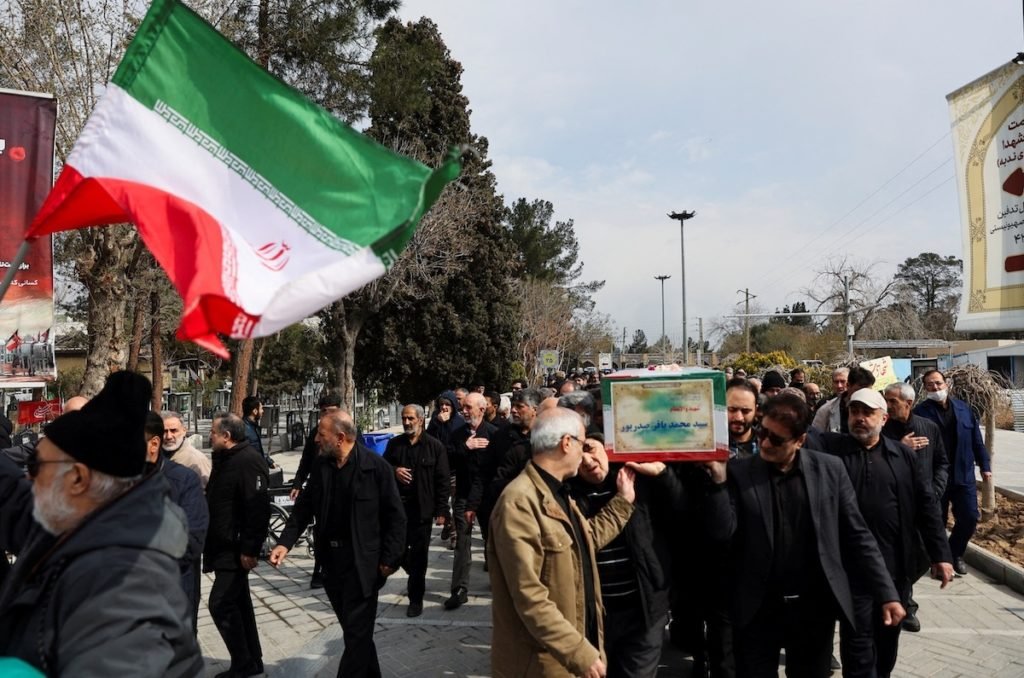
    On 8th March, Iran’s Assembly of Experts declared Sayyed Mojtaba Hosseini Khamenei to be the third Supreme Leader of the Islamic Republic in the midst of an intensifying crisis in the Middle East. He replaced his 86-year-old father, Ayatollah Ali Khamenei, who was neutralised on 28th February in a military strike by the United States and Israel.

    Zahra Haddad Adel, Mojtaba’s wife and the daughter of a previous speaker of parliament, also perished in the attack along with their son. The fresh announcement came following indications of a divide among Iranian officials as the country awaited the verdict of the 88-seat Assembly of Experts, a body of clerics responsible for picking the Supreme Leader.

    The 56-year-old has mostly kept a low profile in contrast to the late Khamenei, as only a few images and videos of him have ever been released. He has never held a public office, delivered speeches or offered interviews. However, there have been long-standing suspicions that he had significant authority over Iran. He was regarded as “a combination of aide-de-camp, confidant, gatekeeper and power broker.”

    Meet Mojtaba Ali Khamenei

    Mojtaba is the second-oldest son of Ayatollah Ali Khamenei and was born on 8th September 1969 in Mashhad, which is a holy Shia city and grew up while the latter attempted to topple the Pahlavi regime. He attended the esteemed Alavi High School in Tehran when the family relocated there post the 1979 revolution.

    He served in the Habib ibn Mazahir Battalion of the 27th Mohammad Rasulullah Division during the last years of the Iran-Iraq War after enlisting in the Islamic Revolutionary Guard Corps (IRGC) at the age of 17. He has a stronger connection to the organisation than his father, who has denied rumours of a split and swore allegiance to him. He developed enduring relationships with his comrades who went on to occupy high-profile jobs within the Iranian military institution.

    Mojtaba taught and acquired his religious education from conservatives in the seminaries of Qom, the nation’s centre of Shia theological education, which is located south of Tehran. He was largely regarded as a Hojjatoleslam, a mid-level religious rank, instead of a senior Ayatollah deemed eligible for the top assignment.

    Interestingly, he travelled to the United Kingdom’s private institutions four times between 2004 and 2008 for infertility treatment. He received medical care at the Wellington and Cromwell Hospitals in London.

    “His marriage, to the daughter of former Majles Speaker Hadad Adel, followed two ‘temporary marriages’ and occurred relatively late in life, reportedly due to an impotency problem treated and eventually resolved during three extended visits to the UK,” read the diplomatic cables of the United States, which were made public by WikiLeaks in the late 2000s.

    The meteoric rise to power

    The younger Khamenei was referred to as “the power behind the robes” in the cables, based on Associated Press (AP). He had tapped his father’s phone and was referred to as his “principal gatekeeper.” However, he had been creating his own power base in the nation.

    A 2008 cable conveyed that Mojtaba “is widely viewed within the regime as a capable and forceful leader and manager who may someday succeed to at least a share of national leadership; his father may also see him in that light.” It added, “Mojtaba is, however, due to his skills, wealth, and unmatched alliances, reportedly seen by a number of regime insiders as a plausible candidate for shared leadership of Iran upon his father’s demise, whether that demise is soon or years in the future.”

    He ran the Supreme Leader’s office like a “fortress” long before he was appointed and was viewed as the real force. He worked behind the scenes but proved to be a crucial link between IRGC appointments and intelligence operations. His name emerged to be affiliated with a web of covert power and critical security apparatus, while his brothers mainly stayed within the comparatively safe limits of cultural or administrative roles attached to their father’s leadership.

    Notably, hardliner Mohsen Araki, Alireza Arafi, who is one of the three members of the temporary council in charge of the nation and Hassan Khomeini, the grandson of the founder of the Islamic Republic in 1979, were competitors for the spot. However, Mojtaba’s selection illustrated how he consolidated support.

    Moreover, he is considered more in favour of building nuclear weapons than his father and could adopt a more aggressive stance on Iran’s nuclear program. Additionally, he has resisted reformers who want to work with the West to end the nuclear campaign.

    The grave accusations and US sanctions

    The reformist faction accused Mojtaba of manipulating elections and using the Basij force to suppress peaceful demonstrators amid the Green Movement of 2009. A violent crackdown on these leaders and their supporters had ensued after the controversial re-election of ultra-conservative president Mahmoud Ahmadinejad in 2009, which set off a massive movement. Mojtaba also played a key part in his first election in 2005.

    Importantly, all-volunteer Basij forces have been at the centre of the onslaught against multiple waves of agitations in the country, including the latest uprising, which claimed the lives of thousands of people at the hands of the troops.

    Mahdi Karroubi, who ran for president in both 2005 and 2009, called Mojtaba “a master’s son” and highlighted that he had tampered with both votes. However, the senior Khamenei apparently termed him “a master himself, not a master’s son.” It was mentioned that money was distributed to religious outfits via the IRGC and the Basij militia to influence the polls.

    The United States Treasury Department placed sanctions on Mojtaba in 2019 and noted that he represented the Supreme Leader in “an official capacity, despite never being elected or appointed to a government position” aside from functioning in the latter’s office. It insisted that he was handed over responsibilities “to advance his father’s destabilising regional ambitions and oppressive domestic objectives” and joined hands with the commander of the IRGC’s Quds Force and Basij, a religious unit connected to the guards.

    The Supreme Leader’s billion-dollar empire

    Mojtaba owns a $3 billion global property and asset empire. According to sources, he has been intimately involved in the transactions, some of which date back at least to 2011, without putting the holdings in his own name, reported Bloomberg. They claimed that his financial dominance has included everything from Persian Gulf ships to Swiss bank accounts and British luxury property worth more than £100 million ($138 million).

    The network of companies aided him in transferring money, estimated to be in the billions of dollars, into Western markets, despite sanctions slapped by Washington against him in 2019. This consists of luxury European hotels from Frankfurt to Mallorca, a mansion in an area known as the “Beverly Hills of Dubai” and premium real estate in several of London’s most elite neighbourhoods, including a £33.7 million house which was purchased in 2014.

    Money for the deals had been routed through accounts at banks in the United Kingdom, Switzerland, Liechtenstein and the United Arab Emirates. Insiders disclosed that the sale of his country’s oil had been the main source of the funds. Many of the acquisitions are made in the name of Ali Ansari, an Iranian businessman who had been sanctioned by the British.

    Mojtaba and his family also controlled billions of dollars and business properties dispersed throughout Iran’s several bonyads or foundations, which were financed by the state firms and other wealth earlier managed by the shah.

  • 2 killed and homes damaged after tornadoes tear through Illinois and Indiana, with more storms moving in

    2 killed and homes damaged after tornadoes tear through Illinois and Indiana, with more storms moving in

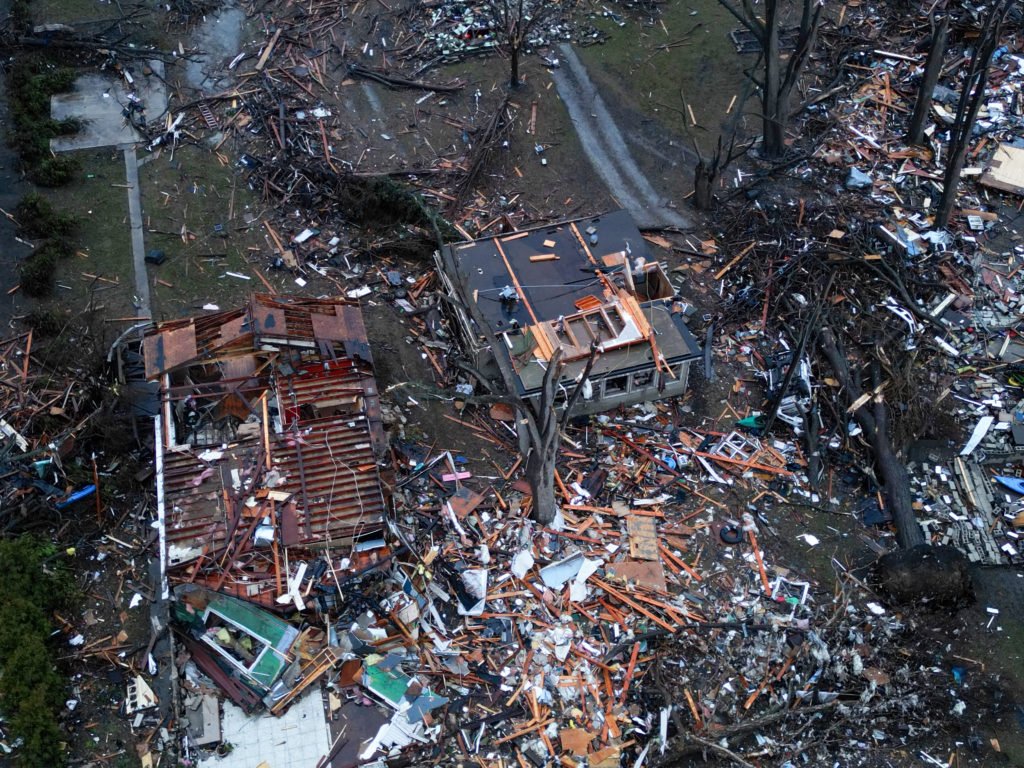
    Major storms whipped up tornadoes in parts of Illinois and Indiana that leveled homes, killing at least two people and injuring others, and another round of rain, hail and strong winds made its way through the region Wednesday, authorities said.

    Several intense supercell thunderstorms moved across northern Illinois and northwestern Indiana on Tuesday, including one supercell responsible for at least four tornadoes, according to the National Weather Service office in Chicago.

    READ MORE: Authorities search debris after suspected tornadoes kill 6 in Michigan and Oklahoma

    “Please do not come here. Do not try to help right now,” Newton County Sheriff Shannon Cothran said in a video update in front of what looked to be a destroyed home in the small northwestern Indiana community of Lake Village.

    People were trapped in their damaged homes and had to be rescued. Many roads were unpassable and at least 70 utility poles were knocked down, officials said at a Wednesday morning news conference.

    A tornado struck a home, killing an elderly couple, Newton County Coroner Scott McCord said in a news release. Their names were not released.

    Fewer than 10 people were hurt in Tuesday’s storms, Laurie Postma, a spokeswoman for the Lake Township Volunteer Fire Department, said at the news conference.

    David Ferris, a paramedic in a neighboring county who lives in Lake Village, just south of the area that was hit, said he, his wife, and their dogs “rode it out in our downstairs bathtub.” They were unscathed, except for losing power. He went out to help with rescue efforts and helped people who suffered cuts, scrapes and bumps to the head.

    READ MORE: Tornadoes threaten millions across the U.S. as spring storm season kicks in early

    “We had another house where a guy crawled out,” Ferris told The Associated Press in an interview. “He was having some trouble breathing because he was covered in house insulation.”

    Ferris said the local Family Dollar store was destroyed, as well as a gas station across the street. He said multiple large trees were uprooted.

    Survey crews were expected to determine the strength and number of tornadoes on Wednesday, the weather service said.

    The storms also produced exceptionally large hail, ranging from 3 to 5 inches (7.6 to 12.7 centimeters) in diameter. One 6-inch (15.2-centimeter) diameter hailstone measured in Kankakee, Illinois, may be considered for a new state record, the weather service said.

    Parts of Illinois, Indiana, Kentucky and Ohio were under a tornado watch Wednesday morning.

    Illinois Gov. JB Pritzker said in a post on the social platform X that he’d been briefed on the storm and tornado damage.

    “Keeping in our thoughts all Illinoisans impacted by the severe weather — we’ll be here to help them recover,” he said.

    A tornado struck down near the Kankakee fairgrounds, about 57 miles (92 kilometers) south of Chicago, before traveling northeast into Aroma Park, where it caused extensive damage, according to the Kankakee County Sheriff’s Office. No injuries have been reported.

    “I want to remind area residents to check on their neighbors and loved ones but to avoid unnecessary travel, if at all possible,” Kankakee County Sheriff Mike Downey said in a statement.

    In video shared on social media, the twister is seen ripping across a field of farmland near an airport while vehicles lined the road.

    More than 2 million Americans were at a moderate risk of severe weather in Illinois and Indiana. Nearly 22 million were at a slightly lesser risk in a zone that includes Chicago, Fort Worth, Texas, and Oklahoma City, Oklahoma.

    Associated Press journalists Sarah Brumfield in Cockeysville, Maryland, and Hannah Schoenbaum in Salt Lake City contributed to this story.

    A free press is a cornerstone of a healthy democracy.

    Support trusted journalism and civil dialogue.


  • Bangladesh shuts down universities due to fuel shortage, asks India for help

    Bangladesh shuts down universities due to fuel shortage, asks India for help

    In a major development, the Bangladesh government has decided to shut all public and private universities as an emergency measure to save fuel and electricity, starting from Monday (9th March).

    The Tarique Rahman-led BNP government has advanced Eid holidays after the energy crisis in the nation worsened due to the ongoing conflict in the Middle East.

    The move is expected to reduce electricity consumption and decrease traffic congestion, thereby preventing wastage of fuel.

    According to the officials of the Bangladesh government, universities require large amounts of electricity to run residential halls, classrooms, laboratories, and air conditioners. As such, early Eid holidays will ease pressure off the power system.

    It must be mentioned that both government and private schools in Bangladesh have already been closed for the month of Ramzan. The Islamic country is dependent on energy imports for 95% of its domestic consumption.

    Given the situation at hand, the government had imposed daily limits on the purchase of fuel. Besides, private coaching centres and foreign-curriculum schools have been directed to suspend their operations.

    Fuel shortage has forced Bangladesh to stop operations at 4 government-run fertiliser factories. While speaking about the matter, a government official informed, “We are doing everything ​we can to reduce consumption and ensure stability in power, fuel and import supplies.”

    In the meantime, Bangladesh sought help from neighbouring India to resolve the ongoing crisis in its energy sector. The government has requested the supply of 50,000 tonnes of diesel within 4 months from Indian Oil Corporation Limited (IOCL) and Assam’s Numligarh Refinery Limited (NRL).

  • A look at evidence linking U.S. to Iranian school strike

    A look at evidence linking U.S. to Iranian school strike

    Geoff Bennett:

    Defense Secretary Pete Hegseth today said no nation in the world takes greater care to avoid civilian casualties than the U.S.

    But the U.S. is currently investigating an explosion at a school next to an Iranian navy base that Iran says killed more than 150 people, mostly schoolgirls.

    Amna Nawaz:

    An official briefed on the initial review tells “PBS News Hour” the strike was likely American.

    Nick Schifrin examines videos and satellite images and speaks to experts for a closer look at what appears to be the deadliest strike of the war.

    Nick Schifrin:

    In the moments after the attack, the only sounds were screams.

    (Cheering)

    Nick Schifrin:

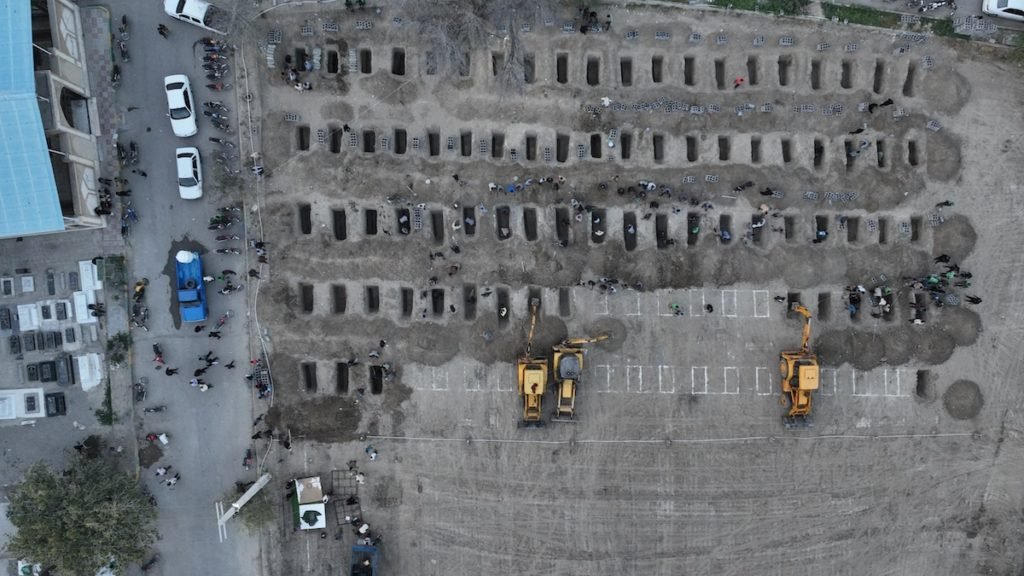
    The school where many of these parents had dropped off their children not long before is now collapsed and gutted, the scale of death clear from the air, rows and rows of tiny graves, classmates in life and now death, a victim still wearing her backpack, like in class, all lined up, a roll call of the dead.

    An official brief on the initial review tells “PBS News Hour” the strike was likely American. Video broadcast by the semi-official Mehr News Agency reportedly shows the strike and, slowed down, weapons experts say that is an American Tomahawk.

    And, today, Iranian state media released these photos it said were taken at the site that appeared to show fragments of an American Tomahawk.

    Master Sgt. Wes Bryant (Ret.), U.S. Air Force: I could already tell, when initial reports came out on this strike, just looking at the damage, that this was a deliberately targeted strike package.

    Nick Schifrin:

    Retired Master Sergeant Wes Bryant spent 20 years in the U.S. Air Force, where he called in airstrikes and led targeting cells and then worked in the Defense Department’s Civilian Protection Center until the Trump administration reduced its size.

    Bryant says this satellite image from after the attack shows six precise strikes inside an Islamic Revolutionary Guard Corps navy base. The seventh hit the school adjacent to the base’s northwest corner.

    Master Sgt. Wes Bryant (Ret.):

    You have within this IRGC naval compound, which as it turns out is a missile headquarters, you have at least seven buildings within this broader compound that were struck. These impact points were generally center of the building and they hit each of these buildings almost near perfectly.

    Nick Schifrin:

    A clear wall separates the school from the base, but back in 2013 there was no wall. The wall was built by 2016.

    President Donald Trump:

    I will say that the Tomahawk, which is one of the most powerful weapons around, is used by — is sold used by other countries.

    Nick Schifrin:

    Yesterday, President Trump said that Iran too has Tomahawks. It does not, although Iran does have cruise missiles, the same technology as in a Tomahawk.

    President Donald Trump:

    Whether it’s Iran, who also has some Tomahawks — they wish they had more. But whether it’s Iran or somebody else, the fact that a Tomahawk — a Tomahawk is very generic. It’s sold to other countries, but that’s being investigated right now.

    Nick Schifrin:

    On Air Force One this weekend, President Trump blamed Iran.

    President Donald Trump:

    We think it was done by Iran. They’re very inaccurate, as you know, with their munitions.

    Nick Schifrin:

    From what you’re seeing, could it have been an Iranian air defense missile going awry?

    Master Sgt. Wes Bryant (Ret.):

    Taken in aggregate, with all of the other information we have, this targeting of the entire compound, the videos of the Tomahawk, the remnants of the Tomahawk, the hallmark of a U.S. strike, I say that’s fairly improbable at this point.

    Nick Schifrin:

    Bryant believes it is possible that the satellite image the U.S. military used was out of date. As seen in Google Earth, today, there is a clear wall that separates the school from the base. But back in 2013, there was no wall. The wall was built by 2016.

    Master Sgt. Wes Bryant (Ret.):

    Potentially using targeting data that is a decade-plus-old and not updating it and not going in and verifying what’s happening on the ground right now, is this still actually a military target, are there possibly civilians in it, even if it is, and how are we going to address that, none of that happened.

    Pete Hegseth, U.S. Defense Secretary:

    No nation in the history of warfare has ever attempted in every way possible to avoid civilian casualties.

    Nick Schifrin:

    Today, Secretary Pete Hegseth accused Iran of placing missiles next to schools without connecting it to the girls school strike.

    Pete Hegseth:

    Iran, who targets civilians indiscriminately, who we’ve seen in the intel moving rocket launchers into civilian neighborhoods, near schools, near hospitals to try to prevent our ability to strike, that’s how they operate.

    Nick Schifrin:

    But a U.S. official says that Hegseth and DOGE cuts reduced the Pentagon’s office dedicated to preventing civilian casualties by 90 percent and by two-thirds at the military’s Middle East Regional Command.

    What’s the impact of those cuts?

    Master Sgt. Wes Bryant (Ret.):

    You have a drop in — a direct reduction in capability to characterize a civilian environment in order to properly characterize a target and conduct an assessment on risk to civilians at that target or in the general area. And then you have a de-emphasis on the prioritization of protection of civilians.

    And that’s going to have a filter-down effect. That’s going to filter down to exactly how you end up executing operations.

    Nick Schifrin:

    Bryant and others are careful not to suggest the cuts led directly to civilian casualty incidents. But, rhetorically, Hegseth has emphasized what he calls lethality over the laws of war.

    Pete Hegseth:

    America, regardless of what so-called international institutions say, is unleashing the most lethal and precise airpower campaign in history, all on our terms with maximum authorities, no stupid rules of engagement, no nation-building quagmire, no democracy-building exercise.

    Nick Schifrin:

    Why is it important for you to speak out today in public in case the U.S. military did make this mistake?

    Master Sgt. Wes Bryant (Ret.):

    The principles of restraint, of adherence to international law, of lessening human suffering when we do have to go to war, of the protection of civilians, these are the ideals and principles that I came up with as primary, as foundational for what we were, what we embodied as American war fighters.

    They hold up the values of the American people. And that’s what separates us from those we hold as our enemies.

    Nick Schifrin:

    President Trump says he will respect the investigation’s outcome of one of the deadliest strikes on civilians in the Middle East in years.

    For the “PBS News Hour,” I’m Nick Schifrin.

  • How India has found ways to procure oil through global highs and lows

    How India has found ways to procure oil through global highs and lows

    Consider this it’s 1973, and the globe is in a state of chaos. When Arab countries stopped selling oil to the West, prices skyrocketed and were four times higher in a matter of months. Everyday people rush for gas, factories close in Europe, and cars queue up for blocks in America. However, in India, a young country still finding its feet, leaders did more than just hang on; they played a strategic game. They made covert agreements with the Soviet Union, exchanging clothing and agricultural products for inexpensive oil paid in rupees rather than dollars. Indian manufacturing and lights continued to function thanks to this astute trading. Better yet, it absorbed excess Soviet oil that may have disrupted other markets.

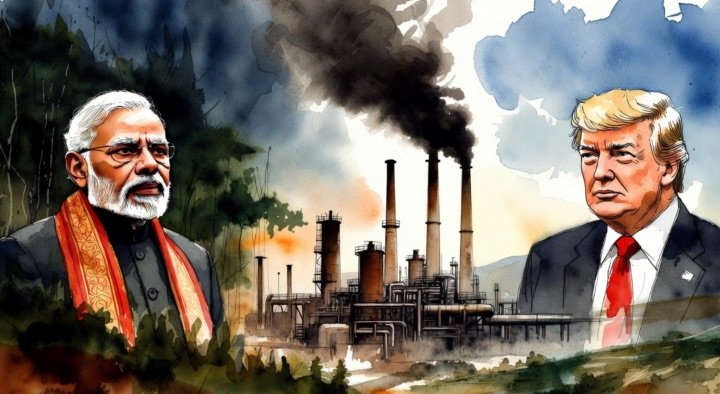
    This anecdote, which most people have forgotten, demonstrates India’s early ability to maintain stability throughout difficult times. Fast forward to March 6, 2026 as tensions with Iran escalate, the United States claims to grant India a temporary 30-day waiver to continue purchasing Russian oil. Ships avoid attacks, missiles fly, and the crucial Strait of Hormuz, which handles one-fifth of the world’s oil, appears poised to choke. Experts fear that prices could soar beyond $150 per barrel. This is serious business for India, which purchases 85% of its oil from outside and consumes 5.5 million barrels a day. However, under the steadfast leadership of Prime Minister Narendra Modi, India transforms weakness into strength by employing astute diplomacy and audacious actions to defuse the international crisis once more.

    Why does India matter so much here?

    It’s easy. The nation is the third-largest oil consumer in the world. By 2030, it might have more thirst than any other location and be at the forefront of growing demand. Because of its influence, India’s decisions have an international impact. A problem with its supplies? Everyone is affected by price increases, from American drivers to African industries. India, meanwhile, is not alarmed. To acquire good deals, it spreads out its purchases and makes use of its scale.

    This ability shines brightly now and has rescued the day in previous crises. India’s Soviet partnership during the oil shock of the 1970s wasn’t a coincidence. It was signed in 1976 and brought in 5.5 million tons of oil over a four-year period for Indian commodities without the need for dollars. This agreement, linked to the 1971 Indo-Soviet friendship treaty that helped liberate Bangladesh, routed cheap oil through Iraq. It reduced India’s expenditures by half and contributed to the construction of major facilities such as Bombay High. Indira Gandhi’s team pioneered this road of smart independence, but Modi’s government has strengthened it by increasing oil reserves and forging new alliances.

    More recent storms, where India’s actions verge on the predictive, vividly echo these historical murmurs. When the US benchmark oil contract (West Texas Intermediate) plummeted to a negative $37 during the 2020 COVID abyss, oil literally paying buyers to take it away, New Delhi didn’t back down; instead, it prospered. In order to reduce the import cost from April to July by 63% to $12.4 billion and strengthen buffers against rebound shocks, refiners chartered 20 supertankers for floating storage, accumulating 40 million barrels at fire sale prices.

    This tanker gate windfall filled PM Modi’s fledgling Strategic Petroleum Reserves (SPR), a 5.33 million tonne network at Visakhapatnam, Mangaluru, and Padur facilities, greenlit in 2018 and increased under his watch, granting 74 days of supply in emergencies, exceeding IEA criteria. India coordinated a 5 million barrel release when the IEA tapped global stocks in 2022, a smooth ballet that moderated price increases caused by the conflict in Ukraine without causing domestic pressure. Such foresight is not fortunate. Rather, it is the proactive, uncompromising Modi doctrine, which turns crisis into opportunities and guarantees that India not only survives but also creates peace for a nervous world.

    The history of silent leadership is most visible in the Russia-Ukraine conflict, as India’s aggressiveness became the world’s vent. Prior to 2022, Russian crude accounted for only 1% of imports. After the invasion, that number skyrocketed to 40%, with 1.5 million barrels per day at $20 discounts, amounting to approx $166 billion by early Jan 2026. Moscow’s shipments were halted by Western sanctions, but Indian giants such as Reliance’s Jamnagar, the world’s largest refinery, devoured Urals grade and turned it into aviation fuel that ironically powered Europe’s fleets affected by the restrictions, bringing in $6 billion in refined reward. Without this Indian alchemy, as insiders refer to it, Brent could have pierced $200 per barrel and set off a recessionary fire.

    The Iran flare up now brings this story back to life with compelling urgency. Tankers have been redirected due to Israeli retaliation and Tehran’s missile salvos, increasing freight by $4,00,000 per leg and setting the stage for a 3% increase in costs. India’s Gulf lifelines, the Saudi and Iraqi streams, falter, but the US waiver restores Russian taps, a practical reversal of tariff tough negotiations. This action highlights New Delhi’s might and is reminiscent of the Iranian waivers in 2018, when PM Modi obtained six-month exemptions for nine million barrels per month despite Trump-era restrictions.

    When it comes to Russia, there is another crucial factor. Despite US tariffs, India had yet to actually ‘stop’ buying Russian crude. The government stated that India imported over 20% of its crude from Russia in February this year, amounting to over 1.04 million bpd.

    By 2012, India had successfully negotiated similar nods under previous agreements, combining payments in Rupees to avoid sanctions. India’s 250 million ton refining capacity exports $100 billion a year, supplying 15% of Europe’s aviation fuel and reducing shocks by 10-15% since 2022, despite critics’ murmurs of dependency. This is not opportunism in Modi’s India; it is orchestration, a subtle leaning towards risky investments that pay global returns.

    India keeps global oil prices stabilised

    Some in Washington and Europe complain that India supports rogue actors by purchasing their energy and even discussing more severe sanctions. However, those thoughts quickly evaporate when they recall connections, such as the US need for cheap Indian pharmaceuticals. Modi’s clear eyed perspective has sculpted it as a gentle reminder of double standards. It is supported by history, India sets the tone rather than following the herd when it comes to epidemic hauls.

    India’s influence grows in the future. By 2030, oil consumption might reach 9 million barrels per day, supporting more than one third of global development. Modi’s agenda, which includes $10 billion bets on U.S. shale and more reserve locations like Mangalore, blends fossil fuels with green aspirations like solar agreements. India maintains composure during conflicts like those in Ukraine or Iran, acting as a steady hand on the wheel. India’s calm leadership is not only astute in the volatile world of oil, but it also serves as the glue that keeps prices and lives in check.

  • As Iran shows no signs of surrender, U.S. launches ‘most intense’ day of strikes

    As Iran shows no signs of surrender, U.S. launches ‘most intense’ day of strikes

    The U.S.-Israeli war with Iran showed no sign of slowing on Tuesday, with both sides trading strikes and vowing to keep up the attacks. U.S. officials said the campaign has destroyed most of Iran’s ability to produce nuclear fuel, and President Trump said forces also struck sea mine targets tied to Iranian threats in the Strait of Hormuz. Stephanie Sy reports.

    Geoff Bennett:

    Welcome to the “News Hour.”

    The U.S. and Israel’s war with Iran shows no sign of slowing today, with both sides trading strikes and vowing to keep up the attacks. U.S. officials say the campaign has destroyed most of Iran’s ability to produce nuclear fuel, while President Donald Trump says U.S. forces have also struck sea mine-related targets tied to Iranian threats in the Strait of Hormuz.

    Amna Nawaz:

    This comes as the Pentagon says about 140 U.S. troops have been wounded in the war, including over 100 who have returned to duty.

    Stephanie Sy begins our coverage.

    Stephanie Sy:

    In an Eastern neighborhood of Tehran, Red Crescent rescue workers locate a person in the rubble. It’s not clear if they’re injured or dead. But a broken doll signals a family lived here, anguish and ashes left in the wake of an airstrike this rescue worker blames on the — quote — “Zionist regime.”

    U.S. Defense Secretary Pete Hegseth today warned the U.S. will not relent until the Iranian regime is defeated.

    Pete Hegseth, U.S. Defense Secretary:

    Iran stands alone, and they are badly losing. Today will be yet again our most intense day of strikes inside Iran, the most fighters, the most bombers, the most strikes, intelligence more refined and better than ever.

    Stephanie Sy:

    President Donald Trump also promised further escalation over Iran’s threats to the Strait of Hormuz. This afternoon, Trump responded to reports that the Iranians are placing mines in the critical oil route, writing on TRUTH Social: “If for any reason mines were placed and they were not removed, the military consequences to Iran will be at a level never seen before.”

    Meanwhile, Democrats, including Senate Armed Services Committee member Richard Blumenthal came out of a briefing on Iran raising the specter of a deployment of American ground troops.

    Sen. Richard Blumenthal (D-CT):

    I am most concerned about the threat to American lives of potentially deploying our sons and daughters on the ground in Iran. We seem to be on a path toward deploying American troops on the ground in Iran.

    Stephanie Sy:

    White House Press Secretary Karoline Leavitt later responded.

    Karoline Leavitt, White House Press Secretary:

    I wouldn’t take Democrats at their word. As for boots on the ground, the president has talked about this repeatedly. Wisely, he does not rule options out as commander in chief.

    Stephanie Sy:

    But neither in the crucial oil shipping lane nor elsewhere has Iran shown signs of surrender, launching missiles on a U.S. base in northern Iraq, targeting a residential building in the kingdom of Bahrain’s capital city. That attack killed at least one person and injured eight.

    Iranian forces also launched drone strikes on an Israeli oil refinery in Haifa, a major industrial city. Despite mounting global pressure, the battered Iranian regime today made it clear there will not be a cease-fire, with Iran’s Parliament speaker, Mohammad Bagher, saying, “We must strike the aggressor in the mouth.”

    An Iranian security official warned President Trump: “Watch out for yourself, lest you be eliminated.”

    And an Iranian military spokesperson told Iranian media the country, — quote — “will not allow the export of a single liter of oil from the region.”

    Meanwhile, in Israel, air raid sirens blared across the city today, a new normal warning residents to take shelter against incoming Iranian strikes. Israeli Prime Minister Benjamin Netanyahu said the aim of the war is to enable Iranian citizens to rid themselves of — quote — “tyranny.”

    Benjamin Netanyahu, Israeli Prime Minister (through interpreter):

    Ultimately, it’s up to them. But there’s no doubt that, through the actions taken so far, we are breaking their bones and there is more to come.

    Stephanie Sy:

    But, for many Iranians, the cost of speaking out is too great.

    Ebrahim Eidi, Iranian Citizen (through interpreter):

    People are afraid to go to the streets. They are not afraid of America. Unfortunately, they are afraid of their own government.

    Stephanie Sy:

    At this remote mountain pass in Eastern Turkey, displaced travelers are saddled with fear and exhaustion. They are some of the tens of thousands currently fleeing Iran. But others are traveling back to the families they left.

    For 45-year-old Leila, being with her family, even in danger, feels more bearable than death.

    Leila, Iranian Citizen:

    I cannot guard, be against bomb. But when I feel I can with them together, maybe we together die.

    Stephanie Sy:

    For Leila and so many Iranians, there is no obvious escape. It’s now a war zone, but it’s still home.

    for the PBS “News Hour,” I’m Stephanie Sy.

  • US destroys Iranian naval vessels, including 16 minelayers near the Strait of Hormuz, after Trump warned Iran against closing the shipping corridor

    US destroys Iranian naval vessels, including 16 minelayers near the Strait of Hormuz, after Trump warned Iran against closing the shipping corridor

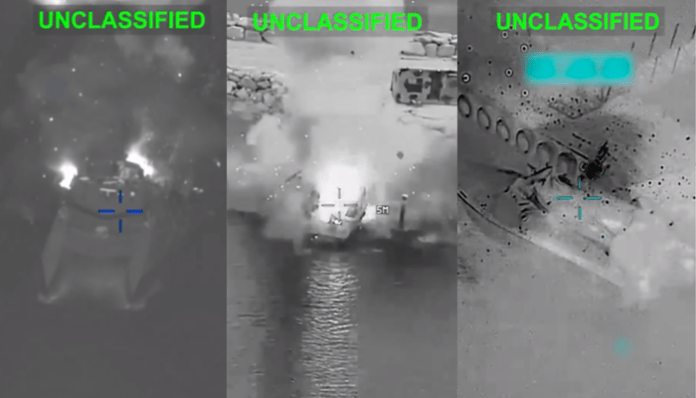
    As the US-Israel-Iran conflict continues on its 12th day, the US Central Command on Tuesday (10th March) released video clips of Iranian naval vessels, including 16 minelayers, being destroyed by US strikes near the Strait of Hormuz.

    “U.S. forces are degrading the Iranian regime’s ability to project power at sea and harass international shipping. For years, Iranian forces have threatened freedom of navigation in waters essential to American, regional and global security and prosperity,” the US Central Command posted on X, along with the clips.

    “U.S. forces eliminated multiple Iranian naval vessels on March 10, including 16 minelayers near the Strait of Hormuz,” it added. The video clips show various Iranian vessels being struck by projectiles.

    The US defence secretary Pete Hegseth said on Tuesday that the US intends to destroy Iran’s missile stockpiles, missile launchers and defence industrial base, Iran’s navy, and permanently deny the country nuclear weapons. He informed that in the last 24 hours, Iran fired the least number of missiles since the beginning of the war.

    Confirming this, General Dan Caine, US Chair of the Joint Chiefs of Staff, said, “They are down 90% from where they started, and one-way attack drones have decreased 83% since the beginning of the operation.” He added that destroying Iran’s navy is a key objective of Operation Epic Fury of the US.

    This comes after US President Donald Trump’s statement, where he said that the US had struck the Iranian vessels, which were capable of laying mines near the Strait of Hormuz, a key global shipping corridor. Trump had earlier warned Iran against laying mines in the region near the Strait of Hormuz.

  • Ukraine and Russia both claim progress on front lines while U.S.-brokered talks are on hold

    Ukraine and Russia both claim progress on front lines while U.S.-brokered talks are on hold

    KYIV, Ukraine (AP) — Russian and Ukrainian officials made rival claims of battlefield successes in their 4-year-old war, with Ukraine saying it pushed Moscow’s forces back across places on the front line and the Kremlin insisting Russia’s invasion of its neighbor is making progress.

    READ MORE: Russian missile hits apartment building in Ukraine’s Kharkiv killing at least 10

    At the same time, Russia’s almost daily attacks on Ukrainian civilian areas continued, killing several people, as Washington postponed its sponsored talks between the two sides due to the war in the Middle East.

    Russia and Ukraine tout contradictory success claims

    Despite being short of soldiers, Ukrainian forces have recently retaken nearly all the territory of the southeastern Dnipropetrovsk industrial region during a counteroffensive, driving Russian troops out of more than 400 square kilometers (150 square miles), Maj. Gen. Oleksandr Komarenko said in an interview published Tuesday by local media outlet RBC-Ukraine.

    Russian troops are poorly supplied and lack support, Andrii Kyianenko, the deputy battalion commander of the 425th Separate Assault Regiment “Skelia” deployed in the area, told The Associated Press. Ukrainian soldiers have broken through Russian defenses and advanced more than 10 kilometers (6 miles), he said.

    The evolving military situation couldn’t be independently verified, but the Institute for the Study of War, a Washington-based think tank, observed that recent Ukrainian counterattacks “are generating tactical, operational and strategic effects that may disrupt Russia’s spring-summer 2026 offensive campaign plan.”

    Meanwhile, Russian President Vladimir Putin claimed Tuesday that Russian forces have extended their gains in Ukraine’s eastern Donbas region, whose capture Moscow has made one of the goals of its invasion. Ukraine controlled about 25% of the Donbas six months ago, but it now holds just 15% to 17%, Putin said.

    He made the claim during a meeting with Denis Pushilin, the Kremlin-appointed head of the parts of the Donbas controlled by Russian forces. It was not possible to verify the claim.

    The Kremlin foreign affairs adviser, Yuri Ushakov, said that Putin told U.S. President Donald Trump late Monday that Russian forces are “advancing rather successfully” in Ukraine.

    That progress should “encourage” Kyiv to “move toward a negotiated settlement of the conflict,” Ushakov told reporters — even though Ukrainian President Volodymyr Zelenskyy has repeatedly demanded a lasting peace deal and European governments accuse Putin of feigning interest in talks while the Russian military keeps hammering Ukraine.

    Russia and Ukraine exchange strikes

    Three powerful glide bombs struck the center of the eastern Ukrainian city of Sloviansk, killing four people, the head of the Donetsk regional military administration, Vadym Filashkin, said Tuesday. At least 16 other people, including a 14-year-old girl, were wounded.

    Overnight drone strikes on three other Ukrainian cities wounded at least 17 people, including two children, emergency services said Tuesday. Ukraine’s air force said that it shot down 122 out of 137 drones that Russia launched during the night.

    Ukrainian missiles meanwhile struck the city of Bryansk in western Russia on Tuesday, killing at least six civilians and injuring 37, regional Gov. Alexander Bogomaz said.

    Zelenskyy told reporters that the Ukrainian military chief, Col. Gen. Oleksandr Syrskyi, reported to him that the strike on Bryansk hit a plant involved in manufacturing control systems for all types of Russian missiles.

    The Ukrainian military said it used British-made Storm Shadow cruise missiles to hit the Kremniy El microchip factory in Bryansk, one of Russia’s largest makers of microelectronics.

    U.S.-brokered talks on hold due to war in the Middle East

    The next round of talks was set for Tuesday and Wednesday in Turkey, according to Zelenskyy, but American negotiators postponed it, possibly until next week, he told reporters via WhatsApp messages.

    The Iran war, which erupted on Feb. 28 following U.S.-Israeli strikes on Iran and spread across the region, has drawn the international spotlight from Ukraine’s plight as it strives to hold back Russia’s bigger army.

    READ MORE: U.S. and Mideast countries seek Kyiv’s drone expertise as Russia-Ukraine talks delayed

    In the meantime, Zelenskyy urged Washington not to lift sanctions on Russia. The U.S. is reportedly considering easing sanctions on Moscow’s oil sales in a bid to ease supply chain disruption and pressure on gas prices as the Middle East conflict continues.

    Such a move would help Moscow finance its invasion and would be “a serious blow” for Ukraine, Zelenskyy said.

    The Kremlin is hoping that the Iran war will bring it a financial windfall from rising oil prices, distract global attention from the war in Ukraine, run down Western arsenals and force the U.S. and its NATO allies to reduce military support for Kyiv.

    Zelenskyy, meanwhile, is hoping that by supplying its cutting-edge and battle-tested drone technology to the United States and its Gulf partners for the war in the Middle East, Ukraine will win more international diplomatic leverage against Moscow.

    He is also seeking a reciprocal supply of advanced American-made air defense missiles Ukraine needs to counter Russia’s attacks.

    Associated Press writer Illia Novikov in Kyiv, Ukraine contributed to this report.

    A free press is a cornerstone of a healthy democracy.

    Support trusted journalism and civil dialogue.