Category: World

  • Iran targets ships in Strait of Hormuz, raising global energy fears

    Iran targets ships in Strait of Hormuz, raising global energy fears

    The Persian Gulf energy crunch deepened on Wednesday as the U.S. and Israel launched new strikes on Iranian targets. Iran retaliated across the region and effectively shut down the vital Strait of Hormuz, prompting countries around the world to take unprecedented steps to keep oil flowing. Special correspondent Leila Molana-Allen reports.

    Geoff Bennett:

    Welcome to the “News Hour.”

    The Persian Gulf energy crunch deepened today, as the U.S. and Israel launched new strikes on Iranian targets. Iran struck back across the region and effectively shut down the vital Strait of Hormuz, prompting countries around the world to take unprecedented steps to keep oil flowing.

    We begin tonight with special correspondent Leila Molana-Allen from Qatar.

    Leila Molana-Allen:

    The roiling waters of the Persian Gulf further inflamed after Iranian missiles this morning struck three cargo ships, this one manned by the Thai navy, engulfed by fire, near one of the world’s most critical oil passageways, the Strait of Hormuz, which snakes between Iran and the Arabian Peninsula.

    Maritime groups say, in all, Iran has struck at least a dozen vessels there, effectively bringing traffic to a halt and global energy fears to an all-time high. Today, Iran pledged it won’t hold back.

    Lt. Col. Ebrahim Zolfaghari, Iranian Military Spokesperson (through interpreter):

    We will never allow even a single liter of oil to pass through the Strait of Hormuz for the benefit of the United States, the Zionists or their partners. Any vessel whose ship or oil cargo belongs to them will be considered a legitimate target.

    Leila Molana-Allen:

    The situation has caused energy prices around the world to skyrocket, to offset the surge, an unprecedented response from the International Energy Agency, which announced it would release 400 million barrels of oil from its emergency stocks. That’s roughly 20 days’ worth of the strait’s exports, making it the largest distribution of reserves in history.

    IEA Director Fatih Birol:

    Fatih Birol, Executive Director, International Energy Agency:

    This is a major action aiming to alleviate the immediate impacts of the disruption in markets. But, to be clear, the most important thing for a return to stable flows of oil and gas is the resumption of transit through the Strait of Hormuz.

    Leila Molana-Allen:

    It all comes amid fears that Iran is preparing to mine the Strait of Hormuz in an effort to shut down shipping altogether.

    Leaving the White House today, the president said U.S. oil companies should proceed with using the strait and reiterated to reporters what he told Axios, that there’s — quote — “practically nothing left to target in Iran.”

    President Donald Trump:

    They have lost their navy. They have lost their air force. They have no anti-aircraft apparatus at all. They have no radar. Their leaders are gone. And we could do a lot worse.

    Leila Molana-Allen:

    Still, joint U.S.-Israeli attacks continue across Iran, this explosion sending shockwaves through the northwestern city of Tabriz. And, in the capital, bombs gutted neighborhood shops like this one.

    A new Israeli intelligence assessment revealed that Iran’s newly installed supreme leader, Mojtaba Khamenei, was lightly wounded at the start of the war. Israel’s defense minister today vowed to carry on for as long as it takes.

    Israel Katz, Israeli Defense Minister (through interpreter):

    We will continue to act and crush this regime and its strategic objectives in Tehran and throughout Iran day after day.

    Leila Molana-Allen:

    Israel’s campaign against Iran includes strikes on Hezbollah, the Iran-backed proxy group in Lebanon. There, attacks ramped up beyond Hezbollah strongholds in Beirut’s southern suburbs today, and continued to hammer Southern Lebanon.

    So far, well over 500 have been killed and some 700,000 displaced.

    Mariam Hassan Rida, Displaced Lebanese (through interpreter):

    I want to go back to my hometown. I’m afraid. I’m scared for myself. There are strikes here and there are strikes there. I’m confused about where to go.

    (Sirens blaring)

    Leila Molana-Allen:

    And Iran’s counterattacks have escalated to what its Islamic Revolutionary Guard Corps called today the most intense yet.

    Missile remnants lay scattered in Central Israel after Iran said it’s increasing its use of custom munitions against them. Eyewitness video captured the moment an oil depot in Oman blew up after it was struck by an Iranian drone. Oman had been the chief mediator between the U.S. and Iran before the U.S. and Israel launched the war.

    And two drones fell near Dubai International airport, one of the world’s busiest, continuing Iran’s strategy of destabilizing its Gulf neighbors and energy markets. Here in Qatar, Iranian attacks ramped up too, with multiple incoming missile and drone launches intercepted throughout the day.

    A Foreign Ministry spokesperson for the country, which was previously a key neutral negotiator between Iran, the United States and Israel, said Qatar reserved the right to defend itself if necessary and had no plans to reconsider its strategic alliance with the United States over Iranian attacks on U.S. bases in the region, but affirmed its belief that the only way this conflict will come to an end is via diplomatic means and urged all parties to come to the negotiating table to avoid any further escalation.

    For the “PBS News Hour,” I’m Leila Molana-Allen in Doha, Qatar.
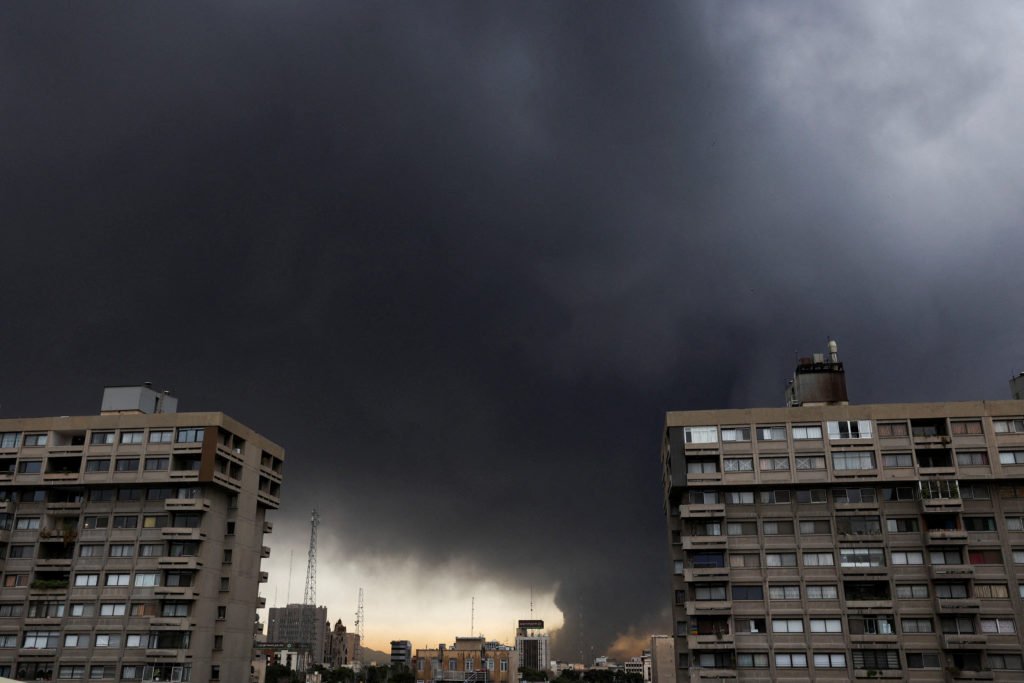
  • Why did U.S. bombings cause ‘acid rain’ to fall in Iran? An atmospheric scientist explains

    Why did U.S. bombings cause ‘acid rain’ to fall in Iran? An atmospheric scientist explains

    This article originally appeared on The Conversation.

    Reports are emerging of black rain falling over parts of Iran in the hours after U.S.-Israeli airstrikes on oil depots on the weekend, with some outlets describing it as “acid rain.”

    Iranian residents have reported headaches, difficulty breathing, and oil-contaminated rain settling on buildings and cars. Iran’s Red Crescent Society warned rainfall following the strikes could be “highly dangerous and acidic.”

    WATCH: As Iran shows no signs of surrender, U.S. launches ‘most intense’ day of strikes

    As an atmospheric chemist and chemical engineer who researches air pollution, these reports are very worrying, and indicate much more than just acid rain.

    This rain would include acids but also likely a host of other pollutants that are harmful to humans and the environment in the short and long term. It may even be worse than the term “acid rain” conveys.

    More broadly, the thick clouds of toxic smoke over densely populated areas in Iran are also a major problem for anyone breathing this air right now.

    What could this ‘acid rain’ be?

    One of the primary ways air pollutants are removed from the atmosphere is through rain. When you have significant levels of pollutants in air they will be collected by falling water droplets and “rain out” of the atmosphere.

    That’s why we are getting these reports of black rain falling from the sky after the oil depots were struck – evidence of just how contaminated the local air must be.

    To me, this black rain indicates toxic pollutants such as hydrocarbons, ultrafine particles known as PM2.5, and carcinogenic compounds called polycyclic aromatic hydrocarbons (PAHs) have made their way into the rain.

    On top of this there would be a mix of other unknown chemicals, likely including heavy metals and inorganic compounds from the building materials and everything else caught up in the initial explosions and the ensuing fires.

    The smoke from the bombed oil depots would also contain sulfur dioxide and nitrogen dioxide, which are precursors to forming sulfuric acid and nitric aid in the air. This acid then makes its way into water droplets, and is responsible for what we conventionally label acid rain.

    The acid rain we heard so much about in past decades was primarily caused by sulfur dioxide produced by burning fossil fuels. Sulfur is naturally present in crude oil but is now mostly removed at the refining stage.

    Aside from the rain, it’s worth remembering that all smoke is toxic; if you can smell it, it can be at levels that are harming you.

    So that level of black smoke seen over densely populated areas in Iran is extremely worrying and can cause chronic short- and long-term health problems.

    What are the potential health risks?

    In the short term, people exposed to this black smoke in Iran might have headaches or difficulty breathing, especially if they have asthma or lung disease.

    Vulnerable populations – such as older people, young children and people with disabilities – are more at risk. Exposure to toxic air pollution during pregnancy can also lead to lower birth weights.

    In the longer term, exposure to the compounds in the air and in this black rain is potentially increasing people’s cancer risk. When ultrafine particles (PM2.5) are inhaled, they can get into your bloodstream. This has been linked to a range of health impacts including cancers, neurological conditions (such as cognitive impairment), and various cardiovascular conditions.

    Once these heavily polluted plumes of air have their pollutants rained into natural waterways, they can also start to affect aquatic life, as well as human drinking water sources.

    Another issue is that this black rain is depositing these compounds on buildings, roads and surfaces, which means they can make their way back into the air when disturbed by strong winds.

    A legacy of war

    There has been growing attention on the environmental impact of conflict worldwide. Part of this has emerged in the wake of past wars in Iraq and Kuwait, where there was large-scale deconstruction of oil wells and the use of burn pits.

    We now know there are long-term health impacts on returning service people, including Australians. So we can assume local populations are also profoundly affected.

    In the short term, people exposed to this smoke and black rain in Iran should try to wear masks or face coverings, seek refuge from it, stay indoors, close doors and windows, and try to keep the air out. It is also important to clean hard surfaces where possible, particularly indoors, to reduce exposure to deposited pollutants.

    On the ground, of course, this may be very difficult to achieve in the chaos of war.

    This article is republished from The Conversation under a Creative Commons license. Read the original article.

    A free press is a cornerstone of a healthy democracy.

    Support trusted journalism and civil dialogue.


  • U.S. to release 172 million barrels of oil from Strategic Petroleum Reserve as prices surge

    U.S. to release 172 million barrels of oil from Strategic Petroleum Reserve as prices surge

    Energy Secretary Chris Wright said Wednesday that the United States will release 172 million barrels from the Strategic Petroleum Reserve as part of the International Energy Agency’s efforts to combat steep oil prices amid the Iran war.

    WATCH: Can tapping into oil reserves help stabilize prices?

    Wright said the release would begin next week and take about 120 days “to deliver based on planned discharge rates.” He also said the U.S. would replace about 200 million barrels within the next year.

    The U.S. had more than 415 million barrels in the SPR as of the end of last month.

    President Donald Trump previously downplayed the importance of using reserve oil, but confirmed earlier Wednesday that his administration would “reduce it a little bit” and then fill it back up.

    “Trump is doing what I called for three days ago, after needlessly sowing additional chaos and uncertainty,” Senate Minority Leader Chuck Schumer said in a statement Wednesday. He added that Trump has “already created a lot more problems than this will solve – from the Strait of Hormuz blockade to his poorly planned and reckless war.″

    Trump frequently criticized the administration of former President Joe Biden for tapping the reserve to try and bring down gas prices.

    A free press is a cornerstone of a healthy democracy.

    Support trusted journalism and civil dialogue.


  • Trump administration starts new process to try to replace tariffs struck down by Supreme Court

    Trump administration starts new process to try to replace tariffs struck down by Supreme Court

    WASHINGTON (AP) — The Trump administration on Wednesday opened a new trade investigation into manufacturing in foreign countries — an effort that comes after the Supreme Court struck down President Donald Trump’s previous use of tariffs by declaring an economic emergency.

    Trump and his team have made clear that they’re seeking to replace the hundreds of billions of dollars in lost revenues after the Supreme Court’s February ruling by using different laws to establish new tariffs.

    READ MORE: Multiple states sue over Trump’s new global tariffs imposed after his Supreme Court loss

    In this case, the administration is starting investigations under Section 301 of the Trade Act of 1974, which could eventually lead to new import taxes. But U.S. Trade Representative Jamieson Greer, in a Wednesday call with reporters, said he didn’t want to prejudge the outcome of the process.

    “The policy remains the same — the tools may change depending on, you know, the vagaries of courts and other things,” said Greer, stressing that the goal was to protect American jobs.

    The start of the process to fully replace Trump’s prior tariffs could invite a return of much of the drama that rattled the global economy last year. The since-overturned tariffs led to new frameworks with U.S. trade partners — and it’s unclear what impact a new set of import taxes could have on those agreements. Greer described the trade frameworks as standing on their own and suggested they were separate from the new investigation.

    This new set of tariffs could play out against the backdrop of a war in Iran and midterm elections in which Democrats are running against Trump’s Republican allies by emphasizing that the public is owed tariff refunds following the Supreme Court decision.

    Greer said that the investigation would examine excess industrial capacity and government backing that could give foreign companies an unfair advantage over U.S. companies.

    The entities subject to the investigation include China, the European Union, Singapore, Switzerland, Norway, Indonesia, Malaysia, Cambodia, Thailand, South Korea, Vietnam, the self-governing island of Taiwan, Bangladesh, Mexico, Japan and India. The government is looking for what it deems to be persistent trade surpluses with the U.S. and policies such as subsidies and the suppression of workers’ wages, among other factors.

    The administration is also rolling out a Section 301 investigation to ban the importing of goods made by forced labor.

    Greer indicated that there could be additional Section 301 investigations over issues such as digital service taxes, pharmaceutical drug pricing and ocean pollution, among other possibilities. The Commerce Department has separate trade investigations under Section 232 of the 1962 Trade Expansion Act.

    There are timeline pressures for the administration to complete its investigations. The administration has imposed 10% tariffs on foreign-made goods under section 122 of the 1974 Trade Act, but those expire after 150 days on July 24. Trump said he planned to raise that import tax to 15%, but he has yet to do so.

    Greer said the administration is “keying off” the new investigation based on the 150-day deadline, saying that the goal is to bring “potential options” to Trump as soon as possible.

    Greer said the investigations would be separate from the trade frameworks announced last year by Trump that set baseline tariff rates, which led to 15% rates charged on goods from the European Union, Japan and South Korea, among other places, that have since been overturned by the Supreme Court. Still, he suggested that the frameworks could play a factor.

    “My sense is that these countries continue to want to deal, and President Trump continues to want the deal,” Greer said, adding that since tariffs are in play the commitments that the countries have made and the implementation of the frameworks would be considered as they “bump” against the demands of the Section 301 process.

    AP writer Mae Anderson contributed to this report.

    A free press is a cornerstone of a healthy democracy.

    Support trusted journalism and civil dialogue.


  • South Africa summons new U.S. ambassador to explain criticism as rift deepens

    South Africa summons new U.S. ambassador to explain criticism as rift deepens

    JOHANNESBURG (AP) — The new U.S. ambassador to South Africa has been summoned to explain his criticism, the country’s foreign minister said Wednesday, as a diplomatic rift continues over foreign policy that the Trump administration describes as anti-American and domestic policies it calls anti-white.

    Ambassador Leo Brent Bozell III was summoned after speaking at a meeting of business leaders on Tuesday, where he challenged the South African government over its diplomatic ties with Iran and its affirmative action laws that advance opportunities for Black people ahead of other races.

    READ MORE: How Trump’s support for white South Africans led to a U.S. boycott of the G20 summit

    The rift has grown between the former allies since President Donald Trump returned to office. Ties have plunged to their lowest point since the end of apartheid, or white minority rule, in 1994. Trump has been critical of South Africa’s Black-led government.

    Bozell, a conservative activist appointed by Trump, took up his role in Pretoria last month.

    In his first detailed public comments on U.S.-South Africa ties since arriving, Bozell said South Africa should change some of its affirmative action laws that were designed to redress the inequalities of South Africa’s decades of racial segregation under apartheid. He compared the laws to race laws that oppressed Black people during apartheid.

    Bozell also called for changing a land law that allows the South African government to expropriate land without compensation in some circumstances.

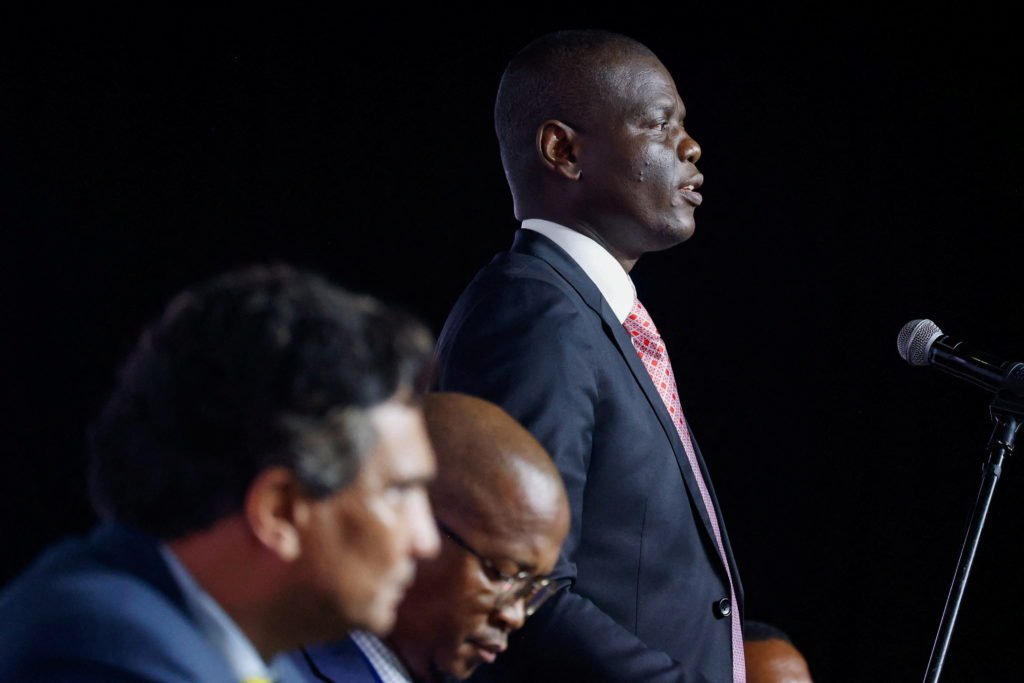
    “While South Africa welcomes active public diplomacy and the strengthening of bilateral ties, we emphasize that such engagements must remain consistent with established diplomatic etiquette and international protocols,” Foreign Minister Ronald Lamola told a press conference. “In this regard, we have called in the ambassador of the United States, Ambassador Bozell, to explain his undiplomatic remarks.”

    Foreign ministry director-general Zane Dangor said Bozell met with South African officials and the ambassador “apologized and expressed regret.”

    There was no immediate comment from the U.S. government.

    Trump’s central allegation against the South African government is his baseless claim that minority white farmers are being targeted in a campaign of violence and killings. Even some conservative white Afrikaner groups denied the Trump administration’s claims.

    Trump confronted South African President Cyril Ramaphosa with those claims at a dramatic White House meeting last year that underlined the strained relationship.

    Bozell did backtrack on one comment earlier Wednesday. At the meeting of business leaders, he criticized a South African court ruling that decided an apartheid-era chant repeated by a far-left opposition political party was not hate speech, despite it having the phrase “kill the Boer.” Boer refers to a white farmer in South Africa.

    The Trump administration has branded the chant as anti-white hate speech. Bozell reiterated that view Tuesday: “I am sorry, I don’t care what your courts say, it’s hate speech.” He said in an X post Wednesday his comment reflected his personal view and “the U.S. government respects the independence and findings of South Africa’s judiciary.”

    The Trump administration has taken other extraordinary steps against South Africa — its biggest trading partner in Africa — including expelling its ambassador to Washington last year and barring South Africa from meetings of the Group of 20 rich and developing nations in the U.S. this year.

    Bozell said he hadn’t come to “to pick a fight” but the U.S. had presented five requests to the South African government around a year ago to improve ties: distance itself from Iran, change parts of its affirmative action laws affecting American companies operating in South Africa, outlaw any expropriation of land without compensation, declare rural crime a priority and publicly condemn the “kill the Boer” chant.

    Bozell said the U.S. was frustrated it had not received any reply from South Africa on those requests.

    Imray reported from Cape Town, South Africa.

    A free press is a cornerstone of a healthy democracy.

    Support trusted journalism and civil dialogue.


  • Prosecutor says Rihanna, A$AP Rocky, 3 kids were home when woman charged with attempted murder fired

    Prosecutor says Rihanna, A$AP Rocky, 3 kids were home when woman charged with attempted murder fired

    LOS ANGELES (AP) — Rihanna, her partner A$AP Rocky, their three children and her mother were all at home when a woman now charged with attempted murder and many other felony counts is alleged to have fired at the property, a prosecutor said Tuesday.

    Ivanna Lisette Ortiz, 35, of Orlando, Florida, was charged with attempting to kill Rihanna, along with 10 counts of assault on a person with a semiautomatic firearm and three counts of shooting at an inhabited vehicle or dwelling, authorities said. No one was injured.

    The singing superstar and her rap star partner were together in a trailer on the property at the time of the Sunday afternoon shooting, while other family members and staffers were in the Beverly Hills-area home, Los Angeles County District Attorney Nathan Hochman said outside a court hearing.

    Inside court, Deputy Public Defender Jamarcus Bradford, Ortiz’s attorney, at first entered a plea of not guilty on her behalf, but then withdrew it in favor of postponing arraignment until March 25. She was ordered held on $1.8 million bail. Ortiz wore blue jail clothes with her blond hair in braids and spoke to the lawyer through a glass divider.

    Bradford didn’t talk to reporters outside court.

    The LA County Public Defender’s Office said in a statement that it could not comment on the pending case against Ortiz.

    “As in every case, we will work to ensure that our client receives the full protections guaranteed under the Constitution,” the statement said.

    The exterior of Rihanna’s residence is shown Monday in Beverly Hills, California. Photo by Damian Dovarganes/AP Photo

    Ortiz could get life in prison if convicted on all charges. All 14 counts against her are felonies. The three counts of firing at a dwelling were for Rihanna’s house, her trailer, and a neighbor’s house, prosecutors said. The 10 assault counts were for Rihanna and family, two staffers and two people in the neighboring house.

    “LA based celebrities should not be additionally worried because of this,” Hochman said, “in large part because of the response of the police.” He praised officers for arresting Ortiz soon after the shooting, several miles (kilometers) to the north in the suburb of Sherman Oaks.

    Judge Theresa McGonigle issued a protective order for Ortiz to stay away from Robin Fenty and Rakim Mayers — the legal names of Rihanna and A$AP Rocky — and their home. McGonigle also said Ortiz is not allowed to possess any firearms or ammunition along with several other conditions.

    The hearing was held in a courtroom a few floors from where Rocky went through a trial where he was acquitted just over a year ago. Rihanna was often in attendance, sometimes with their sons.

    And the lead prosecutor in the new case is Alexander Bott, the deputy district attorney who successfully prosecuted rapper Tory Lanez in a trial where he was convicted of shooting hip-hop star Megan Thee Stallion in the feet.

    Hochman would not say where any of the bullets landed, would not say how long Ortiz had been in California, or discuss her motivation or any connection to Rihanna, saying all were under investigation.

    Public records show her most recent address was in Orlando and that she has been a licensed speech pathologist for more than a decade.

    The Associated Press also sent emails seeking comment from Rihanna’s publicist and manager.

    In 2018, a man was accused of breaking into another home belonging to Rihanna in the Hollywood Hills and spending 12 hours there. The man pleaded no contest to felony counts of stalking and vandalism and a misdemeanor count of resisting arrest in 2019. He was sentenced to probation.

    A nine-time Grammy Award winner, Rihanna has 14 No. 1 hits on the Billboard Hot 100, including “We Found Love,” “Work,” “Umbrella” and “Disturbia.” She founded the makeup brand Fenty Beauty in 2017.

    She and A$AP Rocky announced the birth of their third child, a girl named Rocki Irish Mayers, in September.

    Associated Press Writer Christopher Weber contributed.

    A free press is a cornerstone of a healthy democracy.

    Support trusted journalism and civil dialogue.


  • Britain is ejecting hereditary nobles from Parliament after 700 years

    Britain is ejecting hereditary nobles from Parliament after 700 years

    LONDON (AP) — Centuries of British political tradition will end within weeks after Parliament voted to remove hereditary aristocrats from the unelected House of Lords.

    On Tuesday night members of the upper chamber dropped objections to legislation passed by the House of Commons ousting dozens of dukes, earls and viscounts who inherited seats in Parliament along with their aristocratic titles.

    Government minister Nick Thomas-Symonds said the change put an end to “an archaic and undemocratic principle.”

    “Our parliament should always be a place where talents are recognized and merit counts,” he said. “It should never be a gallery of old boys’ networks, nor a place where titles, many of which were handed out centuries ago, hold power over the will of the people.”

    The House of Lords plays an important role in Britain’s parliamentary democracy, scrutinizing legislation passed by the elected House of Commons. But critics have long argued that it is unwieldy and undemocratic.

    The case of Peter Mandelson, who resigned from the Lords in February after revelations about his friendship with the late sex offender Jeffrey Epstein, drew renewed attention to the upper chamber and the problem of lords behaving badly.

    READ MORE: A list of powerful men named in the Epstein files, from Elon Musk to former Prince Andrew

    The chamber currently has more than 800 members, making it the second-largest legislative chamber in the world after China’s National People’s Congress.

    For most of its 700-year history, its membership was composed of noblemen — almost never women — who inherited their seats, alongside a smattering of bishops. In the 1950s, these were joined by “life peers” — retired politicians, civic leaders and other notables appointed by the government, who now make up the vast majority of the chamber. Roughly 1 in 10 members are currently hereditary peers.

    In 1999, the Labour government of then-Prime Minister Tony Blair evicted most of the 750 hereditary peers, though 92 were allowed to remain temporarily to avoid an aristocrats’ rebellion.

    It was another 25 years before Prime Minister Keir Starmer’s current Labour government introduced legislation to oust the remaining “hereditaries.”

    The lords put up a fight, forcing a compromise that will see an undisclosed number of hereditary members allowed to stay by being “recycled” into life peers.

    The bill will become law once King Charles III grants royal assent — a formality — and the hereditary peers will leave at the end of the current session of Parliament this spring, completing a political process begun a quarter century ago. In Lords terms, that is speedy.

    Labour remains committed to eventually replacing the House of Lords with an alternative second chamber that is “more representative of the U.K.” If past experience is anything to go by, change will come slowly.

    “So, here we are at the end of well over seven centuries of service by hereditary peers in this Parliament,” Nicholas True, the opposition Conservative Party leader in the Lords, told the chamber.

    “Many thousands of peers served their nation here and thousands of improvements to law were made,” he said. “It wasn’t all a stereotypical history of reaction in ermine. Many of those people, no doubt, were flawed but for the most part, they served their nation faithfully and well.”

    A free press is a cornerstone of a healthy democracy.

    Support trusted journalism and civil dialogue.


  • Tornadoes kill 2 in northwestern Indiana and raze buildings in Kankakee, Illinois

    Tornadoes kill 2 in northwestern Indiana and raze buildings in Kankakee, Illinois

    KANKAKEE, Ill. (AP) — Major storms whipped up tornadoes that killed at least two people in northwest Indiana and leveled buildings in Kankakee, Illinois, authorities said Wednesday, as another round of rain, hail and strong winds made its way through the region.

    Several intense supercell thunderstorms moved across northern Illinois and northwestern Indiana on Tuesday, including one responsible for at least four tornadoes, according to the National Weather Service office in Chicago.

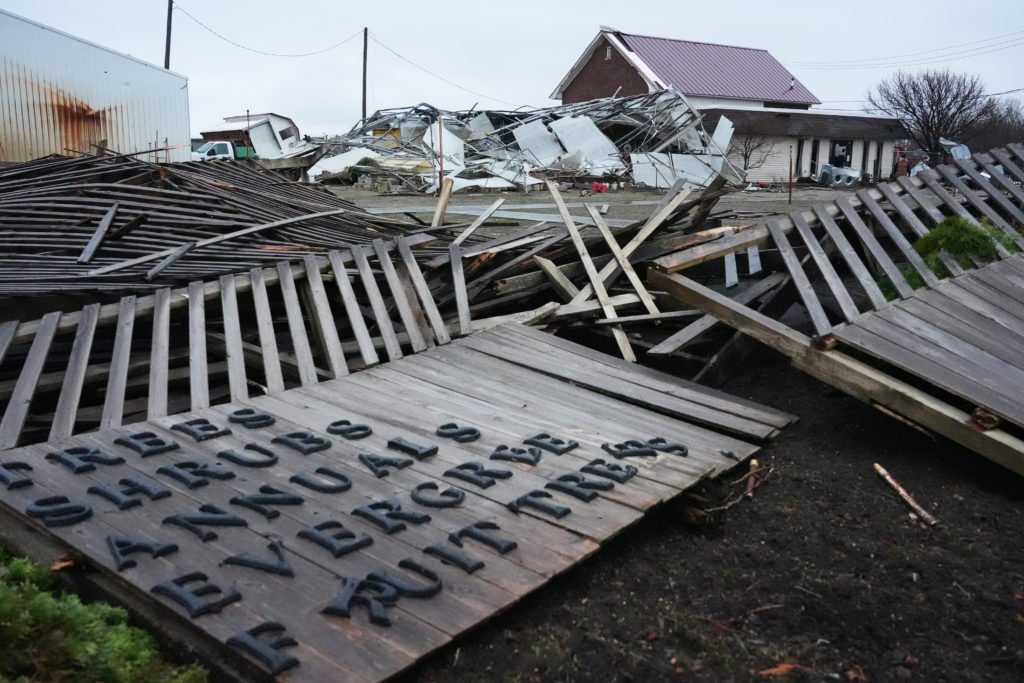
    The storms shattered windows, tore off roofs and smashed vehicles in Kankakee. Wood planks and other debris littered yards, streets and parking lots. A landscape and garden center was seriously damaged, some parts completely destroyed.

    Storms also dropped 1 to 2 inches (2.5 to 5 centimeters) of rain and left piles of hail in the Grand Rapids area in western Michigan, said Alex Manion, a weather service meteorologist in Detroit. Streets flooded, leaving a cars stranded with water up past their doors in some places.

    The weather service said crews are determining the strength and number of tornadoes, and that parts of Illinois, Indiana, Kentucky and Ohio remain under a tornado watch Wednesday.

    Suspected tornadoes last week killed four people in southwestern Michigan and two in eastern Oklahoma.

    A tornado leaves a small Indiana community in tatters

    The storm spawned a tornado that killed an elderly couple in their home in Lake Village, in northwestern Indiana, Newton County Coroner Scott McCord said. Their names have not been released.

    Crews rescued some who were trapped in their damaged homes, at least 70 utility poles were knocked down and many roads are unpassable, Newton County officials said Wednesday morning.

    “Please do not come here. Do not try to help right now,” Sheriff Shannon Cothran said in a video update Tuesday night in front of a destroyed Lake Village home.

    Laurie Postma, a spokesperson for the Lake Township Volunteer Fire Department, said the storm injured less than 10 people in Lake Village. Cothran said Wednesday that no other significant injuries have been reported but that search and rescue operations continue.

    Lake Village is about 60 miles (95 kilometers) southeast of Chicago and 25 miles (40 kilometers) west of Kankakee County, Illinois, where at least one tornado struck Tuesday night.

    Resident says not all warning sirens sounded

    David Ferris, of Lake Village, said he, his wife, and their dogs “rode it out in our downstairs bathtub.” They were unscathed, except for losing power. Ferris, who is a paramedic, helped to rescue and treat injured people.

    “We had another house where a guy crawled out,” Ferris said. “He was having some trouble breathing because he was covered in house insulation.”

    Ferris said a Family Dollar store and a gas station were destroyed, and multiple large trees were uprooted.

    Jennifer Telford, 49, said she hid in her basement in Lake Village, from where she followed news reports of the storm. She didn’t hear the tornado that struck to the south, but said she heard the hail as it pelted her roof.

    “The siren in town didn’t go off,” she said. “The sirens outside town did.”

    She said power had been restored at the truck stop where she works Wednesday morning but that elsewhere, “everything is closed due to the downed trees and power lines.”

    About 4,300 customers in Lake Village and surrounding communities were without power late Wednesday morning, down from more than 11,000 customers at the peak of the storm, the Northern Indiana Public Service Co. said on its website.

    Giant hailstones pelted an Illinois community

    Utility poles are damaged in the aftermath of a powerful storm that ripped through the area a day earlier in Kankakee, Illinois on Wednesday. Photo by Nam Y. Huh/AP Photo

    In Kankakee, the storms produced exceptionally large hail, ranging from 3 to 5 inches (7.6 to 12.7 centimeters) in diameter. One 6-inch (15.2-centimeter) diameter hailstone may have set a new state record, the weather service said.

    A tornado touched down near the Kankakee fairgrounds before traveling northeast into the small suburb of Aroma Park, where it caused extensive damage, the Kankakee County Sheriff’s Office said.

    Nine people in Kankakee County suffered minor injuries, officials there said at a news conference Wednesday. Kevin Birk, a meteorologist in the NWS Chicago office, confirmed at least one tornado touched down in the area Tuesday evening.

    Newlywed Cassidy Sinwelski, 23, said she and her husband were aware of the tornado watch in their Kankakee neighborhood and were expecting a run-of-the-mill storm until her husband spotted dark clouds barreling toward them.

    “We went into the bathroom, got a piece of plywood and within minutes, I closed my eyes, the lights flickered, and we just — there was nothing,” Sinwelski said.

    Then she heard loud rumbles and the sound of shattering glass.

    “I just kept crying out for God, because I didn’t know what else to do,” she said.

    The storm shattered a longstanding garden center’s spring plans

    Tholens’ Garden Center on the south side of Kankakee was hit hard by the tornado, owner Nancy Tholen said Wednesday.

    “We have multiple buildings, and lots of them are destroyed,” Tholen said. “This is our 50th year in business, and this was not how we planned to kick off our spring.”

    Staff had just left for the day when the tornado hit Tuesday afternoon, she said. Thankfully, no one was hurt.

    “You know, we make our living in the next 12 weeks,” Tholen said. “We’ll figure something out to open, but it’s just … it’s crazy. But again, everybody’s safe, so we’re thankful for that.”

    In Aroma Park, just southeast of Kankakee, restaurateur and village trustee Kathleen Slavin watched the destruction of the tornado and “baseball-sized hail” from the village hall, where she had been attending a village board meeting.

    “It took down trees that are probably over a hundred years old, huge trees came down. It took out main power lines,” Slavin said.

    Her friend, 69-year-old Ruth Denoyer, swept up glass after the tornado blew out her windows and pummeled her home.

    “It took our whole garage down, our pool, we have broken windows in the house, glass everywhere.” Denoyer said. “But we still have a roof, unlike some people out here.”

    McCormack reported from Concord, New Hampshire. Associated Press journalists Hallie Golden in Seattle; Sarah Brumfield in Cockeysville, Maryland; Hannah Schoenbaum in Salt Lake City; Margery Beck in Omaha, Nebraska; John O’Connor in Springfield, Illinois; and AP video journalist Laura Bargfeld in Lake Village, Indiana, contributed.

    A free press is a cornerstone of a healthy democracy.

    Support trusted journalism and civil dialogue.


  • Virginia has a data center boon. Officials debate whether it’s time to scrap its tax breaks

    Virginia has a data center boon. Officials debate whether it’s time to scrap its tax breaks

    RICHMOND, Va. (AP) — Nearly two decades ago, Virginia gave tech companies a tax break on equipment and software, and they began to build. The state became a data center hub, and they kept building. Residents bemoaned the noise while they built some more. Artificial intelligence boomed, and the power grid strained — still, more building.

    Now, amid a growing national pushback on data centers, Virginia senators have voted to end a projected $1.6 billion annual tax break, requiring the industry to resume paying a minimum 5.3% sales tax. The proposal has left some opponents warning that it would bring construction of data centers in Virginia to a screeching halt.

    “We have now left the ‘NIMBY’ phase: Not In My Backyard,” Republican state Sen. Mark Obenshain said last month. “And we’ve entered the ‘banana’ phase: Build Absolutely Nothing Anywhere Near Anything.”

    Over the past 18 years, Virginia became the world’s largest data hub. The debate taking place there comes as dozens of communities nationwide are fighting data centers in local zoning meetings, politicians are growing anxious about AI’s effect on household electricity bills and lawmakers are considering reducing tax breaks — or scrapping them altogether.

    The state tax department says the industry has invested more than $80 billion in Virginia and created thousands of jobs over the past two years. Obenshain is not the only one concerned about taxing it. The Data Center Coalition, which represents tech giants, said the tax would “effectively halt investment” from the industry. Just this month, Amazon Data Services bought land from George Washington University in northern Virginia for a data center, officials said.

    A big debate over a big tax break

    It’s far from guaranteed that the state Senate’s proposal will pass the House. But it’s already causing infighting among Democrats, fueled by a looming budget deadline.

    Gov. Abigail Spanberger’s office said she was wary of “going back on Virginia’s commitments to businesses that have invested in the Commonwealth.”

    Democratic Sen. L. Louise Lucas, who chairs the finance committee and supports the tax proposal, retorted on X: “Gov. Spanberger thinks our chicken isn’t cooked — then what is the Senate supposed to pluck out of our budget? Raises for teachers, health insurance assistance, transit support, a tax rebate, or childcare slots?”

    Lucas’ proposal reflects growing pushback nationwide as the aisles of server racks in data centers have gotten increasingly large and seemingly endless, with campuses of server warehouses, electrical substations and backup diesel generators dwarfing the footprints of factories and stadiums. Some need more power than a small city, more than any utility has ever supplied to a single user.

    The regular perks for data centers

    Tax breaks have been a regular perk for developers of data centers, both big and small. State and town officials have seen them as an economic boon and competed with each other to land them, in part by granting property tax abatements and sales tax exemptions.

    Those tax breaks let developers spend money tax-free to equip a data center with pricey things like servers, routers and HVAC equipment and, in some cases, to buy the materials to build them.

    In Virginia, House Democrats are pushing to keep the tax breaks in place, and are sparring with senators. Lawmakers negotiating the budget have until Saturday to agree on and pass a spending plan, when their legislative session is set to end.

    The move to end the tax breaks won bipartisan support in the Senate, with 21 Democrats and seven Republicans voting for it.

    Sen. Richard Stuart, a Republican, said he didn’t think repealing the tax break would affect tech’s rush to build in Virginia: “This ain’t going to slow this train down one iota.”

    States rethinking tax breaks for data centers

    Other states have moved to curtail such tax breaks, or add conditions.

    In Minnesota, lawmakers last year removed the sales tax exemption on the purchase of electricity by the largest data centers, imposed a fee for electricity use and toughened regulations, including scrutiny over their water use.

    Lawmakers in Washington state are advancing legislation this year that would keep the tax break for new data centers, but get rid of it for existing data centers that spend money to replace or upgrade equipment. That is worth $83 million for the state in the first year.

    In Illinois, Gov. JB Pritzker last month called for a two-year “pause” on data center tax breaks, citing rising household electric bills, while Arizona Gov. Katie Hobbs said she wants to eliminate the state’s sales tax exemption completely. She called it a “corporate handout.”

    Bills to repeal the tax breaks have been introduced this year in Arizona, Michigan and Georgia, even as tech companies have proven adept at lobbying in statehouses.

    Lawmakers in Georgia passed a bill imposing a two-year pause on the state’s sales tax exemption for building and equipping data centers, but Georgia Gov. Brian Kemp in 2024 vetoed it.

    Virginia senators still face opposition. The International Brotherhood of Electrical Workers lobbied at the statehouse, urging lawmakers to protect data centers.

    “We need this industry,” Dorian Hargrave, a Virginia-based electrical worker, said in a statement. “If we lose it, our economy is going to take a very big hit.”

    A free press is a cornerstone of a healthy democracy.

    Support trusted journalism and civil dialogue.


  • North Korean leader Kim watches cruise missile tests with his daughter

    North Korean leader Kim watches cruise missile tests with his daughter

    SEOUL, South Korea (AP) — North Korean leader Kim Jong Un and his teenage daughter observed tests of strategic cruise missiles fired from a warship, state media reported Wednesday, as North Korea threatened responses to U.S.-South Korean military drills.

    Images sent by the Korean Central News Agency showed the two in a conference room looking at a screen showing weapons being fired from the Choe Hyon, a year-old naval destroyer.

    Kim Jong Un watched the missiles launches via video on Tuesday and underscored the need to maintain “a powerful and reliable nuclear war deterrent,” KCNA reported in a dispatch that did not mention his daughter.

    The girl, reportedly named Kim Ju Ae and about 13, has accompanied her father at numerous prominent events including military parades and weapons launches since late 2022. South Korea’s spy agency assessed last month Kim Jong Un was close to designating her as his heir.

    This photo provided by the North Korean government shows its leader Kim Jong Un, front right, and his daughter, second right at front, watch what it says the cruise missiles launches from the naval destroyer, the Choe Hyon, via video, in North Korea on Tuesday. Photo by Korean Central News Agency/Korea News Service via AP

    KCNA said the missiles hit target islands off North Korea’s west coast. It quoted Kim Jong Un as saying the launches were meant to demonstrate the navy’s strategic offensive posture and get troops familiarized with weapons firings.

    Kim Jong Un observed similar cruise missile launches from the Choe Hyon in person last week, but his daughter was not seen at that appearance.

    Tuesday’s missile firings came after the start of the springtime U.S.-South Korean military drills that North Korea views as an invasion rehearsal.

    On Tuesday, Kim Jong Un’s sister and senior official, Kim Yo Jong, warned the drills reveal again the U.S. and South Korea’s “inveterate repugnancy toward” North Korea. She said North Korea will “convince the enemies of our war deterrence.”

    The 11-day Freedom Shield drill that began Monday is largely a computer-simulated command post exercise and will be accompanied by a field training program. North Korea often reacts to the two sets of training with its own weapons tests.

    A free press is a cornerstone of a healthy democracy.

    Support trusted journalism and civil dialogue.