Category: World

  • How some states are reviving a push to tax the rich

    How some states are reviving a push to tax the rich

    PROVIDENCE, R.I. (AP) — Chuck Collins figures he won life’s lottery by inheriting vast sums of money through his great-grandfather Oscar Mayer’s processed meat company, but rather than fight to protect every dime Collins has helped push to hike taxes on the ultrarich like himself.

    He was successful in helping implement a higher tax in Massachusetts on income over $1 million, and the idea has already taken hold in a handful of other blue states, including California, Maryland, Minnesota and New Jersey. Lawmakers in the state of Washington, which doesn’t have an income tax, could send the governor this week a measure that would impose one on million-dollar earners.

    “I think people are waking up to the harms of these inequalities,” said Collins, a founding member of the group Patriotic Millionaires, which calls for higher taxes on the country’s super affluent. “Including people who have wealth, who say, if we keep going down this road, it ain’t going to end well for anybody.”

    Washington could be next to tax millionaire income

    Since a state Supreme Court decision nearly a century ago shot down an income tax, Washington has stood out as being one of few states controlled by Democrats without a tax on wages or salaries — though it does tax certain investment proceeds.

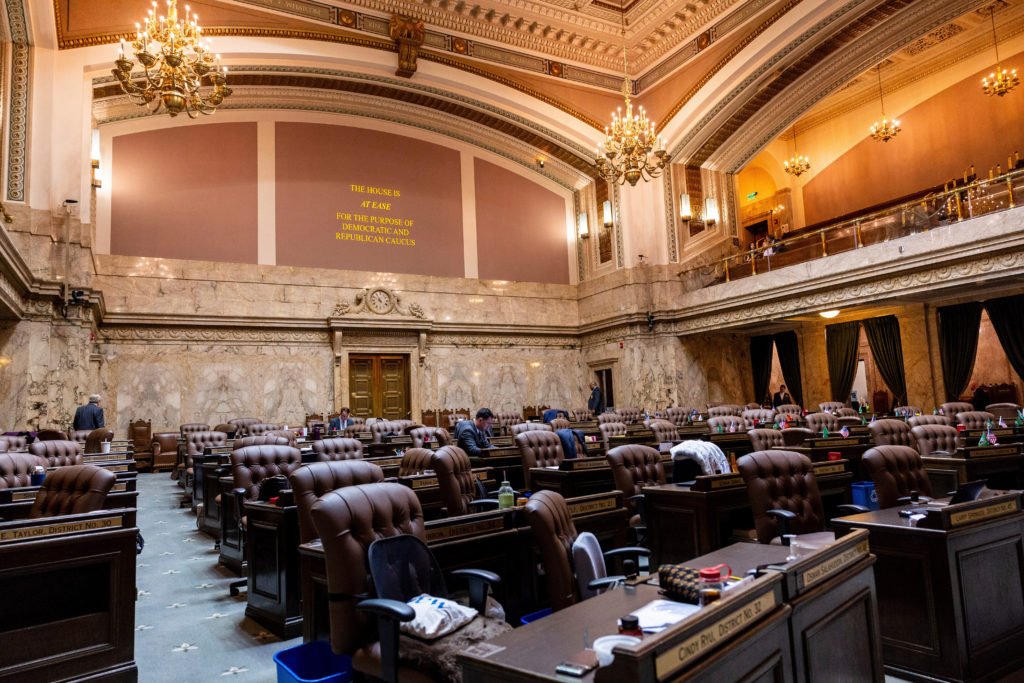
    Facing a budget shortage, lawmakers are debating a proposal that would create a nearly 10% annual tax on personal earnings over $1 million. If adopted, the tax would collect billions of dollars of new revenue that would be designed to pay for free K-12 school meals, childcare services, a family tax credit and eliminate sales taxes on personal care items such as shampoo.

    The state House adopted it this week after an all-night session deliberating amendments to the proposal. Now, it goes back to the Senate, which passed a version previously. Democratic Gov. Bob Ferguson has indicated support if the Legislature, which is controlled by his party, can send it to him before it adjourns Thursday.

    “Washington is a state that has had an extremely regressive tax structure for 93 years,” House Majority Leader Joe Fitzgibbon, a Democrat, said in an interview. “It falls very heavily on working and middle class people in our state.” He said that if the change is adopted, it will help. “We don’t need to be a tax haven,” he said.

    Others, including GOP lawmakers, caution that taxes on the wealthy are not a comprehensive solution to addressing worrisome state revenues and can drive away businesses.

    Colin Hathaway, a millionaire businessman in Washington, said he’s concerned the proposed tax would treat the money earned by his roofing company as income, even though he’s putting most of it back into the business. He was already hit by the state’s previous move to hike capital gains taxes, and said an additional tax could force him to move way from the state where his high school-aged children grew up.

    “There’s a strong incentive to not be doing business here,” he said.

    If the measure is adopted, it’s likely to be challenged in court and with a ballot measure.

    Momentum in blue states

    With affordability a hot topic in statehouses this session, a handful of progressive states are at least considering some kind of wealth tax.

    Perhaps the most ambitious tax-the-rich effort is taking place in California – a state that already taxes its millionaire class. Advocates are working on a ballot measure that would place a one-time 5% tax on the assets of those with a $1 billion net worth. The proposal, backed by a large health care union, would use the extra revenue to backfill federal funding cuts to health services for lower-income people that were signed by President Donald Trump last year.

    For critics, the wealth tax effort in California is the latest example of how the push to tax the rich in the U.S. is no longer about finding solutions to raise revenue but instead now backed by those who believe excessive wealth should be reduced or even erased, said Jared Walczak, a senior fellow at the Tax Foundation.

    “You see that in the language around something like the California wealth tax, where the ballot language itself talks about it being a tax on sustaining excessive accumulations of wealth,” Walczak said.

    Elsewhere, Rhode Island legislators are debating a budget proposal – backed by Democratic Gov. Dan McKee – that would enact higher taxes on residents earning $1 million or more.

    In Michigan, organizers are working to collect enough signatures to get a ballot initiative in front of voters in November asking them to approve replacing the state’s current flat tax. Under the proposal, Michigan would place an additional 5% tax on those who make over $500,000 individually or $1 million for joint filers. The initiative, which is backed by the state’s board of education, would direct the new revenue to help fund K-12 schools.

    And New York City Mayor Zohran Mamdani has reupped his push for New York state to raise taxes on the rich — though he faces opposition from Democratic Gov. Kathy Hochul. A similar call has been made by Chicago Mayor Brandon Johnson, but the Illinois Statehouse so far has not moved on imposing a millionaire tax.

    Red states move in opposite direction

    The recent push by left-leaning leaders in blue states contrasts with what’s being done in many Republican-led states, which have been more critical of passing higher taxes on their richest residents and have moved to abolish or significantly reduce personal income taxes.

    Eight states have no income tax at all, and Walczak said the gap between states seeking tax relief and those seeking higher taxes on the wealthy “is larger than it has been for decades.”

    Still, questions remain about whether such cuts result in spiking other taxes or eliminating funding for services.

    “I think most Americans are pretty fed up because I think they understand that there’s really two tax systems. There’s one for your average person. You’re a nurse? You’re firefighter? Every two weeks you pay taxes. And then for the super wealthy, there’s all these tax breaks and all these special loopholes,” said David Kass, executive director of the left-leaning advocacy group Americans for Tax Fairness.

    Massachusetts is often brought up in the debate over the effectiveness of millionaire taxes. Voters passed the Fair Share Amendment in 2022, which added a 4% surtax on income over $1 million; the threshold has risen annually for inflation. To date, the amendment has collected $6 billion for education and transportation, according to the state’s Executive Office for Administration and Finance.

    “It’s good for everybody, in a time of grotesque inequality, for wealthy people to chip in a little bit more,” said Collins, Oscar Mayer’s great-grandson. “Especially at a time when others are just struggling to keep up.”

    Attanasio reported from Seattle and Mulvihill from Haddonfield, New Jersey.

    A free press is a cornerstone of a healthy democracy.

    Support trusted journalism and civil dialogue.

  • As another shutdown affects travelers, is privatizing TSA screenings a solution?

    As another shutdown affects travelers, is privatizing TSA screenings a solution?

    Long security lines snaked into baggage claim areas and parking garages at some U.S. airports this weekend, a possible indicator of more widespread travel problems as the latest government shutdown drags on.

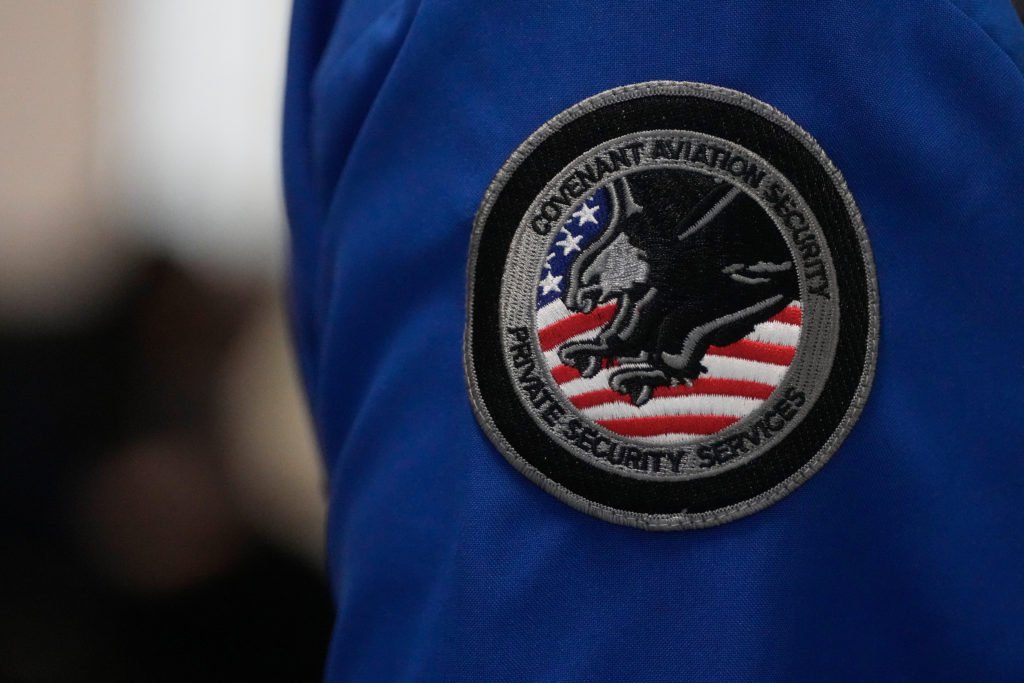
    That kind of disruption, while not yet widespread, is not a concern that typically surfaces at San Francisco International Airport, the largest of nearly two dozen U.S. airports where screening checkpoints are staffed by private contractors under a little-used federal program that allows airports to outsource security screenings while maintaining TSA oversight.

    Because contractors’ pay comes from a federal contract, it often continues even when the government shuts down.

    “The money’s already been allocated, the payments have already been made, and that continues without interruption,” SFO spokesperson Doug Yakel told The Associated Press. “That is a very nice place to be.”

    The contrast draws attention to a long-running debate in the aviation industry: Can private contractors operating under TSA oversight provide a stopgap — and shield airport security operations from the political impasses that can disrupt U.S. air travel?

    Some aviation experts see the TSA screening program as a potential model for keeping security lines moving with fewer disruptions during shutdowns. At SFO, that system helped maintain screening operations during last year’s record 43-day shutdown, Yakel said.

    But critics caution that privatization is not a silver bullet — and could introduce new risks. The union representing federal screeners argues that moving operations to private companies could erode job protections and reduce pay and benefits for workers already facing high turnover amid demanding conditions.

    How the program works

    TSA’s screening partnership program allows airports to use private security companies chosen by the federal government to run checkpoints while TSA retains authority over procedures and oversight. The agency says private security screeners receive the same security background check and must meet the same medical requirements as prospective federal security screeners.

    In addition to SFO, other participating airports include Kansas City International Airport, Atlantic City International Airport and Orlando Sanford International Airport.

    The vast majority of the nation’s roughly 400 commercial airports, meanwhile, rely on federal screening officers employed directly by TSA. During shutdowns, those workers must continue reporting for duty even though they stop getting paid — a dynamic that has historically led to higher absenteeism and slower-moving checkpoints the longer a shutdown lasts.

    The current partial shutdown affects only the Department of Homeland Security, which includes TSA. Democrats in Congress refused to fund the department over objections to its immigration enforcement tactics. The lapse marks the third shutdown in less than a year to leave TSA workers temporarily without pay — and once the government reopens, to have to wait for backpay.

    Those disruptions can ripple through the travel system, cascading problems across already crowded flight schedules. The strain is especially acute this time of year as airlines and airports brace for what they expect will be one of the busiest spring break travel seasons on record.

    San Francisco’s airport is a ‘litmus test’

    Aviation security expert Sheldon Jacobson, whose research contributed to the design of TSA PreCheck, said the program’s success at SFO, a large international airport, shows that privatization “is something that needs to be explored.”

    SFO is among the top 15 busiest airports in the U.S. when measured by passenger traffic. A major hub for international travel, it is the second-busiest airport in California behind Los Angeles International Airport.

    “It’s operated just as well as any other airport,” Jacobson said, adding that SFO’s multiple concourses and status as a hub for United Airlines demonstrate that even large-scale operations can be managed effectively under this model. “If SFO is the litmus test for delivering this privatized product, then many other airports can do it, too.”

    Jacobson noted that most airports currently using the program are smaller, but “the scale issue should not be a limiting factor,” and he called for a broader conversation on how such options could deliver government services efficiently and benefit travelers.

    “Of course TSA would have oversight. It’s not like they’re freewheeling on their own,” he said of privately contracted screeners. “We might as well use a government shutdown that affects air travel as an opportunity to begin that discussion.”

    Why TSA’s union opposes the private model

    The American Federation of Government Employees, which represents TSA officers, has long opposed privatization.

    “We will never advocate for any privatization of any federal employees. We don’t believe that’ll work,” Johnny Jones, secretary-treasurer of the TSA union’s bargaining unit, said in a brief phone call this week.

    In a blog post on its website, the union argues it could weaken accountability for aviation security — one of the reasons Congress chose to federalize airport screening after the Sept. 11 attacks.

    The union also warned that private companies could face pressure to cut costs in ways that affect training, staffing levels and employee benefits. Relying on contractors, the union says, could create inconsistencies between airports if different companies operate checkpoints across the country, potentially complicating oversight of a system designed to maintain uniform national security standards.

    “We have to remember the TSA was created in the wake of 9/11 when there were no security standards or very minimal security standards,” said airline industry analyst Henry Harteveldt, president of Atmosphere Research Group. “The TSA came around, they established very stringent airport screening security requirements, which exist to this day.”

    Others say there are simpler ways to address the shutdown problem.

    Industry groups — including the U.S. Travel Association, Airlines for America and the American Association of Airport Executives — are urging Congress to pass legislation that would ensure aviation workers are paid regardless of the government’s funding status.

    “Every time Washington fails to fund the government, these essential workers pay the price. So do travelers. So does the economy,” Geoff Freeman, U.S. Travel Association’s president, said in a statement. “That is why America’s travel industry has come together, because this workforce is too important, and the stakes are too high, for this to keep happening.”

    An unintended benefit of outsourcing screeners

    Republican lawmakers have pushed in recent years to dismantle the agency entirely and replace its screening functions with private contractors overseen by the federal government.

    Last year, two GOP senators introduced the “Abolish TSA Act,” which would phase out the agency and transfer oversight to a new office charged with aviation security. Supporters of the long-shot legislation say privatized screening could be more efficient and less vulnerable to shutdowns.

    TSA leadership has signaled an openness to discussion. Speaking at a House Appropriations subcommittee hearing last year, Ha Nguyen McNeill, a senior official performing the duties of TSA administrator, said “nothing is off the table” regarding potential privatization.

    “If a new privatization scheme makes sense, then we’re happy to have that discussion to see what we can come up with,” McNeill said. “It’s not an all-or-nothing game.”

    At SFO, officials say its screening model was adopted more than 20 years ago for reasons unrelated to government shutdowns. But with shutdowns in recent years growing longer and more disruptive, the airport says its arrangement has revealed an unintended benefit: fewer staffing disruptions at checkpoints.

    “The benefits, I think, are compelling,” Harteveldt said. “The real issue is making sure that any vendor, any partner to the TSA, upholds the strict standards that TSA has established and works with TSA to ensure that screening remains efficient and finds ways to make it even better.”

    Associated Press video journalist Haven Daley contributed from San Francisco.

    A free press is a cornerstone of a healthy democracy.

    Support trusted journalism and civil dialogue.

  • José Antonio Kast sworn in as Chile’s president, in sharpest shift to the right since Pinochet

    José Antonio Kast sworn in as Chile’s president, in sharpest shift to the right since Pinochet

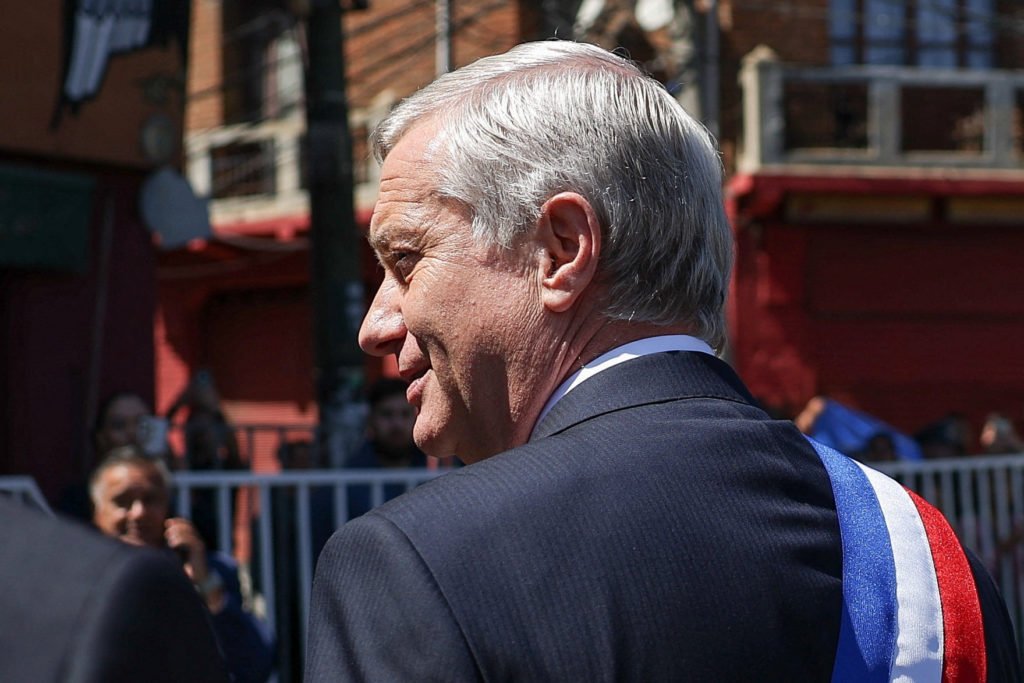
    VALPARAÍSO, Chile (AP) — Far-right leader José Antonio Kast was sworn in as Chile’s new president on Wednesday, marking the Latin American nation’s most pronounced shift to the right since the return of democracy in 1990.

    In a ceremony at the National Congress in the coastal city of Valparaíso and attended by dozens of heads of state, Kast and his Cabinet took the oaths of office after a landslide victory in the 2025 elections.

    READ MORE: Ultra-conservative wins Chile election, will be most right-wing president since dictatorship

    Among those attending the ceremony were Argentina’s President Javier Milei, Panama’s President José Raúl Mulino, Ecuadorian President Daniel Noboa, and Spain’s King Felipe VI. Other guests included Nobel Peace Prize laureate María Corina Machado.

    There were several high-profile absences, including Presidents Luiz Inácio Lula da Silva of Brazil and Nayib Bukele of El Salvador. A modest U.S. delegation was led by Deputy Secretary of State Christopher Landau.

    After the newly appointed Senate President Paulina Núñez placed the presidential sash on Kast, the new Cabinet was sworn in. José Francisco Pérez Mackenna took the oath as chancellor, while María Trinidad Steinert became the minister of security and Fernando Rabat assumed office as minister of justice and human rights.

    Gabriel Boric, a left-winger who in 2022 became Chile’s youngest president at 36, has left office as the worst-rated president since 1990, according to a survey published this week by the polling firm Cadem. More than half of those surveyed (53%) considered his government to be the worst since the return of democracy.

    Kast, a Trump-inspired political veteran, won a landslide victory in December against government-backed communist candidate Jeannette Jara with the promise of fighting crime and curbing illegal immigration, a project that holds similarities to policies adopted by his U.S. counterpart.

    A friend of Washington

    Chile is the latest Latin American country to vote out an incumbent government, with voters backing right-wing leaders from Argentina to Bolivia as President Donald Trump looks to assert U.S. dominance in the Western Hemisphere, in many cases punishing rivals and rewarding allies.

    While Kast has avoided commenting on controversial issues at home and abroad, he has made overtures to the Trump administration and praised the U.S. operation that culminated in the capture of former Venezuelan President Nicolás Maduro.

    READ MORE: U.S. capture of Maduro divides Latin America, thrilling Trump’s allies and threatening his foes

    These signals intensified recently when Kast abruptly ended the transition process following a clash with outgoing Boric over a project to install a submarine cable to connect Chile and China. The project drew intense criticism from the U.S. and further deepened the diplomatic tensions between the Boric administration and Washington.

    Relations between Chile and the United States have deteriorated significantly under the second Trump administration. Boric was a vocal critic of his U.S. counterpart, even characterizing the Republican’s leadership style as that of a “new emperor.”

    Trump has openly signaled his preference for Kast over Boric, notably inviting Kast, then president-elect, to last weekend’s “Shield of the Americas” summit in Miami, which brought together several right-wing leaders in the region, including Bukele and Milei.

    Organized crime and immigration in the spotlight

    Kast narrowly lost the presidency in 2021 to Boric in the runoff election. At that time, his opposition to abortion and same-sex marriage — along with his praise of the legacy and figure of former dictator Gen. Augusto Pinochet — were largely rejected by Chileans.

    Four years later his hard-line stance on crime and immigration won the support of about 60% of voters in a country hit by a rise in organized crime and disappointed by the great expectations that Boric raised but left unfulfilled.

    Kast has praised the crime-fighting tactics of Bukele, even touring El Salvador’s 40,000-capacity mega prison last year. He has also vowed to criminalize illegal immigration, intensify mass deportations and install “fences and walls” along Chile’s borders.

    First 100 days are key

    Experts suggest the new administration’s responsiveness will be key in determining the government’s course for the next four years, as it will have to deal with a divided Parliament to ensure governability and advance its main projects.

    “If there is volume, traction and a clear direction in the first 100 days, the political establishment generally seeks alignment or at least avoids hindering the administration’s priorities,” said Mariano Machado, an analyst with risk intelligence company Verisk Maplecroft. “If that clarity isn’t seen in the first 100 days … the opposite happens.”

    A free press is a cornerstone of a healthy democracy.

    Support trusted journalism and civil dialogue.

  • Twin lava fountains from Kilauea volcano trigger park and highway closures

    Twin lava fountains from Kilauea volcano trigger park and highway closures

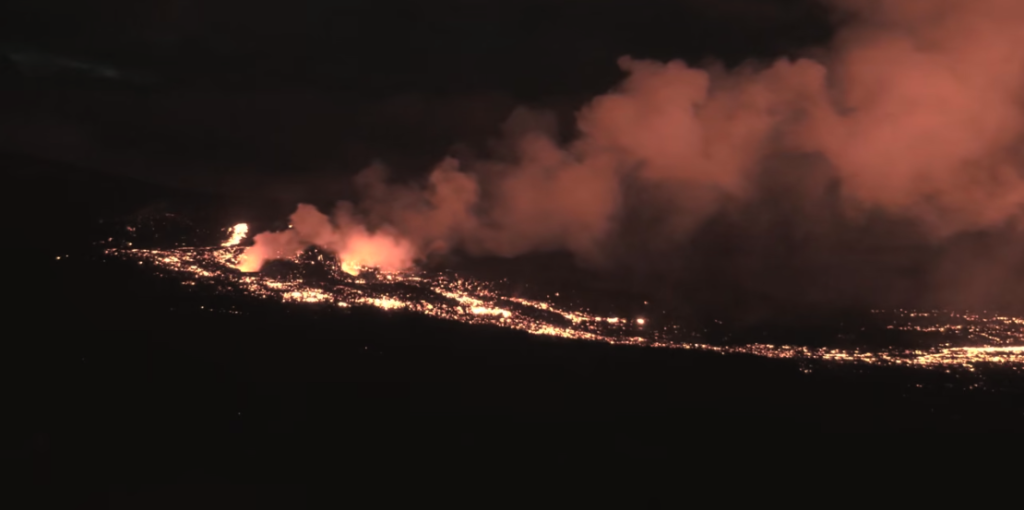
    HONOLULU (AP) — The latest lava fountaining episode of an erupting Hawaii volcano reached 1,000 feet (300 meters) high Tuesday, prompting temporary closures at a national park and part of an important highway because of falling glassy volcanic fragments, including ash.

    Kilauea, on Hawaii’s Big Island, has been dazzling residents and visitors for more than year with an on-and-off eruption that periodically sends fountains of lava soaring into the sky.

    READ MORE: Kilauea displays lava fountains for the 37th time since its eruption began last year

    The fountaining that began Tuesday morning marked the eruption’s 43rd episode since it began in December 2024. A livestream showed two fountains of bright-red lava and smoke. Some episodes have lasted a few days and others a few hours.

    Like other times, the molten rock was confined within Kilauea’s summit crater inside Hawaii Volcanoes National Park and hasn’t threatened homes or buildings.

    But the lava fountains were creating trouble for neighboring communities and a highway where the volcanic fragments and ash, known as tephra, was falling. The tephra prompted temporary closures at the national park around the summit and a partial closure of Highway 11, an important route around the island, on either side of the park.

    Hawaii County officials also opened a shelter at a district gymnasium for residents and tourists impacted by the road closure or falling tephra. There were no people using the shelter soon after it opened, said Tom Callis, a county spokesperson.

    READ MORE: Krasheninnikov volcano in Russia’s Far East erupts for first time in centuries

    The National Weather Service issued an ashfall warning.

    Volcanic tephra can irritate eyes, skin and the respiratory system, according to county officials. Tephra also can clog and cause other problems with water catchment collection systems, which are common in some parts of the Big Island, officials said.

    Ash fell so heavily during a previous fountaining episode that some communities needed help from county civil defense workers to clean up ash that coated their homes, Callis said.

    Kilauea is one of the world’s most active volcanoes.

    A free press is a cornerstone of a healthy democracy.

    Support trusted journalism and civil dialogue.


  • The Iran war and surging oil prices are affecting consumers. Here’s how

    The Iran war and surging oil prices are affecting consumers. Here’s how

    NEW YORK (AP) — As the war in Iran ratchets up, the price of crude oil has been swinging sharply. Consumers are already feeling the effects of the war and its destabilizing effect on worldwide energy production.

    Gasoline prices are climbing, and many people will find some of the most immediate economic pain at the pump.

    READ MORE: Inflation held steady last month before attack on Iran sent energy costs soaring

    But you don’t have to drive a car to be affected. Nearly all goods — including food — that are bought and sold must travel from where they’re produced. Those costs will climb with higher gasoline, diesel and jet fuel prices.

    And the spike in oil prices — surpassing $110 a barrel, then retreating — will likely be a big factor for U.S. inflation. As the war continues, some experts say the price of, well, everything could be affected.

    “The longer this lasts, the more significant the shock would be,” said Gregory Daco, chief economist at consulting firm EY-Parthenon.

    WATCH LIVE: Trump touts his economic agenda in Rep. Massie’s Kentucky district

    Here’s how the growing cost of oil and gas could impact consumers as the war continues.

    At the pump: Gas prices are likely to continue climbing

    Gasoline, diesel and jet fuel are made from crude oil. As the cost of crude climbs, so do the prices of those widely used products, which keep equipment, cars, buses, delivery trucks and airplanes running.

    Across the U.S., drivers were paying an average of $3.58 for a gallon of regular gasoline Wednesday, compared with $2.98 before the war started. Prices have increased about 20% since the U.S. and Israel attacked Iran.

    READ MORE: War with Iran delivers high oil prices and another shock to the global economy

    Prices vary across states. In California, drivers were paying $5.34. Some of California’s refineries have shut down in recent years, so the massive state relies on imports of gasoline and other refined products from Asia.

    By contrast, the average price in Louisiana, which has oil production and refineries, was $3.20.

    The spike in oil prices is likely to further push up gasoline prices, and could be felt more significantly in Asia and Europe, which are more dependent on Middle Eastern oil and gas than the United States.

    The cost of shipping and goods increases alongside the price of diesel

    The price of diesel — which powers 18-wheeler trucks — has been climbing, too: to $4.83 a gallon in the U.S., a 28% jump since the war started.

    “Can’t underscore what a massive jolt this is to the logistics, trucking, (agriculture) sectors,” Patrick De Haan, a petroleum analyst at GasBuddy, wrote on X Monday.

    The effective closure of the Strait of Hormuz, the waterway that carries a fifth of the world’s crude oil and liquefied natural gas, already has caused problems for the shipping industry. Quickly rising oil and gas prices will add to the burden.

    Fuel prices account for 50% to 60% of the total operating cost of shipping goods by ship, according to Patrick Penfield, professor of supply chain practice at Syracuse University, so higher fuel prices have a huge effect on the industry.

    “When fuel prices start to go up, everything starts to slow down,” Penfield said. “So your ships slow down, your trucks slow down. People are less apt to ship things via air. And it really kind of causes a drag on the economy when fuel price go up.”

    Fuel surcharges will also rise — as shipping companies aim to pass along higher costs to their customers, ultimately making goods more expensive.

    Home energy bills will probably rise, and items made from plastic could cost more

    Heating your home and cooking food with natural gas are also likely to cost more as the war grinds on.

    Europe’s benchmark natural gas rose 75% since the war began, according to data from the Intercontinental Exchange.

    That could also affect the cost of products made from natural gas, such as petrochemical feedstock. It’s used to make plastic and rubber, as well as nitrogen fertilizer.

    Eventually, groceries might be more expensive, too

    The spike in oil prices likely won’t be felt immediately at U.S. grocery stores, said David Ortega, a professor of food economics and policy at Michigan State University. But if oil prices remain high for a month or more, he said, “we’re in different territory.”

    Higher oil prices impact the agricultural sector in two ways, Ortega said. They raise the cost of inputs such as fuel for farm equipment and the fertilizer, which is derived from natural gas. They also raise demand for soybean oil, palm oil and other vegetable oils that can be used as replacements for petroleum-based fuel.

    But Ortega said on-farm costs are only a small part of what consumers pay at the supermarket. A larger share comes from the cost of processing and transporting food, which uses a lot of energy.

    “Food gets to the grocery store on diesel, whether it’s on a truck or on a boat,” Ortega said.

    If oil prices remain elevated, fresh foods that must be transported quickly could see price hikes more quickly than packaged foods, which are less perishable, Ortega said.

    If inflation rises, everything gets more expensive

    With U.S. oil prices increasing by roughly 42% from their prewar levels, to roughly $95 a barrel from about $67 before the conflict, that could push up inflation in the United States from 2.4% in January to 3% or higher in the coming months, according to a rough estimate by economists at JPMorgan.

    Economist Daco, of EY-Parthenon, estimated that the bump in gas prices could push monthly inflation to as high as 1% in March, which would be the highest monthly increase in four years. Yearly inflation would near 3% in that case.

    “That’s a significant shock in and of itself,” Daco said.

    Some experts say consumer spending will decrease

    Mark Mathews, chief economist and executive director of research at the National Retail Federation, said higher gas prices would likely affect consumer spending, particularly lower-income shoppers.

    U.S. households pay on average $2,500 a year, or nearly $50 a week, to fill up their tank, he said. If consumers are paying, say, $10 more per week, he said, their budgets are certainly affected.

    “How do they offset that?” he said. “Going out to a movie theater or going to a theme park or going out to eat — all those areas would be … more likely see cuts.”

    Some see hope that prices stay down — for now

    Mathews expects that retailers will absorb higher transportation costs for a while — as many did with higher tariff s — before they increase prices.

    Italian Finance Minister Giancarlo Giorgetti warned against passing along higher energy costs to consumers, recalling the lessons learned after Russia invaded Ukraine.

    “We must act immediately to stop energy prices from spreading to all consumer goods, as happened in 2022,” he told a Monday G7 meeting in Brussels, according to a statement from his office.

    Ed Anderson, a professor of supply chain and operations management for the McCombs School of Business at the University of Texas, said shippers won’t immediately pass on costs to customers.

    “If the conflict is only in the short run, companies will eat it,” he said.

    Rugaber reported from Washington. Associated Press journalists Nicole Winfield in Rome, Dee-Ann Durbin in Detroit and Anne D’Innocenzio in New York contributed to this report.

    A free press is a cornerstone of a healthy democracy.

    Support trusted journalism and civil dialogue.

  • Man taken into custody after driving van into White House security gate

    Man taken into custody after driving van into White House security gate

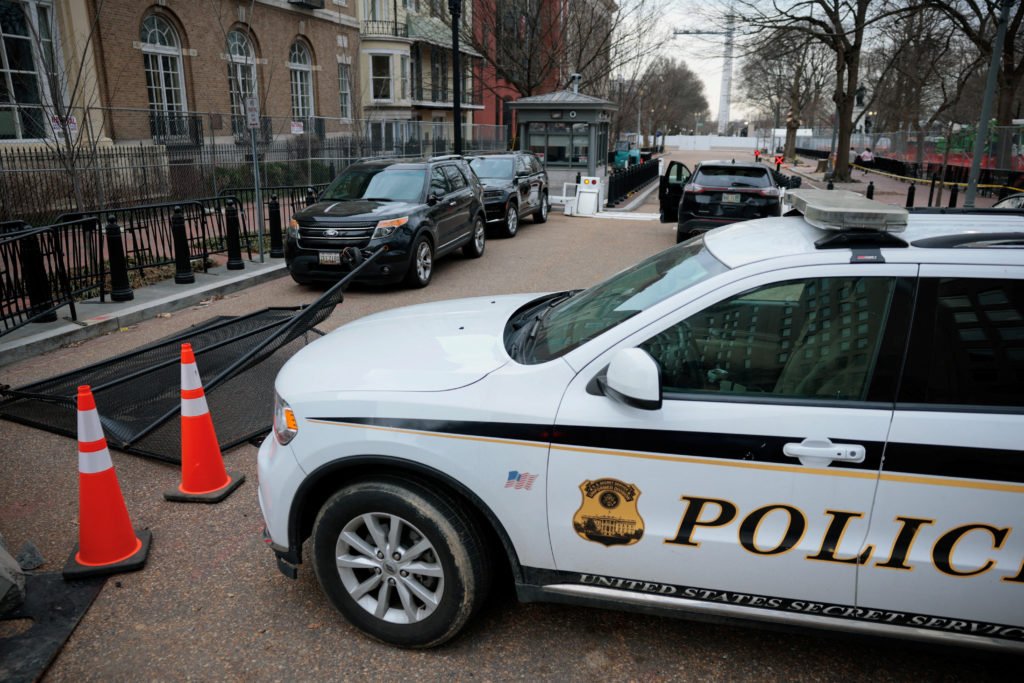
    WASHINGTON (AP) — A man was taken into custody on Wednesday after driving his van into a security barrier outside the White House, authorities said.

    The Secret Service said the man crashed into the temporary security barrier just before 6:30 a.m. He was immediately arrested by officers from the Secret Service’s uniformed division, the agency said.

    READ MORE: Secret Service says an armed man was shot and killed after entering Mar-a-Lago’s secure perimeter

    The man, whose identity was not immediately released, was being interviewed by investigators. Criminal charges were pending, the Secret Service said.

    A police bomb squad was called to the scene, checked the vehicle and determined it to be safe.

    A free press is a cornerstone of a healthy democracy.

    Support trusted journalism and civil dialogue.


  • IEA agrees to release record volume of emergency oil reserves in effort to calm prices

    IEA agrees to release record volume of emergency oil reserves in effort to calm prices

    PARIS (AP) — The International Energy Agency agreed Wednesday to release the largest volume of emergency oil reserves in its history, in a bid to counter the effects on energy markets of the war in the Middle East.

    The Paris-based organization said it will make 400 million barrels of oil available from its members’ emergency reserves. It’s a larger stock than the 182.7 million barrels that were released in 2022 by the IEA’s 32 member countries in response to Russia’s full-scale invasion of Ukraine.

    READ MORE: Inflation held steady last month before attack on Iran sent energy costs soaring

    “Without sufficient routes to market and with no more available storage, Middle East oil producers have started to reduce production,” IEA executive director Fatih Birol said. “And we have seen further attacks and damage to energy and energy-related infrastructure. Refinery operations have also been disrupted, with major implications for jet fuel and diesel supplies in particular.”

    IEA member countries currently hold over 1.2 billion barrels of public emergency oil stocks, with a further 600 million barrels of industry stocks held under government obligation.

    In response to U.S. and Israeli strikes, Iran has attacked commercial ships across the Persian Gulf, escalating a campaign of squeezing the oil-rich region as global energy concerns mount.

    READ MORE: Iran targets commercial ships, Dubai airport and oil facilities as concerns grow over global energy

    Iran has effectively stopped cargo traffic in the narrow Strait of Hormuz through which about a fifth of all oil is shipped from the Persian Gulf toward the Indian Ocean. It has also targeted oil fields and refineries in Gulf Arab nations, aiming at generating enough global economic pain to pressure the United States and Israel to end their strikes.

    Germany, Austria and Japan said earlier Wednesday they would release parts of their oil reserves following an IEA request for members to release the record 400 million barrels to help temper energy price spikes due to the Iran war.

    Group of Seven energy ministers met Tuesday at IEA headquarters in Paris to look at ways to bring down prices. Birol said afterward that they discussed all available options, including making IEA emergency oil stocks available to the market.

    WATCH LIVE: Trump touts his economic agenda in Rep. Massie’s Kentucky district

    The IEA reserves were established in 1974 following the Arab oil embargo.

    “This is a major action aiming to alleviate the immediate impacts of the disruption in markets,” Birol added. “But, to be clear, the most important thing for a return to stable flows of oil and gas is the resumption of transit through the Strait of Hormuz.”

    Birol said that 15 million barrels per day of crude oil and another five million barrels per day of oil products normally pass through the Strait of Hormuz.

    “This amounts to around 25% of the world’s oil trade via sea. And now the flows of oil, gas and other commodities through the strait have all but stopped.”

    The G7 is comprised of the leading industrialized nations of Canada, the United States, France, Italy, Japan, Germany and Britain. Austria is not a member.

    The group’s leaders, including U.S. President Donald Trump, met Wednesday via videoconference to discuss energy issues.

    During his introductory remarks, French President Emmanuel Macron praised the IEA decision to release emergency oil stocks, saying it amounted to the equivalent of “20 days of the volume being exported through the Strait of Hormuz.” The amount being released by G7 nations, alone, comprises 70% of the total, he said.

    “I think it’s very important to see as well everything we can do in order to increase our global production,” Macron added.

    Germany’s economy ministry, Katherina Reiche, said the IEA asked Germany to release 2.64 million tons of its oil reserves. It was not immediately clear how much Austria was releasing.

    She said it would take a couple of days before the delivery of the first quantities.

    “Germany stands behind the IEA’s most important principle of mutual solidarity,” Reiche said.

    The German government also said it will introduce a measure to allow gas stations in Germany to raise fuel prices no more than once a day. The federal government wants to introduce this as quickly as possible, Reiche said.

    According to the IEA, export volumes of crude and refined products are currently at less than 10% of prewar levels.

    In Austria, starting Monday, price increases at gas stations will be allowed only three times a week, the country’s economy minister said. Wolfgang Hattmannsdorfer said his country was releasing part of the emergency oil reserve and extending the national strategic gas reserve, adding: “One thing is clear: in a crisis, there must be no crisis winners at the expense of commuters and businesses.”

    IEA nations have released emergency stocks on five previous occasions: During the 1990-1991 Gulf War, after Hurricane Katrina in 2005, during the Libyan civil war in 2011, and twice after the Russian invasion of Ukraine.

    Birol noted that the situation in natural gas markets is also very challenging, with Asia the most severely affected region.

    “There are few options to replace the missing LNG cargoes from Qatar and the Emirates,” he said. “Global energy supply has been reduced by around 20%.”

    Grieshaber reported from Berlin. Associated Press reporters John Leicester and Sylvie Corbet in Paris contributed to this report.

    A free press is a cornerstone of a healthy democracy.

    Support trusted journalism and civil dialogue.

  • WATCH LIVE: Trump touts his economic agenda in Rep. Massie’s Kentucky district

    WATCH LIVE: Trump touts his economic agenda in Rep. Massie’s Kentucky district

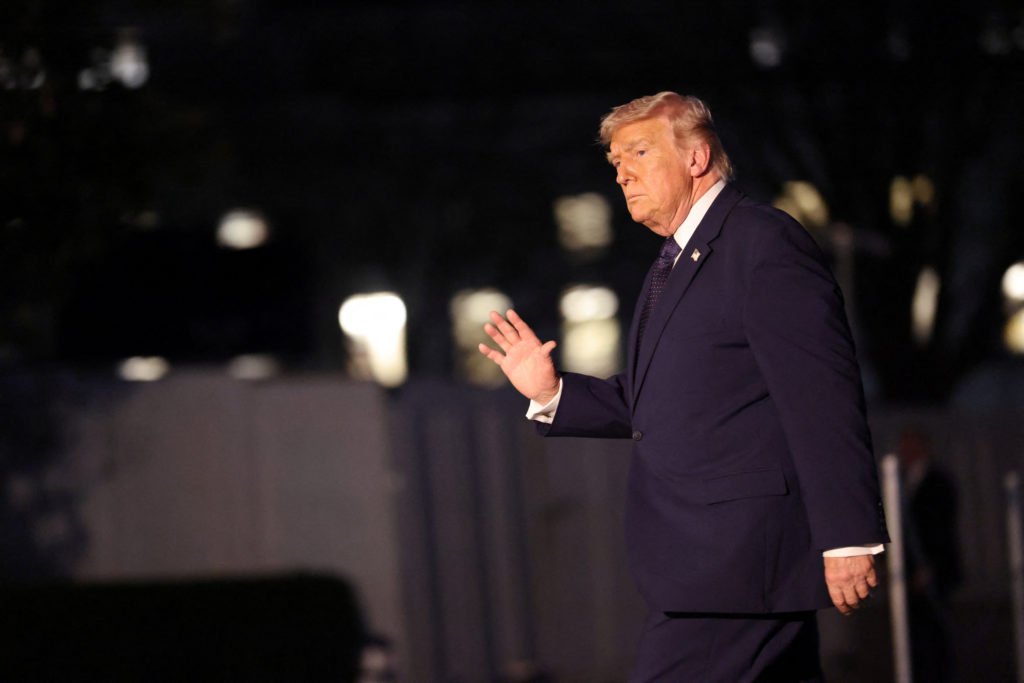
    WASHINGTON (AP) — President Donald Trump plans to visit Ohio and Kentucky on Wednesday to argue that his policies can steady an economy facing shock waves from the war on Iran and to try to defeat one of the few congressional Republicans who has dared to defy him.

    The president is expected to give remarks at 4:25 p.m. EDT. Watch live in our video player above.

    In Cincinnati, the Republican president is touring Thermo Fisher Scientific, a pharmaceutical company. There, he’ll tout efforts to lower prescription drug prices, a key part of his attempts to show his administration is focused on making the cost of living more affordable for many Americans ahead of November’s midterm elections.

    READ MORE: Americans are increasingly worried about voting, new poll shows

    After that, Trump will visit a logistics packing facility in nearby Hebron, Kentucky, part of the district of Rep. Thomas Massie. Trump is backing a primary challenger to Massie.

    The trip presents a test of Trump’s ability to cleanse his party of those who oppose him but also to try to stay on an economic message increasingly strained by the military action launched by the U.S. and Israel against Iran. He’ll be “talking about the economy, which is, of course, the utmost importance to him,” White House press secretary Karoline Leavitt said.

    READ MORE: Inflation held steady last month before attack on Iran sent energy costs soaring

    Polls showed that Americans were increasingly wary of Trump’s handling of the economy even before the conflict with Iran began, and fighting there has derailed Trump’s messaging, as the low gas prices he once bragged about are now surging and stocks that had set record highs have slipped.

    Employers also cut an unexpectedly high 92,000 jobs in February, and revisions trimmed another 69,000 jobs from December and January payrolls — which the White House had previously hailed as “blockbuster.”

    None of that has stopped Trump from continuing to insist the country is booming — and blaming the Democrats for everything else.

    “They’re the one that caused the problem,” he told a House Republican meeting in Florida on Monday. “But we’re really bringing down prices big.”

    READ MORE: Iran targets commercial ships, Dubai airport and oil facilities as concerns grow over global energy

    Democrats offer a sharp contrast to Trump’s depiction of the nation, arguing that costs remain high for many Americans more than a year into his second term and that families are still struggling under his policies.

    Trump’s affordability tour meets his opposition to Massie

    After Democrats won the Virginia and New Jersey governors’ races in November, the White House announced that Trump would travel the country to show that he’s taking kitchen table issues seriously and reassure voters nervous about still-rising prices and economic growth.

    Since then, the president has made stops in Pennsylvania, Georgia, Michigan, North Carolina and Texas — though his speeches sometimes have been more focused on his own political grievances than his plans to try to help lower everyday costs around the country.

    WATCH: Trump calls GOP Rep. Massie, who fought for Epstein files release, a ‘moron’

    This trip, however, marks the first time this primary cycle that Trump has sought to keep promises to punish members of his own party who oppose him on key issues. The president has endorsed Ed Gallrein, a farmer, businessman and retired Navy SEAL, who is running against Massie in Kentucky’s Republican primary on May 19. Trump and Gallrein will appear together on Wednesday.

    Massie is an outspoken Trump critic who opposed the White House-backed tax and spending measure and bucked Trump by pushing to have files related to the sex trafficking investigations into Jeffrey Epstein released. He’s also opposed the U.S. strike on Venezuela that toppled then-President Nicolás Maduro and, most recently, the war in Iran.

    “This isn’t America First,” Massie posted on X on Sunday, blaming the war for causing gas prices to jump.

    A free press is a cornerstone of a healthy democracy.

    Support trusted journalism and civil dialogue.

  • US military to target Iranian ports on Strait of Hormuz saying civilian ports used for military purposes lose protected status, warns civilians to avoid the ports

    US military to target Iranian ports on Strait of Hormuz saying civilian ports used for military purposes lose protected status, warns civilians to avoid the ports

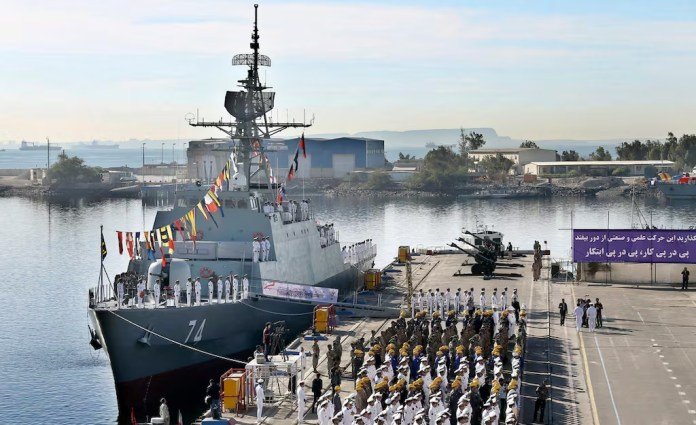
    As Iran continues to attack ships transiting through the Strait of Hormuz, the US military has announced plans to attack Iranian ports in the region. The U.S. Central Command (CENTCOM) issued a stark warning on Wednesday to civilians in Iran, urging them to steer clear of port facilities along the Strait of Hormuz where Iranian naval forces are allegedly conducting military operations.

    In a statement released via an official X post, the CENTCOM accuses the Iranian regime of endangering innocent lives by militarising civilian infrastructure, which could strip these sites of their protected status under international law and render them legitimate military targets.

    In the announcement, CENTCOM said that Iranian naval forces have positioned military vessels and equipment within civilian ports serving commercial maritime traffic. “This dangerous action risks the lives of innocent people,” the statement read, emphasising that while U.S. forces cannot guarantee civilian safety near such facilities, they will take “every feasible precaution” to minimise harm.

    The warning specifically advises Iranian dockworkers, administrative personnel, and commercial vessel crews to avoid naval vessels and military equipment immediately.

    This latest advisory comes amid the ongoing conflict in the Middle East that has intensified since late February 2026, following U.S. and Israeli strikes on Iranian targets including command centres, missile sites, and naval assets. Just days earlier, on March 8, CENTCOM had issued a similar safety alert, cautioning civilians in densely populated areas like Dezful, Isfahan, and Shiraz, where Iran is accused of launching drones and missiles, to shelter in place.

    U.S. forces have reported destroying multiple Iranian naval vessels, including 16 minelayers near the Strait of Hormuz, in response to intelligence indicating Iran has begun laying mines in the waterway.

    The Strait of Hormuz, a critical chokepoint through which about 20% of the world’s oil transits, has seen maritime traffic plummet to near-zero levels since early March due to Iranian threats and attacks.

    At least three ships were struck by unknown projectiles near the strait on Wednesday, with Iran’s Revolutionary Guard claiming one vessel, the Thai-flagged Mayuree Naree, ignored warnings before being targeted. Three crew members remain unaccounted for following the incident, according to the UK’s maritime agency.

    Iranian officials have vehemently rejected the U.S. accusations and escalated their rhetoric in response. A spokesperson for Iran’s Khatam al-Anbiya military command headquarters declared that any vessels linked to the U.S., Israel, or their allies would be considered “legitimate targets,” vowing not to allow “a single litre of oil” through the strait to reach them.

    Tehran has dismissed U.S. threats as “hollow” and warned of retaliatory strikes on regional economic centres, including banks, urging civilians to stay at least one kilometre away from such sites.

  • Inflation held steady last month before attack on Iran sent energy costs soaring

    Inflation held steady last month before attack on Iran sent energy costs soaring

    KANSAS CITY (AP) — Inflation stayed stubbornly elevated last month as gas prices rose in a snapshot of what consumer prices looked like before the U.S.-Israeli attack on Iran sent energy costs soaring.

    Consumer prices rose 2.4% in February compared with a year earlier, the Labor Department said Wednesday, matching January’s 2.4% increase. Excluding the volatile food and energy categories, core prices climbed 2.5% from a year ago, also matching January’s level, which was the lowest in five years. Both figures are above the Federal Reserve’s 2% target.

    READ MORE: Iran targets commercial ships, Dubai airport and oil facilities as concerns grow over global energy

    Wednesday’s data has been overtaken by the conflict that began when the U.S. and Israel attacked Iran on Feb. 28, which has caused wild gyrations in oil prices as shipping lanes through the Persian Gulf have suffered a rare shutdown. Gas prices have already jumped and are expected to push inflation much higher when inflation data for this month is released in early April.

    The price spike will challenge officials at the Federal Reserve and could slow consumer spending, which drives two thirds of the nation’s economic growth each year. The increase could be a one-time event and potentially reverse if the war ends soon, as President Donald Trump has hinted. But the spike in gas prices threatens to worsen inflation for at least a few months with Americans already worn down by nearly five years of stubbornly high prices. “Affordability” is already a thorny political issue for congressional Republicans who will face voters in midterm elections later this year.

    On a monthly basis, prices rose 0.3% in February from the previous month, up from 0.2% in January. Increases at that pace for an extended period would push yearly inflation higher. Core prices moved up just 0.2%, down from a 0.3% rise in January.

    READ MORE: Divided on so many things, Americans find unity in frustration at higher gas prices

    Grocery prices rose more quickly, continuing a trend that has hammered family budgets. They rose 0.4% in February and were up 2.4% from a year earlier. Gas prices increased 0.8% last month, though were down 5.6% compared with a year ago.

    Oil prices soared as high as nearly $120 a barrel late Sunday before falling closer to $87 by Wednesday after Trump suggested that the conflict would be a “short-term excursion.” Still, he has also threatened ongoing attacks and it isn’t clear when the conflict might end.

    Some analysts warn prices will move much higher if the Strait of Hormuz remains closed, which has removed roughly three-quarters of the Persian Gulf region’s oil production from world markets, according to Wood Mackenzie, an energy analytics firm. On Wednesday, a projectile hit a Thai cargo ship off the coast of Oman in the Strait of Hormuz, setting it ablaze.

    READ MORE: Trump’s ‘roaring economy’ meets a rough start to 2026 with job losses, rising gas prices and uncertainty

    Iran is also targeting oil fields and refineries in Gulf Arab nations, aiming at generating enough global economic pain to pressure the United States and Israel to end their strikes.

    Oil prices could soar to $150 a barrel in the coming weeks, the firm forecasts, if shipments don’t resume.

    That would push gas prices still higher in the United States, where they jumped to $3.58 a gallon on average nationwide Wednesday, according to AAA, an increase of about 20% just in one month.

    Higher oil prices will lift other costs as well, including air fares and shipping costs, which could make groceries and restaurant meals more expensive.

    At the same time, given the volatility of oil prices — U.S. crude prices rose 3% Wednesday after falling nearly 9% to $86.55 the day before — it is difficult to forecast how big the impact will be. If shipments resume in a week or so, gas prices will likely decline fairly soon, though they typically fall much more slowly than they rise.

    Laura Rosner-Warburton, senior economist at MacroPolicy Perspectives, a consulting firm, expects inflation could jump by as much as 0.9% in March from the previous month, when that data arrives in early April. It would be the largest monthly gain in nearly four years. Yearly inflation could easily surpass 3% in that case and potentially near 4% in the following months.

    The jump in gas prices so far this month has been the largest since March 2022, and before that since June 2009, Rosner-Warburton said.

    “That is enormous,” she said. “Increases of that magnitude are highly unusual.”

    Core prices will be much less affected this month, but could tick higher over time as more expensive gas pushes up airline fares and shipping, and other transportation costs. Core inflation is expected to have increased 0.3% in February from the previous month.

    Even if the sharp rise is short-lived, it will almost certainly delay any interest-rate cut by the Federal Reserve, which meets next week. It cut its key rate three times last year before leaving it unchanged at its last meeting in January.

    The Fed is already deeply divided over whether it needs to keep its rate at its current level of about 3.6% to push inflation down closer to its 2% goal, or whether it should reduce the rate to support borrowing, spending, and hiring.

    Last Friday, the government reported an unexpectedly sharp job loss in February, as employers slashed 92,000 jobs and the unemployment rate ticked up to 4.4%, from 4.3%.

    The weak jobs report puts the Fed in an especially difficult position: It would normally reduce rates to boost growth and hiring, but it typically raises rates — or at least keeps them where they are — if they are worried about inflation.

    “That’s always the worst-case scenario for the central bank,” said Austan Goolsbee, president of the Federal Reserve Bank of Chicago, on Bloomberg Friday. “As we get more uncertainties, I kind of think that the time at which it makes sense to act keeps getting pushed back.”

    Gregory Daco, chief economist at EY-Parthenon, a consulting firm, said that normally the Fed would expect an oil price shock to have at most a temporary impact on inflation and might still cut rates if the economy needed lower borrowing costs.

    But Fed policymakers were burnt just a few years ago when they initially said the post-COVID inflation spike in 2022-23 — the worst in four decades — would be temporary, Daco said. As a result, they will be reluctant to take the risk of prematurely lowering rates. A few officials even mentioned during the January meeting that they might have to hike rates soon, rather than cut them, according to the meeting’s minutes — and that was before the Iran war.

    “They do not want to be burned again,” Daco said.

    A free press is a cornerstone of a healthy democracy.

    Support trusted journalism and civil dialogue.