
Category: USA

  • Chaos at Minnesota conventions reignites calls for a new way of choosing candidates

    Chaos at Minnesota conventions reignites calls for a new way of choosing candidates


    People walk through a hallway holding signs and wearing political t-shirts.

    WASHINGTON – Last weekend’s tumultuous DFL and GOP state party conventions have prompted some Democrats and Republicans to again consider scrapping the way Minnesota chooses political candidates and replacing it with something else.

    The state’s modern system of caucuses was established more than a century ago in 1922 and is imbued with tradition and woven into the state’s political culture. But it is also an outlier in American politics.

    Only eight other states, including California and Michigan, endorse or nominate candidates at state party conventions.

    Minnesota’s nominating conventions have caused problems before and once again there is talk of abolishing endorsing conventions and moving up the date of Minnesota’s primary election, now scheduled for Aug. 11, to an earlier date, perhaps in June.

    Making those changes would need the approval of the state parties and the Legislature. But pressure for that change is building, especially after last weekend’s conventions. There are several reasons why.  

    “(Party) endorsements do not produce the most electable candidates,” said Blois Olson, a political analyst and publisher of dailyagenda.com

    That’s because the selection of delegates gives activists on the far right and far left the opportunity to have outsized influence, said Jessica Shaten, a delegate to the DFL convention from south Minneapolis.

    “What the endorsement process has become is a way for extremist candidates to take control of their parties,” she said.

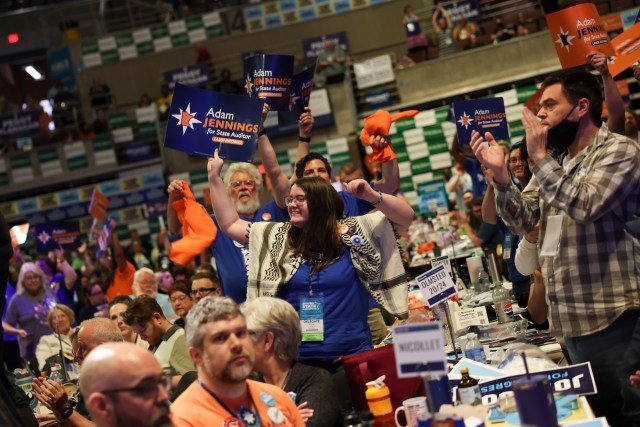
    People stand and cheer holding signs in a crowd at a convention center.
    Delegates cheer for Adam Jennings, candidate for state auditor, as he takes the stage during the DFL State Convention on Saturday, May 30, 2026, in Rochester, Minn. Credit: Ellen Schmidt/MinnPost/CatchLight Local/Report for America

    Like many seeking change, Shaten believes the delegates who vote to endorse candidates at statewide conventions (1,200 attended the DFL convention and 2,000 attended the GOP’s event this year) do not represent the millions of Minnesota voters.  

    The delegates to the statewide conventions are chosen in sub-caucuses at the local and congressional district levels that many more attend, but those caucus-goers still represent a fraction of the state’s more than 3.8 million registered voters.  

    Shaten said the choice of favored candidate should be left up to voters who cast ballots in a primary election. “Let all the voters choose, then the parties could endorse those nominees at a (post-primary) convention,” Shaten said.

    A defeat for moderation

    The Republican Party convention that was held in Duluth was roiled by distrust of some delegates after GOP officials announced there were “anomalies” in a round of balloting.

    In that round to endorse a gubernatorial candidate, businessman Kendall Qualls leaped ahead of state House Speaker Lisa Demuth. Qualls, who is running to the right of Demuth, eventually won the endorsement.

    Also at the GOP convention, former sportscaster Michele Tafoya, a candidate for the U.S. Senate who is supported by the National Republican Senatorial Committee (NRSC), was rejected by delegates who gave more than 60% of their votes to former Navy SEAL Adam Schwarze.

    Like Qualls, Schwarze is considered more conservative and MAGA-aligned than his GOP rival.  

    Tafoya had already said she would not abide by the endorsement and continue to the primary. Because of the snafu with the balloting, the Minnesota Republican Party decided Monday night to release all candidates from the endorsement process, allowing Demuth, who had said she would abide, to continue to the primary, too.

    Mike Lindell, the CEO of MyPillow, is also staying in the race.

    On the Democratic side, Rep. Angie Craig, D-2nd District, who was losing a battle for the support of delegates to Lt. Gov. Peggy Flanagan, decided she would skip the DFL convention in Rochester and move on to the primary in the race to win retiring Sen. Tina Smith’s seat. Once again, Craig is considered the more moderate candidate in that race.

    So, the delegates’ picks were devalued this weekend in one way or another and there will be hard-fought primary battles for Smith’s seat in both parties and for governor in the Republican Party.

    The only statewide candidate that will avoid a tough primary battle is Sen. Amy Klobuchar, who is running for governor. But even that popular politician was considered too moderate for about 30% of the delegates at the DFL convention who cast their votes for 26-year-old progressive Kobey Layne.

    ‘Parties could still have influence’

    Jason Franzen, who since the 1990s has often been a GOP delegate to his party’s convention, said the idea of scrapping the endorsement process was discussed in Duluth.

    “Admittedly, the endorsement process is archaic, but it’s very ‘small d’ democratic,” he said.

    Yet Franzen, a supporter of Qualls who is running for mayor in Delano, predicted that calls to end that process “would continue to persist, and perhaps gather strength.”

    “And if that’s what people in Minnesota want, well, that’s fine,” he said.

    Frank Long, a delegate and longtime party activist from Watertown Township who supports Schwarze, also said there was talk at the GOP convention about changing the process, especially from delegates who are Demuth’s colleagues at the Legislature.

    “I hear that talk all the time, but I heard it more this time,” Long said.

    Long, however, said delegates who come up through the caucuses have a better sense of what voters want in a candidate than those who determine who would run in a primary.

    “They are a small group of people who are recruiting and funding candidates,” he said.

    However, Hamline University political science professor David Schultz said Republicans, especially, should be eager to change the system and there’s a reason for this.

    DFL candidates are more likely to continue their campaigns to the primary, even if they are not endorsed. Gov. Tim Walz and former Gov. Mark Dayton are among those who flouted the endorsement process to win their party’s primary and then a general election.

    But GOP candidates who don’t abide by the endorsement are usually punished by Republican voters in a primary.

    Schultz said this often hurts the better candidate.

    “Since they haven’t won a statewide election in 20 years, there are probably enough people in the Republican Party who are saying, ‘If we keep doing this and we keep losing, maybe we should do something else,” Schultz said.

    Yet change brings risk.

    Olson, the political analyst, said attempts to eliminate the endorsement process would result in “blowback” from certain organizations that field delegates, including unions and hardline ideological groups.

    Erica Dischino
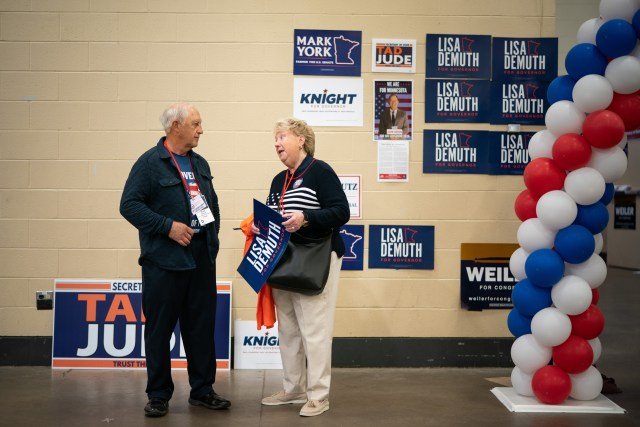
    Attendees converse before walking into the Republican Party of Minnesota State Convention Saturday, May 30, 2026 at the Duluth Entertainment Convention Center in Duluth, Minn. MinnPost / Erica Dischino Credit: Erica Dischino

    And it would weaken the power of state parties, but in a limited way. “Parties could still have influence,” he said. “They just wouldn’t endorse a political candidate.”

    And Minnesota’s political parties could still hold statewide conventions to draft new bylaws and platforms and develop strategies.

    Minnesota Republican Party Chairman Alex Plechash and Democratic Party Chairman Richard Carlbom declined requests to comment for this story.

    Summertime blues

    Thirty-one states hold their primaries before the end of June.

    Minnesota’s August primary puts it in a minority of states who pick their nominees later in the year.

    Changing that, allowing a longer general election period and curbing the influence of state parties, would be a political lift.

    The Legislature would have to pass a new law to establish a new election calendar, something that has been tried before in Minnesota and not succeeded.

    One obstacle, Schultz said, is that members of the Legislature, who are still in session in mid-May on an election year and could be subject to a special session if their work is not done, would have a short time to campaign for reelection if the primary is in June.

    About a dozen other election deadlines would have to be moved up to accommodate the change.

    Yet June primaries bring benefits, too. Many voters are on vacation in August and otherwise not paying attention to politics. Schultz said there’s evidence that August primaries have depressed voter turnout when compared to those held earlier in the year. Secretary of State Steve Simon, then a member of the state House, testified in 2017 that a June date would find more Minnesotans available to vote and leave more time for voters to consider their general election options.

    The post Chaos at Minnesota conventions reignites calls for a new way of choosing candidates appeared first on MinnPost.

  • GOP primary awaits after Schwarze tops Tafoya for party’s U.S. Senate endorsement

    GOP primary awaits after Schwarze tops Tafoya for party’s U.S. Senate endorsement


    Adam Schwarze talks to delegates

    DULUTH, Minn. – Michele Tafoya, who broke with GOP tradition in vowing to continue her quest for retiring Sen. Tina Smith’s seat, may be an exception to an unofficial rule: a candidate who fails to get the Republican Party’s endorsement nearly always loses the nomination.

    After six rounds of balloting that eliminated other candidates, including former NBA player Royce White, the endorsement went to former Navy SEAL Adam Schwarze, who received the support of nearly 63% of the GOP delegates.

    In speeches on the convention floor Friday in Duluth, Schwarze urged delegates to reject Tafoya’s pitch that she was the most “electable” candidate and said Republicans could win the Senate race “without compromising our values.” 

    In a victory speech, Schwarze thanked delegates and said, “I will not compromise.”

    “I will fight in D.C. and we will fight to take back our state together,” he said. 

    Despite her loss at the convention, Tafoya, who had already said she would buck the state party by not abiding by the convention’s choice, said her campaign will continue moving full speed toward the August primary election.

    But that carries some risk. 

    A non-endorsed GOP candidate has not won a Republican primary since 1994, when Arne Carlson, who was considered too moderate for the delegates at that year’s Republican Party convention, went on to be his party’s nominee and win reelection to the governor’s office.

    “Unlike the Democrats, the Republican track record in Minnesota of bucking the convention in recent history has not worked out well,” said Hamline University political science professor David Schultz.

    Tafoya, a former sports broadcaster, does not have the advantage of being an incumbent like Carlson. But she does have the full support of the National Republican Senatorial Convention (NRSC), plenty of name recognition, the ability to raise a lot of campaign cash and is media savvy.

    She touted those strengths in appeals to delegates Friday, but couldn’t earn above 37% of the votes. 

    Losing the endorsement has cost Tafoya the support of the state Republican Party, but Schultz said that’s a very small loss, especially since she’s backed by the NRSC, which would pour millions of dollars in the race if Tafoya wins the Aug. 11 primary and is considered competitive in a general election.

    “The Republican Party in Minnesota is still in the most part broke,” Schultz said.

    In the November general election, Tafoya would likely face either Democratic Lt. Gov. Peggy Flanagan or U.S. Rep. Angie Craig, D-2nd District, who shares something with Tafoya – she also rebelled against the party convention process.

    Tafoya was a victim of an increasingly strong trend in national politics. To win party endorsements – and to a large extent party primaries – candidates have to appeal to their party’s base voters, which are strongly conservative when it comes to the GOP and progressive for Democrats.

    Chisago County delegate Tony Kaufman, who supported Schwarze, said the party activists who cast ballots at the GOP state convention are the most knowledgeable when it comes to picking a political candidate.

    “When you support the endorsement process, you’re supporting an informed base, an informed constituent, and that’s why we’re excited about it, and that’s why we choose to abide by the endorsement,” Kaufman said. “Because it’s not only the Republican Party, we want the citizens of Minnesota to be able to have the same opportunity to be able to get behind a candidate.”

    But party-endorsed candidates who appeal to the extremes of both parties have to win the support of independents and the more moderate voters in their parties to win the general election.

    So, it was her moderation that prevented Tafoya from winning the nomination.

    She previously called herself a “pro-choice Republican” (though more recently has said states should outlaw abortions after 12 weeks of pregnancy) and once wrote an “open letter” to President Donald Trump asking him not to run for reelection.

    Tafoya has also said Extreme Risk Protection Orders, or “red flag” laws, which allow courts to temporarily remove weapons from individuals who are a danger to themselves or others, are the “most sensible” ways to combat mass shootings, raising the hackles of 2nd Amendment enthusiasts.

    She attempted to distance herself from her past statements at the convention. 

    “I will never compromise my conservative values,” she said.

    Tafoya’s previous remarks gave Curtis Rethwisch, a Lincoln County delegate who supported Schwarze, pause. 

    “If it was just word of mouth and campaign smears I wouldn’t give it any credibility, but I watched the videos,” he said. “The words came right out of her mouth.”

    Schwarze, in contrast, checked all the boxes for him. 

    “I don’t have to give up anything on my principles and my morals with him,” he said. “He’s pro life, he’s pro build a wall, he backs Trump.” 

    U.S. Senate candidate Michele Tafoya, talking to delegates at the Republican Party’s state convention Friday, May 26, 2026, in Duluth, will run in a primary after failing to earn the party’s endorsement.

    When Kendall Qualls first ran for governor in 2022, he rejected Tafoya, who was then his campaign co-chairman, as his choice for lieutenant governor because he said Tafoya was pro-choice and not in line with GOP values. 

    Yet, in a state that has not had a Republican in state-wide office for 20 years, Tafoya has already done well in polls that have put her head-to-head with both Flanagan and Craig.

    John Kline, a former Minnesota Republican congressman who introduced Tafoya at Friday’s convention, called her the “only candidate here who can and will win in November.” 

    An Emerson College poll conducted in February, about a month after Tafoya entered the race, showed Flanagan receiving 47% of the support of the respondents and Tafoya 41%. The same poll showed Craig beating Tafoya 47% to 40%.

    “That doesn’t put her in the winning category, but at this point that’s not bad,” Schultz said.

    In a general election, Schultz said Tafoya is “where she should be on the issues.”

    “At that point, she has a shot at attracting independents,” he said. “She picks up a different group of Republicans. People at the conventions are the most extreme.”

    He also said Tafoya’s gender would be a boost when it came to the crucial votes of suburban women and her diverse background – her father was Hispanic – may also help in a general election. 

    But to face either Craig or Flanagan, Tafoya must win over the Aug. 11 primary. 

    Schultz said Tafoya “has a chance to squeak through” the primary, where GOP conservatives will be overrepresented. By that time, Tafoya’s campaign is likely to start an advertising blitz, both on television and the internet.

    There will also be more scrutiny of Schwarze, who has made controversial remarks about birth control.

    Still, the convention results show he has the firm support of the conservative wing of the GOP and of those most supportive of Trump.

    The post GOP primary awaits after Schwarze tops Tafoya for party’s U.S. Senate endorsement appeared first on MinnPost.

  • ICE officer wanted in the shooting of a man during the Minneapolis crackdown is arrested in Texas

    ICE officer wanted in the shooting of a man during the Minneapolis crackdown is arrested in Texas

    MINNEAPOLIS (AP) — A federal immigration officer wanted in the shooting of a Venezuelan man during the Trump administration’s Minnesota crackdown was arrested Friday in Texas, authorities said.

    Christian Castro, of the Immigration and Customs Enforcement agency, was taken into custody 11 days after Minneapolis prosecutors charged him with assault and falsely reporting a crime in the Jan. 14 nonfatal shooting of Julio Cesar Sosa-Celis.

    Hennepin County, Minnesota, prosecutors said the state’s Bureau of Criminal Apprehension located Castro, 52, in Texas and worked with the Texas Rangers and agents from the Department of Homeland Security’s Office of Inspector General to arrest him.

    The Office of Inspector General later denied any involvement, after which the county attorney’s office changed its statement to say that Inspector General’s office staff were “present at the scene” of the arrest and not that they conducted it.

    Messages seeking comment were also left with ICE and the Texas Rangers.

    Online court records do not list an attorney for Castro, and it wasn’t immediately clear if he has one.

    In a statement, Hennepin County Attorney Mary Moriarty heralded the arrest as “a critical step forward in our prosecution of Mr. Castro.”

    Castro is the second federal agent to be charged over their conduct during the Minnesota crackdown, which was known as Operation Metro Surge. He is one of two agents that ICE Director Todd Lyons said lied about the circumstances of the incident.

    According to prosecutors, Castro fired through a home’s front door and shot Sosa-Celis in the thigh after Castro and another officer chased a different man, Alfredo Alejandro Aljorna, to the Minneapolis apartment duplex where he and Sosa-Celis lived. Sosa-Celis and Aljorna were legally in the U.S., Moriarty said.

    Federal authorities initially accused Sosa-Celis and Aljorna of beating an officer with a broom handle and a snow shovel. A federal judge later dismissed the charges, and ICE and the Justice Department opened an investigation into whether the officers lied about what happened.

    In a statement after the charges were announced, ICE said the U.S. attorney’s office was investigating statements made by the officers, who could face disciplinary action including being fired and prosecuted. ICE called the Hennepin County attorney’s action “unlawful and nothing more than a political stunt.” DHS’s Inspector General’s Office, which Moriarty credited with assisting in the arrest, is separate from ICE and is meant to serve as a watchdog for DHS agencies, including ICE.

    Minneapolis last month released video showing the moments before Sosa-Celis’s shooting, captured from a distance by a city-owned security camera.

    The video appears to show a person standing with a snow shovel outside the house, near the street, then retreating toward the house and tossing the shovel into the yard. This happens as a person being chased by another person runs up from the street, falls on the sidewalk, gets up, and keeps heading toward the house.

    The three appear to scuffle near the front steps for about 10 seconds. The exact moment when Sosa-Celis is shot isn’t clear. A car with flashing lights pulls up, and another person walks up.

    The Trump administration sent thousands of officers to the Minneapolis and St. Paul area as part of President Donald Trump’s national deportation campaign and considered Operation Metro Surge a success.

    But tensions mounted during the weekslong campaign, and the shooting deaths of U.S. citizens Renee Good and Alex Pretti by federal officers sparked mass unrest and raised questions about officers’ conduct.

    Minnesota leaders and the Trump administration have clashed over who has the authority to investigate and prosecute federal officers for on-duty conduct.

    Moriarty’s office last month charged immigration agent Gregory Donnell Morgan Jr. with assault for allegedly pointing his gun at people in a car on a highway. He turned himself in last week, and his lawyer disputes the charges.

    The county is also investigating Good’s and Pretti’s killings and sued the Trump administration in March to gain access to evidence in those cases and the Sosa-Celis shooting.

    The post ICE officer wanted in the shooting of a man during the Minneapolis crackdown is arrested in Texas appeared first on MinnPost.
  • Angie Craig hopes risky new strategy will stop Flanagan’s momentum

    Angie Craig hopes risky new strategy will stop Flanagan’s momentum

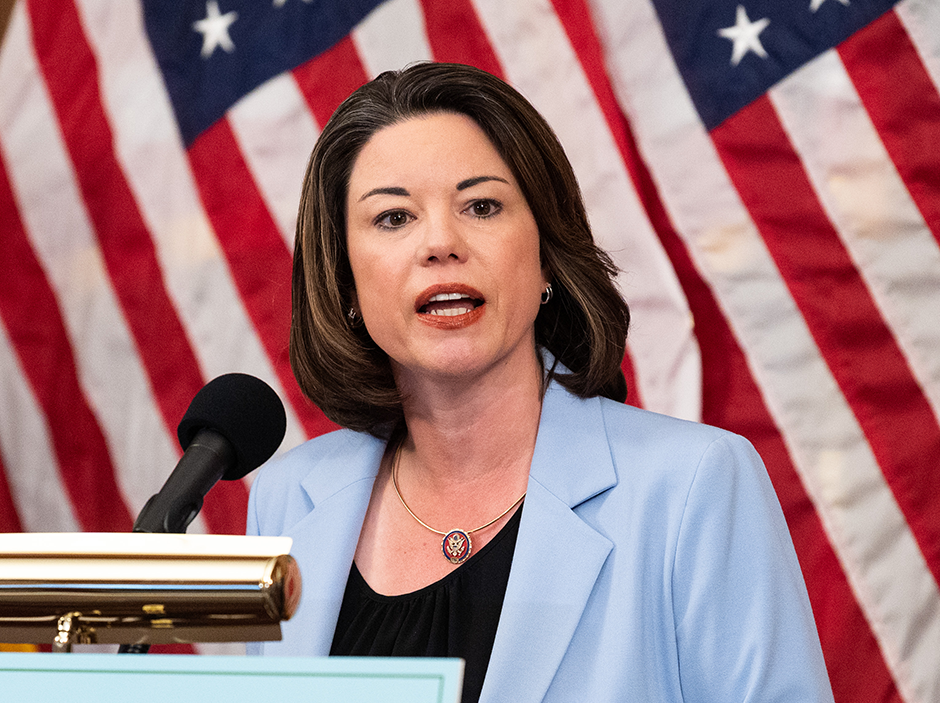
    WASHINGTON – Rep. Angie Craig may be a little down, but she’s certainly not out.

    The congresswoman, who is running for retiring Sen. Tina Smith’s seat, bowed out of the state’s Democratic convention Wednesday as it was painfully clear that thousands of delegates who will meet in Rochester on Saturday will show their preference for Democratic rival Lt. Gov. Peggy Flanagan.

    Instead, Craig has made the calculus that aggressively shifting her efforts to a different, much larger pool of Democratic voters who may be more open to her pragmatic type of politics – those who will cast ballots in August’s primary – will reinvigorate her campaign.

    “I’m a proud DFLer. Every letter has meaning to me,” Craig said in announcing she would skip the convention. “But the DFL endorsement process just doesn’t reflect the full scope of the party that we are. And the purple state that we have become.”

    Craig said most Minnesotans “don’t have the luxury” of time or money to attend a “sub-caucus” and Democrats who don’t attend Saturday’s convention are the voters who matter.

    Besides winning the support of a majority of convention delegates, Flanagan has also racked up endorsements from a growing list of fellow progressives – including Smith herself and a slate of other key Democratic senators – and Craig’s campaign looked to be stumbling.

    And without the DFL Party endorsement, which will now default to Flanagan, Craig will not have access to state party money and other help, including access to the DFL’s voter rolls.

    No matter. Jacob Rubashkin of Inside Elections is among the analysts who are not counting Craig out.

    “She has formidable fundraising chops and significant financial resources, and Election Day isn’t until August so she’s got time to deploy them,” Rubashkin said.

    Craig has steadily outraised Flanagan when it comes to political money, reporting $4.8 million in cash on hand as of March 31, much more than the $1.1 million Flanagan had in the bank.

    “The endorsement isn’t the be-all, end-all of the process, as Gov. (Tim) Walz knows well, and was always going to be an uphill battle for Craig,” Rubashkin said. 

    Walz, with running mate Flanagan, lost the party’s endorsement but advanced to win a primary and the governor’s office.

    Craig was wounded in her run for the U.S. Senate by some of the votes she took to burnish her bipartisan credentials as she fought for reelection to represent the 2nd Congressional District, a seat that had been held by Republicans for nearly 20 years before Craig won it in 2018.

    Flanagan successfully seized on one of those, a vote for the Laken Riley Act, a GOP bill that allows undocumented immigrants arrested for certain nonviolent crimes to be detained and deported.  That vote, taken in January of 2025, a little more than a month before Smith announced her retirement, changed Craig’s political trajectory and rankled many Minnesota Democrats who were subjected in the wake of Operation Metro Surge.

    Craig has since said she regretted that vote and has championed immigrant rights. But the political damage was done.

    “Craig has made her political career on winning tough general election fights in a swing district. She’s actually never had to run in a Democratic primary before,” said Rubashkin. “So, she’s in unfamiliar waters and the positions she took on things like the Laken Riley Act, which might have helped her in a tough MN-02 re-election campaign are hindering her now.”

    Rubashkin also said that another “headwind” Craig is facing is the strong national environment for Democrats and the strength of Sen. Amy Klobuchar’s gubernatorial candidacy.

    Craig must promote her “electability” against a GOP opponent – former sports broadcaster Michele Tafoya and several other Republicans are vying for Smith’s seat — and argue that keeping that seat in the Democratic column is not guaranteed, Rubashkin said.

    “If Democrats aren’t as focused on electability because they see the general election as a safer bet, Flanagan might begin to look more attractive,” he said.

    A ‘remarkable achievement’

    Craig has argued that she is “battle tested” and adept at appealing to increasingly Democratic-leaning suburban voters as well as picking up some support in the Republican-leaning rural areas of her district.

    The 2nd Congressional District includes the south Twin Cities metro area and runs south nearly to Mankato, encompassing all of Scott, Dakota and Le Sueur counties as well as parts of Rice and Washington counties.

    Dan Hofrenning, a political science professor at St. Olaf College, said Craig’s ability to keep the seat “blue” and even make it safer for other Democratic candidates to run in is a “remarkable achievement.”

    “Of all of Minnesota’s eight congressional districts, hers is the most geographically diverse,” he said.

    Flanagan, however, has less experience on the campaign trail. She ran unopposed in a special election for a state House seat and ran for lieutenant governor as Walz’s partner.

    “Flanagan still has to establish herself as a campaigner,” Hofrenning said, while Craig has won four congressional elections on her own in a district President Donald Trump has carried.

    “Experience does matter at this moment in time,” Craig said.

    Meanwhile, Flanagan’s campaign says that by skipping the convention, Craig has insulted the DFL base and that this year’s delegates are more reflective of the broader Democratic primary electorate than at any point in recent history, with 57% of delegates attending the DFL State Convention involved in the process for the first time.

    “I’m disappointed Rep. Craig chose to leave the process before delegates had the opportunity to cast their votes and have their voices heard,” Flanagan said in a statement.

    She was harsher in a post on X.

    “If you can’t face your own party, you’re not ready to face a Republican,” Flanagan said.  

    Hofrenning said it’s likely progressives will be overrepresented when it comes to the balloting in August’s primary, but the pool of voters will be larger and more diverse. He also said former Gov. Mark Dayton skipped the DFL State Convention and still won his race.

    Rubashkin said it may still be too early to determine whether Craig made the right move and whether the lawmaker can best Flanagan in the primary, especially since the political advertising wars have not yet begun.

    “Paid media is just beginning,” he said. “There’s a dark money group that’s started to spend a little money on Angie Craig but otherwise the airwaves have been relatively quiet. Let’s see what happens when Craig begins to dip into her 4-1 cash-on-hand advantage.”

    The post Angie Craig hopes risky new strategy will stop Flanagan’s momentum appeared first on MinnPost.
  • ICE detainees are dying by suicide at an ‘alarming’ rate, an AP investigation finds

    ICE detainees are dying by suicide at an ‘alarming’ rate, an AP investigation finds


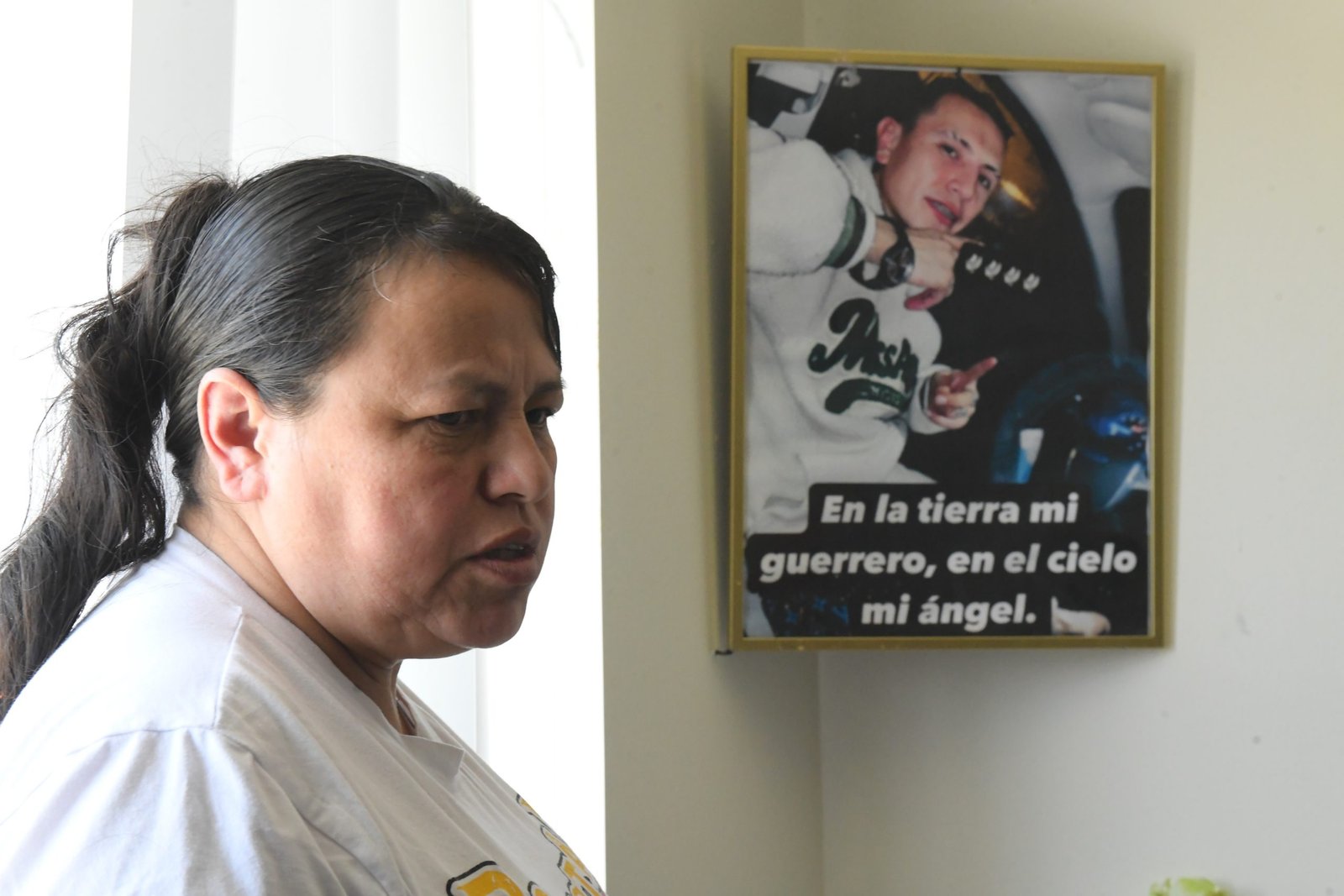
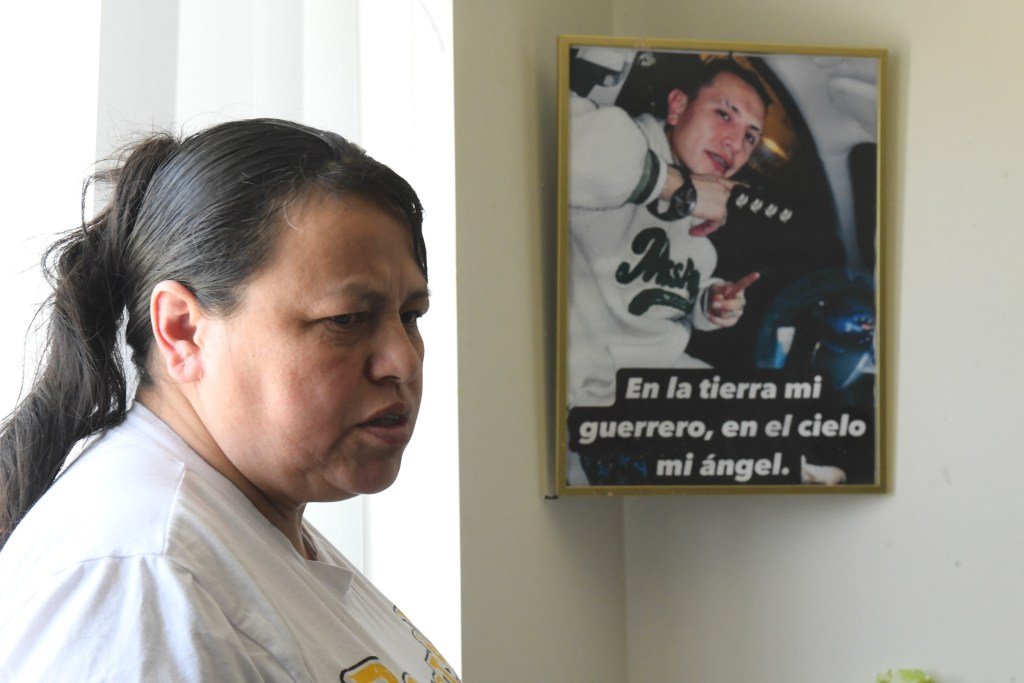
    A woman stands in front of a framed photo of a child.

    EDITOR’S NOTE: This story includes discussion of suicide. If you or someone you know needs help, the national suicide and crisis lifeline in the U.S. is available by calling or texting 988.

    Brayan Rayo Garzon was distraught. Detained by Immigration and Customs Enforcement, he was on his fourth day of isolation in a Missouri jail as he battled the fevers and chills of COVID-19.

    His request for mental health treatment had been put off, records show, and staff had forbidden Rayo from making his nightly call to his mother as a precaution intended to prevent the spread of illness.

    He pleaded with his jailers in handwritten notes to arrange a conversation with her. “I feel in my heart that she’s very worried about me,” he wrote in Spanish.

    A guard collected the note and walked away. Within an hour, jail records show, he was found unconscious in his cell. An autopsy determined he killed himself.

    Rayo’s April 2025 death was the first suicide in a spike among ICE detainees that has alarmed public health officials and jail experts. They said the unprecedented number of suicide deaths is an indication that authorities are failing to properly oversee the detention of tens of thousands of immigrants swept up in the Trump administration’s aggressive deportation strategy.

    A security camera photo of a young man in ICE detention shortly before he committed suicide.
    In this image from video provided by the Missouri State Highway Patrol, Immigration and Customs Enforcement detainee Brayan Rayo Garzon looks towards a surveillance camera in the Phelps County jail in Rolla, Mo., on April 7, 2025, shortly before he died by suicide. Credit: Missouri State Highway Patrol via AP

    An Associated Press investigation found that at least 10 detainees, all men, have died by suicide since President Donald Trump took office in January 2025, a pace that far exceeds the growth in the detainee population, according to a review of ICE data, autopsy reports, coroners’ rulings and police records. Since October, seven deaths have been classified as suicides, a number that is already the most for any fiscal year in the agency’s history. ICE has usually recorded one or no such deaths annually.

    “Something is going profoundly wrong from any kind of public health or mental health perspective,” said Dr. Sanjay Basu, a University of California-San Francisco epidemiologist who cowrote a study documenting the increase in mortality and suicide rates among ICE detainees. “This is one of those alarming, sudden increases.”

    Nine of the deaths were of Hispanic men who had arrived in the U.S. from four countries, the AP found. One man was a Chinese citizen. Their average age was 32. While Trump has characterized those facing deportation as the “worst of the worst,” seven of the 10 had no record of violent crimes in the U.S.

    A note handwritten in Spanish.
    This photo provided by the Missouri State Highway Patrol shows a note written in Spanish by Immigration and Customs Enforcement detainee Brayan Rayo Garzon asking for a phone call with his mother, while he was in the Phelps County jail in Rolla, Mo., on April 7, 2025, shortly before he died by suicide. Credit: Missouri State Highway Patrol via AP

    The suicides account for nearly a fifth of the 51 deaths in ICE custody since January 2025. The majority of those deaths were from natural causes and experts say many of them would have been preventable with timely medical care.

    Department of Homeland Security acting assistant secretary Lauren Bis said suicide deaths in ICE custody remain “extremely rare.”

    Bis said detention staff follow protocols to protect detainees who show signs of self-harming and that ICE requires annual suicide prevention training. She said detainees receive comprehensive healthcare, including mental health services.

    Investigation finds violations of ICE detention standards

    The reasons behind any suicide are complex, and each death often has multiple contributing factors, according to experts. ICE detainees report intense stress after being detained, fear of being returned to countries where their safety may be jeopardized, and frustration and loneliness over the inability to communicate due to language barriers.

    Detainees can also feel helplessness because of the complexity surrounding immigration law. Unlike those in the criminal justice system, most detainees do not have lawyers and their detention on immigration violations is not meant to be punitive.

    ICE becomes responsible for their well-being when they enter detention, and experts say well-run lockups should have few, if any, suicides. That’s because staff can take steps to mitigate the chances that detainees harm themselves by identifying those at risk, getting them care and monitoring them closely, the experts said.

    AP’s investigation found that ICE detention centers have repeatedly fallen short in ways that violate ICE’s own standards.

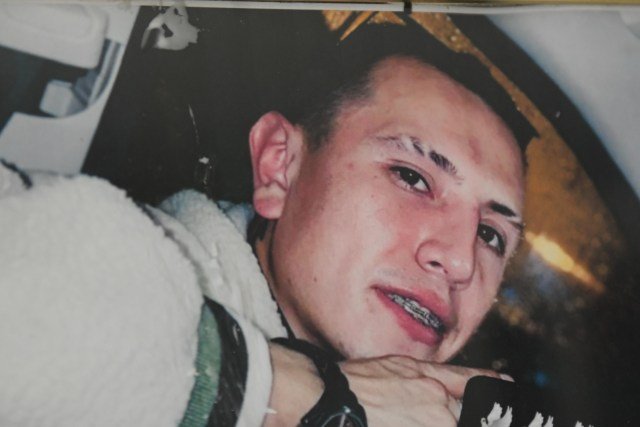
    A picture of a young man with braces.
    A photo of Brayan Rayo Garzon who died by suicide while in ICE custody in April 2025, is displayed in his mother’s apartment in St. Louis, on Friday, May 1, 2026. Credit: AP Photo/Nick Ingram

    An examination of the 10 suicide deaths found the men died across ICE’s detention network, including at centers long run by private contractors and county jails that recently became ICE partners. The AP found that staff in the facilities ignored signs of distress, delayed mental health treatment and failed to monitor detainees who were already deemed at risk. They also permitted detainees to have access to materials that could be used for self-harm, according to AP’s review of ICE inspection reports and death records.

    In some cases, they jailed distressed detainees in isolation, which can exacerbate feelings of humiliation and helplessness, according to experts.

    ICE has repeatedly asserted that it screens detainees within 12 hours of arrival for medical, dental and mental health conditions.

    At least three of the nine facilities where ICE detainees died by suicide have struggled to meet that standard, according to ICE inspection reports and jail records.

    Dr. Homer Venters, former chief medical officer of New York City jails who previously consulted with ICE on preventing detainee deaths, called the rise in suicides terrifying.

    The increase “reflects failures in how the system’s being operated, and particularly failures in how the first stages of coming into detention are happening so that people aren’t being assessed adequately,” Venters said. “And then if that receiving screening picks up red flags, they’re not acted on in a way that reduces the risk of them having preventable death.”

    From border crossing to detention

    Among those who took their own lives was a 19-year-old from Mexico who had been detained following a misdemeanor traffic stop while riding his scooter.

    Another was a 36-year-old restaurant worker who lost contact with his relatives in Nicaragua after ICE detained him in Minnesota and sent him to a crowded camp in Texas. A third was a 45-year-old who had repeatedly crossed the U.S.-Mexico border illegally and had a long criminal record.

    Rayo, who took his own life after pleading to talk to his mother, was a veteran of the Colombian military who had worked as a street vendor in his home country. A week after he turned 26 in 2023, his family crossed the U.S. border in California. He was detained for three months before being permitted to settle with family in St. Louis, records and interviews show.

    His mother, Adriana Garzon, said Rayo caught on quickly to life in the U.S., making friends easily and working as a housepainter and food delivery driver. He wanted to save money to hire a lawyer to help him stay in the country after a judge in 2024 ordered that he be sent back to Colombia, she said.

    He was arrested in March 2025 by St. Louis police after being caught using a stolen credit card, which he had obtained from a friend, at a vape shop, court records show. ICE then took him into custody. An ICE record obtained by AP classified Rayo as a laborer who was a low risk to public safety.

    ICE placed Rayo in the Phelps County jail in Rolla, Missouri, about 100 miles (160 kilometers) from St. Louis.

    Suicides reveal shortcomings across ICE’s detention network

    The deaths have revealed holes in treatment and oversight across ICE’s system, where the detained population has spiked by 50% to 60,000 during Trump’s second term.

    Five died in centers run by longtime ICE detention partners CoreCivic and the GEO Group. A sixth died at a camp operated by an inexperienced contractor that ICE has since replaced. Three died in jails run by sheriffs, and one at a federal prison.

    “We are deeply saddened by and take very seriously the passing of any individual in our care,” CoreCivic spokesperson Brian Todd said.

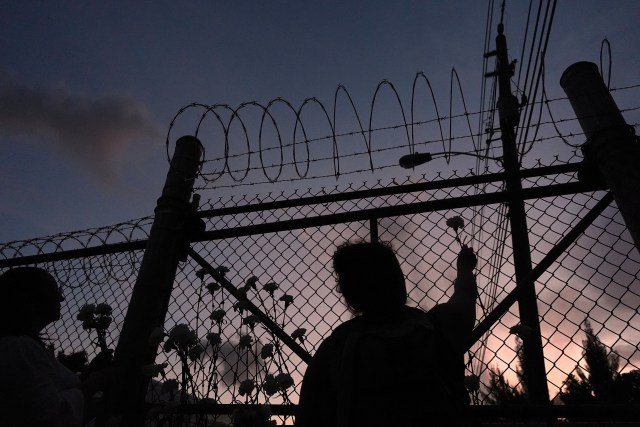
    The silhouette of a person putting a flower on a fence with barbed wire to recognize people who have died in ICE detention.
    FILE – People place flowers on a fence outside Krome Detention Center in Miami, Saturday, May 24, 2025, during a vigil to recognize people who have died in U.S. Immigration and Customs Enforcement custody as well as those affected by mass deportations. Credit: AP Photo/Rebecca Blackwell

    GEO Group spokesperson Christopher Ferreira said the company trains staff on suicide prevention and seeks “to maintain a safe and secure environment in compliance with the standards and requirements set by the federal government.” Officials at the three jails either declined comment or didn’t return messages.

    Leo Cruz Silva, a 34-year-old who had repeatedly illegally entered the country from Mexico, suffered an acute mental health crisis following his detention after an arrest for public intoxication last fall in a St. Louis suburb, records show.

    For two nights in Missouri’s Ste. Genevieve County Jail, Cruz screamed, hid under his bed and reported hallucinations, according to an ICE report on his death. Yet he did not get help quickly.

    A nurse ordered antipsychotic medications and planned to get him treatment the next week, the ICE report said.

    On the third day, he was found dead in his cell.

    Chaofeng Ge arrived in ICE custody last summer at a Pennsylvania facility run by the GEO Group in mental distress, having pleaded guilty to a minor gift card fraud and attempted suicide in state custody, said David Rankin, an attorney representing Ge’s family.

    In five days at the facility, he did not get mental health treatment and was unable to communicate because no one spoke Mandarin, Rankin said. Ultimately, Ge went unmonitored before he was found hanged in a shower stall.

    “It’s clear that ICE has taken very few steps to ensure the safety of these people,” Rankin said. “They appear to want to make this process as cruel and inhuman as possible. It’s completely unacceptable.”

    At Camp East Montana in El Paso, Texas, 36-year-old Victor Diaz died by suicide in a medical holding room in January, according to an ICE report. He had been moved into isolation after reporting harassment by fellow detainees, the report said.

    Days earlier at the same facility, Geraldo Lunas Campos died of asphyxia after ICE said guards restrained him following a suicide attempt. His death was ruled a homicide by a medical examiner and Trump administration officials said the FBI was investigating its circumstances.

    ICE inspectors visited the facility in February, documenting 49 violations of detention standards at what was then ICE’s largest detention facility, according to their report.

    The report found that staff did not record “required checks to prevent significant self-harm and suicide” while inspectors found tools and equipment unsecured and unaccounted for throughout the facility that could be used for harm. Calls to 911 show several other detainees had attempted suicide there.

    At the time of the deaths and inspections, Acquisition Logistics was the contractor running the facility. ICE has since replaced Acquisition Logistics with another contractor. Acquisition Logistics did not return messages seeking comment.

    Detainee spent final days sick and isolated

    The Phelps County Jail had started taking ICE detainees a month before Rayo’s arrival. Sheriff Michael Kirn, a Republican in a county where voters overwhelmingly supported Trump’s reelection, told commissioners his department’s budget was hurting and partnering with ICE could generate millions in revenue.

    Records show Rayo’s trouble started immediately. It took the jail 35 hours to conduct the initial medical screening ICE promises within 12 hours, according to jail records obtained by the AP under the open records law.

    Rayo exhibited labored breathing and told a nurse he was anxious and wanted mental health treatment.

    A nurse who didn’t speak Spanish used a “handheld translator” to assess Rayo, concluding he denied thoughts of suicide and depression, according to the documents compiled by the Missouri State Highway Patrol during an investigation into Rayo’s death.

    She recommended him for the general population, listing his physical and mental condition as stable, records show. And she referred him for a routine mental health appointment.

    Two days later, he reported head pain and body aches. Staff learned he was positive for exposure to tuberculosis bacteria. He was sent to a hospital, where he was diagnosed with COVID-19. He was returned to jail the following day.

    The mental health appointment was scheduled but canceled due to “mental health clinic time and staff,” a jail record shows. Two days later, they again canceled his appointment, this time citing his coronavirus infection.

    The delays violated an ICE standard requiring mental health treatment within a week of a referral.

    Bis, the DHS spokesperson, said Rayo received “high-quality medical care during his time in ICE custody.”

    To ease his anxiety, Rayo called his mother before bed to share a Catholic blessing. “I gave him strength,” said Garzon, whose first name, Adriana, was tattooed on her son’s arm.

    As Rayo grew sicker with nausea, chills and aches, staff moved him into a cinderblock isolation cell with a surveillance camera overhead for closer monitoring and to prevent the spread of disease. He was not allowed to call his mother.

    On his fourth day of isolation, Rayo passed two notes under his door, begging guards to let him talk to his mom. In one, which was reviewed by AP, he appealed to the guard’s humanity. “I know you have family, and you know that they worry about us,” he wrote in Spanish. “God bless you.”

    The English-speaking guard used a colleague’s phone to translate the notes and wrote in a report that he planned to follow up.

    Within an hour, guards found Rayo unconscious on his bed with a sheet around his neck.

    Emergency responders tried to revive him, transporting him to a hospital. That’s when an official called Rayo’s mother — to let her know her son was in very bad shape and would be flown to a St. Louis medical center. At the hospital, a doctor gave her the devastating news: Her son was dead.

    ___

    The spelling of the DHS spokesperson’s last name has been corrected to Bis instead of Bies.

    The post ICE detainees are dying by suicide at an ‘alarming’ rate, an AP investigation finds appeared first on MinnPost.
  • Nonprofit fraud: Amid high‑profile prosecutions, an accountant explains what’s really going on

    Nonprofit fraud: Amid high‑profile prosecutions, an accountant explains what’s really going on

    This story about nonprofit fraud was originally published by The Conversation.

    Nonprofit fraud is in the news a lot these days.

    Federal investigators in Minnesota prosecuted one of the largest alleged COVID-19 pandemic fraud schemes, in which several nonprofits and individuals are accused of stealing about US$250 million from a federally funded child nutrition program. 

    The defendants were found guilty in 2025, three years after the investigation began, of diverting funds by faking meal counts and submitting false reimbursement claims, then spending the money they got on luxury homes and cars. Other federal investigations of alleged fraud at nonprofits serving children in Minnesota are underway.

    In April 2026, the Department of Justice under the Trump administration indicted the Southern Poverty Law Center, a civil rights nonprofit, on fraud charges that the center denies. That indictment has raised concerns about increased federal involvement in policing nonprofits – especially those that take actions the government may find objectionable.

    Beware of false claims

    The Department of Justice says it reached more than $6.8 billion in settlements and judgments in 2025 tied to the False Claims Act, the highest on record.

    The False Claims Act, enacted in 1863, allows the government to pursue individuals or organizations who intentionally submit a “false claim” – baseless requests for taxpayer funds through a government grant or as reimbursement for services provided through a contract.

    The Internal Revenue Service defines nonprofit fraud as the misuse of an organization’s assets, including embezzlement and theft.

    “Public money and tax-exempt status demand public accountability,” Treasury Secretary Scott Bessent has said in defense of the Trump administration’s nonprofit crackdown. The goal, he added, was to end “the days of hiding fraud, abuse and extremist activity behind complicated nonprofit arrangements.” 

    As an accounting professor who studies nonprofit fraud, I see the SPLC indictment and similar actions as a broader shift toward more aggressive government oversight of nonprofits and the policing of charitable activities.

    More training needed

    Despite Bessent’s suggestion, there is no clear data about how common nonprofit fraud is or how prevalent it is compared to corporate fraud or acts of fraud by people employed by government agencies.

    The Association of Certified Fraud Examiners estimates that companies and nonprofits lose approximately 5% of their annualrevenue to fraud, according to a 2024 report.

    The report found a typical loss from a reported nonprofit fraud incident is around $76,000. That’s just over half the average cost of $145,000 for all fraud cases, which also include incidents affecting private companies and government agencies.

    The Association of Certified Fraud Examiners also has found that nonprofits are less likely to be trained than their peers in other sectors to identify evidence of fraud risks. That can make their staff and leaders less prepared to spot and deal with fraud compared to private businesses and government agencies.

    Only 52% of nonprofit staff members report receiving any training on fraud awareness and risk, versus 83% for the employees of publicly traded companies.

    Internal vs. external fraud

    Once charities, which must have a purpose the government accepts, such as education, religion, science or helping those in need, are established, they ask the IRS to grant them tax-exempt status. 

    All U.S. charities, except for churches, must then file mandatory annual 990 forms with the IRS to maintain their tax-exempt status. One of their responsibilities when they complete those forms is to report what the IRS calls any “significant diversion of assets” detected since filing the previous form. 

    Diversion of assets means that money has been taken from a nonprofit, decreasing the funds available for it to fulfill its mission.

    The FBI has a more expansive definition of nonprofit fraud, which also includes the external kind. And it prosecutes people accused of committing them.

    The most common kind of external nonprofit fraud is when people create or run fake charities – groups that solicit donations but in reality are either complete scams that spend little or no time and money on real charitable activities.

    For example, a charity called “Providing Hope VA” raised over $9 million in 2023 to provide services to homeless veterans. Instead, the funds became a personal bank account for its president and sole board member, James Arehart. He was sentenced to 21 months in prison and ordered to repay the bilked funds in 2025.

    Providing Hope VA shut down following Arehart’s fraud conviction.

    The Donald J. Trump Foundation was another charity shuttered in the aftermath of fraud investigations. It ceased operations in 2019 after New York state authorities found that it had made illegal use of charitable contributions for political purposes.

    State of nonprofit fraud policing

    Nonprofits are typically created when their founders file paperwork with state authorities.

    As a result, the responsibility for policing nonprofits generally falls to state attorneys general, rather than federal authorities. But state governments have historically devoted little staff time or money to policing nonprofits, limiting their oversight of the charitable sector.

    Only about 355 people worked to monitor charities in 48 out of 56 U.S. states and territories, according to the most recent comprehensive survey of state regulators from the Urban Institute and Columbia Law School, published in 2016. Most state offices employed fewer than 10 full-time workers. 

    About 1 in 3 states didn’t even employ one staffer whose full-time job was to ensure that nonprofit funds were properly managed and that people in their states who ran nonprofits were upholding their financial and ethical duties, according to the survey.

    Some states are more engaged in watching out for and punishing nonprofit fraud. The New York attorney general’s office, for example, publishes an annual report analyzing hundreds of nonprofit fundraising campaigns. Called Pennies for Charity, it analyzes professional fundraising to calculate how much charities actually receive in funds after they pay fees to the hired professionals. 

    Federal government’s role

    The federal government plays a role, too.

    The IRS oversees nonprofits, to a degree, through its requirement that charities file 990 forms. And in some cases, it audits nonprofits.

    The IRS audited around 660 nonprofits that filed 990 forms in 2024 out of the nation’s estimated 1.9 million tax-exempt organizations. The IRS can also impose penalties or revoke a charity’s tax-exempt status for serious violations, such as failure to file a 990 form for three consecutive years, engaging in overtly political lobbying, or failing to use funds to support a public benefit. 

    When the authorities encounter a large-scale case of suspected federal fraud, or a case that may have harmed people in several states, the federal government may step in. The Justice Department may investigate and prosecute in those instances. Federal investigations of suspected nonprofit fraud have been historically rare, making the SPLC indictment an unusual exception.

    In this case, the FBI and IRS led an investigation into the charity and referred the case to the Justice Department for prosecution. Separately, the Alabama attorney general later opened a civil investigation into the SPLC for potentially violating state charity laws.

    Donor precautions can be counterproductive

    Several organizations rate nonprofits to help donors give wisely, including Charity Watch, Candid and Charity Navigator.

    Many of these groups consider the percentage of their funds that charities spend on overhead costs to be a way to assess a charity’s quality. Overhead includes fundraising, accounting, advertising, media outreach and other expenses that are required to ensure that a charity can get its work done and increase what donors call its “impact.” The salary and benefits of some employees may count as well, depending on their roles.

    This pressure to keep overhead spending low can lead U.S. charities to not make fraud prevention and detection a high priority.

    Nonprofits may also hesitate to report suspected fraud or theft because they worry that it could hurt their reputation among donors and by extension future funding.

    A research team found that donations declined after charities reported cases of nonprofit fraud, and fell even more when the news media covered those incidents. The study, published in 2023, also found that donors were less likely to cut funding when fraud-afflicted nonprofits demonstrated transparency, recovered stolen funds and took steps to prevent future misconduct.

    Likewise, the Association of Certified Fraud Examiners stresses the importance of disclosure and corrective action after fraud occurs in any context.

    The association also recommends that companies and nonprofits establish procedures to analyze their spending and set up whistleblower hotlines. Nonprofits would likely benefit from increased monitoring for fraud, but must weigh the benefit against spending funds to support their charitable mission.

    The post Nonprofit fraud: Amid high‑profile prosecutions, an accountant explains what’s really going on appeared first on MinnPost.

  • Woman at center of sprawling Minnesota fraud case gets nearly 42-year prison sentence 

    Woman at center of sprawling Minnesota fraud case gets nearly 42-year prison sentence 

    MINNEAPOLIS (AP) — A judge on Thursday handed down an extraordinary prison sentence — nearly 42 years — to the former leader of a Minnesota nonprofit who was convicted in a staggering $250 million fraud case that helped ignite an immigration crackdown by the Trump administration.

    Aimee Bock ran Feeding Our Future, which had claimed it helped provide millions of meals to children in need during the pandemic. The U.S. Justice Department, however, said she was atop the “single largest COVID-19 fraud scheme in the country.”

    “I understand I failed. I failed the public, my family, everyone,” Bock said in federal court.

    After the hearing, authorities held a news conference to announce charges against 15 more people accused of fraud in receiving federal payments for a variety of social services administered through Minnesota’s state government.

    “We will claw back every dollar you have stolen from the American people,” Assistant Attorney General Colin McDonald declared.

    President Donald Trump used the fraud cases against Bock and many others to initially justify a massive surge of federal officers to the Minneapolis-St. Paul area last winter, leading to pushback from residents and the deaths of two people.

    Bock had long proclaimed her innocence but was convicted last year of conspiracy, fraud and bribery.

    Her nonprofit was at the center of a fraud network that included a web of partner organizations, phony distribution sites, kickbacks and fake lists of children supposedly being fed, prosecutors say. Dozens of people, many from the state’s large Somali community, have been convicted in a series of overlapping food fraud cases that have spent years in the courts.

    Bock and co-conspirators enriched themselves with international travel, real estate purchases, luxury vehicles and other lavish spending, the government said.

    “This case has changed our state forever,” Joe Thompson, formerly the lead prosecutor in the case, said outside the courtroom. “Aimee Bock did everything she could to earn this long sentence.”

    Bock’s lawyer, Kenneth Udoibok, argued for no more than three years in prison, saying she had provided key information to investigators. He argued that Bock had been unfairly painted as the mastermind and insisted that two co-defendants were responsible for running the scams.

    Meanwhile, in a fresh batch of criminal cases filed in Minnesota, the government said the alleged fraud involved $90 million across seven state-managed Medicaid programs.

    The targets include Fahima Mahamud, who was CEO of Future Leaders Early Learning Center, a childcare center in Minneapolis. Over three years, Mahamud’s organization was reimbursed approximately $4.6 million for services on behalf of people who didn’t make a required copayment, prosecutors allege.

    A message seeking comment from her lawyer was not immediately returned Thursday. Mahamud was charged separately in February with fraud related to meals. She has pleaded not guilty.

    Two other people were charged with conspiring to get $975,000 in Medicaid subsidies for housing services that were not provided. They’re expected to plead guilty in June, according to a court filing.

    Two additional people were accused of receiving $21.1 million by billing Medicaid for autism therapy that was either unnecessary or not provided. Investigators said the two paid families as much as $1,500 per child per month to add their names to the program and get reimbursement.

    “We will not allow criminals to treat children as billing opportunities as American taxpayers foot the bill,” said Health and Human Services Secretary Robert F. Kennedy Jr.

    Trump, who has long derided Somalis, last year blasted Minnesota as “a hub of fraudulent money laundering activity.” He also criticized the leadership of Gov. Tim Walz, the Democrats’ vice presidential nominee in the 2024 election.

    “Somali gangs are terrorizing the people of that great State, and BILLIONS of Dollars are missing. Send them back to where they came from,” Trump wrote on social media.

    Bock is white and the U.S. Attorney’s Office says the overwhelming majority of defendants in the cases are of Somali descent. Most are U.S. citizens.

    The immigration surge led to repeated protests and confrontations between residents and federal officers and resulted in the killings of Renee Good and Alex Pretti.

    ___

    AP reporters Scott Bauer in Madison, Wisconsin, and Ed White in Detroit contributed.

    The post Woman at center of sprawling Minnesota fraud case gets nearly 42-year prison sentence  appeared first on MinnPost.

  • Bipartisan letter calls on state attorneys general to hold ‘nudify’ apps accountable

    Bipartisan letter calls on state attorneys general to hold ‘nudify’ apps accountable

    This story about digital nudification tools was originally reported by Jasmine Mithani of The 19th. Meet Jasmine and read more of her reporting on gender, politics and policy.

    Advances in generative AI have made it easier than ever to create sexually explicit images of nearly anyone without their permission — and so-called “nudification apps” can digitally undress anyone with the click of a button. There is an entire ecosystem that enables these deeply personal violations, from face-swap apps that promise to “undress her” to payment processors that collect profits from each transaction. 

    Although deepfake abuse has repeatedly made headlines, state attorneys general, who are kicking off their semiannual meeting on Tuesday, do not list the topic as a discussion item.

    A bipartisan coalition of 54 organizations, led by gender justice advocacy group UltraViolet, is drawing attention to this omission. They released a letter calling on state attorneys to take direct legal action against app stores that continue to host nudification apps on their respective marketplaces.

    “In a few years, we hope this digital reality we live in, in which any person can be sexually deepfaked online without recourse, will seem unfathomable; we’re putting out this letter to make sure that vision becomes reality,” said Jenna Sherman, campaign director at UltraViolet.

    Research has shown that image-based sexual abuse can impact survivors in the same way physical assaults do. 

    “No matter how hard I tried to detach my reality from the digital absurdity before me, the visuals felt like a violation; an assault on my dignity, integrity, and very existence,” a survivor told UltraViolet in a survey they fielded. “The woman in the video was me, yet it wasn’t—I didn’t recognize that version of myself, stripped bare and exposed in a cruel twist of technology.”

    Signatories include both state and national groups such as Equality Now, Electronic Privacy Information Center, Missing Murdered Indigenous Women Coalition of North Carolina, National Organization for Women and Reproaction.

    The signatories are asking the National Association of Attorneys General, which is convening for the 2026 Spring Consumer Protection Conference, to hold app stores, particularly those run by Apple and Google, accountable for their roles in disseminating nudification tools. Advocates say state-level enforcement matters because there tends to be more capacity to pursue cases than at the federal level, and the process can move more quickly.

    Google explicitly bans nudification apps, and Apple bans offensive apps and those with egregious sexual content. Both companies say they remove apps that violate their policies when they become aware of them.

    But enforcement is not uniform. UltraViolet cites a January report from the Tech Transparency Project, a nonprofit focused on tech accountability, that found 55 nudification apps available on the Apple Store and 47 available on the Google Play Store. Apple told CNBC that it took down 28 of the identified apps, but didn’t explain why others remained up. 

    A follow-up report in April from the same organization found many nudification apps still available for download. It also found that search bars autocompleted queries related to nonconsensual intimate imagery and “in many cases, they “recommended entirely new search queries that led to more nudify apps.”

    The Tech Transparency Project conferred with an analytics firm to estimate that the nudification apps found through their searches “have been downloaded 483 million times and made more than $122 million in lifetime revenue.”

    There has been a movement to pressure tech companies to take action on sexual exploitation on their platforms through framing abuse as a product safety issue. Nudification apps are the most accessible way to generate nonconsensual deepfakes, and are a particular problem in schools as students abuse each other. A high school teacher told UltraViolet they have seen deepfake abuse among teens: “It is appalling and deeply damaging to the victims, and can foment suicide.” 

    That’s part of why organizers are timing the letter to the first day of the Spring Consumer Protection Conference, Sherman said. “In many ways, this conference is the ‘room where it happens:’ state attorneys general gather to discuss the most pressing issues facing consumers and how their offices can address them.” 

    States play an important role in stopping deepfake abuse. Minnesota Gov. Tim Walz, a Democrat, signed the nation’s first ban on nudification technology on May 7. The federal Take It Down Act criminalized the distribution of nonconsensual intimate imagery last year, but it was years behind state laws addressing the problem.

    State attorneys general are in charge of enforcing state-level tech regulations. Sherman said they are the “frontline defenders of consumer protection and data privacy.” 

    “They have long played this firefighter role but have become especially critical over the last years with the worsening of federal consumer protection rollbacks, the exponential increase of Big Tech’s power, and AI development far outpacing the law,” she explained over email.

    Advocates, lawmakers and prosecutors have coalesced around platform accountability over the past year, with a focus on curbing the availability of tools used to make deepfakes. 

    Much of this is backlash to Grok, the chatbot integrated in the social media platform X. In late December 2025, X announced its users could use Grok to create AI-generated images. Elon Musk, the current owner of X and founder of xAI, the creator of Grok, boasted about how his AI tools would be free from “wokeness.” 

    Insufficient guardrails on Grok quickly led to the proliferation of nonconsensual intimate images on X and across the web. Over 1.8 million sexualized images of women were generated and shared on X in a matter of days, per reporting from The New York Times and the nonprofit Center for Countering Digital Hate. Several lawsuits allege Grok and X did not adhere to industry standards on preventing explicit content.

    The deluge prompted California Attorney General Rob Bonta to open an investigation into whether xAI broke any state laws, which includes a ban on nonconsensual intimate imagery passed last year. 

    “As the top law enforcement official of California tasked with protecting our residents, I am deeply concerned with this development in AI and will use all the tools at my disposal to keep California’s residents safe,” Bonta said in the January 14 press release announcing the investigation. 

    Last year, a group of 47 bipartisan state and territory attorneys general urged online payment platforms to “be more aggressive in identifying and removing payment authorization” for deepfake content.

    State attorneys general have also pushed platforms to make changes: New Mexico Attorney General Raúl Torrez sued Meta, alleging its social media products hurt the state’s youth and exposed them to sexual exploitation. A jury concurred, ruling Meta violated the state’s consumer protection laws and ordering the company to pay $375 million in fines. Now, the parties are in negotiations over additional penalties that could have wide-ranging impact beyond the Land of Enchantment. Torrez’s team asked the tech giant to fork over $3.7 billion for teen mental health care and awareness campaigns; but Meta is contesting it.

    Sherman wants to see that energy brought to combat deepfake sexual abuse.

    “We’re just incensed that we have just moved past the Grok-enabled deepfake epidemic of millions without any real accountability, changes, or reckoning,” she said. “We will keep using every possible opportunity to share that rage to evoke real change for every survivor and all of society.”

    The post Bipartisan letter calls on state attorneys general to hold ‘nudify’ apps accountable appeared first on MinnPost.

  • D.C. Memo: McCollum has tough questions for Hegseth

    D.C. Memo: McCollum has tough questions for Hegseth

    WASHINGTON – While President Donald Trump made a high-level, high-stakes trip to China this week accompanied by 17 corporate CEOs — including Cargill chief executive Brian Sikes — Congress refocused its attention on the Iran war.

    An eighth vote was held Wednesday in the U.S. Senate on a war powers resolution that would rein in Trump’s ability to continue to prosecute the war. That effort failed on a narrow 49-50 vote. But it gained a new supporter as Sen Lisa Murkowski, R-Alaska, voted with all Democrats except Pennsylvania Sen. John Fetterman to try to impose Congress’ authority over the war.

    Murkowski joined fellow Republicans Sens. Rand Paul of Kentucky and Susan Collins of Maine in voting for the resolution, saying that the 60-day window during which the president can unilaterally take action without congressional approval had ended. Trump argues it has not because of the shaky cease fire he has established with Iran.

    The U.S. House also tried to approve a war powers resolution late Thursday. The vote was tied, 212-212 and therefore the resolution was rejected. But as in the U.S. Senate, the effort in that chamber has had growing GOP support.

    Trump says he does not need congressional approval to conduct the war.

    Meanwhile, at a hearing this week, Rep. Betty McCollum, D-4th District, questioned Secretary of Defense Pete Hegseth this week over the cost of the Iran war and the budgetary needs of the nation’s military. 

    The top Democrat on the House Appropriations Committee with authority over the Pentagon’s budget, McCollum said the panel is still awaiting information about the Pentagon’s $1.5 trillion request to fund the Defense Department in fiscal year 2027 – a historically high budget for the nation’s military. She also said the panel needed details of a supplemental budget request, estimated to be more than $29 billion, to help pay for the Iran war.

    “We are still waiting for that information,” McCollum said.

    She told Hegseth that it took months for Congress to receive information about U.S. weapon shipments to Ukraine and that the Defense Department “must do better.”

    She said Trump’s 2027 budget request increased defense spending by 44%, which the president proposed paying for with cuts to domestic programs, especially those concerning education.

    She asked Hegseth for an accounting of munition levels, damage to war ships, military equipment that has been lost and additional fuel delivery cost as Iran’s lockdown of the Strait Hormuz has prevented oil tanker deliveries and resulted in a spike in the prices of gasoline and diesel.

    She also said the panel needed details of the $1.5 trillion 2027 defense budget no later than June 11.

    McCollum also asked Hegseth, if Congress is able to approve a war powers resolution that impacted U.S. military actions in Iran, “do you have a Plan B?”

    “We have a plan for all of that. We have a plan to escalate if necessary. We have a plan to retrograde, if necessary. We have a plan to shift assets,” Hegseth said. “Certainly, in this setting we should not reveal what the next step would be considering the gravity of the situation.”

    McCollum told Hegseth that lawmakers could be briefed in a secure location and said she also wanted that information by June 11.

    “I will not support a blank check for the Pentagon,” McCollum told MinnPost. “The Trump administration’s budget request must be closely scrutinized. They have failed thus far to provide information to Congress to justify such an extraordinary budget request, and they have failed to provide a plan to pay for it in the long-term.” 

    Rep. Ken Calvert, R-Calif., the chairman of the appropriations subcommittee also asked Hegseth to send Congress a final request for supplemental funding to cover the costs incurred by the war in Iran.

    “It would be helpful to get the supplemental sooner than later so we could work on it,” he said.

    That war supplement would not account for the damage Iran has caused to U.S. bases in the Middle East, Jules Hurst, the Pentagon’s acting comptroller, told lawmakers. 

    An analysis published last week by the Washington Post showed that Iranian forces had damaged or destroyed at least 228 U.S. structures or pieces of equipment since the war began Feb. 28, including aircraft and hangars, barracks, fuel depots, radar and air defense equipment.

    There was also bipartisan frustration about the conduct of the war at the hearing.

    Rep. Harold Rogers, R-Ky., said it had “confirmed what defense planners had long warned about: Iran doesn’t need a peer military to cause serious problems.”

    In other news:

    ▪️ Reporters Matthew Blake, Brian Arola, and Maddie Robinson are among the MinnPost reporters following the flurry of activity as the state Legislature wraps up its session, including an agreement for a bailout of the financially distressed Hennepin County Medical Center and a $1.2 billion bonding bill, as well as unexpected tax relief. 

    ▪️ Metro reporter Trevor Mitchell also covered the state Legislature this week as it approved $40 million for emergency rental assistance and $100 million in bonds to support the maintenance and development of affordable homes. There’s also a little money in the bill to combat homelessness.  

    ▪️ Congress gave Midwestern farmers a big victory this week as the U.S. House voted to allow nationwide sales of E15 all year long. But opposition from small gasoline and diesel distillers may make it difficult for the E15 legislation to win approval in the U.S. Senate.

    ▪️ Michele Tafoya’s bid for retiring Sen. Tina Smith’s seat is strongly supported by the national Republican Party. But not all of the GOP activists in the state who will decide whether to endorse Tafoya or one several other Republicans running for the seat, are sold on the former broadcaster.  

    The post D.C. Memo: McCollum has tough questions for Hegseth appeared first on MinnPost.

  • Minnesota lawmakers score big win on E15

    Minnesota lawmakers score big win on E15

    WASHINGTON – Farm-country congressional supporters of E15, a gasoline fuel blend that contains 15% ethanol, scored an important victory Wednesday as the U.S. House approved a bill that would allow year-round sales of the fuel.

    Co-sponsored by Reps. Michelle Fischbach, R-7th District; Brad Finstad, R-1st District; and Angie Craig, D-2nd District, the E15 bill was approved on a bipartisan 218-204 vote.

    “This has been a long time coming,” said Craig, a long-time champion of year-round sales of E15.

    Minnesota is the fourth-largest producer of ethanol in the nation with 18 plants, making E15 a major contributor to the Greater Minnesota economy and providing state and local governments with more than $30 million in tax revenues each year.  

    The divide in Congress over E15 does not break along party lines but has pitted farm state lawmakers against those whose districts or states are home to small refineries.

    The lobbying for and against E15 was fierce and the split among GOP lawmakers over the issue prevented the blended fuel from being considered in the farm bill last month.  

    Opponents of year-round E15 sales said the bill approved by the House would make changes to the Environmental Protection Agency’s Renewable Fuel Standard (RFS) that would disqualify a lot of small refineries who can now opt out of the program.

    Unlike major refineries, small independent refiners often do not own their own ethanol blending facilities and must buy expensive biofuel credits to meet RFS obligations. A higher E-15 mandate would increase these costs.

    The RFS is a government mandate established in 2005 that requires increasing volumes of biofuels to be blended into gasoline and diesel every year.

    The E15 bill would phase out the exemption from annual ethanol blending requirements and phase out that process by 2028, replacing it with new reduced compliance requirements for small refineries.

    “This bill puts them out of business,” Rep. Harriet Hageman, R-Wyo., said of her state’s small refineries.

    During House debate on the bill, its opponents also said E15 allows vehicles fewer miles per gallon and produces smog-producing emissions during the warm summer months. That’s why many states do not allow the sales of E15 in the summer, although Minnesota and 21 other states do not have this restriction.

    Supporters of the legislation argued that allowing national year-round E15 was a boon for struggling American farmers and for consumers who are paying ever-higher prices at the pump as a result of the Iran war.

    “For too long, the farmers of western Minnesota, along with families and farmers across the country, have been subjected to frustrating and outdated regulations,” Fischbach said during debate on the legislation. 

    Craig called the bill “a win for consumers and a win for farmers.”

    The National Corn Growers Association says that every year roughly 30% of field corn goes into fuel ethanol and that ethanol is “uniquely positioned to play a large role in the future of transportation fuels.”

    The E-15 bill now goes to the U.S. Senate, where approval is not guaranteed.

    Rep. Jim McGovern, D-Mass., a member of the House Agriculture Committee, on Wednesday questioned the move to remove the E15 measure from the farm bill, where he said it had a better chance of getting through the U.S. Senate.

    “It will be dead on arrival in the Senate,” predicted McGovern.

    The post Minnesota lawmakers score big win on E15 appeared first on MinnPost.