This story about digital nudification tools was originally reported by Jasmine Mithani of The 19th. Meet Jasmine and read more of her reporting on gender, politics and policy.
Advances in generative AI have made it easier than ever to create sexually explicit images of nearly anyone without their permission — and so-called “nudification apps” can digitally undress anyone with the click of a button. There is an entire ecosystem that enables these deeply personal violations, from face-swap apps that promise to “undress her” to payment processors that collect profits from each transaction.
Although deepfake abuse has repeatedly made headlines, state attorneys general, who are kicking off their semiannual meeting on Tuesday, do not list the topic as a discussion item.
A bipartisan coalition of 54 organizations, led by gender justice advocacy group UltraViolet, is drawing attention to this omission. They released a letter calling on state attorneys to take direct legal action against app stores that continue to host nudification apps on their respective marketplaces.
Related: Minnesota passes the nation’s first ban on ‘nudification’ apps
“In a few years, we hope this digital reality we live in, in which any person can be sexually deepfaked online without recourse, will seem unfathomable; we’re putting out this letter to make sure that vision becomes reality,” said Jenna Sherman, campaign director at UltraViolet.
Research has shown that image-based sexual abuse can impact survivors in the same way physical assaults do.
“No matter how hard I tried to detach my reality from the digital absurdity before me, the visuals felt like a violation; an assault on my dignity, integrity, and very existence,” a survivor told UltraViolet in a survey they fielded. “The woman in the video was me, yet it wasn’t—I didn’t recognize that version of myself, stripped bare and exposed in a cruel twist of technology.”
Signatories include both state and national groups such as Equality Now, Electronic Privacy Information Center, Missing Murdered Indigenous Women Coalition of North Carolina, National Organization for Women and Reproaction.
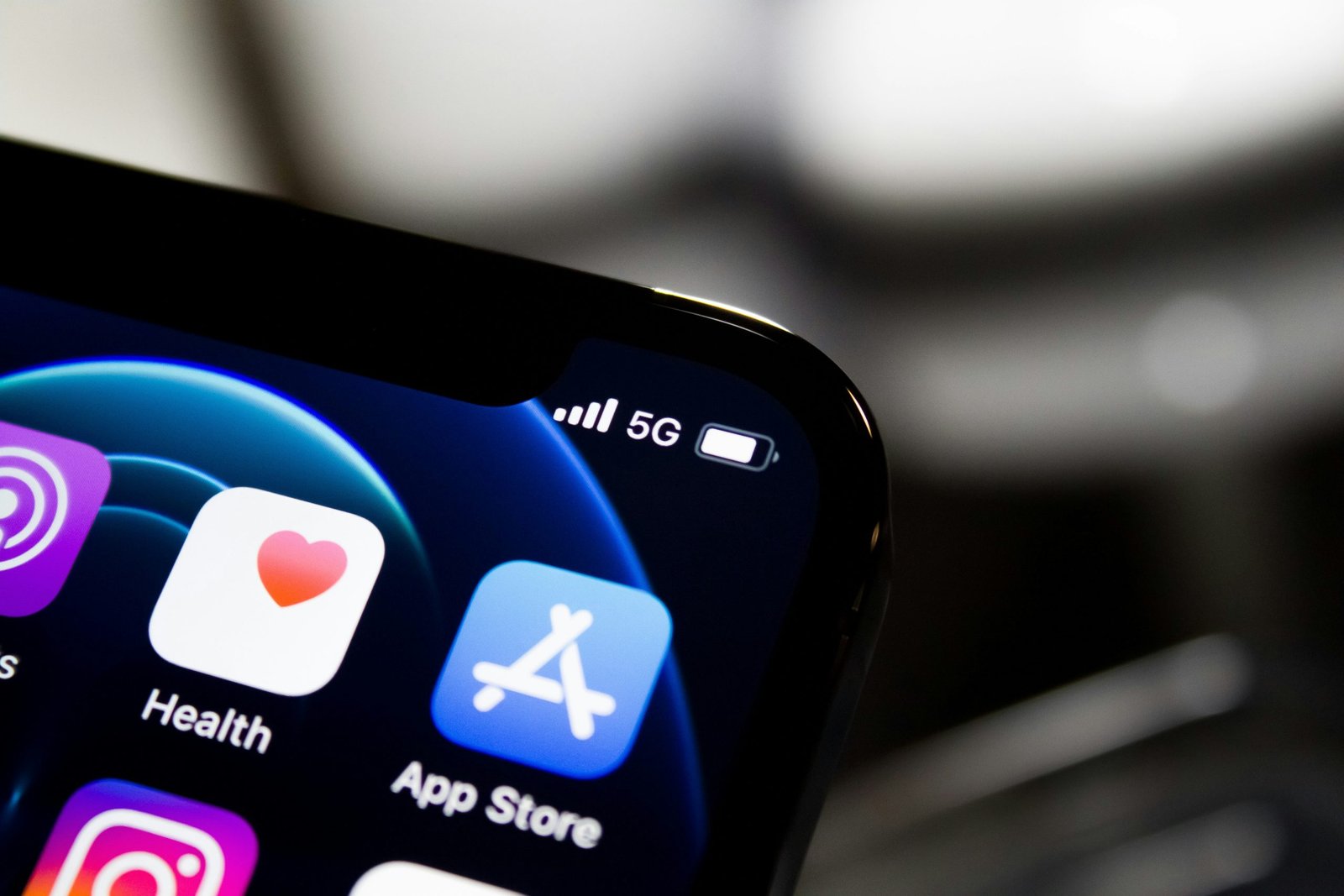
The signatories are asking the National Association of Attorneys General, which is convening for the 2026 Spring Consumer Protection Conference, to hold app stores, particularly those run by Apple and Google, accountable for their roles in disseminating nudification tools. Advocates say state-level enforcement matters because there tends to be more capacity to pursue cases than at the federal level, and the process can move more quickly.
Google explicitly bans nudification apps, and Apple bans offensive apps and those with egregious sexual content. Both companies say they remove apps that violate their policies when they become aware of them.
But enforcement is not uniform. UltraViolet cites a January report from the Tech Transparency Project, a nonprofit focused on tech accountability, that found 55 nudification apps available on the Apple Store and 47 available on the Google Play Store. Apple told CNBC that it took down 28 of the identified apps, but didn’t explain why others remained up.
A follow-up report in April from the same organization found many nudification apps still available for download. It also found that search bars autocompleted queries related to nonconsensual intimate imagery and “in many cases, they “recommended entirely new search queries that led to more nudify apps.”
The Tech Transparency Project conferred with an analytics firm to estimate that the nudification apps found through their searches “have been downloaded 483 million times and made more than $122 million in lifetime revenue.”
There has been a movement to pressure tech companies to take action on sexual exploitation on their platforms through framing abuse as a product safety issue. Nudification apps are the most accessible way to generate nonconsensual deepfakes, and are a particular problem in schools as students abuse each other. A high school teacher told UltraViolet they have seen deepfake abuse among teens: “It is appalling and deeply damaging to the victims, and can foment suicide.”
That’s part of why organizers are timing the letter to the first day of the Spring Consumer Protection Conference, Sherman said. “In many ways, this conference is the ‘room where it happens:’ state attorneys general gather to discuss the most pressing issues facing consumers and how their offices can address them.”
States play an important role in stopping deepfake abuse. Minnesota Gov. Tim Walz, a Democrat, signed the nation’s first ban on nudification technology on May 7. The federal Take It Down Act criminalized the distribution of nonconsensual intimate imagery last year, but it was years behind state laws addressing the problem.
State attorneys general are in charge of enforcing state-level tech regulations. Sherman said they are the “frontline defenders of consumer protection and data privacy.”
“They have long played this firefighter role but have become especially critical over the last years with the worsening of federal consumer protection rollbacks, the exponential increase of Big Tech’s power, and AI development far outpacing the law,” she explained over email.
Advocates, lawmakers and prosecutors have coalesced around platform accountability over the past year, with a focus on curbing the availability of tools used to make deepfakes.
Much of this is backlash to Grok, the chatbot integrated in the social media platform X. In late December 2025, X announced its users could use Grok to create AI-generated images. Elon Musk, the current owner of X and founder of xAI, the creator of Grok, boasted about how his AI tools would be free from “wokeness.”
Insufficient guardrails on Grok quickly led to the proliferation of nonconsensual intimate images on X and across the web. Over 1.8 million sexualized images of women were generated and shared on X in a matter of days, per reporting from The New York Times and the nonprofit Center for Countering Digital Hate. Several lawsuits allege Grok and X did not adhere to industry standards on preventing explicit content.
The deluge prompted California Attorney General Rob Bonta to open an investigation into whether xAI broke any state laws, which includes a ban on nonconsensual intimate imagery passed last year.
“As the top law enforcement official of California tasked with protecting our residents, I am deeply concerned with this development in AI and will use all the tools at my disposal to keep California’s residents safe,” Bonta said in the January 14 press release announcing the investigation.
Last year, a group of 47 bipartisan state and territory attorneys general urged online payment platforms to “be more aggressive in identifying and removing payment authorization” for deepfake content.
Related: Minnesota House passes social media protections for minors, drawing opposition from tech industry group
State attorneys general have also pushed platforms to make changes: New Mexico Attorney General Raúl Torrez sued Meta, alleging its social media products hurt the state’s youth and exposed them to sexual exploitation. A jury concurred, ruling Meta violated the state’s consumer protection laws and ordering the company to pay $375 million in fines. Now, the parties are in negotiations over additional penalties that could have wide-ranging impact beyond the Land of Enchantment. Torrez’s team asked the tech giant to fork over $3.7 billion for teen mental health care and awareness campaigns; but Meta is contesting it.
Sherman wants to see that energy brought to combat deepfake sexual abuse.
“We’re just incensed that we have just moved past the Grok-enabled deepfake epidemic of millions without any real accountability, changes, or reckoning,” she said. “We will keep using every possible opportunity to share that rage to evoke real change for every survivor and all of society.”
The post Bipartisan letter calls on state attorneys general to hold ‘nudify’ apps accountable appeared first on MinnPost.
Leave a Reply