New Delhi: Junaid Siddique’s five-wicket haul was complemented by Aryansh Sharma’s half-century as the United Arab Emirates defeated Canada by five wickets in their ICC Men’s T20 World Cup match here on Friday, February 13.
Senior pacer Siddique headlined a disciplined bowling effort, returning with figures of 5/35 to help UAE restrict Canada to a below-par 150 for 7.
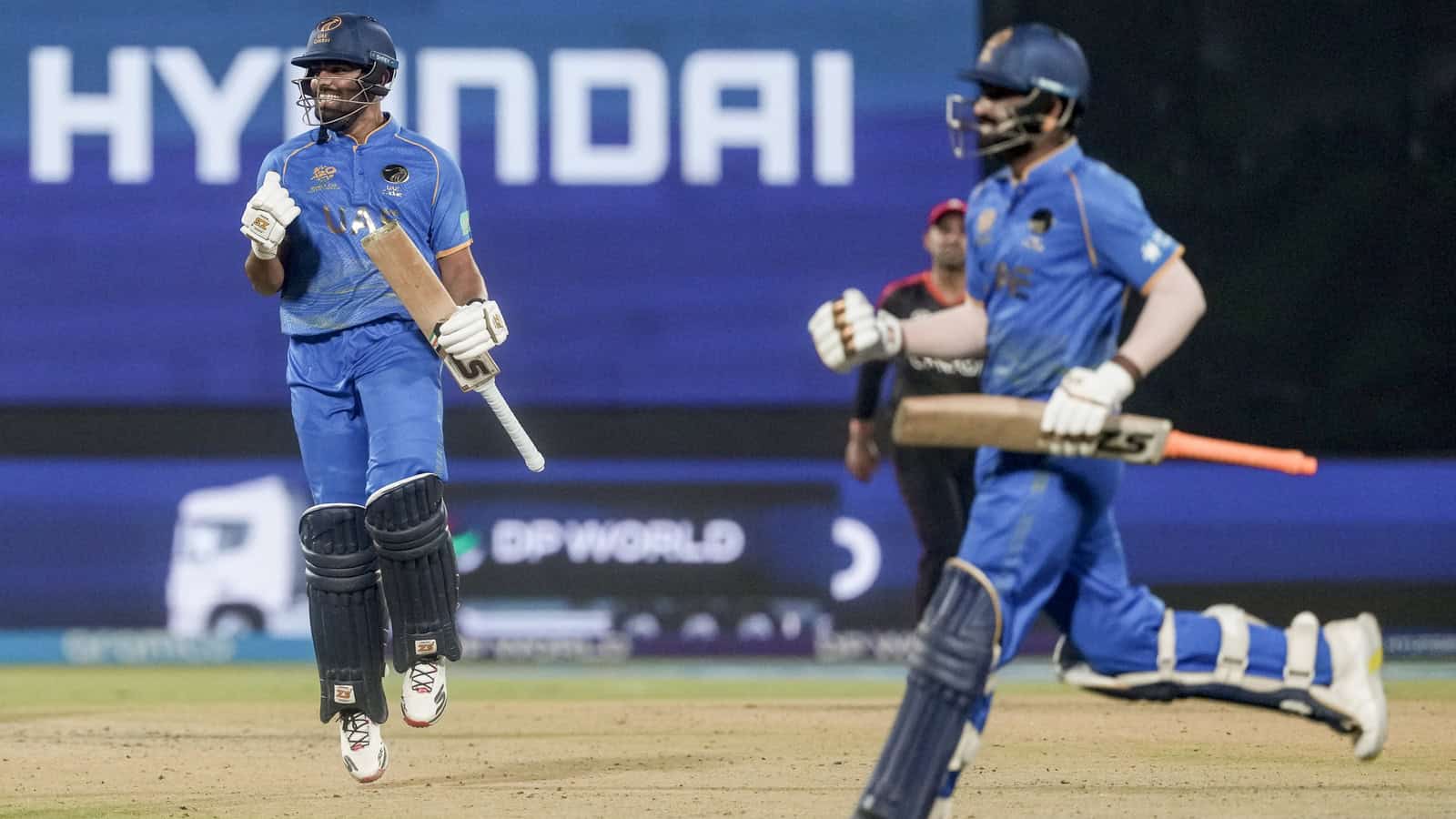
Aryansh then struck an unbeaten 74 off 53 balls laced with six fours and three sixes, while Sohaib Khan also played a very useful knock of 51 off just 29 balls to guide UAE over the line with two balls to spare.
New Delhi: UAE’s Sohaib Khan plays a shot during the ICC Men’s T20 World Cup 2026 cricket match between Canada and UAE, at Arun Jaitley Stadium, in New Delhi, Friday, Feb. 13, 2026. (PTI Photo)New Delhi: UAE’s players celebrate after their victory in the ICC Men’s T20 World Cup 2026 against Canada, at Arun Jaitley Stadium, in New Delhi, Friday, Feb. 13, 2026. (PTI Photo/Salman Ali)(PTI02_13_2026_000401A)
Chasing the modest total, UAE struggled to build momentum and lost wickets at regular intervals even as Aryansh held firm at one end.
Left-arm spinner Saad Bin Zafar (3/14) dented the chase with three key strikes.
UAE skipper Muhammad Waseem was the first to depart, falling to pacer Kaleem Sana. Zafar then dismantled the middle order, first dismissing Alishan Sharafu, who mistimed a cover drive to Nicholas Kirton at extra cover, before removing Mayank Kumar and Harshit Kaushik with catches at long-on and midwicket respectively.
At the halfway mark, UAE needed 92 off 60 balls.
But just when the chase appeared to be slipping away, Aryansh found support in Sohaib, who smashed four sixes and as many fours.
The pair stitched together a crucial 83-run stand for the fifth wicket, bringing the equation down to 26 off 12 balls.
Aryansh showed nerves of steel, smashing back-to-back boundaries before adding a third off a free hit in the penultimate over.
Needing 8 off the last over, he hit a a towering six to ease off the pressure. While Canada added to the drama by taking a wicket, it was a little too late with new man Muhammad Arfan finding the rope for a memorable win.
Earlier, opting to bat, Canada were jolted early as Siddique and Muhammad Jawadullah ripped through the top order inside the first four overs. Siddique set the tone with a superb opening spell, claiming two wickets upfront before adding three more at the death.
He began by pitching one up around off to lure skipper Dilprit Bajwa into an aerial stroke, only for the opener to mistime it and offer a simple catch. Siddique then shifted to a probing fifth-stump line, angling the ball away as Yuvraj Samra attempted a pull, gifting a regulation catch at mid-on.
Jawadullah joined the party, striking with his first delivery to remove the dangerous Kirton, who edged behind, leaving Canada reeling with their top three back in the dugout inside six overs.
Harsh Thaker steadied the innings with a 41-ball-50, briefly reviving Canada’s hopes with a four and a six. He forged two vital partnerships — a 58-run stand with Navneet Dhaliwal (34) and a 33-run association with Shreyas Movva (21).
However, Siddique returned in the 18th over to remove Thaker just as he looked to accelerate. In his next over, he dismissed Movva with a slower bouncer and then accounted for Zafar, halting Canada’s late surge.
Get the latest updates in Hyderabad City News, Technology, Entertainment, Sports, Politics and Top Stories on WhatsApp & Telegram by subscribing to our channels. You can also download our app for Android and iOS.
Diesel is dipping back into the early-2000s style playbook through its new wired earphones that look like they belong clipped to your jeans more than your ears.
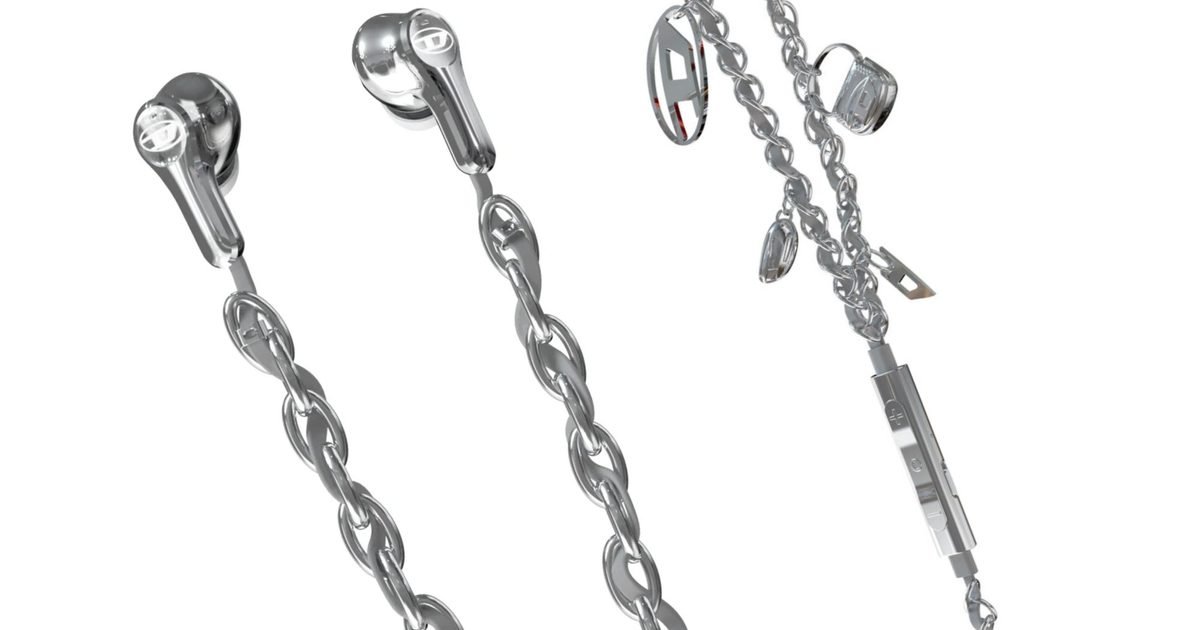
The new Diesel 60458 wired earbuds feature a heavy metallic chain design that closely resembles the wallet chains that were once a staple of early-2000s denim culture.
The earbuds have a silver finish, and the chains running along the cable feature signature Diesel charms that are made from materials such as aluminum, zinc, metal alloys, and ABS.
A fashion accessory that also plays music
Diesel
Once you look past the industrial styling, the Diesel 60458 earbuds are straightforward on the tech front. These are wired earphones with a standard 3.5mm jack for easy plug and play. That means no batteries to charge, no pairing screens to tap through, and no worrying about earbuds dying halfway through a commute.
When it comes to sound, Diesel is clearly aiming these earbuds at everyday listening rather than audiophile-level performance. The company has not shared specifics about the drivers inside, but the product description claims that the earbuds deliver a “crisp” and “balanced” sound. This suggests emphasis on clarity instead of heavy bass or aggressively tuned frequencies.
The product images also show a tangle-free cable with an inline remote with volume and playback controls, a built-in microphone, and a sliding switch to mute the mic. The earbuds are not yet listed on Diesel’s US site, but they are available in the UK for £89.95, which is roughly $123.
Overall, the Diesel 60458 wired earbuds feel like a deliberate counterpoint to minimalistic wireless earbuds. It is bold, unapologetic, and very Diesel, blurring the line between audio gear and fashion accessory.
Whether they end up hanging from your ears or your jeans, these earbuds are meant to be seen as much as they are meant to be heard.
Google says hackers are abusing Gemini to speed up cyberattacks, and it isn’t limited to cheesy phishing spam. In a new Google Threat Intelligence Group report, it says state-backed groups have used Gemini across multiple phases of an operation, from early target research to post-compromise work.
The activity spans clusters linked to China, Iran, North Korea, and Russia. Google says the prompts and outputs it observed covered profiling, social engineering copy, translation, coding help, vulnerability testing, and debugging when tools break during an intrusion. Fast help on routine tasks can still change the outcome.
AI help, same old playbook
Google’s researchers frame the use of AI as acceleration, not magic. Attackers already run recon, draft lures, tweak malware, and chase down errors. Gemini can tighten that loop, especially when operators need quick rewrites, language support, or code fixes under pressure.
The report describes Chinese-linked activity where an operator adopted an expert cybersecurity persona and pushed Gemini to automate vulnerability analysis and produce targeted test plans in a made-up scenario. Google also says a China-based actor repeatedly used Gemini for debugging, research, and technical guidance tied to intrusions. It’s less about new tactics, more about fewer speed bumps.
The risk isn’t just phishing
The big shift is tempo. If groups can iterate faster on targeting and tooling, defenders get less time between early signals and real damage. That also means fewer obvious pauses where mistakes, delays, or repeated manual work might surface in logs.
Google also flags a different threat that doesn’t look like classic scams at all, model extraction and knowledge distillation. In that scenario, actors with authorized API access hammer the system with prompts to replicate how it performs and reasons, then use that knowledge to train another model. Google frames it as commercial and intellectual property harm, with potential downstream risk if it scales, including one example involving 100,000 prompts aimed at replicating behavior in non-English tasks.
What you should watch next
Google says it has disabled accounts and infrastructure tied to documented Gemini abuse, and it has added targeted defenses in Gemini’s classifiers. It also says it continues testing and relies on safety guardrails.
For security teams, the practical takeaway is to assume AI-assisted attacks will move quicker, not necessarily smarter. Track sudden improvements in lure quality, faster tooling iteration, and unusual API usage patterns, then tighten response runbooks so speed doesn’t become the attacker’s biggest advantage.
Windows 11 is getting a new security mode meant to block risky software before it can dig into the system, especially the kind that hides behind drivers and background services.
Microsoft calls it Windows Baseline Security Mode. It turns integrity safeguards on by default, so signed apps, services, and drivers are the ones that run. If something is unsigned, Windows can stop it. You can still approve exceptions when you need to keep a legitimate tool working.
Microsoft is also pushing User Transparency and Consent. Windows will start prompting you when an app reaches for device or data access, and when an installer tries to add extra software you didn’t ask for. Those decisions won’t be permanent, you’ll be able to change them later.
Baseline Security Mode changes what can run
The big shift is that Windows is trying to make low-level changes harder to slip in quietly. Drivers and services are powerful, they can live deep in the OS and survive reboots, which makes them attractive to attackers and messy to remove.
With the safeguards enabled, code signing becomes the gate. That should cut down on silent installs of kernel drivers, system services, or helper processes that hook into other apps.
It’s also not a hard lock. If a trusted app gets blocked, you or your IT admin can allow an exception for that specific case. Microsoft says developers can detect when protections are active and whether an exception exists, which should reduce the usual troubleshooting fog.
The consent prompts are the other half
Baseline mode isn’t only about blocking code, it’s also about making behavior easier to see. Microsoft wants Windows to speak up when software tries to use things people actually care about, like the mic, camera, and files.
That matters because a lot of bad experiences aren’t classic malware. It’s installers that bundle extra stuff, apps that grab permissions they don’t need, or tools that change settings without making it obvious. Clear prompts, plus the ability to revisit choices later, makes that harder to hide.
For businesses, the same controls could mean fewer surprises across managed PCs, while still leaving room to approve older software that’s important to operations.
What to watch next
Microsoft describes this as a phased rollout, starting with more visibility into app and agent behavior, plus tools and APIs so developers can adapt. Later comes broader enforcement through Baseline Security Mode and the consent experience.
Your best next step is to watch Settings for new review controls, and watch driver makers and security vendors for updated guidance. If you rely on niche peripherals, that’s where friction tends to show up first.
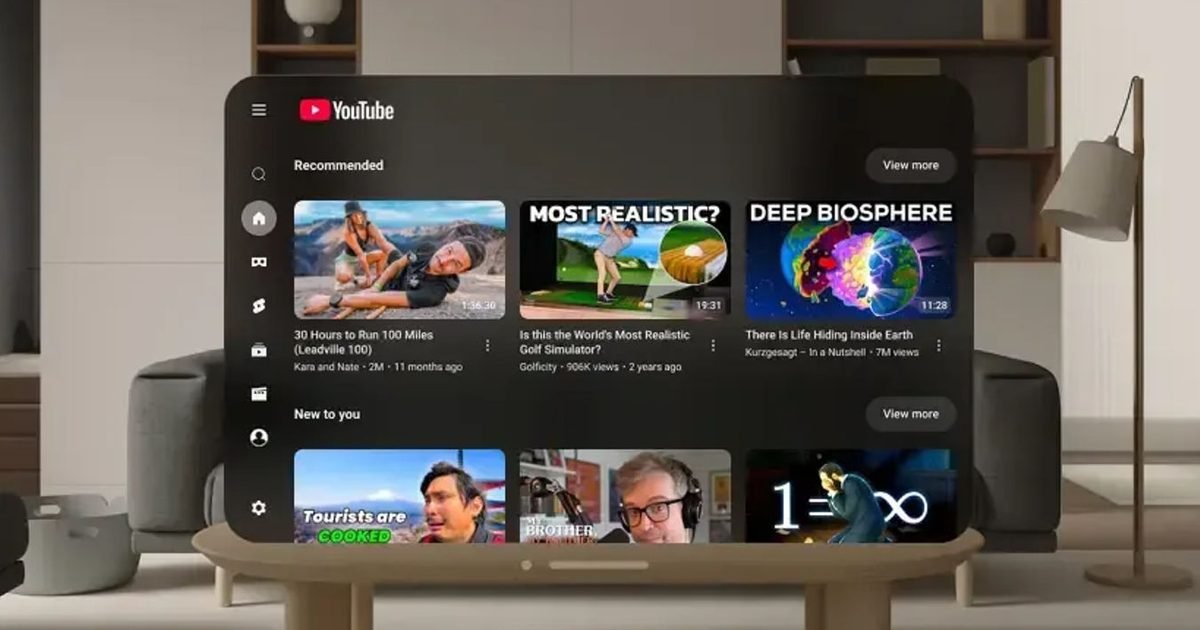
You can finally use YouTube on Apple Vision Pro without pretending Safari is good enough. YouTube released an official app for Apple’s mixed-reality headset on Thursday, closing one of the most obvious entertainment gaps on the device.
Before this, YouTube only ran through the web player, and that came with familiar headaches. The most annoying was offline viewing, there was no official way to download videos for later. If your Wi-Fi was spotty, or you wanted to watch on a flight, you were stuck.
Now the experience feels like an actual app instead of a workaround. You get full access to YouTube’s catalog, plus the kind of video formats that make sense in a headset.
The Safari era is over
A native app changes more than the icon on your home view. It means YouTube can behave like it does on other platforms, with features that the browser version simply didn’t offer.
Offline downloads are the practical win. If you treat YouTube as background viewing, or you hop between rooms and networks, saving a few videos ahead of time is a quality of life upgrade. It’s the sort of basic capability that made the web-only setup feel unfinished.
It finally leans into the headset
The app also targets what Vision Pro is good at. It supports 3D playback and panoramic video, including 180 and 360 formats, so the headset isn’t limited to flat clips floating in space.
That matters because immersive video is one of the few things that can justify wearing a mixed-reality headset for longer than a quick demo. With the official app in place, it’s easier to turn those videos into something you reach for regularly.
Netflix is still missing
YouTube’s late arrival is both a win and a tell. Vision Pro can look and feel advanced, but the broader app lineup still lags behind Apple’s mainstream devices.
There’s also a platform note here. The Vision Pro app reportedly resembles the version that shipped last fall on Samsung’s Galaxy XR, which runs Google’s Android XR. For users, consistency is a good sign.
If you’ve been using third-party YouTube players on visionOS, this is your cue to switch. Some unofficial apps have been removed from the App Store over terms issues, and the official option lowers the risk of losing access. Install it, try a few 3D or panoramic clips, and keep an eye on whether Netflix finally shows up next.
Colombo: Zimbabwe rode on collective brilliance to pull off the first big upset of the ongoing T20 World Cup, stunning injury-ravaged former champions Australia by 23 runs here on Friday, February 13.
This was only the second time that the African nation defeated the traditional heavyweights in the format, having last beaten them back in the 2007 edition of the showpiece.
Australia’s Nathan Ellis, left, jumps to catch a ball as Zimbabwe’s Ryan Burl, right, watch during the T20 World Cup cricket match between Australia and Zimbabwe in Colombo, Sri Lanka, Friday, Feb. 13, 2026. AP/PTI(AP02_13_2026_000132A)
Riding on opener Brian Bennett’s unbeaten 64 and useful contributions from other top-order batters, Zimbabwe posted a challenging 169 for 2 after Australia, who were without some of their front-line bowlers, invited them to bat.
The lower-ranked side then bowled Australia out for 146 in 19.3 overs on a sluggish pitch to register a famous win.
In the 2007 edition of the same tournament, Zimbabwe, then led by Prosper Utseya, had beaten Australia by five wickets with one ball to spare in a low-scoring match in Cape Town.
Pacer Blessing Muzarabani returned figures of 4/17, while Brad Evans (3/23), Wellington Masakadza (1/36) and Ryan Burl (1/9) also delivered with the ball for Zimbabwe.
It was a disaster for Australia in their pursuit of 170 as they suffered a top-order collapse and were reduced to 29 for 4 in 4.3 overs with Josh Inglis (8), Travis Head (17), Cameron Green (0) and Tim David (0) dismissed cheaply.
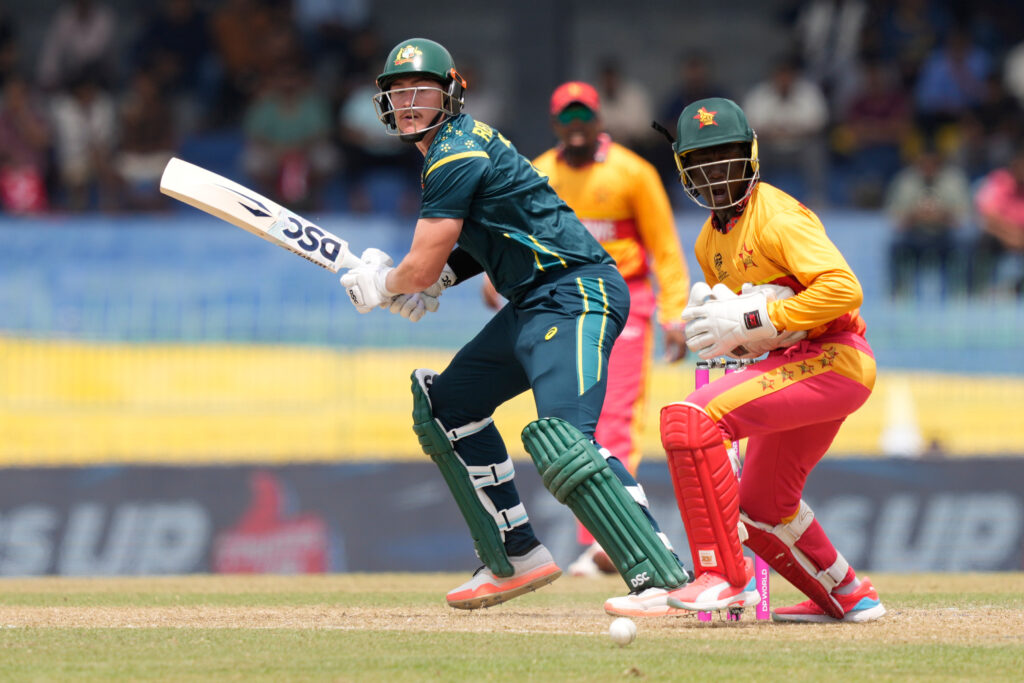
Australia’s Matthew Renshaw, left, plays a shot during the T20 World Cup cricket match between Australia and Zimbabwe in Colombo, Sri Lanka, Friday, Feb. 13, 2026. AP/PTI(AP02_13_2026_000125A)
Matt Renshaw played a lone hand for Australia with a 44-ball 65 while Glenn Maxwell made 31.
From 38 for 4 at the end of Powerplay, Australia reached 67 for 4 at the halfway mark with 103 runs needed for a win.
Maxwell and Renshaw then stitched a fifth-wicket stand of 77 runs off 9.5 overs to bring Australia back.
But Ryan Burl broke the partnership as Maxwell inside-edged one onto the stumps.
Australia needed 56 runs from the final five overs but Marcus Stoinis, who earlier left the field after being hit during the Zimbabwe innings, got out soon for 6.
Zimbabwe’s Wellington Masakadza, right, celebrates the wicket of Australia’s Marcus Stoinis during the T20 World Cup cricket match between Australia and Zimbabwe in Colombo, Sri Lanka, Friday, Feb. 13, 2026. AP/PTI(AP02_13_2026_000154B)
Bennett took a stunning catch near the boundary to dismiss Ben Dwarshuis (7) for Brad Evan’s third wicket of the day.
The target became 34 from 12 balls but Australia lost Renshaw and Adam Zampa (2) in the 19th over, and Matthew Kuhnemann (0) was run out in the final over.
Earlier, Zimbabwe’s top-order batters fired collectively against a depleted Australia bowling attack to post a challenging 169 for 2.
Bennett struck seven fours from the 56 balls he faced and laid the perfect foundation for Zimbabwe for a big total, reaching 125 for one at the end of the 15th over. But Australia came back in the death overs, just conceding 44 runs in the final five overs.
Wicket-keeper Tadiwanashe Marumani and Ryan Burl chipped in with 35 each while captain Sikandar Raza remained not out on 25 off 13 balls.
With wickets in hand, Zimbabwe could have pressed the accelerator much earlier and scored more. There was just one six in the innings.
In the absence of the likes of Pat Cummins and Josh Hazlewood, the Australian pace-bowling attack seemed to be lacking sting initially and the Zimbabwe bowlers capitalised on that, only to fumble in the end.
Adam Zampa was handled very nicely by the Zimbabwean batters, as he remained wicket-less, returning figures of 0/31 from his four overs.
The highlight of the Zimbabwe innings, after they were sent in to bat, was the 61-run stand for the opening wicket between Marumani and Bennett off 7.3 overs.
Marumani hit two fours off Ben Dwarshuis in the third over and three boundaries off Glenn Maxwell in the fourth over after a sedate start.
Bennett joined the party with two boundaries in the fifth over bowled by Matthew Kuhnemann, taking Zimbabwe to a decent 47 for no loss at the end of power play.
Zimbabwe’s Ryan Burl, left, and Brian Bennett greets each other during the T20 World Cup cricket match between Australia and Zimbabwe in Colombo, Sri Lanka, Friday, Feb. 13, 2026. AP/PTI(AP02_13_2026_000131A)
Zimbabwe were 61 for one and they moved to 79 for 1 at the halfway stage. They added 46 runs in the next five overs, reaching 125 for one at the 15th over mark.
Pacer Marcus Stoinis left the field in the 16th over, holding his hand in pain while trying a return catch of Burl.
From a full toss, Burl hit straight back at Stoinis, who tried to get hold of the ball. Stoinis grimaced in pain and immediately called out the physio, before leaving the field.
Cameron Green completed the unfinished 16th over and it turned to be lucky, with Burl getting out in the last ball.
Get the latest updates in Hyderabad City News, Technology, Entertainment, Sports, Politics and Top Stories on WhatsApp & Telegram by subscribing to our channels. You can also download our app for Android and iOS.
Sony just confirmed a God of War trilogy remake is in development. In the 2026 State of Play, it says the first three mainline games from Kratos’ Greek saga are being remade.
No footage yet. Sony describes the project as early, so this announcement is more about ending the guessing than showing a finished vision.
The timing lines up with the series’ 20th anniversary in March 2026, which makes this feel like a deliberate look back while the franchise keeps moving forward.
The first three God of War games debuted on PS2, and Sony says the new versions are being built for modern PlayStation hardware. It hasn’t named a target console yet, so it’s unclear whether they’ll land on PS5, a next-gen system like PS6, or span both.
TC Carson returns to Kratos
Sony tapped TC Carson, the Greek-era voice of Kratos, to help reveal the remakes during State of Play. It underlines that the goal here is the classic version of the character, not a blend with the newer Norse tone.
Sony also says it will share more later, but only when it has something worth showing. Read that as fewer check-ins, bigger updates.
Why the Greek saga matters
Sony frames the remake project as a response to one of the loudest fan requests, bringing the original trilogy back into the spotlight. That’s notable for anyone who only knows Kratos through the modern games, because the Greek run is where the series’ scale, combat identity, and attitude were forged.
There are still missing anchors. Sony hasn’t shared platforms, a release window, or what “remake” means here in terms of scope, whether it’s visuals only or deeper design updates too.
What to play in the meantime
Sony is also offering a quicker fix, God of War Sons of Sparta, and it’s out now on PS5. It’s a 2D action platformer with a canon story set during Kratos’ youth alongside Deimos, with a $29.99 Standard Edition and a $39.99 Digital Deluxe option (plus regional pricing).
If you want more Kratos today, that’s the move. If you’re holding out for the rebuilt originals, watch for first footage, platform confirmation, and any hint of timing, because Sony is clearly saving the next update for a bigger moment.
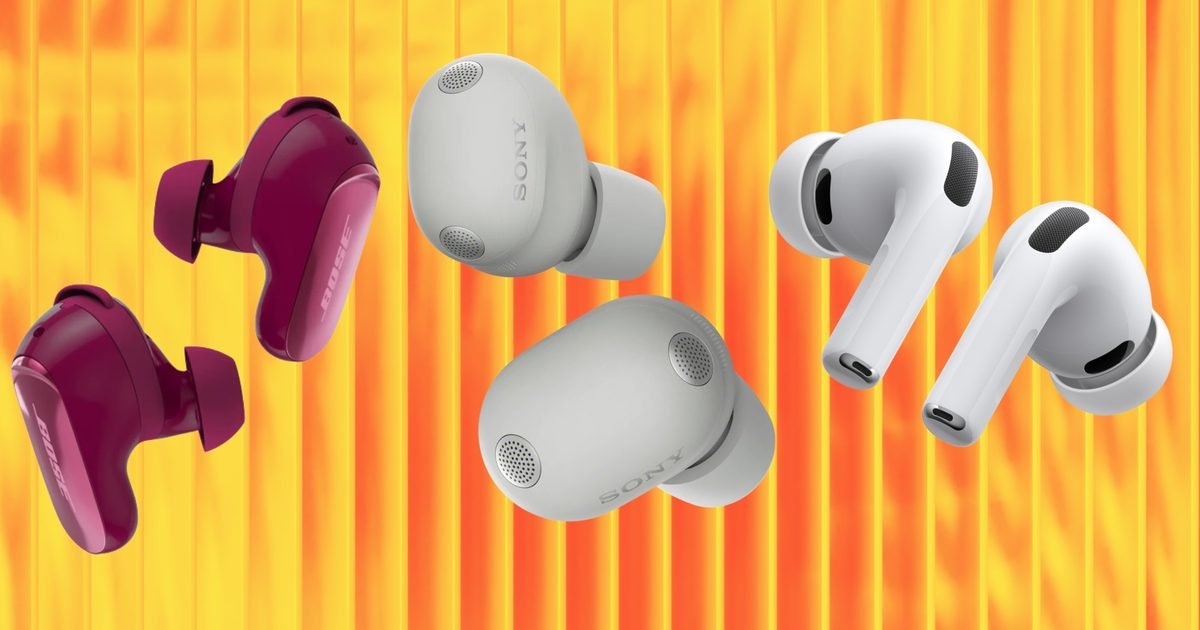
With the launch of the WF-1000XM6 TWS earbuds, Sony has once again thrown the flagship earbuds competition wide open. The earbuds push audio performance, promise better noise cancellation, and deliver better battery life than ever, but the $330 question is: how do they compare with other flagship offerings?
Sony faces white-hot competition from two well-received heavy-hitters from Bose and Apple. Sony is climbing higher up the price ladder when pitted against the second-gen Bose QuietComfort Ultra and the third-gen AirPods Pro. But do Sony’s legacy and the generation-over-generation upgrades on the WF-100XM6 justify the high asking price? Well, that depends on the additional conveniences you expect from your high-end earbuds, instead of just sheer audio excellence.
Price and availability
Sony’s WF-1000XM6 is available for $329.99 at the company’s official website, Amazon, Best Buy, and other authorized retailers. This is a $30 increase over the WF-1000XM5’s launch price.
Released in September 2025, the Bose QuietComfort Ultra (2nd Gen) maintained the same launch price as its predecessor: $299.00. However, you can currently grab a pair of these earbuds at $249.00 via the company’s website.
Apple’s AirPods Pro 3 debuted in September 2025 at a relatively lower price of $249.00. With some digging, I found them listed at $209.99 on Amazon.
Design
Sony WF-1000XM6s feature a stem-free, bulbous oval pill-shaped design with an all-matte plastic finish and foam eartips that should provide a superior grip and seal. The outer surface of the earbuds registers touch inputs.
The Bose QuietComfort Ultra earbuds are based on the familiar stem-based design (with a relatively flatter and wider stem). They also have a soft silicone loop (wrapped around the earbuds) for a firmer grip on the inner ear walls. The stem also registers touch-sensitive pads for swipes and taps.
Apple’s AirPods Pro 3 retain the classic white stem-based design, but the earbuds are angled inward for a better, more secure fit. The device comes with foam-infused eartips, which, by the way, are available in five sizes (from XXS to L). It features a force- and capacitive-touch sensor for gesture-based controls.
While the Sony and Bose earbuds carry an IPX4 rating for basic sweat resistance, the AirPods flaunt an IP57 rating, offering protection against both dust and water immersion. All the earbuds come with USB-C charging cases and support wireless charging.
The AirPods Pro 3’s earbuds are the lightest at 5.55 grams, followed by Sony’s at 6.2 grams and Bose’s at 7.3 grams. Bose’s charging case is the largest and heaviest at 59.8 grams, compared to Sony’s 47 grams and Apple’s 44 grams.
Sony WF-1000XM6: Black, Platinum Silver
Bose QuietComfort Ultra: Black, White Smoke, Midnight Violet, Desert Gold, and Deep Plum
AirPods Pro 3: White
Audio
The WF-1000XM6 sport 8.4mm dynamic drivers with a redesigned soft edge and a lightweight dome to improve both treble and bass. Sony has equipped them with the QN3e processor (along with the V2 co-processor for 32-bit audio processing). Supported codecs include SBC, AAC, LDAC, and LC3 (LE Audio).
Sony
The WF-1000XM6 are the only earbuds in this comparison that provide a 10-band equalizer via the Sound Connect app for a truly customizable output, making them most suitable for audiophiles. Furthermore, the earbuds are certified for Hi-Res Audio Wireless (24-bit / 96 kHz) via the LDAC codec.
The Bose QuietComfort Ultra, on the other hand, come with slightly bigger 9.3 mm dynamic drivers with the company’s CustomTune technology (calibrated audio performance based on your ear’s shape). With a Qualcomm chipset that supports Snapdragon Sound, the earbuds support SBC, AAC, and the aptX Adaptive family of codecs (including aptX Lossless).
Nadeem Sarwar / Digital Trends
When used with compatible devices, the earbuds provide CD-quality or near-CD-quality bitrates via the aptX codecs. Compared to the XM6’s 10-band equalizer, the three-band equalizer on the QuietComfort Ultra is quite a bummer. You get four basic presets: Bass Boost, Bass Reducer, Treble Boost, and Treble Booster.
With custom 10.7mm high-excursion Apple drivers and a new multi-port acoustic architecture, the AirPods Pro 3 deliver noticeably thumpier bass and generate a much wider soundstage compared to the AirPods Pro 2. They feature Apple’s H2 chip and support limited codecs (AAC, SBC, and AAC-ELD for lossless audio with Vision Pro).
The AirPods are popular for their Spatial Audio and head tracking functionality, and the Pro 3 don’t disappoint in that regard. They offer Adaptive EQ, which tunes music to the unique geometry of your ear canal. You still get Headphone Accommodations for fine-tuning the output, but nothing beats a customizable equalizer (good job there, Sony).
Noise cancellation & transparency
Before I get into the nitty-gritty, all three models represent the pinnacle of noise cancellation, allowing you to create a bubble of isolation around you to focus on work, read a book, or be at peace. Most people won’t be able to differentiate between the noise cancellation on the earbuds.
Sony
With the QN3e HD noise-cancelling processor, the V2 chip, and four microphones on each earbud, the WF-1000XM6 claim to offer “the world’s best noise cancelling performance.” While that’s hard to comment on right now, Sony says the earbuds are 25% better than their predecessors at blocking environmental noise.
They also offer the Adaptive NC Optimiser, which automatically tunes the noise cancellation to your fit and environment. Early reviews suggest that the earbuds are noticeably better than their predecessors, but they’re a tad behind Bose’s flagship earbuds, which still seem to have an edge in cutting out low-frequency sounds.
Next up on the list are the QuietComfort Ultra, which do an excellent job of neutralising deep, constant low-frequency sounds (like an airplane’s engine), sudden high-frequency sounds like emergency sirens, and create an intense, vacuum-like effect, as if you’re floating in the middle of the space. The earbuds offer three ANC levels: Quiet (the strongest one), Aware, and Immersion.
Finally, we have the AirPods Pro 3, which claim to offer twice the noise cancellation of the AirPods Pro 2, thanks to the H2 chip and ultra-low noise microphones. They aren’t as isolating as Bose’s earbuds, but instead offer a slightly more natural, airy (compared to a vacuum) version of the vacuum we were talking about earlier.
There’s an Adaptive Audio mode as well, which adjusts the intensity of ANC based on the ambient sound levels. According to SoundGuys, the AirPods offer an average 90% reduction in loudness, followed by the WF-1000XM6s at 88% and the QuietComfort Ultra at 85% (despite being highly regarded as the best ANC earbuds).
You see, all three models are right there at the top, with gaps so minimal that a regular user would spend hours figuring them out. When it comes to audio passthrough, the XM6s feature an Ambient Sound Mode with a customizable ambient noise level, but early reviews remain skeptical about the voices sounding slightly more robotic than they should.
Nadeem Sarwar / Digital Trends
Bose also offers an Aware Mode with ActiveSense technology, but it is the AirPods that are said to offer the most natural passthrough audio via Transparency Mode.
Features
Among the unique features of Sony’s flagship earbuds is 32-bit audio processing, which delivers higher-resolution audio with richer textures and finer details (especially in the background score). The earbuds also support DSEE Extreme, Sony’s proprietary technology that restores the sound quality that is often lost with streaming. You also get native Gemini AI support for talking to Google’s chatbot.
Then there’s a Find Your Equaliser feature in its companion app that plays different sonic signatures to help you figure out your preferred audio profile. The app also lets you switch between ANC and ambient modes based on your location. To ensure clear calls, the earbuds feature a bone conduction sensor, two beam-forming microphones, and AI noise reduction.
Sony
The Bose QuietComfort Ultra (2nd Gen) earbuds use TrueSpatial technology to enhance the soundstage and offer a new Cinema Mode for replicating a theater-like sound experience. The ActiveSense feature monitors for sudden sounds and cancels them in real-time.
You also get useful features like SpeechClarity for isolating your voice during calls, Bluetooth Multipoint support for simultaneous connections to two devices, customizable controls, and Google Fast Pair for near-instant connection with compatible devices. The earbuds can also invoke Gemini AI if it is set as your smartphone’s default assistant.
The AirPods Pro 3 stand out in this regard, offering three features, or rather experiences, that no other earbuds do. First, they come with dedicated sensors to measure heart rate during workouts (via the Fitness or Health app). Speaking of workouts, the Workout Buddy provides personalized motivational messages.
The device also offers Live Translation, a feature currently available in limited languages that allows real-time translation directly through the earbuds. Finally, Apple offers clinical-grade hearing aid functionality and automatic Conversation Boost among other hearing health features. There’s a Conversation Awareness feature as well.
Both the WF-1000XM6 and AirPods Pro 3 feature advanced tracking technology. While the former relies on Google’s Find Hub, the latter uses Apple’s Find My network to crowdsource the location of the devices. Apple’s earbuds also include the U2 chip (ultra-wideband) for Precision Finding.
Battery life
With ANC on, the WF-1000XM6 and the AirPods Pro 3 last up to eight hours on a single charge; their charging cases add another 16 hours, bringing the total playback time to 24 hours. They also support fast charging, with a five-minute charge providing up to an hour of listening time.
Sony
The QuietComfort Ultra, on the other hand, lasts up to six hours with ANC, and up to 24 hours with the charging case. A 20-minute charge can provide up to two hours of battery life.
Verdict
If sound quality is your top priority, consider the WF-1000XM6. They offer Hi-Res Audio Wireless (LDAC) support, a 10-band equalizer for the most customizable audio experience, 32-bit processing, DSEE Extreme, and an excellent battery life.
Sony / Bose / Apple
If you want deep, immersive ANC that blocks most rumble, you can go with the Bose QuietComfort Ultra (2nd Gen). They offer the most secure fit of all earbuds, support multi-point Bluetooth, provide strong call quality, and offer the company’s signature sound profile.
If you’re an Apple user, the AirPods Pro 3 are the most feature-packed earbuds you can buy. They offer the best Transparency in the group with excellent ANC and double as a health-oriented device with heart-rate tracking and hearing aid features. Of course, you also get the Apple ecosystem perks.
NASA is just hours away from its first crewed launch of 2026, and its first since Crew-11 flew to orbit in August last year.
Just ahead of Crew-12’s liftoff, the space agency has released a short trailer (above) for the mission, which will send four astronauts to the International Space Station (ISS). The crew will travel aboard a SpaceX Dragon capsule carried to orbit by a SpaceX Falcon 9 rocket.
NASA astronauts Jessica Meir and Jack Hathaway, ESA (European Space Agency) astronaut Sophie Adenot, and Roscosmos cosmonaut Andrey Fedyaev, are expected to blast off from from Space Launch Complex 40 at Cape Canaveral in Florida at 5:15 a.m. ET on Friday, February 13. If you’re interested in watching a livestream of the event, Digital Trends has all the information you need.
The mission team had been hoping to launch early on Wednesday, but poor weather conditions in the ascent corridor prompted it to push the launch to Thursday. But then another forecast pushed it to Friday. Thankfully, everything is looking good for the launch in just a few hours from now.
“Weather forecasters issued an improved outlook for the launch site conditions, with a 90% chance of acceptable weather at launch time,” NASA said in a post on its website. The team will assess a final forecast at around 10 p.m. ET, a few hours before the crew suits up. Be sure to check NASA’s X account for any last-minute changes to the schedule.
The crew will spend eight months aboard the orbital outpost performing research, technology demonstrations, and maintenance activities, some 250 miles above Earth.
“We do research on the International Space Station because it provides a very unique and novel environment that we cannot replicate here on Earth,” Jessica Meir, on her second mission to the ISS, says in NASA’s trailer. “We’ll be doing a wealth of scientific experiments, ranging from physiology and medical experiments to radiation material science experiments, deploying small satellites, you name it. Really, every aspect of science is represented in the work that we do on the International Space Station.”
Jack Hathaway adds that it’s “important to push the boundaries of what’s possible — if we’re just satisfied with what we have, we’re never going to create the technology to make our lives better.”
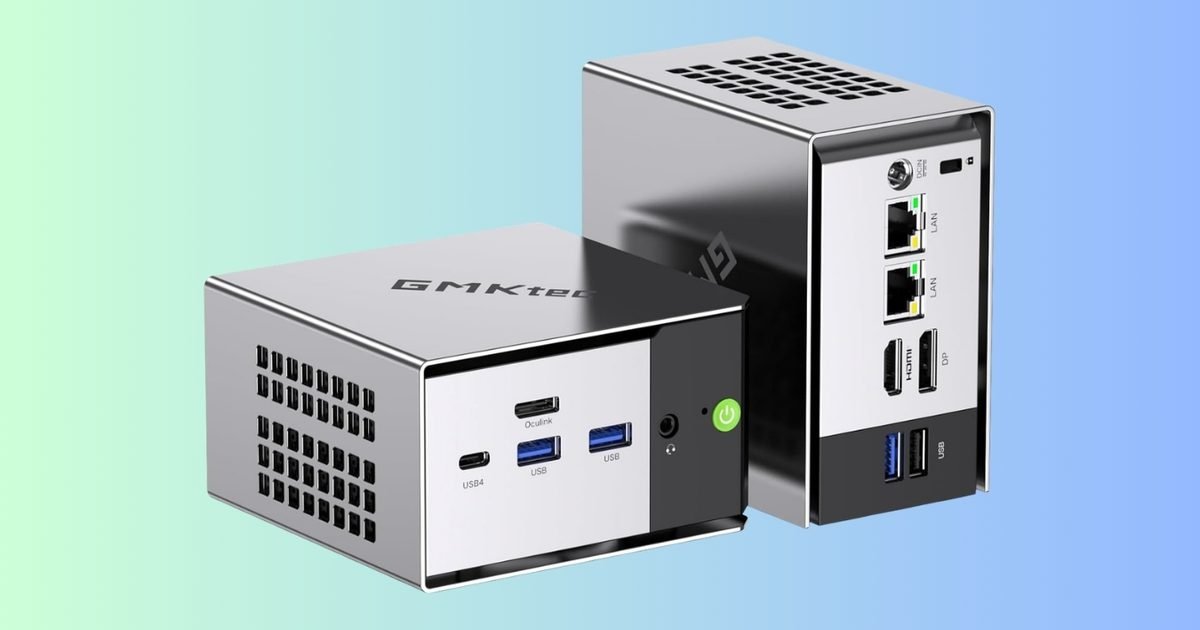
Mini PCs are having a moment because they solve a real problem: you want desktop power without a tower, the noise, or the space commitment. The GMKtec M8 mini PC is $319.99 for a limited time, down from $479.99 for 33% off. If you need a compact machine for work, school, a home office, or a living-room PC, this deal stands out because it packs in ports and connectivity that usually cost more.
What you’re getting
You’re getting a mini PC built around an AMD Ryzen PRO 6650H (6 cores / 12 threads, up to 4.50GHz) with 16GB DDR5 RAM and a 512GB PCIe SSD. That’s a practical baseline for multitasking, lots of browser tabs, office work, and even some lighter creative tasks.
The connectivity is where it gets interesting:
Dual 2.5GbE LAN ports for fast, stable wired networking
USB4 for higher-speed peripherals and docking flexibility
Oculink support for people who like the idea of expandability
HDMI and USB-C options for displays and accessories
This is the kind of port selection that makes a small PC feel more “serious,” especially if you’re building a tidy desk setup.
Why it’s worth it
At this price, it’s a compelling alternative to buying a budget laptop when you already have (or prefer) a monitor, keyboard, and mouse. It can also be a clean way to create a dedicated workstation, a family computer, or a compact machine for a secondary room.
Dual NIC is a standout for certain use cases. If you like tinkering with networking, home lab setups, or you just want reliable wired speed, that feature alone narrows the field.
The bottom line
At $319.99, the GMKtec M8 is a very appealing limited-time buy if you want a compact desktop that’s ready for real multitasking and has excellent connectivity, including USB4 and dual 2.5GbE LAN. If you want the smallest, simplest computer possible, you can go cheaper. But if you want a mini PC that leaves room for more serious setups, this discount is a good reason to pull the trigger.