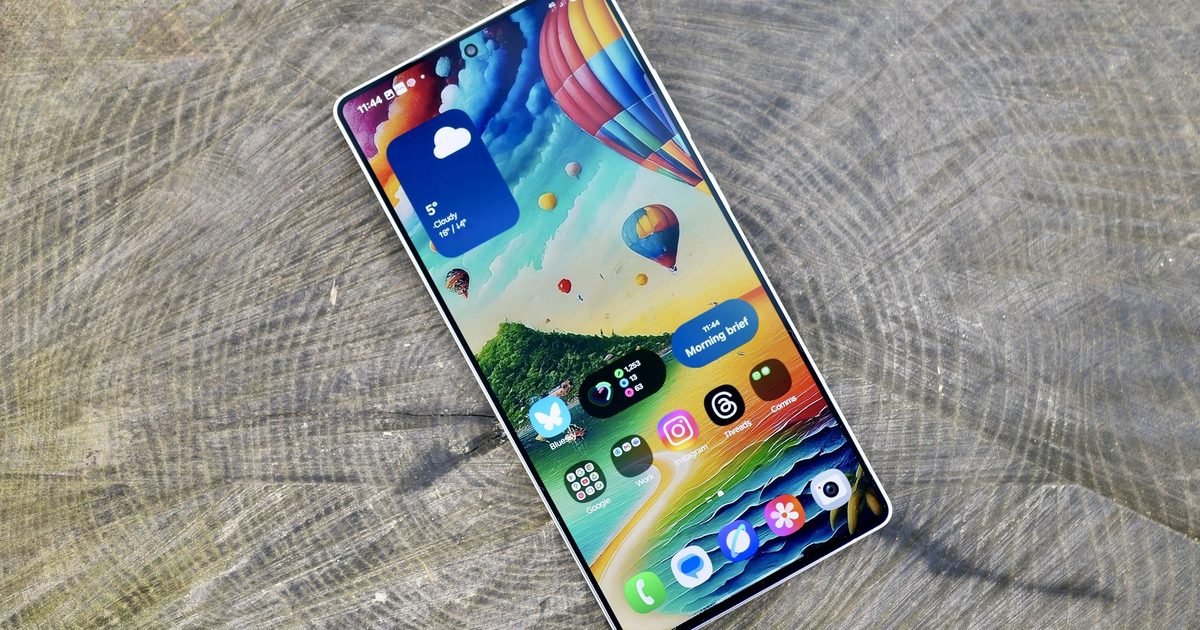
Samsung has uploaded yet another Galaxy S26 teaser, offering a glimpse of how the Privacy Display feature could work. It is a 15-second video published via the company’s official YouTube channel.
In the teaser, we can see a girl sitting in the subway, reading the third chapter of a fictional novel. She is holding the phone above her lap, which naturally makes the screen accessible from either side.
From Flex Magic panel to zero-peeking mode
However, when the people sitting around her try to peek at the screen, it goes all black. What’s interesting is that the teaser appears to establish a connection between peeking and the feature’s activation.
So far, we believed that the feature is based on the “Flex Magic Panel” with directional OLED pixels and clever software that recognizes what is on the screen and blocks either the specific area (such as a notification with banking details) or the entire screen (for when you’re entering passwords) for sideways viewing.
Even though Samsung doesn’t mention the feature in the teaser, aside from a caption that reads “For your eyes only,” the teaser shows the “zero-peeking privacy” toggle engage the moment someone tries to peep at the screen.
Exclusive!
The privacy screen on the Samsung S26 Ultra goes far beyond a global privacy mode. It also supports partial, localized privacy control.
Here is how it works.
You can apply privacy protection to only a specific part of the screen, for example a message notification… pic.twitter.com/RWJPtR0qc8
Hence, in addition to recognizing the on-screen content, the Privacy Display feature might also use the punch-hole camera at the front to detect whether someone other than the user is looking at the screen, and use the Flex Magic Panel to adjust or limit the direction of the emitted light.
A camera-based activation could be a cool (and useful) trick for the Privacy Display, but we still have to wait to find out how the feature actually works post its announcement at the Galaxy Unpacked event on February 25, 2026.
We’ll also find out whether the feature is available across all models or only on the S26 Ultra.
Former NPR host David Greene is suing Google after accusing the tech giant of stealing his voice for use in one of its AI-powered tools.
Greene, who presented NPR’s Morning Edition for eight years until 2020 and now hosts the political podcast Left, Right & Center, told the Washington Post he was “completely freaked out” when he heard the voice used by Google’s NotebookLM, a tool that summarizes documents and generates spoken audio overviews — using a voice that sounds very much like his.
When friends and family started getting in touch to ask him if the voice was his, he decided to sue Google, accusing it of violating his rights by copying his voice for NotebookLM, without asking for his permission or offering any kind of compensation.
Google has denied any wrongdoing. “These allegations are baseless,” a spokesperson for the company said, adding that the male voice in NotebookLM’s audio overviews “is based on a paid professional actor Google hired.” It has yet to reveal who that actor is.
Take a listen to the voice generated by NotebookLM in the video below (it runs for about eight seconds) and then listen to David Greene’s voice in the video below that, and see what you think.
NotebookLM :
David Greene:
Greene’s case is the latest to highlight how AI is steadily upending the creative industries, and at the same time upsetting many of those working within them.
It also brings to mind a similar case in May 2024 when the actor Scarlett Johansson accused OpenAI of replicating her voice for use as one of ChatGPT’s voices for the chatbot’s voice mode.
Johansson said she had twice declined requests from OpenAI CEO Sam Altman to use her voice, and was shocked when the newly released Sky voice sounded “eerily” or “strikingly” similar to hers and that of her AI character in the 2013 movie Her, about a lonely man who falls in love with an advanced AI operating system called Samantha.
Lawyers representing the actor demanded explanations about how the voice was created. OpenAI responded by removing the voice, claiming that it came from a different professional actress, not Johansson, and insisting that it was never intended to mimic her.
As for Greene, he also has concerns about how Google’s NotebookLM tool — using a voice that sounds very much like his — can be used to spread the kind of conspiracy theories that he would never personally give any credence to, with some listeners possibly believing that he’s doing just that.
Unless some kind of settlement is reached beforehand, it’ll be up to a California court to decide if Google has infringed on Greene’s rights to his voice or likeness.
“Asus Vivobook 14 is a good template for serving the best of Windows 11 on an affordable and practically rewarding platter”
Pros
Solid trackpad and decent keyboard
Sufficient selection of ports
Decent performance for the price
Reliable battery with fast charging
Generous memory for 2026
Windows Hello for biometric lock
Cons
Display could’ve been better
Plastic flexes on lid and deck
Fan can get noisy
Random performance hiccups
What makes a good laptop? Well, I can give a pretty haphazard answer to that. But if I were to give a broad verdict, I would say any PC that gets the job done without nuking your wallet, heating like a pan, and lasting at least a full day without forcing you to hunt for a wall socket, takes the cake.
Apple has mastered that art with the MacBook Air, and to such an extent that shoppers have no qualms spending on two, or even three-generation-old, machines. Windows, thanks in no part to the extreme fragmentation, has struggled with the idea.
With Intel Evo-certified PCs, an attempt was made, but they just couldn’t hit the performance-efficiency levels of a MacBook. Then came Qualcomm with its Snapdragon silicon for Windows-on-Arm machines bearing the Copilot+ branding. The vision was squarely a Mac-killer machine at various price points.
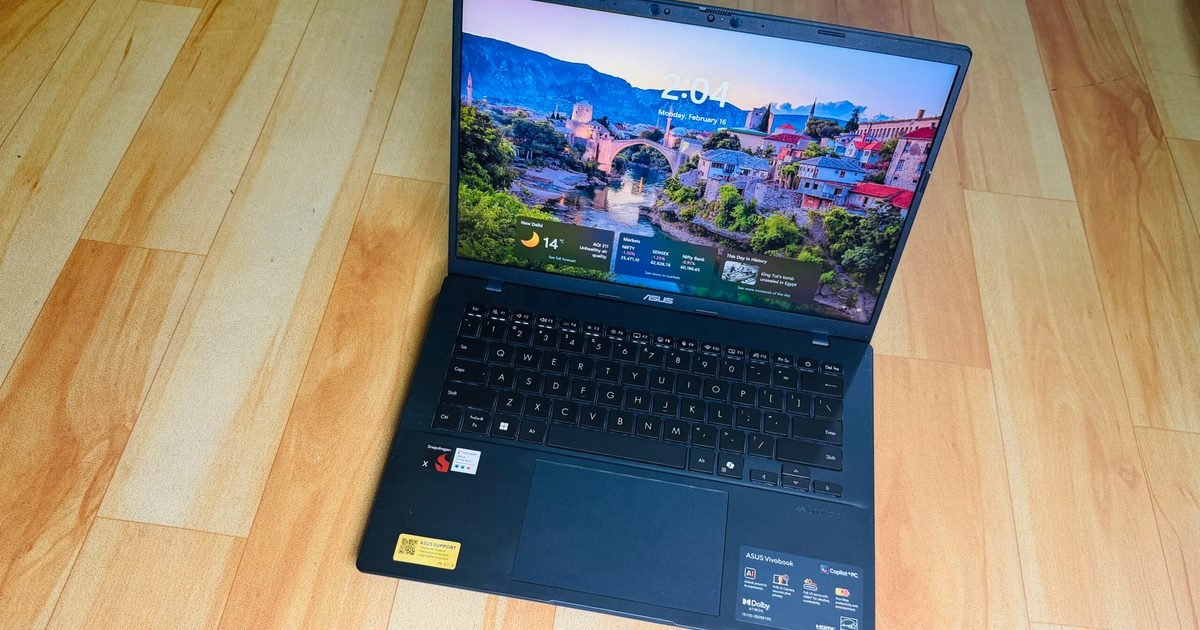
Now that we are headed into the second generation of Qualcomm-powered laptops, I took a leap of faith away from my trusty M4 MacBook Air and fired up the cheapest Cipolot+ laptop I could find – the Asus Vivobook 14, which is currently going for $649 from the brand’s online marketplace, and often dips lower during sales events.
Did I regret it? Not exactly. On the contrary, I came out fairly impressed with the machine, though not without a few harsh learnings.
A quick look at the specs
Color
Cool Silver, Quiet Blue
Operating System
Windows 11 Home (ASUS recommends Windows 11 Pro for business)
Processor
Snapdragon X (X1 26 100) (30MB Cache, up to 2.97GHz, 8 cores, 8 Threads)
Neural Processor
Qualcomm Hexagon NPU (up to 45TOPS)
Graphics
Qualcomm Adreno GPU
Display
14.0-inch LED Backlit, 60Hz, 45% NTSC, Anti-glare (87% screen-to-body ratio)
Memory
16GB LPDDR5X on board (Max 16GB)
Storage
512GB M.2 NVMe PCIe 4.0 SSD
I/O Ports
2x USB 3.2 Gen 1 Type-A; 2x USB 4.0 Gen 3 Type-C; 1x HDMI 2.1; 1x 3.5mm Jack
Camera
FHD camera with IR function (Windows Hello) and privacy shutter
I will start with the value perspective first. Asus is more generous with the memory situation on the Vivobook 14 than Apple, matching the memory at 16GB, but offering a healthy 512GB storage on the base model. For anyone who wishes to use their PC for at least the next half a decade, this is the bare minimum.
Nadeem Sarwar / Digital Trends
I keep my media editing work restricted to the iPad Pro, and it’s a headache. Beyond the cumulative burden of OS updates, the gradual app installs fill up the storage sooner than I would like. Whether you need a machine for work, or college duties, Asus offers a better value for your money if you have an Apple comparison in mind.
Then we have the port situation. Yes, the MacBook Air is sleek, but that comes at the cost of a terrible port selection. And the only way to survive the MacBook Air lifestyle is a dongle. Asus’ affordable laptop won’t outdo Apple’s laptop in the looks department, but it trades a svelte waistline for a reasonable diversity of ports.
You get a pair of USB-C and USB-A ports each, alongside an HDMI port and a 3.5mm combo jack. Now, you may not always use all the ports, but on the days when you are struggling with an external monitor, charger, storage device, and an input device, you really appreciate the I/O versatility at hand.
Nadeem Sarwar / Digital Trends
Another neat perk, and an expected one at the current asking price, is the IR camera kit for face unlock. On modern PCs, biometric unlock is an extremely underrated perk, especially in an age where passkeys are taking over conventional passwords for identity verification.
The keyboard isn’t bad either. There’s plenty of travel, the keycaps are spaced well, and despite the slight wobble, I actually loved typing on it more than my MacBook Air. The keys offer a springy feedback, and there’s a satisfying resistance, as well. There’s a bit of flex in the central portion of the deck, but not enough to hamper the typing experience.
The display is a mixed bag. The 14-inch panel offers a full-HD resolution, which is fairly standard for the price. But it doesn’t fare well in well-lit surroundings. I mostly work in a dark room, but every time I stepped out for a cafe work session, or the nearby park, I had to crank the brightness all the way up to the 100%, and still felt a tad underwhelmed.
Nadeem Sarwar / Digital Trends
Thankfully, it’s not a glossy panel, so reflection was never much of a problem. Out of the box, the display has an odd tint to it, and I had to manually adjust the temperature to make it look neutral. And yeah, the saturation could definitely be better. The Asus laptop, however, is hiding a cool trick.
In the MyAsus app, there’s an E-reading mode that gives a monochrome tint to the screen. All the content is rendered in black and white, and you can even adjust the grayscale level. You also get an eye-care mode, with five levels of blue light reduction. I often found myself juggling between these two modes as they tangibly reduced the eye strain, while the e-ink mode helped me with an extra dose of focus.
Another cool trick is hiding on the trackpad. It’s serviceable on its own, but I loved the edge gestures. Across the left and right edges, you can slide to adjust the volume and brightness levels, while the top edge helps with media playback. I love these thoughtful additions, which go beyond gimmicks and don’t burden you with a learning curve either.
Performance
Nadeem Sarwar / Digital Trends
The Snapdragon X is a rather odd processor, which is both good and bad news. For example, it fares almost as well as the MacBook Air… with the three-generation-old M2 chip on Cinebench at multi-core output, but the Oryon core can’t quite drive ahead of the single-core performance.
That’s both good and bad news. Apple’s M-series silicon is terrific, and I have friends and family members still holding on tightly to their M1-powered machines. On the Windows side of the ecosystem, the Vivobook 14 raced ahead of Intel’s Core Ultra 5 226V, and the equivalent Intel Core 12th Gen processor at Geekbench runs
Paired with 16 gigs of RAM and speedy SSDs, the Asus laptop fared pretty well at my day-to-day tasks. It handled Slack, Teams, Chrome with two dozen tabs, and Copoilt with ease. For academic use and basic corporate work restricted to Workspace and Office suites, there’s enough firepower available here.
Nadeem Sarwar / Digital Trends
But what holds this machine back — and nearly every Windows on Arm machine that I have tested so far – is the inconsistency. On days, the Asus laptop felt buttery smooth. And then there were occasions where it randomly crashed under the stress of a few Chrome windows. Another recurring problem is the update situation, which often left me staring at a blank screen and required a force restart.
Where Qualcomm needs to work, especially when compared against Intel’s Arc and AMD’s Radeon graphics architecture, is the integrated Adreno GPU. On 3DMark Steel Nomad, I got an average tally of around 9fps after three test runs, while an in-game benchmark only reached 18fps. Needless to say, gaming is a distant pipedream, and your only hope is cloud services such as Xbox or GeForce Now.
I wish the fans were a tad less noisy. Even under the stress of web-based work, you can hear them whirring. Thankfully, I didn’t notice any overt heating or scenarios where the laptop became too hot to keep on the lap. Whisper mode offers some respite from the fan house, but to avoid the heat build-up and throttling, I preferred working with the fan profile set to Full-Speed mode. Thankfully, my earbuds helped deal with the noise.
Nadeem Sarwar / Digital Trends
But when I pushed it while editing videos in Filmora, the upper area of the keyboard deck ran noticeably hotter. What bothered me more was the resource allocation. Between two windows and a total of eight apps in total, the system was using 80% of the memory, which is way too much, while the CPU load remained comfortably under the 18% range.
Battery life
This is one aspect where the Asus Vivobook 14 really surprised me. I was expecting it to be a mediocre performer, but it actually proved to be a workhorse. With Power Mode set to balanced, the laptop managed around 11 hours of work in my most recent run, with the screen brightness set close to the 60% mark.
Dialing up to the high-performance mode, the device still managed around eight to nine hours of consistent work before I saw the first low-battery alert. It’s evident that the entry-level Snapdragon X silicon is focusing more on efficiency, instead of raw performance. This approach, I believe, works well for a machine like the Vivobook 14.
I’ve tested over a dozen Windows machines in as many months, but this Asus machine offered the best mileage in the Snapdragon pool for its size, and fared better than Intel machines from rival brands. If your budget is strictly close to the $700 mark, you already have a certain performance expectation in mind.
Nadeem Sarwar / Digital Trends
The Asus Vivobook 14 isn’t exactly blowing past those expectations, but it delivers solid results with battery efficiency. The hiccup was the edge scenarios, where I needed the machine to focus more on creative workflows at high performance levels, and the drop in battery levels was haphazardly aggressive.
On the bright side, the laptop offers a few meaningful tricks within the MyAsus app. There’s a dedicated battery care mode that limits peak charging to the 80% mark, similar to iPhones, in order to preserve its longevity. But for scenarios where you want the full juice for on-the-go work sessions, you can temporarily bypass it for 24-hours and get the full 100% juice.
Verdict
The Asus Vivobook 14 is a laptop that cuts some expected corners, but delivers in a few unexpected ways. It’s got a kit that’s easy on the eyes, but raises the bar with a military-grade (MIL-STD 810H) build. For students and workers who commute daily, this is an underrated perk that can save you hundreds of dollars in accidental repairs and servicing.
Nadeem Sarwar / Digital Trends
On to the topic of battery life, this laptop does a fine job, and support for fast charging (an hour of plugged-in time for a full tank) is just the cherry on top. Now, I don’t know many souls out there who want a laptop specifically for native Copilot AI perks, but if you’re one of those souls, this Asus laptop is a bargain deal that qualifies for all the Copilot+ AI perks, such as on-device translations, AI-powered image editing, and Windows Recall.
The performance is enough for the asking price, though not exactly an Earth-scorcher. As a sweet bargain for not setting the benchmark tables on fire, you get plenty of ports (with ample diversity), a large trackpad with practical tricks, convenient biometric unlock with a physical privacy shutter, and a decent set of speakers that get the job done, but won’t exactly wow your ear canals.
At an asking price of $649 (and even lower, if you’re a good deal-hunter), the Asus Vivobook 14 is a lovely laptop for its target audience. And at a time when the industry is staring at rising PC prices owing to an unprecedented memory crisis, this laptop feels like a bargain in stormy days for market.
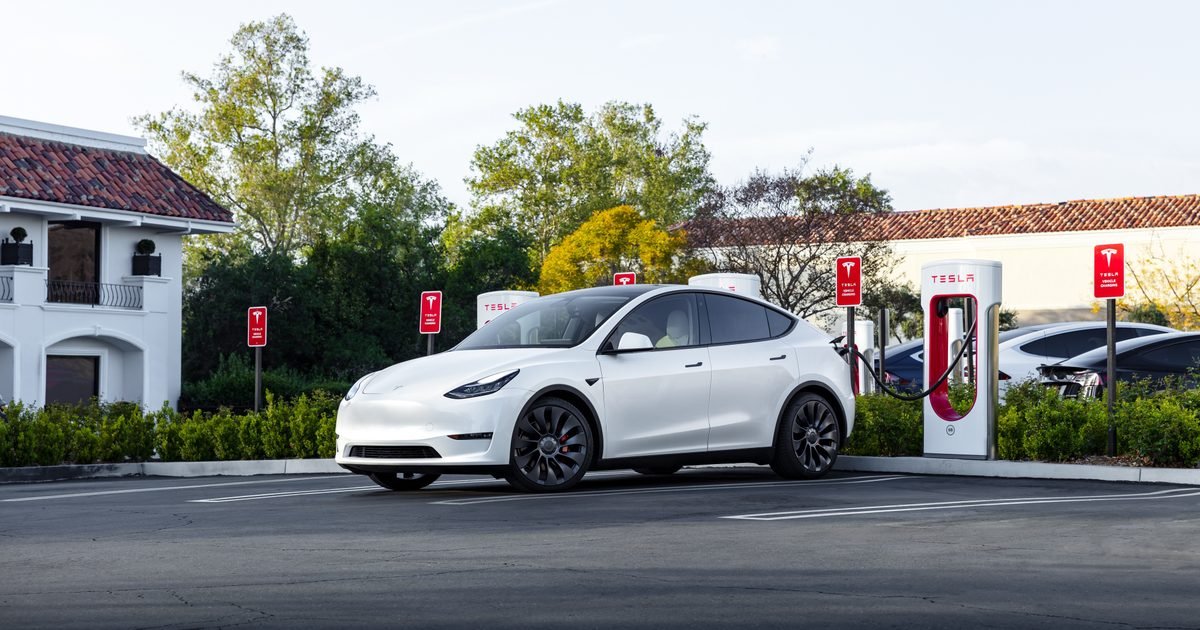
Tesla’s long-awaited adoption of Apple CarPlay is still happening – just not as quickly as some drivers had hoped. After signaling last year that support could arrive by the end of 2025, the electric carmaker has hit a few unexpected hurdles that are slowing the rollout, according to the latest edition of Bloomberg’s Power On newsletter.
A delayed but ongoing integration
Tesla began working to bring Apple’s CarPlay system to its vehicles amid a period of soft sales and mounting pressure to boost demand. At the time, adding CarPlay was viewed internally as more than a minor software update. For many car buyers, CarPlay has become a must-have feature – a familiar, iPhone-like interface that seamlessly integrates navigation, messaging and music into the dashboard.
Despite Tesla’s reputation for having one of the best in-house infotainment systems in the auto industry, customer demand for CarPlay has remained strong. Tesla’s software already supports Apple Music, Spotify, video playback, web browsing and deep integration with its Full Self-Driving (FSD) system. But for many users, that’s not enough. CarPlay’s simplicity and ecosystem integration remain a powerful draw.
Tesla / Tesla
Tesla confirmed plans to support CarPlay in a windowed mode within its existing interface. However, technical challenges have pushed the timeline back.
During testing, Tesla discovered compatibility issues between Apple Maps and its own mapping software used for self-driving features. Specifically, turn-by-turn guidance from Tesla’s navigation system did not properly synchronize with Apple Maps when autonomous driving was active. In scenarios where both systems were visible side by side, this mismatch could confuse drivers.
Tesla requested engineering changes from Apple to address the issue. Apple implemented the fix in a later update to iOS 26 and the latest version of CarPlay. But another obstacle emerged: not enough users had installed the updated software.
CarPlay isn’t just another dashboard app – it’s become a central part of how many drivers interact with their vehicles. For iPhone users especially, the ability to mirror apps, access messages, use Apple Maps or Google Maps, and rely on Siri through a familiar interface can significantly improve the driving experience.
Tesla has long resisted adding CarPlay, arguing that its own system offers superior integration
But as competitors increasingly include CarPlay as standard, the absence has been a sticking point for some potential buyers. Adoption rates of iOS 26 have been slower than previous releases. Apple recently revealed that 74% of iPhones released in the past four years are running iOS 26 – slightly behind the pace of earlier updates. Crucially, the necessary Apple Maps fix did not arrive in the initial iOS 26.0 release but in subsequent updates. Apple has not disclosed how many users are on those later builds.
TeslaUnsplash
For Tesla, rolling out CarPlay before a critical mass of drivers has the compatible software could create inconsistencies and support issues. That has prompted a more cautious approach.
The good news is that CarPlay remains firmly on Tesla’s roadmap. As iOS 26 adoption continues to rise, the technical barriers should gradually ease. Apple is also expanding CarPlay functionality, adding support for third-party voice chatbot apps and enhancing its premium Ultra version – moves that could make the eventual Tesla integration even more compelling.
For now, Tesla drivers eager for CarPlay will need to wait a little longer. But the direction is clear: the feature is coming – just on a timeline dictated as much by software adoption as by engineering.
Apple’s next major iPhone update may quietly deliver one of the most practical upgrades users have been asking for: better battery life. While much of the spotlight this year is expected to shine on artificial intelligence, iOS 27 is shaping up to be just as much about cleaning house as it is about adding flashy new features, as revealed by Mark Gurman in the latest edition of Bloomberg Power On Newsletter.
A smarter, leaner iPhone experience
When Apple rolls out its operating system updates this fall, it will be juggling two major priorities. The first is the integration of AI across the platform, led by a revamped, chatbot-style Siri designed to compete more aggressively with generative AI offerings from rivals. The second – and arguably more foundational – is an internal overhaul of iOS itself.
iPhone 17 ProUnsplash
Over the years, iOS has grown increasingly complex, layered with legacy code and feature additions that have made the system heavier under the hood. With iOS 27, Apple is attempting a reset of sorts. The effort has been compared to the company’s Snow Leopard era on the Mac, when it focused less on new features and more on refining performance and stability.
Engineers are removing scraps of old code
They are rewriting existing features and subtly upgrading apps to improve efficiency. The goal is a snappier, more responsive operating system. Apple is also planning minor interface tweaks, though they won’t be as dramatic as last year’s “Liquid Glass” redesign.
The project, internally code-named “Rave,” is also expected to bring efficiency improvements that could translate into better battery life. Rather than relying on bigger batteries or new hardware, Apple is aiming to squeeze more endurance out of existing devices through smarter code. If successful, these optimizations could reduce background activity, improve power management and extend daily usage time.
Battery life remains one of the biggest pain points for smartphone users. Even incremental gains can make a noticeable difference – whether it’s making it through a full workday without reaching for a charger or squeezing in extra streaming time during travel.
iPhone 17 ProUnsplash
Importantly, these improvements would benefit a wide range of existing iPhone users, not just those upgrading to new hardware. Software-level optimizations can extend the practical lifespan of devices, something that aligns with Apple’s broader messaging around sustainability and long-term support.
At the same time, Apple’s AI push risks increasing system demands. More advanced on-device processing and contextual awareness features could strain performance and battery if not carefully managed. By cleaning up the operating system in parallel, Apple appears to be preparing a stronger foundation for heavier AI workloads.
The timing of iOS 27’s overhaul is also strategic
Apple is reportedly preparing to debut new device categories, including a touch-screen MacBook Pro and its first foldable iPhone. A leaner, more stable operating system will be critical to ensuring those products deliver a smooth experience from day one.
Beyond performance, Apple needs iOS 27 to help restore confidence in its AI roadmap. The company has been playing catch-up in the generative AI race, and delivering a more intelligent yet reliable operating system will be key to regaining ground.
Whether Apple markets battery gains as a headline feature or treats them as a quiet bonus remains unclear. But if iOS 27 succeeds in trimming excess code while enhancing AI capabilities, users may find their iPhones not only smarter – but longer-lasting, too.
Colombo: Ishan Kishan merged power with finesse for a fifty before Jasprit Bumrah destroyed Pakistan’s top-order with his malevolently talented right-arm, powering India to a T20 World Cup Super Eight berth, clinching a one-sided 61-run win here on Sunday.
Kishan’s supersonic 77 (40b) on a tacky Premadasa pitch was worth its weight in gold, carrying India to a competitive 175 for seven after they were asked to bat first. It was easily one of the most entertaining T20I knocks by an Indian batter if one factors in the degree of difficulty.
Pakistan needed a strong Power Play segment to chase 176 on this surface. But Bumrah (2/17) and Hardik Pandya (2/16) jettisoned big-hitting Sahibzada Farhan, Saim Ayub and Salman Ali Agha to bowl them out for 114, reducing the much-anticipated match into a no-contest. India now leads 8-1 in all T20 World Cup encounters.
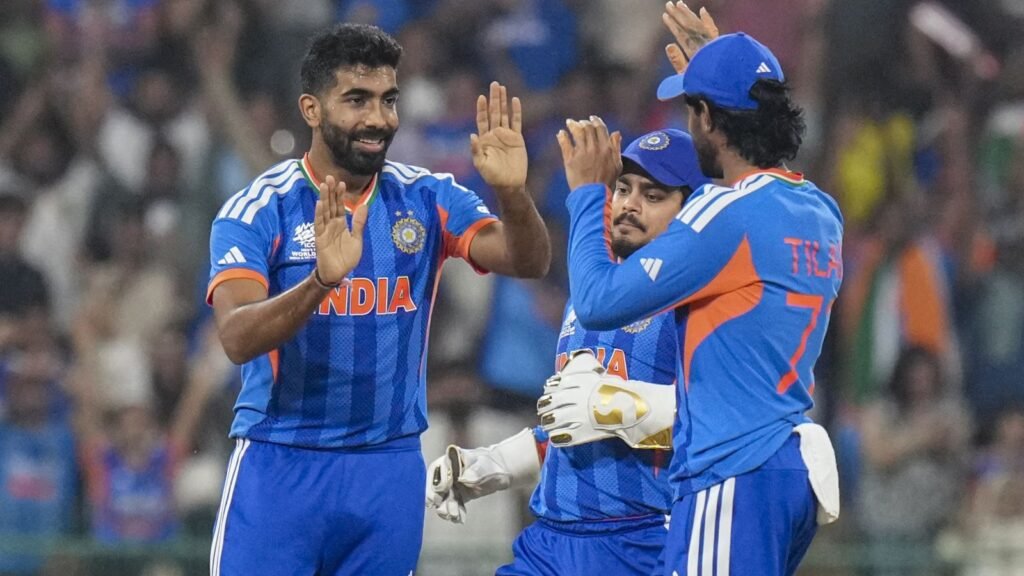
Pandya started the bedlam in the first over of Pakistan’s chase, as his snorter got big on Farhan and he could only sky it to Rinku Singh.
Entered the irrepressible Bumrah. The premier pacer unleashed himself on Pakistan batters in his first over itself.
Ayub could not handle a devilish inswinging yorker to get caught in front of the wicket.
Agha was as clueless as an exchange student in a foreign country against Bumrah’s back-of-length delivery, scooping it to Panyda at mid-wicket.
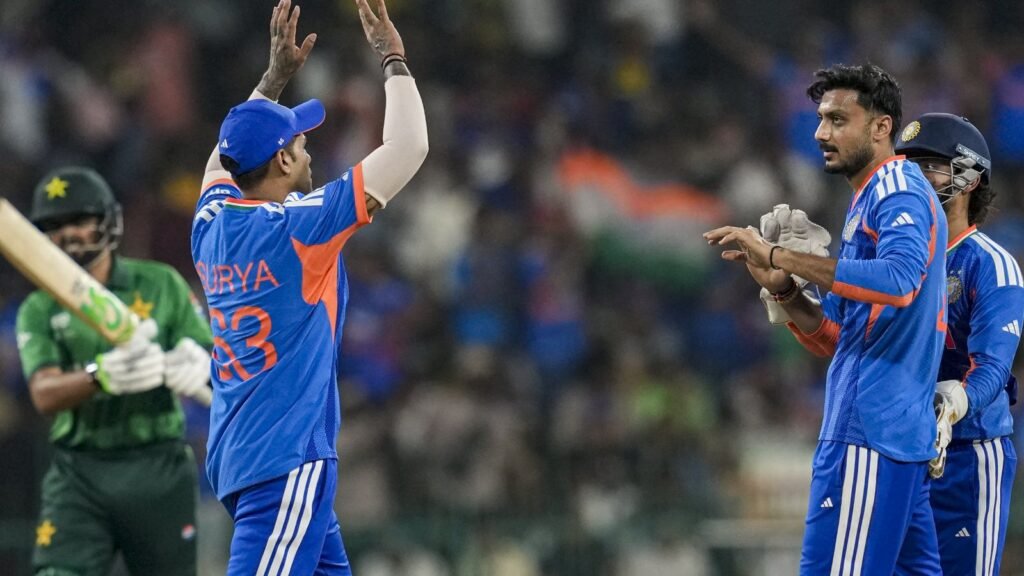
Pakistan was in all sorts of trouble at 13 for three, and it soon became 34 for four after Babar Azam’s horrendous slog sweep off Axar Patel saw his stumps getting rearranged.
Their Powerplay produced 38 for four compared to India’s 52 for one, and that massive difference continued to widen as the match progressed.
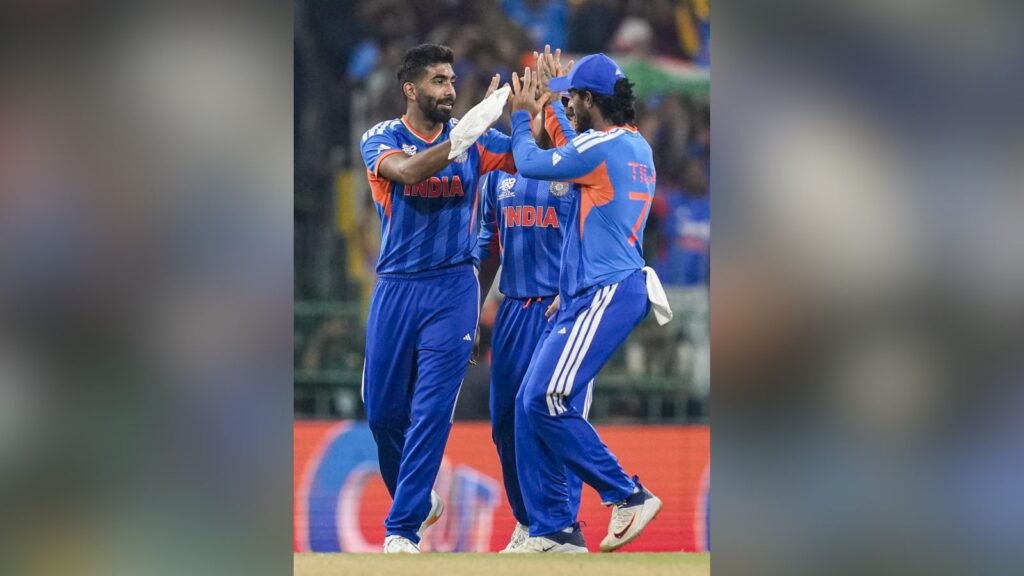
Indian cricket team players celebrating a successful moment during a match.
Pakistan’s Usman Khan plays a shot during an ICC Men’s T20 World Cup 2026 cricket match between India and Pakistan. (PTI Photo/R Senthilkumar)
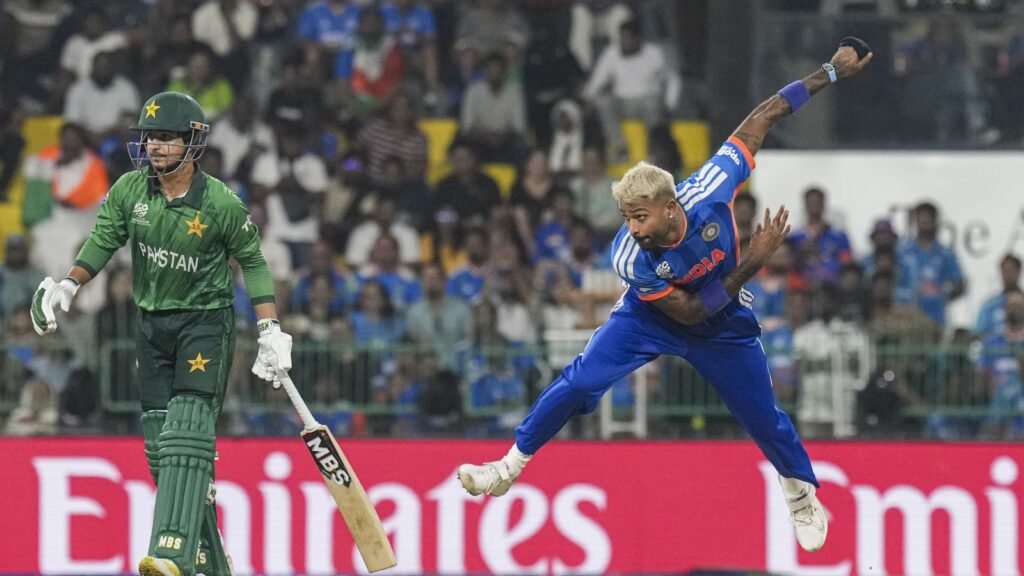
India’s Hardik Pandya bowls a delivery during an ICC Men’s T20 World Cup 2026 cricket match between India and Pakistan. (PTI Photo/Arun Sharma)
India’s Jasprit Bumrah celebrates with teammates after taking the wicket of Pakistan’s Saim Ayub. (PTI Photo/R Senthilkumar)
India’s Jasprit Bumrah celebrates with wicketkeeper Ishan Kishan and Tilak Varma after taking the wicket of Pakistan’s Saim Ayub. (PTI Photo/Arun Sharma)
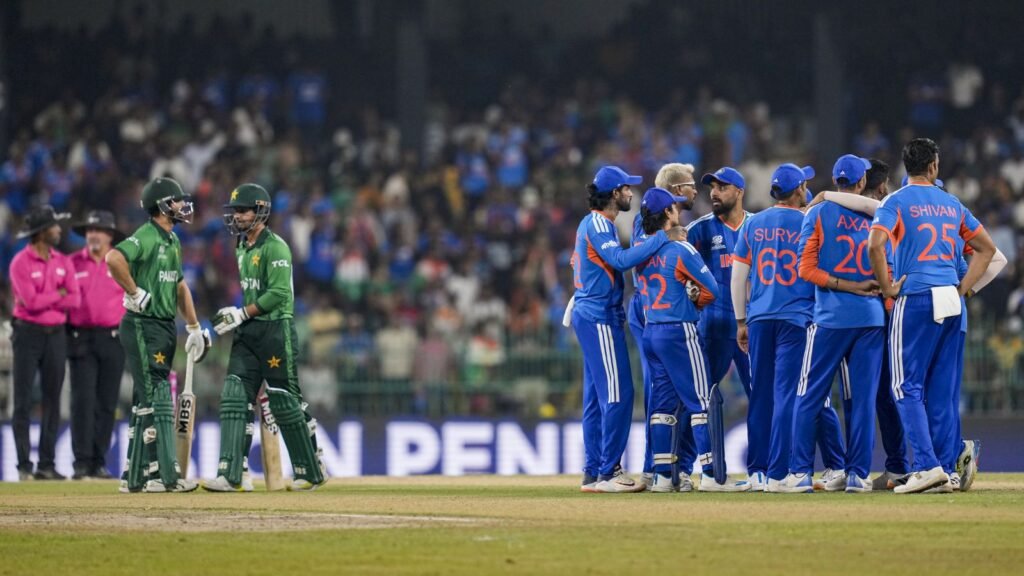
India’s Axar Patel celebrates with teammates after taking the wicket of Pakistan’s Babar Azam. (PTI Photo/R Senthilkumar)
Pakistan did not have either skill or resolve to get out of the marshy land, and continued to perish against Indian spinners through the middle overs as Kuldeep Yadav, Axar, Tilak Varma and Varun Chakravarthy kept them under an unbreakable spell.
Earlier, Kishan shared an 87-run alliance with Tilak for the second wicket in which the latter’s contribution was a princely 11.
The match, which had several preceding dramatic weeks because of the admixture of sports and politics, started off on an unusual note as Pakistan skipper Agha brought himself on for off-spin and accounted for Abhishek Sharma.
The off-spin continued through Ayub (3/25) in the power play and it fetched the desired result.
Abhishek went for a loft off Agha but could not clear Shaheen Shah Afridi at the edge of the circle in the final ball of the first over.
But for the next 7.4 overs, Kishan converted the Premadasa into his own little kingdom, shots flying all around the vast corners of this venue.
The left-hander started with an arrogant chin-high pull off pacer Afridi that thundered into the hoardings beyond the mid-wicket fence.
But that was a mere appetiser. The Jharkhand man soon dismantled an armada of Pakistan spinners.
Agha and Ayub were dispatched for four each, while leg-spinner Abrar Ahmed was carted for six and four off successive deliveries.
The fourth was a spectacular shot. Despite the slowness of the deck, Kishan lent power and placement to the late cut through his malleable wrists, forcing the ball sped to the third man fence.
Later, leg-spinner Shadab Khan too was clobbered for a six as Kishan raced to his fifty in just 27 balls, impressive considering the less-than-ideal conditions for shot-making and an opposition that has already played a couple of matches in this part of the world.
Tilak did not precisely struggle, but did not look entirely comfortable either as Kishan took it upon himself the duties of pushing the score ahead.
But Kishan’s attempt to give himself space and carve Ayub over mid-wicket had disastrous consequences.
He missed the ball altogether to lose the bails as Pakistani players heaved a sigh of relief.
From there, they clawed back, and Ayub was at the forefront of their revival.
The offie jettisoned Tilak (25, 24b) and Hardik Pandya (0) off consecutive deliveries as India suddenly slipped to 126 for four from 126 for two in the 15th over.
Skipper Suryakumar Yadav (32, 28b) and Shivam Dube (27, 17b) could not flex their whole muscle but did enough to add 33 runs to take India past the 150-run mark.
Dube also handled mystery spinner Usman Tariq, who was kept back till the 11th over, stealing a couple of boundaries.
Tariq, too, had his moment when he priced out Suryakumar in the 19th over.
But a 15-run final over by Afrid,i in which Dube and Rinku Singh tore into him, pushed India into the 170 territory.
Get the latest updates in Hyderabad City News, Technology, Entertainment, Sports, Politics and Top Stories on WhatsApp & Telegram by subscribing to our channels. You can also download our app for Android and iOS.
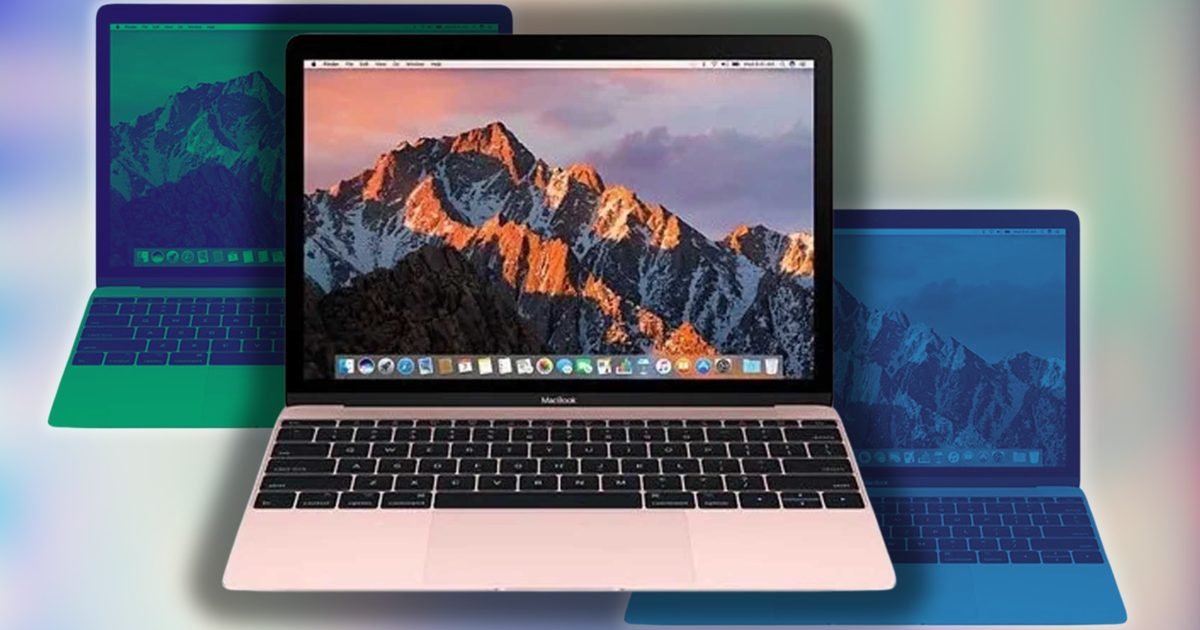
One of the most anticipated devices in Apple’s 2026 portfolio is a low-cost MacBook, one that could be priced in the $700-800 ballpark. Currently in development under the codename J700, Bloomberg now reports that the upcoming laptop will feature a metallic chassis and might come in “playful colors.”
What’s coming?
“To stick with this premium material, Apple developed a new manufacturing process that allows the shells to be forged more quickly. The technique is designed to be both faster and more cost-effective than the one used with Apple’s current laptops,” says the report, which further adds that the machine could hit the shelves next month.
Bill Roberson / Digital Trends
It was widely expected that the entry-level MacBook could trade the expensive metallic shell for plastic to bring down costs. But it appears that Apple wants to keep the signature in-hand feel of a MacBook despite the lower price tag. As far as colors go, the company has reportedly tested shades such as blue, classic silver, dark gray, light green, light yellow, and pink.
It’s unclear whether the upcoming Apple laptop will stick with the same design as the current-gen MacBook Air, or whether the company will bring back the iconic wedge design of the 12-inch MacBook. Bloomberg reports the machine will feature a screen smaller than 13 inches, which raises hopes that Apple just might pull a blast from the past trick.
What else?
Another standout aspect of the machine is going to be the mobile-class chipset. Instead of an M-series processor, which is now a mainstay across the Mac line-up and even the high-end iPads, the pocket-friendly MacBook will reportedly come equipped with an iPhone-class A-series processor.
Does that mean cellular connectivity will also be part of the package? That seems unlikely, but now that Apple is making its own modems, it’s plausible that Apple might use the upcoming MacBook as a test bed and eventually offer the facility on the upcoming slate of MacBook Pro machines.
Bloomberg reports that Apple will predominantly market its low-cost MacBook in the education and enterprise segments. How well it stacks up against Windows on Arm machines with Qualcomm’s Snapdragon X-series processors remains to be seen, but it’s definitely not going to be a sluggish mess.
Colombo: Opener Ishan Kishan’s supersonic half-century helped India ace a tacky pitch and post a competitive 175 for seven against Pakistan in their T20 World Cup match in Colombo on Sunday, February 15.
Kishan (77, 40b) shared an 87-run alliance with Tilak Varma in which the latter’s contribution was a princely 11, after India were asked to bat first.
The match, which had several preceding dramatic weeks because of the admixture of sports and politics, started on an unusual note as Pakistan skipper Salman Agha brought himself on for off-spin and accounted for Abhishek Sharma.
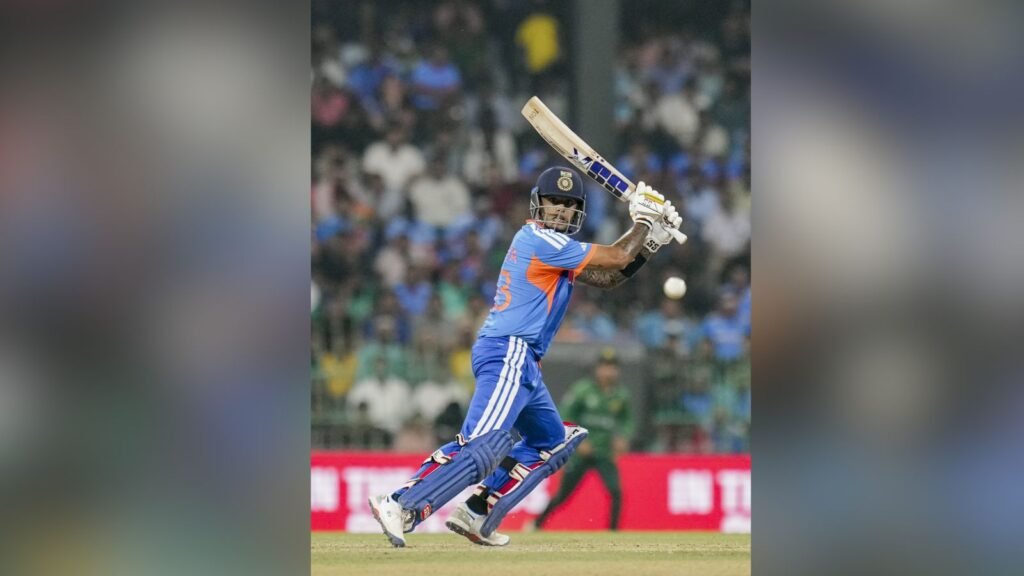
Pakistan’s Saim Ayub takes the catch of India’s captain Suryakumar Yadav during an ICC Men’s T20 World Cup 2026 cricket match between India and Pakistan in Colombo on Sunday. (PTI Photo/R Senthilkumar)
Pakistan’s Usman Tariq celebrates with teammates after taking the wicket of India’s captain Suryakumar Yadav. (PTI Photo/Arun Sharma)
Pakistan’s captain Salman Agha and wicketkeeper Usman Khan appeal unsuccessfully for the wicket of India’s Shivam Dube during an ICC Men’s T20 World Cup 2026 cricket match in Colombo. (PTI Photo/R Senthilkumar)
A Pakistani cricketer makes a spectacular diving save during the T20 World Cup 2026 match against India.
Pakistan’s cricket player hits the ball during a T20 World Cup 2026 match against India, showcasing intense competition and skill.
The off-spin continued through Saim Ayub (3/25) in the power play, and it fetched the desired result initially.
Abhishek went for a loft off Agha but could not clear Shaheen Shah Afridi at the edge of the circle in the final ball of the first over.
For the next 7.4 overs, Kishan converted the Premadasa Stadium into his own little kingdom, shots flying all around the vast corners of this venue.
It seemed as if Kishan was batting on a different track altogether.
The left-hander started with an arrogant chin-high pull off pacer Afridi that thundered into the hoardings beyond the mid-wicket fence.
But that was a mere appetiser. The Jharkhand man soon dismantled an armada of Pakistan spinners.
Agha and Ayub were dispatched for four each, while leg-spinner Abrar Ahmed was carted for six and four off successive deliveries.
The fourth was a spectacular shot. Despite the slowness of the deck, Kishan lent power and placement to the late cut through his malleable wrists, as the ball sped to the third man fence.
Later, leg-spinner Shadab Khan too was clobbered for a six as Kishan raced to his fifty in just 27 balls, impressive considering the less-than-ideal conditions for shot-making and a skilful opposition, who have already played a couple of matches in this part of the world.
Tilak did not precisely struggle, but did not look entirely comfortable either as Kishan took it upon himself the duties of pushing the score ahead.
But Kishan’s attempt to give himself space and carve Ayub over mid-wicket had disastrous consequences.
The Indian opener missed the ball altogether to lose the bails as Pakistani players heaved a sigh of relief.
From there, they clawed back bit by bit, and Ayub was at the forefront of their revival.
The offie jettisoned Tilak (25, 24b) and Hardik Pandya (0) off consecutive deliveries as India suddenly slipped to 126 for four from 126 for two in the 15th over.
Skipper Suryakumar Yadav (32, 28b) and Shivam Dube (27, 17b) could not flex their whole muscle but did enough to add 33 runs to take India past the 150-run mark and eventually to a total that will take good chasing.
Dube also handled mystery spinner Usman Tariq, who was kept back till the 11th over, stealing a couple of boundaries.
Tariq, too, had his moment when he priced out Suryakumar Yadav in the 19th over.
But a 15-run final over by Afridi, in which Dube and Rinku Singh tore into hi,m pushed India into the 170 territory.
Get the latest updates in Hyderabad City News, Technology, Entertainment, Sports, Politics and Top Stories on WhatsApp & Telegram by subscribing to our channels. You can also download our app for Android and iOS.
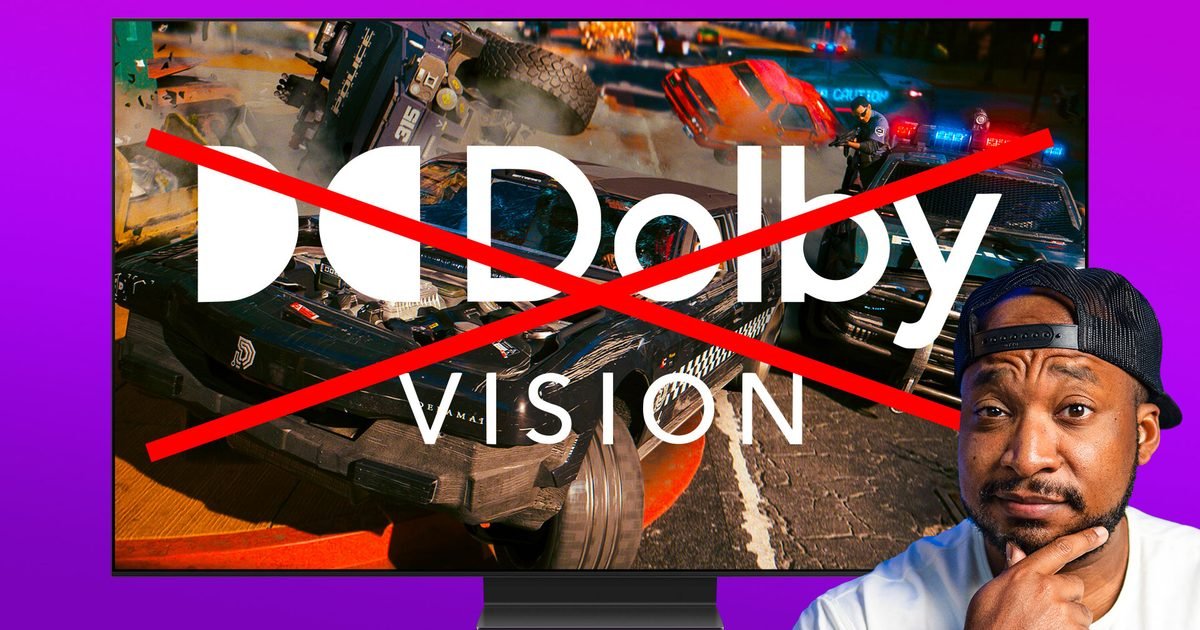
On today’s episode of You Asked: Can we give it a rest with pumping up the TV brightness? Why is Samsung adding Nvidia G-Sync support but not Dolby Vision? And what type of TV will work best in a room with wraparound windows?
Can we stop pumping up TV brightness?
Hisense U9QGDigital Trends
@allclear4115 asks: I’m depressed about TVs nowadays.. Not because they’re too bright, but because they can’t be tamed at all. Rest in peace, dark room!
First off, I definitely understand the brightness fatigue. Everything seems to be “X times brighter than the previous generation” or “brightest ever!” The claimed Nits, the measurement for brightness, is all over the box and the marketing. It’s just everywhere you look, and it can be exhausting.
But I think one of the reasons we see brightness being pushed all over the place is that it’s one of the ways manufacturers can show the most improvement year after year.
Take OLED TVs, for example. The large panels we know now have been around for more than a decade, but they certainly weren’t always this bright. Even as few as four or five or six years ago, they weren’t hitting the levels they are now. And as we’ve talked about a lot, that overall brightness mainly helps with contrast against pure blacks of OLED and peak highlights having the sparkle that makes a viewing experience really special.
With a lot of Mini LED TVs, that increased brightness means being able to overpower ambient light in bright rooms and even sunlight. So brightness does bring some notable quality-of-life improvements.
But that doesn’t mean they aren’t tamed. In fact, some TVs have specific picture profiles for making a pleasurable viewing experience in dark rooms. Hisense, for example, has Theater Day and Theater Night modes. You can set one to have the brightness juiced up during the day to overpower ambient light. And at night, when you don’t want the TV lighting up the entire room, you can turn it down quite a bit.
It’s a similar story for a lot of TVs we talk about on this channel. While they can get very bright and reviewers love to talk about that, they also come with lots of settings that can be adjusted and tailored for what suits you best.
So again, I get where you’re coming from, and I’m sensing a little bit of sarcasm there too. I just don’t think TVs are too bright unless you want them to be. And personally, I’d rather have some room to spare on the bright end than finding my TV too dull when the sun’s out.
Why G-Sync but not Dolby Vision?
Samsung
Parker Tyler asks: So they’ll pay the licensing for G-Sync, but they won’t for Dolby Vision?
The frustration from Samsung not supporting Dolby Vision continues, and I’m kinda torn on it. I’ve seen the improvements that Dolby Vision 2 brings, but I also have a Samsung Mini LED TV at home that I watch every day without Dolby Vision and have zero complaints.
And I’d imagine a lot of Samsung OLED owners feel the same way. Those QD-OLED panels on the high-end models bring a more colorful punch than most of the competition, and HDR 10 and 10 Plus are nothing to scoff at.
I’m just guessing that Samsung doesn’t see Dolby Vision as enough of an “upgrade” to put it in their TVs. And they sell tons of units every year. So a good chunk of the market also agrees.
For gaming, on the other hand, I would assume having Nvidia G-Sync gives more to that crowd than Dolby Vision does to the general audience. I’m also assuming they’ve done the research and see that adding that feature would sell more of their OLED TVs to gamers.
They’ve also doubled down with HDR 10 Plus Advanced, a new format that boasts great picture control through enhanced metadata. Sound familiar? Safe to say Dolby Vision isn’t coming to Samsung anytime soon. But at least they’re servicing the rest of the market with gaming upgrades.
What’s the brightest TV for a room with wraparound windows?
Hisense U8QGDigital Trends
@YeCannyDaeThat asks: I have a really bright room with wraparound windows. Which is the brightest type of TV?
The brightest type of TV that you’ll find most available is Mini LED. And in that scenario with wraparound windows, especially if there’s a window behind the TV as well, you’ll definitely want to look at some of the brightest available.
TCL and Hisense make some really great options. Think TCL QM8K or the Hisense U8QG. You can also find these in some large sizes to really help the TV stand out among the light around it. And since those are 2025 models, you can probably get them for a really good price right now.
Sony Bravia 9Zeke Jones / Digital Trends
Sony’s Bravia 9 is another great pick for a bright room. It also does a great job holding its contrast at high luminance levels.
I haven’t seen it with my own eyes, but TCL also has a QM9K that looks insanely bright, rated to hit up to 6,500 nits with 6,000 dimming zones. It’s overkill in most scenarios, but maybe not in yours?
I also shouldn’t slight OLED options here, since there are a couple that I think would be suitable for bright rooms. Samsung’s S95F and its anti-glare screen do great battling reflections. LG’s G5 has also stepped up its game in terms of brightness compared to previous models.
You’ll have to see which fits your budget, but like I said before, I think if you can get one of those bright TVs in a bigger size, it’ll really help it overcome the light in your room.
Hyderabad: Several pro-Palestine activists held a protest on Sunday, February 15, in Sundarayya Park in Baghlingampally, Hyderabad, denouncing United States President Donald Trump’s “Board of Peace” and Prime Minister Narendra Modi‘s upcoming visit to Israel.
Distributing pamphlets and engaging in discussions, they appealed to the public to join campaigns opposing the ongoing violence in Gaza.
Demonstrators rally for Palestinian rights, holding signs and flags during a protest against Trump’s peace policies.
Demonstrators hold signs and banners during a protest supporting Palestinian rights.
The protests was organised by the Indian People in Solidarity with Palestine (IPSP) along with Disha Students’ Organization and Naujawan Bharat Sabha in major Indian cities, including Delhi, Mumbai, Pune, Rohtak, Visakhapatnam, Vijayawada, Patna, Kolkata and Hyderabad.
The protestors denounced Indian government’s consideration of joining Trump’s “Board of Peace” and accused PM Modi and the Bharatiya Janata Party (BJP) of siding with Benjamin Netanyahu amid the ongoing genocidal war in Gaza.
“Trump’s Board of Peace would control Gaza without giving Palestinians the right to decide their own future, thus ignoring years of Israeli occupation. The draft document does not clearly mention Gaza and removes any promise of a Palestinian state,” said Geetha, a IPSP member.
In mid January, Trump announced the formation of “Board of Peace” which proposes to “rebuild Gaza.” It was unveiled in Davos on January 22 with the US President is its Chairman It was officially signed in Davos on January 22 with the US President is its Chairman. Several countries, including Pakistan and India recveived invitaion to join.
As of now, the Ministry of External Affairs (MEA) said India is still considering its decision on whether to participate.
Suhas, a member of Naujawan Bharat Sabha, stated that PM Modi’s proposed visit to Israel reveals an opportunistic stance. “While the Indian government formally endorses Palestinian statehood, it continues to extend diplomatic and political support to Israel. We should cut all ties with Israel,” he demanded.
23 detained in Pune
In Maharashtra‘s Pune city, 23 people were detained after police refused permission for the demonstration just hours before it started.
Women protesters and police officers engage in a tense confrontation during a demonstration against Trump’s peace initiatives.
Demonstrators were picked up from the protest site, JM Road, and taken into custody despite it being peaceful. They are currently at the Deccan Police Station.
Condemning the detainment, IPSP released a statement, “It is clear that the fascist rulers are afraid of any voice of dissent, and are launching a total attack on our democratic right to dissent and oppose the anti-people directives of the government.”
“While the BJP and Modi cosy up to the murderous Netanyahu, while the central government is still ‘considering’ joining the sham Board of Peace, ordinary citizens and youth are being brutally dragged on the streets for standing with justice and freedom for the Palestinian people,” the statement read.
CONDEMN THE FASCIST PUNE POLICE FOR FILING CRIMINAL CHARGES AGAINST IPSP ACTIVISTS!
— Indian People in Solidarity with Palestine (@ipsp_official) February 15, 2026
Since October 7, 2023, over 72,000 Palestinians have perished and nearly 90 per cent of Gaza’s infrastructure damaged or completely destroyed. Recent data released by the Palestine Civil Defence stated that about 8,000 bodies are still buried beneath the rubble across the Gaza Strip.
Get the latest updates in Hyderabad City News, Technology, Entertainment, Sports, Politics and Top Stories on WhatsApp & Telegram by subscribing to our channels. You can also download our app for Android and iOS.