Google Messages could soon make it much easier to tell someone exactly where you are. A new feature spotted in development would allow users to share their live location directly inside a chat, updating in real time as they move.
The feature has been discovered by Android Authority in an APK teardown of Google Messages. It shows Google is working on built-in real-time location sharing, similar to what many users already rely on in apps like WhatsApp or Telegram.
Unlike sharing a static location pin, this option would update continuously, showing your movement for a chosen period of time.
How live location sharing in Messages would work
The new Real-time Location option will appear inside the attachment sheet of a conversation. Tapping on it starts the location sharing process. If location access has not been granted yet, the app will first ask for permission.
Android Authority
Users can then choose how long their live location stays active. The options include one hour, today only, or a custom duration. While sharing is active, Google Messages will display a persistent banner at the top of the conversation.
One notable detail is how recipients receive the location. Even if the other person does not have the feature enabled, they still get a live location link. If they have the Google Find Hub app installed, the link opens there. Otherwise, it opens in a web browser with real-time updates.
Location sharing can be stopped at any time by tapping the banner at the top of the chat and selecting Stop. There is no word yet on when the feature will roll out publicly.
But Google appears intent on turning Messages into a more complete communication app. Recent updates have added smarter tools, from scam text warnings to features that make sure your messages don’t get lost or ignored in busy group chats.
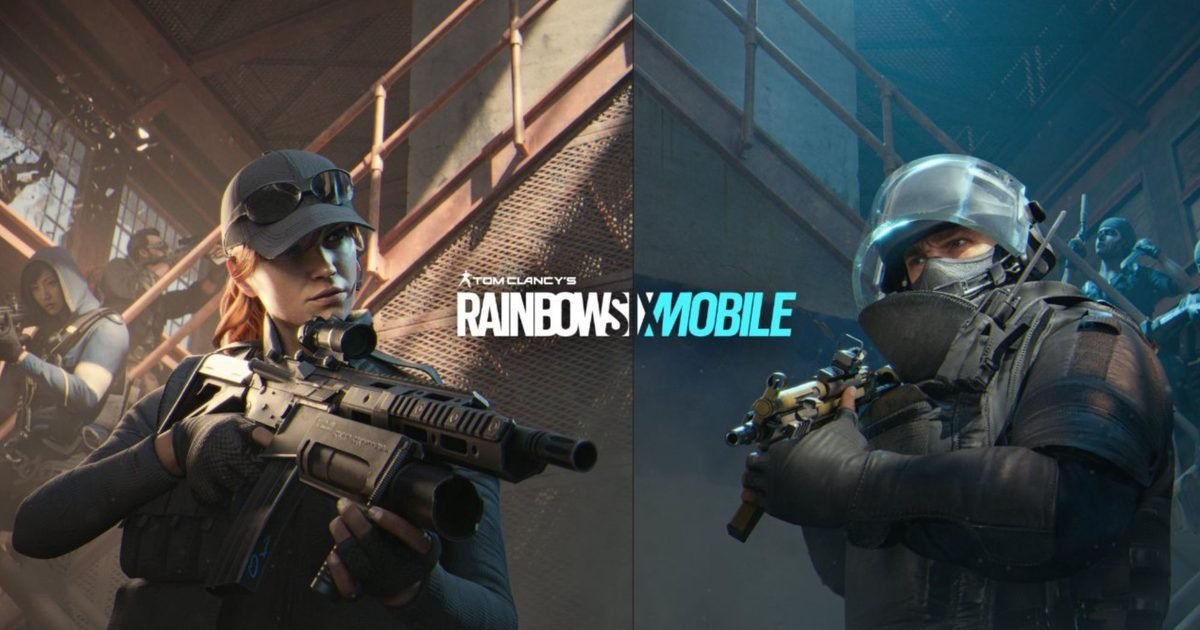
Ubisoft’s long-awaited Rainbow Six Mobile is now officially available on Android and iOS globally. The mobile adaptation of the popular tactical shooter franchise is free to download and brings the core 5v5 competitive gameplay that fans know from Tom Clancy’s Rainbow Six Siege to phones and tablets.
The game was first announced in 2022 and spent several years in testing across select regions, including soft launches in parts of Asia and Latin America. After a phased rollout and multiple delays, Ubisoft confirmed a full global launch late last year. The game is now live with more than 24 operators, five classic maps inspired by Siege, two mobile-exclusive maps, and multiple modes, including Bomb, Bomb Rush, and Team Deathmatch.
As in Siege, matches are built around tactical planning, destructible environments, and tight coordination between Attackers and Defenders. Players can reinforce walls, deploy surveillance tools, breach surfaces, and use unique operator gadgets to outplay opponents. Ubisoft says the maps have been optimized for shorter play sessions while maintaining the series’ focus on strategy over run-and-gun action.
Optimized for shorter matches on mobile
Built from the ground up for mobile devices, Rainbow Six Mobile is not a direct port of its PC and console counterpart. The interface, movement system, and shooting mechanics have been redesigned for touch controls, with customizable HUD options to suit different play styles. The game also supports ranked play, seasonal content updates, and limited-time events to keep players coming back.
Rainbow Six Mobile is free to play, with optional in-app purchases for cosmetic items, battle passes, and other progression-based rewards. With its global rollout now complete, Ubisoft is positioning the title as a long-term addition to its growing lineup of live service mobile games.
Honor’s Magic V5 claimed the slimmest foldable crown last year, and the company now seems to be gunning for the most durable foldable title with its successor. Honor is set to unveil the Magic V6 at MWC early next month, and the next-gen foldable phone will bring some serious durability upgrades.
Ahead of the official launch, Honor has revealed that the Magic V6 will feature both IP68 and IP69 ratings for dust and water resistance, giving it a significant edge over Samsung’s Galaxy Z Fold 7, which comes with an IP48 rating. The phone will also feature a new 2,800 MPa Honor Super Steel Hinge, which the company claims is the “strongest special steel introduced in the commercial sector” and delivers “exceptional structural integrity.
Joe Weller is about to jump… and the only thing between him and gravity is a HONOR Magic V6’s hinge. 😱😱😱
To showcase just how strong the hinge is, Honor even staged an unusual test in which a person rides a zip line supported solely by the Magic V6’s hinge. The company has teased the stunt on X and is expected to reveal the full results at MWC when the device officially debuts.
Alongside the upgraded ingress protection and hinge, the Honor Magic V6 will also bring durability enhancements for the foldable display. The device will feature a reinforced inner screen with an ultra-thin glass and low-reflectivity coatings to improve wear resistance while cutting down on glare.
Honor also showcased a bold new colorway ahead of the launch
While Honor has yet to detail any internal hardware upgrades, it has offered an early look at the Magic V6’s design in a striking new red colorway. The foldable sports a more refined camera island design, a textured red back panel, and a gold metallic frame that gives it a distinctly premium look.
HonorHonorHonor
The official images also highlight the redesigned hinge with a new texture, a triple-camera setup at the back, and a flat outer display with a centered hole-punch cutout for the selfie camera. Inside, the foldable screen features a hole-punch cutout positioned on the right side for the internal front-facing shooter.
Honor is set to introduce the Magic V6 alongside the Honor Robot Phone and a humanoid robot during its MWC keynote on March 1. Full details about the flagship foldable, including specifications, pricing, and availability, are expected to be revealed at the event.
You ask a chatbot for medical advice. It responds with something thoughtful. But did it actually weigh what’s at stake, or did it just get lucky with words?
That’s the problem Google DeepMind tackles in a new Nature paper. The team argues that the way we test AI morality is broken. We check if models produce answers that look right, what they call moral performance. But that tells us nothing about whether the system grasps why something is right or wrong.
People use LLMs for therapy, medical guidance, even companionship. These systems are starting to make decisions for us. If we can’t tell genuine understanding from fancy mimicry, we’re trusting a black box with real human consequences.
DeepMind’s answer is a roadmap for measuring moral competence, the ability to make judgments based on actual moral considerations rather than statistical patterns. The paper lays out three core obstacles and ways to test for each.
The three reasons chatbots fake morality
First is the facsimile problem. LLMs are next-token predictors that sample probability distributions from training data. They don’t run moral reasoning modules. So when a chatbot gives ethical advice, it might be reasoning. Or it might be recycling something from a Reddit thread. The output alone won’t tell you.
Then there’s moral multidimensionality. Real choices rarely hinge on one thing. You weigh honesty against kindness, cost against fairness. Change a single detail, someone’s age or the setting, and the right call can flip. Current tests don’t check if AI notices what actually matters.
Moral pluralism adds another layer. Different cultures and professions have different rules. Fair in one country might be unfair in another. A chatbot used worldwide can’t just spit out universal truths. It needs to handle competing frameworks, and we don’t yet measure that well.
Why your chatbot’s moral education can’t just be memorization
The DeepMind team wants to flip the script. Instead of just asking familiar moral questions, researchers should design adversarial tests that try to expose mimicry.
One idea involves scenarios unlikely to appear in training data. Take intergenerational sperm donation, where a father donates sperm to his son fertilize an egg on his son’s behalf. It looks like incest but carries different ethical weight. If a model rejects it for incest reasons, that’s pattern matching. If it navigates the actual ethics, that’s something else.
Another approach tests whether AI can shift frameworks. Can it toggle between biomedical ethics and military rules and give coherent answers for each? Can it handle small tweaks without getting tripped up by formatting changes?
The researchers know this is tough. Current models are brittle. Change a label from “Case 1” to “Option A” and you might get a different verdict. But they argue this kind of testing is the only way to know if these systems deserve real responsibility.
What comes next for moral AI
DeepMind is pushing for a new scientific standard that takes moral competence as seriously as math skills. That means funding global work on culturally specific evaluations and designing tests that catch fakes.
Don’t expect your chatbot to pass these anytime soon. Current techniques aren’t there yet, but the roadmap gives developers a direction.
When you ask AI for moral advice right now, you’re getting statistical prediction, not philosophy. That might eventually change. But only if we start measuring the right things.
Tesla has a new problem in China. BYD is finally rolling out its megawatt flash chargers at scale, and the specs leave Superchargers in the dust. These new units push 1360kW, enough to add roughly 400 kilometers of range in about five minutes.
The timing matters. BYD has talked up this technology before but held back on deployment. Now construction is visibly underway based on the social media posts as reported by Car News China, and the company is betting that ultra-fast charging will pull more drivers to its EVs.
What 1360kW actually buys you
The numbers are hard to ignore. BYD’s system runs at 1000V and 1000A to hit that peak, a level Tesla hasn’t reached with its Superchargers. The company claims “1 second 2 kilometers,” which trims a 400km top-up to roughly five minutes plugged in.
Liquid cooling keeps the hardware from melting under that load. It runs through both the cables and the terminal itself, so you can sustain max current without overheating. The design also solves a physical annoyance, dual cables suspended from a pulley system. No more wrestling heavy lines or hunting for a cord that reaches your port.
There is a smart grid play here too. The piles store electricity during off hours and release it when demand spikes. That keeps output steady at 1MW and dodges the expensive demand charges that kill fast-charger economics.
Where Tesla still leads and where it doesn’t
The gap is stark. Tesla’s V3 Superchargers cap out at 250kW. Even the upcoming V4 cabinets, expected to hit 350kW for Cybertruck, fall short of BYD’s 1360kW peak. Real-world charging curves will taper, but that headroom still matters.
Charging speed is now a purchase driver. Tesla built its empire on range and network size. BYD is attacking the other variable, how fast you can leave. Liquid cooling means these chargers can sustain high power without the sag that plagues older fast chargers.
Cost explains the delay. The source notes this hardware is expensive, which is why BYD took so long to scale. But with construction now visible, the company is signaling that the math finally works. Local battery storage also helps keep prices reasonable by flattening demand peaks.
What to watch in the charging war
Network size still favors Tesla. Superchargers are everywhere and they just work. But BYD is closing the gap where it stings most, the actual minutes you spend waiting. The pulley system and liquid cooling also suggest these piles might stay reliable as more EVs pile on.
The open question is rollout speed. BYD needs to prove it can build this network as fast as it builds cars. If the deployment matches the charger specs, Tesla might need an answer sooner than the next Supercharger update.
Keep an eye on construction timelines in China. That is where this race will be won or lost.
Most popular messaging apps already let you schedule a text for later, whether it’s a birthday wish timed for midnight or a reminder set to land at the start of a workday. Until now, that convenience has been missing from WhatsApp. However, a new report suggests that the Meta-owned platform is finally laying the groundwork for a native message scheduling feature that could roll out in a future update.
WABetaInfo has spotted evidence of the in-development message scheduling feature in the latest WhatsApp beta for iOS. While the functionality is not yet live, the outlet reveals that the feature will allow users to compose a message, select a specific date and time, and have it sent automatically without further action.
As seen in the shared screenshot, scheduled messages will appear in a dedicated “Scheduled Messages” section, where users will be able to manage or delete them before they’re sent. The feature is expected to work in both individual and group chats, though it’s currently unclear whether WhatsApp will extend it to channels as well.
A long-awaited upgrade that could streamline everyday messaging
Once it goes live, message scheduling could significantly improve how users handle personal and professional conversations on the platform. From planning announcements in community groups to setting reminders for family or colleagues, the addition would remove the need for workarounds like Apple’s Shortcuts app that many users currently rely on. It would also bring WhatsApp more in line with competing messaging services that have offered similar functionality for some time.
For now, there’s no official timeline for when the feature might roll out to users. Message scheduling will likely debut in a future beta release before making its way to the stable channel.
OnePlus just gave small-phone fans exactly what they wanted. The company confirmed the 15T, calling it the “dream machine” for people who prefer pocket-friendly devices. A community lead broke the news on Weibo, and the internet immediately took notice.
The phone is a direct answer to anyone tired of palm-filling phablets. Internal letters describe the 15T as the “small screen big demon king,” promising flagship muscle in a smaller body. Leaks point to a 6.32-inch display, a size that’s become rare in a market obsessed with going bigger. If the rumors stick, you won’t have to trade power for portability anymore.
What a 7,500mAh battery means in a small phone
Small phones usually die fast. It’s the one compromise you always make. The OnePlus 15T might kill that trade-off entirely. Reports suggest a battery between 7,000mAh and 8,000mAh, with multiple leaks zeroing in on 7,500mAh.
That’s huge for any device. Inside a compact 6.32-inch frame, it’s practically unheard of. Certification listings also point to 100W wired charging and wireless support. If this pans out, the 15T won’t just keep up with bigger phones. It’ll outlast most of them while taking up less space.
Everything else you get in a compact body
Battery life is the headliner, but it’s not the only trick. The 15T is tipped to run on a Snapdragon 8 Elite Gen 5 chipset with up to 16GB of RAM. The screen is rumored to be a 6.32-inch OLED with a 165Hz refresh rate and 1.5K resolution. That’s flagship territory through and through.
Camera details are still shaking out. Early leaks mentioned a 200-megapixel main sensor, but newer rumors point to a dual 50-megapixel setup with a telephoto lens. The front camera might land at 16 megapixels instead of 32. Internal letters insist imaging has taken a full leap forward. It’ll launch with Android 16 and ColorOS 16.
When you can expect to buy one
China gets the 15T first, and it’s right around the corner. Reports target a mid-to-March launch, backed by certification database sightings and Weibo invites. Expect it in Cloud Ink Black, Morning Mist Grey, or Powder pink.
Global customers might wait a bit longer. Rumors suggest a separate OnePlus 15s for international markets, possibly with tweaked cameras. But the important part is finally official. The compact flagship you’ve been asking for is real, and it’s landing this spring.
Microsoft is weighing a significant expansion for Xbox Game Pass Ultimate. The company may bundle several premium services into its $30 tier, potentially packaging subscriptions for World of Warcraft and Minecraft Realms under one roof.
The talk started with The Verge’s Tom Warren, who recently noted Microsoft is early in exploring how to grow its Game Pass offerings. Jez Corden later fleshed that out. He claims to have heard Microsoft is specifically looking at tucking those extra subscriptions into Ultimate. Nothing is confirmed. But if it happens, that recent price hike suddenly makes more sense.
What extra services might show up
Names were dropped. World of Warcraft’s monthly fee. Fallout 1st for Fallout 76 private servers and extra stash space. Minecraft Realms for persistent friend worlds. Whatever The Elder Scrolls premium tier is called. Right now you pay for these separately on top of Game Pass.
Bundle them and those individual charges vanish for Ultimate subscribers. The math flips fast if you already pay for one or two. Corden made the point plainly in his video. At $30, stacking all those extras makes the top tier a no-brainer for anyone deep in those games.
Why Microsoft is pushing now
The $30 price tag landed recently and not everyone loved it. Some subscribers questioned whether Ultimate offered enough over the standard tier. Adding actual paid services answers that question directly.
It also fits what Microsoft has been building. The company now owns Activision Blizzard and Bethesda. World of Warcraft subscriptions, ESO Plus memberships, Fallout 1st fees already feed the same beast. Wrapping them into Game Pass eliminates decisions. You stop asking whether to restart your WoW sub. It’s just there, part of the membership you already carry.
The games themselves already justify a look. The Outer Worlds 2 landed day one. Clair Obscur: Expedition 33 arrived. South of Midnight too.
What happens next
This is still a rumor. Corden stressed he heard Microsoft was exploring the idea with no guarantee it ships. These things take time if they happen at all.
But the shape of it tracks. Microsoft has spent years and billions collecting subscriptions. Rolling them into one super tier is the natural endgame. Watch your payment method. If you already shell out for any of these extras, Ultimate might soon cancel a few recurring charges for you.
Lucknow: Thirteen students from Uttar Pradesh’s Lucknow University were issued notices on Tuesday, February 24, for offering prayers and protesting outside the Lal Baradari mosque on the campus, after the administration sealed its entrance.
The notices were issued following a report by Sub-Inspector Ashwini Kumar Mishra from the Hasanganj Police Station on Monday, February 23, which stated that the prayers had created a tense situation on the university campus. It created potential for communal tension and a breach of public peace, it said.
As the Muslim students had offered namaz outside the Lal Baradari, the Hindu students, in a show of unity, formed a human chain to help them continue their prayers and break their fasts during Ramzan.
Lal Baradari, once home to a bank and a canteen, has stood abandoned since 2017–18 after its condition worsened. Yet, in spite of entry restrictions, students were said to be frequenting the building. The Mughal-era structure was fenced by the university administration in the presence of police personnel.
According to the SI, the students deliberately stopped the construction work of the mosque. “In the University, sloganeering and a protest demonstration were conducted by sitting on the road in front of the Divyang Canteen, and an attempt was made by students to offer Namaz in a public place, due to which tension prevails as a full possibility of breaching peace and order and spoiling social harmony has arisen,” the report read.
Students asked to submit sureties of Rs 50,000
Citing the above reasons, the Sub-Inspector requested the magistrate to summon the students and bind them with a bail bond of “the heaviest possible amount.”
The students were thus issued a show-cause notice and were required to submit a personal bond of Rs 500 and two sureties of Rs 50,000 each to guarantee the maintenance of peace and order for one year.
The students to whom the notices were issued were Prince Prakash, Ahmed Raza, Shubham Kharwar, Taukir Ghazi, Navneet Yadav, Prem Prakash Yadav, Shivaji Yadav, Prasann Shukla, Prince Kumar, Akshay Kumar Verma, Abhishek Srivastava, Kanchi Singh and Mohammad Ayaz Hasan.
Shubman Kharwar, a student named as a respondent in the challan, said they will continue to stage a dharna against the closure of the gates of Lal Baradari.
When asked why they issued a notice against him, he told news agency ANI, “Our Muslim brothers were not allowed to pray inside the Lal Baradari mosque; they were forced to pray outside. All the Hindu brothers had formed a chain in unity, the same unity which the Bharatiya Janata Party (BJP) cannot digest. And this is why the challan was registered.”
The challan report was registered under sections 126 (security for keeping peace in other cases), 130 (formal show cause notice), and 135 (inquiry into truth of information) of the Bharatiya Nagarik Suraksha Sanhita (BNSS)
ABVP cadre chant Hanuman Chalisa at university
Police detained several people after tensions flared on Tuesday at Lucknow University when Akhil Bharatiya Vidyarthi Parishad (ABVP) students sought to confront the recent offering of namaz by reciting Hanuman Chalisa near the Laal Baradari mosque on the campus.
Police detained several people after tensions flared on Tuesday at Lucknow University when ABVP members sought to confront the recent offering of namaz by reciting Hanuman Chalisa near the Laal Baradari mosque on the campus.
According to officials, the ABVP activists assembled near the mosque and raised slogans of “Jai Shri Ram,” while moving in groups inside the campus.
ABVP and members of Bajrang Dal protest at Lucknow University on Tuesday, Feb 24. (Source: X)
Visuals showed police repeatedly stopping the protesters from advancing further.
The ABVP cadre later sat on a road in front of the mosque and began reciting the Hanuman Chalisa, demanding “shuddhikaran” (purification) of the place where namaz was offered.
ABVP and members of Bajrang Dal protest at Lucknow University on Tuesday, Feb 24. (Source: X)
An ABVP office-bearer earlier warned that if namaz was allowed inside the university campus, they too would chant the Hanuman Chalisa there.
Police presence remained heavy on the campus to prevent any escalation, officials said. Visuals also showed groups of youths marching inside the university premises and being stopped by security personnel at multiple points.
Get the latest updates in Hyderabad City News, Technology, Entertainment, Sports, Politics and Top Stories on WhatsApp & Telegram by subscribing to our channels. You can also download our app for Android and iOS.
The four astronauts preparing to end a five-decade gap in crewed lunar flights will have to wait until at least April before they can begin the Artemis II mission.
During the SLS rocket’s second wet dress rehearsal last weekend, NASA discovered an issue with the flow of helium to the rocket’s upper stage.
Engineers decided that to fix the problem, the massive rocket, which is currently on the launchpad at the Kennedy Space Center in Florida, will have to be transported back to the Vehicle Assembly Building (VAB). That four-mile rollback to the VAB is expected to take place on Tuesday, February 24.
On Monday, NASA confirmed that as a result of the latest issue, the rocket will no longer be launching on the recently announced March 6 target date, adding that the Artemis II mission will now lift off “no earlier than April 2026.”
NASA added: “The quick work to begin preparations for rolling the rocket and spacecraft back to the VAB potentially preserves the April launch window, pending the outcome of data findings, repair efforts, and how the schedule comes to fruition in the coming days and weeks.”
The Artemis II crew members — NASA’s Victor Glover, Reid Wiseman, and Christina Koch, along with the Canadian Space Agency’s Jeremy Hansen — left quarantine on Saturday evening and remain at NASA’s facility in Houston, Texas.
NASA originally targeted February 8 for the launch, but another issue in the first wet dress rehearsal prompted a delay, with NASA then announcing March 6 as a possible launch date. But that, too, has now been disregarded, with the team currently looking to launch in April.
The much-anticipated mission will involve the crew performing detailed tests on the Orion spacecraft’s systems while flying around the moon, with a smooth journey paving the way for a crewed lunar landing in the Artemis III mission, which could take place before the end of this decade.
Interested in following the 10-day mission when it finally gets underway? NASA recently shared a fascinating video revealing exactly how the flight is expected to unfold.