Apple has announced its first major event of 2026 on March 4 – and it is shaping up to be a departure from the company’s usual playbook. Rather than the familiar gathering at its Cupertino headquarters, the March 4 event will take place simultaneously across three cities: New York, London and Shanghai.
The invite itself may be dropping hints about what’s coming. It features a 3D Apple logo rendered in yellow, green, and blue, which is a far cry from the company’s signature silver and grey aesthetic.
Bloomberg‘s Mark Gurman has pointed out that these are the same shades Apple has reportedly been testing for its upcoming low-cost MacBook, which has only added to the speculation.
What can we expect?
The centrepiece is likely to be the affordable MacBook. It is said to be powered by the A18 chip, the same one found in the iPhone 16 Pro, and could feature a 12.9-inch LCD display. If the pricing rumours hold, it may come in under Rs 60,000 in India, which would make it Apple’s most accessible laptop in some time.
Alongside the MacBook, Apple is also expected to unveil the iPhone 17e. The device is rumoured to pack the A19 chipset from the iPhone 17 series, with MagSafe charging and slimmer bezels reportedly in the mix, though the rear camera and notch design are said to remain largely unchanged.
There’s also an updated iPad Air, tipped to get the M4 chip for improved multitasking and graphics. Apple may also refresh its base iPad line with the A18 chipset, bringing it up to speed with its more premium siblings.
New Delhi: The RBI is watching the development around the Rs 590 crore fraud at IDFC First Bank and there is no systemic issue, Governor Sanjay Malhotra said on Monday, February 23.
IDFC First Bank had on Sunday disclosed a Rs 590-crore fraud committed by certain employees and others at a particular branch in Chandigarh in a specific set of Haryana state government accounts.
“We are watching the development, there is no systemic issue,” Malhotra told reporters at a press briefing after the customary post budget address by Finance Minister Nirmala Sitharaman to the Central Board of Directors of the Reserve Bank of India (RBI).
IDFC First Bank had said that the fraud is “confined to a specific group of government-linked accounts within Haryana government” operated through the said branch in Chandigarh” and stressed that it does not extend to other customers of the Chandigarh branch.
New Delhi: Sales of luxury homes, costing Rs 10 crore and more, in Gurugram rose 80 per cent last year to Rs 24,120 crore on higher volumes coupled with price rise, according to a report.
Real estate consultant India Sotheby’s International Realty (ISIR) and data analytics firm CRE Matrix on Monday, February 23, released a report on Gurugram’s primary (first sale) luxury housing market and highlighted that the IT city, located in Delhi-NCR, has beaten Mumbai in sales of homes priced Rs 10 crore and above in value terms.
Mumbai saw sales of homes worth Rs 21,902 crore in this price category.
As per the data, the sales of luxury homes, prices Rs 10 crore and above, jumped nearly 3 times to 1,494 units in Gurugram during the last calendar year from 519 units in the preceding year.
In value terms, the sales increased to Rs 24,120 crore last year from Rs 13,384 crore in 2024.
“While Mumbai has traditionally held the crown for being the most expensive real estate market, Gurugram in Delhi-NCR, outpaced Mumbai in total sales value for luxury homes priced at Rs 10 crore and above during 2025,” the report said.
Tina Talwar, Area Director, India Sotheby’s International Realty, said, “What is particularly notable is that this growth is no longer confined to legacy addresses. Emerging micro-markets such as Dwarka Expressway, Golf Course Road, and Golf Course Extension Road are collectively driving a structural expansion supported by infrastructure upgrades, superior product launches, and enhanced connectivity.”
Abhishek Kiran Gupta, Co-founder and CEO of CRE Matrix said the nearly ten-fold growth in the luxury segment over the past two years underscores sustained buyer confidence, strong capital inflows, and the expanding base of high-net-worth individuals.
Bangkok: US futures dropped and Asian shares were mostly higher on Monday, February 23, after the Supreme Court struck down most of President Donald Trump’s sweeping tariffs.
Bitcoin tumbled as much as 5% early Monday, dropping below $65,000. The sell-off has been driven by investors pulling out of speculative assets and concerns about future cryptocurrency regulation.
The original cryptocurrency, pitched as “digital gold”, has lost nearly half of its value since Oct 6, when it hit a record high of $126,210.50,
Markets in Japan and mainland China were closed for holidays.
Hong Kong led regional gains as its Hang Seng index surged 2.2% to 26,980.22.
In South Korea, the Kospi gave back early gains, edging 0.1% lower to 5,809.53.
Australia’s S&P/ASX 200 shed 0.6% to 9,024.40.
Taiwan’s Taiex added 0.5% and the Sensex in India was up 0.4%. The SET in Bangkok jumped 1.1%.
The mixed reactions are “highlighting the winners-and-losers effect of shifts in tariff policy that has just delivered a boost to countries who previously had a comparatively bad deal,” Benjamin Picton of Rabobank said in a commentary.
“US tariff policy will continue to be a source of uncertainty for markets as traders attempt to price in the implications of what is still a movable feast,” he wrote.
The future for the S&P 500 lost 0.8% and that for the Dow Jones Industrial Average dropped 0.7%. The future for the Nasdaq composite index was down 1%.
On Friday, Wall Street kept calm after the Supreme Court‘s ruling against Trump’s sweeping tariffs, which triggered panic in financial markets when they were announced last year.
The S&P 500 rose 0.7% to 6,909.51. It had been flipping between small gains and losses before the court’s ruling, following discouraging reports showing slowing growth for the US economy and faster inflation.
The Dow Jones Industrial Average added 0.5% to 49,625.97. The Nasdaq composite rose 0.9% to 22,886.07.
Tariffs aren’t going away, even with the Supreme Court’s ruling. Trump said Friday he would use other avenues to put taxes on imports from other countries after calling the court’s decision terrible.
Trump said he would sign an executive order to impose a 10% global tariff under a law that could limit it to 150 days. He later raised that to 15%. He said he’s exploring other tariffs through other avenues, ones that would require Commerce Department investigations.
The reaction has been tentative given persisting uncertainties over what he will do.
On Wall Street, Akamai Technologies dropped 14.1% for one of the market’s sharpest losses. The cybersecurity and cloud computing company reported stronger results for the end of 2025 than analysts expected, but it gave a profit forecast for the upcoming year that fell short of estimates.
Akamai plans to spend a bigger percentage of its revenue this upcoming year on equipment and other investments. It’s the latest potential indicator of how shortages of computer memory created by the AI boom are affecting customers throughout the economy.
Discouraging reports showing slowing US economic growth and accelerating inflation drew a relatively muted response.
The reports highlight the Federal Reserve’s dilemma over interest rates, but did not change traders’ expectations much for what the Fed will ultimately do. Traders are still betting that the Fed will lower rates at least twice this year, according to data from CME Group.
Lower interest rates would give the economy and investment prices a boost, but they also risk worsening inflation. Fed officials said at their last meeting that they want to see inflation fall further before they would support cutting rates further.
In other dealings early Monday, US benchmark crude oil lost 77 cents to $65.71 per barrel. Brent crude, the international standard, gave up 74 cents to $70.56 per barrel.
The US dollar slipped to 154.40 Japanese yen from 154.94 yen. The euro rose to $1.1820 from $1.1797.
The price of gold rose 1.9%, while the price of silver was up 5.4%.
Mumbai: Equity benchmark indices Sensex and Nifty opened on a firm note on Monday, February 23, led by strong buying in banks and services stocks, tracking a rally in Asian markets.
Analysts said global sentiment was shaped by the US Supreme Court’s verdict that knocked down the Trump tariffs and termed them “illegal”, a move that could significantly alter global trade dynamics.
The 30-share BSE Sensex jumped 572.10 points, or 0.69 per cent, to 83,386.81 in early trade. The 50-share NSE Nifty advanced 190.65 points, or 0.75 per cent, to 25,761.90.
Among the Sensex constituents, Adani Ports, Axis Bank, Kotak Mahindra Bank, HDFC Bank, Hindustan Unilever, Mahindra & Mahindra, ICICI Bank, Reliance Industries, State Bank of India, and PowerGrid were the major gainers.
Infosys, Tech Mahindra, HCL Technologies, Tata Consultancy Services, IndiGo, and NTPC were trading in the red.
“The Trump tariff tale has become murkier after the US Supreme Court declared the tariffs illegal. The SC judgement is, indeed, a landmark decision which will seriously impact Trump’s tariff weaponisation strategy,” V K Vijayakumar, Chief Investment Strategist, Geojit Investments Ltd, said.
He noted that even the new 15 per cent global tariff imposed under Section 122 will be challenged in courts and the probability of this decision getting annulled is high since Section 122 allows the US president to impose tariffs to tackle serious balance of payments crisis, which the US doesn’t have now.
“India has already delayed the visit of its trade negotiating team to the US in light of the changed scenario. This is a welcome move.
“From the market perspective, the US SC decision is indeed a positive, but this is not sufficient to trigger a sustained rally in the market. The market will see only a relief rally, which is unlikely to sustain. The market will respond only to the fundamentals, which are fortunately improving,” Vijayakumar said.
The broader Asian markets were trading higher, with Hong Kong’s Hang Seng benchmark surging over 2 per cent, while South Korea’s Kospi went up nearly 1 per cent.
Markets in Japan and mainland China were remained closed due to holidays.
The US equities market ended higher on Friday.
Brent crude, the global oil benchmark, declined 1.07 per cent to USD 70.99 per barrel.
Foreign Institutional Investors (FIIs) offloaded equities worth Rs 934.61 crore on Friday, while domestic institutional investors outpaced FIIs by purchasing stocks worth Rs 2,637.15 crore, according to the exchange data.
On Friday, the 30-share BSE Sensex climbed 316.57 points to settle at 82,814.71, while NSE Nifty advanced 116.90 points to close at 25,571.25.
Brussels: The European Union’s executive arm requested “full clarity” from the United States and asked its trade partner to fulfill its commitments after the US Supreme Court struck down some of President Donald Trump’s most sweeping tariffs.
Trump has lashed out at the court decision and said on Saturday, February 21, that he wants a global tariff of 15 per cent, up from 10 per cent he had announced a day earlier.
The European Commission said the current situation is not conducive to delivering “fair, balanced, and mutually beneficial” trans-Atlantic trade and investment, as agreed to by both sides and spelled out in the EU-US Joint Statement of August 2025.
American and EU officials sealed a trade deal last year that imposes a 15 per cent import tax on 70 per cent of European goods exported to the United States. The European Commission handles trade for the 27 EU member countries.
A top EU lawmaker said on Sunday he will propose to the European Parliament negotiating team to put the ratifying process of the deal on pause.
“Pure tariff chaos on the part of the US administration,” Bernd Lange, the chair of Parliament’s international trade committee, wrote on social media. “No one can make sense of it anymore — only open questions and growing uncertainty for the EU and other US trading partners.”
The value of EU-US trade in goods and services amounted to 1.7 trillion euros (USD 2 trillion) in 2024, or an average of 4.6 billion euros a day, according to EU statistics agency Eurostat.
“A deal is a deal,” the European Commission said. “As the United States’ largest trading partner, the EU expects the US to honor its commitments set out in the Joint Statement — just as the EU stands by its commitments. EU products must continue to benefit from the most competitive treatment, with no increases in tariffs beyond the clear and all-inclusive ceiling previously agreed.”
Europe’s biggest exports to the US are pharmaceuticals, cars, aircraft, chemicals, medical instruments, and wine and spirits. Among the biggest US exports to the bloc are professional and scientific services like payment systems and cloud infrastructure, oil and gas, pharmaceuticals, medical equipment, aerospace products and cars.
“When applied unpredictably, tariffs are inherently disruptive, undermining confidence and stability across global markets and creating further uncertainty across international supply chains,” the commission added.
As primarily a trading bloc, the EU has a powerful tool at its disposal to retaliate — the bloc’s Anti-Coercion Instrument. It includes a raft of measures for blocking or restricting trade and investment from countries found to be putting undue pressure on EU member nations or corporations.
The measures could include curtailing the export and import of goods and services, barring countries or companies from EU public tenders, or limiting foreign direct investment. In its most severe form, it would essentially close off access to the EU’s 450-million customer market and inflict billions of dollars of losses on US companies and the American economy.
Washington/New Delhi: India will face a reduced tariff of 10 per cent from February 24 for 150 days, after US President Donald Trump announced a new global levy on imports into America following a Supreme Court verdict against his earlier sweeping tariffs.
The Indian government is studying these and their implications, the Commerce Ministry said on Saturday, February 21.
In a proclamation titled ‘Imposing a Temporary Import Surcharge to Address Fundamental International Payments Problems’ dated February 20, Trump said he is imposing, for a period of 150 days, a “temporary import surcharge of 10 per cent ad valorem” on articles imported into the US,” effective February 24.
The new tariff rate of 10 per cent is applicable to countries worldwide, including India.
In a major setback to Trump’s pivotal economic agenda in his second term, the US Supreme Court ruled that the tariffs imposed by Trump on nations around the world were illegal and that the president had exceeded his authority when he imposed the sweeping levies.
Further, a fact sheet issued by the White House said Trump is invoking his authority under Section 122 of the Trade Act of 1974, which empowers the President to address certain fundamental international payment problems through surcharges and other special import restrictions.
The fact sheet noted that some goods will not be subject to the temporary import duty because of the needs of the US economy.
The goods include certain critical minerals, metals used in currency and bullion, energy, and energy products; natural resources and fertilisers that cannot be grown, mined, or otherwise produced in the US; certain agricultural products, including beef, tomatoes, and oranges; pharmaceuticals; certain electronics; passenger vehicles, some light trucks, certain medium and heavy-duty vehicles, buses, and certain aerospace products.
Trump lashed out at the Supreme Court justices who ruled against him, calling them “fools and lapdogs”.
“The Supreme Court’s ruling on tariffs is deeply disappointing, and I’m ashamed of certain members of the Court, absolutely ashamed for not having the courage to do what’s right for our country,” he told reporters at the White House on Friday, just hours after the verdict came in.
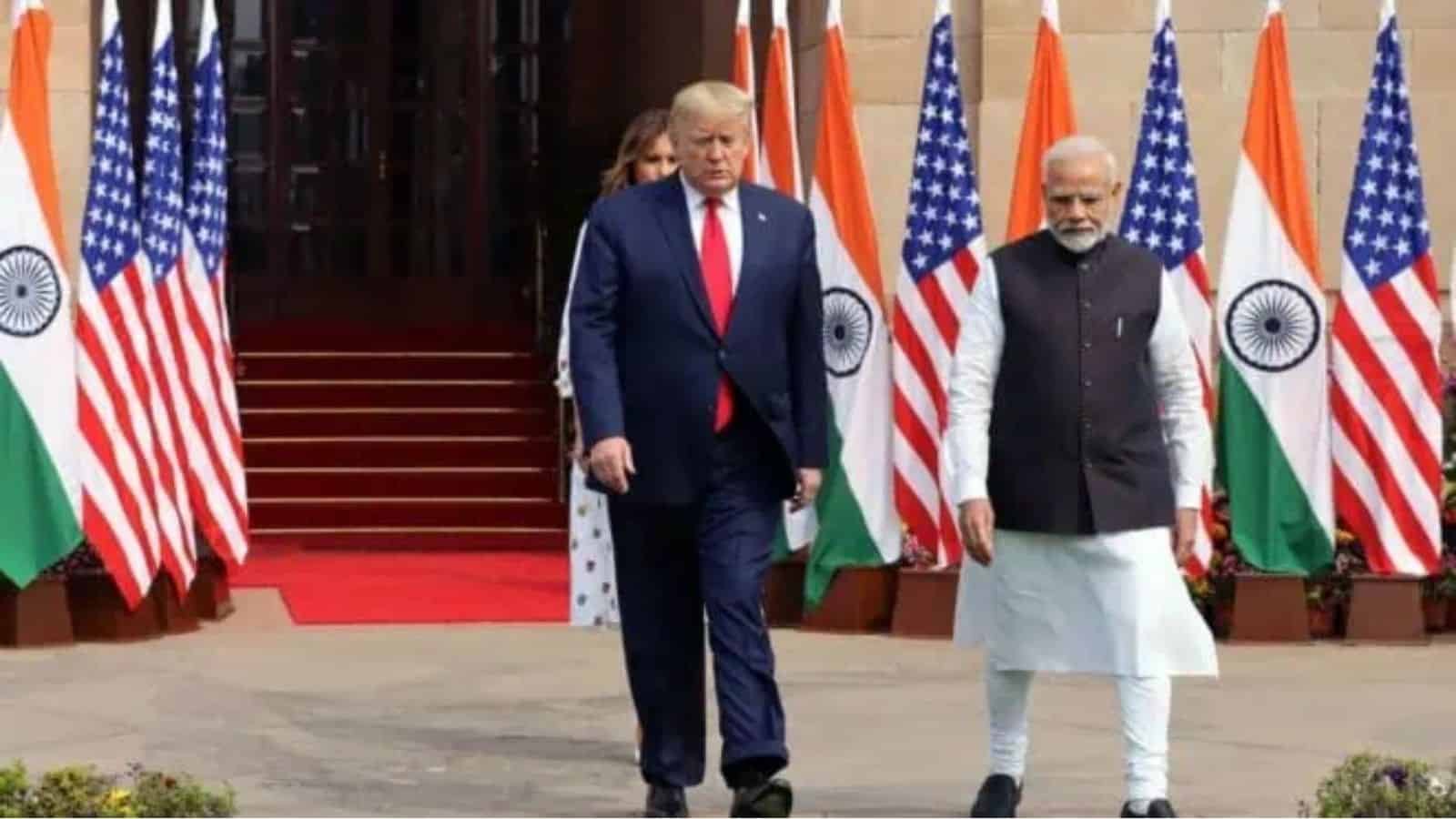
The US President also said that “nothing” changes in the trade deal with India in the wake of this verdict, as he responded to the ruling by announcing an additional 10 per cent global levies on items imported into America.
“Nothing changes. They’ll (India) be paying tariffs, and we will not be paying tariffs. So deal with India is they pay tariffs. This is a reversal for what it used to be… So we made a deal with India. It’s a fair deal now, and we are not paying tariffs to them, and they are paying tariffs. We did a little flip,” Trump said.
The Indian commerce ministry in a statement said the government is studying the developments on the US tariffs and their implications.
“We have noted the US Supreme Court judgement on tariffs yesterday (Friday). US President Donald Trump has also addressed a press conference in this regard. Some steps have been announced by the US administration. We are studying all these developments for their implications,” it said.
The US had imposed a reciprocal tariff of 25 per cent on India in August.
Later, an additional 25 per cent was imposed for buying Russian crude oil, taking the total tariffs on India to 50 per cent.
Meanwhile, earlier this month, both countries agreed to finalise an interim trade deal, under which Washington agreed to cut down the tariffs to 18 per cent. So far, the punitive 25 per cent has been removed. The remaining 25 per cent exists.
After the proclamation, the tariffs on Indian goods will now be 10 per cent from the existing 25 per cent. The 10 per cent levy is over and above the existing MFN or import duties in the US.
For instance, if a product faces a 5 per cent MFN duty, an additional 10 per cent will be imposed, taking the effective duty to 15 per cent.
Earlier, this was 5 plus 25 per cent.
There is no clarity, however, about what the tariff imposed by the US will be on countries, such as India, after the 150-day period.
To finalise the legal text for the first phase of the bilateral trade agreement, the Indian team is scheduled to meet its counterparts in Washington from February 23-26, 2026.
Commerce Minister Piyush Goyal had said the deal may be signed in March and implemented in April.
Welcoming the 10 per cent tariff, apex exporters’ body Federation of Indian Export Organisations (FIEO) said the move would boost competitiveness of labour-intensive sectors such as gems and jewellery and engineering.
“The reduction of the US reciprocal tariff on India improves competitiveness for key sectors such as pharmaceuticals, electronics, engineering goods, textiles, and gems and jewellery, particularly amid supply chain diversification,” FIEO Director General Ajay Sahai said.
However, Section 232 tariffs on steel, aluminum, copper (50 per cent) and certain auto products (25 per cent) remain a constraint, he said, adding that India should leverage this improved position to expand market share while pursuing trade negotiations for greater stability and sectoral relief.
The extent of benefit of the lower tariffs for Indian exporters remains to be seen as India’s competitors, too, will now need to pay the reduced rate of 10 per cent.
If India will look at renegotiating its trade deal with the US, he said India is unlikely to renegotiate out of compulsion.
“However, both sides may recalibrate negotiations in light of the changed tariff environment. The ruling creates an opportunity to pursue a more balanced and rules-based framework rather than one driven by unilateral tariff actions,” Sahai said.
Think tank GTRI said India should reassess the deal.
“Taken together, the ruling and the temporary tariff response inject significant uncertainty into global trade relations and ongoing negotiations. Countries that made concessions to avoid higher US tariffs may now reassess the value of those agreements, while the legal fragility and short duration of the 10 per cent tariff complicate business planning and diplomatic strategy, the GTRI said.
The Congress on Saturday demanded that the government put the interim trade agreement on hold and renegotiate the terms of the deal.
Congress General Secretary Jairam Ramesh said the government must also ensure that the interests of Indian farmers are fully protected during renegotiations and asked the government to categorically state that it will not allow any import liberalisation to the American side.
During 2021-25, the US was India’s largest trading partner in goods. The US accounts for about 18 per cent of India’s total exports, 6.22 per cent in imports and 10.73 per cent in bilateral trade.
In 2024-25, the bilateral trade touched USD 186 billion (USD 86.5 billion exports and USD 45.3 billion imports).
New Delhi: Gold prices appreciated by Rs 850 to Rs 1,59,500 per 10 grams in the national capital on Friday, February 20, while silver stayed flat at Rs 2.64 lakh per kilogram, tracking a firm global trend, according to marketmen.
The yellow metal of 99.9 per cent purity had closed at Rs 1,58,650 per 10 grams (inclusive of all taxes) on Thursday.
However, silver prices remained unchanged at Rs 2,64,000 per kilogram.
In the international market, spot gold gained USD 30.83, or 0.62 per cent, to USD 5,027.13 per ounce, while silver was trading 2.55 per cent higher at USD 80.5 per ounce.
“Gold has rebounded above USD 5,020 per ounce, while silver has also surged to around USD 81 driven by rising concerns over a potential US-Iran conflict,” Kaynat Chainwala, AVP Commodity Research, Kotak Securities, said.
She added that investors remained cautious ahead of key economic releases, including Personal Consumption Expenditures (PCE) inflation, Q4 GDP, and flash PMI data.
Gaurav Garg, Research Analyst at Lemonn Markets Desk, said the uptick in bullion prices comes after recent consolidation, with buyers stepping in on dips following sharp volatility earlier this month.
Global cues, including geopolitical tensions and expectations around US interest rates, continue to drive near-term sentiment, he added.
“Despite intermittent corrections, the broader trend for precious metals remains supportive. Investors are viewing current moves as part of a consolidation phase rather than a reversal,” Garg said.
New Delhi: The government on Friday, February 20, announced seven measures, including credit assistance for e-commerce exporters and support for alternative trade instruments, with an aim to promote the country’s outbound shipments.
These measures are part of the Rs 25,060 crore export promotion mission. Out of 10 components of the mission, three have already been rolled out in January.
To support exporters using digital channels, the commerce ministry announced credit facilities with interest subvention and partial credit guarantees.
The Direct E-Commerce Credit Facility will provide support up to Rs 50 lakh with 90 per cent guarantee coverage.
The Overseas Inventory Credit Facility will extend support up to Rs 5 crore with 75 per cent guarantee coverage, and an interest subvention of 2.75 per cent will be available, subject to an annual ceiling of Rs 15 lakh per applicant, the commerce ministry said.
To promote export factoring as an affordable working capital solution for MSMEs, an interest subvention of 2.75 per cent will be provided on the factoring cost for eligible transactions undertaken through RBI/IFSCA-recognised entities.
Assistance is capped at Rs 50 lakh per MSME annually and will be processed through a digital claim mechanism to ensure transparency and timely disbursal.
To support emerging export opportunities, the ministry said this intervention enables exporters to access new or high-risk markets through shared-risk and credit enhancement instruments such as Letters of Credit confirmation and negotiation.
For Trade Regulations, Accreditation and Compliance Enablement (TRACE), support will be extended to exporters in meeting international testing, inspections, certifications and other conformity requirements.
Under this, partial reimbursement of 60 per cent under the Positive List and 75 per cent under the Priority Positive List will be provided for eligible testing, inspection and certification expenses, subject to an annual ceiling of Rs 25 lakh per IEC (import export code).
Facilitating Logistics, Overseas Warehousing and Fulfilment (FLOW) will enable exporters to access overseas warehousing and fulfillment infrastructure, including E-Commerce Export Hubs integrated with global distribution networks, it said.
Under this, an assistance of up to 30 per cent of the approved project cost will be provided for a maximum of three years, subject to prescribed ceilings and MSME participation norms.
For exporters from northeastern and hilly regions, Logistics Interventions for Freight and Transport (LIFT) was announced.
LIFT mitigates geographical disadvantages faced by exporters in remote, hilly, northeastern and landlocked districts. Under this, there will be partial reimbursement of up to 30 per cent of the eligible freight expenditure, subject to a ceiling of Rs 20 lakh per IEC per financial year.
Financial assistance will also be extended for an integrated Support for Trade Intelligence and Facilitation (INSIGHT).
It is generally limited to 50 per cent of project cost, with up to 100 per cent support for proposals from central and state Government institutions and Indian Missions abroad, subject to notified ceilings.
Through these coordinated financial and ecosystem interventions, the government aims to reduce the cost of capital, diversify trade finance instruments, enhance compliance readiness, address logistics constraints and strengthen overseas market integration for MSMEs.
Launching these measures, Commerce and Industry Piyush Goyal said they are aimed at empowering Micro, Small and Medium Enterprises (MSMEs) for global markets.
He said India’s expanding network of Free Trade Agreements (FTAs) has significantly enhanced market access for Indian exporters.
He noted that nearly 70 per cent of global GDP and two-thirds of global trade are now accessible to India through nine concluded FTAs, including the first tranche of the Bilateral Trade Agreement with the United States.
These agreements provide preferential access across sectors in 38 developed and emerging economies.
Emphasising that the benefits of global trade must reach every MSME, startup and entrepreneur, Goyal said the mission is aimed at promoting new products, services and exporters, while enabling Indian businesses to access new markets.
He said India has recorded double-digit growth in merchandise exports in the first half of February.
The mission seeks to simplify processes for MSMEs, strengthen access to credit, enhance quality standards, support compliance with international regulations and expand logistics and warehousing infrastructure globally.
Speaking at the occasion, Commerce Secretary Rajesh Agarwal said these interventions will help access new markets, and promote exports of new products.
He asked the export promotion councils to prepare a communication package to take advantage of the free trade pacts finalised by India.
During April-January 2025-26 fiscal, the country’s exports rose by 2.22 per cent to USD 366.63 billion. Imports grew 7.21 per cent to USD 649.86 billion, leaving a trade deficit of USD 283.23 billion during the nine-month period of 2025-26.
New Delhi: India’s recalibration of crude oil imports marks a structural shift from opportunistic discount buying to disciplined geopolitical risk management, according to analytics firm GlobalData.
With oil accounting for roughly a quarter of India’s primary energy consumption and import dependence at about 87 per cent, the country is prioritising compliance resilience, supply diversification and stronger US energy linkages as part of a more strategic energy security doctrine, the firm said.
India, the world’s third-largest oil consumer, is projected by the International Energy Agency to see demand rise from 5.5 million barrels per day (mbpd) in 2024 to 8 mbpd by 2035. Import dependence could increase to 92 per cent by 2035 despite ongoing domestic exploration, widening exposure to external supply shocks.
Arnab Nath, Associate Project Manager of Economic Research at GlobalData, said the growing gap between demand and domestic output is driving efforts to broaden the supplier base and reduce reliance on concentrated or politically constrained supply corridors.
India’s crude sourcing has shifted significantly since 2022. Russia’s share of India’s oil imports rose from 2.7 per cent before the Ukraine conflict to 25.9 per cent in 2024 on the back of discounted cargoes. However, imports from Russia fell more than 40 per cent year-on-year in January 2026 amid tightening trade and sanctions dynamics.
At the same time, the United States and Venezuela have re-emerged in India’s crude mix. While Venezuelan volumes are expected to remain limited due to heavy grades and production constraints, they are seen as a tactical alternative as India seeks to rebalance geopolitical risks, GlobalData said, adding the shift is also influenced by US tariff threats linked to Iran-related trade.
According to Nath, the recalibration could ease near-term friction between New Delhi and Washington and open space for deeper cooperation in liquefied natural gas (LNG), critical minerals and clean-technology supply chains.
However, he noted that India will continue to prioritise price competitiveness and supply security, maintaining sourcing flexibility, including from the Middle East and select sanctioned-origin barrels where feasible.
For Washington, the move reinforces the effectiveness of tariffs and sanctions as negotiating tools, potentially making energy a recurring element in bilateral trade discussions, the report said.
Following the India-US trade agreement announced on February 2, India faces stronger incentives to reduce sanctions exposure and tariff risks while preserving access to competitively priced crude. The US had imposed an additional 25 per cent tariff in August 2025 linked to Russian oil purchases and signalled the possibility of further increases.
GlobalData said refiners are now optimising for compliance resilience and supply continuity. While Russian crude may remain part of the mix when commercially viable, India’s overall direction points to a broader supplier base anchored by stronger US energy ties and selective engagement with alternative sources.
“India’s crude strategy is evolving from opportunistic discount capture to a more structured approach to managing geopolitical risk,” Nath said, adding that energy trade with the US is likely to remain transactional in oil but increasingly convergent in long-term transition areas such as grid modernisation and nuclear cooperation.