Category: BUSINESS

  • Chandrayaan-2 makes first ever obseravtion of Sun’s impact on Moon, says ISRO

    Chandrayaan-2 makes first ever obseravtion of Sun’s impact on Moon, says ISRO

    Chennai: The Chandrayaan-2 mission, launched in 2019, has made the first-ever observation of the effects of the Sun’s Coronal Mass Ejection (CME) on the Moon using its onboard scientific instruments, ISRO said on Saturday.

    This observation would help understand the lunar exosphere, very thin atmosphere of the Moon, and the impact of space weather on its surface, the Bengaluru-headquartered space agency said.

    Launched on July 22, 2019, from Sriharikota using the GSLV-MkIII-M1 rocket, Chandrayaan-2 carried eight experiment payloads. On August 20, 2019, Chandrayaan-2 was successfully inserted into the elliptical orbit around the Moon.

    Memory Khan Seminar

    Although communication with the Vikram lander was lost during its September 7 landing attempt, the Orbiter remains fully operational and continues to function in a 100 km x 100 km orbit around the Moon.

    According to an ISRO release, one of the payloads (on-board Chandrayan-2), Chandra’s Atmospheric Compositional Explorer 2 (CHACE 2) has recorded the effects of the Coronal Mass ejections from the Sun on the lunar exosphere.

    The primary objective of the CHACE-2 payload is to study the composition and distribution of the lunar neutral exosphere and its variability.

    Coronal Mass Ejections occur when the Sun ejects significant quantities of its building material, comprising mostly Helium and Hydrogen ions.

    These effects are significant on the Moon, as Moon is an airless body that too deprived of any global magnetic field, the presence of which would have shielded the solar effects on its surface.

    “Observations from CHACE-2 showed an increase in the total pressure of the dayside lunar exosphere (very thin atmosphere) when the Coronal Mass Ejection (of the Sun) impacted the Moon. The total number density (number of neutral atoms or molecules present in an environment per unit volume) derived from these observations showed an increase by more than an order of magnitude,” the release said.

    Germanten HospitalGermanten Hospital

    “This increase in consistent with earlier theoretical models, which predicted such an effect, but CHACE-2 onboard Chandrayaan-2 has observed such an effect for the first time.”

    ISRO further said the rare opportunity to directly observe the effects of a Coronal Mass Ejection (CME) impacting the Moon occurred on May 10, 2024, when a series of CMEs were hurled from the Sun toward the lunar surface.

    This increased quantity of the solar coronal mass that impacted on the Moon enhanced the process of knocking off the atoms from the lunar surface, thereby liberating them to the lunar exosphere, which manifested as the enhancement of the total pressure in the sun lit lunar exosphere.

    Apart from pushing the edge of scientific understanding about the Moon and the lunar space weather, this observation also indicates the challenges of building scientific bases on the Moon.

    Lunar base architects need to account for such extreme events, which would temporarily alter the lunar environment, before the effects subside, the release added.

  • No one hurt as United Airlines plane clips tail of another aircraft in Chicago

    No one hurt as United Airlines plane clips tail of another aircraft in Chicago

    Chicago: A United Airlines plane heading for its gate clipped the tail of another United aircraft at Chicago’s O’Hare Airport, authorities said.

    No one was hurt in Friday’s incident and the 113 passengers on Flight 2652 from Jackson Hole, Wyoming, were able to leave the plane normally after a delay, United officials said in a statement.

    The second plane had its horizonal stabiliser struck and was not moving when the planes hit, officials said.

    Memory Khan Seminar

    Bill Marcus, a passenger on the flight from Wyoming, said he didn’t even realise anything happened until the pilot said there would be a delay to document something and passengers on the plane saw a number of people gather around the right wing.

    “I was shocked that I didn’t feel something more, although when they separated the planes there was some shuddering,” Marcus told CBS News Chicago. It took about 40 extra minutes for the plane to get to the gate, he said.

    Earlier this month, two Delta Air Lines regional jets collided at the intersection of taxiways at LaGuardia Airport in New York, injuring a flight attendant.

    Runway collisions like these could add to worries about aviation safety in the wake of recent crashes and near misses including the deadliest plane crash in the United States in decades, when an Army helicopter collided with an airliner preparing to land at Ronald Reagan Washington National Airport in January.

  • GST rate cut benefits reaching consumers, govt monitoring prices of 54 items

    GST rate cut benefits reaching consumers, govt monitoring prices of 54 items

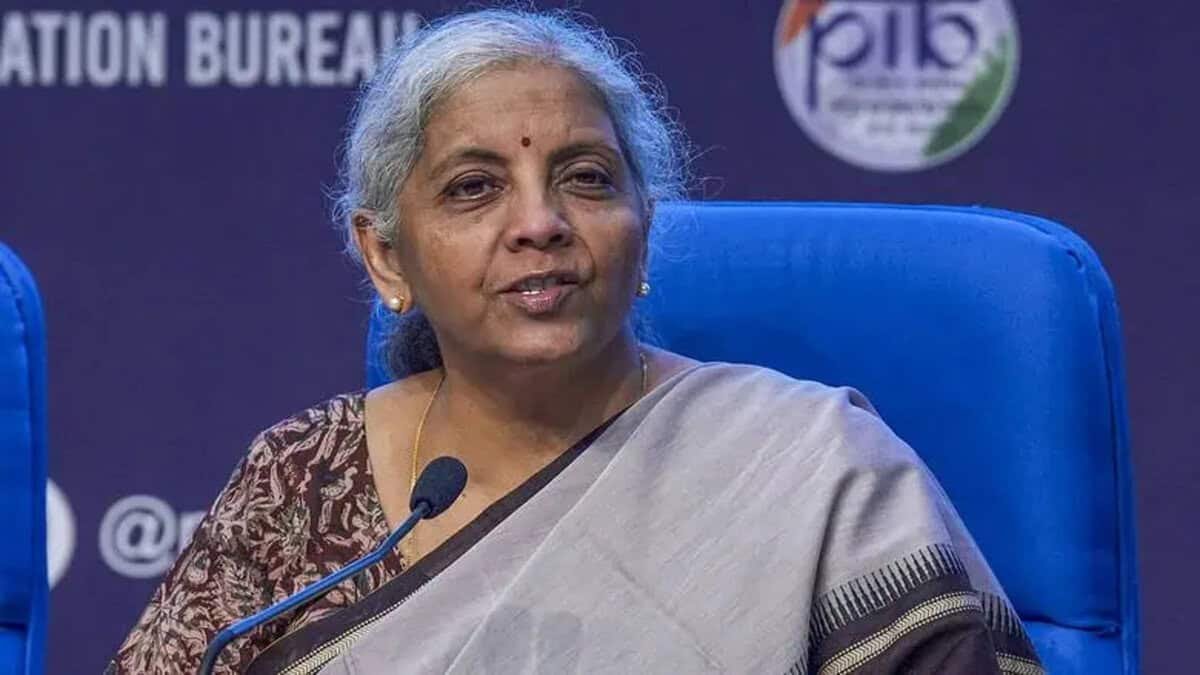
    New Delhi: Finance Minister Nirmala Sitharaman on Saturday said the benefits of GST reforms are reaching consumers in the form of reduced prices.

    Addressing a press conference on GST Bachat Utsav, she said the government has been monitoring price cuts in 54 items across the country since the lower GST rates came into effect on September 22.

    “GST rate reduction has resulted in increase of purchases. The consumption drive will continue,” Sitharaman said.

    Memory Khan Seminar

    “We are convinced that on every such items benefits are being passed on by companies,” she added.

    In case of some items, businesses have passed on to consumers higher than the weighted-average GST rate cut benefits.

    Sitharaman said the Department of Consumer Affairs has received 3,169 complaints related to non-reduction in prices commensurate with GST cut. Of this, 3,075 complaints have been forwarded to nodal officers in the Central Board of Indirect Taxes and Customs (CBIC). Total 94 complaints have been resolved by the department.

    The department will enable a functionality on the grievance reporting portal so that the complaints can be forwarded to the chief commissioners of the respective zones from where complaints have come in, the minister said.

    New lower GST rates kicked in from September 22, resulting in slashing of prices of as many as 375 items ranging from toothpaste and shampoo to cars and television sets.

    Tax rates of 5, 12, 18, and 28 per cent have been clubbed into two rates of 5 per cent and 18 per cent, resulting in a reduced price of 99 per cent of daily use items.

    Germanten HospitalGermanten Hospital

  • Dhanteras gold buying kicks off, record prices may dampen volumes by 15pc

    Dhanteras gold buying kicks off, record prices may dampen volumes by 15pc

    Mumbai: Gold and silver buying on the auspicious occasion of Dhanteras kicked off on Saturday with jewellers expecting higher footfalls, though record high prices of the yellow metal could dampen demand by 15 per cent in volume terms compared with a year earlier.

    Dhanteras, the most auspicious day in the Hindu calendar for buying items ranging from precious metals to utensils, is being celebrated over two days until 1.45 pm on Sunday, with jewellers expecting more footfalls in both online and offline stores.

    Gold prices have surged 65 per cent to Rs 1,34,800 per 10 grams of 24 karat, inclusive of all taxes, in the national capital, compared with Rs 81,400 on Dhanteras last year, which was celebrated on October 29, 2024.

    Memory Khan Seminar

    Silver prices are currently at Rs 1,77,000 per kilogram.

    “We are expecting the momentum to pick up after the muhurat time. Since the festival falls on a weekend we have geared up for a robust Dhanteras,” All India Gem And Jewellery Domestic Council (GJC) Chairman Rajesh Rokde told PTI.

    GJC expects gold sales to increase by 40-45 per cent in value terms on a year-on-year basis, he said.

    Suvankar Sen, Managing Director and chief executive of Senco Gold and Diamonds, said high prices will affect sale volumes by 12-15 per cent, but in value terms there will be growth of 20-25 per cent on Dhanteras.

    While some consumers are still buying gold jewellery even at high rates, many are shifting towards silver buying, especially bullion.

    Saiyam Mehra, former chairman of GJC, said volume-wise, gold jewellery sales are expected to witness a decline of 10 per cent on Dhanteras.

    Germanten HospitalGermanten Hospital

    He said silver prices surged due to scarcity of the white metal since last month because of a ban on imports of jewellery, though silver prices have now started seeing a correction.

    Sachin Jain, regional CEO for India at the World Gold Council, said Dhanteras and Diwali are the top gold-buying occasions in India.

    “Despite gold prices reaching multiple historic highs through 2025, witnessing an approximate 51.2 per cent year-to-date increase in rupee prices by end-September, consumer sentiment and demand for the yellow metal have been positive,” he said.

    Retailers, who had been cautious about their inventories in recent months, are now well-stocked and optimistic, with seasonal and wedding-related demand further fuelling purchases, suggesting a vibrant festive season for gold sales.

    Consumer buying is expected to be strong across various gold purchases, from higher caratage gold jewellery to investment products like digital gold, coins and ETFs.

    “This positive outlook is strongly supported by India registering positive gold ETF flows of USD 902 million in September, along with overall gold imports reaching a nine-month high in August 2025,” Jain said, adding that gold demand is expected to continue through the Diwali period and until the end of the year due to the wedding season.

    Kam Jewelry Managing Director Colin Shah said while demand dynamics are likely to remain consistent, consumer preferences are rapidly shifting toward lightweight jewellery.

    “The festive season is expected to see a significant surge in demand for jewellery in the 9 to 18 carat segment. … we foresee a festive surge of 18-20 per cent in overall sales,” Shah said.

    India is the world’s second-largest gold consumer and one of the largest importers globally, after China.

  • India overtaking UK in startups reflects PM Modi’s vision, says Sunak

    India overtaking UK in startups reflects PM Modi’s vision, says Sunak

    New Delhi: Former British Prime Minister Rishi Sunak captivated attendees at the NDTV World Summit 2025, held at the Bharat Mandapam in New Delhi, with a stirring address that wove personal reflection, geopolitical insight, and a clarion call for embracing uncertainty.

    Speaking under the summit’s theme, “Edge of the Unknown: Risk, Resolve, Renewal,” Sunak’s session, titled “Navigating the Unknown: Policy, Power, Perspective,” offered a roadmap for global collaboration in an era of seismic shifts.

    His remarks, delivered with characteristic eloquence, underscored India’s meteoric rise and the urgent need for innovation-driven partnerships, particularly between the UK and India.

    Memory Khan Seminar

    Sunak set the tone early, exuding warmth in a pre-recorded video message: “Hi India, this is Rishi Sunak. I am thrilled to be at NDTV’s World Summit at the Bharat Mandapam in Delhi. I’m looking forward to discussing the future of global growth with India’s rising stars. And of course, looking forward to seeing my good friend, Prime Minister Narendra Modi ji, and meeting the young leaders who are shaping the future.”

    His words, steeped in his Indian heritage, struck a chord as he arrived in the capital, where he met PM Modi to discuss deepening ties in education, innovation, and women’s empowerment.

    The meeting, held at PM Modi’s residence, highlighted the enduring friendship between the two nations, a theme Sunak carried into his speech.

    Addressing a packed audience, Sunak confronted the summit’s central motif, risk as a frontier, resolve as deliberate action, and renewal as bold reinvention.

    He began by reflecting on his tenure as Prime Minister, a period defined by economic turbulence and post-COVID recovery.

    “I wanted to resolve the economic issue, that’s what I was there for,” he said, noting how he steered UK inflation back to a stable 2 per cent.

    Germanten HospitalGermanten Hospital

    Yet, he tempered this achievement with humility, quoting his mother-in-law, Sudha Murty: “You have to just do your best. That’s what my mother-in-law says, you have to give your best and then leave it to your God.”

    The anecdote, delivered with a smile, drew laughter, grounding his high-stakes narrative in familial wisdom and reinforcing the summit’s call for human-centric leadership.

    Sunak’s gaze then turned to the shifting global order, a landscape he described as irrevocably altered.

    “The old global order that people of my generation grew up with is gone, and I don’t think it is coming back,” he declared, tracing the arc from post-Cold War optimism to today’s multipolar reality.

    He highlighted how globalisation’s promise has frayed, with tariffs re-emerging as nations prioritise domestic resilience amid supply chain vulnerabilities exposed by pandemics and geopolitical strife.

    “The focus will now be on multi-polarity and domestic capabilities,” Sunak asserted, urging countries to balance self-reliance with open collaboration.

    For him, India exemplifies this balance, its rapid growth a beacon for the Global South.

    Lauding India’s ascent, Sunak celebrated its surpassing of the UK in the number of unicorns – billion-dollar start-ups that symbolise entrepreneurial dynamism.

    “India has just about surpassed the UK in terms of the number of Unicorns… the economy is growing very fast,” he remarked, crediting Prime Minister Modi’s vision.

    He pointed to India’s strides in technology and energy, from digital infrastructure to solar power, as evidence of its resolve.

    “For the first time in 100 years, cricket is going to be a sport in the Olympics in 2028. This is because of India,” he said, weaving cultural pride into economic optimism. These achievements, he argued, position India as a global pacesetter, capable of shaping a new world order through innovation and ambition.

    Technology, particularly artificial intelligence, formed a cornerstone of Sunak’s address. He marvelled at its dizzying pace; “Telephone, electricity and other tech took decades, ChatGPT took just two months to reach the 100 million user mark.”

    Acknowledging AI’s risks – from job disruption to ethical dilemmas – he remained steadfastly optimistic. “There are certain drawbacks to AI, [but] my bias lies towards being pro-innovation,” he said, advocating for policies that nurture creativity.

    He cited the ‘FinTech Bridge’ between London and Mumbai, a legacy of his premiership, as a model for cross-border collaboration in finance, healthcare, and education. Such partnerships, he argued, turn risk into opportunity, aligning with the summit’s ethos of renewal.

    Geopolitics, too, featured prominently. Sunak addressed China’s role with measured candour; “It is clear [China] does not play by the same rules that many of the rest of us were playing by. They don’t view trade purely as an economic function, and it has meant that countries have to think about security, IP theft, alongside trading relationships.”

    He championed the India-UK free trade agreement as a counterweight, a deal to boost trade, protect intellectual property, and foster economic security.

    “We must build coalitions of the willing,” he urged, positioning the Indo-Pacific as a crucible for democratic cooperation on trade and maritime freedom.

    Sunak’s speech was peppered with personal touches, endearing him to the audience. When asked who offers better advice – his mother-in-law, Sudha Murty, or father-in-law, Narayana Murthy – he sidestepped with diplomacy, praising Murthy’s ethos of selfless service.

  • Reliance Q2 net profit rises 9.6 pc y-o-y but falls compared to Q1

    Reliance Q2 net profit rises 9.6 pc y-o-y but falls compared to Q1

    New Delhi: Reliance Industries Ltd on Friday reported a 9.6 per cent rise in its September quarter net profit on robust consumer business supported by an uptick in cash cow oil-to-chemical unit.

    Consolidated net profit of Rs 18,165 crore in July-September was higher than Rs 16,653 crore earning in the same period last year. It however was 33 per cent lower when compared to earnings in first quarter of current fiscal (April-June).

    Revenue from operations rose to Rs 2.59 crore in Q2 from Rs 2.35 crore last year, according to stock exchange filing made by the company.

    Memory Khan SeminarMemory Khan Seminar

  • Markets open lower as investors react to Q2 results

    Markets open lower as investors react to Q2 results

    Mumbai: Indian stock markets opened lower on Friday as investors reacted to the second-quarter (Q2) earnings of major companies, including Infosys, Wipro, and Eternal.

    Weak cues from Asian markets and renewed US-China tensions also weighed on investor sentiment.

    At the same time, gold prices hit a record high, adding to the cautious mood in the market. However, a sharp drop in crude oil prices — with Brent crude falling to around $60 per barrel — may help limit losses for Indian equities.

    Memory Khan Seminar

    At 9:20 AM, the Sensex was trading at 83,365, down 103 points or 0.12 per cent, while the Nifty slipped 33 points or 0.13 per cent to 25,552.

    “The Nifty managed to hold its gains and ended near the day’s high, closing above the 25,550 mark with a strong bullish candle. This positive momentum suggests continued strength in the near term,” analysts said.

    “On the downside, immediate support is placed at 25,500, followed by 25,400, while on the upside, resistance is seen at 25,700 and 25,800 levels,” market experts added.

    Eternal, HCL Tech, Infosys, Tech Mahindra, Power Grid, Kotak Mahindra Bank, Trent, Tata Steel, Ultratech Cement, and ICICI Bank were among the major losers, declining up to 3.5 per cent.

    On the other hand, gains in Asian Paints, Tata Motors, ITC, Bharti Airtel, Mahindra & Mahindra, and Maruti Suzuki helped trim some of the losses. These stocks rose between 0.3 per cent and 3 per cent.

    In the broader market, the Nifty MidCap index slipped 0.28 per cent, while the Nifty SmallCap index edged up 0.10 per cent.

    Germanten HospitalGermanten Hospital

    Among sectoral indices, IT was the biggest drag, with the Nifty IT index down 1.13 per cent. The Nifty Pharma and PSU Bank indices also declined by 0.3 per cent each.

    “The market is resilient and technically strong. Price action in the leading stocks indicate short covering. Even now there is big shorts in the system and the strength in the market might keep the bears on the back foot, facilitating further short covering,” market experts said.

  • FM Sitharaman urges farmers to leverage PMFME, PMDDKY for profitable agriculture

    FM Sitharaman urges farmers to leverage PMFME, PMDDKY for profitable agriculture

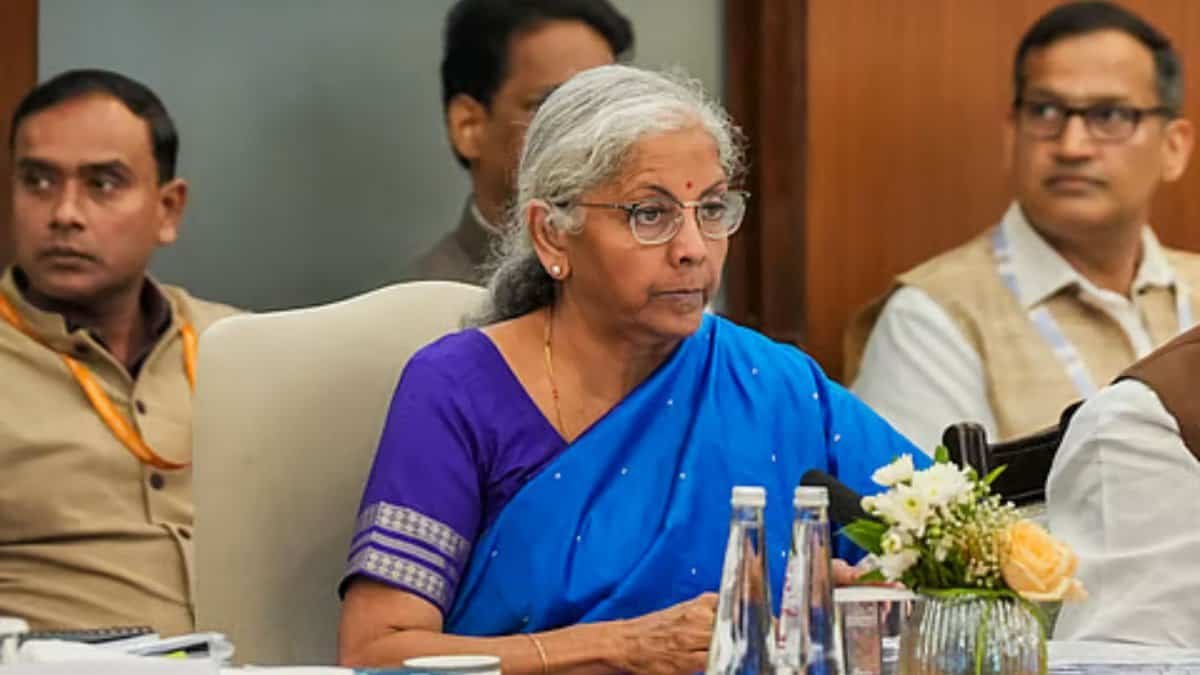
    Koppal: Union Finance Minister Nirmala Sitharaman on Wednesday urged farmers to make full use of the Pradhan Mantri Formalisation of Micro Food Processing Enterprises (PMFME) and Pradhan Mantri Dhan Dhanya Krishi Yojana (PMDDKY) to turn agriculture into a profitable venture.

    Speaking after inaugurating the Farmers‘ Training and Common Facility Centre in Koppal district, Sitharaman, a Rajya Sabha member from Karnataka, said the new generation GST reforms will also benefit agrarian communities.

    The facility was set up using her MP Local Area Development (MPLAD) fund.

    Memory Khan Seminar

    PMFME was launched to support value addition in agricultural products. The Centre provides financial and technical assistance and helps businesses upgrade under the scheme, she said.

    Sitharaman added that the government aims to promote rural entrepreneurship to generate jobs in villages.

    “More than Rs 3,700 crore funds have been given by the Centre to states till now since 2020. Loans have been provided to farmers. Rs 11,000 crore has been sanctioned for farmers. More than one lakh agriculture entrepreneurs have emerged,” she said.

    On PMDDKY, Sitharaman said, “Rs 24,000 crore budgetary allocation has been made in 2025-26 for this scheme. Koppal is one of the districts to benefit under it.”

    The scheme aims to boost agricultural productivity, encourage crop diversification, and improve livelihoods in 100 low-performing agricultural districts.

    The union minister also noted that 43 lakh farmers in Karnataka benefit from the PM Kisan Samman Nidhi Yojana, which provides Rs 6,000 per year in three instalments of Rs 2,000 each through Direct Benefit Transfer (DBT).

    Germanten HospitalGermanten Hospital

    Sitharaman highlighted reforms under the next-generation GST. “Just a month ago, the GST Council announced the next-generation GST ahead of Deepavali, following PM Modi’s direction to reform it. We implemented the changes during Navaratri. Taxes on farm equipment, solar power, tractors, and agricultural machinery have been either waived or cut to five per cent, down from 12 per cent,” she said.

    She added that GST has also been reduced on bio-pesticides, micronutrients, and bio-fertilisers. “We want farmers to prosper.”

    The facility, set up by NABARD with state government support, will process and store 840 tonnes of mango and 600 tonnes of papaya. Products made here are certified by the Food Safety and Standards Authority of India.

    According to Sitharaman, NABARD is providing training to ensure farmers can fully utilise the facility.

    “This is a good step towards improving the lives of ‘annadata’ (farmers) in Koppal district, which is considered the Akshaya Patra of north Karnataka,” she said, noting that the project reflects Prime Minister Narendra Modi’s vision of ‘Vocal for Local’.

    Sitharaman also thanked the Karnataka government for assisting in setting up the facility smoothly and said she is utilising her MPLAD funds across all seven districts of Kalyana Karnataka.

  • Trump calls BRICS ‘attack’ on US dollar

    Trump calls BRICS ‘attack’ on US dollar

    New York: US President Donald Trump has called the BRICS grouping an “attack” on the US dollar, claiming that he threatened nations seeking to join the bloc with tariffs following which “everybody dropped out”.

    BRICS comprises Brazil, Russia, India, China, South Africa, Egypt, Ethiopia, Indonesia, Iran, and the United Arab Emirates. Trump has often threatened to impose additional tariffs on the bloc for what he calls its “anti-American” policies.

    The BRICS nations have voiced serious concerns about the rise of unilateral tariff and non-tariff measures which distort trade.

    Memory Khan Seminar

    Speaking at a bilateral meeting with Argentine President Javier Milei on Tuesday, Trump said he was “very strong” on the dollar, adding that “anybody who wants to deal in dollars” will have an “advantage” over those who do not.

    “…I told anybody who wants to be in BRICS, that’s fine, but we’re going to put tariffs on your nation. Everybody dropped out. They’re all dropping out of BRICS,” he claimed.

    “BRICS was an attack on the dollar,” he said.

    The US President said he told potential members that if they “want to play that game, I’m going to put tariffs on all of your product coming into the US.”

    He added that if former President Joe Biden or Democrat Kamala Harris had been elected, “you wouldn’t have the dollar as your currency anymore”.

    “You wouldn’t have a world domination by the dollar if I didn’t win this election,” he said.

    Germanten HospitalGermanten Hospital

    Last month, the BRICS nations expressed concern over the proliferation of trade-restrictive actions in the form of “indiscriminate rising” of tariffs, particularly measures used as a means of “coercion”, cautioning that such practices risk marginalising the Global South countries.

    Earlier this year, Trump imposed tariffs on multiple countries, including 50 per cent on Indian exports.

  • Stock markets trade higher in early trade tracking rally in Asian peers

    Stock markets trade higher in early trade tracking rally in Asian peers

    Mumbai: Equity benchmark indices Sensex and Nifty were trading higher in early trade on Wednesday, tracking a rally in Asian markets amid hopes of a US Federal Reserve rate cut later this month.

    The 30-share BSE Sensex climbed 354.57 points to 82,384.55 in early trade. The 50-share NSE Nifty edged higher by 109.55 points to 25,255.05.

    From the Sensex firms, Asian Paints, NTPC, Bajaj Finance, Bharat Electronics, Bajaj Finserv and Power Grid were among the major winners.

    Memory Khan Seminar

    However, Tech Mahindra, Axis Bank, Infosys and Titan were the laggards.

    In Asian markets, South Korea’s Kospi, Japan’s Nikkei 225 index, Shanghai’s SSE Composite index and Hong Kong’s Hang Seng were trading in the positive territory.

    US markets ended on a mixed note on Tuesday.

    “Fed Chair Jerome Powell warned that the sharp slowdown in hiring is increasingly threatening the US economy, hinting at the possibility of two more rate cuts this year,” Jigar Trivedi, Senior Research Analyst at Reliance Securities, said.

    Global oil benchmark Brent crude dipped 0.19 per cent to USD 62.27 a barrel.

    Foreign Institutional Investors (FIIs) offloaded equities worth Rs 1,508.53 crore on Tuesday, while Domestic Institutional Investors (DIIs) bought stocks worth Rs 3,661.13 crore, according to exchange data.

    Germanten HospitalGermanten Hospital

    On Tuesday, the Sensex declined 297.07 points or 0.36 per cent to settle at 82,029.98. The Nifty dipped by 81.85 points or 0.32 per cent to 25,145.50.