New Delhi: The government on Tuesday signed an MoU with online food delivery platform Zomato to enhance access to flexible and technology-enabled livelihood opportunities through the National Career Service (NCS) platform, which can create nearly 2.5 lakh job opportunities annually.
Union Labour Minister Dr Mansukh Mandaviya said it would integrate platform economy roles into the formal employment system, connecting youth and women jobseekers to dignified, technology-enabled livelihoods.
Dr Mandaviya highlighted that the NCS portal has emerged as an important platform for job seekers at both National and International level, connecting millions of individuals with employment and livelihood opportunities.
He noted that the portal, launched in 2015, has mobilised over 7.7 crore vacancies and continues to serve as a vital bridge between job seekers and employers.
He further added that several key organisations have already partnered with the NCS portal, and the collaboration with Zomato marks another milestone in the Ministry’s efforts to expand flexible and technology-enabled livelihoods.
Shobha Karandlaje, Minister of State for Labour and Employment, underscored the importance of extending social protection to every organised and unorganised worker in the country.
She emphasised that the MoU supports the Pradhan Mantri Viksit Bharat Rozgar Yojana (PM-VBRY) and the government’s vision of Viksit Bharat 2047, promoting formalization and social security for all workers.
Karandlaje called upon all stakeholders to work in close partnership with the Government to ensure the vision of inclusive and secure livelihoods for all workers.
Vandana Gurnani, Secretary, Ministry of Labour and Employment, emphasised the government’s commitment towards ensuring dignified employment and sustainable livelihoods for all workers.
She announced that new career opportunities coming up on the National Career Service (NCS) portal around Diwali would provide a well-timed boost to job seekers and employers alike.
Under the new ‘Aggregator’ category, Zomato will list around 2.5 lakh flexible livelihood opportunities annually on the NCS portal, providing structured access to real-time income avenues for delivery partners and gig workers.
Agartala: A Kolkata-bound Indigo flight on Tuesday made an emergency landing at the Agartala airport shortly after takeoff due to a suspected bird hit mid-air, an official said.
All passengers are safe and they have been accommodated in other flights, Airport Director K C Meena told PTI.
The plane did not suffer any major damage, Meena said.
“The Indigo flight took off from the MBBA Airport for Kolkata around 12.40 pm and after 20 minutes, it made an emergency landing after the pilot experienced a suspected bird hit mid-air,” he said.
A team of engineers from Kolkata has conducted checks in the flight as per the standard operating procedure, Meena said.
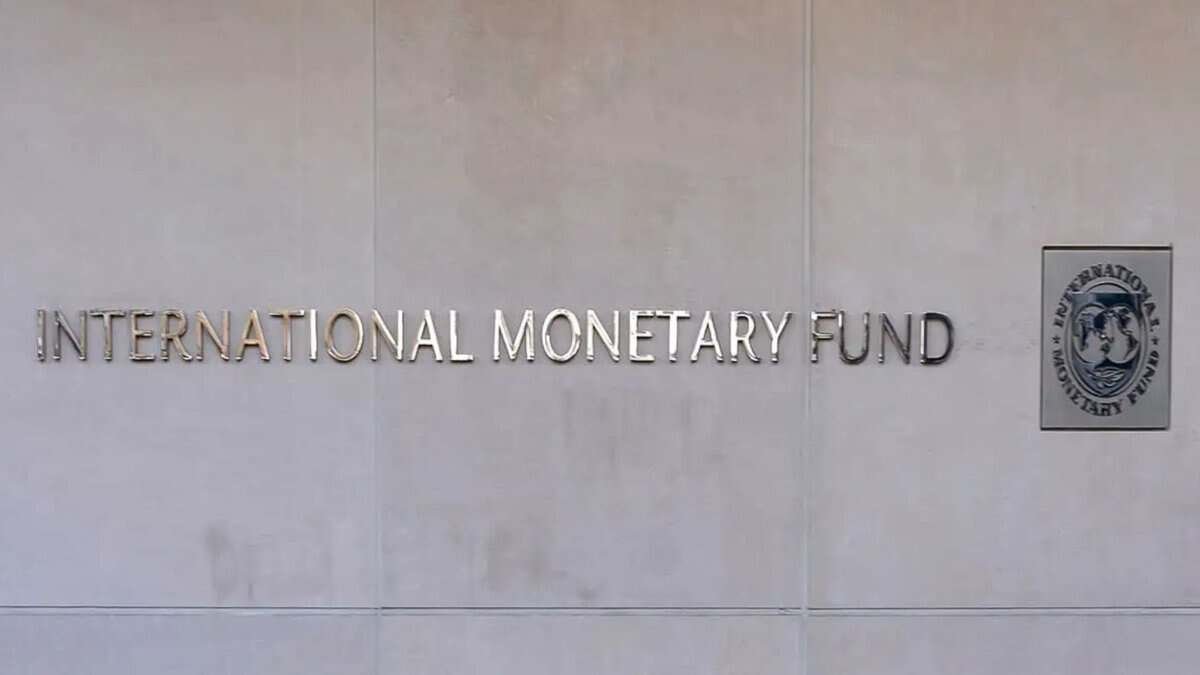
Washington: The US and global economies will grow a bit more this year than previously forecast as the Trump administration’s tariffs have so far proved less disruptive than expected, the International Monetary Fund said Tuesday, though the full impact of those policies is still emerging.
The United States’ economy will expand 2 per cent in 2025, the IMF projected in its influential semi-annual forecast, the World Economic Outlook. That is slightly higher than the 1.9 per cent forecast in the IMF’s last update in July and 1.8 per cent in April.
The US should grow 2.1 per cent next year, also just one-tenth of a percent faster than its previous projection, the IMF said.
The global economy, meanwhile, will grow 3.2 per cent this year, up from a 3 per cent estimate in July, the IMF forecast, and 3.1 per cent in 2026, the same as its previous estimate.
The figures represent a bit of a round-trip for the IMF: In January, before Trump began imposing tariffs, it had forecast global growth of 3.3 per cent, only slightly higher than its newest estimate. While the US and world economies have fared better than expected, it’s too soon to say they are fully in the clear, the IMF said, as Trump has continued to make tariff threats and it can take time for changes in international trade patterns to play out.
The reasons for the better performance “are clear,” IMF chief economist Pierre-Olivier Gourinchas said in a blog post.
“The United States negotiated trade deals with various countries and provided multiple exemptions,” Gourinchas wrote. “Most countries refrained from retaliation, keeping instead the trading system largely open. The private sector also proved agile, front-loading imports and speedily re-routing supply chains.”
By front-loading imports, many companies were able to stock up on goods before the duties took effect, enabling them to avoid or delay price increases.
Yet many of those factors only reflect “temporary relief, rather than underlying strength in economic fundamentals,” the IMF’s report said.
The IMF also said that import price data in the U.S. shows that so far importers and retailers are paying most of the tariffs, not overseas companies, as many Trump administration officials have predicted. Over time, those firms are likely to pass on more of the price hikes to consumers, the IMF said.
There are signs that some downsides of the higher tariffs are starting to emerge, the IMF outlook said. Core inflation, which excludes the volatile food and energy categories, has ticked up to 2.9 per cent, according to the Federal Reserve’s preferred measure, up from 2.7 per cent a year ago.
Hiring has ground to nearly a halt, which could partly reflect a more cautious approach by many firms in the wake of the uncertainty created by the higher tariffs.
The IMF’s forecasts are modestly more optimistic than many private-sector economists’ expectations. The National Association for Business Economics, a group of academic and business economists, on Monday forecast that the US would grow just 1.8 per cent this year and 1.7 in 2026.
Nearly two-thirds of the economists surveyed by the NABE said they think the administration’s duties are nevertheless slowing growth, by up to a half-percentage point.
Other trends are offsetting some of the downsides of tariffs in the US, Gourinchas said. For example, a clampdown on immigration has reduced the supply of workers at the same time that hiring has slowed. As a result, the unemployment rate has remained low.
An artificial intelligence-driven investment boom in data centres and computing power has also provided a lift to the economy, Gourinchas noted in his blog post.
China, meanwhile, has weathered the hit from US tariffs by sending more of its goods to Europe and Asia, rather than the United States, and its currency has depreciated, which has made its exports cheaper. The IMF is forecasting that China’s economy will expand 4.8 per cent this year and 4.2 per cent in 2026, the same as in July.
In Europe, Germany is bolstering growth by increasing government spending to build up its military, Gourinchas said. The IMF now expects the 20 countries that use the euro to grow 1.2 per cent this year, up from a 1 per cent forecast in July, and 1.1 per cent next year, the same as three months ago.
The IMF is a 191-nation lending organisation that works to promote economic growth and financial stability and to reduce global poverty.
New Delhi: Crude oil futures on Tuesday declined by Rs 43 to Rs 5,248 per barrel as participants trimmed their positions amid weak demand in the spot market.
On the Multi-Commodity Exchange, crude oil for November delivery fell Rs 43 or 0.81 per cent to Rs 5,248 per barrel in 11,008 lots.
Analysts said the prices fell after participants offloaded their holdings amid weak demand in the spot market.
Globally, West Texas Intermediate crude oil was trading 0.24 per cent lower at USD 59.25 per barrel, while Brent Crude fell 0.46 per cent to USD 63.03 per barrel in New York.
Tokyo: Asian shares were trading mixed on Tuesday after a rally on Wall Street spurred by US President Donald Trump’s reassurances over relations with China.
Japan’s benchmark Nikkei 225 slipped 1.4 per cent to 47,419.87, as trading resumed following a national holiday Monday.
In Hong Kong, the Hang Seng lost 0.4 per cent to 25,788.44, while the Shanghai Composite edged up 0.2 per cent to 3,897.56.
“Don’t worry about China,” Trump said on his social media platform Sunday. He also said that China’s leader, Xi Jinping, “doesn’t want Depression for his country, and neither do I. The U.S.A. wants to help China, not hurt it!!!”
On Friday, the S&P 500 tumbled to its worst drop since April after he accused China of “ a moral disgrace in dealing with other Nations.” He also threatened much higher tariffs on Chinese goods.
Still, the status of trade talks between the two biggest economies remains unclear. Despite harsh rhetoric and fresh retaliatory moves on tariffs and export controls, Trump said he still may meet with Chinese leader Xi Jinping later this month on the sidelines of a regional summit.
Australia’s S&P/ASX 200 edged 0.1 per cent lower to 8,876.20. South Korea’s Kospi gained 0.6 per cent to 3,605.10.
The S&P 500 jumped 1.6 per cent in its best day since May, closing at 6,654.72. It recovered just over half its drop from Friday. The Dow Jones Industrial Average climbed 1.3 per cent to 46,067.68, and the Nasdaq composite leaped 2.2 per cent to 22,694.61.
The down-and-up moves for the market echoed its manic swings during April, when Trump shocked investors with his “Liberation Day” announcement of worldwide tariffs. He eventually relented on many to give time to negotiate trade deals.
“After the sharp lurch in US equities on Friday — the worst since the “Liberation Day” tariff shock — markets have delivered a relief rebound — arguably regaining confidence even,” Mizuho Bank said in a commentary.
Trump’s wavering on tariffs has helped stocks soar since April. So have expectations for several cuts to interest rates by the Federal Reserve to help the economy.
Critics say the market now looks too expensive now after prices rose much faster than corporate profits. Worries are particularly high about companies in the artificial-intelligence industry, where pessimists hear echoes of the 2000 dot-com bubble that imploded.
Broadcom jumped 9.9 per cent for one of Monday’s biggest gains in the S&P 500 after announcing a collaboration with OpenAI. Broadcom will help develop and deploy custom AI accelerators that the maker of ChatGPT will design.
For stocks to look less expensive, either prices need to fall, or companies’ profits need to rise.
That’s raising the stakes for the upcoming earnings reporting season, with big US companies lined up to say how much profit they made during the summer. JPMorgan Chase, Johnson & Johnson and United Airlines are some of the big names on the calendar this coming week.
Fastenal tumbled 7.5 for the largest loss in the S&P 500 after the maker of fasteners and safety supplies reported a profit for the latest quarter that was slightly weaker than analysts expected.
In other dealings early Tuesday, benchmark US crude added 20 cents to USD 59.69 a barrel. Brent crude, the international standard, gained 21 cents to USD 63.53 a barrel.
In currency trading, the US dollar fell to 152.13 Japanese yen from 152.29 yen. The euro cost USD 1.1581, up from USD 1.1569.
Mumbai: The rupee appreciated four paise to close at 88.68 against the US dollar on Monday, supported by suspected RBI intervention and optimism about a breakthrough in the India-US trade talks.
Forex traders said the domestic unit faced some resistance as renewed trade war tensions between the US and China led to risk aversion in global markets.
At the interbank foreign exchange, the rupee opened at 88.75 and traded in the range of 88.57-88.79 before settling at 88.68, registering a rise of 4 paise than its previous close.
On Friday, the rupee appreciated seven paise to close at 88.72 against the US dollar.
The US threatened an additional 100 per cent tariffs on China after Beijing announced controls over exports of rare earth last week.
The USD/INR pair got support from optimism surrounding the India-US trade talks and potential RBI intervention, traders said.
“The US government shutdown and rising odds of a rate cut by the US Federal Reserve may further strengthen the domestic currency. However, risk aversion in global markets amid renewed US-Sino tariff war may cap sharp upside. Traders may take cues from India’s CPI data,” Anuj Choudhary, Research Analyst, Currency and commodities, Mirae Asset ShareKhan, said.
Forex traders said positive sentiments stemmed from expectations after reports surfaced that a team of senior officials from India would visit the US this week for trade talks, and that negotiations on the proposed bilateral trade agreement are progressing well.
Last month, Commerce and Industry Minister Piyush Goyal led an official delegation to New York for trade talks.
After that meeting, India and the US decided to continue negotiations for an early conclusion of a mutually beneficial bilateral trade agreement.
Both sides held constructive meetings on various aspects of the trade deal.
Meanwhile, the dollar index, which gauges the greenback’s strength against a basket of six currencies, was trading 0.13 per cent higher at 99.10, as safe-haven demand for dollars continues keeping the dollar well bid.
Brent crude, the global oil benchmark, was trading higher by 1.90 per cent at USD 63.91 per barrel in futures trading.
On the domestic equity market front, the Sensex declined 173.77 points to settle at 82,327.05, while the Nifty dropped 58 points to close at 25,227.35.
Meanwhile, Foreign Institutional Investors sold equities worth Rs 240.10 crore on Monday, according to exchange data.
India’s forex reserves fell by USD 276 million to USD 699.96 billion during the week ended October 3, according to RBI data.
In the previous reporting week, India’s forex reserves had dropped by USD 2.334 billion to USD 700.236 billion.
Mumbai: Shares of Anil Ambani-led Reliance Group companies saw a sharp decline on Monday, with stocks falling up to 10.5 per cent during intra-day trade.
According to reports, the Enforcement Directorate (ED) arrested Ashok Kumar Pal, a senior executive of Reliance Power, on Saturday in connection with an alleged fake bank guarantee and forged invoicing case.
At the closing bell, shares of Reliance Power was at Rs 46.10, down Rs 2.48 or 5.10 per cent on the National Stock Exchange (NSE).
Reliance Infrastructure also followed suit and dropped 4.5 per cent to Rs 231 per share. However, it recovered at the closing bell and end the trading session at Rs 238 apiece.
Pal has been sent to two-day custody and will be presented before the court today. He was interrogated for several hours before his arrest on Friday night.
The ED is investigating the matter under the Prevention of Money Laundering Act (PMLA), probing alleged financial irregularities and possible violations.
This development follows a major ED crackdown on July 24, during which searches were conducted at 35 premises linked to Reliance, involving 50 companies and over 25 individuals.
The ongoing probe stems from a money laundering case registered based on a CBI FIR, which alleged misuse of loans.
The role of Yes Bank, including its former promoters, is also under the scanner. The ED suspects that loans worth around Rs 3,000 crore, disbursed by Yes Bank between 2017 and 2019, were misused.
The investigation is reportedly based on information received from multiple regulators and financial institutions, including the National Housing Bank, SEBI, National Financial Reporting Authority (NFRA), and Bank of Baroda.
Investigators claim that Pal played a key role in diverting company funds and submitting fake bank guarantees worth over Rs 68 crore to the Solar Energy Corporation of India (SECI) with the intention to defraud a public sector entity.
Interestingly, October 10, Reliance Power shares had surged nearly 15 per cent on the NSE, hitting a day’s high of Rs 50.75 per share amid heavy buying and strong trading volumes.
Data shows that nearly 7 crore equity shares of the company were traded that day, compared to the weekly and monthly average of 2 crore shares.
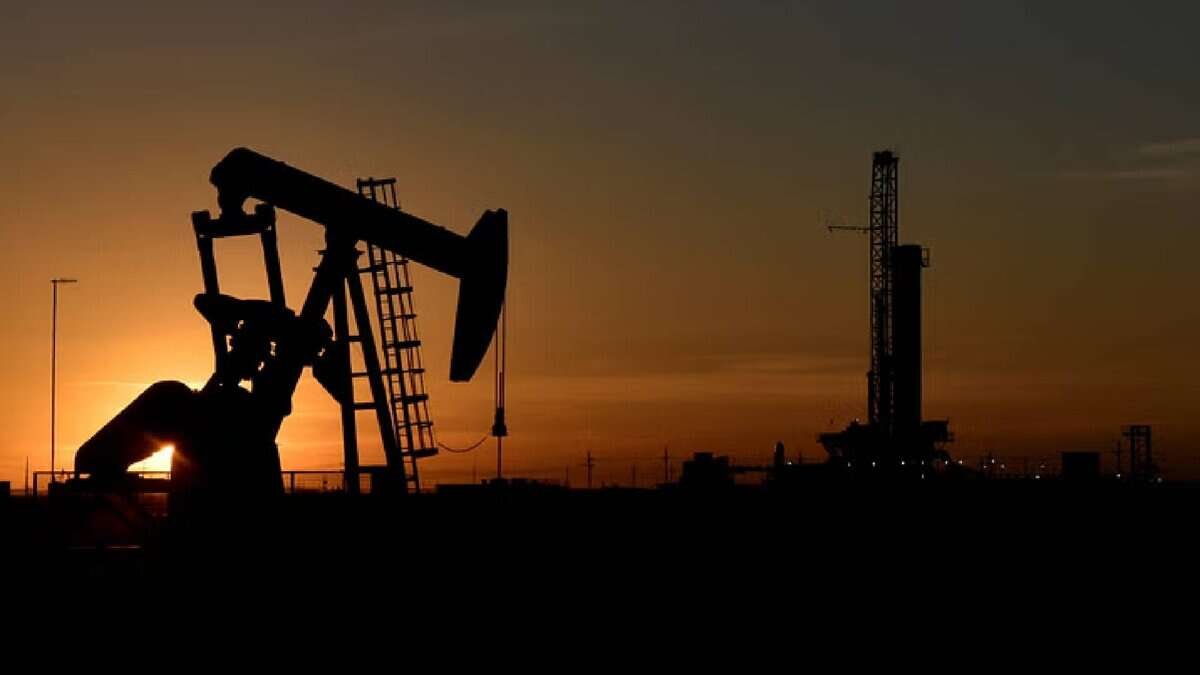
Oil field machinery silhouetted against a sunset sky. Photo: X
New Delhi: Crude oil prices on Monday rose Rs 60 to Rs 5,298 per barrel in futures trade as participants increased their positions following a firm spot demand.
On the Multi Commodity Exchange, crude oil for November delivery traded higher Rs 60 or 1.15 per cent at Rs 5,298 per barrel in 9,454 lots.
Analysts said raising of bets by participants kept crude oil prices higher in futures trade.
Globally, West Texas Intermediate crude was trading 1.51 per cent higher at USD 59.79 per barrel, while Brent crude rose 1.48 per cent to USD 63.64 per barrel in New York.
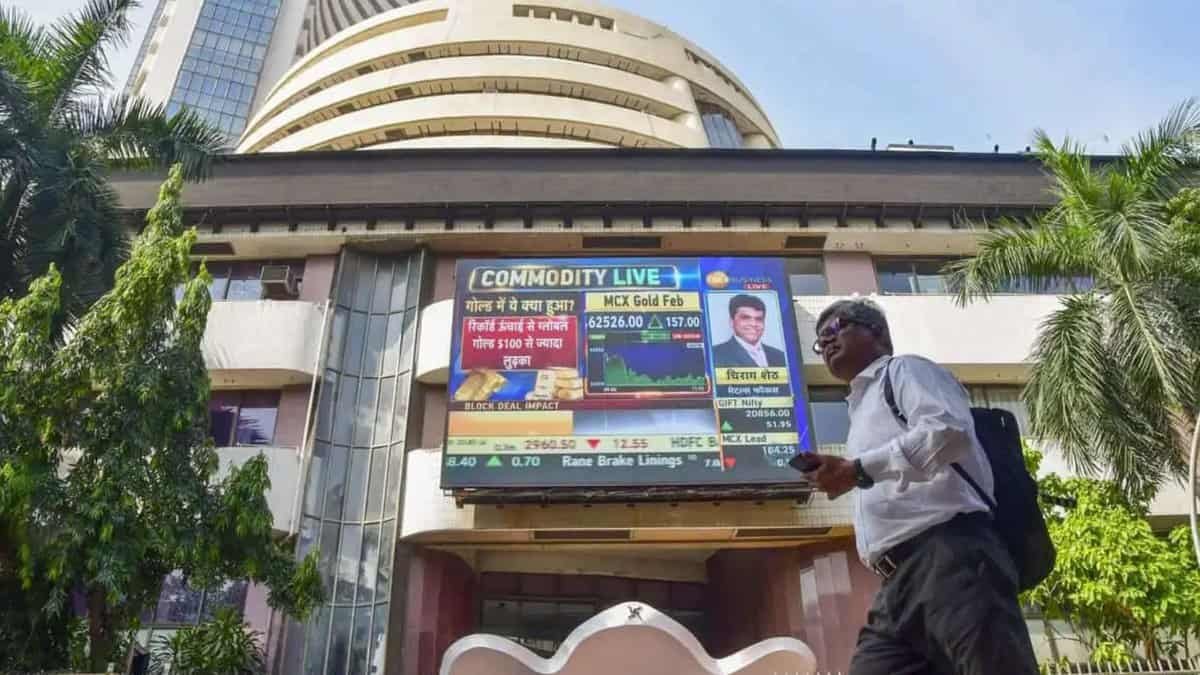
Mumbai: Benchmark indices Sensex and Nifty fell in early trade on Monday, tracking a sharp decline in global markets after the US announced an additional 100 per cent tariff on Chinese goods effective November 1.
The 30-share BSE Sensex dropped 451.82 points to 82,049 in early trade. The 50-share NSE Nifty declined 109.55 points to 25,175.80.
From the Sensex firms, Tata Motors, Bharat Electronics, Tata Steel, Infosys, NTPC and Axis Bank were among the major laggards.
However, Asian Paints, Bharti Airtel, Maruti and Eternal were among the gainers.
In Asian markets, South Korea’s Kospi, Shanghai’s SSE Composite Index and Hong Kong’s Hang Seng were trading sharply lower.
US markets ended significantly lower on Friday. The Nasdaq Composite tanked 3.56 per cent, while the S&P 500 tumbled 2.71 per cent and the Dow Jones Industrial Average dropped 1.90 per cent.
“Investor sentiment turns cautious after the US announced a 100 per cent tariff on all Chinese goods effective November 1, rekindling fears of a renewed trade war. Although President Trump later softened his stance, saying the US does not intend to “hurt China,” which led to a recovery in US stock futures, investor caution persists amid renewed global uncertainty,” Ponmudi R, CEO of Enrich Money, an online trading and wealth tech firm, said.
Global oil benchmark Brent crude jumped 1.48 per cent to USD 63.66 a barrel.
Foreign Institutional Investors (FIIs) bought equities worth Rs 459.20 crore on Friday, according to exchange data.
On Friday, the Sensex jumped 328.72 points or 0.40 per cent to settle at 82,500.82. The Nifty advanced 103.55 points or 0.41 per cent to settle at 25,285.35.
New Delhi: Stock market investors this week would track the renewed tariff tensions between the US and China, domestic inflation data, besides, quarterly earnings from blue-chips HCL Tech, Infosys and Reliance Industries would also drive the momentum in equities, analysts said.
Moreover, global market trends and geopolitical developments would also drive investors’ sentiments.
“Markets direction this week will hinge on a mix of domestic cues, global macroeconomic trends, and corporate earnings. The renewed escalation of the US–China tariff war, which sparked a sharp sell-off on Wall-Street on Friday, is expected to dampen global risk sentiment. This resurgence in trade tensions could spur dollar outflows, adding further pressure on emerging market equities and currencies,” Ponmudi R, CEO – Enrich Money, an online trading and wealth tech firm, said.
US markets ended sharply lower on Friday. The Nasdaq Composite tanked 3.56 per cent, while S&P 500 tumbled 2.71 per cent and Dow Jones Industrial Average dropped 1.90 per cent.
“This week will be event-heavy as focus shifts to key domestic macroeconomic data and a busy Q2 FY26 earnings calendar. On the data front, the government will release retail inflation (CPI) figures for September on October 13, followed by wholesale inflation (WPI) on October 14,” Ajit Mishra – SVP, Research, Religare Broking Ltd, said.
Investors will keenly watch numbers from IT majors and midcap IT names such as Infosys, HCL Technologies, Wipro, Tech Mahindra, LTIMindtree, along with banking heavyweight Axis Bank, as well as Reliance Industries, he said.
“Globally, Federal Reserve Chair Jerome Powell’s upcoming speech is expected to guide global cues on monetary policy direction,” Mishra added.
Investors would also track trading activity of foreign investors this week, an expert said.
“This week is likely to be crucial as global sentiment turned cautious following a sharp decline in the US markets amid renewed tensions between the US and China,” Santosh Meena, Head of Research at Swastika Investmart Ltd, said.
On the macroeconomic front, focus will shift to the United States, where Federal Reserve Chair Jerome Powell is scheduled to speak on Tuesday, October 14. His comments will be closely watched for cues on the Fed’s interest rate outlook and inflation trajectory, Meena said.
Last week, the BSE benchmark surged 1,293.65 points or 1.59 per cent, and the NSE Nifty climbed 391.1 points or 1.57 per cent.