New Delhi: Businesses will not be able to file GST returns which are due for three years or more beginning the November tax period, GST Network (GSTN) has said.
In an advisory, GSTN, which handles the technology backbone, said monthly, quarterly and annual returns for all GST-registered businesses will be barred from filing after the expiry of three years from the due date.
“The said restriction will be implemented on the GST portal from November 2025 Tax period, which means any return whose due date was three years back or more and hasn’t been filed till November Tax period will be barred from filing,” GSTN said.
The government had, in 2023, amended the Goods and Services Tax (GST) law providing for time baring of GST return filing.
With effect from December 1, 2025, the monthly GST return form GSTR-1 and GSTR-3B due on October 2022, and the annual GST return GSTR-9 for the 2020-21 fiscal will become time-barred, the GSTN advisory dated October 29 said.
New Delhi: The US has granted India a six-month exemption from American sanctions on the Chabahar port in Iran, the External Affairs Ministry (MEA) said on Thursday.
The sanctions were to come into effect from September 29 but following talks between the two sides, an exemption of one month was granted. The fresh exemption of the six-month period will be effective from October 29.
“For Chabahar port in Iran, we have been granted exemption for a six-month period from the US sanctions,” External Affairs Ministry spokesperson Randhir Jaiswal said at his weekly media briefing.
Last month, the Trump administration announced its decision to revoke the 2018 sanctions waiver with regard to the strategically-located Chabahar port in Iran.
India is a major partner in development of the Chabahar port, located in the Sistan-Balochistan province Iran’s southern coast. It is currently operating the Shahid Beheshti terminal at the port.
The US State Department had said last month that people operating the Chabahar Port and engaging in other related activities will face sanctions under the US Iran Freedom and Counter-Proliferation Act (IFCA) starting September 29.
The Chabahar port is being developed by India and Iran to boost connectivity and trade ties. Both the countries are also strongly pitching for making Chabahar port an integral part of the International North-South Transport Corridor (INSTC).
The INSTC is a 7,200-km-long multi-mode transport project for moving freight among India, Iran, Afghanistan, Armenia, Azerbaijan, Russia, Central Asia and Europe.
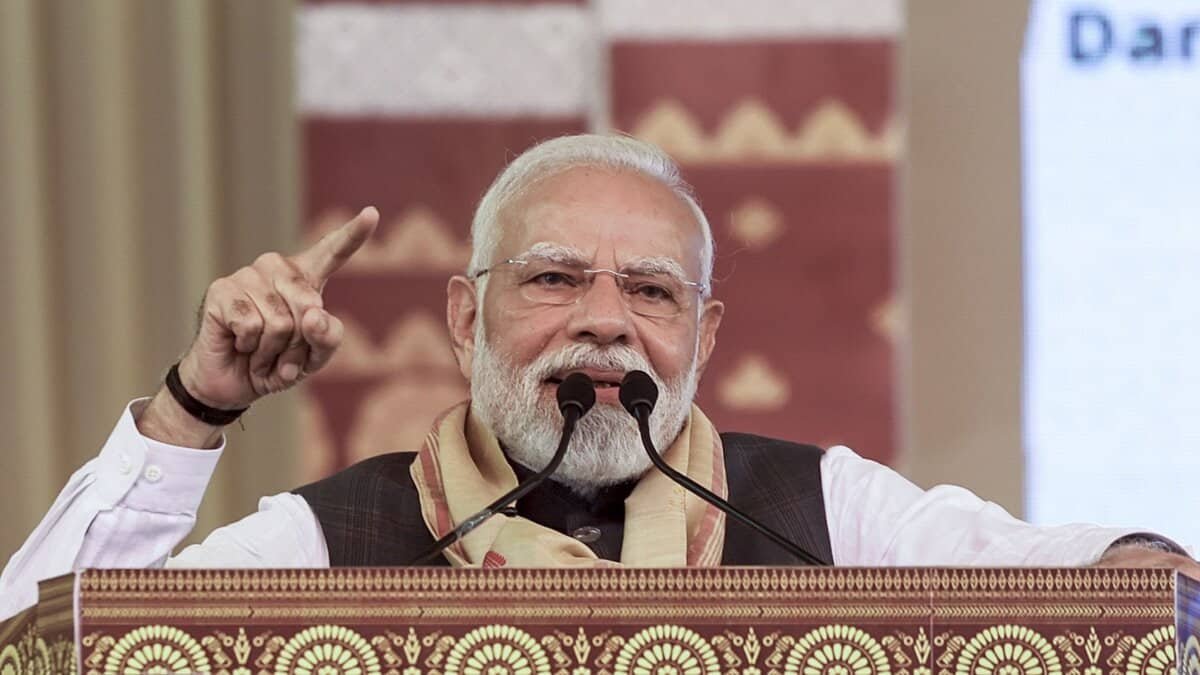
Mumbai: Prime Minister Narendra Modi on Wednesday exhorted global investors to take bets on the Indian shipping sector, pointing out that this is the “right time” for such a move.
The Prime Minister also met a select chief executives of global majors, including DP World and APM, at a specially convened meeting on the sidelines of the India Maritime Week 2025 held here.
“For all of you hailing from different countries, this is the right time to work in the Indian shipping sector and also expand (your presence),” Modi said during a public address before the closed-door meeting with CEOs.
Modi listed several targets being chased by India in the maritime sector over the next few years, and underlined the importance of the global community in the same.
“You all are an important partner who will help us achieve all our aims. We welcome your ideas, innovations and investments,” Modi said.
He said that India allows 100 per cent foreign direct investment in the shipping and ports sector, and also provides incentives under the “Make In India, and Make For The World” vision.
Addressing an audience, including leaders of various companies, the Prime Minister affirmed India’s commitment to strengthening the supply chain resilience at a global level.
He also said that India is engaged in creating world-class mega ports, and cited the work undertaken on the Vadhavan Port to the north of the financial capital, which entered the top-10 firms in the world on the first day.
The government is also looking to grow the capacity at 12 major ports by four times and increase India’s share in containerised cargo at the global level.
Later, Modi held a meeting with top CEOs of shipping sector companies from across the world.
As per people in the know, he met AP Moller-Maersk Chairman Robert Maersk Uggla, DP World Group Chairman Sultan Ahmed bin Sulayem, Mediterranean Shipping Company Chief Executive Soren Toft, Adani Ports and SEZ Managing Director Karan Adani and French company CMA-CGM’s Senior Vice President Ludovic Renou.
The participation from over 85 countries in the IMW sends a strong message, Modi said, noting the presence of CEOs of major shipping giants, startups, policymakers, and innovators at the event.
The Prime Minister also thanked Port of Singapore (PSA) for the nearly Rs 8,000 crore investment in the Jawaharlal Nehru Port Authority’s fourth terminal, pointing out that this is also the largest FDI in the port sector in India.
Modi said more than 150 new initiatives have been launched under the ‘Maritime India Vision’, resulting in nearly doubling the capacity of major ports, a substantial reduction in turnaround time, and a new momentum in cruise tourism.
Mumbai: Stock market benchmark indices Sensex and Nifty bounced back in early trade on Wednesday, tracking a rally in global peers, amid hopes of a rate cut by the US Federal Reserve and fresh foreign fund inflows.
The 30-share BSE Sensex climbed 287.94 points to 84,916.10 in early trade. The 50-share NSE Nifty went up by 86.65 points to 26,022.85.
From the Sensex firms, Asian Paints, Tata Steel, Trent, Larsen & Toubro, State Bank of India and Adani Ports were among the major gainers.
However, Mahindra & Mahindra, Bajaj Finance, Eternal and Axis Bank were among the laggards.
“Globally, stock markets continue to be bullish, aided by the sustained uptrend in the mother market US… Today, the market is likely to get another positive news from the Fed, which is expected to cut rates by 25 bps. More important than the rate decision will be the Fed commentary on quantitative tightening,” VK Vijayakumar, Chief Investment Strategist, Geojit Investments Limited, said.
In Asian markets, South Korea’s Kospi, Japan’s Nikkei 225 index and Shanghai’s SSE Composite index were quoting higher.
US markets ended in positive territory on Tuesday.
Foreign Institutional Investors (FIIs) bought equities worth Rs 10,339.80 crore on Tuesday, according to exchange data.
“A dovish tone from the US Federal Reserve could further boost liquidity flows into emerging markets like India, helping the Nifty and Sensex sustain their momentum near record highs,” Ponmudi R, CEO of Enrich Money, an online trading and wealth tech firm, said.
Global oil benchmark Brent crude dipped 0.08 per cent to USD 64.35 a barrel.
“Volatility marked yesterday’s trade, but the key takeaway was strong FII buying, with net inflows of Rs 10,340 crore lending confidence to the markets,” Prashanth Tapse, Senior VP (Research), Mehta Ltd, said.
On Tuesday, the Sensex declined 150.68 points or 0.18 per cent to settle at 84,628.16. The Nifty dipped 29.85 points or 0.11 per cent to 25,936.20.
New Delhi: Aviation watchdog DGCA has flagged various regulatory non-compliances at Akasa Air, including repetitive procedural lapses, and has asked the airline to take remedial actions, according to sources.
The observations have been made by the Directorate General of Civil Aviation (DGCA) after a comprehensive review of surveillance data of the airline for the April-September period.
The review covered key domains, including flight safety, safety management system and flight duty time limitations, the sources said.
They said there are various non-conformities, including repetitive procedural lapses, documentation gaps and systemic failures in regulatory compliance.
In a statement, Akasa Air said it “always submits comprehensive responses to all observations raised within the prescribed timelines.
The carrier also said the DGCA conducts routine audits across all airlines as part of its ongoing efforts to uphold and continuously elevate aviation safety standards in India.
“… we remain committed to maintaining the highest levels of operational and safety excellence in line with all regulatory requirements,” it added.
Akasa Air started flying more than three years ago and currently has a fleet of 30 planes.
Washington: Elon Musk has launched Grokipedia, a crowdsourced online encyclopedia that the billionaire seeks to position as a rival to Wikipedia.
Writing on social media, Musk said that “Grokipedia.com version 0.1 is now live” and promised that “Version 1.0 will be 10X better.”
Grokipedia’s goal is “ the “truth, the whole truth and nothing but the truth,” he said.
Musk has previously criticised Wikipedia for being filled with “propaganda” and called for people to stop donating to the site. In September he announced that his artificial intelligence company xAI was working on Grokipedia.
The Grokipedia site has a minimalist appearance with little beyond a search bar that users can type in queries. It states that it has 885,279 articles. Wikipedia, meanwhile, says it has more than 7 million articles in English.
Like Wikipedia, users can search for articles on various topics such as Taylor Swift, the baseball World Series, or Buckingham Palace.
While Wikipedia is written and edited by volunteers, it’s unclear how exactly Grokipedia articles are put together. Reports suggest the site is powered by the same xAI model that underpins Musk’s Grok chatbot, but some articles are seemingly adapted from Wikipedia.
Grokipedia’s entry on Wikipedia accuses the site of having “systemic ideological biases—particularly a left-leaning slant in coverage of political figures and topics.”
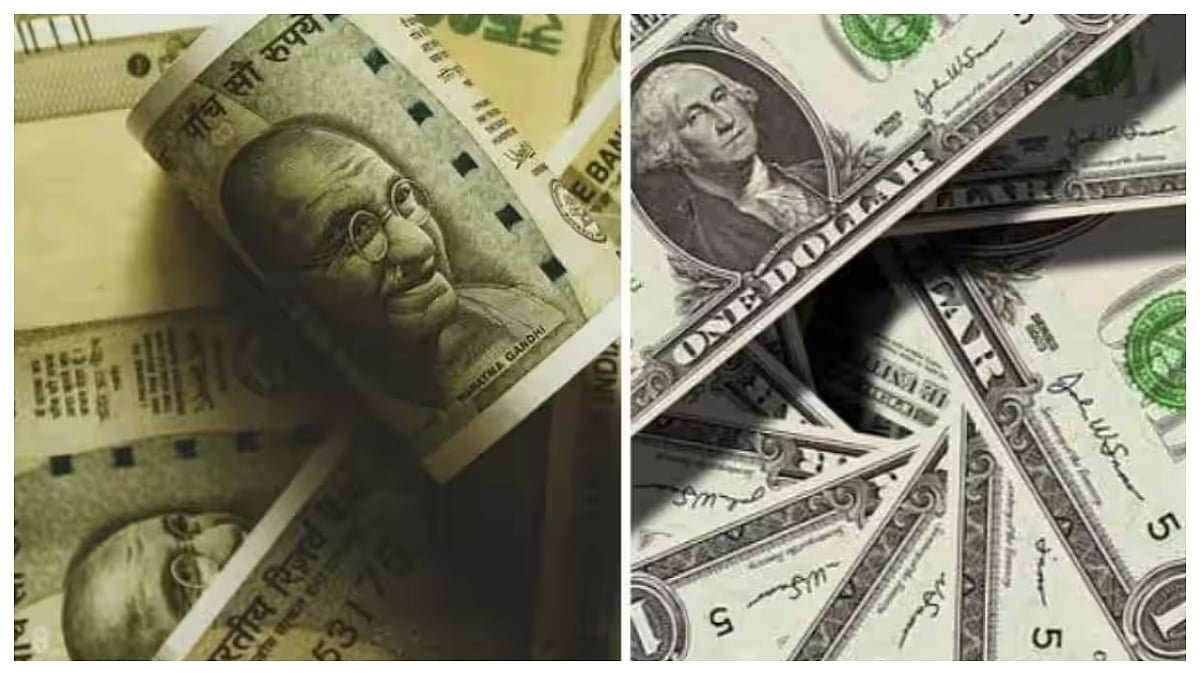
Mumbai: The rupee depreciated by 10 paise to close at 88.29 against the US dollar on Tuesday on weak domestic stock markets and foreign fund outflows.
Forex traders said a weak US dollar and softening of crude oil prices cushioned the downside.
Investors are also keeping a watch on the Federal Reserve’s policy decision on Wednesday for further cues.
At the interbank foreign exchange market, the rupee opened at 88.34, and later traded in a range of 88.23 to 88.40 during the day. The local unit finally settled at 88.29 against the greenback, registering a fall of 10 paise from its previous close.
On Monday, the rupee plunged 36 paise to close at 88.19 against the US dollar.
“We expect the rupee to trade with a slight negative bias on weak domestic equities and month-end dollar demand from importers. However, optimism over the trade deal between India and the US may support the rupee at lower levels,” said Anuj Choudhary, Research Analyst, Currency and Commodities, Mirae Asset ShareKhan.
Choudhary further noted that investors may remain cautious ahead of the US FOMC meeting decision. USDINR spot price is expected to trade in a range of 87.90 to 88.60, he said.
Meanwhile, the dollar index, which gauges the greenback’s strength against a basket of six currencies, fell 0.09 per cent to 98.69.
Brent crude, the global oil benchmark, fell 1.74 per cent to USD 64.48 per barrel in futures trading.
On the domestic equity markets front, Sensex declined 150.68 points to settle at 84,628.16, while the Nifty dipped 29.85 points to 25,936.20.
Foreign Institutional Investors purchased equities worth Rs 10,339.80 crore on Tuesday, according to exchange data.
Meanwhile, India’s crude oil imports from the United States climbed to their highest level since 2022 in October, a move seen as part of New Delhi’s effort to diversify supplies away from Russia and ease trade tensions with the Trump administration.
India’s crude imports from the US reached 540,000 barrels per day as of October 27 – the highest since 2022, according to data from Kpler.
October is likely to close with near 575,000 bpd, and November looks to book around 400,000-450,000 bpd, per US export data – a sharp jump from the year-to-date average of around 300,000 bpd.
Mumbai: The downward trend in gold prices continued on Tuesday, with rates falling close to Rs 1.18 lakh per 10 grams amid weak global cues and renewed optimism over trade talks between the US and China.
According to the India Bullion and Jewellers Association (IBJA), the price of 10 grams of 24-carat gold dropped by Rs 3,034 to Rs 1,18,043, compared to Rs 1,21,077 in the previous session. Similarly, 22-carat gold slipped to Rs 1,08,127 per 10 grams from Rs 1,10,907, while 18-carat gold fell to Rs 88,532 from Rs 90,809.
Silver prices also declined sharply, falling by Rs 3,135 to Rs 1,41,896 per kg, against Rs 1,45,031 earlier. IBJA releases gold and silver prices twice a day — at 12 noon and 5 p.m.
“After a spectacular rally from Rs 110,000 to Rs 170,000 per kg, Silver has formed a textbook Head and Shoulders pattern, a well-known reversal formation that typically signals exhaustion after a sharp uptrend. Prices have already broken below the neckline, with current levels near Rs 1,40,000 coinciding almost perfectly with the 50 per cent Fibonacci retracement of the prior rally,” said SAMCO Securities.
Futures on the Multi-Commodity Exchange (MCX) mirrored the weakness in the spot market. The December 5, 2025, gold contract fell 1.87 per cent to Rs 1,18,700, while the silver contract for the same expiry slipped 0.74 per cent to Rs 1,42,301.
“Gold traded weak by another Rs 2,500 at Rs 1,18,450 per 10 grams as sentiment turned negative following renewed optimism around a possible US-China trade deal. The focus now shifts to the US Fed’s interest rate decision on Wednesday night, which will guide the next leg of the trend. Gold remains under pressure with key support at Rs 1,16,500–Rs 1,18,000, while resistance is seen near Rs 1,21,000–Rs 1,22,000,” Jateen Trivedi of LKP Securities.
In the international market, gold prices were down 1.98 per cent at $3,939 per ounce on Comex, while silver traded 0.52 per cent lower at $46.53 per ounce.
Mumbai: Jana Small Finance Bank on Tuesday said the Reserve Bank of India (RBI) has returned its application to become a universal bank due to non-fulfilment of criteria.
The Small Finance Bank’s managing director and chief executive, Ajay Kanwal, said that in the communication received late on Monday evening, the regulator has not spelt out the exact reasons for returning the application made in June this year.
“We will soon figure out what the answer really is, and we will rectify as per the expectations. We have to keep in mind that this is a return and not a rejection,” Kanwal told PTI.
Kanwal said he will discuss the exact reasons for returning its universal bank application with the RBI top brass later this week, and then rectify them before the bank reapplies.
However, he did not give a timeline for a new application.
In a disclosure to exchanges early on Tuesday, Jana Small Finance Bank said the central bank has “returned the application made for voluntary transition to universal bank due to non-fulfilment of the criteria mentioned in the RBI circular in this regard.”
Kanwal said from an asset perspective, nothing changes for Jana Small Finance Bank, as even now, it is allowed to carry out nearly all the activities like a universal bank.
Inability to do co-lending is one of the restrictions, Kanwal said, adding that Jana Small Finance Bank does not view it as an impediment to its business plan.
However, from a liability perspective, bagging the universal bank license would have helped reduce the cost of funds, and those plans have now been postponed, he admitted.
Kanwal said Jana Small Finance Bank’s recent realignment of its parent company structure was not linked to its aspirations to become a universal bank.
It can be noted that the Reserve Bank had earlier this year granted an in-principle nod to Jana Small Finance Bank’s larger peer, AU Small Finance Bank, to become a universal bank over a defined timeline. Jana Small Finance Bank’s application for the coveted license had also excited investors, leading to a surge in the stock price.
The Jana SFB scrip was trading 2.79 per cent down at Rs 443.95 a piece on the BSE at 0957 hrs.
New Delhi: Reliance Industries on Friday said it will comply with the latest US and other Western sanctions relating to Russian oil and will tweak refinery operations to meet them.
The oil-to-retail behemoth said that it is assessing the implications of restrictions announced by the European Union, the United Kingdom and the United States on crude oil imports from Russia and the export of refined products to Europe.
“We will comply with the EU’s guidelines on the import of refined products into Europe,” an RIL spokesperson said.
Reliance Industries said that it remains fully committed to maintaining adherence to applicable sanctions and regulatory frameworks.
The spokesperson also said the company will tweak refinery operations to meet the latest sanctions compliance requirements.
The US government, on October 22, imposed sanctions on Russia’s two largest crude oil producers, Rosneft and Lukoil, barring all American entities and individuals from conducting business with them.
Non-US firms could also face penalties if found dealing with the sanctioned companies or their subsidiaries. The US Treasury Department said all existing transactions involving Rosneft and Lukoil must be wound down by November 21.
Russia currently supplies nearly a third of India’s crude imports, averaging around 1.7 million barrels per day (mbd) in 2025, of which approximately 1.2 mbd came directly from Rosneft and Lukoil. Most of these volumes were bought by private refiners, Reliance Industries Ltd and Nayara Energy, with smaller allocations to state-owned refiners.
Russian crude flows are expected to remain in the 1.6–1.8 mbd range until November 21, but direct volumes from Rosneft and Lukoil are likely to decline thereafter, as Indian refiners seek to avoid any risk of US sanctions, said Sumit Ritolia, Lead Research Analyst (Refining and Modelling) at Kpler.