Category: BUSINESS

  • Mahindra clocks 19% growth in SUV sales in Feb, tractor sales also up 19%

    Mahindra clocks 19% growth in SUV sales in Feb, tractor sales also up 19%

    Mumbai: Mahindra & Mahindra on Saturday announced that its overall auto sales for the month of February stood at 83,702 vehicles, a growth of 15 per cent, including exports.

    Hyderabad Institute of Excellence

    In the ‘Utility Vehicles’ segment, Mahindra sold 50,420 SUVs in the domestic market, a growth of 19 per cent and 52,386 vehicles overall, including exports. The domestic sales for Commercial Vehicles stood at 23,826.

    “In February, we clocked SUV sales of 50,420, a growth of 19 per cent and 83,702 total vehicles, a growth of 15 per cent. This strong performance is a result of a continued positive momentum for our SUV portfolio,” said Veejay Nakra, President, Automotive Division, M&M Ltd.

    MS Creative SchoolMS Creative School

    Meanwhile, Mahindra & Mahindra’s Farm Equipment Sector (FES), part of the Mahindra Group, announced its tractor sales numbers for February.

    Domestic sales in February were at 23,880 units, against 20,121 units during February 2024.

    Total tractor sales (domestic and exports) during February 2025 were at 25,527 units, as against 21672 units for the same period last year. Exports for the month stood at 1,647 units.

    According to Hemant Sikka, President – Farm Equipment Sector, Mahindra & Mahindra, “We have sold 23,880 tractors in the domestic market during February 2025, a growth of 19 per cent over last year”.

    After a good Kharif crop, Rabi crop outlook is also looking positive due to favourable weather conditions.

    “Increase in Agri credit limit, continued Government support to increase farmer incomes and a bumper Rabi harvest will help boost tractor demand going forward. In the exports market we have sold 1647 tractors, at a growth of 6 per cent over last year,” he mentioned.

    The Mahindra Group is one of the largest multinational federation of companies with 260,000 employees in over 100 countries.


  • Coal movement on Rail-Sea-Rail route doubles to 54 mn tonnes over 2 yrs

    Coal movement on Rail-Sea-Rail route doubles to 54 mn tonnes over 2 yrs

    New Delhi: The Ministry of Coal said on Friday that it has doubled the movement of coal on its Rail-Sea-Rail route initiative which integrates the two modes of transportation for the efficient movement of coal.

    Hyderabad Institute of Excellence

    This multi-modal system allows for seamless transportation of coal from mines to ports and to their end users, while improving logistical efficiencies.

    The RSR mode reduces congestion on the all-rail route (ARR) by providing an additional alternative mode of coal evacuation and ensures a lower carbon footprint compared to the ARR mode of coal movement. The coastal shipping mode of transportation has the potential to revolutionise India’s logistics industry, according to a Coal Ministry statement.

    MS Creative SchoolMS Creative School

    Over the last few years, the Ministry of Coal has made significant strides in the use of the coal Rail-Sea-Rail (RSR) networks for evacuation of coal in coordination with Railways. As a result, the coal movement which was 28 million tonnes (MT) in FY22 has almost doubled to 54 MT in FY24 and is on the increasing trend.

    To achieve a further increase in RSR mode for coal movement, Indian Railways notified in February their decision to permit telescopic benefit in freight rate to coal movement to powerhouses transported from coal mines of Coal India Ltd (CIL) and its subsidiaries. This would further aid in increasing the coal movement in RSR mode.

    At present movement of domestic coal from mines has been taking place through the Rail-Sea-Rail (RSR) route in order to meet the demand of various power plants. This involves the movement of coal by rail in two legs i.e. from mines to the unloading port as the first leg and from subsequent loading port to power plants as second leg. As a matter of policy, the charging of both legs of rail transportation was done separately and independently by Railways.

    The telescopic benefit reduces rail freight for coal movement as compared to charging coal freight in both legs separately, resulting in reduced cost of transportation in RSR mode.

    This decision of Railways will aid in increasing the volume of coal movement further in RSR mode and promote coastal shipping, the statement said.

    The Ministry of Coal said it was committed to enhancing the Rail-Sea-Rail coal evacuation strategy to consistently meet the nation’s growing energy demands and ensure a resilient and efficient energy supply system.

  • Maha Kumbh boost India’s GDP, CEA predicts 7.6% GDP growth in Q4, 6.5% for FY25

    Maha Kumbh boost India’s GDP, CEA predicts 7.6% GDP growth in Q4, 6.5% for FY25

    New Delhi: A significant pick up in the government capex and additional expenditure linked to Maha Kumbh congregation are expected to push the fourth quarter GDP growth to 7.6 per cent, required to achieve an overall economic expansion of 6.5 per cent in the current fiscal, Chief Economic Adviser V Anantha Nageswaran said on Friday.

    Hyderabad Institute of Excellence

    Briefing media on the third quarter GDP number, he said the data released by the National Statistics Office (NSO) augurs well, and the upwardly revised 6.5 per cent GDP estimate for the current financial year is realistic.

    During the third quarter ended December 2024, India’s economic growth rate decelerated to 6.2 per cent against 9.5 per cent a year ago, mainly due to poor performance by mining, manufacturing and all other sectors, except agriculture.

    MS Creative SchoolMS Creative School

    NSO also released the second advance estimate for the current fiscal and pegged the economic growth at 6.5 per cent against 6.4 per cent estimated in the first advance estimate released in January.

    To achieve 6.5 per cent growth, India’s GDP has to grow at 7.6 per cent in the fourth quarter, which, according to experts, is optimistic.

    Nageswaran noted that 7.6 per cent growth is realistic and can be achieved during the fourth quarter.

    “There are some good developments, such as a very significant pickup in government capex and the additional expenditure that we are seeing happening because of the footfalls in Maha Kumbh…that we have been seeing,” he said.

    Amidst external negative factors, he said, there are incremental positive factors, making a good case for implied growth of 7.6 per cent being attained in the fourth quarter.

    Asked about the stock market fall, he said looking at the long-term prospects of the Indian economy compared to other places and looking at the historical track record of the Indian market, one shouldn’t be over-interpreting the near-term numbers.

    Benchmark indices Sensex and Nifty tumbled nearly 2 per cent on Friday, mirroring deep losses in global markets as the latest announcement of an additional 10 per cent tariff on Chinese products rattled investors.

    He also said that the Indian economy is on the verge of crossing USD 4 trillion in FY25.

    Nominal GDP or GDP at current prices is estimated to attain a level of Rs 331.03 lakh crore in the year 2024-25, against Rs 301.23 lakh crore in 2023-24, showing a growth rate of 9.9 per cent.

    About inflation, Nageswaran said, it is trending down.

    He further said that the near-term global economic outlook is influenced by the trade policies of major economies amid a slowing disinflation.

    Despite the uncertain global outlook, he said, India’s economic momentum is expected to be sustained, driven by strong rural demand and a revival in urban consumption.

    The robust kharif production and better rabi sowing, coupled with higher reservoir levels and seasonal winter correction in vegetable prices, augur well for food inflation going forward, he said.

    The Union Budget’s emphasis on agriculture, MSMEs, investment, and exports is likely to enhance India’s medium-term economic prospects, he added.

  • Rupee falls 19 paise to close at 87.37 against US dollar

    Rupee falls 19 paise to close at 87.37 against US dollar

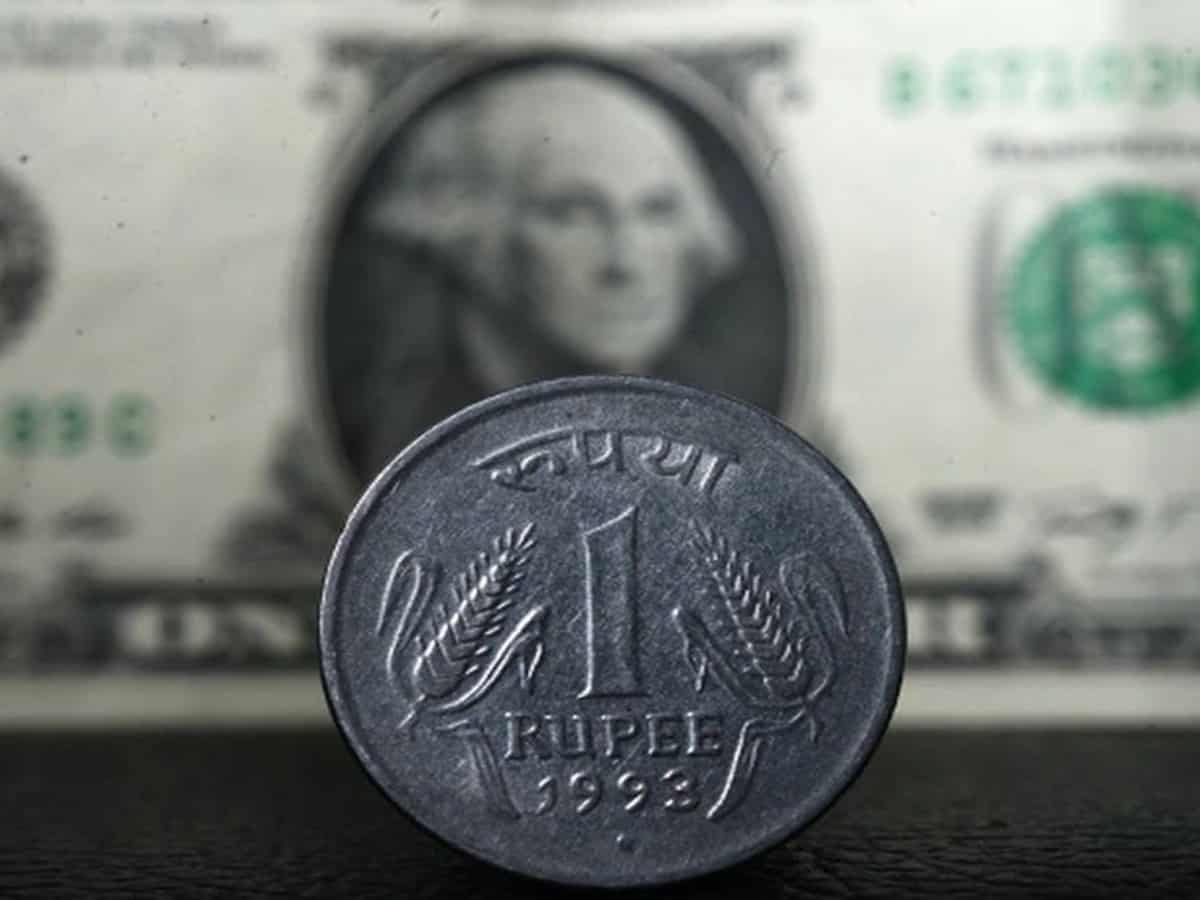
    Mumbai: The rupee depreciated 19 paise to close at 87.37 against the US dollar on Friday, as the strength of the American currency and a negative trend in domestic equities dented investor sentiments.

    Hyderabad Institute of Excellence

    Forex traders said the ongoing uncertainty surrounding tariff imposition by the US has left financial markets in flux. Moreover, the tariff chaos has injected volatility and uncertainty into the US Dollar Index.

    At the interbank foreign exchange, the rupee opened at 87.32 against the greenback. During the session it fell to an intra-day low of 87.53 before ending the session at 87.37 against the dollar, logging a loss of 19 paise from its previous close.

    MS Creative SchoolMS Creative School

    On Thursday, the rupee settled almost flat with a marginal gain of 1 paisa at 87.18 against US dollar.

    Elevated greenback against major crosses and sustained FII outflows also contributed to the decline in the domestic unit, forex traders said.

    Besides, month-end dollar demand by importers amid uncertainty over US trade tariffs also boosted the American currency.

    Meanwhile, the dollar index, which gauges the greenback’s strength against a basket of six currencies, was trading 0.08 per cent higher at 107.33.

    Brent crude, the global oil benchmark, fell 0.74 per cent to USD 73.49 per barrel in futures trade.

    In the domestic equity market, the 30-share BSE Sensex declined 1,414.33 points, or 1.90 per cent, to settle at 73,198.10, while the Nifty fell 420.35 points, or 1.86 per cent, to 22,124.70 points.

    Meanwhile, the Reserve Bank on Friday conducted US dollar-rupee swap worth USD 10 billion for injecting long term liquidity in the system, with the auction eliciting robust demand. The settlement of auction will take place on March 4 and March 6.

    Under the swap exercise, a bank shall sell US dollars to the Reserve Bank and simultaneously agree to buy the same amount of US dollars at the end of the swap period.

    Foreign Institutional Investors (FIIs) offloaded equities worth Rs 11,639.02 crore in the capital markets on net basis on Friday, according to exchange data.

    Dilip Parmar, Research Analyst, HDFC Securities, said the rupee weakened for the fifth consecutive month, driven by an escalation in foreign fund outflows.

    “Despite the central bank’s attempts to curb volatility, the overall impact was limited as the US dollar strengthened broadly, fuelled by concerns surrounding Trump’s tariff policies and haven demand. The Reserve Bank of India’s liquidity adjustment via Buy/Sell USD-INR swaps and MSCI rebalancing flows were unable to stabilise the local currency,” he said.

    The latest Reserve Bank data released on Friday showed the country’s forex reserve jumped by USD 4.758 billion to USD 640.479 billion in the week ended February 21.

    In the previous reporting week, the overall reserves had dropped by USD 2.54 billion to USD 635.721 billion.

    On the global front, President Donald Trump plans to impose tariffs on Canada and Mexico starting Tuesday, in addition to doubling the 10 per cent universal tariff charged on imports from China.

    The prospect of escalating tariffs has already thrown the global economy into turmoil, with consumers expressing fears about inflation worsening.

  • Adani Green shoots past record 12,000 MW renewable energy capacity

    Adani Green shoots past record 12,000 MW renewable energy capacity

    Ahmedabad: Adani Green Energy Limited (AGEL), India’s largest renewable energy company, on Friday surpassed a record 12,000 megawatts (MW) operational portfolio with the commissioning of an additional 275 MW solar capacity at the world’s largest renewable energy plant at Khavda in Gujarat.

    Hyderabad Institute of Excellence

    AGEL is the first renewable energy company in India to reach this landmark. The 12,258.1 MW portfolio consists of 8,347.5 MW solar, 1,651 MW wind and 2,259.6 MW wind-solar hybrid capacity, according to an AGEL statement.

    “The milestone underscores AGEL’s commitment to deliver 50,000 MW of clean, affordable and reliable power by 2030. The 12,258.1 MW operational portfolio will power more than 6.2 million homes and avoid about 22.64 million tonnes of CO2 emissions annually. The emissions avoided are equivalent to carbon sequestrated by 1,078 million trees,” the company said.

    MS Creative SchoolMS Creative School

    Adani Green Energy’s 12,258.1 MW contribution is the largest greenfield expansion in India’s RE sector which represents about 10 per cent of India’s installed utility-scale solar and wind capacity. This also constitutes over 13 per cent of India’s utility-scale solar installations.

    Adani Green Energy is developing the world’s largest renewable energy plant of 30,000 MW on the barren waste land at Khavda in Gujarat’s Kutch region. Built across 538 sq kms, the area of the project is five times the size of Paris and almost as large as Mumbai city. Once complete, it will be the planet’s largest power plant across all energy sources, the company said.

    AGEL has operationalised a cumulative capacity of 2,824.1 MW renewable energy at Khavda so far. The accelerated progress at Khavda underscores AGEL’s commitment to India’s goal of 500 GW non-fossil fuel capacity by 2030, the company statement said.

    Work at Khavda continues at a fast pace, with AGEL leveraging the project execution capabilities of Adani Infra, the manufacturing expertise of Adani New Industries Limited, the operational excellence of Adani Infrastructure Management Services Ltd. and the robust supply chain of our strategic partners, the statement said.

    AGEL is recording the fastest greenfield renewable energy capacity addition in India and the rapid progress at Khavda and other project sites will sustain the growth momentum, the statement added.

  • India toy exports poised to capture bigger share of global pie: Report

    India toy exports poised to capture bigger share of global pie: Report

    New Delhi: India’s fast-growing toy industry is poised to capture a larger share of the global toy market, which is estimated to reach $179.4 billion by 2032, according to a report by Punjab National Bank (PNB).

    Hyderabad Institute of Excellence

    The report states that the growth in the toy industry is driven by skill development, technology adoption, and quality improvements, along with significant support from the government.

    This is reflected in the trade figures, which show that India‘s toy imports have declined by as much as 79 per cent from $304 million in FY2018-19 to $65 million in FY2023-24. Meanwhile, exports have grown by 40 per cent during the same period, rising from $109 million to $152 million. As a result, India has become a net exporter of toys.

    MS Creative SchoolMS Creative School

    Government policy has played a crucial role in strengthening domestic manufacturing in recent years, and the announcement of the National Action Plan for Toys in the Union Budget 2025-26 reaffirms the crucial importance of this sector. The action plan aims to further boost the toy industry through cluster development, enhancing skills and creating a strong manufacturing ecosystem for producing high-quality toys under the ‘Made in India’ brand.

    The report points out that the implementation of the Quality Control Order (QCO) in 2020 ensured stricter quality standards for toys. Additionally, the government increased import duties from 20 per cent to 60 per cent in February 2020 and further to 70 per cent in March 2023. These measures have significantly reduced toy imports while boosting domestic production.

    The report is in line with industry estimates that show the current market size of the industry is $1.7 billion and expected to reach $4 billion by 2032 with a 10.5 per cent annual growth rate.

    With a continued push towards self-reliance, quality improvements, and a strong manufacturing ecosystem, India’s toy industry is well-positioned for global expansion. The sector’s growth not only strengthens the economy but also aligns with the broader vision of making India a global manufacturing hub.

    The Indian toy industry has expanded its global presence to more than 100 countries, including the US, the UK, Germany, Netherlands, Denmark and even China and the next step for the toy manufacturers is to reach international consumers through the effective use of online mediums, a senior official of the Department for Promotion of Industry and Internal Trade (DPIIT) said.

    As part of its strong commitment to create a better ecosystem for the toy industry, the Government of India has identified the sector as one of the champion sectors, with a long-term vision to create a global market for ‘Made in India’ toys. A cohesive approach is being followed by breaking the silos and working with industry in all aspects for enhancing the robustness of the sector, he added.

  • Andhra Pradesh govt presents Rs 3.22 lakh crore budget for 2025-26

    Andhra Pradesh govt presents Rs 3.22 lakh crore budget for 2025-26

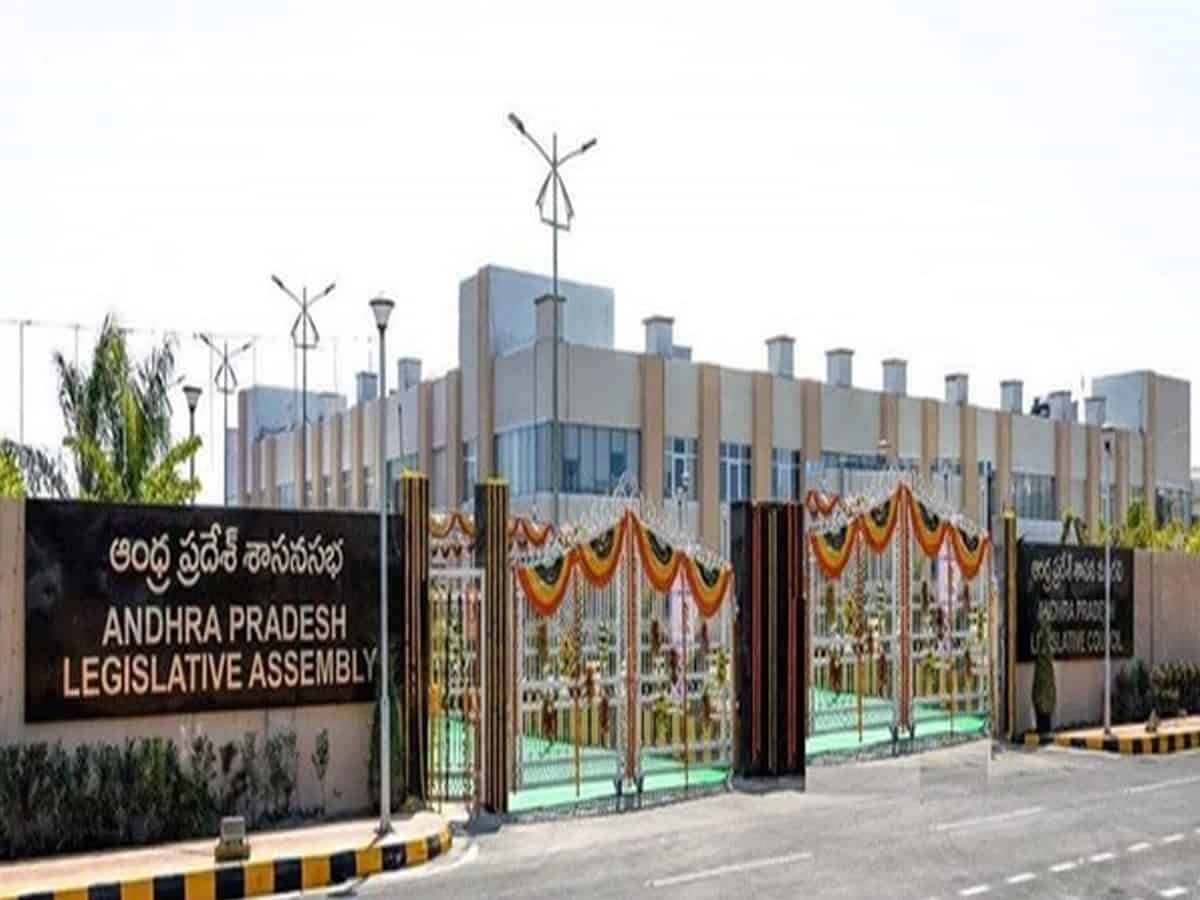
    Amaravati: Andhra Pradesh government on Friday presented a Budget for over Rs 3.22 lakh crore for 2025-26 fiscal with an estimated revenue expenditure of Rs 2.51 lakh crore and capital expenditure of over Rs 40,000 crore.

    Hyderabad Institute of ExcellenceHyderabad Institute of Excellence

    Finance Minister Payyavula Keshav while presenting the Budget in the state Assembly said the estimated revenue deficit is around Rs 33,185 crore (1.82 per cent of the GSDP) and the fiscal deficit is around Rs 79,926 crore (4.38 per cent of the GSDP). The budget proposes Rs.47,456 crore for the BC component while school education got an allocation of Rs. 31,805 crore for 2025-26.

    The Budget proposes to allocate Rs 19,264 crore for the Health, Medical and Family Welfare Department for 2025-26.

    MS Creative SchoolMS Creative School

    The Panchayati Raj & Rural Development Department, a portfolio held by Deputy Chief Minister Pawan Kalyan, got Rs.18,847 crore for 2025-26.

    In his speech Keshav said the government is presenting the budget in the backdrop of the financial destruction caused by the previous regime. It has been a highly complex task, because the previous regime created financial chaos in every department.

  • Indian stock market opens sharply lower amid weak global cues

    Indian stock market opens sharply lower amid weak global cues

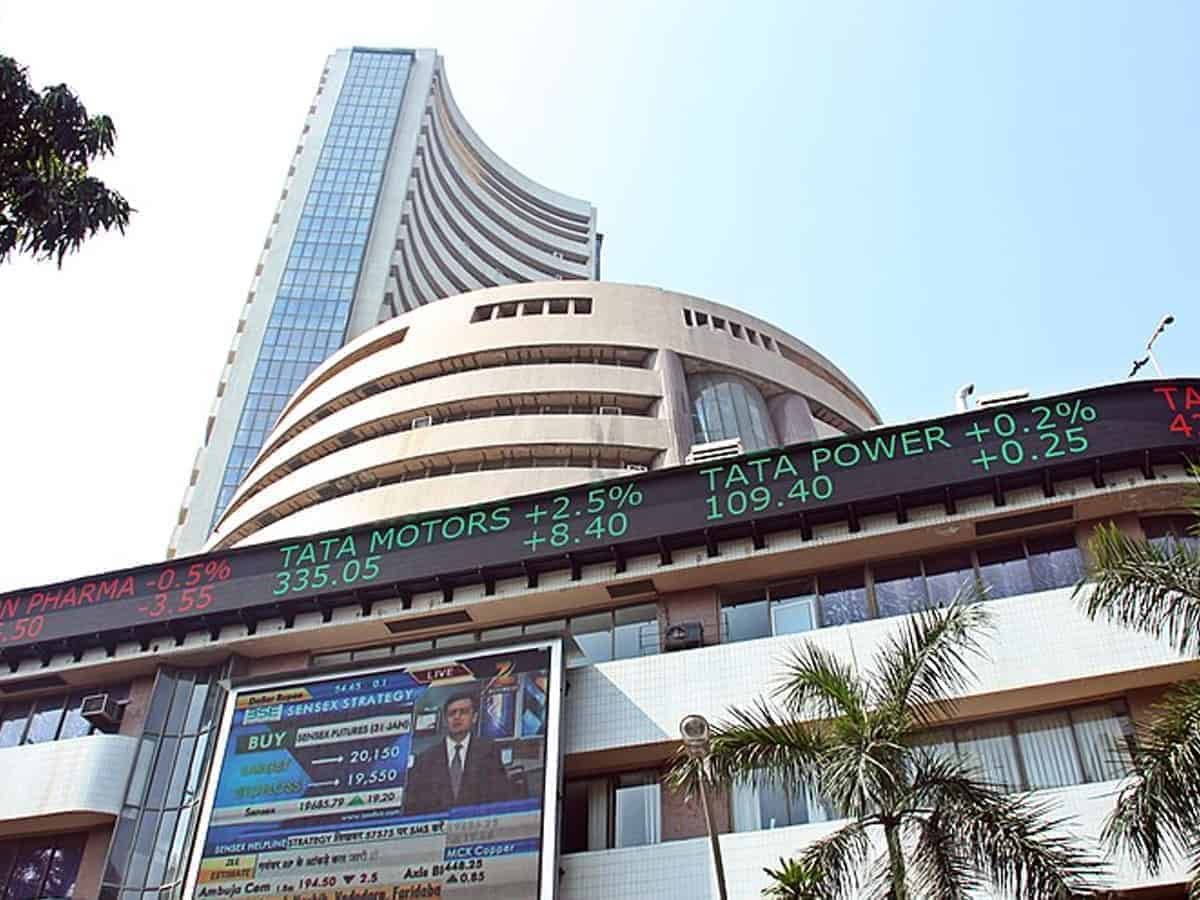
    Mumbai: The Indian benchmark indices opened sharply lower on Friday amid weak global cues, as selling was seen in the auto, IT, PSU bank and metal sectors in the early trade.

    Hyderabad Institute of Excellence

    At around 9.34 am, Sensex was trading 840.82 points or 1.13 per cent down at 73,771.61 while the Nifty declined 254.15 points or 1.13 per cent at 22,290.90.

    Nifty Bank was down 439.75 points or 0.90 per cent at 48,304.05. The Nifty Midcap 100 index was trading at 48,142 after declining 994.75 points or 0.12 per cent. Nifty Smallcap 100 index was at 14,836.35 after dropping 320.25 points or 2.11 per cent.

    MS Creative SchoolMS Creative School

    According to experts, the last three sessions have been unremarkable for the benchmark index, as indicated by the small-bodied candlestick formations. The minimal changes in price suggest persistent bearish sentiment, prompting market participants to adopt a cautious approach.

    “Moving forward, one must remain vigilant with global developments, which are likely to act as catalysts in setting the initial tone for domestic markets. At the same time, one should refrain from making aggressive bets until momentum returns to the market,” said Sameet Chavan, Head Research, Technical and Derivative, Angel One.

    Meanwhile, in the Sensex pack, Reliance, ITC, Sun Pharma, ICICI Bank, Hindustan Unilever Limited, Axis Bank and Asian Paints were the top losers.

    In the last trading session, Dow Jones declined 0.45 per cent to close at 43,239.50. The S&P 500 declined 1.59 per cent to 5,861.57and the Nasdaq declined 2.78 per cent to close at 18,544.42.

    In the Asian markets, Seoul, China, Japan, Bangkok, Jakarta and Hong Kong were trading in red.

    The foreign institutional investors (FIIs) continued their selling on sixth day in a row, as they sold equities worth Rs 556.56 crore on February 27. However, domestic institutional investors (DIIs) bought equities worth Rs 1,727.11 crore, on the same day.

  • India’s new office supply hits an all-time high at 515 lakh sq ft in 2024

    India’s new office supply hits an all-time high at 515 lakh sq ft in 2024

    New Delhi: India’s office market reported the highest-ever supply in any year, as new office supply hit an all-time high in 2024 across seven major cities at 515 lakh square feet, a report showed on Thursday.

    Hyderabad Institute of Excellence

    A surge in demand for grade-A office spaces kept developers active throughout the year.

    Construction activities increased by 7 per cent compared to the previous year, reaching 515 lakh square feet, marking the highest supply ever recorded. Among the top seven cities, the maximum fresh supply was seen in Hyderabad followed by Bengaluru, according to the report by Vestian.

    MS Creative SchoolMS Creative School

    With robust absorption and supply in 2024, vacancy rates improved slightly, decreasing from 13.98 per cent in 2023 to 13.91 per cent in 2024.

    Additionally, rental prices increased by 3.8 per cent to 8.2 per cent across the top seven cities.

    In 2024, the absorption reached an all-time high of 707 lakh square feet, reflecting a 16 per cent annual increase, the report mentioned.

    All cities except the National Capital Region (NCR) and Kolkata reported their highest-ever absorption levels during 2024.

    “IT-ITeS sector continued to dominate leasing activities during 2024 with 36 per cent share. The share has increased from 24 per cent a year earlier. While IT industry is expected to lead in 2025 on the back of strong demand from GCCs, other segments such as BFSI and Flex Spaces are also anticipated to garner traction,” said Shrinivas Rao, FRICS, CEO, Vestian.

    Bengaluru dominated the absorption with 177 lakh sq ft in 2024, registering an increase of 15 per cent over the previous year. However, the share remained stable at 25 per cent compared to last year.

    The share of Mumbai in pan-India absorption increased from 14 per cent in 2023 to 18 per cent in 2024, whereas the share of NCR declined from 17 per cent to 13 per cent during the same period

    Emphasis on sustainability has grown among occupiers as several multinational companies with offices in India have pledged to achieve net-zero emissions, leading to a rise in demand for green-certified office spaces in India.

    Anticipating this shift, leading developers are prioritising the construction of sustainable office buildings, said Rao.

  • Indian stock market opens flat, Nifty above 22,500

    Indian stock market opens flat, Nifty above 22,500

    Mumbai: The Indian benchmark indices opened almost flat on Thursday amid mixed global cues, as buying was seen in the financial services and metal sectors in the early trade.

    Hyderabad Institute of Excellence

    At around 9.31 am, Sensex was trading 9.44 points or 0.01 per cent up at 74,592.68 while the Nifty climbed 6.30 points or 0.03 per cent at 22,553.85.

    Nifty Bank was up 218.90 points or 0.45 per cent at 48,827.25. The Nifty Midcap 100 index was trading at 49,643 after declining 59.15 points or 0.12 per cent. Nifty Smallcap 100 index was at 15,354.50 after dropping 54.10 points or 0.35 per cent.

    MS Creative SchoolMS Creative School

    According to experts, after a flat to positive opening, Nifty can find support at 22,500 followed by 22,400 and 22,300. On the higher side, 22,700 can be an immediate resistance, followed by 22,800 and 22,900.

    “The charts of Bank Nifty indicate that it may get support at 48,500 followed by 48,200 and 47,900. If the index advances further, 48,800 would be the initial key resistance, followed by 49,200 and 49,500,” said Hardik Matalia, Derivative Analyst of Choice Broking.

    Meanwhile, in the Sensex pack, Bajaj Finance, IndusInd Bank, Bajaj Finserv, M&M, Tata Steel, HDFC Bank, Zomato, Sun Pharma, ICICI Bank and Bharti Airtel were the top gainers. Whereas, UltraTech Cement, Tech Mahindra, Asian Paints, Infosys, Axis Bank and Hindustan Unilever Limited were the top losers.

    In the last trading session, Dow Jones declined 0.43 per cent to close at 43,433.12. The S&P 500 added 0.01 per cent to 5,956.06 and the Nasdaq climbed 0.26 per cent to close at 19,075.26.

    In the Asian markets, Seoul, China, Jakarta and Hong Kong were trading in red. Whereas Bangkok and Japan were trading in green.

    The foreign institutional investors (FIIs) continued their selling on fifth day in a row, as they sold equities worth Rs 3,529.10 crore on February 25. However, domestic institutional investors (DIIs) bought equities worth Rs 3,030.78 crore, on the same day.

    Tuesday’s bounce back was turned lower from the 22620 vicinity itself, pointing towards the feebleness of the recovery attempt. A parallel consolidation in the last three days does show signs of giving away on the downside, said Anand James, Chief Market Strategist, Geojit Financial Services.

    “But as maintained all this week, we will wait for 22,950 to be conquered, as a confirmation of strength. Downside marker for the day may be placed at 22,530, with deeper support seen at 22,300,” he noted.