Category: BUSINESS

  • PhonePe launches ‘insuring HEROES’ campaign for International Women’s Day

    PhonePe launches ‘insuring HEROES’ campaign for International Women’s Day

    New Delhi: PhonePe on Thursday launched its ‘insuring HEROES’ campaign ahead of the International Women’s Day.

    Hyderabad Institute of Excellence

    International Women’s Day is observed every year on March 8.

    As part of the initiative, the company is offering exclusive discounts of up to 30 per cent, specifically for women, on select term life and health insurance plans.

    MS Creative SchoolMS Creative School

    It is available on the PhonePe platform until March 9, 2025. Women can avail these exclusive offers on the PhonePe app to ensure their overall economic well-being and enjoy long-term stability.

    Discounts include up to 15 per cent off on health insurance plans, and up to 30 per cent off on term life insurance plans.

    Through this initiative, PhonePe aims to assist women with greater financial security, facilitating their access to the right insurance solutions tailored to their unique needs.

    To avail these offers on the PhonePe app: users must first select the ‘insuring HEROES’ banner within the insurance section of the PhonePe app.

    They can then click ‘buy term plan’ to begin. Next, the users must choose the ‘buy new plan’ button and fill the ‘date of birth’ and ‘annual income’ to calculate the coverage.

    Users also will need to share some ‘additional personal details’ to find the best insurance plans for their needs.

    Then, they can ‘check out the top plans’ and shortlist the one they prefer to buy.
  • India’s social security coverage doubles to 48.8 pc: Minister

    India’s social security coverage doubles to 48.8 pc: Minister

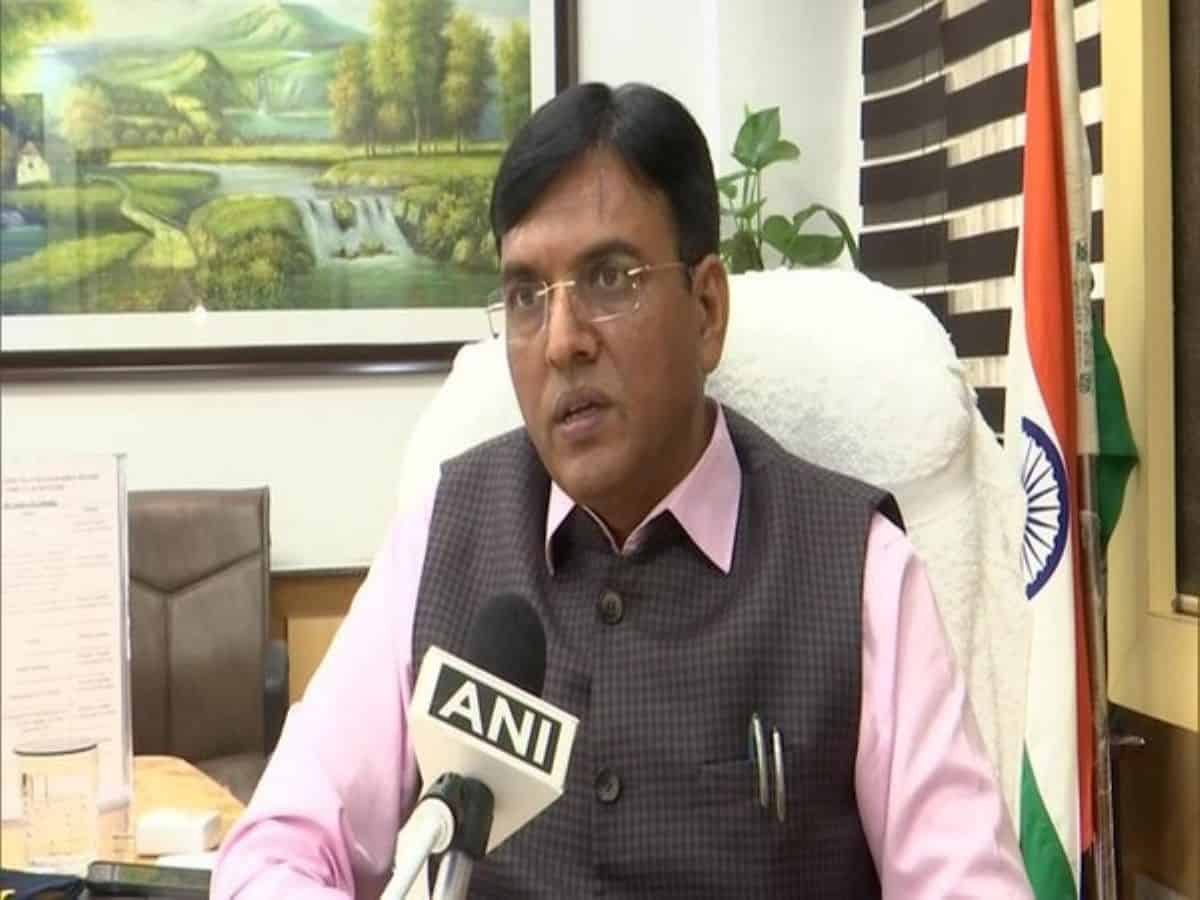
    New Delhi: Social security coverage in India has doubled from 24.4 per cent to 48.8 per cent, said Union Minister for Labour and Employment and Youth Affairs and Sports Mansukh Mandaviya.

    Hyderabad Institute of Excellence

    Addressing the post-budget webinar on the theme ‘Investing in People’, Mandaviya outlined the government’s mission to skill and empower India’s youth, ensuring that talent in the country makes a global impact.

    Citing the ILO World Social Security Report 2024-26, he said “India’s social security coverage doubling from 24.4 per cent to 48.8 per cent”.

    MS Creative SchoolMS Creative School

    The expansion of the e-Shram Portal, covering over 30.67 crore unorganised workers, and the inclusion of gig workers under Pradhan Mantri Jan Arogya Yojana (PMJAY), reinforce the government’s commitment to workforce welfare, the Union Minister said.

    The government has also integrated 12 key welfare schemes under e-Shram and has made the portal available in 22 Indian languages, he said, adding that to support workers’ families.

    “Ten new ESIC medical colleges have been approved, with plans for 10 more in the pipeline,” he said.

    Mandaviya highlighted the roadmap for Viksit Bharat by 2047 and stated that investing in people is not just an economic decision but a social, moral, and cultural commitment toward an educated, healthy, and empowered society.

    Underscoring the success of employment initiatives, Mandaviya said that “17.1 crore jobs were created between 2014-24, including 4.6 crore in the past year alone”.

    On the other hand, there has been a “significant drop in unemployment rates, from 6 per cent in 2017-18 to 3.2 per cent in 2023-24”, the Minister said.

    There has also been “a remarkable rise in female employment from 22 per cent to 40.3 per cent in the same period”, he added, while crediting these achievements to the government’s progressive policies.

    Meanwhile, Sumita Dawra, Secretary (Labour and Employment) highlighted major strides in modernising the Employees’ Provident Fund Organisation (EPFO), including the enrolment of over 6.2 crore new members in six-and-a-half years.

    She also mentioned reforms such as centralised pension processing system, auto-settlement of PF claims, and robust IT infrastructure.

    Dawra underscored the ESIC expansion — from 2.03 crore insured persons (IPs) in 2014 to 3.72 crore in 2024 — and the growing healthcare network across 165 hospitals and 1,590 dispensaries.

  • Indian stock market opens flat, Sensex above 73,600

    Indian stock market opens flat, Sensex above 73,600

    Mumbai: The Indian benchmark indices opened almost flat on Thursday amid mixed global cues, as selling was seen in the IT and FMCG sectors in the early trade.

    Hyderabad Institute of Excellence

    At around 9.33 am, Sensex was trading 58.07 points or 0.0.08 per cent down at 73,672.16 while the Nifty declined 12.65 points or 0.06 per cent at 22,324.65.

    Nifty Bank was up 205.85 points or 0.42 per cent at 48,695.80. The Nifty Midcap 100 index was trading at 49,649.70 after gaining 481.35 points or 0.98 per cent. Nifty Smallcap 100 index was at 15,429.35 after rising 128.30 points or 0.92 per cent.

    MS Creative SchoolMS Creative School

    According to market watchers, after a positive opening, Nifty can find support at 22,200 followed by 22,100 and 22,000. On the higher side, 22,450 can be an immediate resistance, followed by 22,550 and 22,700.

    The RBI will conduct two open market operations purchases worth Rs 50,000 crore each on March 12 and March 18 and a USD/INR Buy/Sell Swap auction of 10 billion dollar for a tenor of 36 months on March 24. This will inject more liquidity into the system.

    “The Nifty closed above its 5-day exponential moving average (EMA) for the first time since February 6, 2025, potentially signalling a reversal from a bearish to a bullish trend in the short term,” said Devarsh Vakil, Head of Prime Research at HDFC Securities.

    Meanwhile, in the Sensex pack, Tata Motors, Asian Paints, Zomato, Tata Steel, IndusInd Bank, Hindustan Unilever, ICICI Bank, Axis Bank, HCL Tech, TCS and Bajaj Finserv were the top gainers. Whereas, Kotak Mahindra Bank, PowerGrid, Infosys and UltraTech Cement were the top losers.

    In the last trading session, Dow Jones gained 1.14 per cent to close at 43,006.59. The S&P 500 added 1.12 per cent to 5,842.63 and the Nasdaq added 1.46 per cent to close at 18,552.73.

    In the Asian markets, Only Bangkok was trading in red. Whereas China, Japan, Seoul, Jakarta and Hong Kong were trading in green.

    The foreign institutional investors (FIIs) extended their selling on tenth day on March 5 as they sold equities worth Rs 2,895.04 crore. However, domestic institutional investors (DIIs) also extended their buying on 20th day as they bought equities worth Rs 3,370.60 crore, on the same day.

  • New Income Tax Bill allows access to digital records, breaching privacy

    New Income Tax Bill allows access to digital records, breaching privacy

    In the 2025 Union budget, finance minister Nirmala Sitharaman introduced a new Income Tax Bill, a revamp of the old one – Income-tax Act, 1961.

    Hyderabad Institute of Excellence

    Although Sitharaman assured that the new Bill will “simplify” things for taxpayers, experts point out things will get complicated and intrusive from here on.

    Sitharaman, while presenting the 2025 Union budget in the Lok Sabha had stated, “The revised Income Tax Bill is expected to be clear, concise, consistent and supplemented with illustrative examples to aid understanding and interpretation by various stakeholders, which will also eliminate obsolete and redundant provisions, according to industry experts.”

    MS Creative SchoolMS Creative School

    She added that the ongoing review of the Income-tax Act, 1961, will modernise and simplify India’s tax system in line with broader economic goals.

    However, the revised version of the Income Tax Bill conceals potential risks. Ready to be implemented from April 2026, tax officers will get full access to a taxpayer’s digital records. The clause was not in the Income-tax Act, 1961, where although tax officers are permitted to authorise laptops, hard drives, and emails, they were restricted to pry digital assets.

    As per clause 247 of the new Income Tax Bill, designated income tax officers in India will now have the right to access your emails, social media, bank details, and investment accounts, in certain cases, starting April 1, 2026, if they suspect tax evasion or undisclosed assets on which tax is not paid.

    It also states that if the taxpayer refuses authorisation to their digital records, tax officers can bypass passwords, override security settings, and unlock files.

    This clause of the new Income Tax Bill is dangerous as it is a clear violation of privacy and harassment.

    According to Vishwas Panjiar, a partner at Nangia Andersen LLP, he warned that the new Income Tax Bill will infringe personal data.

    “This represents a notable departure from the present Income-tax Act, 1961, which did not explicitly cover such digital domains. Without clear safeguards, these extensive powers could lead to taxpayer harassment or unnecessary scrutiny of personal data,” Panjiar was quoted by Reuters.


  • Indian businesses to prioritise employee financial well-being in 2025: Report

    Indian businesses to prioritise employee financial well-being in 2025: Report

    Bengaluru: As India’s businesses maintain steady economic growth, prioritising employee financial well-being — flexible pay models, salary-linked financial support, and personalised benefits — has become the key focus for HR and payroll departments in 2025, a new report said on Wednesday.

    Hyderabad Institute of Excellence

    The report by ADP, a global technology company, showed that 46 per cent of organisations in the country have identified the expansion of financial well-being programmes to better support their workforce as their top priority this year.

    The report highlights that financial stress is increasingly recognised as a major factor impacting employee productivity, engagement, and retention. More than half of surveyed business leaders (55 per cent) acknowledged financial stress reduction as a key area where payroll systems can positively influence employee experience.

    MS Creative SchoolMS Creative School

    “Financial well-being is not merely about increasing pay; it is about empowering employees with the right knowledge and tools,” said Rahul Goyal, Managing Director of ADP India and Southeast Asia.

    “Ensuring employees understand financial, tax and payroll processes when joining the company fosters long-term financial security. Regular coaching and education sessions can further build confidence and enable employees to make informed financial decisions,” he added.

    The report, based on insights from over 300 HR, payroll, and finance leaders, showed that companies are adopting flexible pay models, salary-linked financial support, and personalised benefits aligned with employees’ life stages.

    Nearly one-third (30 per cent) of organisations are introducing flexible pay models as the workforce demands more financial flexibility, such as performance-based compensation and access to loans. About 65 per cent of payroll leaders say avoiding compliance risk is very challenging.

    Payroll teams are under mounting pressure to navigate evolving tax structures, multi-state or cross-border regulations, and the upcoming wage code reforms, prompting a shift towards automated governance frameworks and payroll technology solutions.

    Organisations are also investing in modern payroll technologies to enhance efficiency, enhance data integration and ensure data security and privacy, recognising that payroll holds critical employee data, the report said.

    Employees now expect a user experience comparable to consumer-grade standards, complete with advanced features and functionalities to help them navigate the ever-changing compliance landscape. However, 30 per cent of organisations cite scalability and customisation challenges, while 28 per cent identify high costs as barriers to widespread adoption.

    Consequently, only 12 per cent of organisations report having a payroll function fully equipped to support future workforce demands, the report said.

    Goyal noted that the report underscores an urgent need for businesses to modernise payroll systems. The aim is not just boosting efficiency, but also to enhance compliance readiness and meet rising employee expectations.

  • Ola Electric misses cell manufacturing deadline at its Gigafactory

    Ola Electric misses cell manufacturing deadline at its Gigafactory

    New Delhi: As it continues to struggle on various fronts amid job cuts, Ola Electric Mobility has now failed to kick off cell manufacturing at its Gigafactory on time.

    Hyderabad Institute of Excellence

    According to a stock exchange filing by the company, “We would like to inform you that we are in receipt of a letter dated 3 March 2025 from IFCI Ltd. ‘Subject Non-Achievement of Milestone-1’ according to Schedule M of the Programme Agreement dated 28 July 2022.”

    “The company is actively engaged with the relevant authorities in this regard and is in the process of filing an appropriate response,” said Ola Electric.

    MS Creative SchoolMS Creative School

    IFCI is the project management agency for the production-linked incentive (PLI) scheme for advanced chemistry cells (ACCs). Ola Electric’s subsidiary — Ola Cell Technologies Pvt Ltd — is a beneficiary of the PLI scheme.

    According to industry sources, Ola Electric has essentially missed the deadline to start cell manufacturing operations at its Gigafactory.

    Similar letters have been sent to Reliance New Energy Pvt. and Rajesh Exports Ltd — the two other beneficiaries of the PLI scheme.

    Bhavish Aggarwal-run Ola Electric became the first company to win approval under the PLI scheme for localised cell manufacturing in October 2023.

    It was awarded the maximum capacity of 20 GwH for its bid and the construction of the Gigafactory therafter.

    Amid third-quarter earnings call, Aggarwal indicated that the Gigafactory would go onstream in the first quarter of fiscal 2026.

    The plan was to achieve a production capacity of 5 GWh in the first year itself, and 20 GWh by 2027.

    A 4,680 NMC cell will be produced first, followed by LFP cells in the next couple of years. Ola Electric has invested Rs 1,200 crore in the Gigafactory to date.

    Ola Electric reported a massive net loss of Rs 564 crore in the third quarter (Q3 FY25), an increase of 13.94 per cent compared to a net loss of Rs 495 crore in the previous quarter (Q2 FY25).

    On a year-on-year (YoY) basis, the net loss widened from Rs 376 crore in the same quarter last year (Q3 FY24) – a steep 50 per cent increase.

    The company has attributed the increased losses to “highly competitive intensity and service challenges” during the quarter.

    Ola Electric Mobility is reportedly laying off more than 1,000 employees and contract workers in its second round of job cuts within months.

  • Stock market opens higher, Sensex above 73,300

    Stock market opens higher, Sensex above 73,300

    Mumbai: The Indian benchmark indices opened higher on Wednesday amid mixed global cues, as buying was seen in auto, IT and PSU Bank sectors in early trade.

    Hyderabad Institute of Excellence

    At around 9.31 am, Sensex was trading 358.34 points or 0.49 per cent up at 73,348.27 while the Nifty added 106.40 points or 0.48 per cent at 22,189.05.

    Nifty Bank was up 147.80 points or 0.31 per cent at 48,393. The Nifty Midcap 100 index was trading at 48,337.15 after adding 329.30 points or 0.69 per cent. Nifty Smallcap 100 index was at 14,909.40 after rising 146.80 points or 0.99 per cent.

    MS Creative SchoolMS Creative School

    According to experts, markets could see a subdued opening tracking overnight weakness in US markets, but optimism in other Asian indices may aid sentiment after benchmark Nifty ended in red for the 10th day in a row on Tuesday.

    “The market is dealing with the pessimism of the likely impact of Trump’s reciprocating tariff policy amidst escalating trade tensions and growing signs of an economic slowdown and sticky US inflation,” said Prashanth Tapse, Sr VP Research Analyst at Mehta Equities.

    “Technically, in case Nifty gives up 22,000 on a closing basis, then the next big support will come at 21,281 mark,” he added.

    Given the ongoing volatility, traders are advised to exercise caution, implement strict stop-loss strategies, and avoid carrying overnight positions.

    Meanwhile, in the Sensex pack, HCL Tech, M&M, PowerGrid, Tech Mahindra, Zomato, Tata Steel, Tata Motors and ICICI Bank were the top gainers. Whereas, Bajaj Finance, Bajaj Finserv, UltraTech Cement and HDFC Bank were the top losers.

    In the last trading session, Dow Jones declined 1.55 per cent to close at 42,520.99. The S&P 500 declined 1.22 per cent to 5,778.15 and the Nasdaq declined 0.35 per cent to close at 18,285.16.

    In the Asian markets, Bangkok, China, Japan, Seoul, Jakarta and Hong Kong were trading in green.

    The foreign institutional investors (FIIs) extended their selling on March 4 as they sold equities worth Rs 3,405.82 crore. However, domestic institutional investors (DIIs) also extended their buying as they bought equities worth Rs 4,851.43 crore, on the same day.

  • Rupee gains 13 paise to settle at 87.19 against US dollar

    Rupee gains 13 paise to settle at 87.19 against US dollar

    Mumbai: The rupee rebounded from initial losses and settled with a gain of 13 paise at 87.19 against the US dollar on Tuesday on the back of a weak American currency index and a sharp fall in crude oil prices.

    Hyderabad Institute of Excellence

    Forex traders said the gain in the local currency was capped due to a weak tone in the domestic equity markets and continued withdrawal of foreign capital.

    At the interbank foreign exchange, the rupee witnessed high volatility. It opened at 87.38 and touched the intraday low of 84.40 against the greenback. The unit ended the session at 87.19 against the dollar, registering a gain of 13 paise from its previous closing level.

    MS Creative SchoolMS Creative School

    On Monday, the rupee settled with a gain of 5 paise at 87.32 against the US dollar.

    Dilip Parmar, Research Analyst, HDFC Securities, said the rupee appreciated as the US dollar retreated against major currencies, and crude oil prices traded near three-month lows. Also, the decline in US Treasury yields has contributed to the weakening of the dollar in recent days.

    “Foreign fund outflows and stable economic activity are sending mixed signals for the rupee. The currency is also reacting to movements in regional currencies. In the near term, USD/INR is expected to trade within the range of 86.80 to 87.70,” Parmar said.

    Anuj Choudhary – Research Analyst at Mirae Asset Sharekhan, said the rupee is expected to trade with negative bias on account of weakness in the domestic markets and continued FII outflows. Uncertainty over the trade tariff issue may further pressurise the rupee.

    “However, weak crude oil prices and weak tone in the US dollar may support the rupee at lower levels. USD-INR spot price is expected to trade in a range of 87.10 to 87.60,” Choudhary said.

    Meanwhile, the dollar index, which gauges the greenback’s strength against a basket of six currencies, was trading 0.40 per cent lower at 106.31.

    “The US dollar fell on the ongoing trade tariff concerns and disappointing economic data from the US. ISM manufacturing PMI data fell to 50.3 in February vs 50.6 in January and forecast a rise to 50.9,” Choudhary said.

    Brent crude, the global oil benchmark, fell 1.49 per cent to USD 70.55 per barrel in futures trade.

    In the domestic equity market, the 30-share BSE Sensex fell 96.01 points, or 0.13 per cent, to settle at 72,989.93, while the Nifty slipped 36.65 points, or 0.17 per cent, to close at 22,082.65 points.

    Foreign Institutional Investors (FIIs) offloaded equities worth Rs 3,405.82 crore in the capital markets on a net basis on Tuesday, according to exchange data.

    On the global front, President Donald Trump said on Monday that 25 per cent taxes on imports from Mexico and Canada would start on Tuesday.

    Trump said that the tariffs are to force Mexico and Canada to step up their fight against fentanyl trafficking and stop illegal immigration. He wants to eliminate the US’ trade imbalances and push more factories to relocate in the United States.

  • Paytm shares plunge over 3 pc after ED issues notice over FEMA violations

    Paytm shares plunge over 3 pc after ED issues notice over FEMA violations

    New Delhi: Shares of Paytm’s parent company, One97 Communications Limited, fell over 3 per cent in early trading on Tuesday after the Enforcement Directorate (ED) issued a notice against the firm.

    Hyderabad Institute of Excellence

    The stock dropped as much as 3.26 per cent to Rs 702 per share during intra-day trade.

    The ED announced on Monday that it had sent a notice to One97 Communications, its managing director Vijay Shekhar Sharma, and other associated entities for alleged violations under the Foreign Exchange Management Act (FEMA).

    MS Creative SchoolMS Creative School

    The agency stated that its investigation had been completed, and the notice was issued as a step before the adjudication process begins.

    According to the ED, Paytm’s subsidiaries, including Little Internet Private and Nearbuy India Private, have also received show-cause notices.

    The alleged violations involve foreign investments made by One97 Communications in Singapore, for which the company did not file the necessary reports with the Reserve Bank of India (RBI).

    Additionally, the company is accused of receiving Foreign Direct Investments from overseas investors without following the RBI’s pricing rules.

    In response, a Paytm spokesperson stated that the company is committed to following regulatory guidelines and is working to resolve the matter in accordance with the law.

    The company stated in a stock exchange filing that the alleged violations are linked to these subsidiaries for transactions that occurred before they were acquired by Paytm.

    Paytm announced that it is seeking legal counsel and exploring suitable remedies through the available regulatory channels.

    The company emphasised that part of the alleged violations relates to a time before its investment in Little and Nearbuy, stressing that these transactions took place before the companies became its subsidiaries.

    Additionally, Paytm assured that the issue does not impact its operations. All services on the Paytm app continue to function normally and securely, with no disruption for users or merchants.

  • Credit card spending in India sees 14 pc growth in Jan

    Credit card spending in India sees 14 pc growth in Jan

    Mumbai: Total credit card spending in India reached Rs 1,84,100 crore (Rs 1,841 billion) in the month of January, marking a strong 14 per cent growth (year-on-year), a report showed on Tuesday.

    Hyderabad Institute of Excellence

    The total credit card transaction volume in January 2025 stood at 430 million, reflecting a 31 per cent year-on-year growth, despite a 1 per cent month-on-month (MoM) decline due to the high base of December 2024.

    The slowdown in transaction volume is attributed to increased caution driven by rising delinquencies, according to the report by Asit C Mehta Investment Interrmediates Ltd.

    MS Creative SchoolMS Creative School

    “Although the credit card data saw a moderation at an industry level in terms of new card dispatches, card spendings and transaction per card but the leading banks such as HDFC and SBI saw higher card dispatches and consequently leading to market share gain,” said Akshay Tiwari, AVP-Equity Research Analyst.

    The number of outstanding credit cards stood at 109 million, declining by 1.2 million cards from December 2024. The average spending per card decreased slightly by 1 per cent (on-month) to Rs 16,911, though it registered a marginal 1 per cent YoY increase.

    The average spend per transaction was Rs 4,282, showing a 15 per cent YoY decrease, reflecting evolving consumer behaviour and macroeconomic conditions.

    Leading banks continued to strengthen their presence in the credit card segment. HDFC Bank increased its market share from 20.2 per cent to 21.5 per cent over the past year through aggressive customer acquisition strategies.

    SBI recovered from a dip in market share to 18.8 per cent, adding 240,000 new cards in January alone. ICICI Bank improved its share from 16.3 per cent to 16.6 per cent, showed the report.

    A key highlight of the month was the Reserve Bank of India (RBI) lifting its 10-month embargo on Kotak Mahindra Bank’s credit card issuance in February 2025.

    This move allows Kotak to re-enter the market, potentially reshaping the competitive landscape in the coming months. Kotak’s market share currently stands at 4.6 per cent, reflecting the impact of the previous restriction.

    Despite short-term fluctuations in transaction volume and spending, the credit card industry continues to exhibit strong long-term growth.