










Mumbai: The Consulate General of the People’s Republic of China in Mumbai, in association with the Chhatrapati Shivaji Maharaj Vastu Sangrahlaya Museum Society of Mumbai and St. Xavier’s College, hosted a photo exhibition titled “Beyond Borders, Between Hearts – China Through Indian Youth’s Lens” at College Hall, St. Xavier’s College, Fort, on November 8.
The event was inaugurated by Mr Qin Jie, Consul General of China in Mumbai, and attended by faculty members, students, and cultural representatives. The exhibition marked a significant moment in the growing people-to-people connection between India and China, especially as the two countries prepare to commemorate 75 years of diplomatic relations in 2025.
A Lens that captures friendship and discovery
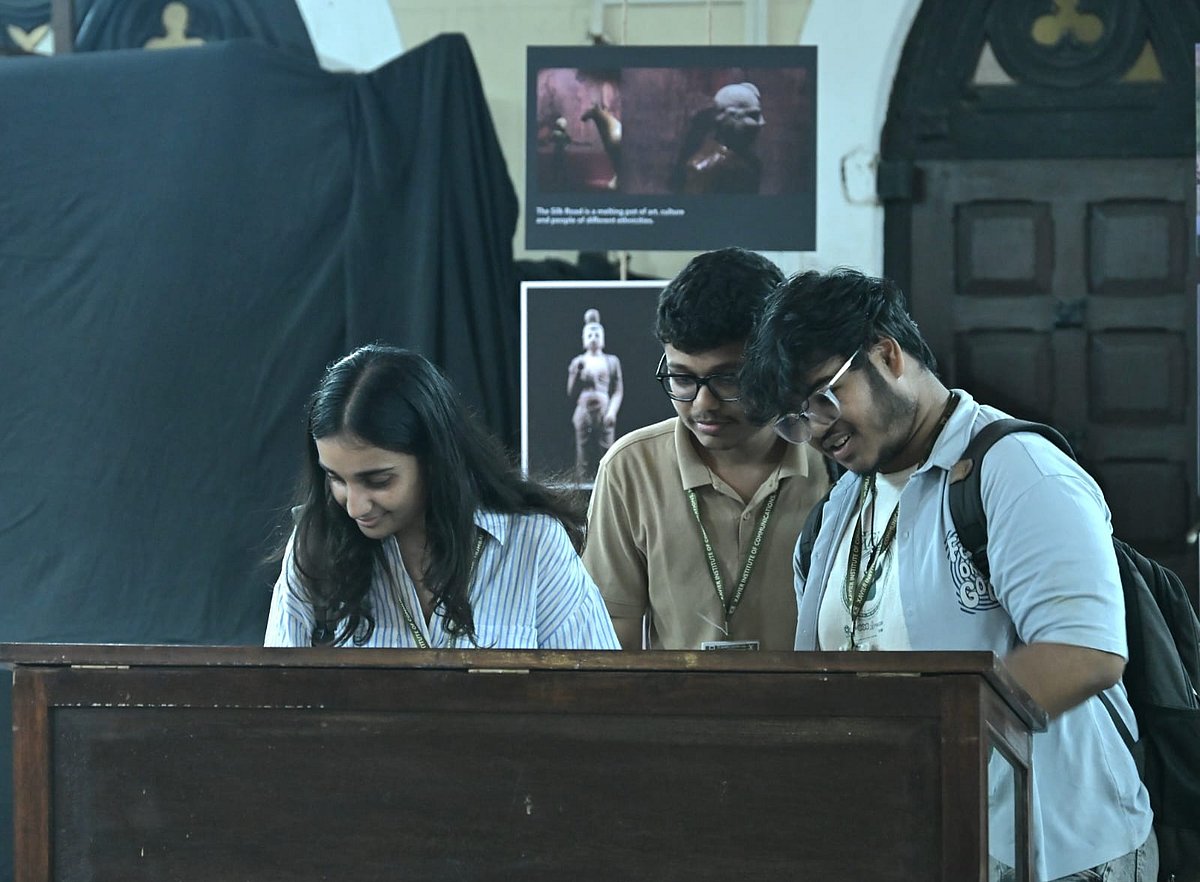
The exhibition displayed a collection of photographs taken by young Indian participants who visited China as part of youth exchange and educational programmes. From Hangzhou’s tranquil waters to Shanghai’s futuristic skyline and the historic beauty of Xi’an, their cameras captured the many sides of China: modern and yet deeply traditional, ambitious, yet rooted in harmony.
Each photograph told a story, of encounters with local people, shared meals, laughter, and the discovery of a country that, for many students, existed only in books and screens until they experienced it firsthand.
“It not only showcases the colourful journey of these young friends but also how China and India are connected with each other,” said Consul General Qin Jie in his address.

The changing face of China
Commending the creativity and perception of the young photographers, Mr. Qin Jie reflected on how India and China, both ancient civilizations, are now walking side by side in their pursuit of progress. “In these images, you see not just China’s mountains and cities, but also its transformation. How deserts have turned into grasslands, how innovation has reshaped daily life,” he said.
He emphasised that exhibitions like these are not only artistic expressions but also vehicles for diplomacy, soft bridges that allow people to understand one another beyond policy and politics.
China’s vision for growth and cooperation
During his remarks, Mr. Qin Jie outlined China’s priorities for its 15th Five-Year Plan (2026–2030), which will focus on three key pillars – modernisation, innovation, and openness.
He highlighted that China aims to deepen cooperation with countries across the Global South, including India, in areas such as science, education, technology, and culture. “China’s further development will create even more opportunities for India, and vice versa,” he said, noting that both nations have complementary strengths and shared ambitions for growth and stability in Asia.
“China has achieved modernisation through the hard work of its people,” he said. “We pledges to avoid the zero-sum approach and focus on mutually beneficial and shared development.”

Education and youth exchange
Education has been a cornerstone of the China–India relationship, and the Consulate General of China in Mumbai continues to promote academic exchange between the two countries.
“So far, our consulate has issued over 80,000 visas this year, including many for students,” said Mr. Qin Jie in a conversation with The Free Press Journal. “Going forward, we want to see more young people from both nations studying in each other’s universities and even high schools. That’s how mutual understanding grows, through friendship formed in classrooms and on campuses.”
He further shared his vision for deepening collaboration between Indian and Chinese universities, emphasising the role of youth as cultural ambassadors. “As the title of this exhibition says – Beyond Borders, Between Hearts, we want young people to learn through involvement,” he said. “These photos show how Indian students connected with Chinese lives during their travels. I hope to see Chinese students coming to India as well, to capture their experiences here and share them back home.”
Drawing inspiration from history, the Consul General quoted British economic historian Angus Maddison, who documented how India and China together accounted for nearly 60% of the world’s GDP for centuries, largely due to peaceful trade and innovation.
“Both our nations were great innovators made money from their own territories, and traded with other countries in a peaceful way,” he said. “Under the leadership of our two countries, China and India will co-write a successful story of cooperation and our complementarity will unleash more tangible benefits to our two peoples.”
The event concluded with students and guests touring the exhibition, discussing the stories behind the photographs, and reflecting on how such cultural exchanges contribute to peace and understanding.


