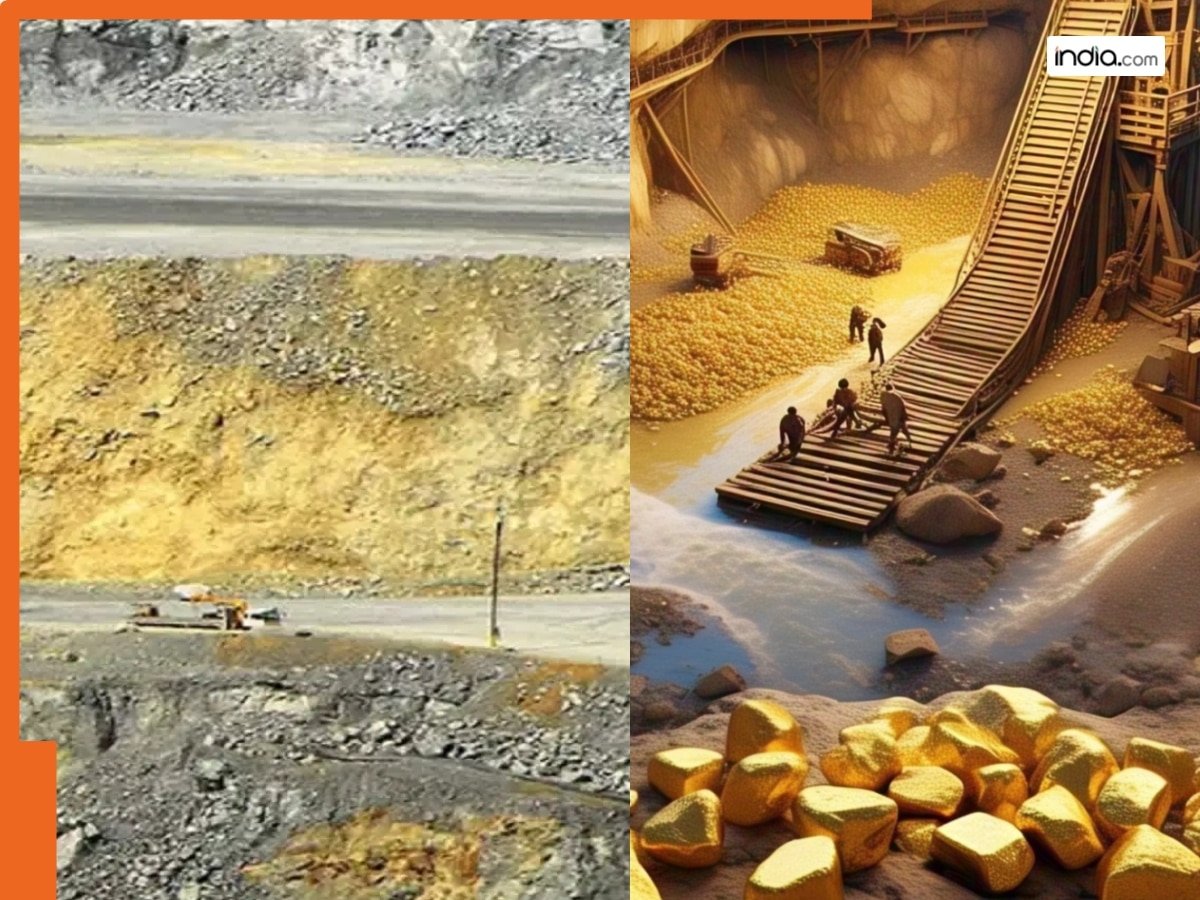
Karnataka is home to some of the most significant gold rеsеrvеs in India and the Union mines ministry has begun the process to auction nine gold-rich tailing dumps.
India’s oldest gold mine: In a significant development after twenty-four years of mining halt at Karnataka’s historic Kolar Gold Fields (KGF), the Union mines ministry of the central government led by PM Modi has begun the process to auction nine gold-rich tailing dumps. Potentially valued at up to Rs 30,000 crore, reports have it that the residues from past mining still contain gold and rare elements like palladium and rhodium.
In the recent development, the Print has reported that SBI Caps has been appointed as the transaction adviser, and the auction process is expected to conclude within 18–24 months.
“With gold prices touching Rs 9,000 a gram, even extracting 1 gram per tonne would be profitable,” the report quoted a senior mines ministry official as saying.
Gold production from Indian mines surges by 86 pc in Feb
The production of gold from Indian mines surged by 86 per cent in February this year to 255 kg while that of copper increased by 28.7 per cent to 11,000 tonnes, according to data released by the Ministry of Mines was reported by IANS news agency.
Where are gold rеsеrvеs found in Karnataka?
Karnataka is home to some of the most significant gold rеsеrvеs and mining operations in India. The primary districts for gold mining in Karnataka include Kolar, Dharwad, Hassan, and Raichur. Thеsе rеgions are the main contributors to the country’s gold production.
The overall index of mineral production of India’s mining and quarrying sector rose by 8 per cent in February this year compared to the same month last year, the figures compiled by the Indian Bureau of Mines showed.
Cumulative growth in mineral production
The cumulative growth in mineral production for April-February, 2023-24 over the same period of the previous year is 8.2 per cent. Other important minerals which showed positive growth during February 2024 over February 2023, include Phosphorite (19 per cent), Limestone (13 per cent), Coal (12 per cent), Natural gas (U) (11 per cent), Petroleum(crude) (8 per cent), Manganese Ore (6 per cent), Magnesite (3 per cent), Lignite(2.8 per cent), and Zinc Conc. (2.8 per cent).
(With inputs from agencies)
Leave a Reply