The conflict erupted in early May following a deadly terrorist attack in Jammu and Kashmir’s Pahalgam on February 22 that claimed the lives of 26 civilians.
Just days after giving a befitting reply to Pakistan’s terrorism agenda through Operation Sindoor, External Affairs Minister S. Jaishankar has now issued a stern warning. Nearly three weeks after the end of a brief but intense conflict between India and Pakistan, External Affairs Minister S. Jaishankar has issued a warning against future terrorist provocations, reiterating that India will not hesitate to strike back regardless of location. “If they are deep in Pakistan, we will go deep into Pakistan,” Jaishankar said in an interview with POLITICO during his official visit to Brussels for high-level trade talks with the European Union.
Meanwhile, the Indian Air Force is now focusing on something even more strategic: deciphering the weapons capabilities used by China and Turkey. After all, Pakistan folded quickly during the military action, so India is now demonstrating that strength is more than just sheer firepower but also about smart planning and solid intelligence.
Sources have cited, as reported by Zee News, that New Delhi now possesses rare and valuable war data on Chinese and Turkish military equipment, including missiles, drones, and radar systems, which were either taken or intercepted during Operation Sindoor.
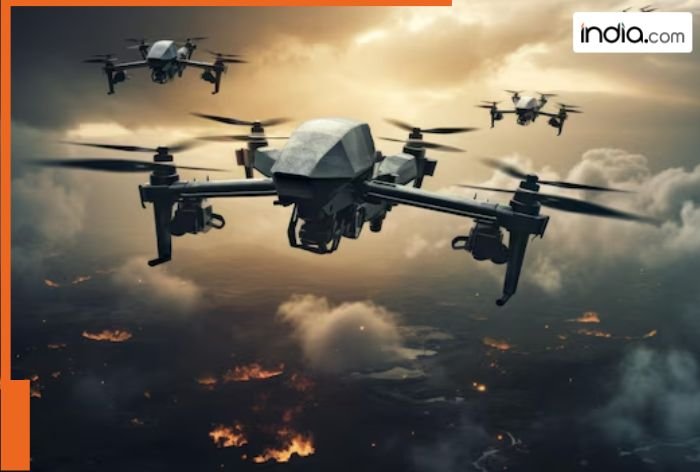
According to a report from Zee News, India has, for the first time, access to vital battlefield data regarding some of Turkey and China’s advanced weapons. These weapons include the PL-15 air-to-air missile, YIHA drones from Turkey, and important parts of the JF-17 and J-10 fighter jets, which are regarded as long-time crown jewels of the air fleets in China and Pakistan.
Furthermore, the Defence Ministry has set out a carefully initiated multi-layered strategy to give the Indian Air Force benefits over its adversaries and to ensure better performance in any potential future conflict. The purchase of 6 Embraer aircraft from Brazil being central to it. The Embraer aircraft will accommodate Netra MK1A radar systems developed in India and enhance India’s airborne surveillance and early warning capabilities, the report further mentioned.
At the same time, a leasing agreement has been parallelly greenlit for an American KC-135 mid-air refueling aircraft. Negotiations are also underway to acquire six more aerial tankers – an acquisition that will now enable Indian fighter jets to stay airborne longer, even in hostile regions, and without the vulnerability of running low on fuel.
Pakistan — rattled after Operation Sindoor — is now leaning more heavily on allies such as China and Turkey and their military support. Several media reports claim that Beijing is speeding up delivery of Yuan-class submarines, armed drones and frigates to Islamabad. Meanwhile, Turkey is helping Pakistan upgrade submarines and has supplied corvettes and vital F-16 spare parts.
The conflict erupted in early May following a deadly terrorist attack in Jammu and Kashmir’s Pahalgam on February 22 that claimed the lives of 26 civilians. India blamed Pakistan for sponsoring the attack, a charge Islamabad has denied. The clash saw days of missile exchanges and aerial strikes between the two nuclear-armed neighbours, culminating in a ceasefire declared on May 10.
Leave a Reply