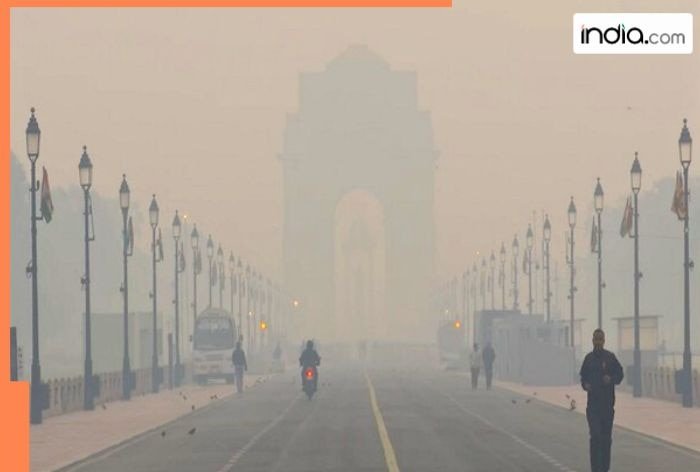
Due to the fluctuating air quality in Delhi, Stage IV of the Graded Response Action Plan (GRAP) has been implemented across the National Capital Region (NCR) since December 16.
New Delhi: On Tuesday morning, the air quality in the National Capital remained in the “severe” category, with a thin layer of smog reducing visibility in parts of the city. The Central Pollution Control Board (CPCB) reported an Air Quality Index (AQI) of 401. According to the India Meteorological Department’s weather forecast, the minimum temperature in Delhi is recorded at 8°C, with a maximum of 20°C. A cloudy sky with light rain or drizzle is expected in the capital city.
Several areas in Delhi recorded alarming AQI levels, including Mundka (463), Ashok Vihar (440), Bawana (455), Rohini (451), Wazirpur (442), Burari (435), Nehru Nagar (433), and Vivek Vihar (433). Other areas such as Anand Vihar (422), Jahangirpuri (424), Najafgarh (426), Patparganj (425), and Punjabi Bagh (430) also experienced poor air quality.
AQI categories
For context, the Central Pollution Control Board (CPCB) categorizes AQI as follows: 0 to 50 is considered “good,” 51 to 100 is considered “satisfactory,” 101 to 200 as “moderate,” 201 to 300 as “poor,” 301 to 400 as “very poor,” and 401 to 500 is considered as “severe”.
Actions taken
Due to the fluctuating air quality in Delhi, Stage IV of the Graded Response Action Plan (GRAP) has been implemented across the National Capital Region (NCR) since December 16. Additionally, the Supreme Court has instructed the governments of Uttar Pradesh and Haryana to impose a firecracker ban and to strictly enforce GRAP measures and the Solid Waste Management Rules of 2016. The Court also directed NCR states to deploy teams at Delhi’s entry points to ensure compliance with GRAP IV.
In response to the cold wave, the Delhi Urban Shelter Improvement Board (DUSIB) has set up 235 pagoda tents as night shelters for the homeless. These shelters offer essential services, including food, medicines, and ambulances.
Meanwhile, residents are reporting increasing health issues due to rising pollution levels in Delhi, including respiratory problems and eye irritation. Thick fog and toxic air quality have made life challenging, raising the demand for stronger and more effective measures to address this crisis.
Leave a Reply