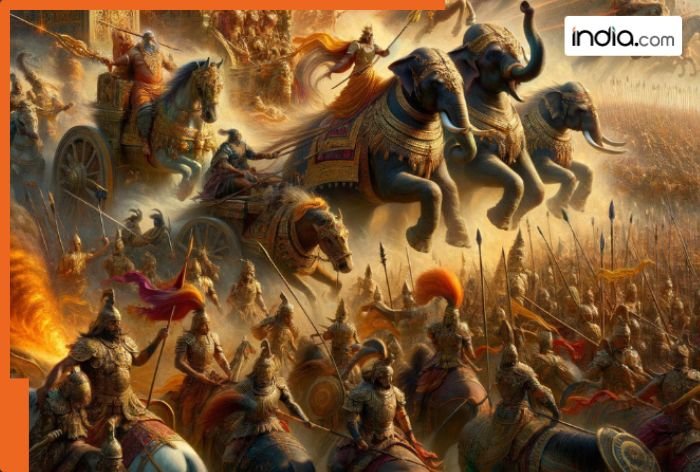
In 1556, after the death of Humayun, Akbar took the charge and became the ruler of Delhi. Vikramaditya took advantage and launched an attack on the Mughal army.
New Delhi: From Babur and Humayun to Shah Jahan and Aurangzeb, Delhi’s history has seen the reign of many rulers. However, there was a time when a Hindu king defeated the Mughals and claimed the throne of Delhi. Hemchandra Vikramaditya, who is also known as Hemu, was the last Hindu ruler to sit on the throne of Delhi in the 16th century. Hemu is also referred to as the Napoleon of India.
Hemchandra Vikramaditya: A War Expertise
Not only an exceptional warrior, Hemu was also a skilled administrator. Both friends and foes recognized his military prowess. Historian R.C. Majumdar, in a chapter titled Hemu: A Forgotten Hero from a book on Sher Shah, notes that a mere accident in the Battle of Panipat turned Hemu’s victory into defeat. Otherwise, he would have established a Hindu dynasty in Delhi instead of the Mughals.
Adil Shah Appointed Him as Prime Minister
Hemu was granted the title of Vakil-e-Ala, equivalent to the position of Prime Minister, during the reign of Adil Shah. When Adil Shah learned that Humayun had reclaimed the throne of Delhi, he entrusted Hemu with the mission to uproot the Mughals completely. Hemu emerged victorious in this battle.
Not only that, but Hemu had also won 22 battles for Adil Shah. It is said that as long as he lived, no one could defeat him. This is why he is often referred to as the Napoleon of India.
Hemu Defeated Akbar
In 1556, after the death of Humayun, Akbar took the charge and became the ruler of Delhi. Vikramaditya took advantage and launched an attack on the Mughal army. This was the Battle of Panipat, in which Hemu defeated Akbar. To assert his victory over Akbar, Hemu claimed Delhi and declared himself the ruler. However, just a month later, another battle took place between Hemu and Akbar. It is said that Hemu entered the battlefield without any armor.
Hemu Lost the Second Battle of Panipat
In his book Muntakhab-ut-Tawarikh, Badayuni writes that Hemu’s attacks were so precise that they created chaos within Akbar’s army. However, a miraculous turn of events occurred for the Mughal forces when Ali Quli Shaibani’s soldiers launched a barrage of arrows on Hemu’s troops. One of these arrows pierced Hemu’s eye and lodged into his skull. Despite this, he continued to fight but eventually lost consciousness and fell. The Mughal army then captured him, and Akbar’s commander, Bairam Khan, ordered Hemu’s beheading.
Leave a Reply