WASHINGTON — While President Donald Trump was saber-rattling against Iran at the United Nations and hosting China’s leader at the White House this week, members of Congress were wrestling with what some may consider a more mundane issue — the sharp rise in the cost of diesel.
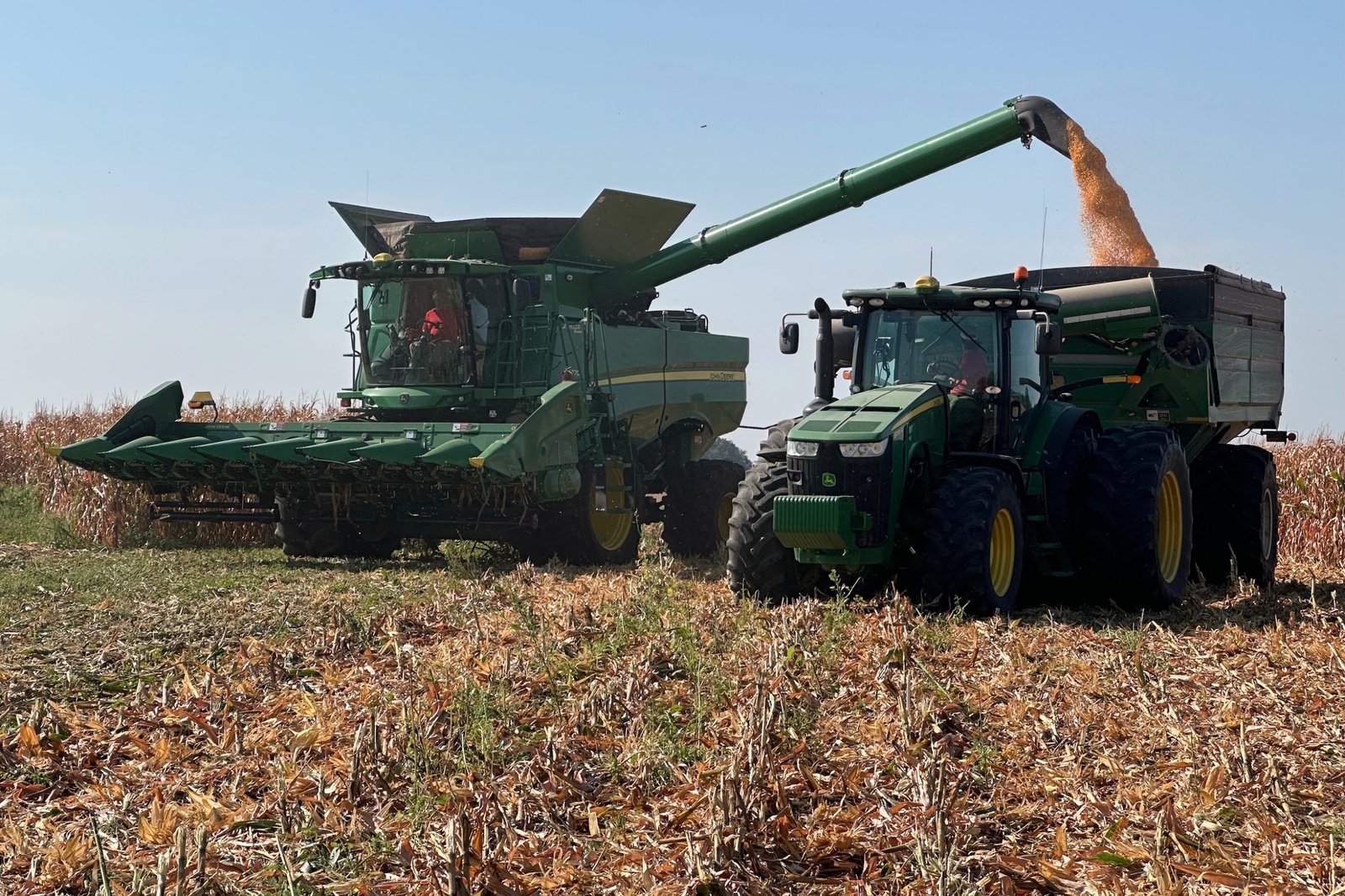
The cost of diesel has shaken farmers, especially in states like Minnesota and Iowa that are in the midst of their fall harvest.
So, Sen. Chuck Grassley, R-Iowa, and other farm state lawmakers have asked Trump to ban the export of diesel that’s produced in the United States.
The United States produces an average of 5.3 million barrels of diesel — a distillate made from crude oil — each day and exports about 30% of that production.
“I hope WH doesnt listen 2 Big Oil who claim diesel export ban wont work Big Oil doesnt need 2 charge sky-high diesel prices 4 Iowa farmers + truckers just filling up They shld cut price 4 US diesel & get the $$ frm other countries IF U CAN EMBARGO CHIPS U CAN EMBARGO DIESEL,” Grassley posted on X.
More broadly, consumers will pay for the cost of diesel fuel, which has risen more than 70% from a year ago to about $6.50 a gallon. That’s because most consumer goods are shipped on trucks and large ships that run on diesel.
The increased cost of shipping will eventually be added to the cost of goods, which include groceries. Some retailers, including Amazon, have already implemented fuel surcharges.
Trump, mindful of the probability of a hike in inflation before the midterm elections, said he’s considering a 90-day ban on imports.
That touched off a fierce debate in Congress, and even among officials in the Trump administration, as economists warned that a ban would be counterproductive.
The theory is that an export ban would result in more diesel fuel in the United States, lowering prices. But economists say the domestic oil industry is more likely to tamp down production in reaction to an export ban, to keep prices high, which would also push up the price of gasoline since both fuels are distilled from oil.
Meanwhile, most Democrats, including Sen. Amy Klobuchar and Rep. Angie Craig, D-2nd District, reject the idea of an export ban and favor another solution.
“The number one action the president should take to lower diesel and fuel costs is to end the war he unilaterally started with Iran,” Klobuchar said.
Craig also advocated the end of the war in Iran as the best way to lower prices at the pump.
Rep. Brad Finstad, R-1st District, did not include an export ban in the policies he supports to bring down the price of diesel fuel.
“While Democrats continue to oppose commonsense measures that would improve fuel affordability, Congressman Finstad supports a stronger pipeline network and has advocated for increased biodiesel demand and nationwide, year-round E15 — measures which would lower costs for hardworking families and give consumers more choice at the pump” said Finstad spokeswoman Jenny Lupke.
Rep. Tom Emmer, R-6th District, seemed to brush off concerns.
In a Fox Business interview this week, Emmer said the high cost of fuel is a “short-term” problem that would eventually “tumble down” when the Iran war ends. He also cited a meme from a Trump supporter that he received.
“$4 gas, $6 diesel not acceptable,” the meme said. “But it’s not gonna get me to vote for a communist.”
Dem’s ‘shadow hearing’
Since GOP leaders of the House and Senate have failed to investigate, congressional Democrats held a forum this week on the deaths of Renee Good and Alex Pretti and others who have died at the hands of federal immigration agents.
The hearing was not official since Democrats are not in control of Congress. But it provided a platform for the families of victims of the Trump administration’s hardline immigration policy.
It also allowed Democrats to contend that there will be no accountability for those deaths unless their party regains power in Congress.
“We are here today because nothing has changed at (U.S. Immigration and Customs Enforcement),” said Sen. Richard Blumenthal, D-Conn.
Among those who testified were Good’s mother and brother and a witness to the fatal shooting of Pretti on a Minneapolis street last winter.
Donna Ganger, Good’s mother, spoke of the frustration and hopelessness she’s felt since her daughter’s death. After Good’s death, the Justice Department and the FBI withheld evidence and refused to cooperate with state law enforcement officials investigating the shooting.
That has changed recently as the Justice Department has released a trove of evidence to the state, including the vehicle Good was shot in. There are also unconfirmed reports that the FBI has questioned a witness in Pretti’s death.
Still, a tearful Ganger said Congress should make sure justice is done.
“Members of Congress, we need your help” she pleaded.
Stella Carlson testified that she witnessed Pretti filming rough immigration enforcement action in her neighborhood and started filming herself.
“My instincts felt clear,” she said. “I will be his backup.”
Carlson said she saw several federal agents wrestle Pretti to the ground before he was shot and killed. She also said federal agents tossed Pretti’s lifeless body around “like a ragdoll.”
Under questioning by Sen. Tina Smith, D-Minn., Carlson said the effect of Operation Metro Surge lingers.
“Federal agents are still around,” Carlson said. “There’s still a lot of grief and a lot of guilt.”
Rep. Ilhan Omar, D-5th District, told those at the hearing that, as an immigrant, her image of the United States was “as the land of the free, the land of law.”
“You just never think that this country is going to be a country where its own government kills its own citizens and residents,” she said.
There have been at least 10 fatal shootings by ICE and Border Patrol agents across the nation since the second Trump administration took office, according to a review of public reports by The Guardian.
This week’s hearing was one of a dozen unofficial forums Democrats have held in Washington, D.C., and in states where shootings have occurred. The party hopes voter dissatisfaction with the Trump administration’s immigration policy, which rose after the killings of Good and Pretti, will give them a boost in November’s midterms.
In other news:
▪️Reporter Maddie Robinson discovered that, while Minnesota’s teen pregnancy rates have been falling, federal cuts to pregnancy prevention programs could set back years of progress on efforts to reduce racial and geographic disparities.
▪️ The state’s effort to comply with Trump administration mandates to audit “high risk” Medicaid programs for possible fraud has caused chaos and disruption in care for the state’s most vulnerable residents — the elderly and disabled and those in need of mental health services.
▪️Reporter Brian Arola wrote about how “blue” college towns in Greater Minnesota could impact local legislative races.
▪️And Forrest Peterson reported on how a citizens group is shaping cleanup efforts on the Minnesota River, one of the most polluted waterways in the country.
Please keep your comments, and any questions, coming. I’ll try my best to respond. You can reach me at aradelat@minnpost.com.
The post D.C. Memo: Duels over diesel fuel appeared first on MinnPost.
Leave a Reply