WASHINGTON – Returning from an August break, the U.S. House scrapped plans to work through September, with GOP leaders deciding instead to stay in session for another week and not return until mid-November after the midterm elections.
That means many GOP and President Donald Trump priorities — including more help for U.S. farmers battered by tariff policy, low commodity prices and increases in farm input costs by the closing of the Strait of Hormuz — will have to wait.
So will any consideration of the SAVE America Act, legislation that would mandate strict documentary proof of citizenship and photo identification for federal elections. Like the new farm subsidies, GOP leaders were hoping to include the voting provision in a reconciliation bill that would be shielded from a filibuster in the U.S. Senate.
But the House accomplished a few things in the few days it was in session this week.
The most important House action was approval of a continuing resolution, or CR, that has already passed the Senate and will stave off a federal shutdown Sept. 30 by funding the federal government until Dec. 11.
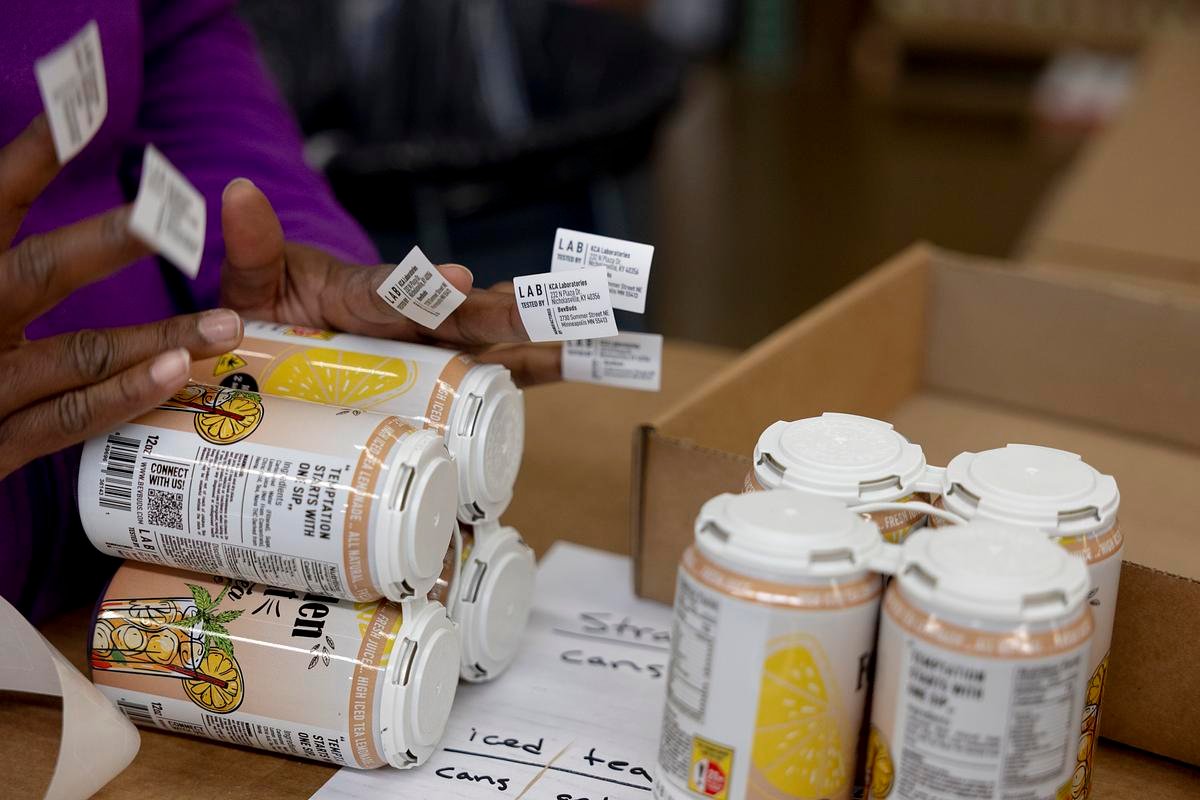
That spending bill pushes back by a month a federal ban on gummies, drinks and other products made from hemp-derived THC, the main active, mind-altering compound found in the cannabis plant. That delay was backed by Trump who promptly signed the CR into law.
Related: As hemp THC industry lobbies Congress for regulations, could Minnesota be a national model?
Producers of intoxicating hemp-based products hailed the delay, saying it gives them more time to find political support for federal regulation — instead of an outright ban — on drinks and edibles that have become a booming business in Minnesota.
“The hemp beverage industry looks forward to working with Congress to create a regulatory framework that protects public health, keeps products away from minors, and permanently removes the bad actors that sell untested, high-potency, copycat gummies and candies that target children,” said Christopher Lackner, president of the Hemp Beverage Alliance in a statement.
Lackner also urged Congress “to look at Minnesota, Louisiana, New Jersey, Kentucky, Georgia, and other hemp beverage states to see how regulation is the path to protect public health.”
The marijuana lobby, which seeks to have hemp-based intoxicating products considered on par with marijuana, which is outlawed by the federal government, said it would fight any attempt in Congress to keep hemp-based products legal under federal law. The 2018 farm bill allowed the growing of hemp and opened the door to the manufacturing of products from that plant.
“As expected, Congress passed the one-time extension of the farm bill loophole that the White House requested,” said Chris Lindsey, a lobbyist for the American Trade Association for Cannabis and Hemp (ATACH). “While we’re disappointed, our sights are set on December.”
Lindsey said that “loophole” in the last farm bill approved by Congress “empowers bad actors, threatens public health, and undermines state regulations.”
‘There will be chaos’
A whistleblower complaint forwarded by Sen. Richard Blumenthal, D-Conn., this week to the U.S. Postmaster said a rushed effort to comply with President Donald Trump’s new restrictions on mail-in voting would result in the disenfranchisement of thousands and even millions of voters.
The new regulations required the U.S. Postal Service to create a “Federal Ballot Mail Portal” that will serve as a database for voter information that could be used to reject ballots that appear invalid.
The whistleblower complaint said the USPS expected states to take back an entire batch of mail-in ballots, which could number thousands, to fix an issue with a single ballot.
“Should the slapdash Portal mistakenly mark a ballot as unverified, there is no clear process by which state election officials or voters themselves can challenge the rejection,” the whistleblower complaint said. “Voters intending to cast ballots by mail may not even be aware that their ballots have been rejected, or were part of a rejected batch, until it is too late to secure an alternative ballot or vote in person. “
Minnesota was one of 24 Democratic-led states suing to block implantation of the USPS’s new rule.
Related: Trump says mail-in ballots boost Democrats, but some of Minnesota’s reddest counties rely most on remote voting
“In some States, it would be impossible at this point to comply with the last-minute rollout of USPS’ novel ballot-verification program,” the lawsuit said. “In other States, there will be chaos.”
Minnesota Secretary of State Steve Simon said in a statement that “nothing had changed” in the state’s mail-in voting system and that voters receiving a ballot in their mailbox should fill them out and mail them in.
He said he is confident the legal challenge to the new USPS rule will prevail.
But he also called the USPS implementation of a new rule “to fundamentally change the way voting by mail works” within weeks of the start of mail-in balloting for a general election is “outrageous and unprecedented.”
Simon said his office is evaluating the new rule and making plans to work with local governments if the legal challenge fails and the new rule takes effect.
He also said the new rule “would require a massive surge in staffing by local election offices — requiring an untold number of new election officials to be hired and trained immediately.”
Critics of the involvement of the USPS in elections call Trump’s action an unconstitutional “power grab” since the U.S. Constitution grants states — not the federal government — primary responsibility to administer elections.
In other news:
▪️ State government reporter Matthew Blake wrote that an open state Senate seat in Maple Grove could give the DFL a chance to pick up a traditional “red” seat.
▪️ President Donald Trump’s derision of communities that oppose the construction of data centers as wanting to be “backwards and poor” has put some Minnesota Republicans in a tough spot. They are trying to finesse the situation as Americans of both parties increasingly oppose those facilities.
▪️ The full impact of the U.S.-Canada trade war has not hit Minnesota yet, and the Canadians have focused on “red” states in drawing up their countervailing tariffs on American goods. But the rift between Washington and Ottawa is likely to be an issue in the midterms in the state.
▪️ Metro reporter Trevor Mitchell found out why the establishment of new, much needed public restrooms are on hold.
The post D.C. Memo: U.S. House approves intoxicating hemp ban delay appeared first on MinnPost.
Leave a Reply