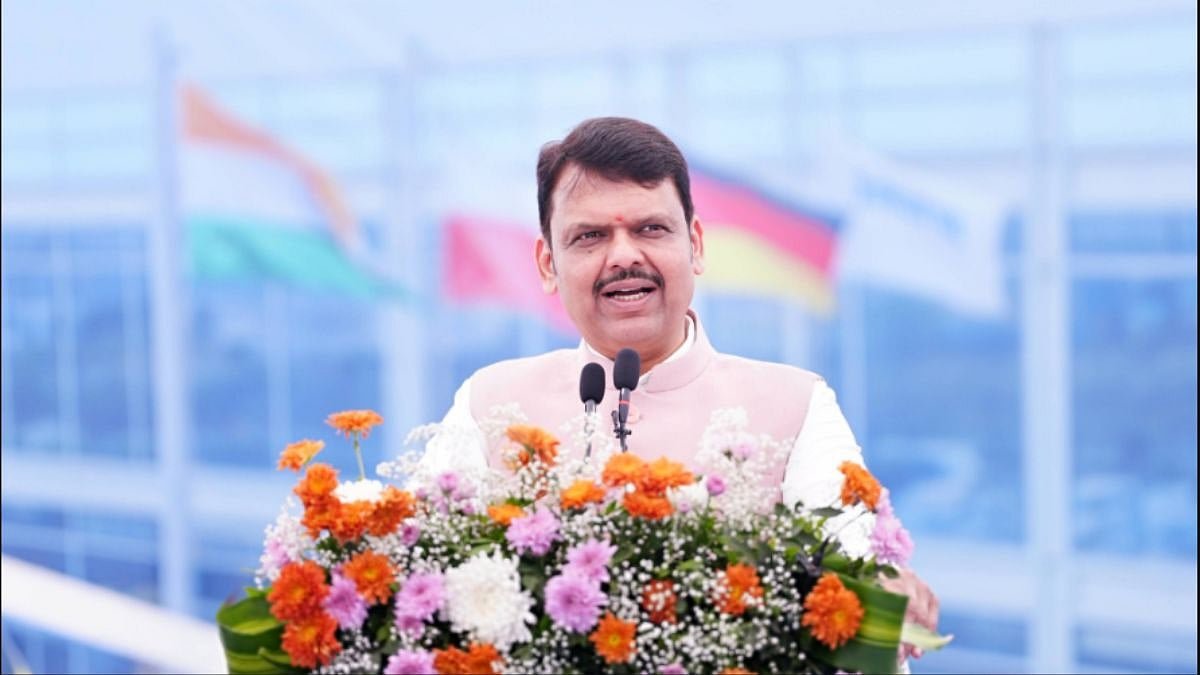
Highlighting the critical intersection of technology and food security, Maharashtra Chief Minister Devendra Fadnavis on Friday said that agriculture must serve as the cornerstone of the nation’s technological evolution. Speaking at the India AI Summit 2026, Fadnavis emphasised that the success of India’s digital journey depends on its ability to support the half a billion citizens who rely on farming.
“The India AI mission is about using technology to deliver inclusion, transparency and scale. Today, agriculture must sit at the heart of this mission,” Fadnavis said during a panel discussion focussed on scaling intelligence for food and climate resilience. He noted that while smallholders are currently burdened by fragmented information and rising costs, “Artificial intelligence changes this equation.”
Addressing global food system strains
Fadnavis framed the mission within a global context noting that food systems worldwide are currently under unprecedented pressure. He pointed to falling water tables, deteriorating soil health and fragile supply chains as primary drivers of instability. For the Global South, he argued, the sector is more than just a pillar of the economy, it is a matter of national security and social stability.
“Across the world, food systems are under strain. Climate volatility is intensifying. Water tables are falling. Soil health is deteriorating,” Fadnavis said. He credited the central government for recognising these stakes early on, stating that under Prime Minister Narendra Modi’s leadership, “India has placed digital public infrastructure and responsible AI at the centre.”
Predictive governance and farmer empowerment
The Maharashtra chief minister detailed how AI is already being transitioned from a theoretical concept to a tool of “predictive governance.” He cited Maharashtra’s success in delivering early warnings to cotton farmers, which significantly reduced financial risks. He also outlined plans for a statewide interoperable agriculture data exchange designed to ensure that data serves to empower farmers rather than exploit them.
“AI can provide hyperlocal weather predictions, early outbreak warnings, precision irrigation and fertiliser guidance, credit scoring based on crop intelligence, transparent traceable supply chains and real-time market advisories,” Fadnavis said. He stressed that traditional extension systems, regardless of their commitment simply cannot match the speed and scale required to tackle modern climate challenges.
Global collaboration and ethical standards
A key highlight of the address was the mention of the “Global Call for AI Use Cases in Agriculture,” an initiative launched in partnership with the World Bank and Wadhwani AI. This collaboration resulted in a comprehensive compendium of scalable AI solutions recently released in Delhi. Fadnavis stressed that as these technologies scale, they must be anchored in strong moral frameworks to maintain public trust.
“AI must be built on trusted data, ethical governance and public accountability,” he said. By integrating these values with cutting-edge tools, the government aims to transform Indian agriculture from a reactive sector into a predictive powerhouse, securing both the livelihoods of farmers and the nation’s food future.
Leave a Reply