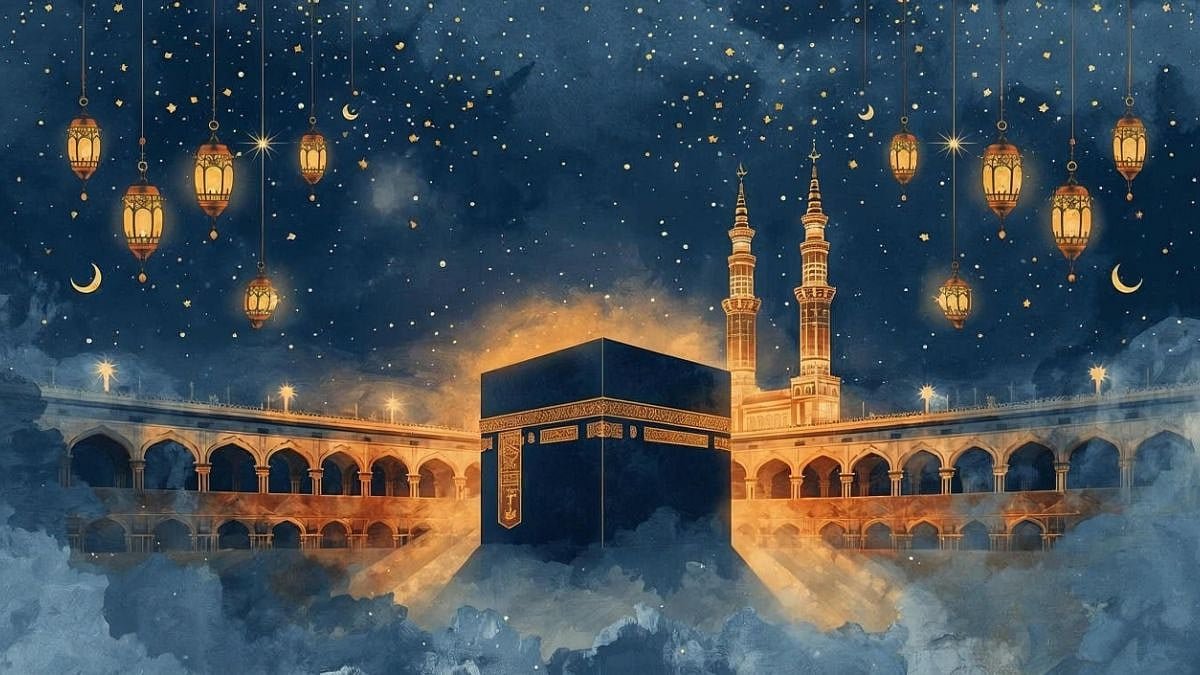
Ramadan, also known as Ramazan, is the sacred month in Islam that is observed in the ninth month of the Islamic calendar. In this spiritual month, devotees observe fast (Roza) and perform Umrah for the sake of the almighty Allah. Umrah is a voluntary Islamic pilgrimage to Mecca, Saudi Arabia. According to Islamic belief, performing Umrah during the month of Ramadan is considered highly sacred and auspicious.
Umrah in Ramadan
Umrah is often referred to as a lesser or minor pilgrimage. Umrah is the sacred journey that is performed by Muslims, and it involves pilgrims travelling to the city of Makkah, where the revered Kaaba is also spelled as al-Kaaba. It is a sacred stone building which is located at the center of Islam’s most important mosque and holiest site, the Masjid al-Haram in Mecca, Saudi Arabia. The sacred stone stands as the epic centre of Islamic faith. Every good deed performed in this holiest month is multiplied, and it is believed that performing Umrah in Ramadan is equal to performing Hajj.
Umrah rituals
Umrah is a Sunnah of the Prophet Muhammad, which consists of four essential rites that are performed to visit the Kaaba.
Key rites and steps of Umrah
Ihram: Pilgrims must cleanse themselves, and men should wear white, while women should avoid wearing bright, flashy, or attention-grabbing colors during Umrah.
Tawaf: Upon entering Masjid al-Haram, pilgrims should circle the Kaaba seven times in a counter-clockwise direction, starting from the Black Stone.
Sa’i: It is an essential ritual of Umrah, requiring pilgrims to walk or run seven times between the hills of Safa and Marwah in Mecca, covering about 3 km in total.
Halq: It is the last ritual performed by devotees in which men must shave their heads or cut their hair short, while women cut a small amount of their hair to complete their pilgrimage.
The history behind Umrah
Umrah’s history originates from 628-629 CE when Prophet Muhammad saw a dream that he performed Tawaf and Umrah, and that was the time when he and his followers aimed to perform Umrah, but they were stopped at Hudaybiyyah by the Qurayshites. After a 10-year peace treaty signed between Prophet Muhammad (representing Medina) and the Quraysh tribe of Mecca, during which there would be no hostilities, and the Muslims would be granted access to the holy site of the Ka’aba for three days per year. Complying with the terms of the treaty, in 6AH, Prophet Muhammad (peace be upon him), along with his companions, performed the first Umrah.
Leave a Reply