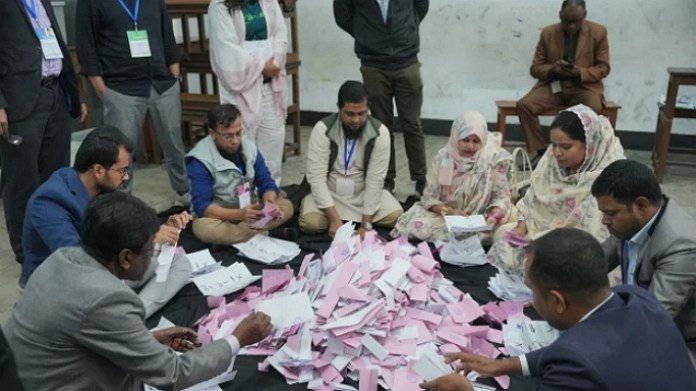
The voting for Bangladesh’s 13th national parliamentary election ended at 4.30 PM (Bangladesh time) today, and the counting of ballots started immediately after that. Early trends of the results have started to come, which indicate that the Bangladesh Nationalist Party (BNP) is surging ahead of others.
As expected, Bangladesh Jamaat-e-Islami is showing a good performance, but lags behind BNP. On the other hand, the newly formed National Citizen Party (NCP) born out of the 2024 student-led uprising, has yet to register any significant gains. If the current trends continue, BNP will form a government with a comfortable majority deafening Jamaat-led 11-party alliance.
Voting concluded peacefully on Thursday after a high turnout at many polling stations, marking the first general election since the student-led protests that ousted longtime Prime Minister Sheikh Hasina in 2024. The contest primarily pits the BNP, led by former PM Khaleda Zia’s son Tarique Rahman, against a Jamaat-e-Islami-headed 11-party alliance that includes the NCP.
According to current trends reported by Somoy TV, the BNP is leading in 50 seats, while the Jamaat-led 11-party alliance is leading in 18 seats. While numbers vary in different news outlets, all of them show a massive lead by the BNP.
Notably, voting was held in 299 constituencies, as one seat’s voting was postponed due to a candidate’s death.
BNP spokesperson Mahdi Amin said that the party is heading toward a landslide victory in the election. Bangladesh Jamaat-e-Islami Ameer Shafiqur Rahman said his party would accept the results of the election.
This year’s counting may take longer compared to earlier elections, as there were two elections simultaneously. Apart from the parliamentary vote, a national referendum on constitutional reforms was also held, requiring voters to cast two separate ballots. A white coloured ballot was used for electing members of parliament (Jatiya Sangsad) from single-member constituencies.
And a separate pink ballot was used for the referendum on the July National Charter (or July Charter reforms), which proposes sweeping changes to the constitutional framework of the country. As per current trends, the referendum is getting more yes votes, which means its acceptance by the voters.
The major reforms include limiting the term for the prime minister to 10 years, a bicameral parliament with the introduction of a 100-member upper house, enhanced judicial independence, a neutral caretaker government for future elections, and other institutional reforms aimed at preventing authoritarian rule.
Voters needed to select either yes or no on the Pink ballot. If the “Yes” vote prevails, the newly elected Parliament will function as a Constitutional Reform Council for its initial 180 working days to integrate the charter’s proposals into the Constitution. A “No” vote will mean that rejection of the July National Charter by the voters, and the parliament will not be bound to implement the proposed reforms.
Notably, the referendum has a total of 84 points, and there is only a single yes or no vote for it, voters can’t choose individual items separately.
Election officials have noted that counting both sets of ballots will likely delay the announcement of comprehensive results. While current trends are very early, definitive trends should appear by early morning, and full official outcomes for both the 299 parliamentary seats and the referendum are expected by Friday evening or later.
Leave a Reply