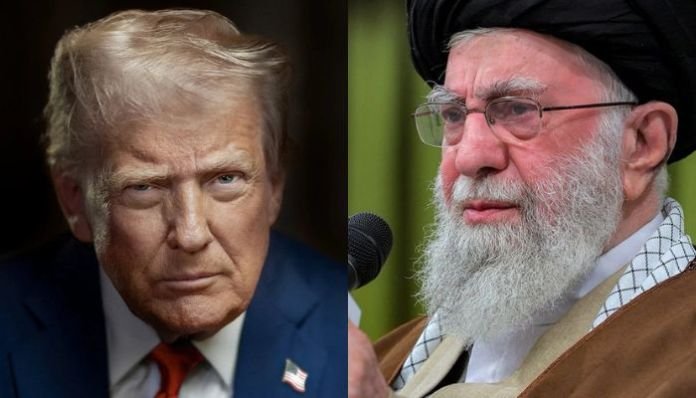
US President Donald Trump on Wednesday (4th February), sent a clear warning to Iran’s leadership, saying Supreme Leader Ali Khamenei “should be very worried.”
Speaking to NBC News, Trump said Iran is currently in talks with the United States. His comments came at a time when US military forces are stepping up their presence in the region.
Nuclear talks set for Friday in Oman
After confusion earlier in the day, both Washington and Tehran later confirmed that nuclear talks will go ahead on Friday morning in Muscat, Oman. Iran’s Foreign Minister Abbas Araghchi said the meeting will begin around 10 a.m. A White House official also confirmed the schedule.
Iran and U.S. agree to hold nuclear talks Friday in Oman as Trump delivers blunt warning to Khamenei https://t.co/d7k76FjuP7
— CTV News (@CTVNews) February 5, 2026
The talks were first expected to be held in Turkey, but Iran pushed for Oman as the venue and asked that regional countries stay out of the discussions.
Big gaps over what to discuss
While the meeting is back on track, the gap between the two sides remains wide. Iran has made it clear that it only wants to talk about its nuclear program. US Secretary of State Marco Rubio, however, said any deal must go further. According to Rubio, meaningful talks should also include Iran’s ballistic missile program, its support for regional militant groups, and how it treats its own people.
Rubio added that the US is open to talks but is not ready to limit discussions to just one issue. He also said White House Middle East envoy Steve Witkoff is ready to take part in the meeting.
Rising tension in the region
The renewed diplomacy comes at a tense moment. US military activity in the region has increased, and earlier this week, a US jet shot down an Iranian drone that came close to the aircraft carrier Abraham Lincoln in the Arabian Sea. The incident pushed oil prices higher and added to fears of a wider conflict.
Tensions have also grown after Iran’s recent crackdown on protests at home, which left thousands dead. These events have made the atmosphere around the talks even more fragile.
Missiles remain a red line for Iran
Iran has repeatedly said its missile program will never be part of negotiations. Araghchi has underlined that his mandate is limited to the nuclear deal, a position backed by Iran’s President Masoud Pezeshkian. Tehran has also restricted access for international inspectors at some nuclear sites following US and Israeli airstrikes earlier this year.
High stakes for both sides
Iran is under pressure from Western sanctions that have hurt its economy and fueled unrest, while Trump has warned that serious consequences could follow if no deal is reached. As officials meet in Muscat, both sides appear cautious and firm on their red lines, with the outcome likely to shape not just the nuclear issue, but stability across the region.
Leave a Reply