










Delhi-NCR AQI update: Delhi air quality turns hazardous after Diwali, Punjabi Bagh records AQI at 999, Narayana at 611; Check full list
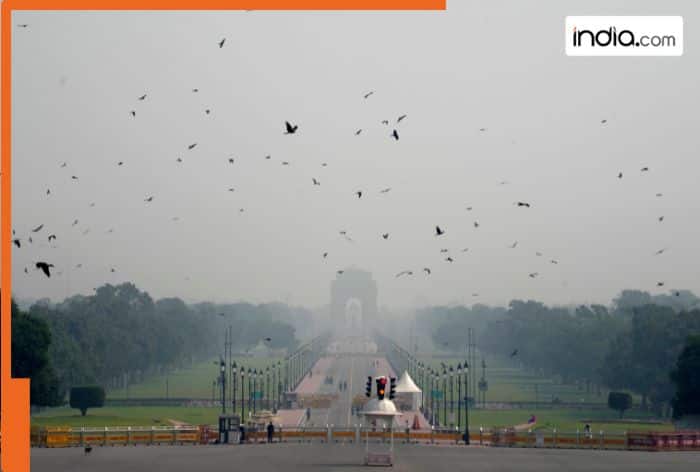
On the morning after Diwali, Delhi woke up to a thick, heavy haze. Many areas of the city recorded very high pollution levels. As per the Central Pollution Control Board (CPCB) and its SAMEER app, the Air Quality Index (AQI) in Punjabi Bagh touched 999, Narayana recorded 611, Rohini and Anand Vihar were at 500, Central Delhi was around 409, and Noida reached 392.
The CPCB categorises AQI between 0 and 50 as ‘good’, 51 and 100 ‘satisfactory’, 101 and 200 ‘moderate’, 201 and 300 ‘poor’, 301 and 400 ‘very poor’, and 401 and 500 ‘severe’.
On Monday afternoon, air quality data from 31 monitoring stations in Delhi showed “very poor” readings, while three locations had “severe” levels.
According to the Decision Support System (DSS), transport vehicles caused about 15.6 per cent of Delhi’s pollution on Monday, while industries and other local sources together made up about 23.3 per cent.

Because of the worsening air, the Commission for Air Quality Management (CAQM) enforced Stage II of the Graded Response Action Plan (GRAP) across Delhi-NCR. These are emergency steps taken to control pollution, such as stopping construction dust, restricting diesel generators, and increasing road cleaning. If the air quality turns “severe,” authorities may move to Stage III, which brings even tougher rules.
Earlier this month, on October 15, the Supreme Court allowed the use of green firecrackers in Delhi-NCR, but only for limited hours i.e. between 6 am and 7 pm, and again from 8 pm to 10 pm on Diwali eve and the festival day.


