










The Chetak, based on the French Aérospatiale Alouette-III, entered service in 1962
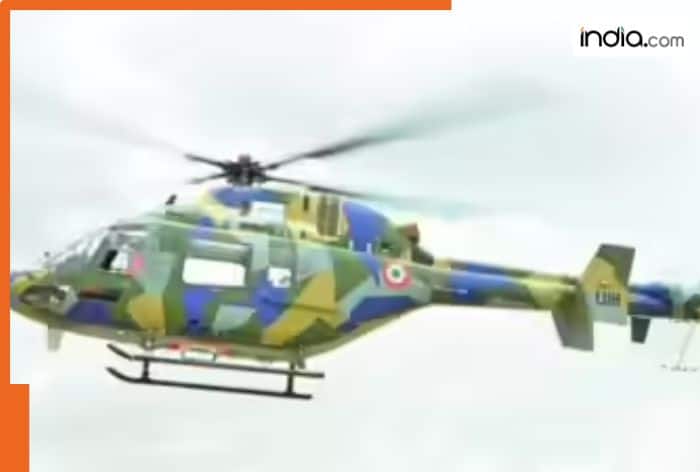
The Indian Ministry of Defence has initiated a critical procurement process for 200 new light helicopters, a move that not only aims to replace its dangerously old fleets but also signals a fundamental shift in its acquisition strategy. By opening the door to global competition for a project mandated to be built in India, the ministry is indicating that the era of relying on a single domestic source, like Hindustan Aeronautics Limited (HAL), is evolving to meet urgent and large-scale demands.
A Requirement Far Beyond 200 Helicopters
While the immediate Request for Information (RFI) is for 200 aircraft—120 for the Army’s aviation unit and 80 for the Air Force—this is only the beginning. The provided text clarifies that together, the Army and Air Force have a total requirement for more than 450 light helicopters, with the Army alone needing approximately 250.
This larger number reframes the entire process. The current tender is not a complete fleet replacement but a significant first step in a much larger re-equipment effort. The urgency is underscored by the state of the current fleet. Of the 246 Cheetah and Chetak helicopters ever built, the Indian Army Aviation Corps now operates about 190, with around 30 currently under maintenance, highlighting the operational strain of keeping these vintage machines airworthy.
The Legacy Fleet: 60 Years of Service and Rising Concerns
The push for replacement is driven by the extreme age of the current helicopters. The Chetak, based on the French Aérospatiale Alouette-III, entered service in 1962. Its counterpart, the single-engine Cheetah, derived from the French Aérospatiale SA 315B Lama, joined the force in 1976.
Having been in service for close to 60 years, calls to retire these assets have grown louder, particularly due to a spate of accidents in recent years, some of which were fatal. Their replacement is a matter of both operational capability and personnel safety.
A Modern Mandate with Built-in Flexibility
The ministry has laid out clear, demanding requirements for the new aircraft, which must be able to perform a variety of roles day and night:
- Reconnaissance and surveillance
- Transporting small teams for special missions
- Moving supplies internally or via underslung loads
- Working in tandem with attack helicopters to find and track targets
Reflecting the realities of India’s operational terrain, the RFI places special emphasis on performance in extreme conditions, from hot deserts to the icy altitudes of the Siachen glacier. It demands specific load-carrying capacities for operations above 16,000 feet. Interestingly, the ministry is not limiting its options, stating it is open to both single-engine and twin-engine models. This is significant, as the forces currently use the single-engine Cheetah and Chetak as well as the twin-engine Advanced Light Helicopter (ALH) in these mountainous regions.
Critically, the RFI mandates that the helicopters must be built in India, allowing helicopter makers to team up with an Indian company, which could be HAL or another private entity.
HAL: The Incumbent Contender Facing New Realities
Hindustan Aeronautics Limited (HAL) is undeniably a primary contender. It began producing the Chetak under license in 1965 and is the developer of the indigenous Light Utility Helicopter (LUH). The Army already has a separate plan to buy 80 LUHs from HAL.
However, the very existence of this new, large-scale global RFI points to challenges. The text explicitly notes that deliveries of the LUH are delayed due to technical problems with its autopilot system, despite the helicopter passing high-altitude tests in 2020 and receiving its Initial Operational Clearance in 2021.
The combination of the massive total need (450+ helicopters), the existing delays in the domestic LUH project, and the government’s decision to launch a competitive global tender suggests a clear conclusion: the reliance on a single-source supplier is diminishing. The government cannot afford to wait for a single production line to meet this vast requirement. This RFI forces the issue, compelling HAL to improve its productivity and resolve technical issues swiftly if it wants to secure a major role in this project, while also opening the door for other Indian companies to partner with global OEMs to establish parallel production lines. The path forward is competition, collaboration, and faster delivery.
—E.O.M
(Girish Linganna is an award-winning science communicator and a Defence, Aerospace & Geopolitical Analyst. He is the Managing Director of ADD Engineering Components India Pvt. Ltd., a subsidiary of ADD Engineering GmbH, Germany. Contact: girishlinganna@gmail.com )
Topics


