










The Ganga Expressway is being constructed as a six-lane highway, which can be expanded to eight lanes in the future.
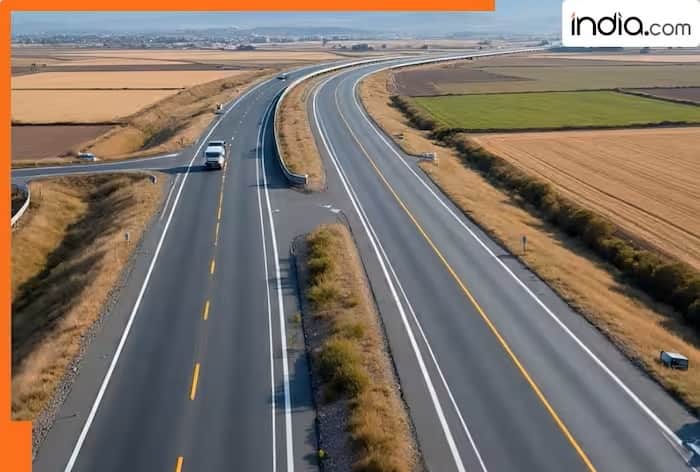
New Delhi: Uttar Pradesh, one of the largest states in India, has been facing a major problem for a long time: inadequate road connectivity between the western and eastern parts of the state. To bridge this gap, the Uttar Pradesh government will soon inaugurate the Ganga Expressway. This expressway will not only reduce the distance but will also save time, money, and resources.
About The Ganga Expressway
The Ganga Expressway will provide a direct and fast route from the west to the east of the state. Once operational, the journey from Meerut to Prayagraj will be completed in half the time, and the landscape of several districts in the state will be transformed. The Ganga Expressway is a greenfield expressway, meaning it is being built from scratch.
This expressway will be 594 km long, starting from Bijoli village in Meerut district and ending at Judapur Dandu village in Prayagraj district. The entire project is being developed by the Uttar Pradesh Expressways Industrial Development Authority (UPEIDA).
The Ganga Expressway is expected to be functional by early 2026. After this, the journey from Meerut to Prayagraj, which currently takes about 12 hours, will take just 6 to 7 hours.

Which Districts Will The Ganga Expressway Cover?
The Ganga Expressway will pass through 12 districts of Uttar Pradesh. These include Meerut, Hapur, Bulandshahr, and Amroha in western Uttar Pradesh, and Sambhal, Badaun, Shahjahanpur, Hardoi, Unnao, Raebareli, Pratapgarh, and Prayagraj in central and eastern Uttar Pradesh. The expressway will pass through approximately 518 villages. This will directly benefit rural areas, which have so far lacked adequate road connectivity. Farmers will be able to transport their crops to markets more quickly, and new employment opportunities will be created in villages.
Design And Technical Features Of The Ganga Expressway
The Ganga Expressway is being constructed as a six-lane highway, which can be expanded to eight lanes in the future. The maximum speed limit on this expressway is 120 km per hour. This means that people will be able to travel safely and quickly. The project is based on the Design, Build, Finance, Operate, and Transfer (DBFOT) model, meaning that the responsibility for design, construction, financing, operation, and subsequent transfer will be under a single entity. This model is adopted for large infrastructure projects worldwide.
The foundation stone of the Ganga Expressway was laid by Prime Minister Narendra Modi on December 18, 2021.
Facilities And Features Of The Ganga Expressway
- There will be two main toll plazas on the Ganga Expressway.
- 15 ramp toll plazas will be built on the expressway.
- There will be nine service centers for the convenience of travelers.
- Food, restrooms, and rest areas will be available.
- A 960-meter-long bridge will be built over the Ganga River.
- A 720-meter-long bridge will be built over the Ramganga River.
- 18 flyovers and eight road overbridges will also be constructed.


