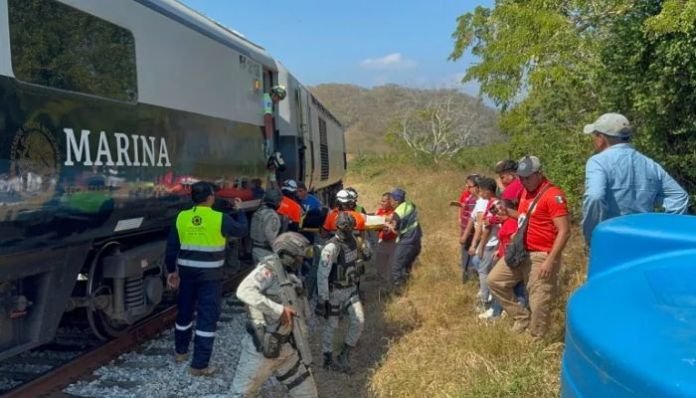
At least 13 people lost their lives, and around 100 others were injured after a passenger train derailed in Mexico’s south-western state of Oaxaca. The accident happened on Sunday, 28th December, near the town of Nizanda when the train went off the tracks while taking a sharp turn. According to the Mexican navy, which runs the country’s railway network, the train was carrying 241 passengers and nine crew members.
Interoceanic Train derails in southern Mexico, killing at least 13 and injuring dozens https://t.co/ADBxh6Z4mz pic.twitter.com/pd3kq992Eu
— New York Post (@nypost) December 29, 2025
Many injured, several in serious condition
Officials said that 98 people were injured in the crash, and 36 of them are being treated in hospitals. Mexican President Claudia Sheinbaum confirmed that five of the injured are in critical condition. She also mentioned that senior government officials, including the Secretary of the Navy, were en route to the accident site to oversee rescue and relief efforts.
Pictures from the scene showed rescue teams helping passengers get out of the tilted train, which had partly slipped down a cliff. Emergency workers and local volunteers joined forces to move the injured to safety and provide first aid.
13 people DEAD as train derails in Asunción Ixtaltepec, Mexico
The Mexican Interoceanic Train had only been running since 2023
98 people injured in accident pic.twitter.com/tzZfFZzHOG
— RT (@RT_com) December 29, 2025
Oaxaca’s Governor, Salomón Jara Cruz, expressed his deep regret over the tragedy and stated that state and federal agencies were collaborating to support the victims and their families.
The train was part of Mexico’s Interoceanic Railway project, which connects the Pacific port city of Salina Cruz with Coatzacoalcos on the Gulf of Mexico. This major rail link was inaugurated two years ago to boost trade and industry in southern Mexico.
The project, launched under former president Andrés Manuel López Obrador, aims to build a strong economic corridor across the Isthmus of Tehuantepec by improving transportation, ports, and industrial infrastructure. It is also part of Mexico’s broader plan to expand passenger and freight train services in the southern region.
Leave a Reply