Category: Uncategorized

  • Intel chief says the company is going to make GPUs at scale

    Intel chief says the company is going to make GPUs at scale

    After years of struggling, retreating, and re-emerging, Intel is once again entering the GPU market. The company plans to build GPUs at scale, a clear signal that it wants a serious seat at the tablet ruled by Nvidia and AMD.

    Intel’s CEO, Lip-Bu Tan, said that the company has hired a new chief architect to build graphics cards. “I just hired the chief GPU architect, and he’s very good,” Tan mentioned in a statement quoted by Reuters.

    Why Intel can’t afford to ignore GPUs anymore

    GPUs are no longer optional in the AI-driven industry, even for the most prominent players in the CPU industry.

    Whether it is to enhance a computer or laptop’s video editing or gaming capabilities or to build a massive AI data processing center, GPUs are the building blocks of the modern computing stack.

    Intel seems to have understood it the hard way. For the last few years, the company has struggled with manufacturing delays, lost a significant market share to AMD, and missed key AI opportunities.

    A serious GPU push could help the company restore relevance beyond CPUs.

    The company’s renewed GPU push is primarily enterprise-focused, a market where Nvidia currently enjoys near-unchecked dominance.

    An enterprise-focused GPU roadmap

    Consumer-grade GPUs might exist under the Arc brand, but they might not be the headline act, unless the company decides to revamp the Arc lineup.

    Even though Intel’s efforts seem to be in the right direction, it appears the company is a tad too late in recognizing the importance of GPUs and in creating a lineup that’s attractive to enterprises around the world.

    It might be a while before the company has models on offer, while the existing giants will continue to innovate and reap profits.

    Even though the company hasn’t announced any launch dates, development is underway, with early platforms expected over the next few years.

    Anyways, it’s clear that the company wants to be a full-stack silicon provider again. For now, it’s good to see the company committing to, not experimenting with, GPUs.
  • Waiting for memory prices to drop? Intel CEO says the shortage isn’t easing anytime soon

    Waiting for memory prices to drop? Intel CEO says the shortage isn’t easing anytime soon

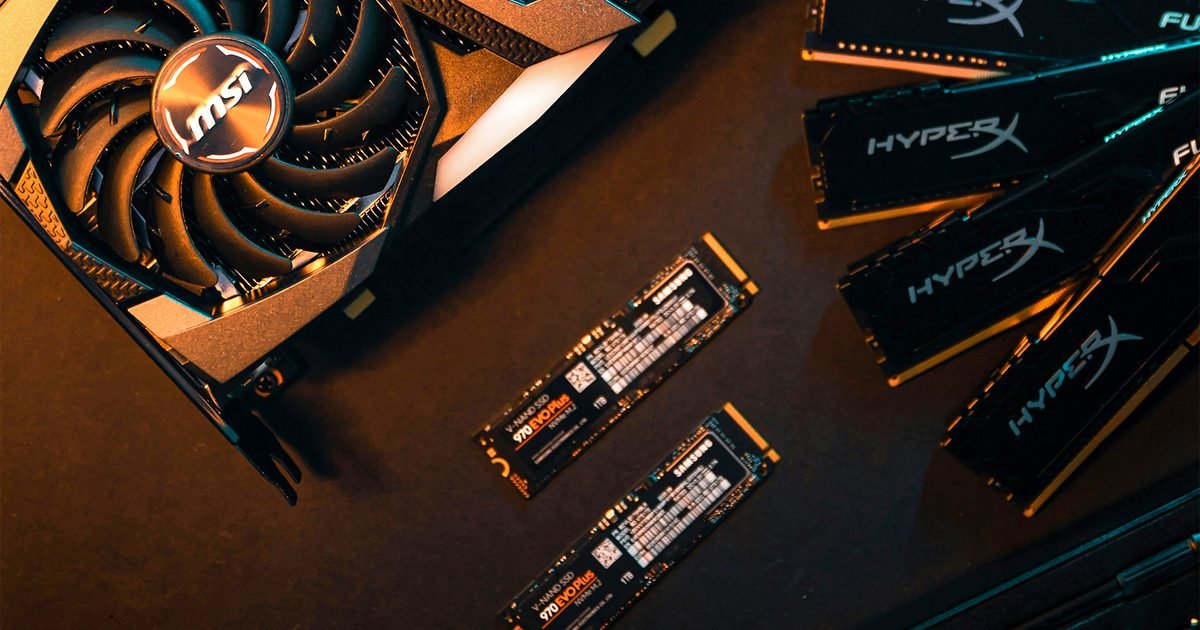
    If you’ve been waiting for the global memory shortage to ease anytime this year and hardware prices to drop, Intel CEO Lip-Bu Tan has some bad news. Speaking at a recent Cisco Systems conference, Tan said the crunch will likely last at least two more years.

    According to Bloomberg, Tan cited information from two key players in the memory space who reportedly told him, “There’s no relief until 2028.” The timeline aligns with recent comments from Micron’s Christopher Moore, VP of Marketing for its Mobile and Client Business Unit, who said tight supply conditions are likely to linger for the foreseeable future.

    The prolonged shortage is being driven largely by the explosive growth of AI infrastructure, which is soaking up memory at an unprecedented scale. With memory manufacturers increasingly focused on serving data centers and AI workloads, supply for consumer devices is being squeezed. For buyers, that could mean paying more for laptops, phones, PC components, and even TVs.

    AI demand could keep your next hardware upgrade expensive

    Nvidia’s next wave of AI hardware could make the situation even worse. According to Tan, the company’s latest Rubin platform will drive demand even higher. AI is going to “suck up a lot of memory,” Tan said, which could further tighten supply for consumer electronics.

    For consumers, this means the pressure on hardware pricing is unlikely to ease anytime soon. Devices may continue to ship with higher price tags or more modest memory configurations unless memory supply expands significantly or demand from AI infrastructure slows. Until then, buyers may need to plan upgrades carefully or hold onto existing hardware longer than usual.

  • AMD chief hints a new Xbox console might land in 2027

    AMD chief hints a new Xbox console might land in 2027

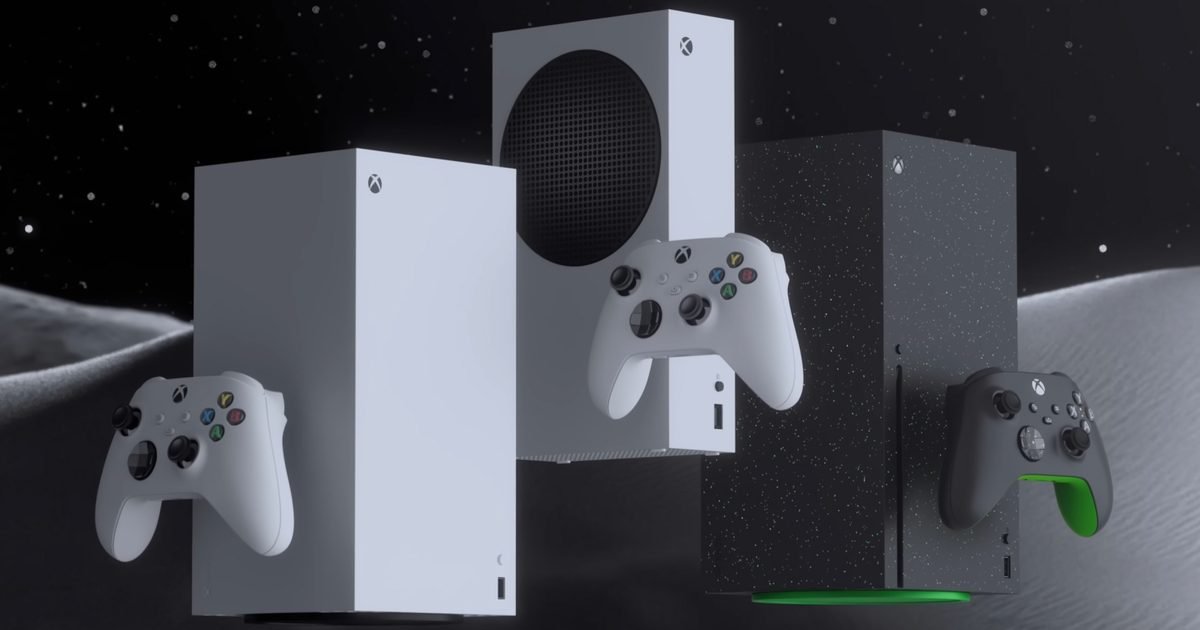
    Pouring cold water on Microsoft’s announcement about its next-generation Xbox, AMD’s CEO, Lisa Su, has hinted at the console’s expected launch timeline at the company’s latest earnings call.

    Su has clearly stated that the next-generation Xbox “is progressing well” to launch in 2027. The top executive also talked about an “AMD semi-custom SoC,” which could debut alongside the next-generation Xbox.

    AMD chief hints next-gen Xbox could arrive in 2027

    “From a product standpoint, Valve is on track to begin shipping its AMD-powered Steam Machine early this year,” says Su.

    From what it looks like, AMD’s semi-custom SoC division is working on chips for three different consoles: the Valve Steam Machine, next-generation Xbox, and Sony’s PlayStation 6.

    The Xbox 2027 (that’s not its official name) could come with a new semi-custom chip based on AMD’s RDNA 5 architecture, offering massive performance and efficiency gains rather than an incremental upgrade.

    The new chip could make 4K gaming at 120 fps the new norm, with advanced ray tracing (potentially even full path tracing) for dramatically improving lighting and realism, and benefit from FSR Redstone, AMD’s most advanced 4K upscaling technology to date.

    I’m not even talking about faster loading times and a more responsive UI.

    What’s likely changing under the hood

    For those catching up, AMD’s FSR Redstone technology could allow the console to render games at a lower resolution (saving power) and then reconstruct a sharper, more detailed 4K version in real time.

    The approach could allow developers to focus on richer world complexity and physics, letting AI do the job of upscaling the visuals.

    Altogether, the next-generation Xbox won’t only be faster and more capable than the Xbox Series X/S, but it should be smarter, smoother, and far more future-proof than today’s consoles.

    For now, you should rest assured that the development of the next-gen Xbox console is on track, and you might get your hands on it in 2027.

    However, the ongoing memory crisis, rising component costs, and the substantial hardware upgrade could make the console a pricey affair for early adopters.

  • Your wait for Nvidia’s ARM-based laptops may be longer than expected

    Your wait for Nvidia’s ARM-based laptops may be longer than expected

    Laptops featuring Nvidia‘s ARM-based chips are a long time coming. Rumors about the devices have been circulating for well over a year, and a recent report suggested that the first machines could arrive as early as Q1 2026. However, a fresh leak indicates the wait may stretch longer than expected.

    The scoop from leaker Moore’s Law is Dead (via Notebookcheck) suggests the delay stems from unresolved software and compatibility issues affecting Nvidia’s chips. The situation is reportedly being further complicated by Microsoft’s slow progress in ensuring the Nvidia N1X platform works smoothly with Windows.

    As a result, the launch window for Nvidia’s first ARM-powered laptops appears to be slipping beyond Q1 2026. Current speculation points to a Q2 or summer 2026 debut, with N1X-powered models potentially delayed until August.

    Several manufacturers, including Dell and Lenovo, are prepping Nvidia N1X- and N1V-powered laptops, which have surfaced in various leaks over recent months. However, none of these devices have officially been announced so far, reinforcing the idea that the platform may not be ready for primetime.

    Compatibility remains the biggest hurdle for Windows on ARM

    The delay underscores broader challenges facing Windows on ARM. While recent Snapdragon-based laptops have shown clear improvements in performance and efficiency, software optimization and driver support remain ongoing hurdles. Nvidia’s entry into the space was expected to help accelerate adoption, but unresolved platform-level issues appear to be slowing progress.

    For Nvidia, the N1X is a key part of its push beyond GPUs. As such, a delayed launch is likely better than shipping bug-ridden products, especially since early impressions could shape how buyers view Nvidia’s new ARM chips.

    The lack of an official timeline makes it difficult to say when these devices will actually reach the market. Until Nvidia or its partners make a formal announcement, the information revealed in the leak should be taken with a grain of salt, as plans could still shift if software issues are addressed.

  • Galaxy Buds 4 Pro, Samsung’s answer to the AirPods Pro, look just like the AirPods Pro

    Galaxy Buds 4 Pro, Samsung’s answer to the AirPods Pro, look just like the AirPods Pro

    Samsung’s wearable design division seems to have decided that subtlety is overrated and that functionality is what they’ll focus on for the next iteration of their flagship earbuds. But in doing so, the Galaxy Buds 4 and the Galaxy Buds 4 Pro might look awfully similar to their biggest competitors: Apple’s AirPods.

    Fresh renders of Samsung’s upcoming TWS earbuds (via Android Headlines) are giving AirPods users a brief moment of déjà vu. Both the Galaxy Buds 4 (black) and Buds 4 Pro (white) have a very familiar design.

    A new yet familiar design language

    I’m talking about a long stem that hangs outside the ear, housing the charging points on the inner side and microphones at the bottom, a bulbous driver and chip housing, and the open earbud design on the Buds 4 or the silicon eartips on the Buds 4 Pro (for better noise isolation); all of these are very familiar design cues.

    There are a couple of Samsung-specific twists as well. For instance, both the Buds 4 earbuds rest horizontally inside their charging case, giving the case a wider, flatter layout. Furthermore, the cases feature what looks like a frosted, translucent lid, something that Apple won’t dare to try.

    Positioning against Apple’s Pro lineup

    Compared to the Galaxy Buds 3 and the Galaxy Buds 3 Pro, the Buds 4 series is a dramatic visual pivot.

    Clearly, the regular Galaxy Buds 4 are designed (and should be positioned) to compete with the AirPods 4, while the Galaxy Buds 4 Pro should take on the AirPods Pro 3, which offers the best-in-class noise cancellation.

    Anyway, Samsung’s next-generation flagship earbuds should debut alongside the Galaxy S26 series at the rumored Galaxy Unpacked event on February 25, 2026.

  • While NASA’s lunar dreams wait, another crew eyes orbit

    While NASA’s lunar dreams wait, another crew eyes orbit

    NASA’s first crewed lunar mission in more than 50 years won’t be getting underway this month after all.

    It had been targeting February 6 for the launch of the much-anticipated Artemis II mission that will take four astronauts on a flight around the moon, but after issues surfaced during a critical preflight test on Tuesday, NASA decided that it won’t launch the SLS rocket until March at the earliest.

    During the so-called “wet dress rehearsal” in which engineers fuel the rocket and go through the entire launch procedure without actually igniting the engines, a hydrogen leak was detected at the base of the SLS rocket.

    The upcoming launch window runs from February 6 through 11, but NASA has decided it needs more time to review the situation, with a second rehearsal also likely. That’s meant pushing the launch date to March 6 at the earliest.

    “With more than three years between SLS launches, we fully anticipated encountering challenges,” NASA chief Jared Isaacman wrote in a post on X on Tuesday. “That is precisely why we conduct a wet dress rehearsal. These tests are designed to surface issues before flight and set up launch day with the highest probability of success.”

    The schedule update means that the Artemis II astronauts — NASA’s Victor Glover, Reid Wiseman, and Christina Koch, together with the Canadian Space Agency’s Jeremy Hansen — will have a bit of extra time on terra firma before they blast to space.

    It also means that another set of astronauts should be heading to orbit ahead of their lunar-bound colleagues. SpaceX’s Crew-12 — comprising NASA astronauts Jessica Meir and Jack Hathaway, along with the European Space Agency’s Sophie Adenot and Roscosmos cosmonaut Andrey Fedyaev — could be heading to the International Space Station as early as February 11.

    At least, that had been the plan until Monday, when SpaceX said it was grounding its workhorse Falcon 9 rocket — the same vehicle type that will be carrying Crew-12 to orbit — after an issue occurred during a launch earlier that day when its upper stage failed to perform a deorbit burn as expected.

    “Teams are reviewing data to determine root cause and corrective actions before returning to flight,” the company said in a post on X.

    It’s unusual for the Falcon 9 to experience anomalies these days, so hopefully SpaceX can sort it out soon, paving the way for Crew-12’s ride to orbit next week as originally planned.

  • Xcode’s new AI agents don’t just suggest code, they get things done for you

    Xcode’s new AI agents don’t just suggest code, they get things done for you

    Apple has quietly turned Xcode, its venerable app-building machine, into an AI-driven software that can now harness agentic coding. Last year, the Cupertino giant added basic AI-based features, such as code completion and suggestions to Xcode 26, but the new update changes everything.

    Xcode 26.3 includes powerful AI agents such as Anthropic’s Claude and OpenAI’s Codex, both of which can analyze your current project, update settings, search for relevant information, run tests, and interact with previews, all via text-based commands.

    Apple’s Xcode now has direct integration with the Claude Agent SDK, giving developers the full functionality of Claude Code for building on Apple platforms, from iPhone to Mac to Apple Vision Pro.

    Read more: https://t.co/fyZ10bhkN3

    — Anthropic (@AnthropicAI) February 3, 2026

    What does agentic coding actually do?

    In simpler terms, the app’s AI won’t just assist coders and developers; it will also help them automate tasks. It works by reading the entire program, understanding what it does and how it performs specific tasks, and then turning your text-based commands into relevant changes or additions.

    But what exactly does agentic coding solve? For developers, Xcode 26.3 solves the never-ending problem of writing similar code across projects and helps debug errors by navigating hundreds of lines of code.

    The idea isn’t to replace programmers, but to help them outsource the boring and tedious parts of their job to AI (debugging, rebuilding, adding specific functions, redesigning a piece of code, etc.), while they can work on exploring creative ideas, managing their schedule, or taking some time off.

    Codex is now available in Xcode 26.3

    Work through complex tasks with more autonomy by breaking down tasks, searching Apple docs, exploring file structures, updating settings, and capturing Previews as you iterate

    Available in the Xcode 26.3 release candidate pic.twitter.com/uwwVkHx5Pq

    — OpenAI Developers (@OpenAIDevs) February 3, 2026

    Apple’s open-ended AI strategy

    What’s even more unique is Apple’s approach toward integrating AI into Xcode. It uses an open Model Context Protocol (MCP), allowing developers to plug in other compatible agents for greater flexibility.

    For now, Apple Xcode 26.3 with agentic coding is available as a release candidate; it’s only available for registered members of the Apple Developer Program (via the developer site). However, a full public release on the Mac App Store is coming soon.

  • ChatGPT is down for a ton of users right now

    ChatGPT is down for a ton of users right now

    If you’re struggling to access ChatGPT today, February 3, 2026, you’re not alone. OpenAI’s flagship chatbot is currently experiencing issues, flagged as “elevated error rates for ChatGPT users.”

    Users began reporting the outage on Down Detector at around 12:08 PM PST. At the time of writing this report, over 12,900 instances have been reported on the platform, 99% of which are related to ChatGPT.

    Over 12,000 service disruptions reported

    OpenAI has acknowledged the issue. “We have identified that users are experiencing elevated errors for the impacted services,” the company writes on its official OpenAI Status page. It is currently working on implementing a solution.

    While OpenAI reports the issue as ongoing for 10 minutes (at the time of writing this article), users have been reporting it on Down Detector for more than 30 minutes. Among APIs, ChatGPT, and Sora, the chatbot currently has the lowest uptime at 98.67%.

    Per OpenAI, users may be experiencing issues logging in to their ChatGPT accounts, having conversations with the chatbot, uploading files, or using voice mode.

    ChatGPT isn’t generating responses

    I can confirm that the chatbot isn’t generating responses at the moment, though I’m not facing any issues with logging into my account.

    ChatGPT is not the only AI tool that has had a rough spell lately. Anthropic’s Claude also experienced an outage just over a week ago.

    Hundreds of users saw a “This isn’t working right now” error message, and some even struggled with the log-in pipeline during the downtime.

    Away from AI chatbots, TikTok also experienced long spells of service disruption soon after its US operations deal was finalized. Moreover, two days ago, X was down for a couple of hours, affecting thousands of users.

    On the more positive side of things for AI chatbots, OpenAI just launched the ChatGPT Codex app for macOS. Furthermore, Apple has also announced that Anthropic and OpenAI models will be available for agentic coding on the Xcode platform following the latest update.

  • AEKE K1 is a smart home gym that evolves with your family

    AEKE K1 is a smart home gym that evolves with your family

    Let’s be honest: trying to get an entire household to agree on a fitness routine is usually a recipe for disaster. It often feels like trying to solve a puzzle where the pieces keep changing shape. You have adults balancing the stress of work and the exhaustion of parenting, kids who are glued to their screens, and grandparents who need something gentle but effective. Everyone has a different schedule, a different body type, and a drastically different idea of what “fun” looks like.

    For years, the “home gym” solution to this problem was to buy a treadmill that eventually turned into an expensive clothes hanger, or a set of dumbbells that gathered dust in the corner because only one person knew how to use them properly. Most equipment is built for a solitary user with a specific goal, not a chaotic, multi-generational family.

    This is exactly where the AEKE K1 Smart Home Gym is trying to change the narrative. It isn’t just another piece of heavy metal to stub your toe on; it is designed to be a chameleon that adapts to whoever is standing in front of it.

    The “Brain” Behind the Brawn

    At first glance, the K1 looks like a sleek mirror or a piece of modern tech, but the real magic is what is happening inside. It ditches the clunky iron plates for AI-controlled digital resistance. This is a game-changer for a shared space. It means the machine can generate up to 220 pounds of resistance for a heavy strength session, but instantly dial it back for a mobility workout, all without anyone having to manually move a pin or swap a weight.

    The system uses what they call a “6D fitness analysis,” which sounds technical, but in practice, it acts like a vigilant spotter. It watches your movement in real-time. If your form gets sloppy during a squat, it knows. If you are favoring one side, it catches it. This allows it to offer corrections instantly, which is crucial when you don’t have a human trainer in the room to stop you from hurting yourself.

    A Gym That Knows You

    The biggest friction point in family fitness is setup time. Nobody wants to spend ten minutes adjusting seat heights and weight stacks. The K1 solves this with individual user profiles. When you step up, it remembers you. It knows that you are working on hypertrophy, and it knows that your partner is focused on cardio. It switches modes instantly, so a teenager can jump on for a quick 15-minute game after school, and a parent can do a serious lift after dinner, with zero reconfiguration required.

    Turning Sweat into Play

    Speaking of teenagers, the K1 pulls a clever trick to get people moving: it gamifies the experience. Staring at a wall while lifting weights is boring. Staring at a vibrant 43-inch 4K screen while chasing high scores in a fitness game is actually fun.

    By blending movement with entertainment, it stops exercise from feeling like a chore. The built-in sound system immerses you in the experience, whether that is a high-energy game for the kids or a guided session for the adults. It turns the “fitness corner” into a place people actually want to hang out.

    Safety and Practicality

    For a family device, safety is non-negotiable. Because the weight is digital, the K1 can instantly cut the resistance if it detects you are struggling or in danger. It’s a safety net that iron weights simply can’t offer. Plus, it respects your living space. When you are done, it folds down to take up barely any room – about 0.3 square meters – blending back into your home decor rather than dominating it.

    Perhaps the most refreshing part? It breaks the modern trend of endless subscriptions. The K1 offers a lifetime experience without the monthly fees that usually plague smart fitness gear. It’s a solution designed for the reality of modern homes: flexible, safe, engaging, and genuinely built for everyone.

  • Beats Studio Pro at $169.95 is the kind of headphone deal you don’t overthink

    Beats Studio Pro at $169.95 is the kind of headphone deal you don’t overthink

    There are headphone deals that are “nice,” and then there are deals that land in the zone where you stop browsing and actually buy. Beats Studio Pro at $169.95 is that second kind. It’s down from $349.99, a 51% discount, and it checks the boxes most people care about for everyday listening: long battery life, noise cancelling, and a clean setup whether you’re on iPhone or Android.

    What you’re getting

    Beats Studio Pro are wireless over-ear headphones with active noise cancelling and up to 40 hours of battery life (depending on how you use them). They also support USB-C lossless audio, which is a nice perk if you want a wired option for higher-quality listening or for situations where you’d rather not rely on Bluetooth.

    Compatibility is another selling point. These aren’t locked to one ecosystem. They’re designed to work well across Apple and Android, which makes them a good choice if you swap between devices, use a mix of work and personal gear, or you’re buying a gift without knowing the recipient’s phone type.

    Why it’s worth it

    At full price, Studio Pro can be a tougher sell because there are a lot of strong options in the premium category. At $169.95, the equation changes. You’re getting a well-known everyday headphone with real travel and commute utility at a price that feels more like midrange.

    This is a strong pick for people who want a “one headphone” solution. Something you can use for flights, work calls, the gym bag (not for lifting, but for getting to the gym), or just zoning in at a coffee shop. Noise-cancelling matters most when you use it consistently, and the long battery life makes that easy.

    The bottom line

    At $169.95, Beats Studio Pro is a strong value if you want comfortable over-ear headphones with ANC, long battery life, and the flexibility of USB-C lossless audio for wired listening. If you’re chasing the absolute best audiophile tuning, you may prefer more specialized headphones. But for a mainstream, do-everything pair that fits both Apple and Android lifestyles, this 51% discount is a great time to buy.