Elon Musk, the CEO of Tesla and SpaceX, has achieved a groundbreaking milestone by becoming the first individual in history to surpass a net worth of $400 billion. Bloomberg reported this remarkable achievement and called Musk most influential figures in the business and technological world. According to the Bloomberg Billionaires Index, Musk is now roughly $136 billion richer since November 5. Forbes, however, provides a more conservative estimate, valuing Musk’s net worth at $368 billion.
Tesla’s stock price has been a major contributor to Musk’s financial success. The electric vehicle giant has seen a 65% rally in its stock since Donald Trump’s election win and surpassed $1.315 trillion in market capitalization. Musk has reportedly contributed significantly to Trump’s re-election efforts. Analysts suggest that this political alignment has created favorable market conditions for Musk’s businesses
Musk’s private space exploration company, SpaceX, has also played a critical role in his wealth growth. SpaceX is now valued at an estimated $350 billion. Musk’s 42% ownership stake in SpaceX translates to a substantial boost in his net worth.
In addition to Tesla and SpaceX, Musk’s artificial intelligence startup, xAI, has contributed to his financial successor. The valuation of xAI has doubled to $50 billion this year,
The 2024 Best Picture Oscar race is starting to take shape, and even better, some of the movies contending this year are already available to stream. Peacock might not seem like the obvious place to catch a potential Oscar winner, but Conclaveis one of the best movies of 2024, and it’s absolutely worth checking out.
The movie is set in the days after the death of the pope, and follows the bishops responsible for selecting a new leader for the Catholic church. As they battle over philosophies, they also uncover startling revelations about members of their group, and realize that not everyone has completely pure motivations. Here are three reasons you should check it out in December.
We also have guides to the best movies on Netflix, the best movies on Hulu, the best movies on Amazon Prime Video, the best movies on Max, and the best movies on Disney+.
It features a rollicking cast of old dudes
CONCLAVE – Official Trailer 2 [HD] – Only In Theaters October 25
One of the great things about making a movie like Conclave is that it provides ample opportunities for legends to do great work. Ralph Fiennes remains one of the best working actors, and his central performance is the throughline that keeps the action humming.
John Lithgow and Stanley Tucci are both excellent in supporting roles, as is Isabella Rossellini, who mostly exists on the fringes of the movie, but comes to its center at several key moments, revealing that although she has been largely silent, that doesn’t mean she wasn’t paying attention.
It’s filled with intrigue
Focus Features
Although Conclave is a movie about a bunch of religious old men, the movie is nonetheless also a story about the politics of the group, and the scandals that threaten to undo their various candidacies. As a result, it can feel a bit gossipy and tawdry in ways that keep the movie light.
Conclave is, at least ostensibly, a movie about electing one of the most powerful men in the world. But instead of draping the movie with seriousness, director Edward Berger decided to make what feels more like a thriller with a whip-fast pace and healthy doses of genuine fun.
It has the kind of ending that you’ll want to talk about
Focus
No spoilers since we want you to watch the movie, but Conclave features a genuinely walloping ending that leaves you questioning the motives of several central characters, and the morality of what has transpired.
It’s an ending that, even if you find yourself uniquely gifted at predicting major twists, you might find hard to predict, and one that deepens the story that has been unfolding through the rest of the film. Conclave is the perfect mix of high and low art, filled with scandalous intrigue and also serious ideas, and its ending reaffirms both of those impulses.
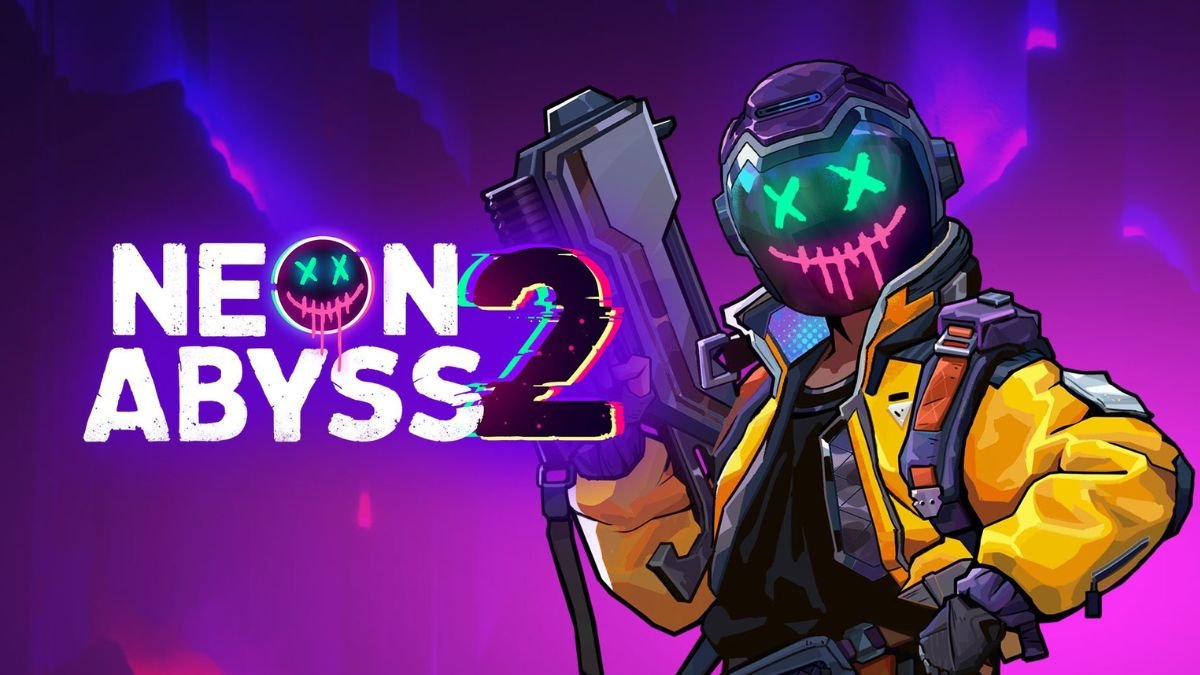
Veewo Games, the Chinese developer behind the popular roguelike action game Neon Abyss, has officially announced its highly anticipated sequel, Neon Abyss 2. The game is scheduled to launch in Early Access for PC via Steam in 2025. The sequel promises to offer similar but better fast-paced, chaotic action that people loved in the original game.
Neon Abyss 2 offers run-and-gun gameplay in beautifully pixelated visuals. It has a revolutionary weapon system and players can choose their combat style. The game introduces even more powerful item combinations to allow players to stack random power-ups to create unique and unstoppable builds in every run.
It also introduced the Faith System, a new game-changing new mechanism that lets players turn the tides of battle.
Fans of the original Neon Abyss and newcomers alike can wishlist the game on Steam to stay updated as its release approaches
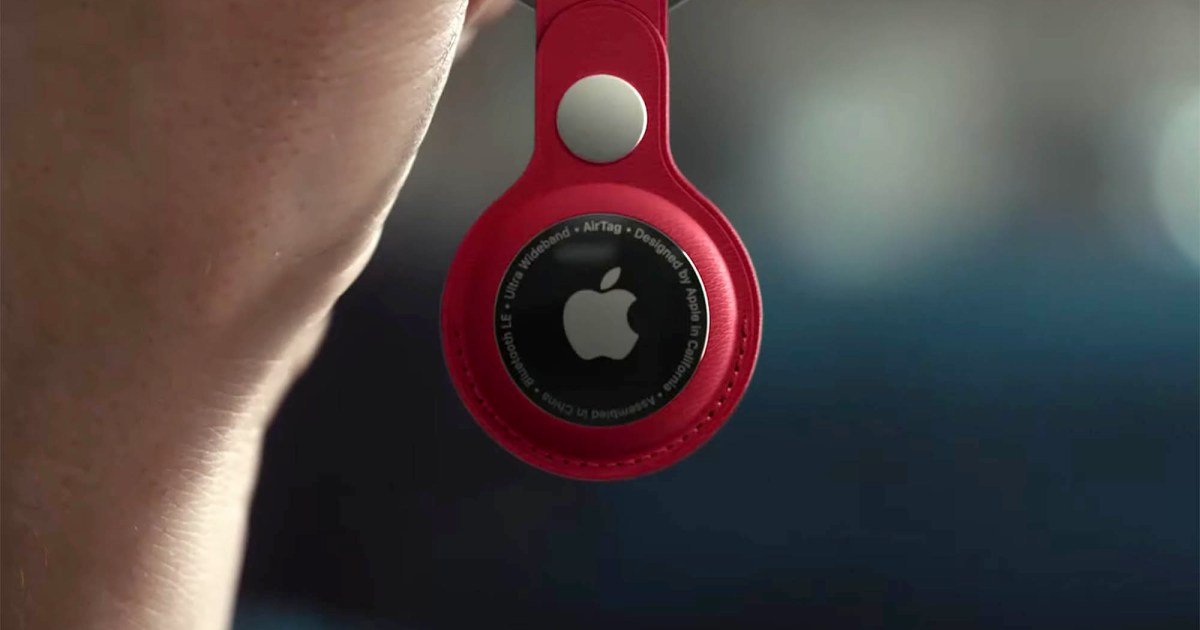
Apple introduced its first object tracker all the way back in 2021. In typical Apple fashion, the company hasn’t said a word about an upgrade, but as per reliable reports, the AirTag 2 has moved to the “manufacturing tests” stage with an added focus on privacy measures.
Now, Bloomberg’s Mark Gurman has shed more light on the biggest hardware upgrade destined for the second-generation AirTag. In the latest edition of his PowerOn newsletter, Gurman writes that the object tracker will get a more powerful UWB chip.
UWB, short for Ultra Wideband, is a short-range radio technology that enables spatial awareness. In the Apple ecosystem’s context, this tech stack allows Precision Finding to facilitate accurate distance and direction guidance for object tracking.
Digital Trends
The purpose of Precision Finding is to offer more precise location and navigation instructions to users as they attempt to find their misplaced gadgets. In its current iteration, users get visual cues on the screen in the form of large arrows and distance estimation, alongside sound and haptic cues.
Please enable Javascript to view this content
So, how good is this new UWB chip fitted inside the AirTag 2? As per Bloomberg, it will be “on par with the one introduced in the iPhone 15.” To recall, Apple equipped the iPhone 15 and iPhone 16 series with its second-generation Ultra Wideband chip.
The UWB fitted inside the current-gen AirTag offers a range of 10 meters or roughly 30 feet. The second-gen UWB chip will reportedly triple those numbers, which means the minimum location-finding range will climb up to 30 meters.
Apple
The UWB-powered Precision Finding feature is available for the iPhone 11 and all its mainline successors to date. On the iPhone 15 and 16 series, thanks to the second-gen UWB chip, Precision Finding also allows users to find a friend nearby using the Find My app.
In addition to an improved UWB chip, Apple has reportedly tweaked the internal design and made it more difficult to tamper with the speaker assembly. That’s a thoughtful change and would dissuade bad actors from illicit activities like stalking and theft.
Back in 2022, “silent AirTags” with their speaker kit removed popped up on online platforms like Etsy and eBay. Such object trackers are much harder to find without the beeping sound produced by the onboard speaker, especially if the device is hidden well or concealed tightly.
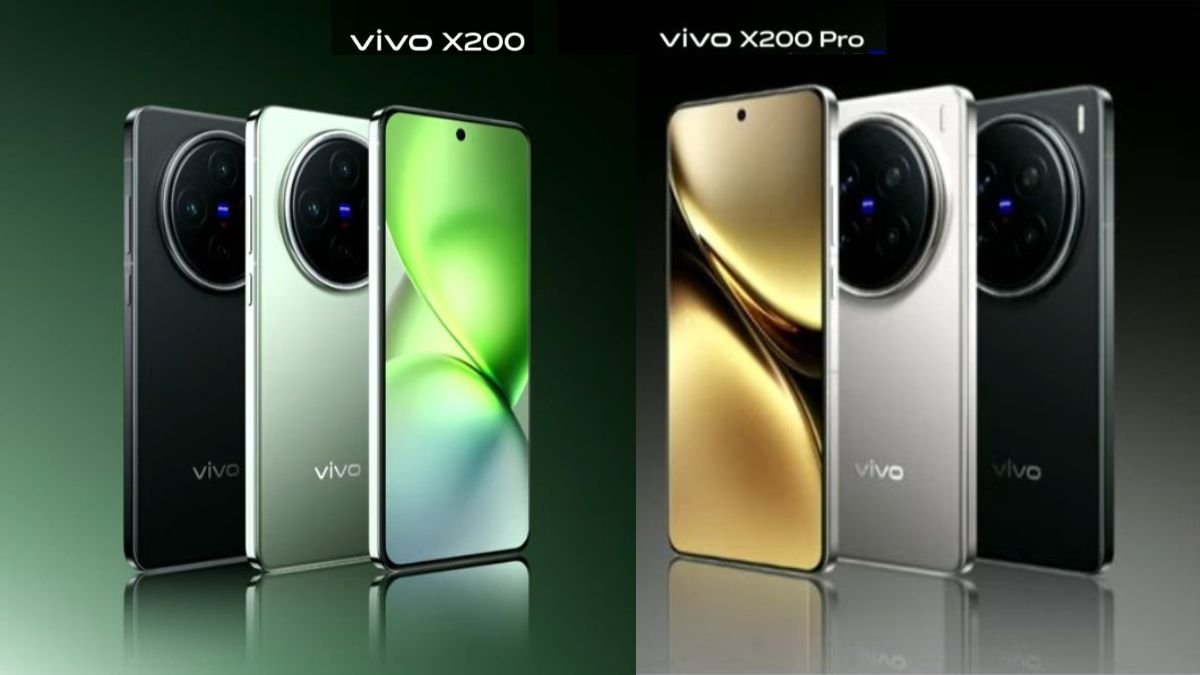
Vivo has officially unveiled its flagship smartphones, the Vivo X200 and Vivo X200 Pro, in India. These phones come with top-end specifications and innovative features. Now let’s have a look at specifications to know more about these smartphones.
The Vivo X200 features a 6.67-inch 1.5K 120Hz LTPS AMOLED display, while the X200 Pro comes with a 6.78-inch 1.5K 120Hz 8T LTPO AMOLED screen. Both displays offer an impressive peak brightness of up to 4500 nits and employ 2160Hz high-frequency PWM dimming for enhanced eye comfort. Armor Glass protection is also there to protect the display.
These phones are powered by Dimensity 9400 SoC with Immortalis-G925 GPU. Vivo X200 comes in two models 12+256GB and 16+512GB. On the other hand, Vivo X200 Pro has a single variant offering 16GB LPDDR5X RAM and 512GB UFS 4.0 Storage.
Vivo X200 and Vivo X200 Pro run on Vivo’s Funtouch OS 15, based on Android 15. The company also promises four major OS updates and five years of security patches.
Vivo X200 Pro
Vivo X200 has 50 megapixels Sony LYT-818 sensor with Zeiss T* coating and optical image stabilization (OIS). It also has 50 megapixels Ultra-wide Camera and 50 megapixels IMX882 Telephoto camera with 3x optical zoom.
Vivo X200 Pro offers a 50 megapixels Sony LYT-818 primary camera with OIS, 50 megapixels ultra-wide camera, and 200 megapixels telephoto camera with ISOCELL HP9 sensor, co-developed with Samsung. It also features Zeiss APO certification for exceptional clarity and reduced fringing. The Pro model also has top-notch video recording offering 4K Dolby Vision, 4K 120fps slow motion, and 10-bit log shooting capabilities. Both devices are equipped with a 32 megapixels front camera for stunning selfies.
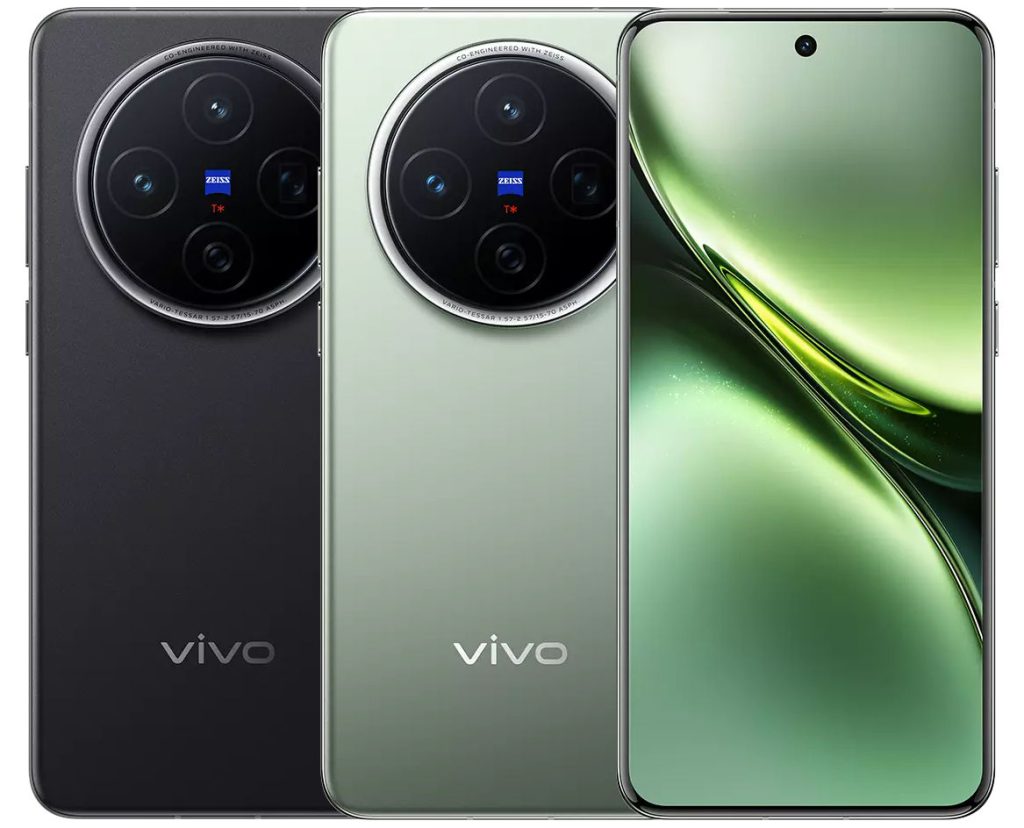
Vivo X200
Connectivity options are 5G SA/NSA, Wi-Fi 7 802.11 be, Bluetooth 5.4, GPS, Beidou, GLONASS, Galileo, QZSS, NavIC, USB Type-C, and NFC. These phones also have an in-display fingerprint sensor.
Vivo X200 packs a 5,800mAh battery and supports 90W wired fast charging support. Vivo X200 Pro packs a 6,000mAh battery with support for 90W wired fast charging and 30W wireless charging.
Vivo X200 and Vivo X200 Pro have IP68 and IP69 ratings for dust and water resistance. The X200 is available in Natural Green and Cosmos Black, while the X200 Pro is offered in Titanium Grey and Cosmos Black.
Pricing and Availability
Vivo X200:
12GB + 256GB: ₹65,999
16GB + 512GB: ₹71,999
Vivo X200 Pro:
Pre-orders begin today on Vivo India eStore, Amazon, Flipkart, and offline retailers, with sales starting December 19th. Both phones will be available with up to Rs 7,200 instant discount for HDFC Bank, SBI, and Flipkart Axis Bank credit card holders.
I’ve been very critical of AMD’s FSR 3 in the past. It’s not that the tool is bad — in fact, I think it’s excellent — but for a long time, it just wasn’t available in a wide swath of games. That’s changing. Over the past year, AMD has broadened support for its upscaling and frame generation tech massively, and it’s continued to refine the upscaling algorithm that makes up the core of FSR. I’m sure you, like myself, have settled into assumptions about what FSR is capable of and where it’s available, but as we close out the year, it’s high time to challenge those assumptions.
It’s no secret that Nvidia’s DLSS 3 is a core component of some of the best graphics cards you can buy, and AMD’s FSR 3.1, although impressive, doesn’t reach the heights of Nvidia’s AI-driven tech. That hasn’t changed, and I’m not sure it ever will. But based on the FSR 3.1 implementations I’m seeing today, AMD is offering a tool that useful in a ton of situations.
What changed?
AMD
Let’s back up to a little over a year ago. AMD first released FSR 3 in September of last year, and only in two games: Immortals of Aveum and Forspoken. Both games were received critically and commercially with a collective sigh, and by the time FSR 3 was added, the wider opinion about these titles had already been set in stone. Based on player numbers at the time FSR 3 was added, the only reason to boot up these games was to check out FSR 3, not to actually play them.
Get your weekly teardown of the tech behind PC gaming
Over the past year, there have been two major changes with FSR. First, AMD released FSR 3.1. It was announced in March at GDC 2024, but it didn’t release until June of this year alongside the PC release of Horizon Forbidden West. It launched in a slate of six PlayStation releases that had been ported to PC. The release was much better for support than the original FSR 3, but considering the quality boost AMD was claiming, support was slow out of the gate.
It’s kind of remarkable what’s happened over the past six months, however. Using the list on the PCGamingWiki, I counted 55 games that support FSR 3.1 now. They aren’t all barn burners, of course, but there are a lot of high-profile games with the feature, many of which included it on day one. That list includes Silent Hill 2, Marvel Rivals, Stalker 2, Call of Duty: Black Ops 6, Warhammer 40K: Space Marine 2, and Final Fantasy XVI. And that’s just to name a few.
Konami
Moreover, that list of 55 games is just those with FSR 3.1. If you’re more concerned about frame generation support overall — both FSR 3 and 3.1 support frame generation, but the upscaling looks better with 3.1 — the list is even larger. AMD’s official list includes 76 titles with FSR 3 support. To put that into context — in February of this year, when I heavily criticized FSR 3 for lacking support, it was only available in 12 games, many of which weren’t very popular. Today, most major PC releases arrive with FSR 3.1 or FSR 3 support on day one.
I’ll cover quality differences between FSR and DLSS next — and believe me, there are plenty of differences — but broad support is one of the major reasons DLSS 3 has been so attractive this past year. The scales are starting to balance, though. By my count, there are 133 games with DLSS 3 support. Give or take a few titles with both DLSS and FSR support, the two tools are much closer in support today than they were even six months ago.
A closer look
The support for FSR has improved massively, but so has the quality. I won’t pretend that AMD has caught up to DLSS. It hasn’t. But the quality comparison of DLSS to FSR sometimes loses context, particularly when you’re zoomed in on fine details that may not make a huge difference in the heat of the moment.
Space Marines 2 Performance Upscaling
Warhammer 40K: Space Marine 2 sets the tone for this conversation. Above, you can see the Performance mode of DLSS 3, FSR 3.1, and TAA outputting to 4K. It’s pretty clear that DLSS looks the best. It’s sharper, and it doesn’t struggle with instability on details like the barbed wire in front of the fire. FSR 3.1 does. However, looking at TAA is a sobering reminder of the state of upscaling just a couple of years ago. It looks horrible. DLSS looks the best, no doubt, but I think it’s worth highlighting how far AMD has come with FSR.
Since the release of FSR 3, many games have added AMD’s Native AA mode, too. This is similar to Nvidia DLAA, which is much better than the TAA implementation in most games. It’s basically DLSS, just running at native resolution. AMD’s take on Native AA is very good as well. I’d go as far as to say it’s just as good as DLAA, and sometimes even a little better. You can see in that in action in Ghost of Tsushima below.
The differences are much more minor with any sort of native anti-aliasing mode, but DLAA and FSR Native AA definitely look better than TAA. You can see that clearly if you look at the yellow trees in the background. Between FSR and DLAA, the leaves are slightly sharper with FSR Native AA than DLAA, but that’s really splitting hairs. The big deal here is being able to use something like FSR’s Native AA with any graphics card, particularly if you combine it with FSR 3 frame generation.
Marvel Rivals Performance Upscaling
The conversation could stop there, and for most part, it does. DLSS looks better than FSR, but FSR works with any GPU. But I actually found some games where FSR looks a bit better. Marvel Rivals is a prime example of that. Once again in Performance mode, you can see how the TAA upscaling struggles to stabilize shadows with the game’s cel-shaded styling. What’s interesting is that DLSS shows some of that instability as well, while FSR locks the shadows in place.
Ratchet Performance Upscaling
That’s not what I’d expect. I usually expect FSR to work like it does in Ratchet and Clank Rift Apart. FSR 3.1 is certainly sharper than the game’s built-in IGTI upscaling, basically matching the quality of DLSS. However, it’s not stable. You can see these random white dots on the grates close to the camera, as well as some instability around the edges of the wrench. That’s how I’ve come to know FSR, but Marvel Rivals challenges that assumption.
Rather than a strict quality gap, something else became apparent during my time with several games packing FSR 3.1. DLSS is more consistent, but that doesn’t mean it’s strictly better in every game. There are games like Warhammer 40K: Space Marine 2 where DLSS is clearly better, but there are also titles like Marvel Rivals where I wouldn’t claim one tool is better than the other. The implementation makes a significant difference. DLSS has many more consistently high-quality implementations, but that doesn’t mean you should count out FSR.
Ghost Performance Upscaling
The only area where it really struggles is in scenes like the one you can see from Ghost of Tsushima above. Moving, highly detailed, and dense objects aren’t recreated as accurately with FSR as they are with DLSS. Still, AMD has come a long way since the first versions of FSR, and in some games, the differences between FSR 3.1 and DLSS are fairly small in the grand scheme of gameplay.
Turning the corner
AMD
It took more than a year, but AMD has reached a level of quality that’s good enough and a density of games that’s high enough for FSR 3 to be a very compelling tool. I don’t want to silo this topic to a competition between FSR 3 and DLSS 3, however. Although both tools accomplish the same goal, they’re focused on different use cases. The better and broader FSR 3 is, the more the use cases for it are actually valid, and that’s something to get excited about.
Unlike DLSS 3, FSR 3 isn’t a tool designed and built around selling you a new graphics card. That’s largely been Nvidia’s approach, and that’s not a bad thing. It bills DLSS 3 as enabling this premium tier of gaming experience that otherwise wouldn’t be possible — I’m thinking along the lines of Alan Wake 2 or the recent Indiana Jones and the Great Circlewith path tracing. You can use it to bring weaker hardware up to par, but Nvidia’s focus is enabling the next wave of visual fidelity.
FSR 3’s focus is more on bringing that lower-end hardware up to par, even if it can enable those next-gen experiences as well. That use case is very compelling, and it’s a reason to root for FSR 3’s success regardless of which GPU brand you prefer.
Jacob Roach / Digital Trends
I just encountered this recently. I’ve been playing Silent Hill 2, and I thought I’d have to put it on hold on a recent trip I made to New York. I bring along an Asus Zenbook S 16 when I travel, which isn’t powerful enough to play most games, let alone something like Silent Hill 2. With FSR 3, though, I was able to play a bit of the game on my trip. This laptop has a recent Ryzen AI 300 processor, but that’s beside the point. I can use FSR 3 on just about any modern hardware, so even if I happened to have something like Lenovo Yoga Slim 7i with a recent Intel chip, it would still work.
Was it the ideal way to play Silent Hill 2? Hell no. Would I prefer to play it with my RTX 4090 desktop? Every day of the week. But I was able to keep playing during my downtime, and I wouldn’t have been able to without FSR 3. These are the situations where broad FSR 3 adoption and better quality make all of the difference. It’s not just this specific use case, either. We’ve already seen what FSR 3 can do on handhelds in games such as Like a Dragon: Infinite Wealth.
Now, with broader support and better image quality, those use cases are actually practical. I highly doubt there will be a day that FSR can match what DLSS is capable of, at least if AMD continues with its approach to broad hardware support. It doesn’t need to match DLSS to be useful, though. It’s just good enough in most games to be a viable alternative when DLSS isn’t an option.
Hopefully, the story doesn’t stop here. FSR 3 has come a long way from where it was when it showed up in Immortals of Aveum and Forspoken a little over a year ago, and hopefully, we can look back in a year from now and see that same level of progress.
Apple has unveiled the winners of the 2024 App Store Awards. The company has honored 17 apps and games that have made a significant impact on users’ lives and global culture. These winners have been chosen from 45 finalists by App Store Editors.
Apps That Transform Everyday Moments
The winning apps reflect the diversity of experiences available across Apple devices:
iPhone App of the Year:Kino by Lux Optics Inc. helps users create cinematic content with film-inspired filters and advanced controls.
iPad App of the Year:Moises by Moises Systems Inc. empowers musicians with AI-driven tools to refine their craft.
Mac App of the Year:Adobe Lightroom by Adobe Inc. transforms photo editing on Mac with professional-grade features.
Apple Vision Pro App of the Year:What If…? An Immersive Story by Marvel Studios, ILM Immersive, and Disney+ redefines spatial computing with captivating experiences in the Marvel Universe.
Apple Watch App of the Year:Lumy by Raja V. enhances daily life by helping users embrace the rhythms of the sun.
Apple TV App of the Year:F1 TV by Formula One Digital Media Limited brings racing action to fans with immersive home-viewing experiences.
Games That Inspire and Entertain
Apple’s gaming honorees showcase creativity and innovation:
iPhone Game of the Year:AFK Journey by Farlight Games delivers tactical adventures and engaging storylines.
iPad Game of the Year:Squad Busters by Supercell combines competitive multiplayer gameplay with family-friendly fun.
Mac Game of the Year:Thank Goodness You’re Here! by Panic, Inc. offers endless laughter through quirky narratives.
Apple Vision Pro Game of the Year:THRASHER: Arcade Odyssey by Puddle, LLC immerses players in vibrant cosmic worlds.
Apple Arcade Game of the Year:Balatro+ by Playstack Ltd. reinvents traditional card games with unique mechanics.
Cultural Impact Awards
In addition to celebrating apps and games, Apple recognized six developers for their Cultural Impact, honoring apps that foster inclusivity, intellectual curiosity, and connection:
Oko by AYES BV: Assists users with visual impairments in navigating city streets.
EF Hello by Signum International AG: AI-powered language learning for users at all levels.
DailyArt by Zuzanna Stanska: Connects users to centuries of exceptional artwork.
NYT Games by The New York Times Company: Brings families together through engaging daily puzzles.
The Wreck by The Pixel Hunt: Explores emotional resilience through an interactive narrative.
Do You Really Want to Know 2 by Gamtropy Co., Ltd.: Educates users about HIV, offering valuable resources for open conversations.
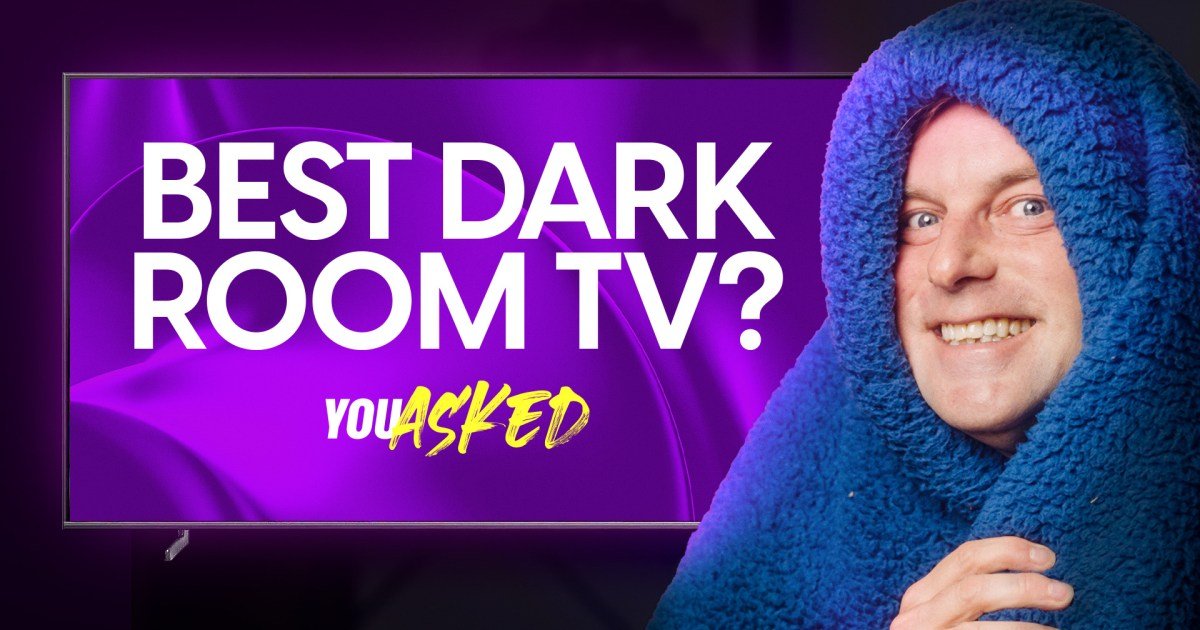
On today’s episode of You Asked: Is there a way to force Dolby Vision onto the PlayStation 5? Do you need an internet connection to use newer Sony TVs? When will Samsung’s Tizen update finally happen? And what is the best dark-room TV?
Does my TV need the internet?
Digital Trends
Jay Luis Martinez writes: I am thinking of the Bravia 9 but I heard (read in the comment section below a YouTube video) that you cannot use new Sony TVs (since 2023 or 2024) in offline mode. Is this true?
I can’t speak to Sony TVs distributed in the EU, but in the U.S. you can use a Sony TV without an internet connection. And, frankly, I’d be shocked if that wasn’t also the case in Europe — the EU has stricter consumer protection laws than the U.S.
It would be extremely unwise for any TV brand — especially one as large as Sony — to make its TVs unusable without an internet connection. In fact, in the U.S., I don’t think you could call it a TV if the tuner required an internet connection for basic use. Also, here in the U.S., that limitation would need to be explicitly and obviously disclosed on the product packaging.
Folks say all kinds of stuff in forums and comment sections. Sometimes it can be helpful, other times it is just flat-out false. So, I’m glad you asked to get accurate information.
PS5 Pro games in Dolby Vision mode?
Giovanni Colantonio / Digital Trends
Luigi writes: Remember how you used to be able to force upscaling to 4K if you routed a PS4 or PS5 through an Xbox One X or S’s (not Series X or S) pass-through before getting to the TV? Is it possible to do tricks like that and get your PS5 or PS5 Pro to be tricked into doing Dolby Vision or upscale from lower resolutions? Playing Xbox Series X games on my 2023 LG C3 in Dolby Vision makes such a beautiful difference. I wish there was a way to play games from the PS5 Pro in Dolby Vision mode. I always switch to my Series X for Disney, Netflix, or any movie experience. I just wish there was a way to play Sony’s first-party games in Dolby Vision. Is there any pass-through or other solutions to achieve this?
The short answer is no, you cannot pull a trick using any consumer device — that I’m aware of — to force the TV into Dolby Vision. And even if something like that did exist, I’m not sure it would make things better.
The signal needs to have a Dolby Vision flag and metadata for the Dolby Vision chip in your TV to work off — that’s best coming from the source and for material that was made to use Dolby Vision. The Apple TV 4K can force everything into Dolby Vision if you want it to, but I suggest disabling that feature.
(I actually don’t remember the trick where you could run a signal through an Xbox and it would come out the other end upscaled, but it’s hard to imagine that being useful, especially today.)
If your TV is 4K — or more accurate, Ultra HD — then it is upscaling everything to 4K. A 4K TV in a 16:9 aspect ratio has 8,249,400 pixels and it has to fill all of them all the time, without exception. This includes letterbox or pillarbox bars — they’re in the signal and each pixel is accounted for.
Unless your TV’s upscaler is rather poor, and your source’s upscaler is super good, there is rarely a good reason to upscale your signal before it gets to the TV — the TV usually does a better job.
Where’s the Samsung update?
Digital Trends
Roderick Strong writes: I remember hearing at the beginning of the year that Samsung TVs from the last 5 years will be getting a UI update that is going to use the new Tizen update. Since I currently have the 82-inch Q90R from 2019, my TV would be included in the upgrade. Have you heard any news on this, and if so, what can you share about this?
The update started to roll out about a week and a half ago for some Samsung TVs, but it seems to have halted — at least for some owners. John Higgins, our A/V senior editor, says his TV prompted him for the update at one point, in line with some press information about the update launching. However, that prompt has since disappeared.
I have not seen any published rollout schedule from Samsung, which doesn’t surprise me. And while I’m hopeful it won’t be too much longer, I have to think there may have been some deployment hiccups. For now, hold tight — it should be coming along soon.
Best TV for a super-dark room
Zeke Jones / Digital Trends
Tom Rice writes that he is looking to get a new TV for a totally dark room. He wants to know if it matters how bright the TV can get if it will never fight with any other light source. He’s looking at 83-inch versions of the LG B4 and C4, as well as the 77-inch version of the G4 and admits to being tempted by the 100-inch Hisense U8.
When you’re viewing in a completely dark room, the need for high average picture level — or just overall brightness — goes down a bit, while your need for excellent backlight control goes up.
When you are in a blacked-out room, the irises in your eyes open wide to allow as much light in as possible. This is going to make you more sensitive to light levels both at the low and high ends of the spectrum.
On the low end, you are going to be more sensitive to blooming or halo — the effect of the backlight in an LCD-based TV bleeding through areas of the screen where it shouldn’t. This is why I prefer OLED TVs for dark rooms: blacks are black because there is no backlight bleedthrough.
However, if you want an LCD-based TV, I suggest a high-end mini-LED TV to cut down on those backlight effects. The Hisense U8 has very good backlight control, but it’s not going to be perfect like OLED.
On the other end of the spectrum, you have heightened sensitivity to bright light. This means that when watching SDR content, the brightness doesn’t need to be turned up very high. For HDR content, the specular highlights don’t have to be as intensely bright to get a lot of HDR pop to the picture.
So, yes, you can get along just fine with a TV that doesn’t hit 1,000 nits for HDR. The LG B4 will hit just shy of 700 nits for HDR highlights, and that will probably be plenty dazzling.
However, while the brightness of the LG B4 may be sufficient, one other consideration is processing.
See, when we spend more for a TV, we aren’t just getting better backlight control and higher brightness. We’re also — often enough, anyway — getting superior picture processing, which determines a bunch of other picture-quality factors like clarity, sharpness, detail, color accuracy, and more.
The LG C4, Bravia 8, and Samsung S90D are great TVs for dark rooms because they have great processing to go along with all their other performance attributes. And the C4 is the only one that gets up above the 80-inch level. The LG B4 would likely be a huge upgrade, but if it were my money, I’d be getting the C4.
However, when looking at a 100-inch TV, we have to have that talk about picture size versus picture quality. With a set budget, you will have to give up some picture quality as you move up in size, provided the price is staying the same. And that, my friends, is a very personal choice.
If you were to just say “tell me what TV to get,” I’d say get the LG C4.
Zomato-owned quick commerce platform Blinkit has entered the ultra-fast food delivery market with the launch of a standalone app, Bistro. Bistro promises to deliver snacks, meals, desserts, and beverages in just 10 minutes. The app is currently operational in select areas of Gurugram and will be available in more cities if it gets enough consumer interest.
It is worth noting that the concept of ultra-fast food delivery isn’t entirely new for Zomato. Zomato treated a 10-minute food delivery service in Gurugram back in 2022 but later shelved the project. The company also introduced Zomato Everyday to offer home-style meals prepared in centralized kitchens for quicker deliveries. Bistro is the latest attempt by Zomato to re-enter in ultra-fast food delivery space.
Bistro will be competing with major players like Swiggy and Zepto. Swiggy’s Bolt service already operates in over 400 cities. Zepto’s Cafe delivers tea, coffee, pastries, and snacks in under 10 minutes. Zepto is also planning to launch a standalone app for Cafe. Swish is also operating in the same space and raised $2 million last month. Swish uses cloud kitchens to deliver meals, snacks, and beverages across select neighborhoods.
Bistro app is currently available only on the Play Store for Android devices. The company has yet to launch the app for iOS.
Ultra-fast food delivery services has already made a considerable user base. Zepto claims its Cafe business is doing 30,000 orders per day. Swiggy also says that 5 percent go all food orders on Swiggy came via Bolt. This is the reason Zomato do not want to be late in leveraging the potential of this new market.
Although it’s been off the air for more than 20 years now, Buffy the Vampire Slayer continues to gain new fans who discover the series through streaming services. And, while star Sarah Michelle Gellar had previously been reluctant to join any potential reboot of the show, it now seems like she’s changed her tune.
In an interview on The Drew Barrymore Show (via Variety), Gellar said that she had been rethinking her stance on revisiting the character.
“I always used to say no because it’s in its bubble, and it’s so perfect,” she explained. “But watching [And Just Like That…] and seeing [internal-link post_id=”3705319″ sponsored=”false” taxonomy=”false” ]Dexter: Original Sin[/internal-link], and realizing there are ways to do it, definitely does get your mind thinking, ‘Well, maybe.’”
Please enable Javascript to view this content
Gellar added that she thought there were several different narrative options a new show could pursue and that the series wouldn’t have to be a prequel.
“It could be anything,” she said. “It’s a universe. It makes you realize that in this world, we need those heroes, I think, more so than ever.”
As she alluded to in that answer, Gellar had previously been reluctant to express any interest in revisiting her most iconic character. In 2023, she told SFX Magazine (via Indiewire) that she thought Buffy’s story was over. “I am very proud of the show that we created, and it doesn’t need to be done,” Gellar said. “We wrapped that up.”
The show originally ran for seven seasons from 1997 to 2003 and followed a teenage girl who discovers that she is The Slayer, a once-in-a-generation chosen one who is tasked with battling vampires and various other demonic forces.