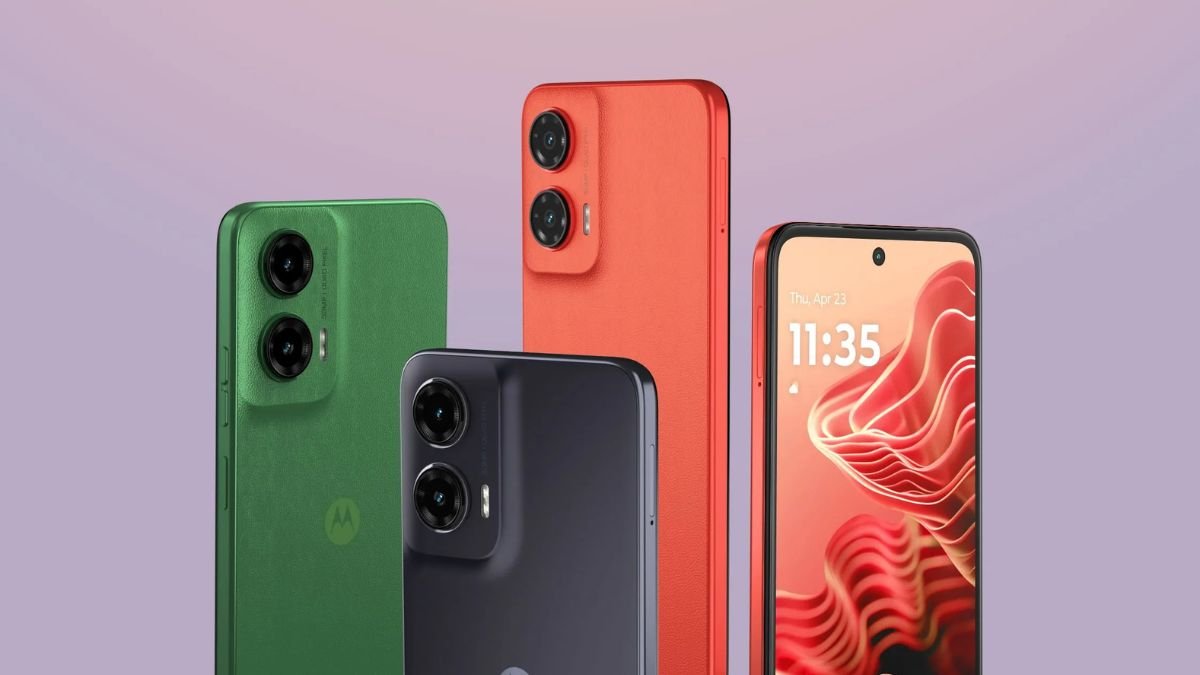
Motorola has introduced its latest budget-friendly 5G smartphone, the Moto G35 5G, in India. The smartphone is priced at Rs. 9,999 and has been designed to cater to users seeking a good device with performance, camera prowess, and durable build in affordable cement.
The Moto G35 5G boasts a 6.72-inch full-HD+ LCD screen with a 120Hz refresh rate and 240Hz touch sampling rate. The display supports up to 1,000 nits peak brightness and is protected by Corning Gorilla Glass 3. Features like Vision Booster and Night Vision Mode enhance the viewing experience.
It packs Unisoc T760 chipset that has been designed primarily for affordability and efficiency rather than raw performance. The chipset is not designed for gaming or resource-intensive tasks. However, it supports 5G and is sufficient for normal day to day usage. The SoC is paired with 4GB of LPDDR4x RAM and 128GB of UFS 2.2 storage. The phone runs Android 14 with Motorola’s custom Hello UI, to ensure a clean and user-friendly interface.
Moto G35 has a dual rear camera that includes 50-megapixel primary camera with quad-pixel technology and 8-megapixel ultra-wide-angle lens. For selfies and video calls, the Moto G35 5G features a 16-megapixel front-facing camera.
Motorola has included Dolby Atmos-backed stereo speakers. It also has a side-mounted fingerprint sensor for quick and secure access. Connectivity options include 5G. Dual-band Wi-Fi, Bluetooth 5.0, GPS, A-GPS, LTEPP, GLONASS, Galileo, and QZSS, and USB Type-C.
The Moto G35 5G packs a 5,000mAh battery to ensure all-day usage. It supports 20W wired charging via a USB Type-C port.
The phone has an IP52 rating to protect it against dust and splashes. Motorola offers the handset in three striking colorways: Guava Red, Leaf Green, and Midnight Black. The device remains lightweight at 185g and slim at 7.79mm thickness.
Moto g35 5g price in India
The Moto G35 5G is available in a single configuration of 4GB RAM + 128GB storage, priced at Rs. 9,999.
The phone will be available via Flipkart and the official Motorola India store starting from December 16th.
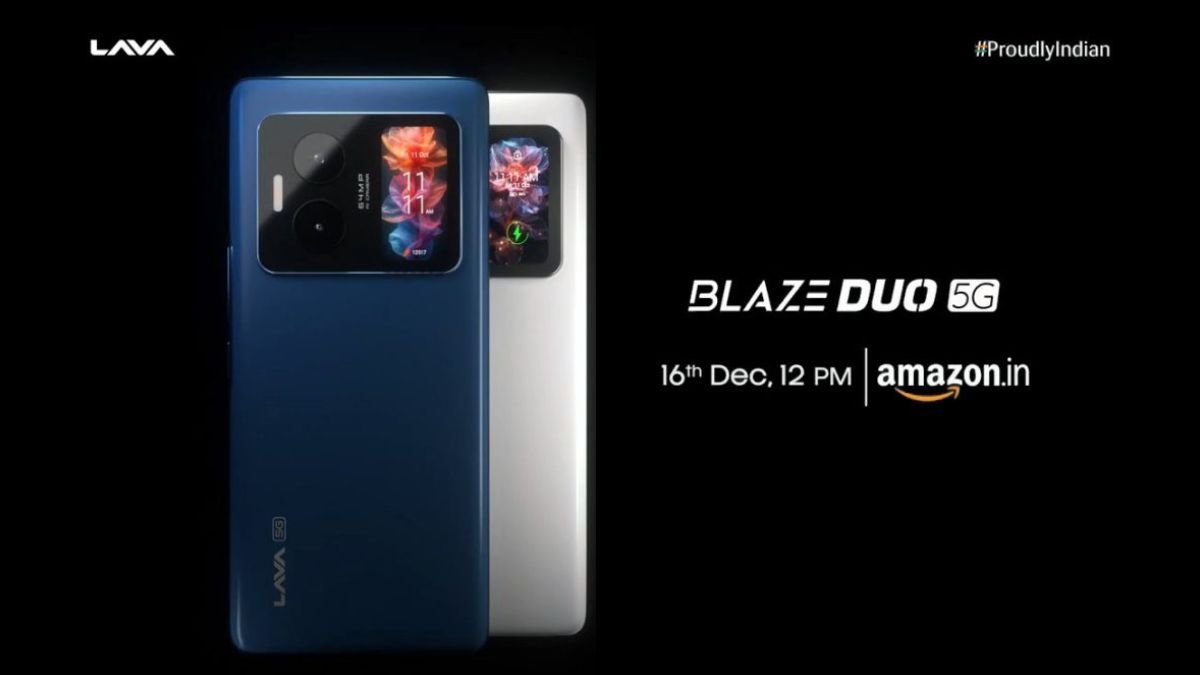
Lava is set to disrupt the mid-range smartphone market with its upcoming smartphone Lava Blaze Duo 5G. The device will be launched on December 16, 2024 and will be available exclusively via Amazon. Lava Blaze Duo 5G will be first in its segment to come with a dual-display setup.
The most notable feature of the smartphone is its secondary 1.58-inch AMOLED rear display. The display supports essential features such as receiving calls, viewing notifications, and operating apps such as the music player. Although the display is smaller than 1.74-inch secondary screen on Lava’s Agni 3 5G, it will offer almost the same functionalities.
Lava Blaze Duo 5G will also feature a 6.67-inch 120Hz 3D curved AMOLED display and Dimensity 7025 chipset. It will come in 6GB and 8GB LPDDR5 RAM configurations with 128GB UFS 3.1 storage.
The phone will also feature a 64MP primary rear camera with a Sony sensor paired with a secondary camera. It will also offer a 16MP selfie camera at the front. The device will also come with a 5000mAh battery that supports 33W fast charging
The Blaze Duo 5G will ship with Android 14 and the company has committed to delivering the Android 15 update.
The Lava Blaze Duo 5G will be available exclusively on Amazon India following its launch. Pricing will be revealed on December 16 during the launch of the smartphone.
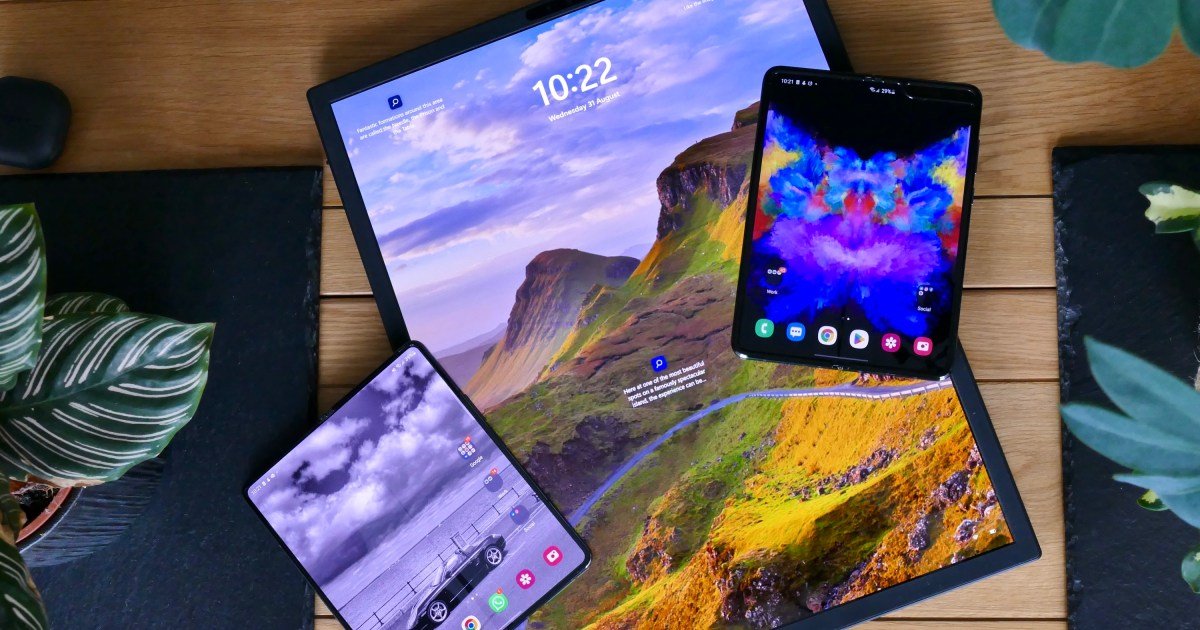
Apple is the biggest consumer electronics player that is yet to dabble in foldable devices. It seems the company’s plans for a foldable device could actually be more ambitious than any rival has attempted so far. According to Bloomberg, the company’s next big product category could be, well, a big foldable iPad.
The report mentions “a giant iPad that unfolds into the size of two iPad Pros side-by-side.” The biggest challenge for Apple has been eliminating the crease in the middle of the flexible screen, and it seems the company’s engineers have solved that piece of the puzzle to a large extent.
The prototype device is said to offer “a nearly invisible crease.” So far, the likes of OnePlus, Vivo, and Samsung have launched phones with increasingly “seamless” foldable screens. However, the crease is still very much there, though the situation has improved over the past few years.
“Apple’s approach would be different because it wants the screen to look like a single, uninterrupted piece of glass,” adds the report. The company has reportedly been experimenting with the concept for a while now, and it could hit the shelves in the vicinity of 2028.
Please enable Javascript to view this content
Citing an alleged leak, Bloomberg’s Mark Gurman mentions that the foldable device could use an 18.8-inch flexible panel. Another interesting bit of information mentioned in the report is that the device could run a version of iPadOS with some macOS DNA thrown into the mix.
Once again, this is not likely going to be a device that embraces the iPadOS-macOS hybrid dreams that many iPad Pro users have harbored for years. There is, however, some hope that by the time Apple’s foldable iPad concept arrives, the underlying OS will have matured to offer more room for productivity and computing than what it currently allows.
Microsoft’s Surface Neo concept was abandoned after a hyped reveal.Jeremy Kaplan / Digital Trends
So far, the closest implementations of what Apple is reportedly developing are the Asus Zenbook Fold OLED and the HP Spectre Foldable laptops. However, both these machines are pretty expensive, starting at $3,500 in the U.S. market. The situation is not too different with Huawei’s triple-fold phone that arrived earlier this year.
For comparison, the fastest iPads with an M-series silicon start at a thousand dollars. Apple will have to pull off a magic wand trick from its engineering division and supply chain to land at an asking price where the foldable iPad doesn’t become too pricey to approach, even for enthusiasts.
The Vision Pro headset has already proved to be an uber-expensive adventure for Apple, one that failed to revolutionize the augmented reality (AR) and VR segment owing to its $3,500 sticker price. In the meanwhile, work on a foldable iPhone is reportedly still on the table, but it would take a while before Apple puts it on the shelves.
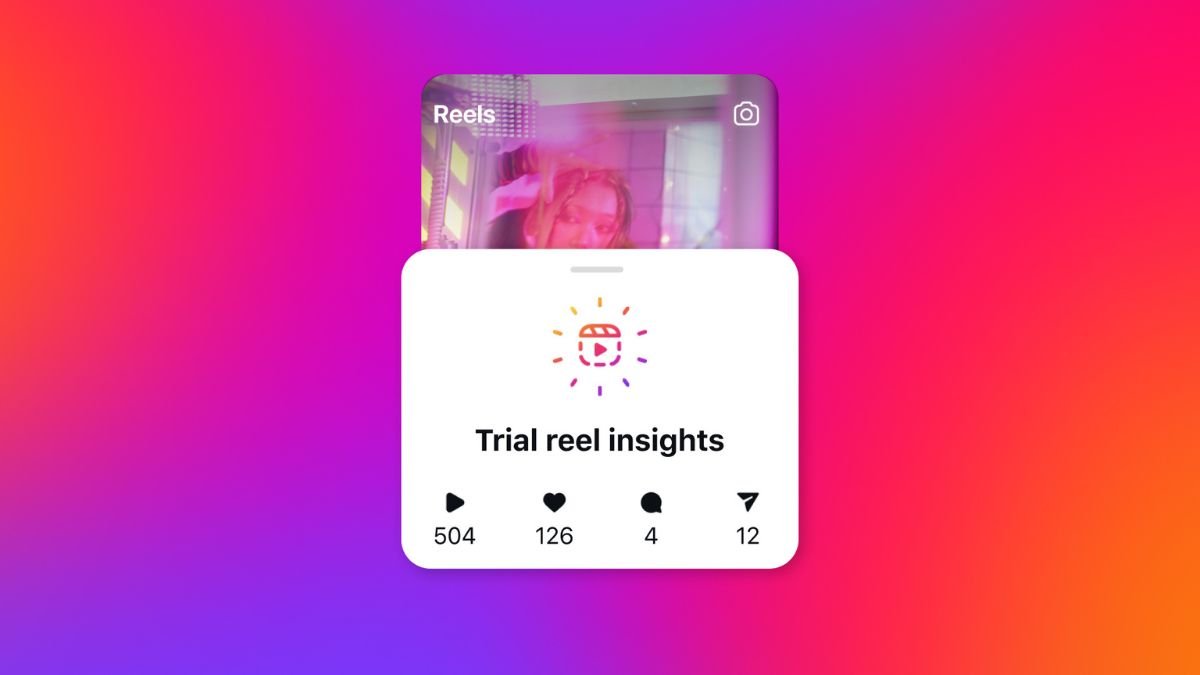
Instagram has unveiled a new feature called Trial Reels. The feature has been designed to help creators test their content with non-followers before sharing it with their audience. This feature aims to reduce the pressure creators face when exploring new content ideas, formats, or niches. They can see how content resonates with fresh audiences first before sharing it with their followers.
Also see: How to Delete Instagram Account
After sharing a Trial Reel, creators can check the real-world feedback and engagement. If trial Reel performs well, they can share it with their floors with a single tap. There’s Las an option to set the Reel to automatically share with their followers if it meets specific performance benchmarks during the trial period.
For sharing Trial Reels, create a reel as usual. Before posting, toggle the “Trial” option. The reel will be shared exclusively with non-followers and won’t appear on the creator’s main grid or Reels tab until you decide to make it public.
The engagement metrics will be available in drafts section. It will show views, likes, comments, and shares after 24 hours after posting.
Instagram has confirmed that you can followers may still find your trial reel through shared links, direct messages, or reels using the same audio, location, or filter.
Instagram began testing Trial Reels earlier this year and received positive outcomes. Now it has started rolling it out gradually to eligible creators worldwide. It should become fully available in the coming weeks.
As the credits rolled on Sony’s Kraven the Hunter, ostensibly the last entry in Sony’s Spider-Man-less universe, all I could think about was that this movie would’ve been a success in 2004. Against all odds, I quite enjoyed Kraven the Hunter, going into it with low expectations and being mostly entertained throughout the film’s 120-plus minutes. It’s a rough movie, for sure, largely because it seems to be at war with itself over what it should be. However, it’s undeniable that it has the same “this is remarkably stupid, but I can sort of dig it” quality that made films like 2005’s Fantastic Four and 2009’s Watchmen so enjoyable.
And yet, it feels woefully out of place in 2024, to the point where you sometimes can’t actually believe something so dated was actually greenlit, let alone shot and sent into the world. But I truly believe there’s value in the mess that is Kraven the Hunter. Sure, it’s a movie that is uneven, but it’s far from the worst way of spending two hours on a lazy afternoon. And while it’s not making any best-of-2024 lists any time soon, I believe Kraven the Hunter is more than entertaining enough if you think about it as an ode to the comic book movies of the mid-2000s.
Freaky little men doing freaky little things
Sony Pictures Releasing
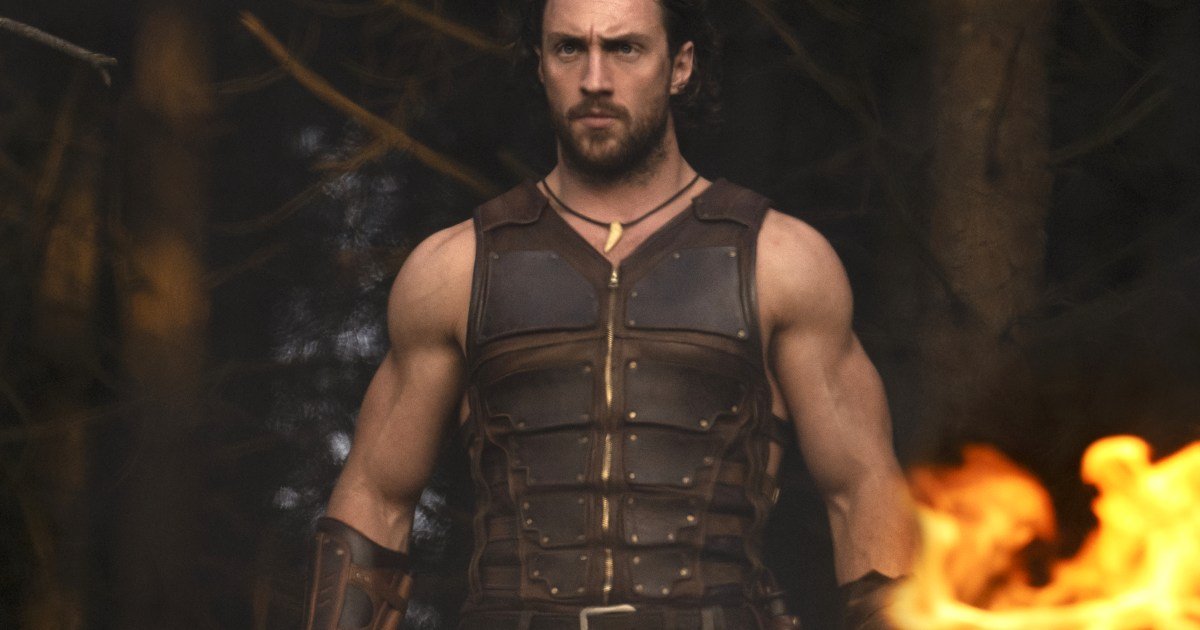
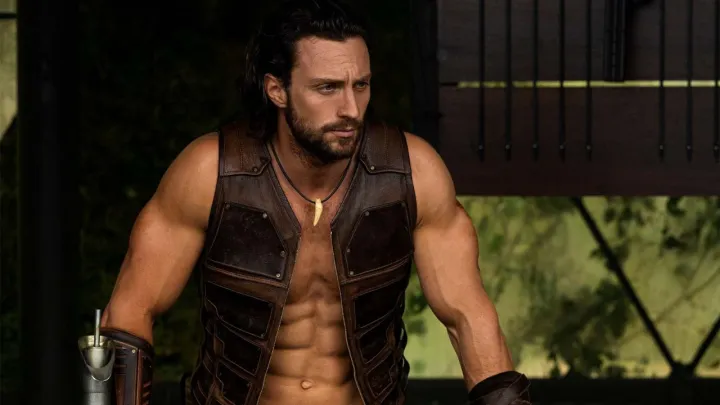
If I had to describe Kraven the Hunter in any way, that’s exactly how I’d do it. It’s a movie full of freaky actors doing silly things and saying silly lines. Sure, it’s never as silly as it should be, but it’s silly enough to make you chuckle a few times, often intentionally. Yes, Aaron Taylor-Johnson is a hunk with a stereotypically attractive look. However, his most highly regarded turns, from Dave Lizewski in Kick-Ass to Ray Marcus in Nocturnal Animals (for which he actually won a Golden Globe), have him embracing his darker, awkward, and more off-putting side. Kraven keeps him as a straightforward action man, and Taylor-Johnson does admirably, but you can often see a glimmer of the freak within, and it’s a shame he isn’t allowed to let it out.
As for his supporting cast, it’s a who’s who of indie actor outsiders. There’s Sanctuary‘s Christopher Abbott as the Foreigner doing what he does best: stealing scenes and being a little freak; there’s Thelma‘s Fred Hechinger as Dmitri Smerdyakov, Kraven’s half-brother with the ability to mimic voices (I kid you not, the film’s funniest transition goes from a seemingly serious scene to Hechinger lip-syncing to Harry Styles’ Sign of the Times, which is far funnier than it sounds). Then there’s Oscar winner Russell Crowe as Kraven and Dmitri’s father, Nikolai Kravinoff. Ever a game actor, Crowe goes all-in, speaking with a thick, yet highly fluctuating Russian accent and really selling the “dastardly, yet one-dimensional Russian mobster” schtick like few others can.
Sony
However, the highlight is definitely Alessandro Nivola as the film’s main villain, Aleksei Sytsevich, aka The Rhino. There’s scenery chewing, and then there’s what Nivola is doing in Kraven the Hunter. This is Gary-Oldman-in-The-Professional levels of unhinged, and Nivola is delivering. It takes a really gifted actor to be this ridiculous and remain engaging without becoming obnoxious. Nivola has been around for a while — that’s him as Nicolas Cage’s brother, Pollux, in 1997’s action camp delight Face/Off. If any actor qualifies as being “underrated,” it’s Nivola, and while Kraven the Hunter won’t elevate him onto the A-list, it’s yet another example of just how much of an accomplished character actor he is.
Hunter or prey?
Sony
The main issue holding back Kraven the Hunter from truly being a great mid-2000s movie — other than, you know, being released in 2024 — is, unfortunately, J.C. Chandor. The director, who proved his considerable talent in early 2010s gems like Margin Call and A Most Violent Year, is woefully out of his comfort zone with this comic book property. Chandor tries to ground the plot by focusing on a few compelling ideas — a broken crime family struggling with the meaning of legacy, a hunter seeking revenge for humanity’s mistreatment of nature, and a young man fighting his inner animal (literally). However, there’s only so much grounding he can do with such a silly screenplay.
It doesn’t help that Chandor seems to be the only one interested in doing a version of Kraven more in line with today’s sensibilities. The cast seems to be on the same page about the type of movie they want to do, and it’s not the one Chandor is aiming for. Taylor-Johnson, Hechinger, Abbott, Crowe, and Nivola all range from over the top to bordering camp, instantly clashing with Chandor’s more stoic and gritty approach. One second, the screenplay has Crowe delivering the most by-the-numbers bad guy speech, and the next, Chandor is ripping off Gladiator while an overly dramatic score plays. Admittedly, the director brings great style to the film. The action scenes are also, for the most part, quite solid. The highlight is the extended car chase through London, where Taylor-Johnson goes full berserk. It’s probably the closest thing to Chandor’s vision for the film, but Kraven the Hunter was just not the right IP for that.
Kraven the Hunter | The Final Trailer
Moreover, whatever gravitas Chandor tries to bring into the mix goes out the window once Nivola’s character transforms into The Rhino during the film’s third act. There’s simply no way to do a grounded or, dare I say, dignified version of The Rhino, a strong contender for Marvel Comics’ silliest villain. Aleksei Sytsevich has always been one of the most dim-witted and absurd Spider-Man foes, depicted as either having the skin of a rhino, wearing a rhino suit, or using rhino-themed armor — the common denominator here is that they’re all stupid.
Too little, too late
Sony Pictures Releasing
As it stands, Kraven the Hunter is an entertaining movie released about 20 years too late. It would make a perfect double feature with Tim Story’s Fantastic Four. Both movies are simple-minded and undemanding, enjoyable enough to warrant a watch, yet also instantly forgettable. Unlike Story’s duology, however, Kraven the Hunter shoots a bit too high, biting off far more than it can chew. Realistically speaking, this movie, like so many others in Sony’s misguided Spider-Man-less universe, shouldn’t have existed in the first place. However, it does, and you know what? It could’ve been much worse.
Still, reviews have not been kind to it; the film currently has an embarrassingly low 15% on Rotten Tomatoes and is tracking to earn a paltry $15 million domestically during its opening weekend. However, I’m fairly certain Kraven the Hunter will find success — you guessed it — on Netflix once it hits the streamer, and considering these numbers, it’ll be sooner rather than later. Perhaps Kraven the Hunter will find a new life on the small screen; it won’t be enough to give it a sequel, but maybe it will get Taylor-Johnson a role in 2032’s Spider-Man: Home Depot or something. As for the film itself, it will become one of those gems you watch when you start missing your youthful days of the noughties. So what if it was released in 2024? It still counts, or at least it should.
Kraven the Hunter is currently playing in theaters worldwide.
Realme is gearing up to launch its latest smartphone, the Realme 14x 5G, in India. The company has officially announced December 18 as the launch date through media invites. Realme has also shared a teaser video on X (formerly Twitter), giving fans a glimpse of what’s to come.
Teasers confirm the beautiful design with flat edges, diamond cut lines on the back panel, and a triple camera setup on the back. The phone will come in three colors: Black, Red, and Gold.
The smartphone will be sold on Flipkart. So Flipkart has added a dedicated microsite to tease its upcoming launch. Realme has also added a dedicated page on its official website with a countdown timer.
The Realme 14x 5G stands out as the first smartphone in its segment to feature IP69 Water and Dust Resistance. IP69 offers enhanced protection against high-pressure water jets and complete dust ingress. Interestingly, the company has not mentioned an IP68 rating, which is typically more relevant for consumers as it focuses on water resistance for submersion up to a specific depth. So, IP68 is more practical for everyday use than IP69.
Also read: IP68 vs IP69
Reports suggest that the phone will feature a 6.67-inch HD+ IPS LCD display, up to 8GB RAM, up to 256GB storage, and a 6,000mAh battery. The phone should get a starting price of Rs. 11999.
A recent survey by research firm Accenture determined that a majority of potential buyers of electric vehicles are mostly concerned with reliability, affordability and how well EVs integrate into their daily lives.
It seems Plug In America, a nonprofit dedicated to accelerating the shift to electric vehicles (EVs), has listened to those concerns as it revamped PlugStar.com, its information and shopping platform.
The website aims to simplify the EV buying process, giving prospective buyers advanced tools and resources to make EV ownership more accessible and hassle-free.
Please enable Javascript to view this content
As a visitor to the site, you’ll first be asked to put in your ZIP code, and PlugStar will then give you the most relevant information, from EV models and incentives to local events and educational info.
“EVs are different, and EV buyers have a lot of specialized questions they need answered to find the right car for their needs,” says Joel Levin, Plug In America’s executive director, in a statement. “Our expert staff has pulled together the best data on vehicles, incentives, charging equipment, electricians and dealers to make a state-of-the-art, essential resource for anyone looking to buy or lease an EV.”
The platform offers a shopping assistant tool, along with enhanced filters, to help customers find EV models that match their lifestyle.
It also helps with finding applicable incentives, be it for a specific vehicle or for chargers and electricity, at the national and state levels, as well as the local level where Plug In America has partnerships.The platform also helps to connect with PlugStar-certified dealers knowledgable about EVs and those able to offer federal incentives.
These features might come in handy given the highly uncertain fate of the existing $7,500 tax credit on the purchase or lease of a new EV. The incoming Trump administration is reportedly planning to end the incentive next year. Meanwhile, some states, such as California, plan to bring back their own incentives.
The PlugStar platform also provides details about each EV model, along with a customizable calculator for buying, loaning, or leasing, and comparing vehicle features side by side. Finally, the site also provides help finding public charging locations or home charging solutions.
If all that wasn’t enough, Plug In America says all visitors who create a profile on PlugStar.com before the end of the year will be entered into a drawing for a $250 gift card.
As 2024 wraps up, one thing is clear, YouTube is now the biggest streaming platform in people’s living rooms. YouTube says that viewers across the globe collectively streamed over 1 billion hours daily on TV. People are watching sports content, kids’ content, and podcasts using YouTube apps on TV. As a person who is really interested in tech, I also admire how YouTube is redefining our TV experience.
Creators have also improved their content and are now uploading high-quality content for TV viewers. With 4K video uploads increasing by 35%, content looks sharper and more cinematic on larger screens. This is the reason creators are now earning well from TV views. Revenue from TV views has grown by 30% this year. This is the reason YouTube has added a subscribe button directly to the video player on TVs. Tests confirmed that it increased channel subscriptions through TVs by 40%.
Watching sports content also jumped by 30% this year. Fans watched game clips, highlights, and interviews. The platform also tested the Watch With feature where creators act as sportscasters and give their live commentary and reactions to games.
Kids’ content is also one of the most popular types of content on YouTube TV. Channels like Ms. Rachel saw record-breaking watchtimes. To make YouTube safer for kids, YouTube introduced a parent code feature. It allows parents to block content they find inappropriate. Switching between YouTube and YouTube Kids profiles became simpler. This move shows how YouTube is adapting to its growing role in family entertainment
Podcasts are also growing on YouTube. YouTube viewers streamed over 400 million hours of podcasts every month on their living room screens. Creators are also transforming podcasts into visual experiences. This shift from audio-only to visual storytelling highlights how YouTube is pushing the boundaries of traditional media.
It seems 2024 was just the start of YouTube’s TV takeover. YouTube is trying to make sure you get interesting content right on your TV. Focusing on TV-friendly features, high-quality content, and innovative tools sets YouTube apart from traditional TV and other streaming platforms.
What excites me most is how creators are shaping this shift. They are not just adapting; they are now earning a significant portion of their revenue from TV viewers. This is proof that the platform is growing in ways that benefit both audiences and content makers.
Looking ahead, I can’t wait to see what YouTube has in store for 2025.
We’re now into the third year of the AI boom, and industry leaders are showing no signs of slowing down, pushing out newer and (presumably) more capable models on a regular basis. ChatGPT, of course, remains the undisputed leader.
But with more than a half-dozen models available from OpenAI alone, figuring out which one to use for your specific project can be a daunting task.
GPT o1
OpenAI
If you want to try out the best and brightest model for ChatGPT, look no further than o1.
OpenAI CEO Sam Altman spent a better part of his summer in 2024 teasing the imminent release of the company’s secretive Project Strawberry. The company finally unveiled Project Strawberry in September, outing it as OpenAI’s first “reasoning” model and renaming it “o1.” Much like the two-stage release of GPT-2, where a stripped-down version was released months ahead of the full-feature version, GPT Plus subscribers were first given access to the o1-preview version.
As a reasoning model, o1 is touted as using humanlike reasoning to check its own answers before outputting more accurate responses to complicated science, math, and coding queries. Trained on a “completely new optimization algorithm and a new training dataset specifically tailored for it,” per the company, o1 drastically outperforms the GPT-4o family of models across industry benchmark tests.
The full version of OpenAI o1 made its debut in December 2024 during the company’s 12 Days of OpenAI livestream event. Its internal system of checks reportedly helps the new model hallucinate less than its predecessors. According to OpenAI’s tests, the new version of o1 reduces “major errors” on “difficult real-world questions” by 34% compared to its preview version. If you’ve got reams of highly complex data to pour over or have complicated math and coding problems to solve, o1 is the OpenAI model you’ll want to use.
Unfortunately, it is not currently available to free-tier users (and likely won’t be for quite some time). You can access o1 with a Plus or Teams subscription, though you’ll only get 50 messages with it per week at that level. You’ll need to shell out $200 monthly for a Pro subscription if you want to use it without limits. So, our recommendation would be to start out on 01, and if you run out of your allotted messages for the day, move on to one of the models below.
GPT o1-mini
OpenAI’s o1-mini is a lightweight version of the company’s larger reasoning model. It is geared more toward quickly solving challenging mathematics and coding problems rather than creative prose generation. It’s built for speed and designed to provide fast, efficient solutions for specific technical tasks, making it ideal for task automation.
Unlike the preview model, you can still access o1-mini, though you will need at least a Plus subscription. With Plus, you’ll get 50 messages a day with OpenAI o1-mini. Pro subscribers, aka the folks shelling out $200 a month, have unlimited access to the mini model.
GPT-4o
OpenAI
GPT-4o is to GPT-4 in terms of performance what GPT-4 was to GPT-3.5. Introduced in May 2024, GPT-4o (the “o” stands for “omni”) is OpenAI’s “latest, fastest, highest intelligence model.” It offers human-level response times (critical for features like Advanced Voice Mode), improved performance with languages beyond English, and a far better understanding of vision and audio content.
Not only is this model faster, more efficient, and more cost-effective than its predecessors, but 4o has also achieved state-of-the-art results in multilingual and vision benchmark tests. It also offers a 128,000-character context window and can generate text, images, audio, and computer code. It recently received a minor boost to its creative writing skills thanks to a pre-Thanksgiving update.
You can access GPT-4o through the free tier of ChatGPT, but you will run into restrictive usage caps. Once you reach your limit with 4o, the platform will drop your access down to either 4o-mini or the older GPT-4-Turbo model. Subscribing to the $20-per-month Plus tier will significantly increase that usage cap.
GPT-4o mini
OpenAI’s “lightest-weight intelligence model” is GPT-4o mini. Designed more for completing computationally simple tasks performed quickly and repeatedly as opposed to pondering over challenging coding or analytical problems, 4o mini offers nearly all of the same features as the larger 4o model, save for its restricted access to some of the more advanced analytical tools.
GPT-4o mini is available to Plus and Pro subscribers, and you can select it from the drop-down model list in the upper left corner of the ChatGPT home screen. You can also access it as a free-tier user by blowing through your GPT-40 usage allowance. The platform will shunt you over to the 4o mini model until you come off cool down and are allowed to access GPT-4o again.
GPT-4
Matheus Bertelli / Pexels
GPT-4 was the first big step up in ChatGPT’s capabilities since its debut. Launched in April 2023 alongside the new ChatGPT Plus subscription tier, GPT-4 powered both ChatGPT and Microsoft’s free Copilot platform. OpenAI touted GPT-4 as “more reliable, creative, and able to handle much more nuanced instructions than GPT-3.5.” It was also the company’s first multimodal model, allowing it to generate and analyze images and audio in addition to text.
GPT-4 still serves as the base model available for free-tier ChatGPT users. For most casual users, GPT-4 and its “omni” variants are plenty capable of performing the inference tasks that you need.
Early versions
Wikimedia Commons
GPT-1, the original large language model from OpenAI, made its debut in June 2018 and became the archetype of generative pre-trained transformer technology. Even in its earliest form, GPT-1 managed to outperform the state-of-the-art models of the time by nearly 6% at natural language inference tasks.
Its 1.5-billion-parameter successor, GPT-2, arrived in November 2019. It expanded upon GPT-1’s basic text generation capabilities to include answering questions, summarizing documents, and translating text between languages. GPT-3 arrived in May 2020 but was quickly snatched up by Microsoft that September with a licensing scheme that gives Microsoft exclusive use of that model.
The GPT-3.5 model is a subset of Microsoft’s licensed GPT-3 that offered better performance and a later knowledge cutoff date than earlier iterations. When OpenAI launched the ChatGPT platform in November 2022, the chatbot ran atop the GPT-3.5 model. The company incorporated web browsing capabilities the following April, but by May 2023, GPT-3.5 had been depreciated in favor of the far more capable GPT-4 family of models. As such, it’s no longer available for public use and can only be accessed through OpenAI’s developer API.