Category: INDIA

  • Bombay HC Dismisses Plea Alleging Corruption In Adani Power Contract, Imposes ₹50,000 Cost On Petitioner

    Bombay HC Dismisses Plea Alleging Corruption In Adani Power Contract, Imposes ₹50,000 Cost On Petitioner

    Bombay High Court dismisses corruption plea against Adani Power contract, imposes ₹50,000 cost on petitioner | Wikipedia (Representational Image)

    Mumbai: The Bombay High Court dismissed a petition alleging corruption in awarding a contract to Adani Power for the supply of 6,600 MW of bundled renewable and thermal power, terming the allegations “vague and unsubstantiated.” The court imposed a cost of Rs 50,000 on the petitioner, directing payment to the Maharashtra State Legal Services Authority.

    Petitioner, Shriraj Nageshwar Aepurwar, had claimed the contract violated the fundamental right to access electricity at fair rates under Article 21 of the Constitution. It was alleged that the former Chief Minister had engaged in corrupt practices while awarding the public contract.

    However, the bench of Chief Justice Devendra Kumar Upadhyay and Justice Amit Borkar found no merit in the claims. The bench remarked: “Filing such a writ petition containing unsubstantiated and reckless averments runs the risk of sometimes even good causes being lost.”

    The petitioner referred to the recent indictment of Gautam Adani by the United States Department of Justice, alleging that Adani orchestrated a bribery scheme to influence Indian government officials. The court rejected this argument, stating that the petitioner failed to substantiate the allegations. “The submissions cannot be accepted merely on the basis of charges filed in a US court,” the judges noted.

    The court observed that the petitioner was not a participant in the tender process leading to the award of the contract to Adani Power. Further, the petitioner filed a writ petition instead of a public interest litigation (PIL), which the court deemed inappropriate. Even if treated as a PIL, the court emphasized the need for proper evidence to support such serious allegations.

    The bench also pointed out that the petition was “bereft of any substantiating and supporting material” and contained “absolutely bald and vague allegations, which do not persuade us to entertain the same.”

    When the petitioner argued the plea was not filed in personal interest, CJ Upadhyay orally remarked: “There’s a hidden agenda. Merely by crying scam… doesn’t impress us.”

    Adani Power won the 25-year contract by quoting Rs 4.08 per unit, nearly a rupee lower than the state’s current procurement cost. Supplies are expected to begin within 48 months from the award of the letter of intent.


  • World Chess Champion D Gukesh Gets Felicitated At Velammal Nexus In Chennai

    World Chess Champion D Gukesh Gets Felicitated At Velammal Nexus In Chennai

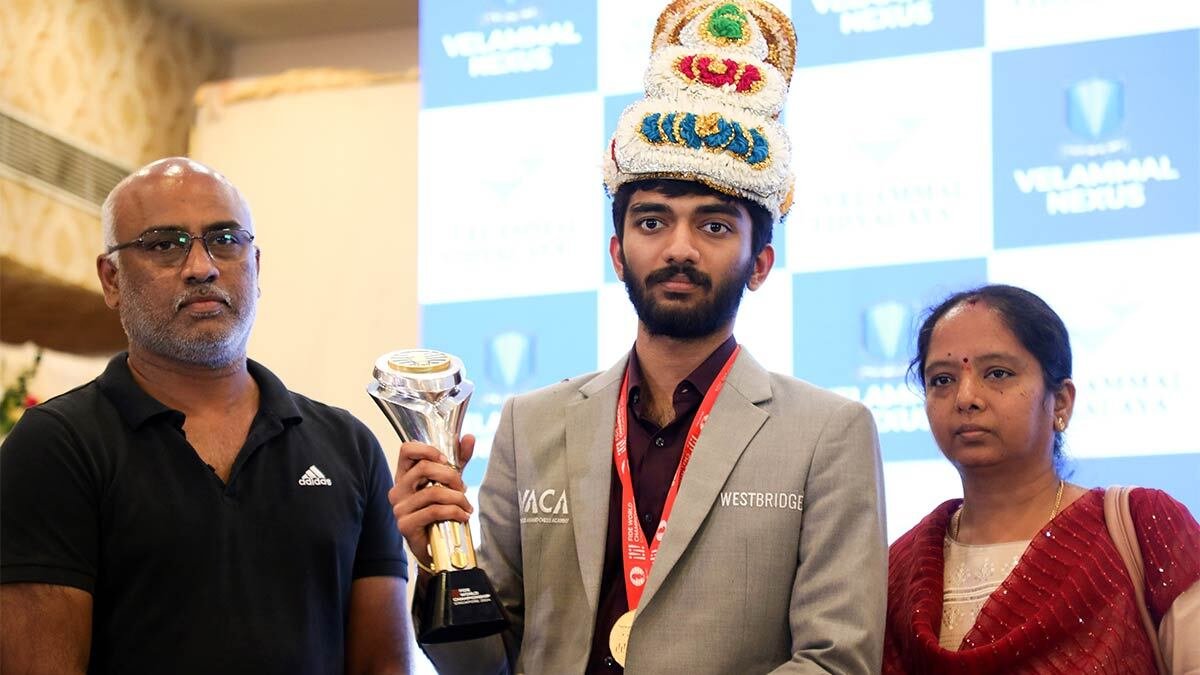
    D Gukesh, India’s newly-crowned International Chess Federation (FIDE) World Championship title winner was felicitated at his alma mater, Velammal Nexus in Chennai on Monday.

    The Indian chess grandmaster returned to India today, days after winning 2024 FIDE World Championship in Singapore and becoming the youngest-ever World Chess Champion. India’s chess prodigy, Gukesh, last week made history by defeating China’s Ding Liren in the decisive 14th game of the FIDE World Championship match in Singapore.

    Earlier in the day, the World champion received a rousing welcome at the Chennai Airport. Fans turned up in numbers to welcome the youngest world chess champion at the Chennai Airport. Gukesh was surrounded by people as he made his way out of the airport.

    “I am very glad to be here. I could see the support that and what it means to India. You guys are amazing. You gave me so much energy,” Gukesh told reporters after arriving at the airport. The championship, which was tied at 6.5-6.5 heading into the final game, culminated in a stellar performance by Gukesh, securing a 7.5-6.5 victory over Ding Liren.

    Following his triumph, Gukesh was overwhelmed with emotions and broke down in tears. Gukesh termed the win as the “best moment of his life” in the post-match press conference.

    Following the game, Liren said in the post-match press conference, “I was totally in shock when I realized I made a blunder. I will continue to play. I think I played my best tournament of the year. It could be better, but considering yesterday’s lucky survive. It is a fair result to lose in the end. I have no regrets.”

    When Gukesh finally received his trophy following his triumph in a heartwarming gesture, he handed it over to his parents immediately.
    At the end of game 13, the scores are level at six and a half points each, with one classical game left, as per FIDE. At this point, one move or one mistake could be the point of difference. The game lasted for 68 moves. 


  • Deadline for payment of 2nd instalment extended

    Deadline for payment of 2nd instalment extended

    Hyderabad: The Haj Committee of India has extended the deadline for payment of the second instalment for Haj 2025 till December 30.

    Pilgrims selected from the waiting list, who have already paid the first instalment, were required to pay the second instalment of Rs 1,42,000 by 16 December.

    Pilgrims can use the e-payment facility or the Haj Suvidha app via credit card, debit card, net banking, or UPI. Alternatively, payments can be made using a pay-in slip at any branch of the State Bank of India or Union Bank of India, in the account of the Haj Committee of India, using the bank reference number provided on the website under their cover number.

    After completing their payment, pilgrims selected from the waiting list must submit their documents to the respective state or union territory Haj committees by 1 January 2025. The unique bank reference number assigned to each cover must be mentioned on the deposit receipt.

    The third instalment of the remaining Haj amount will be determined after the finalisation of the airfare and Saudi expenses, with details to be communicated in due course.

    For further information, refer to the Haj expenditure details on their official website.

  • Concord Enviro Systems’ IPO to open on Dec 19

    Concord Enviro Systems’ IPO to open on Dec 19

    (L-R) Mr. Tanmay Jagdale, Associate Vice President , Motilal Oswal Investment Advisors Limited; Mr. Prayas Goel, Chairman and Managing Director, Concord Enviro Systems Limited; Mr. Prerak Goel, Executive Director, Concord Enviro Systems Limited and Mr. Hiren Raipancholia , Director , Equirus Capital Private Limited. |

    Concord Enviro Systems, an environmental engineering solutions firm, on Monday said it has set a price range of Rs 665-701 per share for its initial share-sale, which will open for public subscription on December 19.

    The initial share-sale is scheduled to close on December 23 and the bidding for anchor investors will open for a day on December 18, the company announced.

    The proposed IPO comprises a fresh issuance of equity shares worth Rs 175 crore and an Offer For Sale (OFS) of 46.41 lakh equity shares valued at Rs 325.33 crore, at the upper end of the price band, by promoters and an investor. This aggregates the issue size to Rs 500.33 crore Those selling shares in the OFS are, promoters –Prayas Goel and Prerak Goel, promoter groups — Namrata Goel, Nidhi Goel and Pushpa Goel– and investor AF Holdings.

    Proceeds from the fresh issue will be invested in Concord Enviro FZE (CEF) for setting up a new assembly unit for water treatment systems as well as its working capital requirement.

    Additionally, funds will be invested in Rochem Separation Systems (India) Private Ltd to expand its manufacturing facilities and support activities, payment of debt, technology and growth initiatives, working capital requirements and for general corporate purposes.

    At the upper end of the price band, the company’s market capitalisation has been pegged at Rs 1,450 crore.

    Half of the issue has been reserved for qualified institutional buyers, 35 for retail investors and the remaining 15 per cent for non-institutional investors. Concord Enviro Systems is an integrated solutions provider for industrial waste water reuse and zero liquid discharge solutions, with an in-house position across the value chain. The company’s reach extends to diverse regions with exports to countries in North America, Latin America, Africa, the Middle East, and Southeast Asia.

    Motilal Oswal Investment Advisors and Equirus Capital are the book running lead managers to the issue. The equity shares of the company are expected to be listed on December 27 on the NSE and BSE.


  • A Daydream or a Nightmare?

    A Daydream or a Nightmare?

    The Indo-Pakistani war that preceded Bangladesh’s independence in 1971, India’s support to the ‘Mukti Vahini’ (Emancipation Army) in Bangladesh, and the diplomacy that followed, is the saga of then Prime Minister Indira Gandhi’s leadership.

    फाइल फोटो (Source- Reuters)

    I heard this tale several times as a child, narrated by my father’s friend, a Bangladeshi Hindu convert who had migrated from that country before its 1971 Liberation War, whom I called ‘Abdul Chacha’: 

     I still recall the stentorian voice of ‘Bangabandhu’ Sheikh Mujibur Rahman ringing out the strident tones of his magical, inspirational speech at the Race Course Maidan (now known as Suhrawardy Udyan), in Calcutta, on March 7, 1971, calling an entire nation to rise up and take up arms against an exploitative government in erstwhile East Pakistan, informally declaring independence for Bangladesh, proclaiming, ‘The struggle this time is a struggle for our liberty. The struggle this time is a struggle for our independence,’ calling for ‘every house to turn into a fortress’, and ending on the notes of ‘Amader keu dabaya rakhta parba na (nobody can ever pin us down to the ground)’. 

    The Genesis of the Tale of Valour 

    On October 30, 2017, UNESCO added the speech to the ‘Memory of the World Register’ as a documentary heritage. It was delivered during a period of escalating tensions between East Pakistan and the powerful political and military establishment of West Pakistan. What followed in the days immediately after is now history! 

    The Bangladesh Liberation War of 1971 began 18 days later when the Pakistani Army initiated ‘Operation Searchlight’ against Bengali civilians, intelligentsia, students, politicians and armed personnel and ‘Bangabandhu’ was placed under house arrest by Pakistani soldiers at the midnight of March 25 night. 

    By March 1971, Mujibur-led Awami League cadres were on the streets, demonstrations were rife and strikes were the order of the day. Pakistan’s army—aided by the ‘Razakars’, considered the worst traitors in Bangladesh’s history—was openly vandalizing the country. The Hamoodur Rehman Commission gave an official count of 26,000 deaths. Lakhs of refugees fled to India seeking shelter. 

    The Indo-Pakistani war that preceded Bangladesh’s independence in 1971, India’s support to the ‘Mukti Vahini’ (Emancipation Army) in Bangladesh, and the diplomacy that followed, is the saga of then Prime Minister Indira Gandhi’s leadership. She completely relied on her military chief, Field Marshal Sam Manekshaw. 

    On December 16, 1971—later officially known as Bangladesh’s ‘Vijay Diwas’—just 13 days after the start of the war, General AA Khan Niazi, in-charge of the Eastern Command of the Pakistani Army, surrendered in Dhaka, handing over his service revolver to the Indian Army’s Eastern Command In-charge Lieutenant General JS Arora. 

    Sheikh Hasina & the Quota System 

    The quota system in Bangladesh started in 1972 and was modified several times since then. In the most recent version, the quotas covered 56% of jobs in the Bangladesh civil service. Most importantly, 30% of government jobs were set aside for the children and grandchildren of freedom-fighters of the 1971 Liberation War. 

    The Bangladesh Supreme Court, on July 21, 2024, scrapped most of the quotas on government jobs that had sparked nationwide protests by students which killed at least 114 people earlier this year. Dismissing a lower court order, the Supreme Court’s Appellate Division directed that 93% of government jobs in the country should be open to candidates on merit. The apex court’s ruling reduced the number of reserved jobs from 56% to 7%. However, it did not fully satisfy the protesters’ demands. The court decided to reserve 5% of government jobs for the children of “freedom fighters” from the 1971 War, down from 30%. 

    Many young graduates were upset about the “freedom-fighter” category, believing it favoured supporters of Hasina’s ruling party, the Awami League. Critics accused Hasina’s government of influencing the judiciary, while she hinted the court’s ruling would align with students’ demands. 

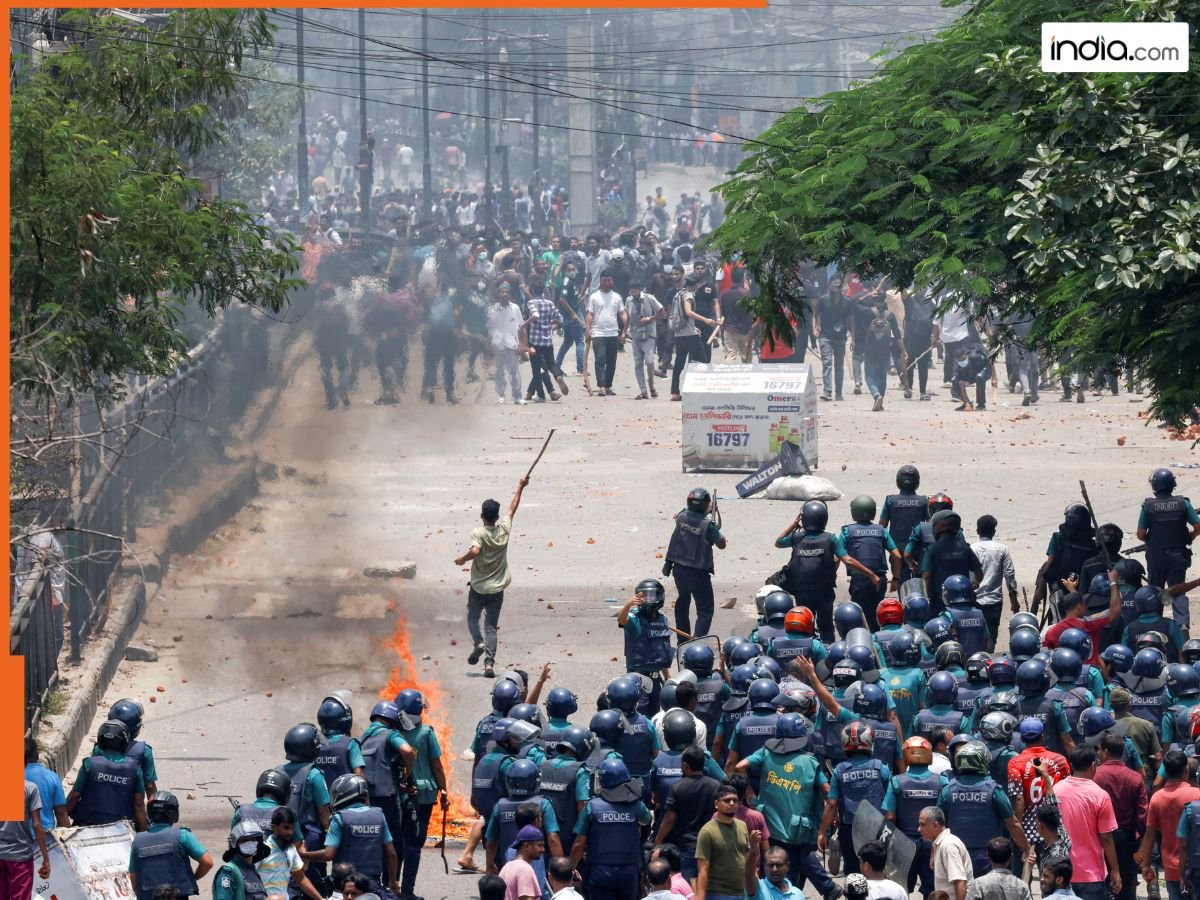
    The government chose not to engage in peaceful talks with the protesters. Instead, it launched a major crackdown on the protesters. As the situation deteriorated, the government shut down the Internet and mobile networks across the country. But reports trickling in suggested that at least 39 protesters were killed over two days, with 33 deaths occurring on July 18, and thousands more injured. Other estimates suggested a death toll of as high as 64. 

    Hasina, finally, resigned on August 5, 2024, after protesters stormed her official residence, Bangabhaban, in Dhaka. She later fled the country in a military chopper along with her sister. After she left, jubilant crowds waved flags and danced in front of cameras, sometimes in indecent and pervert poses. Others smashed a statue of Hasina’s father, ‘Bangabandhu’ Mujibur Rahman, the country’s Independence hero. 

    Unrest Spills over across Border 

    In a deeply disturbing development at end-November, students at leading universities in Bangladesh—including Dhaka University—were seen trampling upon the Indian National Flag placed deliberately at the entrances to these institutions. 

    Some BJP leaders from West Bengal warned about stopping exports to Bangladesh indefinitely. “If the attacks on Hindus and their places of worship don’t stop by next week, we’ll enforce a five-day ban on trade,” said the BJP’s Suvendu Adhikari, a leading Opposition figure in the West Bengal Assembly. “We’ll see how they manage without our potatoes and onions,” he said. 

    Amid growing anger over reports of Hindus being selectively targeted and attacked in Bangladesh and their places of worship and idols being vandalized, Indian truck drivers and traders have stopped doing business with the country. Hospitals in India are also refusing to treat patients coming from Bangladesh. Rumours about the border being closed have caused fear and many Bangladeshis in India are hurrying back to their country. 

    And A  Major Bone of Contention 

    Tensions between the two nations were already running high, triggered by the arrest of—and denial of bail to—Chinmoy Krishna Das, a Hindu ISKCON monk, in Chittagong, Bangladesh, accused of sedition for allegedly disrespecting Bangladesh’s national flag. Ramen Roy, who defended Chinmoy Krishna Prabhu in a legal case in Bangladesh, was brutally attacked there and his home ransacked by a group of radical Islamists. The attack seriously injured Roy, who is now battling for his life in the ICU. 

    And Threat to ‘Capture’ Kolkata 

    Tensions between Bangladesh and India have increased following recent threats made by some Bangladeshi former and present military personnel linked to extremist factions in that country claiming they would “capture Kolkata within four days”. This has led to concerns over security and stability, particularly in the border regions where migration has been rampant. 

    The threat to capture Kolkata—however laughable it may sound—comes amid increasing anti-India rhetoric from certain sections of Bangladeshi society. These sentiments have been linked to Bangladesh’s political instability and rising tensions between the two countries. Some Bangladeshi groups are promoting a narrative of claiming parts of Indian territory to form a ‘Greater Bangladesh’, a territory that would encompasse parts of India’s northeastern region—West Bengal, Bihar, Odisha, Jharkhand, Sikkim, Arunachal Pradesh, Assam, Meghalaya, Tripura, Mizoram, Manipur, Nagaland and, in particular, Kolkata, which they ignorantly claim historically belongs to Bangladesh. The rhetoric has sparked concern and contributed to increased surveillance and security along the Indo-Bangla border. 

    West Bengal Chief Minister Mamata Banerjee, on Monday (December 9), warned these Bangladeshi radicals that Indians “would not quietly sit and suck lollipop” to their claim to take over Bengal along with two other neighbouring states. Her swipe at the Bangladeshi leaders came on a day when Indian Foreign Secretary Vikram Misri visited Dhaka to meet officials of the interim government led by Muhammad Yunus in the wake of the attacks on Hindus in Bangladesh. 

    (The author of this article is a Defence, Aerospace & Political Analyst based in Bengaluru. He is also Director of ADD Engineering Components, India, Pvt. Ltd, a subsidiary of ADD Engineering GmbH, Germany. You can reach him at: girishlinganna@gmail.com) 


  • Top Mistakes To Avoid When Investing In Mutual Funds

    Top Mistakes To Avoid When Investing In Mutual Funds

    You are excited about investing in mutual funds, with dreams of watching your money grow steadily over time. But as you start, you realise that not everything goes as smoothly as you thought. This isn’t because mutual funds are complex—it is because there are common mistakes that even seasoned investors sometimes make. By being aware of these pitfalls, you can save yourself time, money, and stress.

    Common Pitfalls of Mutual Funds Investment

    After you and proceed to invest in mutual funds, you must avoid the following mistakes:

    No Investment Goals

    Without well-defined goals, your investment approach may lack direction and fail to deliver desired results. For example, if you invest without a clear purpose, you could select funds based on ongoing market trends or short-term gains rather than choosing options that fit your long-term objectives. Result? Your portfolio could become unbalanced and fail to meet your key financial milestones, like retirement savings, purchasing a home, or funding your children’s education. 

    Begin by setting specific, quantitative, and realistic goals is crucial to avoid this. For example, if your goal is to save for retirement in 20 years, you would likely select a mix of debt and equity schemes that balance growth and stability over the long term. Conversely, if you are saving for a down payment on a house in five years, you might go for more conservative investments to preserve capital.

    Skipping Diversification

    Whether it is or mutual fund investment,, or diversification is crucial. Diversification is allocating capital across different asset classes, geographical locations, and sectors to reduce risk exposure. If you invested all your money in one sector, like technology, and that sector took a hit, you could experience significant losses. Diversification acts as a safeguard against such risks. 

    For example, if you allocate your investments proportionally in technology, healthcare, and consumer goods through a , a fall in one industry can offset profits in another. This approach mitigates the effect of market volatility on your overall portfolio. Although diversification won’t guarantee profits, it is a necessary strategy for risk management.

    Avoiding Expense Ratio

    The expense ratio points out the annual fee asset management companies charge their investors. It covers the fund’s cost, including management, administrative fees, and other expenses. A slight difference in expense ratios can notably influence your returns over the long term. For instance, if you invest in a fund with a 2% expense ratio instead of a similar fund with a 0.5% expense ratio, the higher fee can erode your returns, especially over the long term. 

    Suppose you invest ₹1,00,000 in a mutual fund with a 10% return per year. If the expense ratio is 2%, your effective return will be 8% (10% – 2%). Over the next 20 years, this difference results in a considerable reduction in your investment’s growth.

    Timing the Market

    Timing the market refers to an attempt to identify the perfect times to buy or sell based on current market conditions. However, this strategy is often ineffective and can result in major financial losses. For example, if you try to purchase mutual fund units when you think the market is at its lowest point and sell when it reaches its peak, you might miss the market’s most profitable days. Research has shown that missing a few of the best trading days can severely impact your overall returns. 

    So what’s the alternative here? Consider a dollar-cost averaging strategy. In this, you consistently invest a fixed amount at regular intervals through a , regardless of market conditions. The goal is to reduce the impact of market volatility and average the purchase cost over time.

    Not Reviewing Your Investments

    Fund performance, market conditions, and financial objectives are constantly evolving. That is why it is recommended to keep track of your portfolio to ensure it matches your changing financial goals and market dynamics.  

    For example, if you initially invested in a growth-focused mutual fund but your risk appetite has decreased, you may consider revising your investment strategy. Frequent reviews highlight areas needing improvement, which can enhance your returns.

    Not Understanding Compounding

    Compounding works by reinvesting your returns to earn money not just on your initial investment but also on the returns already accumulated. Imagine you invest ₹1,00,000 in a mutual fund that yields 10% annually. By the end of the first year, you would have ₹1,10,000. In the second year, you earn 10% on ₹1,10,000, not just on your original ₹1,00,000, giving you ₹1,21,000. 

    As this process repeats, your returns grow faster, creating a “snowball effect.” Missing out on compounding means you are not allowing this growth to build up. The key is to start early and stay invested, as compounding accelerates wealth growth more noticeably over the long term

    Focusing Solely on Past Performance

    It is tempting to look at a fund’s past performance and assume it is a safe choice if it has done well before. However, relying too heavily on past performance can be misleading. Market conditions change, and a fund that performed well in the past might not deliver the same results in the future. Many investors are lured into high-performing funds without considering current market trends and future potential.

    Not Considering Inflation

    Inflation reduces the value of your returns over time. If you don’t account for inflation, you might think you are earning significant returns, but the real growth after inflation might be minimal.

    Choose funds with returns that outpace inflation. Equity and balanced funds, though slightly riskier, often provide higher returns that can help offset inflation over time.

    Conclusion

    Investing in mutual funds can be rewarding if done wisely. By avoiding these common mistakes, you will be better positioned to build a robust and profitable portfolio. Remember that patience, discipline, and a clear understanding of your goals are essential to successful investing. With careful planning and regular reviews, mutual funds can help you grow wealth and achieve your financial dreams.

  • Vedanta Declares 4th Interim Dividend Of ₹8.5 Per Share; Company’s NCDs Receive Rating Upgrade

    Vedanta titan in the metal and mining industry, nodded to its fourth interim dividend on Monday, paying out Rs 8.5 per share for the fiscal year 2024–2025.

    Today’s statement came after market hours. Furthermore, India Ratings and Research Private Limited has retracted the rating on commercial paper and raised the ratings on non-converting debentures (NCDs) to ‘IND AA-/Rating Watch with Developing Implications,’ according to Vedanta.

    Compared to the previous finish of Rs 519.70 on the BSE, Vedanta’s shares closed 1.21 per cent down at Rs 513.40. Early transactions on the BSE also saw it reach a record high of Rs 527.

    The firm’s market capitalisation dropped to Rs 2 lakh crore. A transaction of Rs 41.21 crore was recorded on the BSE from the sale of 7.99 lakh shares of the company.

    Company’s exchange filling

    ‘We would like to notify you that the Fourth Interim Dividend of Rs 8.5/- per equity share on face value of Rs 1/- per equity share for the Financial Year 2024-25, totalling Rs 3,324 Crores, was considered and approved by the Board of Directors of Vedanta Limited (the ‘Company’) at its meeting today, Monday, December 16, 2024.

    As previously said, Tuesday, December 24, 2024, will be the record date for dividend payments, and the interim dividend will be paid in accordance with the legal deadlines,’ Vedanta stated.

    Vedanta’s Q2 FY25

    According to an exchange report on Friday, the metal producer’s net profit for the quarter ending in September 2024 was Rs 5,603 crore, up from a loss of Rs 915 crore in the same time last year.

    This contrasts with the analysts’ forecast of Rs 2,378.2 crore that Bloomberg surveyed. A deferred tax of Rs 1,868 crore was included in the second quarter’s earnings. A 60 per cent yearly decline in oil and gas revenue and a 30 per cent decline in iron ore sales had the most effects on revenue growth.

    The cost of materials consumed increased by 16 per cent year over year, which had an effect on the company’s consolidated profits before interest, taxes, depreciation, and amortisation.


  • Enforcement Directorate Raids Residence Of Congress Leader Vishal ‘Golu’ Agnihotri

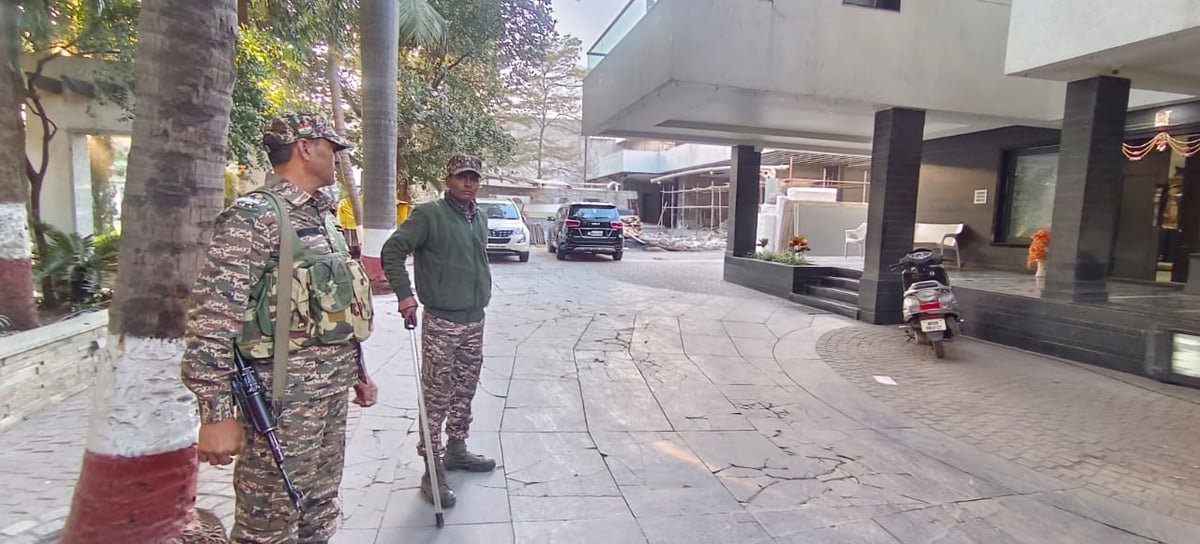
    CRPF personnel are deployed outside his house while the operations are underway. | Anand Shivre

    Indore (Madhya Pradesh): The Enforcement Directorate (ED) conducted a raid at Congress leader Vishal (Golu) Agnihotri’s residence in Indore’s Chandan Nagar on Monday. It is said that the politician was preparing to travel to Dubai but was detained at the airport before his departure.

    According to information, the investigation is believed to be linked to the arrest of bookie Piyush Chopra in Ujjain earlier this year. At present, Central Reserve Police Force (CRPF) personnel are deployed outside his house while the operations are underway. The ED has seized various documents and electronic evidence from his house. 

    The Chandan Nagar Police Station has reportedly not been informed about the ED’s actions.

    Reason of the raid 

    Infact, Ujjain Police had arrested nine individuals for running a cricket betting racket on June 14, 2024. During the operation, cash amounting to ₹14.58 crore, 41 mobile phones, 19 laptops, and several national and international SIM cards were recovered.

    The main accused happened to be Piyush Chopra who was found in possession of 3,000 bundles of ₹500 notes, 7 kilograms of silver, and foreign currency from seven different countries. Sources say the authorities had to use machines to count the seized cash, which took the entire night.

    FP Photo

    Close connections with former CM Kamal Nath 

    Golu Agnihotri is believed to be a close aide of former Madhya Pradesh Chief Minister Kamal Nath. He currently serves as the acting president of the Indore Congress. Agnihotri had sought a Congress ticket to contest from the Indore-4 constituency in 2013 and 2018 but was not successful. Later, he was appointed to his current position in the party.


  • Born in anger or out of deliberate devotion to music, many stories credit origin of tabla

    New Delhi: Legend has it that a competition was held in a Mughal court between two pakhawaj players. The losing maestro was so enraged that he smashed his pakhawaj, a two-sided percussion instrument, into two. And so was born the tabla.

    Such was the dramatic birth of the tabla, the two pieces of wood, metal and bound leather, which today are the primary percussion accompanying instruments of any Hindustani classical performance.

    For ages, the tabla largely played second fiddle to the vocalist or the main instrumentalist — until the holy trinity of Pandit Samta Prasad, Pandit Kishan Maharaj and Ustad Alla Rakha Khan gave it prominence.

    However, it was left to Alla Rakha’s son, Zakir Hussain, to put it on the global stage when he collaborated with Western performers such as John McLaughlin, Yo-Yo Ma and George Harrison of the Beatles.

    Stories behind the origin of tabla

    Much like the diverse sounds it produces, the stories behind the invention of the tabla are also numerous. The smashing of the pakhawaj by Sudhar Khan Dadhi in the court of Mohammed Shah Rangeela in the 18th century is just one legend.

    “The origin of the Tabla is one of the most controversial aspects of Indian classical music and nothing can be said with any degree of certainty,” says musicologist Pandit Vijay Shanker Mishra in his book “Art and Science of Playing Tabla.”

    “On regaining his calm, Sudhar Khan placed the two severed pieces of the Pakhawaj with their faces (drumheads) up, much like today’s Tabla and began playing on them. As the Pakhawaj could still produce sounds in spite of being sliced into two, the people exclaimed: ‘Tab bhi bola (It still speaks!)’ (which) turned into ‘Tabbola’ and finally, ‘Tabla,’ hold the proponents of this view,” according to Mishra’s book.

    Many also credit the invention of the tabla to a drummer named Amir Khusrau Khan in the early 18th century, who was tasked with creating a more refined and melodic percussion instrument to accompany the emerging music style known as ‘Khayal.’

    The barrel-shaped pakhawaj drum was considered the ancestor of both the tabla and the mridangam, and has been depicted in countless paintings and prints.

    Although the tabla is a relatively recent addition to Hindustani classical music, the instrument has gained immense popularity, and today it is impossible to imagine a concert without the tabla, whether as a solo instrument or an accompaniment.

    There is a more scholarly view of the origins of the name — it is said to have been derived from the Arabic word “tabl”, meaning “drum.” The percussion instrument is made up of two drums, ‘daayaan’ or right, which produces bass sound, and ‘baayaan’ or left, which creates higher pitched treble.

    While the daayaan is a narrower drum typically made of wood, the baayaan is the larger, rounded drum made of metal. Both the drums are played with the fingers and the palm of the hand.

    Over the centuries, several distinct gharanas in classical Indian tabla have developed, including Ajrara, Benares, Delhi, Farrukhabad, Lucknow, and Punjab. While these gharanas still dominate the tabla tradition today, the late 20th century has seen their boundaries start to blur as modern exponents seek to build upon the foundation laid by their predecessors.

    Tabla, a worldwide sensation

    Many artists have taken the tabla worldwide, exploring its versatile fusion possibilities. Like, Punjab master Alla Rakha, who became renowned as Ravi Shankar’s principal accompanist during numerous global tours, and his son Zakir Hussain, widely considered as the tabla’s foremost contemporary ambassador.

    But the fame and recognition for tabla players was not easy to come by, and as mentioned by Hussain in the book, “Zakir Hussain: A Life in Music”, contemporary tabla players have much to thank their seniors, Pandit Samta Prasad, Pandit Kishan Maharaj, Alla Rakha Khan, for their groundbreaking contribution to music.

    “As a tabla player we didn’t make much money. Now it’s different; we tabla players are not taken for granted. In the early days when we were going to play outside Bombay, we tabla players were asked to travel by train whilst the main artists would travel by air. That changed in my father’s time and now all musicians travel together,” wrote Zakir Hussain in the book by Nasreen Munni Kabir.

    “It took about 20 years to get to a point where I could ask for something, tell the organisers that I needed this or that — say I wanted a good hotel room or wanted to travel by air,” he said in the book.

  • BPSC Cancels 70th CCE Prelims Exam Held At Bapu Exam Centre

    The decision was announced by BPSC Chairman Ravi Manu Bhai S Parmar | Representative Image

    Patna: The Bihar Public Service Commission (BPSC) on Monday, December 16 cancelled the 70th CCE prelims exam held at the Bapu Pariksha Bhavan in Patna, Bihar on December 13. The decision was announced by BPSC Chairman Ravi Manu Bhai S Parmar and was taken after reports of exam getting disrupted in the centre. The decision is based on the reports by Centre Superintendent and the investigation report by District Administration. Approximately 12,000 candidates took exam at this centre.

    Amar Ujala reported that the exam was taken by four lakh seventy-five thousand candidates at 911 centres. The exam taken by the candidates at other centres will not be impacted. The commission’s IT cell and agency are conducting also currently investigating.

    Parmar also declined rumors of any paper leak during the exam and said that the exam only stands cancelled at the Bapu Pariksha Bhavan. Aspirants should keep an eye on the official website to stay updated about the new date. The chairman further clarified that results will be made public at the same time, even if the test is retaken.

    Those who attempted to interfere with the exam by breaking the IT regulations will face harsh consequences.

    BPSC’s findings

    When the question paper arrived late, there was an option for extra time in the Bapu Examination Complex room. However, the miscreants disrupted the test between 1 and 1:15 p.m.

    Furthermore, BPSC discovered near the end that some aspirants were using their cell phones to record inside the exam centre. BPSC is also investigating how the aspirants got in via cell phones, as reported by Amar Ujala.

    According to the report, there were also various candidates who were not able to take the test because of the chaos.