Category: BUSINESS

  • Indian real estate market ready to meet global workspace demand: Report

    Indian real estate market ready to meet global workspace demand: Report

    Mumbai: As global firms recalibrate their footprints, India is braced for intensified demand — not just for space, but for future-ready, flexible environments that can deliver performance, resilience, and purposeful design in equal measure, a new report said on Monday.

    Global corporates are targeting over 100 million square feet of new workspace as disruption drives new wave of real estate demand.

    As many as 63 per cent of the corporate real estate leaders surveyed expressed concern about economic and geopolitical volatility. But instead of freezing decision-making, companies are taking action by building optionality into their space strategies, including shorter leases, more flexible formats, and locations that align with risk diversification and talent access, said the report by Knight Frank.

    MS Creative School

    “In India, this shift is already underway. Office leasing in the country reached 71.9 mn sq ft in 2024 — a 21 per cent YoY growth — while 2025 has started on a strong footing, clocking 28.2 mn sq ft in Q1 alone, up 74 per cent YoY,” said Shishir Baijal, Chairman and Managing Director, Knight Frank India.

    “Corporate real estate complexities today are being shaped by a convergence of strategic alignment, operational volatility, and fast-evolving workstyles — all against a backdrop of compressed timelines and cost discipline. The CRE function is no longer reacting from the sidelines but is being repositioned at the centre of enterprise transformation,” Baijal added.

    Far from pulling back, many corporates are accelerating change. About 50 per cent of respondents expect their total footprint to grow over the next three to five years, the equivalent of 104 million sq ft of space. Twenty-seven companies are expecting to expand by over 20 per cent — creating up to 49 million sq ft of demand from those firms alone, the findings showed.

    “Occupiers are cutting loose from legacy portfolios, but they’re not abandoning space, they’re moving to better space and — in many cases — into more locations as they regionalise their portfolios,” said Dr Lee Elliott, Partner and Head of Global Occupier Research at Knight Frank.

    The survey highlights a marked shift in location strategies, with organisations consolidating into prime assets, seeking functional flexibility, and designing networks of hubs rather than monolithic headquarters.

    The trend is already playing out in major markets where demand is tilting toward buildings that offer adaptability, experience, and ESG credentials, particularly in cities that combine global reach with local talent.

    “Global uncertainty and the need for business transformation is speeding up this activity, rather than slowing it down, because corporates know they need to get it right to succeed in the current macro environment,” Elliott mentioned.

  • India embraces cashless revolution in last 11 years: Nirmala Sitharaman

    India embraces cashless revolution in last 11 years: Nirmala Sitharaman

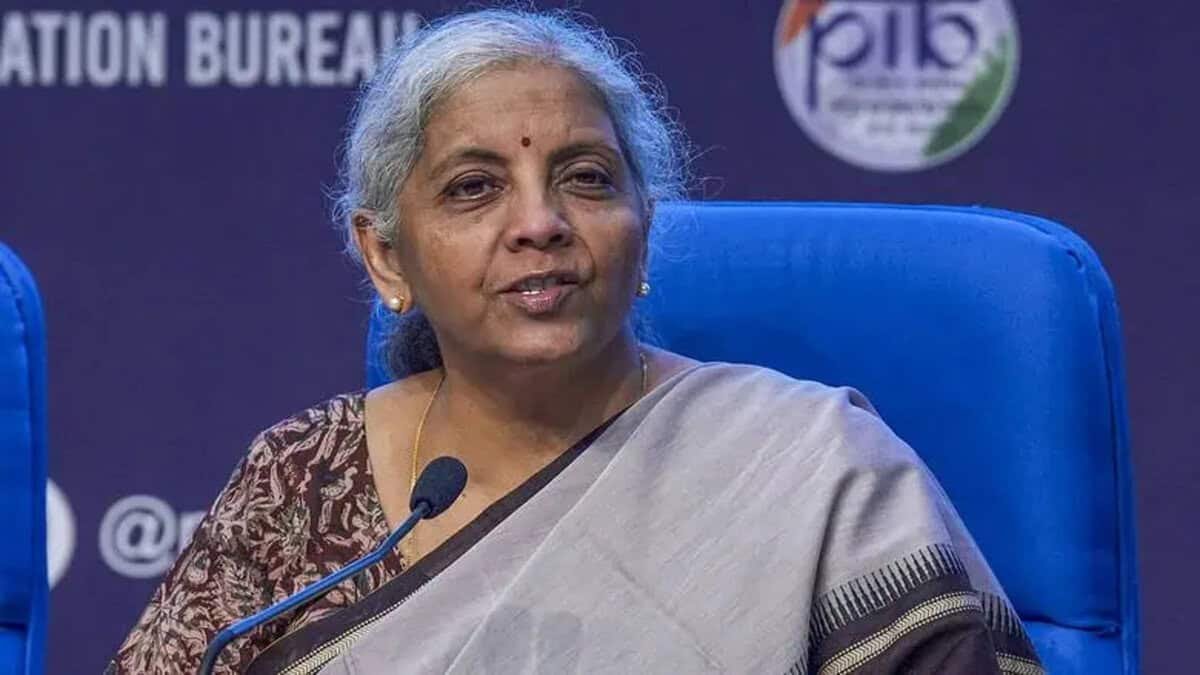
    New Delhi: Union Finance Minister Nirmala Sitharaman on Monday said that India is embracing a cashless revolution with world-class digital initiatives like unified payments interface (UPI).

    In the last 11 years, India has seen a remarkable journey under the leadership of Prime Minister Narendra Modi, the finance minister said on a post on X.

    “India is embracing a cashless revolution. With Rs 70,000 crore+ worth UPI transactions daily and 59.6 crore transactions in a single day, digital payments are now the norm,” the minister added.

    MS Creative School

    From making life easier for the common citizen to boosting business confidence, it’s been a decade of real and visible change, she further stated.

    India today is not just the fastest-growing major economy, but also a key global voice on pressing issues like climate action and digital innovation.

    In the month of May, UPI posted a robust growth by processing 18.68 billion transactions, up from 17.89 billion in April. As per data by the National Payments Corporation of India (NPCI), the UPI transactions mark a 33 per cent year-on-year (YoY) surge compared to 14.03 billion transactions in the same month last year.

    The UPI transactions rose to Rs 25.14 lakh crore (by value) last month, a 5 per cent increase from Rs 23.95 lakh crore in April. This reflects a 23 per cent rise from Rs 20.45 lakh crore in May last year. The average daily transaction volume stood at 602 million, while the average daily transaction value reached Rs 81,106 crore.

    The UPI has strengthened its dominance in India’s digital payments system with its share in the total transaction volume rising to 83.7 per cent in 2024-25 from 79.7 per cent in the previous financial year.

    The RBI’s annual report shows that UPI facilitated 185.8 billion transactions during 2024-25, which represents a 41 per cent year-on-year increase. In value terms, UPI transactions rose to Rs 261 lakh crore from Rs 200 lakh crore in FY24.

  • Indian stock market opens in green, IT and PSU banks lead

    Indian stock market opens in green, IT and PSU banks lead

    Mumbai: The Indian benchmark indices opened higher on Monday amid positive global cues, as buying was seen in the IT, PSU banks and auto sectors in the early trade.

    At around 9.26 am, Sensex was trading 379.01 points or 0.46 per cent up at 82,568 while the Nifty added 116.15 point or 0.46 per cent at 25,119.20.

    Nifty Bank was up 273.35 points or 0.48 per cent at 56,851.75. The Nifty Midcap 100 index was trading at 59,405.95 after rising 395.65 points or 0.67 per cent. Nifty Smallcap 100 index was at 18,711.90 after climbing 129.45 points or 0.70 per cent.

    MS Creative School

    According to analysts, the monetary bazooka fired by the RBI last week will keep the market spirits alive in the near-term.

    But this may not be sufficient to sustain the rally, and more important is the trend in earnings growth, they added.

    “Q4 results indicate better earnings growth for midcaps. FY26 earnings are unlikely to reach mid teens, which is necessary for the market to remain resilient and move up,” said Dr VK Vijayakumar, Chief Investment Strategist, Geojit Investments Ltd.

    Meanwhile, in the Sensex pack, Bajaj Finance, Axis Bank, IndusInd Bank, Kotak Mahindra Bank and Infosys were the top gainers. Whereas, Titan, Tata Steel and Eternal were the top losers.

    After a positive opening, Nifty can find support at 25,000, followed by 24,900 and 24,800. On the higher side, 25,100 can be an immediate resistance, followed by 25,200 and 25,300, said experts.

    Given the current market dynamics and lingering global uncertainties, traders are advised to maintain a disciplined approach. It is prudent to avoid taking large overnight positions and instead focus on short-term trading opportunities, backed by strict stop-losses and robust risk management, said Hardik Matalia from Choice Broking.

    The foreign institutional investors (FIIs) purchased equities worth Rs 1,009.71 crore on June 6, while domestic institutional investors (DIIs) extended their buying on the 14th day, as they bought equities of Rs 9,342.48 crore on the same day.

    In the Asian markets, Hong Kong, Bangkok, China, Seoul and Japan were trading in green.

    In the last trading session, Dow Jones in the US closed at 42,762.87, up 443.13 points, or 1.05 per cent. The S&P 500 ended with a gain of 61.06 points, or 1.03 per cent, at 6,000.36 and the Nasdaq closed at 19,529.95, up 231.51 points, or 1.20 per cent.

  • Bank of India cuts lending rate after RBI’s repo rate reduction

    Bank of India cuts lending rate after RBI’s repo rate reduction

    Mumbai: The Bank of India (BOI) on Friday reduced its repo-based lending rate (RBLR) by 50 basis points, bringing it down from 8.85 per cent to 8.35 per cent.

    This move follows the Reserve Bank of India’s (RBI) decision to cut the repo rate by 50 basis points, lowering it from 6 per cent to 5.5 per cent.

    The central bank’s decision is aimed at boosting economic activity by making loans cheaper for businesses and individuals.

    MS Creative School

    The RBI’s Monetary Policy Committee (MPC), led by Governor Sanjay Malhotra, announced this rate cut during its latest policy meeting.

    Governor Malhotra noted that with this quick series of cuts, the MPC believes there is now limited room left for more rate cuts to support growth.

    Along with the repo rate cut, the RBI also reduced the Cash Reserve Ratio (CRR) by 100 basis points.

    The CRR, which is the minimum amount banks must hold with the RBI, will now be reduced from 4 per cent to 3 per cent.

    This reduction will happen in four stages and is expected to inject around Rs 2.5 lakh crore of liquidity into the banking system.

    In another significant shift, the RBI changed its policy stance from ‘accommodative’ to ‘neutral’. This means that future interest rate decisions will depend on how the economy performs, rather than aiming solely to support growth or control inflation.

    Despite the rate cuts, the RBI has kept its GDP growth forecast for the current financial year unchanged at 6.5 per cent.

    The quarterly growth estimates have also remained steady at 6.5 per cent for the first two quarters, 6.7 per cent for the third, and 6.6 per cent for the fourth.

    On the inflation front, the RBI has lowered its full-year forecast from 4 per cent to 3.7 per cent.

    The inflation forecast for the first two quarters of the year has also been revised downward to 2.9 per cent and 3.4 per cent, from 3.6 per cent and 3.9 per cent previously.

    Meanwhile, Bank of India’s stock reacted mildly to the announcement, closing 0.1 per cent higher at Rs 124.3 on the National Stock Exchange (NSE) on Friday.

    In comparison, the benchmark Nifty rose 1.02 per cent. So far this year, Bank of India shares have gained 22.06 per cent, and have gone up 5.54 per cent in the last 12 months.

  • Adani Group contributes Rs 74,945 crore tax in FY25, up 29 pc

    Adani Group contributes Rs 74,945 crore tax in FY25, up 29 pc

    Ahmedabad: The Adani Group’s total contribution to the exchequer increased by 29 per cent to Rs 74,945 crore in fiscal year 2025, from Rs 58,104 crore in FY24, through its portfolio of listed entities, it announced on Thursday.

    Of the total contribution of Rs 74,945 crore, direct contributions stood at Rs 28,720 crore, indirect contributions at Rs 45,407 crore, while other contributions at Rs 818 crore, the company said in a statement.

    To put it in perspective, Rs 74,945 crore is roughly the cost of building the entire Mumbai Metro network – an infrastructure lifeline for millions of people. It’s also nearly enough to host a modern-day Olympics.

    MS Creative School

    Among its publicly listed entities, the leading contributors include Adani Enterprises Limited (AEL), Adani Cement Limited (ACL), Adani Ports and Special Economic Zone (APSEZ), and Adani Green Energy Limited (AGEL).

    According to the Group, the details are covered in the independent annual reports published by seven of the group’s listed entities – Adani Enterprises Limited, Adani Ports and Special Economic Zone Limited, Adani Green Energy Limited, Adani Energy Solutions Limited, Adani Power Limited, Adani Total Gas Limited, and Ambuja Cements Limited.

    The figure also includes the tax paid by three other listed companies, NDTV, ACC and Sanghi Industries, which are held by the seven companies.

    The group has also published a document titled ‘Basis of Preparation and Approach to Tax’ on the websites of its seven entities, which provides a complete breakdown of Adani Group’s global tax and other contributions.

    It includes direct contributions like global taxes, duties and other charges borne by Adani portfolio of companies; indirect contributions like global taxes and duties collected and paid on behalf of other stakeholders; and other Contributions like social security etc, contributed for the benefit of the employees.

    Adani Group said it considers tax transparency as an integral part of its broader ESG framework.

    “Through this voluntary initiative, the Group aims to demonstrate its commitment to transparency, foster stakeholder trust and contribute to a more accountable global tax environment. The group strives to harmonise growth with social responsibility, aiming to transform India’s infrastructure landscape while promoting innovation and creating long-term value for stakeholders,” it emphasised.

    The Group engaged a professional agency to provide an independent assurance report on its global contribution to the exchequer.

  • Indian stock market opens in green amid mixed global cues

    Indian stock market opens in green amid mixed global cues

    Mumbai: The domestic benchmark indices opened higher on Thursday amid mixed global cues, as buying was seen in the pharma, auto and IT sectors in the early trade.

    At around 9.29 am, Sensex was trading 268.8 points or 0.33 per cent up at 81,267.09 while Nifty added 82.75 point or 0.34 per cent at 24,702.95.

    Nifty Bank was down 29.70 points or 0.05 per cent at 55,647.15. The Nifty Midcap 100 index was trading at 58,188 after rising 263.35 points or 0.45 per cent. Nifty Smallcap 100 index was at 18,398.75 after climbing 141.65 points or 0.78 per cent.

    MS Creative School

    According to analysts, the Nifty ended higher on Wednesday and the India VIX fell nearly 5 per cent, which bulls would have liked to see.

    “For Nifty, 24,462 remains intact and that’s keeping the optimism alive. Should this level break, the market will most likely drop to key support at 23,800. Short-term resistance sits between 24,760 and 24,882. Globally, stock bulls have tailwinds,” said Akshay Chinchalkar, Head of Research, Axis Securities.

    Meanwhile, in the Sensex pack, Eternal, PowerGrid, M&M, HDFC Bank, HCL Tech, TCS, IndusInd Bank and Kotak Mahindra Bank were the top gainers. Whereas Nestle India, Titan, Bajaj Finance, Tata Motors and Tech Mahindra were the top losers.

    According to analysts, both geopolitical and economic news are likely to weigh on markets in the near-term.

    “The major economic news is the sharp dip in the US ISM PMI data. This indicates that the US economy is slowing down sharply. The US 10-year bond yield has declined to 4.36 per cent and, given the slowing US economy, is likely to trend lower,” according to Dr. VK Vijayakumar, Chief Investment Strategist, Geojit Investments Ltd.

    This will turn out to be good for emerging markets (EMs) like India in the medium term. Buy on dips continues to be the ideal strategy now. Rate sensitives will be preferred in view of the expected rate cut by the RBI MPC, said experts.

    In the Asian markets, Hong Kong, Bangkok, Seoul, China and Jakarta were trading in green, whereas only Japan was trading in red.

    In the last trading session, Dow Jones in the US closed at 42,427.74, down 91.90 points, or 0.22 per cent. The S&P 500 ended with a gain of 0.44 points, or 0.01 per cent, at 5,970.81 and the Nasdaq closed at 19,460.49, up 61.53 points, or 0.32 per cent.

    On the institutional front, foreign institutional investors (FIIs) were net buyers as they bought equities worth 1,076.18 crore on June 4, while domestic institutional investors (DIIs) purchased equities worth 2,566.82 crore.

  • Domestic occupiers capture 46 pc of office leasing in India since 2022: Report

    Domestic occupiers capture 46 pc of office leasing in India since 2022: Report

    Mumbai: Indian firms have significantly increased their footprint in the commercial real estate market, with domestic occupiers accounting for 46 per cent of gross leasing activity since 2022 — up from 35 per cent during 2017-2019, according to a new report released on Wednesday.

    Leasing volumes by domestic firms reached unprecedented levels in 2024 with 31.9 million square feet, with them continuing the strong momentum into Q1 2025 with 8.8 million square ft already leased, said the report by JLL.

    The BFSI sector has recorded the most substantial growth in average transaction size. BFSI firms have more than doubled their space requirements, with average deal sizes jumping from 10,500-11,500 sq. ft in 2017-2019 to 24,000-25,000 sq. ft in the 2022-Q1 2025 period, representing a staggering 125-130 per cent increase.

    MS Creative School

    Delhi-NCR leads in domestic leasing activity, while Mumbai has shown the most significant growth with its share increasing by approximately 62 per cent.

    “This evolution reflects India’s strengthening economy and changing corporate strategies focused on efficiency and consolidation. While global occupiers remain the mainstay, the rising importance of Indian occupiers in the office market will continue to support the rising leasing activity levels in the country,” said Dr Samantak Das, Chief Economist and Head of Research and REIS, India, JLL.

    Both these, together, have the potential to push India’s leasing volumes to over 100 million sq. ft over the next 3-4 calendar years, he added.

    After BFSI, manufacturing follows closely behind with average deals growing from 7,000-8,000 sq. ft to 15,000-16,000 sq. ft, a 100-120 per cent increase that reflects India’s strengthened focus on domestic production capabilities.

    While flex operators continue to secure the largest spaces per transaction at 57,000-60,000 sq ft (up 35-45 per cent from previous levels), technology firms have also substantially increased their footprint.

    The IT and ITeS sector now averages 31,000-32,000 sq. ft per deal, up 85-95 per cent from the 2017-2019 period, the report noted.

    “The evolution of India’s domestic corporate real estate landscape reveals a fascinating divergence in occupier preferences across major metros. Delhi NCR and Mumbai have emerged as clear frontrunners, but with distinctly different demand drivers,” said Rahul Arora, Head-Office Leasing and Retail Services, Senior Managing Director (Karnataka, Kerala), India, JLL.

  • Smaller cities to drive India’s quick commerce market to $57 billion by 2030

    Smaller cities to drive India’s quick commerce market to $57 billion by 2030

    New Delhi: Riding on a surge in online orders in smaller cities and towns, India is likely to see its quick commerce (QC) total addressable market (TAM) reach $57 billion by 2030, according to a new report.

    Morgan Stanley has updated its forecast from earlier $42 billion, as quick commerce adoption rises across the country. The global brokerage has also raised its gross order value (GOV) estimates for the quick commerce segment in India by 9-11 per cent for FY26–28.

    It also identified key catalysts for the sector in the coming quarters, including sustained growth in quick commerce GOV, continued improvement in food delivery margins, and a stable competitive environment.

    MS Creative School

    Quick commerce operators, including Blinkit, Instamart, Zepto and Flipkart Minutes continue to expand.

    Eternal’s (earlier Zomato) quick commerce business is “primed for growth” with a profitability profile over the medium term that is expected to mirror its food delivery operations, said the report.

    By holding leadership positions in both food delivery and quick commerce, Eternal is uniquely positioned to dominate a growing profit pool, the brokerage noted.

    According to a recent KPMG Private Enterprise’s Venture Pulse, global VC investment rose from $349.4 billion across 43,320 deals in 2023 to $368.3 billion across 35,684 deals in 2024, as quick-commerce remains a hot sector of investments in India this year.

    E-commerce and quick commerce have grown 2–3 times faster in value than traditional and modern trade channels, diminishing the need for an extensive traditional trade network to enter the market.

    Digital payments are also gaining popularity, with 45 per cent of Internet users adopting them for transactions, said a Bain & Company report in April.

    According to the RBI, “Private final consumption is the brightening spot in the economy, driven by e-commerce and q-commerce among which it is important to foster competition rather than being restrictive”.

  • Oil India commences natural gas production from Bakhri Tibba block in Jaisalmer

    Oil India commences natural gas production from Bakhri Tibba block in Jaisalmer

    Jaisalmer: Government owned Oil India Ltd (OIL) has commenced natural gas production from the Bakhri Tibba block, located in the desert belt near the India-Pakistan border in Rajasthan’s Jaisalmer district.

    The commencement of natural gas production was announced by Union Minister for Petroleum and Natural Gas, Hardeep Singh Puri.

    Taking to social media platform ‘X’, the Union Minister hailed the milestone as a testament to the company’s resilience and commitment.

    MS Creative SchoolMS Creative School

    “This milestone is a shining example of Oil India Ltd’s resilience, resolve and responsibility in delivering energy under challenging frontier conditions,” Puri posted on Monday.

    He further said, “I commend the relentless efforts of the Oil India team, who brave extreme situations daily to ensure stable energy flow. Every hydrocarbon molecule produced brings us closer to energy security and self-reliance,” he added.

    Oil India has begun production from the DSF-III (Discovered Small Field) block in Bakhri Tibba. The operation is situated in a remote and arid region, underscoring the scale of the logistical and technical challenges overcome by the team.

    According to official figures, gas production from the site has already reached a supply rate of 67,200 standard cubic meters per day (SCMD), being delivered to GAIL and the Rajasthan Rajya Vidyut Utpadan Nigam Ltd (RRVUNL) for downstream utilisation.

  • Another RBI rate cut to spark affordable real estate momentum: Experts

    Another RBI rate cut to spark affordable real estate momentum: Experts

    New Delhi: As the Reserve Bank of India (RBI) prepares for its monetary policy committee (MPC) meeting this week, industry experts said on Tuesday that the transmission of rate cuts into lower borrowing costs is vital to sustain residential real estate demand — particularly in the affordable housing segment, which is sensitive to interest rate movements.

    Given the prevailing benign inflation environment and the GDP growth of 6.5 per cent recorded in FY2025, the Reserve Bank is likely to proceed with a 25-bps repo rate cut this Friday (June 6).

    “The case for a rate cut is further supported by the revival in the liquidity conditions to a surplus of Rs 3.6 lakh crore, which enhances the effectiveness of monetary transmission. Additionally, the softening of G-sec yields reflects bond market confidence in the RBI’s inflation and liquidity management and strengthens the rationale for easing rates,” said Shishir Baijal, Chairman and Managing Director, Knight Frank India.

    MS Creative School

    With the anticipated rate cut, the cumulative reduction in the policy rate in this cycle would be 75 bps.

    However, the focus must now shift to the pace and breadth of transmission.

    “While some commercial banks have begun to lower their MCLR and base rates, the adjustments have been modest. With liquidity conditions stabilising, there is now greater scope for commercial banks to accelerate the pass-through of policy easing to borrowers. This will be key to spurring consumer demand and private investment, ultimately supporting economic growth,” Baijal noted.

    The Central Bank is projected to cut the repo rate by another 50 basis points (bps) this fiscal (FY26), after the 50 bps cut until April this year. Bank lending rates have begun easing, which should support domestic demand, according to a latest Crisil note.

    Experts said that with EMIs constituting a significant share of monthly income in affordable category, even a modest reduction in lending rates can influence buying decisions, providing the necessary momentum to support this price-sensitive demand segment.