Category: BUSINESS

  • Silver futures hit record high on weak dollar, Fed rate cut hopes

    Silver futures hit record high on weak dollar, Fed rate cut hopes

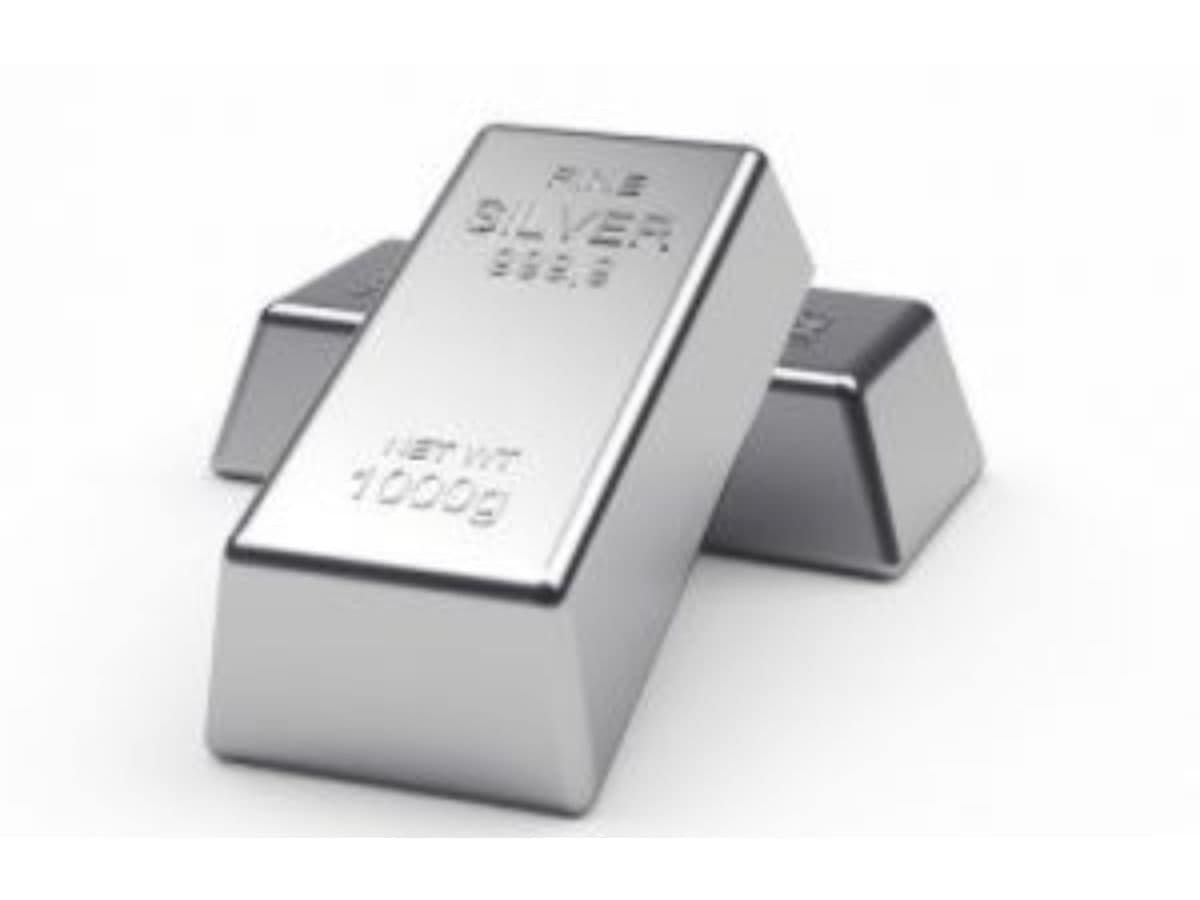
    New Delhi: Silver futures surged by Rs 3,668 to a fresh record high of Rs 1,78,649 per kilogram while gold prices climbed to Rs 1,30,550 per 10 grams in the domestic markets on Monday, driven by a weak US dollar and growing expectations of an interest rate cut by the US Federal Reserve.

    On the Multi Commodity Exchange (MCX), the yellow metal futures for February 2026 contract jumped by Rs 1,046, or 0.81 per cent, to Rs 1,30,550 per 10 grams in 12,199 lots.

    Silver futures for March 2026 delivery extended the gains for the seventh straight session, by soaring Rs 3,668, or 2.09 per cent to hit a lifetime high of Rs 1,78,649 per kilogram in a business turnover of 15,750 lots.


    Add as a preferred source on Google
    Memory Khan SeminarMemory Khan Seminar

    The white metal has skyrocketed by Rs 21,245, or 13.5 per cent, over the past seven sessions, from Rs 1,57,404 per kilogram on November 20.

    “Gold heads for fifth straight monthly gain and silver hits fresh record high amid Federal Reserve rate cut expectations and profit taking in the dollar index,” said Rahul Kalantri, Vice-President of Commodities at Mehta Equities.

    The dollar index, which gauges the greenback’s strength against a basket of six currencies, was quoting 0.03 per cent lower at 99.43, lending support to gold prices in the international markets.

    On the global front, Comex gold futures for December delivery extended their winning streak for the sixth consecutive session, by rising USD 35.2, or 0.83 per cent, to USD 4,253.5 per ounce — marking their highest level in six weeks.

    “Gold prices are rising amid growing calls for another interest rate cut by the US Federal Reserve as early as next week. Market participants are now pricing in an 87 per cent probability that the Fed will cut by 25 basis points (bps) at its December policy meeting,” an expert said.

    Comex silver futures for December contract also gained for the fifth straight day, jumping by USD 1.3, or 2.4 per cent, to hit a fresh high of USD 57.80 an ounce in the overseas trade.

    Germanten HospitalGermanten Hospital

    Rahul Kalantri added that the technical charts for silver have turned “more bullish” in the past week, attracting chart-based speculators to the long side of the market.

    “Safe-haven buying also emerged for precious metals after trading was halted in the CME due to overheating in its data center,” he said.

    Meanwhile, the rupee’s recent weakness against the US dollar has also provided support to bullion prices in domestic markets, though optimism around a Russia- Ukraine peace deal capped further gains, Kalantri noted.

    According to commodities market experts, investors are awaiting a slew of macroeconomic data releases in the US, including the ISM Manufacturing PMI for November later in the day, which could provide fresh cues about the health of the economy and short-term direction for bullion prices.

    Market participants will also watch for comments from the US Federal Reserve Chair, Jerome Powell, who is scheduled to speak at a panel discussion in Stanford on Monday, ahead of the year’s final monetary policy decision.

    Later in the week, traders will turn their attention to key US economic indicators such as ADP employment change, unemployment claims and delayed Personal Consumption Expenditures (PCE) Index report, a key inflation gauge for the US central bank, they said.

  • UPI transactions grow 32 pc in Nov as consumption remains robust

    UPI transactions grow 32 pc in Nov as consumption remains robust

    New Delhi: The unified payments interface (UPI) saw 32 per cent transaction count growth (year-on-year) at 20.47 billion in the month of November — along with registering 22 per cent annual growth in transaction amount at Rs 26.32 lakh crore, the National Payments Corporation of India (NPCI) data showed on Monday.

    Average daily transaction amount in November stood at Rs 87,721 crore, the NPCI data showed.

    The month of November recorded 682 million average daily transaction counts, up from 668 million registered in October.

    Add as a preferred source on Google
    Memory Khan SeminarMemory Khan Seminar

    Meanwhile, monthly transactions via instant money transfer (IMPS) stood at 6.15 lakh crore in November, up 10 per cent year-on-year, as transaction count stood at 369 million. Daily transaction amount via IMPS stood at Rs 20,506 crore.

    In October, UPI witnessed 25 per cent transaction count growth (year-on-year) at 20.70 billion — along with registering 16 per cent annual growth in transaction amount at Rs 27.28 lakh crore.

    Notably, UPI continues to dominate the country’s digital payments landscape, with transactions surging 35 per cent year-on-year (YoY) to reach 106.36 billion in the first half of 2025, data showed.

    The total value of these transactions stood at a massive Rs 143.34 lakh crore — highlighting how deeply digital payments have become a part of everyday life in India, according to Worldline’s India Digital Payments Report (1H 2025).

    Person-to-merchant (P2M) transactions grew 37 per cent to 67.01 billion, driven by the “Kirana Effect,” where small and micro businesses have become the backbone of India’s digital economy. India’s QR-based payment network also saw tremendous growth, more than doubling to 678 million by June 2025 — a 111 per cent rise from January 2024.

    India’s Digital Public Infrastructure (DPI) has played a transformational role in enabling universal access to services, bridging urban–rural gaps and strengthening the country’s position as a global digital powerhouse.

    Germanten HospitalGermanten Hospital

  • RBI may cut interest rate by 25 bps on Friday

    RBI may cut interest rate by 25 bps on Friday

    Mumbai: The RBI may trim the benchmark lending rate by 25 bps in its forthcoming monetary policy meeting, as inflationary pressures are subdued, though some experts believe the central bank is likely to keep the rate unchanged in the backdrop of better-than-expected GDP growth of 8.2 per cent in the second quarter.

    The consumer price index (CPI) based headline retail inflation is ruling below the 2 per cent lower band mandated by the government for the last two months.

    Some experts, however, believe that the RBI may continue with the pause on interest rates as economic growth has picked up, sustained by fiscal consolidation, targeted public investment, and various reforms, such as the GST rate cut.

    Add as a preferred source on Google
    Memory Khan SeminarMemory Khan Seminar

    The Monetary Policy Committee meeting is scheduled from December 3-5, 2025.

    RBI Governor Sanjay Malhotra is scheduled to announce the decision of rate-setting panel on December 5.

    The central bank started its rate-easing cycle in February last year. It has cumulatively reduced the repo rate by 100 basis points in successive policy announcements to 5.5 per cent, before hitting the pause button in August.

    According to some experts, the RBI may trim the benchmark lending rate by 25 bps in its forthcoming monetary policy meeting, as inflationary pressures are subdued. The consumer price index (CPI)-based headline retail inflation has been ruling below the 2 per cent lower band mandated by the government for the last two months.

    Some experts, however, believe that the RBI may continue with the pause on interest rates as economic growth has picked up, sustained by fiscal consolidation, targeted public investment, and various reforms, such as the GST rate cut.

    This year, the story has been about growth overshooting and inflation undershooting, said a HDFC Bank report.

    Germanten HospitalGermanten Hospital

    “Therefore, the upcoming RBI rate decision remains a close call. But given the lingering risks on growth (in H2) and inflation expected to remain well below 4 per cent until Q3 FY27, we see that there may still be a chance of another 25bps rate cut at the upcoming policy,” it said.

    A research report from the State Bank of India’s economic research department said that with a strong GDP growth and minimal inflation, it is now for the RBI to communicate to the broader markets the rate trajectory in the MPC meeting this week, as well as continuing with the neutral stance.

    On what the RBI’s MPC may decide in the forthcoming policy, Madan Sabnavis, Chief Economist, Bank of Baroda said “it would be a close call on the repo rate. Given that monetary policy is forward-looking and inflation in Q4-FY26 and FY27 is likely to be in the 4 per cent plus region, yielding a real repo rate of 1-1.5 per cent, the policy rate appears to be at a fair level.

    “Under these conditions, we do not think that there should be any change in the policy rate,” he said.

    Dharmakirti Joshi, Chief Economist, Crisil said the primary driver behind the headline inflation falling below the lower end of the RBI’s target range of 2-6 per cent has been food inflation, although fuel inflation has also remained subdued.

    Excluding gold, core inflation stood at 2.6 per cent in October, supported by GST cuts, he said.

    “We anticipate a 25-basis point cut in the repo rate in December. While growth remains robust, a significant decline in retail inflation in October has created additional room for this adjustment,” Joshi said.

    Experts believe the guidance is expected to be neutral to dovish, providing an assurance of adequate liquidity and a hint at further scope for rate reduction with evolving growth dynamics.

    On expectations from the meeting of the 58th rate-setting panel, Mandar Pitale, Head-Financial Markets, SBM Bank (India), expects the MPC to maintain the status quo in the December policy review.

    “This is in light of the need to attract interest rate-sensitive flows to support the BoP and to avoid aggravating the immediate issue on resource mobilisation for banks, as a rate reduction could move retail resources away from the banking sector,” he said.

    Aditi Nayar, Chief Economist, ICRA opined that with the Q2 FY2026 GDP growth exceeding 8 per cent, a rate cut in the December 2025 MPC review now appears unlikely, notwithstanding the series-low CPI inflation print for October 2025.

    The government has mandated the RBI to ensure that retail inflation remains at 4 per cent with a margin of 2 per cent on either side.

    Ashok Kapur, Chairman, Krishna Group and Krisumi Corporation, believed that with inflation hovering at record lows, the RBI unquestionably has the policy space to consider a 25-bps rate cut.

    The housing and allied sectors, as well as the broader economy, are already benefiting from the GST rationalisation and the RBI’s cumulative 100-bps rate cuts earlier this year, he said.

    A further reduction at this juncture would undoubtedly strengthen the ongoing growth momentum, Kapur said.

  • IPO pipeline swells; 2 dozen companies line up Rs 40,000-cr public offers in Dec-Jan

    IPO pipeline swells; 2 dozen companies line up Rs 40,000-cr public offers in Dec-Jan

    New Delhi: The IPO momentum shows no signs of slowing, with another two dozen companies, including ICICI Prudential AMC, Meesho and Juniper Green Energy, preparing to launch their public issues that could collectively raise nearly Rs 40,000 crore over the next two months, merchant bankers said.

    Adding to this robust pipeline are prominent names such as artificial intelligence firm Fractal Analytics, home and sleep solutions brand Wakefit Innovations, technology-led security and surveillance firm Innovatiview India, and hospital chain Park Medi World, they added.

    This exceptional pipeline not only reflected the confidence of issuers but also highlighted investors’ appetite to seize listing-day gains or back companies with strong long-term growth potential.

    Add as a preferred source on Google
    Memory Khan SeminarMemory Khan Seminar

    Moreover, companies across the spectrum — large, mid- and small-caps — are gearing up to tap the IPO route in the coming weeks.

    Experts attribute this momentum to rising retail participation and resilient domestic inflows, which have been instrumental in sustaining the fundraising surge.

    So far this year, 96 companies have debuted on the stock exchanges, raising Rs 1.6 lakh crore. More than 40 of these listings occurred in the last three months alone, highlighting the heightened activity in the primary market.

    In comparison, 91 public issues collectively mobilised Rs 1.6 lakh crore in 2024, supported by resilient retail participation, strong private capex, and a buoyant economy.

    With several IPOs scheduled for December, the total fundraising in 2025 could touch Rs 2 lakh crore, setting a new record for India’s primary markets, said Thomas Stephen, Head – Preferred, Anand Rathi Share and Stock Brokers.

    “This is remarkable given the global volatility and a muted secondary market. Strong domestic liquidity has supported high valuations, and mutual funds, earlier cautious on pre-IPO deals, are now meaningfully increasing allocations,” Stephen added.

    Germanten HospitalGermanten Hospital

    According to him, India’s robust consumption story, aided by GST and income-tax rationalisation, has encouraged many consumer-facing businesses to consider listing.

    Echoing this sentiment, Shantanu Awasthi, Co-founder & CEO of Mavenark, noted that companies previously hesitant about tapping the public markets now recognise that sustained growth will require substantial capital infusion.

    The fundraising wave is expected to help firms finance expansion, capital expenditure, debt repayment, and other corporate purposes.

    Among the key players in the upcoming IPO slate, ICICI Prudential AMC aims to raise Rs 10,000 crore in the second half of December, merchant bankers said.

    According to the draft red herring prospectus (DRHP), the issue will be entirely an offer for sale (OFS) of 1.76 crore equity shares by its UK-based promoter Prudential Corporation Holdings.

    Meanwhile, SoftBank-backed Meesho is planning to raise Rs 5,421 crore through an issue opening on December 3. The IPO comprises a fresh issue worth Rs 4,250 crore and an OFS of 10.55 crore shares valued at Rs 1,171 crore at the upper band. At the same time, Precision component maker Aequs’ Rs 922 crore and Vidya Wires’ Rs 300 crore public offering would be available for subscription.

    Other sizeable offerings planned for December included — Clean Max Enviro Energy Solutions (Rs 5,200 crore), Fractal Analytics (Rs 4,900 crore) and Juniper Green Energy (Rs 3,000 crore).

    Also preparing for the market between December and January are– Manipal Payment, Kanodia Cement, Corona Remedies, Milky Mist, Amagi Media Labs, Nephrocare Health Services, Veeda Clinical, LCC Projects, Waterways Leisure, KSH International, Skyways Air Services, Ardee Engineering, PNGS Reva Diamond, and CIEL HR Services.

    Together, these companies are expected to raise Rs 40,000 crore, the merchant bankers said.

    Among this year’s major main-board listings, Tata Capital led with Rs 15,512 crore, followed by LG Electronics (Rs 11,607 crore), Lenskart Solutions (Rs 7,278 crore), and Billionbrains Garage Ventures, the parent of Groww, which raised Rs 6,632 crore.

    Mavenark’s Awasthi suggested investors to remain mindful of valuations and the underlying business narratives before investing.

  • Govt orders WhatsApp, Telegram, other apps to block access without active SIM

    Govt orders WhatsApp, Telegram, other apps to block access without active SIM

    New Delhi: The Indian government has issued a major directive that could change how millions of people use popular messaging apps such as WhatsApp, Telegram, Signal, Snapchat, ShareChat, JioChat, Arattai, and Josh.

    According to reports, the Department of Telecommunications (DoT) has asked these platforms to ensure that their services cannot be used unless the user has an active SIM card in their device.

    This move comes under the new Telecommunication Cybersecurity Amendment Rules, 2025, which bring app-based communication services under telecom-style regulation for the first time.

    Add as a preferred source on Google
    Memory Khan SeminarMemory Khan Seminar

    Under the new rules, these apps — officially termed Telecommunication Identifier User Entities (TIUEs) — must ensure that a user’s SIM card remains continuously linked to the app within 90 days.

    For people using these platforms on web browsers, the government has added another layer of security.

    Apps will now be required to automatically log users out every six hours and ask them to log in again through a QR code.

    The DoT says this system will make it harder for criminals to misuse these services remotely, as every session must be tied to an active and verified SIM, as per the reports.

    Officials say the rule aims to close a major gap in how communication apps verify users. At present, most apps only verify a mobile number once — during installation.

    After that, the app continues working even if the SIM is removed or becomes inactive. According to reports, the Cellular Operators Association of India (COAI) highlighted that this behaviour allows apps to function independently of SIM cards, which creates opportunities for misuse.

    Germanten HospitalGermanten Hospital

    Cybercriminals, including those operating from outside India, are known to exploit this loophole.

    Even after changing or deactivating SIM cards, they can continue using these apps, making it extremely difficult for authorities to trace fraud through call records, location logs, or telecom data.

    The COAI said that making SIM binding mandatory would keep a reliable link between the user, the number, and the device, which could help reduce spam, fraud calls, and financial scams.

    Similar security checks already exist in other sectors. Banking and UPI apps require strict SIM verification to prevent unauthorised access, while SEBI has proposed linking SIM cards to trading accounts and using facial recognition for added security.

    Experts, however, are divided on the issue. Some cybersecurity professionals told MediaNama that the move may have limited impact, as scammers can still use forged or borrowed IDs to get new SIM cards.

    On the other hand, telecom industry representatives argue that mobile numbers remain India’s strongest digital identity and believe the new rules could strengthen cybersecurity and accountability.

  • Govt polices effective in accelerating GDP growth: Experts

    Govt polices effective in accelerating GDP growth: Experts

    New Delhi: Experts on Friday lauded India’s robust economic growth in Q2 FY26, saying that the government polices — envisioned by Prime Minister Narendra Modi and his team — have been effective in accelerating the GDP growth to new record levels.

    For the second consecutive quarter, India’s GDP growth significantly surpassed expectations, printing at a six-quarter high of 8.2 per cent in Q2 FY2026, and displaying an acceleration over the 7.8 per cent growth seen in Q1 FY2026, in contrast to the widespread market expectation of some moderation.

    Power Gilt Treasuries CEO and Chairman of the Economic Affairs Committee of PHDCCI, Vineet Nahata, told IANS that this has a major bearing on the inflation front and our inflation has reduced drastically.

    Add as a preferred source on Google
    Memory Khan SeminarMemory Khan Seminar

    The gap between real and nominal GDP, which was as large as 12 percentage points in Q1 FY23 is now at 0.5 percentage points in Q2 FY26.

    “Our inflation right now, as far as CPI is concerned, is 0.25 per cent. That has been the main cause of narrowing the difference between the real and nominal GDP,” said Nahata.

    “In fact, I should congratulate the finance ministry for coming out with policies that have been so effective in accelerating the country’s GDP growth, and the results are clear,” he mentioned.

    Nahata further stated that the implementation of economic policies is directed towards becoming ‘Viksit Bharat’ by 2047.

    With 7.6 per cent real GDP growth for FY26, the GDP is likely to cross $4 trillion by March 2026 and for FY27, GDP is expected to be around $4.4 trillion, according to the SBI Research report, which added that the India story appears to take new, bigger and bolder dimensions.

    The overall trends suggests that GDP growth is domestic driven, supported by services exports and driven by low inflation and value-add expansion in labour intensive sectors.

    Germanten HospitalGermanten Hospital

    The manufacturing sector clocked a strong growth rate of 9.1 per cent, while the construction segment grew at 7.2 per cent in the secondary sector during the quarter.

  • RBI issues 7 new master directions on digital banking

    RBI issues 7 new master directions on digital banking

    Mumbai: The Reserve Bank on Friday issued seven new master directions on digital banking channels authorisation for regulated entities, including commercial banks and small finance banks.

    This is part of a massive exercise taken by the Reserve Bank of India (RBI) to enhance clarity, ease of access, and reduce compliance burden for regulated entities (REs), thereby supporting the broader objective of improving ease of doing business.

    After consultations with stakeholders, the central bank has issued 244 master directions (MDs) consolidating the instructions currently administered by the Department of Regulation on an ‘as-is’ basis.

    Add as a preferred source on Google
    Memory Khan SeminarMemory Khan Seminar

    These instructions have been issued separately for 11 types of regulated entities and are cohesively organised across various regulatory areas.

    The 244 master directions include seven new MDs on “Digital Banking Channels Authorisation” for seven types of REs.

    The seven REs are: commercial banks, small finance banks, payment banks, local area banks, regional rural banks, urban co-operative banks, and rural co-operative banks.

    The new directions on digital banking channels will be applicable from January 1, 2026.

    The directions primarily deal with policies and procedures, eligibility criteria for providing various services, guidelines on technological issues in digital banking, compliance, customer conduct, and exemptions.

    According to the directions, all REs will have to put in place comprehensive policies for all digital banking channels, keeping in account all statutory and regulatory requirements (including on management of liquidity and operational risks in the digital banking scenario).

    Germanten HospitalGermanten Hospital

    Digital banking channels refer to modes provided by the banks over websites (internet banking), mobile phones (mobile banking) or other digital channels through customers‘ electronic devices/equipment for the execution of financial and other banking transactions involving a significant level of process automation and/or interfacing with other institutions/entities.

  • Rupee falls 9 paise to settle at 89.45 against US dollar

    Rupee falls 9 paise to settle at 89.45 against US dollar

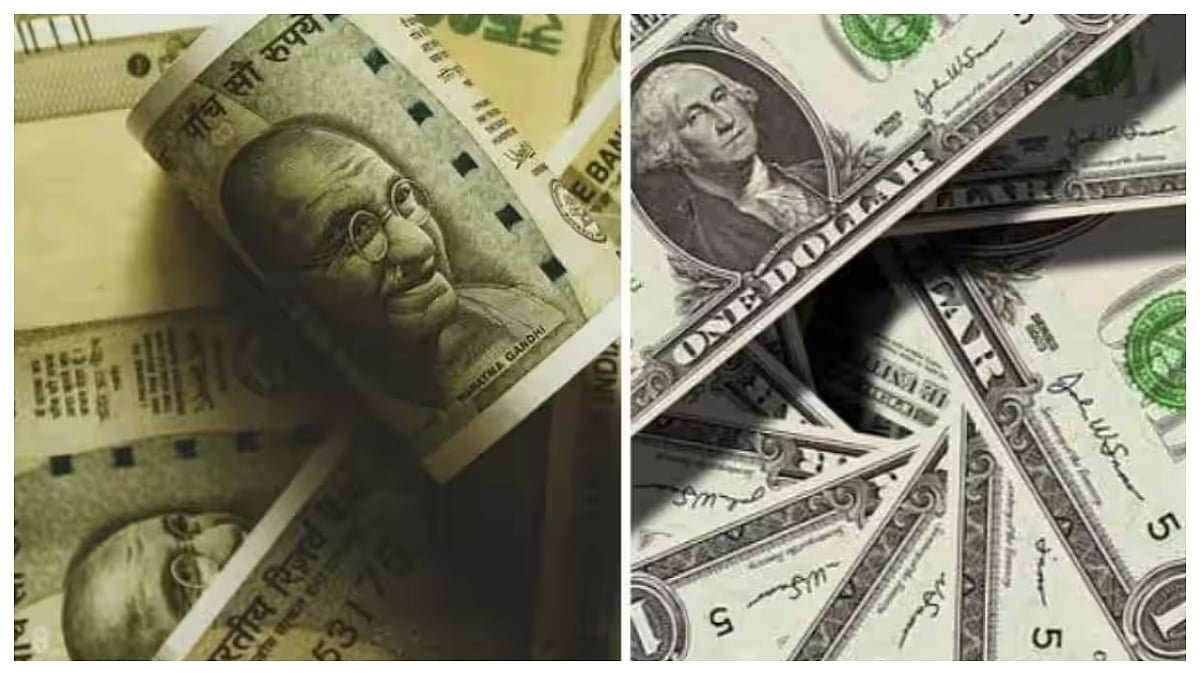
    Mumbai: The rupee dropped 9 paise to settle at 89.45 against the US dollar on Friday, tracking a strong greenback and a rise in international crude oil prices.

    According to forex traders, the Indian currency was also weighed down by subdued equity market sentiment and the withdrawal of foreign funds.

    Moreover, market participants remained on the sidelines before the release of the nation’s GDP data. The GDP data was released after market hours.

    Add as a preferred source on Google
    Memory Khan SeminarMemory Khan Seminar

    The Indian economy grew by a higher-than-expected 8.2 per cent — a six-quarter high — as increased factory production in anticipation of a consumption boost from the GST rate cut helped offset deceleration in farm output.

    At the interbank foreign exchange market, the rupee opened at 89.41 and touched the intra-day low of 89.50 against the greenback. It finally settled at 89.45 (provisional) against the US dollar, registering a loss of 9 paise from the previous close.

    The rupee depreciated 14 paise to settle at 89.36 against the US dollar on Thursday.

    “The slide in the rupee occurred just before the release of the nation’s GDP number,” Dilip Parmar, Research Analyst, HDFC Securities, said, adding that “dollar outflows and high month-end greenback demand have exerted persistent downward pressure on the local currency.”

    Parmar further noted that in the near term, market sentiment leans toward the dominance of the US dollar. “The spot USDINR pair faces an upper bound resistance at 89.70 and finds its support at 88.80,” he added.

    Meanwhile, the dollar index, which gauges the greenback’s strength against a basket of six currencies, was 0.06 per cent higher at 99.59.

    Germanten HospitalGermanten Hospital

    Analysts attributed the strength in the greenback to increased demand from importers and banks for month-end trade payment settlements.

    Brent crude, the global oil benchmark, rose 0.33 per cent to USD 63.13 per barrel in futures trade.

    Anuj Choudhary, Research Analyst at Mirae Asset ShareKhan, said the Indian rupee traded on a negative bias amid a recovery in the US dollar index and mixed-to-weak domestic markets. FII outflows and overnight gains in crude oil prices also pressured the rupee.

    “We expect the rupee to trade with a slight positive bias on rising odds of a rate cut by the Fed in December and easing geopolitical tensions,” Choudhary said, adding, “USD-INR spot price is expected to trade in a range of 89.25 to 89.70.”

    On the domestic equity market front, the Sensex dipped marginally by 13.71 points to settle at 85,706.67, while Nifty slipped 12.60 points to 26,202.95.

    Foreign institutional investors sold equities worth Rs 3,795.72 crore on a net basis on Friday, according to exchange data.

    Meanwhile, the central government’s fiscal deficit touched 52.6 per cent of the full-year target at the end of October, according to official data released on Friday.

    The fiscal deficit was 46.5 per cent of the Budget Estimates (BE) of 2024-25 in the first seven months of the previous financial year.

  • Nifty hits record high after 14 months; Sensex nears all-time peak

    Nifty hits record high after 14 months; Sensex nears all-time peak

    Mumbai: Stock market benchmark indices extended their previous day’s rally in early trade on Thursday, with the Nifty hitting its fresh record high amid favourable global trends on growing hopes of a US Fed rate cut and foreign fund inflows.

    The 30-share BSE Sensex advanced 313.38 points to 85,922.89 in early trade. The 50-share NSE Nifty rallied 90.25 points to hit an all-time high of 26,295.55. The broader index had earlier scaled its record intra-day high of 26,277 on September 27, 2024.

    From the Sensex firms, Bajaj Finance, Bajaj Finserv, ICICI Bank, Larsen & Toubro, Asian Paints and Mahindra & Mahindra were among the biggest gainers.

    Add as a preferred source on Google
    Memory Khan SeminarMemory Khan Seminar

    However, Eternal, Kotak Mahindra Bank, UltraTech Cement and Maruti were among the laggards.

    In Asian markets, South Korea’s Kospi, Japan’s Nikkei 225 index, Shanghai’s SSE Composite index and Hong Kong’s Hang Seng index were trading in positive territory.

    US markets ended higher on Wednesday.

    Foreign Institutional Investors (FIIs) bought equities worth Rs 4,778.03 crore on Wednesday, according to exchange data. Domestic Institutional Investors (DIIs) also purchased stocks worth Rs 6,247.93 crore in the previous trade.

    “Expectation of a rate cut by the Fed and a possible Russia-Ukraine peace accord have improved sentiments for equity markets globally,” VK Vijayakumar, Chief Investment Strategist, Geojit Investments Limited, said.

    Brent crude, the global oil benchmark, dipped 0.48 per cent to USD 62.83 per barrel.

    Germanten HospitalGermanten Hospital

    “Global equity markets have extended their gains, buoyed by growing expectations of interest-rate cuts by the US Federal Reserve. Major US indices — including the S&P 500, Dow Jones, and Nasdaq — posted another session of solid advances as softer Treasury yields and renewed policy optimism strengthened risk appetite. This upbeat sentiment has carried into today’s global trade, with Asian markets opening higher,” Ponmudi R, CEO of Enrich Money, an online trading and wealth tech firm, said.

    On Wednesday, the Sensex jumped 1,022.50 points or 1.21 per cent to settle at 85,609.51. The Nifty zoomed 320.50 points or 1.24 per cent to end at 26,205.30.

  • Sebi mulls relaxed framework for issuing duplicate securities certificates

    Sebi mulls relaxed framework for issuing duplicate securities certificates

    New Delhi: In a bid to ease investor compliance and eliminate inconsistencies in documentation, Sebi has proposed doubling the monetary threshold for simplified documentation required to issue duplicate securities to Rs 10 lakh from the current Rs 5 lakh.

    “Due to non-standardization of documents and different approaches followed by RTAs/listed companies, investors feel the pain of going for varied documentation for various listed companies,” Sebi noted.

    The regulator also noted that the existing Rs 5 lakh threshold for availing simplified documentation, where investors are exempted from filing copies of FIRs, police complaints, court orders or newspaper advertisements, was set several years ago. Since then, India’s securities market has grown significantly in terms of market capitalisation, investor participation, and average portfolio sizes.

    Add as a preferred source on Google
    Memory Khan SeminarMemory Khan Seminar

    Given this expansion, Sebi noted that the value of individual security holdings has risen materially. As a result, retaining the earlier limit no longer aligns with current market realities and ends up creating avoidable procedural hurdles for investors.

    “In view of the above and to provide ease of investment and procedural convenience to investors, it is proposed to increase the limits for simplified documentation for issuance of duplicate securities from Rs 5 lakh to Rs 10 lakh,” Sebi said in its consultation paper.

    To further streamline the process, the regulator has proposed introducing a common affidavit-cum-indemnity form, which would also reduce the cost of obtaining duplicate securities.

    Additionally, it has been proposed that stamp duty be applied based on the investor’s state of residence, in line with the practice followed by the Investor Education and Protection Fund Authority.

    Sebi also highlighted that, in practice, most listed companies already issue newspaper advertisements on behalf of investors reporting loss of securities. To formalise this market practice, the regulator has proposed clarifying that listed companies should be responsible for issuing these advertisements.

    “The suggested measures aim at ease of investments for investors and help restitute investor rights in securities that may have been held in physical form. As duplicate securities issued would be necessarily in dematerialised mode, this will result in increased dematerialisation,” Sebi said.

    Germanten HospitalGermanten Hospital

    At present, for issuing duplicate securities, investors are required to submit multiple documents, including copies of FIRs or police complaints detailing the security and certificate numbers, advertisements in widely circulated newspapers, and separate affidavits and indemnity bonds executed on non-judicial stamp paper.