Category: BUSINESS

  • Stock market opens high as Trump indicates ‘wonderful trade deals’ for India, US

    Stock market opens high as Trump indicates ‘wonderful trade deals’ for India, US

    Mumbai: The Indian benchmark indices opened higher on Friday as Prime Minister Narendra Modi and US President Donald Trump announced plans to cement “some wonderful trade deals” for India and the US.

    The Sensex was trading 279.95 points or 0.37 per cent up at 76,418.92 while the Nifty climbed 84 points or 0.36 per cent at 23,115.40.

    Nifty Bank was up 196.75 points or 0.40 per cent at 49,556.60. Nifty Midcap 100 index was trading at 51,014.20 after climbing 133 points or 0.26 per cent. Nifty Smallcap 100 index was at 15,953.60 after dropping 20.25 points or 0.13 per cent.

    Hyderabad Institute of Excellence

    “The Nifty 50 has formed a red candle on the daily scale, which indicates selling pressure at higher levels,” said Hrishikesh Yedve from Asit C. Mehta Investment Interrmediates Ltd.

    “The 21-Days Simple Moving Average is placed at 23,270, making the 23,270–23,300 zone a strong hurdle.On the downside, 22,780 will act as a key support level,” he added.

    He advised traders to adopt a buy-on-dips strategy as long as the index holds 22,780.

    MS Creative SchoolMS Creative School

    Meanwhile, in the Sensex pack, Tata Steel, ICICI Bank, M&M, HCL Tech, Tata Motors, Bajaj Finserv, IndusInd Bank, Axis Bank, Infosys and Bajaj Finance were the top gainers. Sun Pharma, UltraTech Cement, Asian Paints, HDFC Bank and Kotak Mahindra Bank were the top losers.

    In the last trading session US markets settled higher, Dow Jones gained 0.77 per cent to close at 44,711.43. The S&P 500 added 1.04 per cent to 6,115.07 and the Nasdaq climbed 1.50 per cent to close at 19,945.64.

    In the Asian markets, Jakarta, China, Seoul, Bangkok and Hong Kong were trading in green. Whereas Japan was trading in red.

    In terms of institutional activity, foreign institutional investors (FIIs) continued their selling equities for the seventh consecutive day on February 13, offloading equities worth Rs 2,789.91 crore, while domestic institutional investors (DIIs) provided support by purchasing equities worth Rs 2,934.50 crore on the same day.

    Investors will closely monitor global market trends, crude oil prices, and institutional flows to gauge further market direction, according to Aakash Shah of Choice Broking.
  • Adani Group benefitted from Centre relaxing border security rules: Report

    Adani Group benefitted from Centre relaxing border security rules: Report

    Indian conglomerate Adani Group has benefitted from the Union government overriding senior army officials and relaxing the country’s border security norms, alongside the Indo-Pakistan border in Gujarat, reports The Guardian.

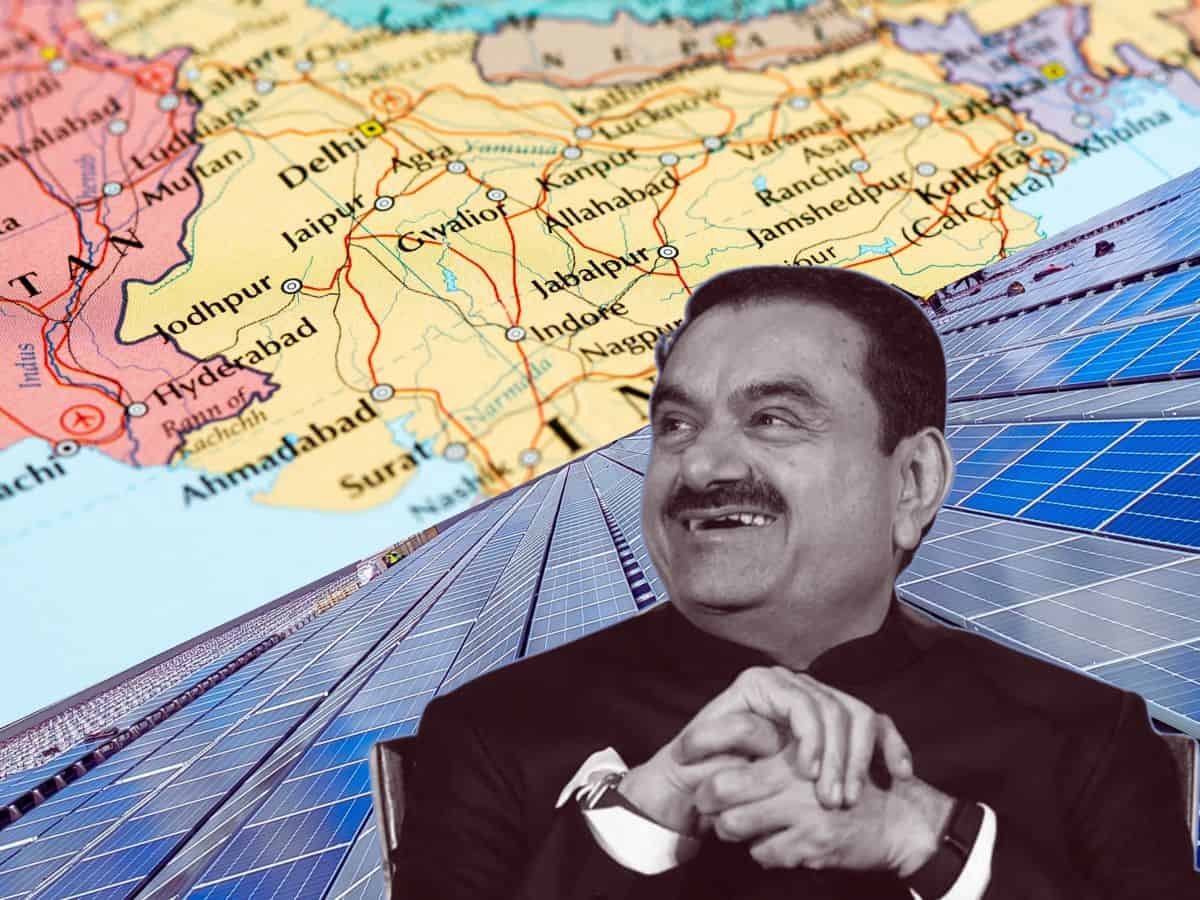
    According to the report, the Adani Group is building its flagship solar and wind energy park alongside the Pakistan border in Rann of Kutch, on lands leased from the Gujarat state government.

    The reports say Adani Group’s Khavda plant, which is supposed to be the largest solar plant on the planet, is laying solar panels and wind turbines one kilometre away from the border. Until recently, no major construction was allowed up to a 10-kilometre distance from the Indo-Pakistan border, according to the military safety protocols.

    Hyderabad Institute of Excellence

    Gujrat govt lobbied for policy change

    The Guardian report claims that according to confidential meeting minutes it viewed, the Gujarat state government lobbied “at the highest levels” to reduce the no-construction buffer zone, which would benefit the Adani group.

    The report says that following letters by the Gujarat government to the Prime Minister’s Office, a confidential meeting was held in April 2023, which was attended by Gujarat state officials, the Union ministry of renewable energy, and the director general of military operations.

    Senior military officials overridden

    According to the report, senior military officials raised “apprehensions” over tank mobilisation and security surveillance along the Indo-Pakistan border in Gujarat. These concerns were countered by the developers’ assurance “that solar platforms would be adequate in mitigating any threats from enemy tank movements.”

    MS Creative SchoolMS Creative School

    Military officers also raised concerns over the size of the solar panels and requested adjustments, which were reportedly rejected by the developers, stating it would not be financially viable. The meeting ended with the defence ministry agreeing with a “mutual consensus” to the demands made by the Gujarat government, which in turn, would benefit the Adani Group.

    The Guardian claims that the defence ministry, within a month, amended the nation’s security protocols about India’s sensitive borderlands, helping the Adani Group to make the project ‘financially viable’.

    The border security relaxation made by the central government was not specific to just the concerned Indo-Pakistan border but was a whole national policy change. This means India’s sensitive border areas with Nepal, China, Bangladesh, and Myanmar are now open to mega-construction projects.

    A notification was issued to all ministries confirming a relaxation of the guidelines around infrastructure development, which applied not only on the India-Pakistan border but also on land adjoining Bangladesh, China, Myanmar and Nepal.

    Senior Indian army officers, overseeing operations in the sensitive border area were reportedly not consulted about the decision, raising surprise and concern among army ranks.

    “What happens if there is the need to lay mines, anti-tank and anti-personnel? What about the concept of space and surprise in offensive and defensive operations?” The Guardian quoted an army officer.

    The Adani Group’s Khavda plant has been part of a larger debacle after the group’s supremo Gautam Adani and his close aides were indicted by the US Government for forgery and cheating American investors, over alleged corruption he was involved in renewable-energy purchase agreements with state governments.

    The contended energy deals were supposed to be produced from the same Khavda plant, for which India’s defence ministry has reportedly bent its security protocols.

  • Adani Group pledges Rs 2,000 cr to build India’s largest ‘Skill and Employ’ initiative

    Adani Group pledges Rs 2,000 cr to build India’s largest ‘Skill and Employ’ initiative

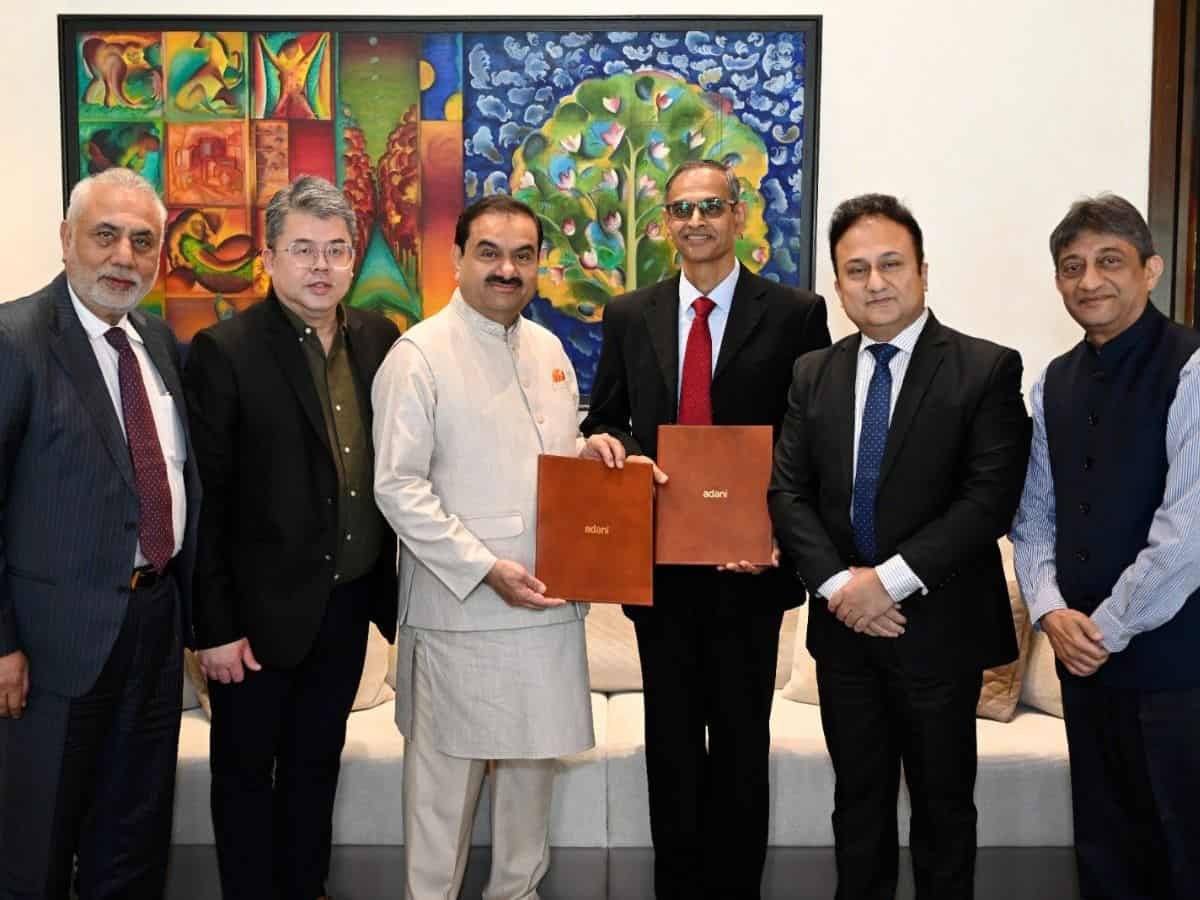
    Ahmedabad: In a bid to create a talent pool of industry-ready workforce, the Adani Group on Wednesday partnered with ITE Education Services (ITEES) of Singapore to build a skilled talent pipeline for serving industries across the spectrum, including green energy, manufacturing, hi-tech, project excellence and industrial design.

    Towards this goal, the Adani family will donate over Rs 2,000 crore to establish internationally benchmarked schools of excellence.

    This is part of the Rs 10,000 crore social donation recently announced by the Adani Group. On Tuesday, the company had announced Rs 6,000 crore towards building Adani Health Cities (AHCs) in partnership with US-based Mayo Clinic.

    Hyderabad Institute of Excellence

    Gautam Adani, the Chairman of the Adani Group, announced in a post on social media platform X that the company is launching the world’s largest and state-of-the-art finishing school in Mundra, Gujarat.

    “Delighted to announce one of India’s largest Skill and Employ initiatives! In partnership with Singapore’s ITEES, the global leader in technical training, the Adani Group is launching the world’s largest finishing school in Mundra,” the Adani Group Chairman posted.

    This state-of-the-art facility will blend AI-driven immersive learning with cutting-edge innovation centres, and annually train over 25,000 learners to help accelerate the ‘Make in India’ movement,” the billionaire industrialist noted.

    MS Creative SchoolMS Creative School

    These learners would be fresh graduates and diploma holders with vocational and technical qualifications from ITIs or Polytechnics and would be selected for an intensive boot camp experience within the schools.

    Each of these finishing schools, called Adani Global Skills Academy, will select students from technical and vocational education backgrounds in India aligned to their industry and role aspirations.

    Once these students have been certified in their chosen field of study, they will be provided employment within the Adani Group as well as the broader industry, depending on their role and field of training.

    This will ensure that trained professionals are first-day first-hour industry-ready and benchmarked to global standards of excellence, said the company.

    “This partnership is critical to our initiative as a Group to build high-level technical talent and is in line with our commitment towards the Make-in-India focus across our portfolio,” said Robin Bhowmik, CEO of Adani Skills and Education.

    With deep engagement across academic quality assurance, certification-led learning pathways, faculty and student exchange programmes and leadership development, this partnership will embed the best of application-led learning to support industries across sectors, thus contributing to Viksit Bharat,” Bhowmik noted.

    ITEES Singapore will serve as a knowledge partner towards creating a continuous feeder for this technically qualified and industry-ready talent.

    “This partnership is critical to our initiative as a Group to build high-level technical talent and is in line with our commitment towards the Make-in-India focus across our portfolio,” said Robin Bhowmik, CEO of Adani Skills and Education.

    Suresh Natarajan, CEO of ITEES, Singapore, said they are pleased to collaborate with the Adani Group to share ITE’s expertise and knowledge in skills education and training.

    “Through this meaningful partnership, ITEES aims to enhance skill development and create lasting impact by transforming education and lives,” Natarajan added.

  • Industrial production registered 3.2 percent growth in Dec 2024: Data

    Industrial production registered 3.2 percent growth in Dec 2024: Data

    New Delhi: India’s industrial growth, based on the Index of Industrial Production (IIP), was recorded at 3.2 per cent in December 2024, according to the data released by the Ministry of Statistics on Wednesday.

    The manufacturing sector, which accounts for more than three-fourths of the index of industrial production (IIP), posted a 3 per cent growth during December 2024.

    The sector plays a key role in providing quality jobs to the young graduates passing out from the country’s engineering institutes and universities.

    Hyderabad Institute of Excellence

    Within the manufacturing sector, 16 out of 23 industry groups at NIC 2 digit-level have recorded a positive growth in December 2024 over December 2023.

    The top three positive contributors for the month of December 2024 are – “Manufacture of basic metals” (6.7 per cent), “Manufacture of electrical equipment” (40.1 per cent) and “Manufacture of coke and refined petroleum products” (3.9 per cent), the official statement said.

    In the industry group “Manufacture of basic metals”, item groups “MS blooms/ billets/ ingots/ pencil ingots”, “Galvanized products of Steel (including colour coated tin plates, TMBP and Tin free steel)”, “Pipes and tubes of Steel”, have shown significant contribution in growth, according to the official statement.

    MS Creative SchoolMS Creative School

    The electricity sector clocked a robust growth of 6.2 per cent during the month while the mining sector slowed to 2.6 per cent.

    The industrial growth rate in December has slowed after accelerating to a 6-month high of 5.2 per cent in November.

    The figures on use-based classification show that the production of capital goods, which comprise machines used in factories, went up by a robust 10.3 per cent in December.

    This segment reflects the real investment taking place in the economy which has a multiplier effect on the creation of jobs and incomes going ahead.

    There was also an 8.3 per cent increase in the production of consumer durables such as electronic goods, refrigerators, and TVs during November 2024 reflecting the higher consumer demand for these items amid rising incomes.

    The figures also show that industrial production increased by 4 per cent in the April-December 2024-25, compared to 6.3 per cent in the same period of the previous financial year.

  • Equity mutual fund inflows in India hold firm at Rs 39,688 crore in Jan: AMFI

    Equity mutual fund inflows in India hold firm at Rs 39,688 crore in Jan: AMFI

    Mumbai: Equity mutual funds (MFs) saw net inflows of Rs 39,687.78 crore in January even as the domestic stock market continued its downward trend, according to data from the Association of Mutual Funds in India (AMFI) on Wednesday.

    This comes after December saw a strong 14.5 per cent jump in inflows to Rs 41,155.91 crore.

    Despite the marginal decline, inflows into open-ended equity funds remained positive for the 47th consecutive month.

    Hyderabad Institute of Excellence

    The dip in inflows coincided with a weak performance in the stock market, as the BSE Sensex fell by 1.28 per cent and the Nifty dropped 0.99 per cent in January.

    “Domestic investors continued with their investment spree into the equity oriented mutual funds in the month of January, taking correction in the market as an opportunity to build their exposure further. This logged the 47th consecutive month of net inflows into the segment,” according to Himanshu Srivastava from Morningstar Investment Research India.

    He added that it’s pleasing to see more and more investors using mutual funds route to enter into the equity markets because of the obvious benefit that mutual fund offers.

    MS Creative SchoolMS Creative School

    Among different equity fund categories, small-cap funds saw strong inflows, rising by 22.6 per cent to Rs 5,720.87 crore.

    Mid-cap funds also witnessed a slight increase by attracting Rs 5,147.87 crore in investments.

    Large-cap funds experienced a significant boost, with inflows surging 52.3 per cent to Rs 3,063.33 crore.

    On the other hand, sectoral and thematic funds saw a steep decline in investments, dropping by 41.2 per cent to Rs 9,016.60 crore.

    This was mainly due to fewer new fund offers being launched during the month. In January, mutual funds raised Rs 2,838 crore through three sectoral/thematic funds.

    Meanwhile, debt mutual funds saw a major turnaround, recording net inflows of Rs 1,28,652.58 crore in January, compared to massive outflows of Rs 1,27,152.63 crore in December.

    The liquid fund category led the inflows with Rs 91,592.92 crore, followed by money market funds, which received Rs 21,915.53 crore.

    However, short-duration funds and gilt funds witnessed outflows of Rs 2,066.19 crore and Rs 1,359.66 crore, respectively.

    Overall, open-ended mutual funds recorded net inflows of Rs 1,87,606.23 crore in January, a sharp contrast to the net outflows of Rs 80,509.20 crore seen in December.

  • Electric energy conference kicks off in Seoul to showcase advanced tech

    Electric energy conference kicks off in Seoul to showcase advanced tech

    Seoul: A conference on electric energy kicked off in Seoul on Wednesday to showcase cutting-edge electric power technologies of local and foreign companies, the industry ministry said.

    Elecs Korea 2025, hosted by the Ministry of Trade, Industry and Energy, will run for three days through Friday at the COEX convention centre, according to the ministry, reports Yonhap news agency.

    Some 260 companies from here and abroad are taking part in the event to show their advanced heavy electrical equipment, smart grid solutions and power supply technologies, as well as renewable energy technologies.

    Hyderabad Institute of Excellence

    This year’s event will also feature the application of artificial intelligence (AI) to electric power technologies to boost their efficiency.

    “We have set the yearly export target at an all-time high of US$16.2 billion for this year to help the heavy electrical equipment industry, which is booming thanks to an increase in AI data centres and efforts to achieve carbon neutrality, lead South Korea’s exports,” Industry Minister Ahn Duk-geun said in an opening speech.

    Last year, the country’s exports of heavy electrical equipment hit a record high of $15.6 billion.

    MS Creative SchoolMS Creative School

    Ahn said the government will support the electric power industry by providing investment in research and development projects and tax benefits.

    Meanwhile, South Korea will work to export its power grid packages that encompass power plants and energy storage systems, the industry ministry said, amid the rising global demand for electricity sparked by the development of cutting-edge technologies, such as artificial intelligence (AI).

    The power grid packages, named K-Grid, include a wide range of electricity-related products, such as cables, transformers, circuit breakers and energy storage systems.

    The ministry said the alliance aims to break into the American market where demand for advanced power grids and electricity is high from the fast-evolving AI and data centre sectors.

  • RBI to inject Rs 2.5 lakh crore to enhance liquidity in banking system

    RBI to inject Rs 2.5 lakh crore to enhance liquidity in banking system

    Mumbai: The Reserve Bank of India (RBI) was all set to inject Rs 2,50,000 crore through its Variable Rate Repo (VRR) auction on Wednesday to enhance liquidity in the banking system.

    The Central Bank has stated that the amount has been decided based on an assessment of the liquidity conditions.

    The Reserve Bank also said it will be conducting daily Variable Rate Repo (VRR) auctions on all working days in Mumbai with reversal taking place on the next working day, until further notice.

    Hyderabad Institute of Excellence

    RBI Governor Sanjay Malhotra had announced on Friday, after the monetary policy meeting, that the central bank was committed to provide sufficient liquidity in the economy and would take steps to ensure durable liquidity to meet the requirement of the system.

    The RBI Governor also said that the RBI was keeping a close watch on the rupee and was taking all steps to keep the Indian currency stable.

    According to a Morgan Stanley report, the RBI is expected to proactively manage liquidity and take up some additional measures (OMO purchases/FX swaps) as liquidity deficit rises towards end-March. We see risk of a longer rate cut cycle, if growth recovery is lacklustre, driven by weaker domestic demand and uncertainty from global factors.

    MS Creative SchoolMS Creative School

    To support its point, the report referred to the RBI governor’s statement highlighting that on the regulatory front, there is a trade-off between stability and efficiency which should be kept in mind. He said that this trade-off will be kept in mind while formulating regulations.

    In a big relief for banks, RBI Governor Malhotra announced that the implementation of the proposed Liquidity Coverage Ratio (LCR) as well as project financing norms will be deferred by a year and will not to be implemented before March 31, 2026.

    He said that the step has been taken as the earlier deadline March 2025 deadline does not give sufficient time for the implementation of these guidelines. The RBI does not want to cause disruption in the financial system and will ensure a smooth transition, added.

    Both public sector and private sector banks had opposed the implementation of these norms, announced by former RBI Governor Shaktikanta Das, as they feared they were would cause a liquidity crisis in the financial system. The heads of banks had raised the issue with Malhotra, shortly after he took over as RBI Governor with Das’s tenure coming to an end.

  • Beneficiaries alloted remaining 2BHK houses in Kollur

    Beneficiaries alloted remaining 2BHK houses in Kollur

    Hyderabad: Ramya, primarily a domestic worker at five houses in the locality, also doubles at a puja items store in Nallakunta. The only breadwinner in her family she has been providing for her bedridden husband, with critical health issues, and her two sons, for the past year. She has been working tirelessly for several years to provide quality education for her children.

    After spending Rs one lakh in the last month to meet her husband’s hospital expenditure, she received great news this week. She has been selected as a beneficiary under the state’s 2BHK housing scheme, rebranded as Indiramma Illu by the Congress government.

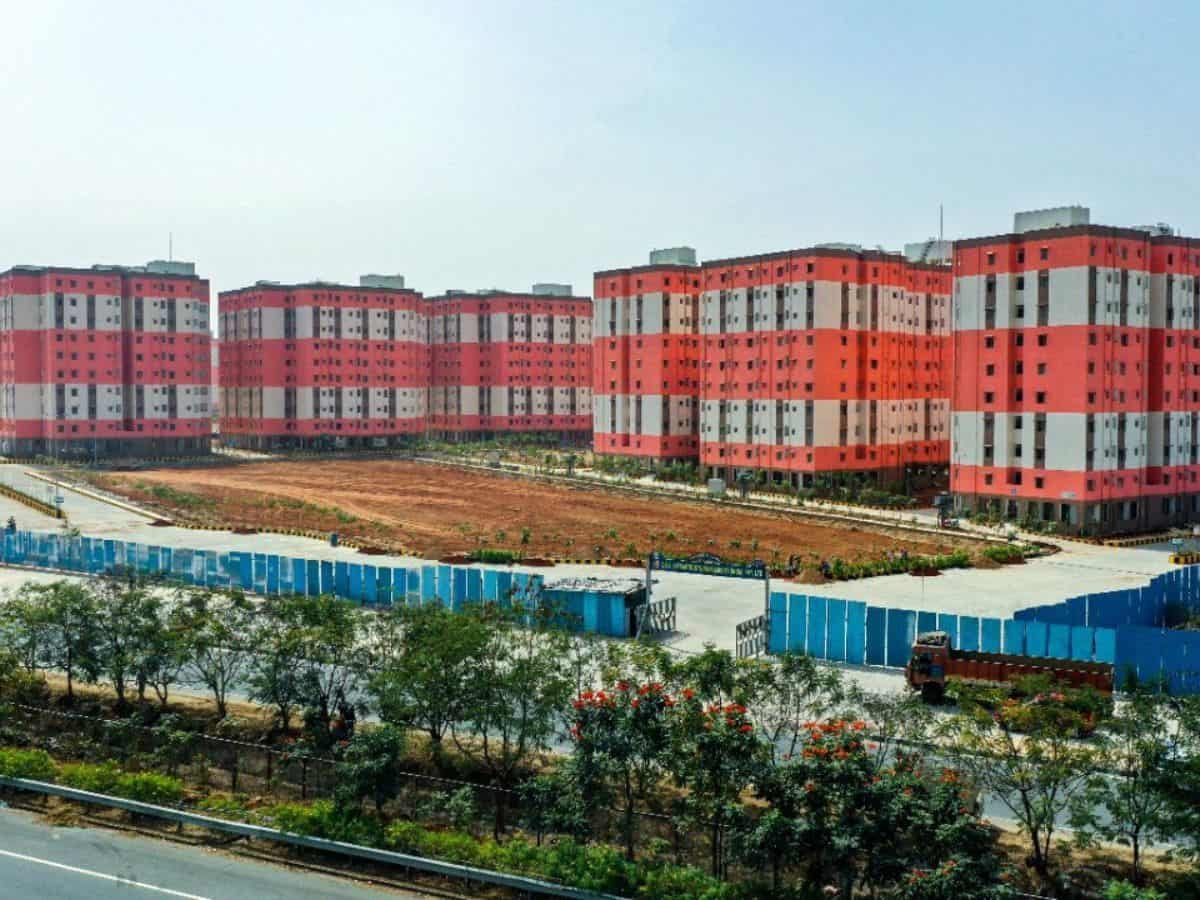
    For the past few days, people have been receiving calls from government officials asking them to take possession of the 2BHK houses allotted to them at Kollur Dignity Housing Colony in Ramachandrapuram mandal of Sangareddy district.

    Hyderabad Institute of Excellence

    2BHK allotment under previous regime

    Though the beneficiaries are under the impression that they were allotted the houses under the Indiramma Illu they applied for during Praja Palana, the Congress’ guarantees campaign, Telangana Housing Board officials have claimed that the applications were short-listed during the previous regime. However, the beneficiaries had not occupied their allotted flats in the housing colony.

    According to the superintending engineer of Telangana Housing Board, Venkata Das Reddy, there were a total of 15,600 2BHK apartments built in Telangana’s Kollur, of which only 7,000 flats have been occupied till now.

    The administration has been attempting to communicate with the beneficiaries asking them to immediately occupy their allotted houses, or yield to someone else to take ownership of the 2BHK houses, he told Siasat.com.

    MS Creative SchoolMS Creative School

    These houses have been built jointly by the state and the central governments under the Pradhan Mantri Awas Yojana’s (PMAY) urban housing component.

    The housing colony which is spread across 117 blocks covering an area of around 140 acres, was inaugurated by former chief minister K Chandrashekar Rao in June 2023.

    However, with the election code coming into effect, and the transition of power in the state and Lok Sabha elections, a majority of the flats were left unoccupied. Now the Congress government is inviting the beneficiaries of the scheme to occupy their flats.

    Incomplete 2BHK homes in Telangana

    Housing officials are also deliberating on whether beneficiaries could be allocated incomplete 2BHK towers left unfinished by the previous government, allowing them to take ownership and complete the construction themselves.

    The housing board had requested contractors to finish the structures, but there has been no positive response.

    “If the contractor completed the foundation and slabs but left the rest unfinished, the amount paid to the contractor for each house can be deducted, and the remaining funds can be given to the beneficiary to complete the construction,” said Reddy.

    However, this decision is yet to be finalised.

    Indiramma Illlu to be delayed?

    On the Indiramma Illu front, the beneficiaries may have to wait a little longer, as the identification of beneficiaries under the GHMC limits is still ongoing with the comprehensive socio-economic, political, caste, education and employment survey yet to conclude, claimed officials.

    According to housing officials, due to the MLC elections code in force, the names of the beneficiaries of Indiramma Illu in the rural areas are not being announced. Though the counting of votes for the MLC elections will be completed by March 3, if the schedule for the local body elections is announced immediately after that, the process of disclosing the beneficiaries could be further delayed.

    On January 26, the state government identified beneficiaries in one village per mandal across the state, officially kick-starting the Indiramma Illu scheme.

  • Dubai unveils plans to introduce new Rail Bus system

    Dubai unveils plans to introduce new Rail Bus system

    Dubai: The Roads and Transport Authority (RTA) in Dubai has unveiled plans to introduce a Rail Bus system at the ongoing World Government Summit (WGS).

    In a post on X, RTA revealed that the Rail Bus is a sleek, modern transit vehicle capable of carrying up to 40 passengers and reaching speeds of up to 100 km/h, offering a fast and efficient solution for daily commutes.

    The Rail Bus carriages incorporate cutting-edge, sustainability-focused technologies, ensuring maximum safety while reducing energy consumption and maintenance costs.

    Hyderabad Institute of Excellence

    Key features of the Rail Bus:

    • Lightweight structure made from recyclable materials, reducing the vehicle’s weight to just seven tonnes.
    • Each carriage is 11.5 meters long and 2.65 meters wide, offering comfortable seating for 22 passengers.
    • Modular design supported by 3D printing technology, enhancing scalability and efficient deployment.
    • The system is expected to be 20-30 percent cheaper than comparable transport alternatives.
    • Reliance on solar energy significantly lowers operational expenses, making it an environmentally friendly transport solution.

    RTA will conduct comprehensive technical studies on the system over the next two years, with pilot locations under consideration to assess operational feasibility and network integration.

    Sheikh Mohammed bin Rashid Al Maktoum, Vice President and Prime Minister of the UAE and Ruler of Dubai, reviewed the Rail Bus system during his visit to the RTA stand at WGS.

    Mattar Al Tayer, Director General and Chairman of the Board of Executive Directors of RTA, emphasized that the Rail Bus system aligns with:

    MS Creative SchoolMS Creative School
    • UAE Net Zero Strategy 2050
    • Dubai Net Zero Emissions Public Transport Strategy 2050
    • Dubai Autonomous Transport Strategy 2030, which targets 25 percent of all trips in Dubai to be autonomous by 2030.

    Al Tayer said, “The project reflects RTA’s commitment to fostering public-private partnerships and supporting start-ups in developing next-generation autonomous transport systems. RailBus is solar-powered, highly efficient, and cost-effective, integrating with Dubai’s public transport network. It also enhances first and last-mile connectivity, ensuring safe, smooth, and sustainable travel for residents and visitors in urban areas.”

  • Warm January lifts electricity demand to 138 bn units in India

    Warm January lifts electricity demand to 138 bn units in India

    New Delhi: The third-warmest January in 125 years and industrial activity lifted demand for electricity 2.2 per cent (year-on-year) to 138 billion units (BU) in the first month of 2025, according to a report on Tuesday.

    In January, peak power demand is estimated to have risen 14 GW on-year to 237 GW. On the other hand, power generation rose an estimated 3.9 percent on-year to 149 BU in January, surpassing typical monthly demand.

    Real-time market (RTM) volume surged 27 percent on-year to 3,036 million units (MUs), while the day-ahead market (DAM) spiked 8 percent to 6,015 MU. Overall RTM volume at the Indian Energy Exchange (IEX) rose 400 basis points to 26 percent on-year in January, according to the report by Crisil Intelligence.

    Hyderabad Institute of Excellence

    The India Meteorological Department (IMD) said the all-India mean temperature in January was 0.94 degree Celsius higher than the average of 18.04 degree Celsius seen since 1901.

    Typical heating requirements, a key driver of power demand, was subdued this time because of warmer and drier weather conditions. While temperatures have been warmer across the nation, growth in power demand has not been uniform on a regional level, the report mentioned.

    Power generation rose an estimated 3.9 per cent on-year to 149 BU in January, surpassing typical monthly demand.

    MS Creative SchoolMS Creative School

    Coal generation inched up 0.8 per cent on-year on a high base of 10 per cent on-year growth last fiscal. Generation of hydro, nuclear and renewable energy rose 24 per cent, 15 per cent and 24 per cent on-year, respectively.

    Additionally, manufacturing activity continues well, as underscored by the Purchasing Managers’ Index (PMI) reading 57.7 for January, well above the mark of 50 that underscores expansion.

    With nearly half of India’s power demand coming from industrial and commercial consumers, expansion of relevant activities is crucial for power demand to continue growing. Between April 2024 and January 2025, power demand is estimated to have increased 4.2 per cent on-year, the report noted.