Category: BUSINESS

  • NRI accounts clock 43 pc jump in funds in April-December

    NRI accounts clock 43 pc jump in funds in April-December

    Mumbai: The flow of funds from Indians working overseas into non-resident Indian (NRI) bank accounts has shot up by 42.8 per cent to $13.33 billion between April and December 2024, compared to $9.33 billion during the same period in 2023, according to the latest figures compiled by the Reserve Bank of India (RBI).

    The total outstanding NRI deposits at the end of December 2024 have gone up to $161.8 billion from the corresponding figure of $146.9 billion in December 2023.

    NRI deposit schemes include foreign currency non-resident (FCNR) deposits as well as non-resident external (NRE) deposits, and non-resident ordinary (NRO) deposits which are held in rupees.

    Hyderabad Institute of Excellence

    The highest flows to the tune of $6.46 billion came into FCNR (B) deposits during the April-December 2024 period, close to double the amount of $3.45 billion deposited in these accounts during the same period last year. The outstanding amount in FCNR(B) accounts increased to $32.19 billion at the end of December.

    An FCNR(B) account allows customers to maintain a fixed deposit in India in freely convertible foreign currencies for a tenure ranging from one to five years. Since the account is maintained in foreign currency, it secures the money against currency fluctuations during the tenure of the deposit.

    NRE deposits recorded an inflow of $3.57 billion during this period, compared to $2.91 billion in the same period of the previous year. Outstanding NRE deposits stood at $99.56 billion in December 2024.

    MS Creative SchoolMS Creative School

    NRO deposits registered inflows to the tune of $3.29 billion in April-December 2024, up from $2.97 billion during the same period a year ago. The total outstanding amount in NRO deposits was $30.04 billion in December 2024. An NRO account is a rupee-denominated bank account for NRIs.

    The RBI had in early December hiked the interest rate ceiling on Foreign Currency Non-Resident (FCNR-B) deposits, so that banks could offer higher returns on these deposits. The step was taken to attract more foreign currency into the country to strengthen the rupee vis-a-vis the US dollar.


  • India poised to stay world’s fastest growing economy in 2025-26: RBI bulletin

    India poised to stay world’s fastest growing economy in 2025-26: RBI bulletin

    Mumbai: High frequency indicators point towards a sequential pick-up in momentum of India’s economic activity during the second half of 2024-25, which is likely to sustain moving forward, according to the latest RBI monthly bulletin.

    In a challenging and increasingly uncertain global environment, the Indian economy is poised to sustain its position as the fastest growing major economy during 2025-26 as per the IMF and World Bank estimates of GDP growth of 6.5 per cent and 6.7 per cent, respectively, the report points out.

    It further states that the Union Budget 2025-26 prudently balances fiscal consolidation and growth objectives by continued focus on Capex alongside measures to boost household incomes and consumption.

    Hyderabad Institute of Excellence

    The effective capital expenditure/GDP ratio is budgeted to improve to 4.3 per cent in 2025- 26 from 4.1 per cent in 2024-25 (revised estimate).

    Retail inflation moderated to a five-month low of 4.3 per cent in January, mainly due to a sharp decline in vegetable prices driven by the arrival of winter crops in the market, the report states.

    High frequency indicators show that the economy is on a path of recovery during H2:2024-25 from the loss of momentum witnessed in H1.

    MS Creative SchoolMS Creative School

    Industrial activity has recorded an improvement over the previous quarter, as reflected in the Purchasing Managers’ Index (PMI) in January.

    Pick-up in tractor sales growth, and fuel consumption, and sustained growth in air passenger traffic also point to a recovery in overall momentum, according to the bulletin.

    It also highlights that rural demand continues to hold up, buoyed by increasing farm incomes.

    In rural areas, sales of Fast-Moving Consumer Good (FMCG) companies grew by 9.9 per cent in Q3:2024-25, much higher than 5.7 per cent in Q2. Urban demand also exhibited a recovery with 5 per cent growth in Q3, being nearly double of 2.6 per cent in the previous quarter.

    The enterprise surveys conducted by the Reserve Bank corroborate this assessment. Listed non-government non-financial companies recorded acceleration in sales growth during Q3 as per early results.

    On a sequential basis, operating profit margins have also turned out to be higher in line with improved sales growth, according to the report.

    It further states that investment intentions of the private sector remained stable, with the total cost of projects sanctioned by banks/financial institutions (FIs) at close to ₹1 lakh crore in Q3:2024-25.

    External Commercial Borrowings (ECBs) and Initial Public Offerings (IPOs) for Capex purposes also recorded an uptick during Q3.

    Uncertainty surrounding global trade and geopolitical landscape have had a bearing on domestic equity markets. The benchmark and broader markets declined on account of selling pressures from Foreign Portfolio Investors (FPIs) as sentiments remained weak.

    The Indian rupee has depreciated in line with other emerging economies, weighed down by the strength of the US dollar.

    Strong macroeconomic fundamentals, along with improvements in various measures of external sector vulnerability, have helped India tide over the ongoing wave of global uncertainty, the RBI bulletin points out.

    The RBI bulletin also highlights that the US trade policy uncertainty has spiked to levels last seen during the 2019 episode of US-China trade war and restrictive trade policies and fragmentation could lead to a long-term shift in global trade patterns rather than a short-term disruption, and upward pressures on consumer and business costs.

    The global economy continues to grow at a steady but moderate pace, with divergent outlook across countries amid rapidly evolving political and technological landscapes.

    Financial markets remain on edge on the slowing pace of disinflation and the potential impact of tariffs.

    Emerging Market Economies are witnessing selling pressures from FPIs and currency depreciation engendered by a strong US dollar, the bulletin added.

  • Indian stock market opens lower, Nifty below 22,900

    Indian stock market opens lower, Nifty below 22,900

    Mumbai: The Indian benchmark indices opened lower on Thursday amid mixed global cues, as selling was seen in the auto, pharma and FMCG sectors in the early trade.

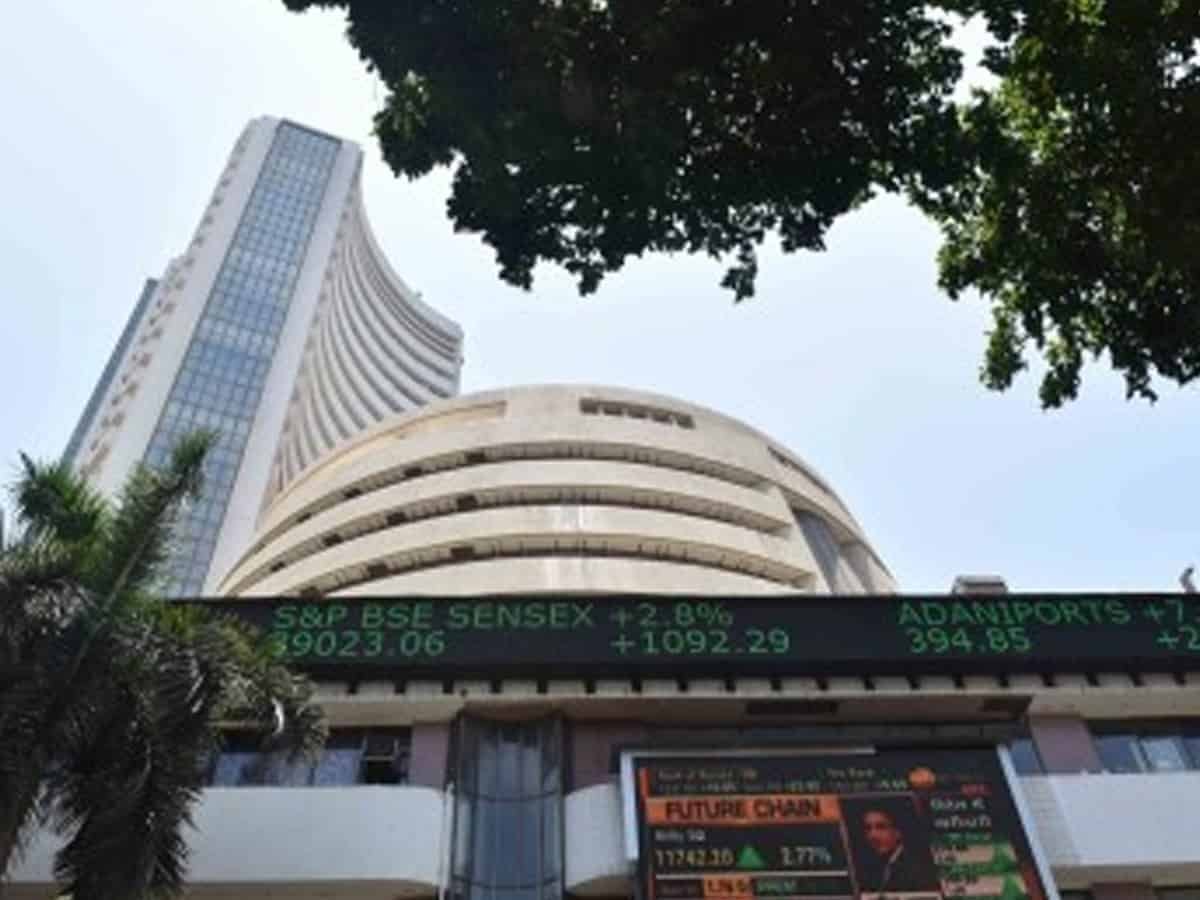
    At around 9.37 am, Sensex was trading 219.70 points or 0.29 per cent down at 75,719.48 while the Nifty declined 45.75 points or 0.20 per cent at 22,887.15.

    Nifty Bank was down 270.85 points or 0.55 per cent at 49,299.25. Nifty Midcap 100 index was trading at 50,260.65 after declining 266.60 points or 0.53 per cent. Nifty Smallcap 100 index was at 15,465.95 after dropping 59.95 points or 0.39 per cent.

    Hyderabad Institute of Excellence

    After a negative opening, Nifty can find support at 22,850 followed by 22,800 and 22,700. On the higher side, 23,000 can be an immediate resistance, followed by 23,100 and 23,200, according to market watchers.

    “Given the ongoing volatility, traders are advised to exercise caution, implement strict stop-loss strategies, and avoid carrying overnight positions,” said Hardik Matalia, Derivative Analyst of Choice Broking

    Meanwhile, in the Sensex pack, M&M, ITC, Maruti, Zomato, HDFC Bank, L&T, Bharti Airtel, Sun Pharma, Tata Motors and Hindustan Unilever were the top losers. Whereas, Infosys, Adani Ports, Axis Bank, Asian Paints, Tech Mahindra, NTPC, Power Grid and ICICI Bank were the top gainers.

    MS Creative SchoolMS Creative School

    In the last trading session, Dow Jones gained 0.16 per cent to close at 44,627.59. The S&P 500 added 0.24 per cent to 6,144.15 and the Nasdaq climbed 0.07 per cent to close at 20,056.25.

    In the Asian markets, Seoul, China, Bangkok, Japan, Jakarta and Hong Kong were trading in red.

    Gold and silver experienced mild profit-taking following hawkish comments in the Federal Reserve’s January meeting minutes, said experts.

    “The US Fed noted that inflation remains high and emphasised the need for further economic data before considering rate cuts. As a result, the dollar index and US bond yields rose, pressuring gold and silver prices,” said Rahul Kalantri, VP Commodities of Mehta Equities Ltd.

    On the institutional front, foreign institutional investors (FIIs) offloading equities worth Rs 1,881.30 crore on February 19. In contrast, domestic institutional investors (DIIs) remained net buyers, purchasing equities worth Rs 1,957.74 crore on the same day.

  • Adani Portfolio clocks highest ever TTM EBITDA of Rs 86,789 crore, core infra biz surges

    Adani Portfolio clocks highest ever TTM EBITDA of Rs 86,789 crore, core infra biz surges

    Ahmedabad: Led by its core infrastructure business, the Adani Portfolio has delivered the highest-ever trailing-twelve-month (TTM) EBITDA of Rs 86,789 crore, the Adani Group said on Thursday.

    The core infrastructure businesses (utility, transport, and incubating infra businesses under Adani Enterprises Ltd) accounted for 84 per cent of total EBITDA.

    On a trailing-twelve-month (TTM) basis, portfolio EBITDA grew by 10.1 per cent (year-on-year) to an all-time high of Rs 86,789 crore while EBITDA for Q3 FY25 increased by 17.2 per cent to Rs 22,823 crore, according to the Adani Group, India’s largest infrastructure player.

    Hyderabad Institute of Excellence

    Adani Portfolio companies are now on a high capex path, with a strong base of increasing cashflow generation and project execution outlay of respective portfolio companies.

    “This will position the respective portfolio companies as the global leaders in their respective sectors,” said the company.

    The fund flow from operations or cash after tax was at Rs 58,908 crore, the asset base stood at Rs 5.53 lakh crore and net debt to EBITDA was at 2.46 times (as of September 30, 2024).

    MS Creative SchoolMS Creative School

    Sufficient liquidity is maintained across portfolio companies to cover debt servicing requirements for at least the next 12 months, said the Group.

    According to the company, the highly stable ‘Core Infrastructure’ portfolio continues to power cashflow generation, with an 84 per cent contribution to the total portfolio EBITDA.

    This ‘Core Infrastructure’ platform comprises AEL’s incubating Infrastructure businesses, Utility (Adani Green Energy, Adani Power, Adani Energy Solutions, and Adani Total Gas), and Transport (Adani Ports and SEZ) businesses.

    The credit profile has now achieved a significant milestone, with 75 per cent of the Run-rate EBITDA now generated from assets with domestic ratings of ‘AA-‘ and above, according to the company.

    Adani Enterprises’ Incubating infra businesses (ANIL, airports, and roads) are on a high growth trajectory and continue to lead the growth with EBITDA growth of 45.6 per cent YoY in Q3 FY25 and 33.3 per cent in TTM.

    “As on 30 September 2024, Adani Portfolio had a cash balance of Rs 53,024 crore, representing 20.5 per cent of Gross Debt,” it said.

    The Adani Group is India’s largest and fastest-growing portfolio of diversified businesses. With interests across energy and utilities, transport and logistics (including seaports, airports, shipping, and rail), metals and materials, and consumer sectors, the Adani Group has established a leadership position in the market.

  • 25 pc discount on registration of layouts under LRS in Telangana

    25 pc discount on registration of layouts under LRS in Telangana

    Hyderabad: The Telangana government announced a 25 percent discount on the registration of open plots in layouts under the Layout Regularisation Scheme (LRS) of 2020, for which plot buyers have now been given time until March 31.

    A review meeting on the implementation of LRS was held at Dr BR Ambedkar Telangana State Secretariat on Wednesday, February 19, by deputy chief minister Bhatti Vikramarka, revenue minister Ponguleti Srinivasa Reddy, and industries minister D Sridhar Babu on speeding-up the registration of such layouts.

    The scheme applies to those who have bought plots in layouts but have not registered them, and to layouts where only 10 percent of plots have been registered and the rest haven’t. It also applies to those who have registered the sale deed but are yet to have their plots regularised.

    Hyderabad Institute of ExcellenceHyderabad Institute of Excellence

    The ministers, however, cautioned the officials against regularising those lands that fell under the prohibited list.

    The officials have been directed to ensure that the buyers complete their registration at the sub-registrar’s offices instead of going from pillar to post.

    MS Creative SchoolMS Creative School

  • HYDRAA demolishes wall blocking Dalits’ access to colony in Hyderabad’s Shamirpet

    HYDRAA demolishes wall blocking Dalits’ access to colony in Hyderabad’s Shamirpet

    Hyderabad: Devarayamjal’s Dalits saw an end to their four-decade-long struggle to have a road to reach their houses, as the Hyderabad Disaster Response Assets Monitoring and Protection Agency’s (HYDRAA) Disaster Response Force (DRF) team demolished the boundary constructed by a realtor in 1985, that had closed all entry and exit points to reach their colony.

    The operation took place in Devarayamjal village of Thumkunta municipality in Shamirpet mandal of Medchal-Malkajgiri district on Wednesday, 19 February, where the boundary wall constructed by Tirumala Colony Ventures was demolished by HYDRAA.

    The Dalits, who had complained about HYDRAA’s Prajavani programme on 17 February, informed the agency that they had previously taken their issue to the SC/ST Commission in February 2022 and had received orders that were never implemented.

    Hyderabad Institute of ExcellenceHyderabad Institute of Excellence

    The victims also told HYDRAA that neither ambulances nor fire engines could access their colony, forcing them to carry pregnant women out to reach an ambulance outside their street. Residents could only enter using two-wheelers through a narrow path.

    The HYDRAA commissioner, after reviewing the case, directed officials to ensure that nothing obstructed the Dalits from accessing their street.

    MS Creative SchoolMS Creative School

  • Uber starts subscription plans for auto drivers, bins commission model

    Uber starts subscription plans for auto drivers, bins commission model

    Leading ride-hailing platform Uber has shifted to a software-as-a-service (SaaS) subscription-based model for its auto drivers, from a commission-based model.

    A notification on the Uber app informed users that starting February 18, all Uber auto rides will be cash-only.

    “Given the industry’s shift towards a subscription-based model for drivers, we have decided to align our approach accordingly so as not to be at a competitive disadvantage,” Uber spokesperson said.

    Hyderabad Institute of Excellence

    Subscription-based model for auto drivers is being offered by ride-hailing apps such as Rapido, Namma Yatri and others.

    “Uber is making a major shift with its new Auto model, moving towards a SaaS (Software-as-a-Service) approach. Here’s what’s different… Uber will connect you with nearby drivers, but the service itself is independent of Uber,” the company said in a separate blog post.

    It further said no trip-level commission is charged to drivers, and made it clear that Uber only provides the platform.

    MS Creative SchoolMS Creative School

    “Uber does not levy any cancellation charges, Uber suggests a fare, but the final amount is decided by the driver and you,” it added.

    Payments will now be made directly to drivers, in cash or via UPI, and digital payment methods through the Uber app, including Uber Balance will no longer be applicable for Uber Auto, with the new model.

    Reacting to Uber’s shift to a SaaS model, the Telangana Gig and Platform Workers Union (TGPWU) and Indian Federation of App-based Transport Workers (IFAT) leadership, in a statement, said that they will closely monitor the implementation of Uber’s new model and assess its impact on auto drivers’ earnings and working conditions.

  • SBI pegs India’s GDP growth at 6.3 pc for Q3 of 2024-25

    SBI pegs India’s GDP growth at 6.3 pc for Q3 of 2024-25

    New Delhi: SBI economists have pegged India’s GDP growth at 6.2-6.3 per cent for Q3 (October-December) of 2024-25 driven by buoyant demand and Capex trends along with the increase in EBIDTA and corporate GVA recorded by India Inc.

    The SBI report released on Wednesday considers the slowdown in the second quarter (Q2) as a “blip” and states that “presuming no major revisions are announced in the erstwhile Q1 and Q2 figures by NSO, we estimate the FY25 full year GDP at 6.3 per cent.”

    The official GDP data for the third quarter is expected to be released on February 28.

    Hyderabad Institute of Excellence

    The report states that the percentage of indicators showing acceleration has increased to 74 per cent in Q3FY25 vs 71 per cent in Q2FY25.

    Continuing the momentum, a healthy rural economy is further reinforcing stability and sustains momentum in other sectors even as rural agriculture wage growth is consistent and domestic tractor sales and rabi crop sown have picked up momentum.

    The report highlights that Capex is showing improvement in Q3 FY25 with majority of the states’ Capex as a percentage of BE (Budget estimate) being lower in FY25 on date but embracing a momentum in Q3 FY25, which augurs well for future developments.

    MS Creative SchoolMS Creative School

    It also points out that IIP manufacturing growth has improved from 3.3 per cent in Q2 FY25 to 4.3 per cent in Q3 FY25 and the SBI Index is also showing positive momentum in Q3.

    India Inc. has reported positive EBIDTA growth/margins (44 bps) after two quarters, while Corporate GVA has improved substantially (QoQ), according to the report.

    The report further states that despite the global slowdown, India has continued to remain one of the fastest growing economies.

    It highlights that the recent update of the IMF’s global growth forecast estimates India’s growth at 6.5 per cent for both FY25 and FY26 on the back of robust domestic demand, infrastructure support and the Government’s strategic policy interventions

    The SBI has built a ‘Nowcasting Model,’ to estimate GDP statistically, with 36 high frequency indicators associated with industry activity, service activity, and global economy.

    The model uses the dynamic factor model to estimate the common or representative or latent factor of all the high frequency indicators from Q4 of FY13 to Q1 of FY23.

  • Ola Electric sees dip in VAHAN registrations in Feb

    Ola Electric sees dip in VAHAN registrations in Feb

    New Delhi: Ola Electric Mobility Limited is expected to see a decline in VAHAN registrations for February and the company’s sales remain steady, according to the company’s exchange filing on Wednesday.

    The temporary dip in registrations is due to ongoing contract renegotiations with Rosmerta Digital Services Private and Shimnit India Private, which handle vehicle registrations for Ola Electric.

    In its filing, the company said that these discussions have impacted the registration numbers reflected on the VAHAN portal.

    Hyderabad Institute of Excellence

    “However, it clarified that sales have not been affected and remain strong throughout February,” the company stated.

    The filing added that the registration process will return to normal in the coming weeks.

    Ola Electric shares were trading at Rs 60.85, up by Rs 0.58 or 0.96 per cent on National Stock Exchange (NSE) during an intra-day trading session.

    MS Creative SchoolMS Creative School

    However, investors have been impacted heavily from the continuous decline in the company’s share price as approximately Rs 40,000 crore has been wiped out since the company stock’s peak valuation.

    Ola Electric’s market capitalisation dropped to Rs 26,187.81 crore from Rs 66,000 crore which went up following its initial surge post-listing.

    The concerns which contributed to the stock’s downturn includes mounting losses, declining revenue, ongoing service-related issues and the broader correction in the Indian stock market.

    The electric two-wheeler (e2W) firm reported a 50 per cent spike in its consolidated net loss, which widened to Rs 564 crore in Q3 FY25 from Rs 376 crore in Q3 FY24.

    Its operating revenue also declined 19 per cent, falling from Rs 1,296 crore to Rs 1,045 crore during the same period.

    In an exchange filing last week, the firm attributed the increased losses to “highly competitive intensity and service challenges” during the quarter.

    However, the electric mobility company stated that the service-related issues have been resolved, and it remains focused on expanding its presence in the electric two-wheeler market.

  • Indian stock market opens lower, pharma stocks drag

    Indian stock market opens lower, pharma stocks drag

    Mumbai: The Indian benchmark indices opened lower on Wednesday amid mixed global cues as selling was seen in the pharma and IT sectors in the early trade.

    At around 9.31 am, Sensex was trading 271.06 points or 0.36 per cent down at 75,696.33 while the Nifty declined 88 points or 0.38 per cent at 22,857.30.

    Nifty Bank was down 243.90 points or 0.50 per cent at 48,843.40. Nifty Midcap 100 index was trading at 49,366.90 after declining 384.55 points or 0.77 per cent. Nifty Smallcap 100 index was at 15,093.70 after dropping 74.75 points or 0.49 per cent.

    Hyderabad Institute of Excellence

    On the technical front, a base appears to be forming around the 22800–22700 zone, aligning with the lower boundary of a Falling Wedge pattern, according to market watchers.

    “Strong support is evident at every 100-point interval, with key levels at 22600–22500, coinciding with the 127 per cent retracement of the early February rebound,” said Sameet Chavan of Angel One.

    “Given the recent price action, traders are advised to continue with a buy-on-dips approach,” he added.

    MS Creative SchoolMS Creative School

    Meanwhile, in the Sensex pack, Sun Pharma, Tech Mahindra, TCS, M&M, PowerGrid, ICICI Bank, Zomato, Infosys and Hindustan Unilever were the top losers. Whereas, NTPC, Tata Steel, Tata Motors, Kotak Mahindra Bank, L&T and SBI were the top gainers.

    In the last trading session, Dow Jones gained 0.02 per cent to close at 44,556.34. The S&P 500 added 0.24 per cent to 6,129.58 and the Nasdaq climbed 0.07 per cent to close at 20,041.26.

    In the Asian markets, Seoul and China were trading in the green. Whereas Bangkok, Japan, Jakarta and Hong Kong were trading in red.

    On the institutional front, after being net sellers for the past nine sessions, Foreign institutional investors (FIIs) turned buyers, purchasing equities worth Rs 4,786.56 crores on February 18. Meanwhile, Domestic institutional investors (DIIs) extended their buying streak for the 10th consecutive session, acquiring equities worth Rs 3,072.19 crores on the same day.