Author: News Desk

  • DGCA proposes tighter rules for foreign airlines operating in India

    DGCA proposes tighter rules for foreign airlines operating in India

    New Delhi: The Directorate General of Civil Aviation (DGCA) has proposed to tighten rules for foreign airlines operating to and from India, including mandatory digital registration, stronger legal accountability for local representatives, and putting in place a formal passenger grievance reporting system.

    The DGCA on Wednesday issued a draft aeronautical information circular, which seeks to strengthen the civil aviation regulator’s oversight of foreign airlines.

    The proposal includes a shift to a digital-first compliance system through the eGovernance of Civil Aviation (eGCA) portal, the DGCA’s online platform used for licensing, approvals, and regulatory filings.

    Add as a preferred source on Google

    Under the proposed framework, foreign airlines will have to obtain unique login credentials by uploading authenticated documents related to their incorporation and operational approvals.

    Portal access will be activated only after the regulator verifies the credentials and competence of the airline’s designated “local representative” in India.

    The draft circular proposes to make the local representative of the airline more accountable to the regulator. Under the proposed rules, the representative must either be an Indian national or a registered Indian entity and will be responsible for ensuring regulatory compliance on behalf of the airline.

    MS Admissions 2026-27MS Admissions 2026-27

    The proposal requires the representative to report any aviation incident to the DGCA within four hours, maintain updated information on the eGCA portal at all times, and ensure that any change in representation is completed within prescribed deadlines. For the first time, the proposed framework would make the airline itself legally liable for any lapses committed by its local representative.

    The airline shall be responsible for all acts or omissions done by the local representative in discharge of its responsibilities assigned by the airline and shall immediately replace the local representative if, at any point in time, the airline or DGCA observes frequent lapses, the draft observed.

    The draft also introduces the concept of “deemed suspension” of an airline’s authorisation to operate to specific airports if those approvals remain unused for an extended period.

    Under the proposal, if a foreign carrier does not operate flights to a particular Indian airport for four consecutive International Air Transport Association (IATA) seasons, the regulator can suspend the airport authorisation.

    The IATA seasons refer to the global airline industry’s two scheduling periods each year — summer and winter — during which airlines plan flight schedules and slot usage worldwide.

    In addition, the draft circular outlines a new passenger grievance redress mechanism for foreign carriers operating in India. The mechanism would require airlines to maintain a formal grievance register and submit periodic reports to the DGCA to ensure greater transparency and consumer protection in handling passenger complaints.

    The DGCA has set an April 9 deadline for comments on the draft proposal from stakeholders, which will be taken into consideration before the new compliance framework is finalised.
  • News Wrap: Tornadoes kill at least 2 in Indiana

    News Wrap: Tornadoes kill at least 2 in Indiana

    In our news wrap Wednesday, a series of tornadoes killed at least two people in Indiana and leveled homes and businesses in Illinois, the Department of Homeland Security reactivated its Global Entry program and UK Prime Minister Keir Starmer was warned of the “reputational risk” in appointing Peter Mandelson as U.S. Ambassador due to his ties to Jeffrey Epstein.

    Geoff Bennett:

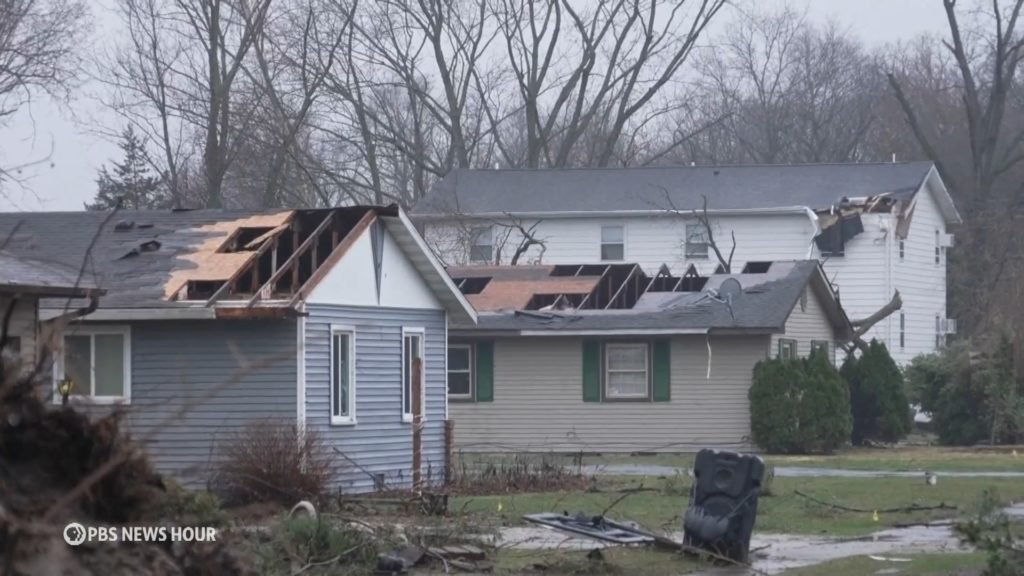
    In the day’s other headlines: A series of tornadoes killed at least two people in Northwestern Indiana and leveled homes and businesses in neighboring Illinois. An elderly couple was killed when a tornado struck their home in Lake Village, Indiana. Fire officials there say at least 10 others were injured.

    And in Kankakee, Illinois, a tornado flattened entire neighborhoods. Residents were left in shock, while the city’s mayor expressed relief that lives were spared.

    Woman:

    It was just devastation. It reminded me of the movie “Twister.”

    Christopher Curtis, Mayor of Kankakee, Illinois: We’re very fortunate that where the tornado did come through at the city of Kankakee was mostly our commercial industrial area, and not heavy residential area, but it has suffered significant damage.

    Geoff Bennett:

    That same weather system swamped roads in places in and around Grand Rapids, Michigan, and reportedly dropped hail the size of golf balls. And there’s more bad weather ahead. Widespread storms with damaging winds will stretch from Houston, Texas, all the way through the mid-Atlantic and up to Philadelphia.

    The Department of Homeland Security reactivated its global entry program early this morning. The fast-track service for preapproved travelers entering the U.S. was paused last month because of the partial government shutdown.

    A DHS spokesperson said the decision was intended to help alleviate the disruptions to travelers caused by the shutdown. A handful of U.S. airports have seen long security lines and delays lasting for hours in recent days amid a shortage of airport screeners.

    U.K. Prime Minister Keir Starmer was warned of the reputational risk in appointing Peter Mandelson as U.S. ambassador due to his ties to Jeffrey Epstein. That’s according to documents released today by the British government. The 147-page report lays out Mandelson’s ties to Epstein, as well as unrelated financial issues.

    Mandelson was arrested last month on suspicion of misconduct in public office. He denies any wrongdoing and has not been charged. Cabinet minister Darren Jones said the government fell short in its due diligence of Mandelson and that Epstein’s victims are their first priority.

    Darren Jones, Chief Secretary to U.K. Prime Minister: Peter Mandelson’s behavior was an insult to them and their suffering. I am therefore sorry that these events leave those victims with no choice but to relive their horrors with still too little justice being served.

    Geoff Bennett:

    Meantime, in Washington, Epstein’s longtime accountant Richard Kahn told lawmakers today that he was, in his words, not aware of the nature or extent of Epstein’s abuse until after his death.

    That’s according to opening remarks obtained by reporters ahead of a closed-door deposition by the House Oversight Committee. Kahn remains an executor of Epstein’s estate and also denies any wrongdoing.

    Seven members of Iran’s national women’s soccer team remain in Australia, an Australian government official said today. That’s as the rest of their teammates head back to a country now at the center of a widening war. The players had traveled to Australia for the Asian Women’s Cup just before the war started.

    Six of the women have accepted humanitarian visas that will allow them to remain in Australia for good. A seventh who had initially sought asylum has since decided to return to Iran, a decision supported by Australia’s home affairs minister.

    Tony Burke, Australia Home Affairs Minister:

    In Australia, people are able to change their mind. People are able to travel. And so we respect the context in which she has made that decision. For every member of this delegation, they have been shown a respect by Australia that would be unfamiliar to them in Iran.

    Geoff Bennett:

    Also today, Iran’s sports minister told state television that — quote — “under no circumstances” would the men’s team participate in this summer’s soccer World Cup, which is being hosted by the U.S., Mexico and Canada.

    Those comments came hours after FIFA’s president Gianni Infantino said that President Trump told him Iran would be welcome.

    On Wall Street today, stocks ended mixed as oil prices turned higher and investors digested the latest report on inflation. The Dow Jones industrial average fell nearly 300 points on the day. The Nasdaq managed a slight gain of almost 20 points. The S&P 500 closed just barely in the red.

  • West Asia turmoil drags stock markets, Sensex tumbles 1,123 points

    West Asia turmoil drags stock markets, Sensex tumbles 1,123 points

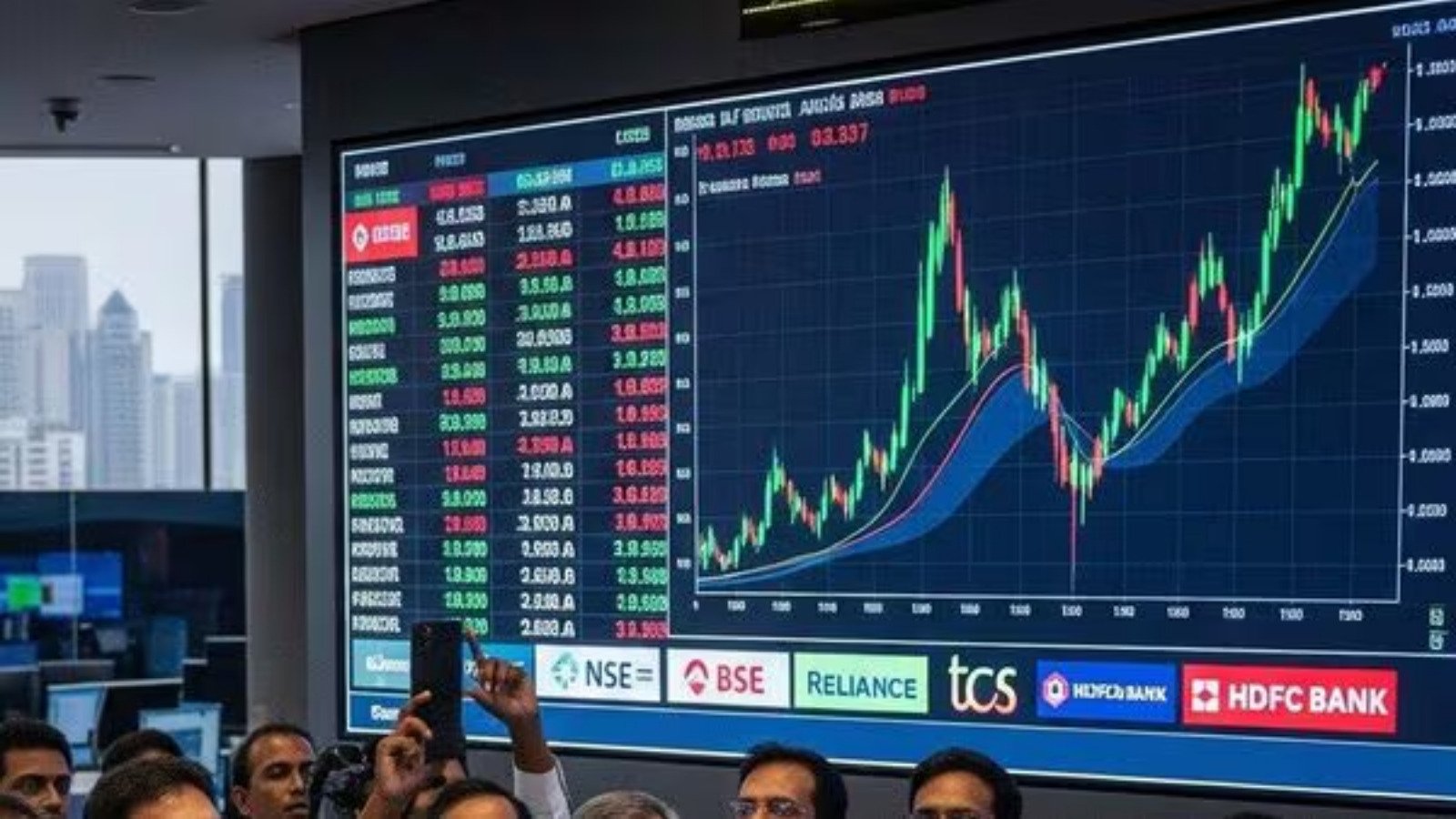
    Mumbai: Benchmark stock indices Sensex and Nifty closed more than 1 per cent lower on Wednesday, March 4, in tandem with a weak trend in Asian markets as the conflict in West Asia intensified, driving oil prices higher.

    Falling for the fourth straight session, the 30-share BSE Sensex tumbled 1,122.66 points or 1.40 per cent to settle at 79,116.19. During the day, it crashed 1,795.65 points or 2.23 per cent to 78,443.20 but recovered some of the losses in the second half of the session.

    The 50-share NSE Nifty dived 385.20 points or 1.55 per cent to end at 24,480.50, marking its third straight session of losses and logging the lowest closing level in the past six months. During the day, it dropped 560.3 points or 2.25 per cent to 24,305.40.

    Add as a preferred source on Google

    From the Sensex pack, Tata Steel tanked 6.76 per cent, followed by Larsen & Toubro (4.53 per cent). Bajaj Finance, UltraTech Cement, NTPC, InterGlobe Aviation, Bajaj Finserv and Kotak Mahindra Bank were also among the laggards.

    Bharti Airtel, Infosys and Tech Mahindra were the gainers.

    Brent crude, the global oil benchmark, jumped 3.08 per cent to USD 83.91 per barrel.

    MS Admissions 2026-27MS Admissions 2026-27

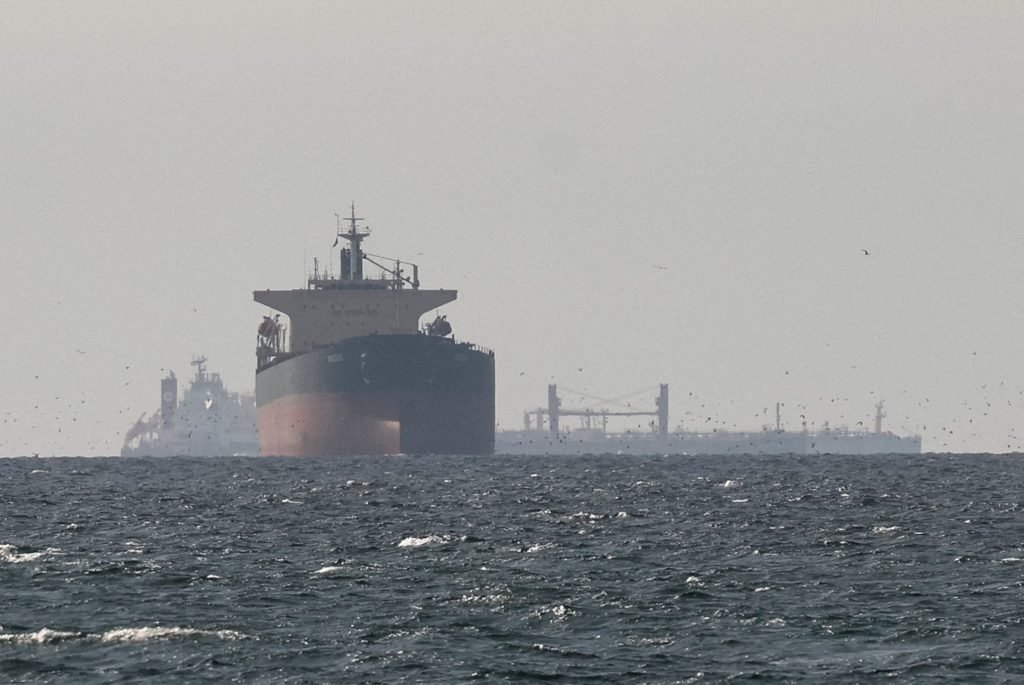
    “Global risk sentiment remained fragile amid ongoing tensions in the Middle East and the closure of the Strait of Hormuz, which kept oil prices volatile. Indian equities mirrored the broader risk‑off environment due to the impact of inflation and the potential for higher CAD.

    “The continued depreciation of the INR also remains a key concern, while incremental foreign outflows lead to near-term volatility in the market,” Vinod Nair, Head of Research, Geojit Investments Limited, said.

    The rupee slumped to an all-time low of 92.35 against US dollar on Wednesday, weighed down by spiking crude oil prices.

    The BSE smallcap select index tumbled 2.42 per cent and midcap select index dropped 2.10 per cent.

    Among sectoral indices, metal plunged 4 per cent, BSE PSU Bank (3.50 per cent), industrials (3.29 per cent), realty (3.16 per cent), commodities (3.12 per cent), capital goods (2.64 per cent), power (2.59 per cent), services (2.25 per cent) and energy (2.23 per cent).

    A total of 3,245 stocks declined, while 1,053 advanced and 135 remained unchanged on the BSE.

    Asian markets ended with deep cuts. South Korea’s Kospi tumbled 12 per cent. Japan’s Nikkei 225, Shanghai’s SSE Composite index and Hong Kong’s Hang Seng index also ended significantly lower.

    European markets were trading in positive territory. The US market ended in negative territory on Tuesday, March 3.

    The conflict in West Asia intensified with Iran continuing to pound several Gulf countries in retaliation for the joint attack against it by Israel and the US. The US and Israel have also carried out fresh strikes on Iran.

    Foreign Institutional Investors (FIIs) offloaded equities worth Rs 3,295.64 crore on Monday, according to exchange data. Domestic Institutional Investors (DIIs), however, bought stocks worth Rs 8,593.87 crore.

    Equity markets were closed on Tuesday for Holi.

    On Monday, the Sensex ended at 80,238.85, down 1,048.34 points or 1.29 per cent. The Nifty settled 312.95 points or 1.24 per cent down at 24,865.70.

  • Youth Arrested For Molesting Women In Isolated Places

    Youth Arrested For Molesting Women In Isolated Places

    Indore News: Youth Arrested For Molesting Women In Isolated Places | Representative Image

    Indore (Madhya Pradesh): Police have arrested an MBA student, Kanahiya Patil, for allegedly harassing and attempting to molest women in isolated areas under the Rau police station limits, officials said on Wednesday.

    According to police, the accused allegedly targeted women who were alone, passed obscene comments and attempted to molest them before fleeing the spot.

    A woman had lodged a complaint on November 1, stating that an unidentified man riding a scooter misbehaved with her and made indecent remarks on CAT Road, which is considered a relatively isolated stretch.

    Based on the complaint, police registered a case under relevant sections of the Bharatiya Nyaya Sanhita (BNS) and launched an investigation.

    Police examined CCTV footage from the area and nearby locations and also used technical inputs and informers to trace the accused.

    On Tuesday, police received information that the suspected scooter rider had been seen again near CAT Road. Acting swiftly, a police team cordoned off the area and apprehended the accused.

    During interrogation, the accused allegedly confessed that he used to harass women when he found them alone, police said.

    The scooter allegedly used in the incidents has been seized, and further legal action is being taken as the investigation continues.


  • West Asia Conflict: India Joins 29 Nations Seeking Protection For UN Peacekeepers In Lebanon

    West Asia Conflict: India Joins 29 Nations Seeking Protection For UN Peacekeepers In Lebanon

    India and 29 countries call for the safety of UN peacekeepers in Lebanon as tensions escalate between Israel and Hezbollah | X

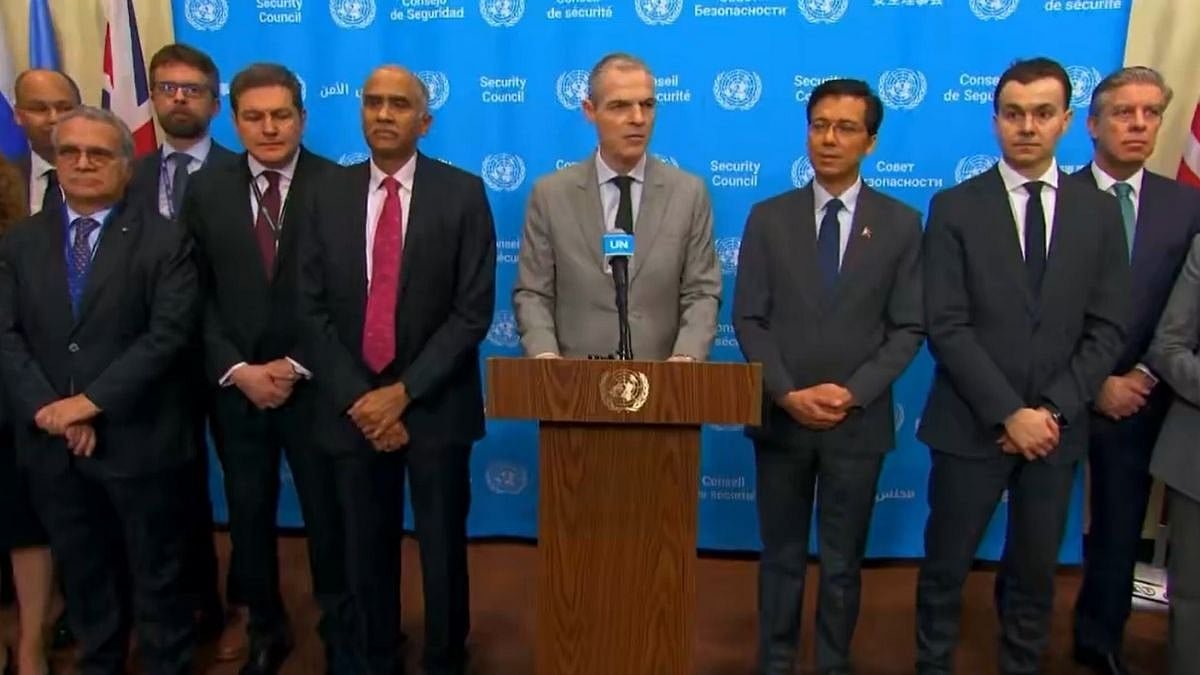
    United Nations, March 12: India has called for the protection of UN peacekeepers in Lebanon, who are in the midst of a heightened confrontation between Israel and Hezbollah in the fallout of the Iran war.

    “We urge all parties, under all circumstances, to ensure the safety and security of UNIFIL personnel and premises, in accordance with international law,” a joint statement by India and 29 other countries said on Wednesday (local time), referring to the UN Interim Force in Lebanon.

    “Peacekeepers must never be the target of attacks or intimidation of any kind,” the statement said. “We commend the courage, professionalism and dedication of UNIFIL peacekeepers in the fulfilment of their mandate”.

    India second-largest troop contributor to UNIFIL

    The 642 Indian peacekeepers constitute the second-largest contingent in the 7,438-member UNIFIL.

    Created in 1978, the peacekeeping operation is charged with monitoring the cessation of hostilities there and helping the Lebanese government regain control of the southern Lebanon areas.

    Joint statement delivered at UN Security Council

    With India’s Permanent Representative P. Harish at his side, France’s Permanent Representative Jerome Bonnafont read out the statement outside the Security Council before it met to discuss the situation in Lebanon.

    Three Ghanaian peacekeepers were injured in their base last week “amid heavy firing” in an area of southern Lebanon where they were located, according to UNIFIL.

    Condemning the attack, the statement said, “Those responsible for the attack must be held accountable.”

    The UN has said the incident was under investigation and has not assigned blame.

    Statement criticises Hezbollah, urges restraint from Israel

    The statement condemned “in the strongest terms Hezbollah’s reckless decision to join the Iranian attacks against Israel”, which dragged “Lebanon in a war neither its authorities nor its population wanted”.

    As for Israel, it said they urge the country “to abstain from attacks against civilian infrastructure and heavily populated areas and to respect the Lebanese sovereignty and its territorial integrity”.

    “All parties must respect international law, including international humanitarian law, and ensure the protection of civilians and civilian infrastructure,” it added.

    UN warns of dangerous and precarious situation

    Under-Secretary-General Jean-Pierre Lacroix told the Council that UNIFIL is implementing its mandates in a “dangerous and precarious environment”.

    He said that since March 1, UNIFIL has recorded 4,120 “trajectories” coming from both sides of the Blue Line that effectively separates Israel and Lebanon.

    Hezbollah has carried out daily strikes across the Blue Line, with rockets, missiles and drones at targets in Israel and the occupied Syrian Golan, he said.

    Also Watch:

    Meanwhile, “UNIFIL has observed incursions by Israel Defense Forces units into Lebanon at several locations”, and there have been direct clashes between the Israeli forces and Hezbollah, he said.

    (Disclaimer: Except for the headline, this article has not been edited by GPlus’s editorial team and is auto-generated from an agency feed.)


  • Apple’s cheapest MacBook is here and it may finally appeal to Indians

    Apple’s cheapest MacBook is here and it may finally appeal to Indians

    Apple has a habit of making things expensive. The MacBook Neo, unveiled on Wednesday, March 4, is a deliberate step in the opposite direction. And, it might be the most interesting Mac the company has launched in years.

    Starting at Rs 69,900, it is the cheapest MacBook Apple has ever made. For a market like India, where price has long been the single biggest barrier to switching to a Mac, that matters.

    No corners cut

    But, Apple has not cut corners in the usual ways. The Neo gets the A18 Pro that powers the iPhone 16 Pro, the most powerful chip Apple has put into a laptop at this price, and not a watered-down processor developed for a budget product. That means it is up to 50 per cent faster at everyday tasks than the best-selling Intel Core Ultra 5 Windows laptop, the company said in a statement. It also runs completely silent, with no fan.

    Add as a preferred source on Google

    The 13-inch Liquid Retina display runs at 2408×1506 resolution with 500 nits of brightness, making it sharper and brighter than most Windows laptops at this price point. Battery life is rated at 16 hours, which in real-world terms means you will almost certainly get through a full day without reaching for a charger.

    There are four colours – blush, indigo, silver and a new citrus. It weighs just over 1.2 kg. Speakers support Spatial Audio and Dolby Atmos.

    Smart, green and ready to go

    On the software side, the Neo ships with macOS Tahoe and full Apple Intelligence support, including Writing Tools and Live Translation. 

    MS Admissions 2026-27MS Admissions 2026-27

    Apple is also pitching the Neo as its greenest laptop yet, with 60 per cent recycled content, 90 per cent recycled aluminium and 100 per cent recycled cobalt in the battery.

    Pre-orders have already opened, with the MacBook Neo hitting shelves on March 11.

    For first-time Mac buyers, or anyone who has looked at MacBook prices and quietly closed the tab, this one is worth a proper look.

  • Can tapping into oil reserves help stabilize prices?

    Can tapping into oil reserves help stabilize prices?

    Geoff Bennett:

    The decision by the International Energy Agency, or IEA, to tap into oil reserves is historic in its size and scope; 400 million barrels dwarfs the number of barrels that were released after Russia invaded Ukraine.

    But there are many questions about whether this more ambitious effort will stop a surge in oil and gas prices if the war endures.

    To explore some of these questions, we’re joined now by Clay Seigle, a senior fellow in the Energy, Security and Climate Change Program at the Center for Strategic and International Studies.

    Thank you for being with us.

    So the IEA has not laid out a clear timeline for when this release could begin, but in your view, how quickly could it hit the market and how much relief could it provide?

    Clayton Seigle, Center for Strategic and International Studies: Good evening.

    The oil that is expected from the IEA’s strategic drawdowns could hit the market relatively quickly. It’s a little bit of a function of whether industry, meaning the oil companies that are connected to those reserves, are ready to receive those barrels or if they have other commercial operations that are taking up bandwidth.

    But, for the most part, as soon as the decision is made, within days, that oil can begin flowing to industry.

    Geoff Bennett:

    And President Trump has said that the U.S. will tap the Strategic Oil Reserve. Of course, as you well know, those strategic reserves are typically used for short-term disruptions, not prolonged crises. How much can this effectively stabilize prices?

    Clayton Seigle:

    It all depends on the duration of the disruption.

    So the 20 million barrels per day of oil that come from the Mideast Gulf and supplied world markets is really must-have for global economic prosperity and the kind of prices, inflation, economic conditions that we’re used to.

    So what a measure like drawing down reserves from the International Agency and the Strategic Petroleum Reserve can do is buy us more time. They can extend a lifeline for us to complete the operation in the Gulf and reach a postwar settlement with the Iranians that will bring security back to the region and allow those exports to flow again.

    So it can buy us more time, but it’s not a substitute to getting those exports going again. It’s really just a temporary measure.

    Geoff Bennett:

    A lifeline, yet not a substitute. How much oil, how much of America’s reserves could be tapped here?

    Clayton Seigle:

    Well, the reserve is only about 60 percent full, following that big drawdown that you mentioned from 2022. And the thing about the Strategic Petroleum Reserve is it’s designed to draw down very quickly, which is what was done a few years ago.

    But because of the plumbing and other considerations, it can only be refilled very gradually. And that’s why we’re only at about the 60 percent level. So I think that U.S. policymakers will probably be very judicious in deciding the volumes that they want to commit to this, but also, again, with an eye toward how soon the cause of the problem, which is the blockage in the Middle East Gulf and the Strait of Hormuz, can be resolved.

    Think of the lifeline like this. If you lose your job, and maybe we all have, hopefully, you have an emergency fund or rainy day fund in the bank that you can use to pay the bills until you get a new paycheck. It’s not instead of getting a new job and a paycheck. It’s in addition to for the short term.

    So you still need to get that job and the paycheck going again. And the world still needs to get that oil from the Mideast Gulf flowing to market.

    Geoff Bennett:

    Yes.

    The IEA has only done this five times before, including twice after Russia’s invasion of Ukraine. How much difference did those releases actually make for supply and prices?

    Clayton Seigle:

    That was a really interesting case study from 2022 because the market was facing the prospect of five million barrels per day of Russian oil potentially being removed from the market.

    And, famously, crude prices soared to $130 per barrel, United States pump prices, what we pay at the gasoline station, $5 a gallon. And that’s the nationwide average. It was a lot higher in certain states. But that was all just fearing five million barrels a day disappearing. At the end of the day, those Russian barrels didn’t disappear from the market.

    They were just reshuffled to other buyers around the world. And so once that happened, the oil that had been released from the drawdowns stayed on the market and kept prices lower for longer.

    Geoff Bennett:

    Beyond tapping the reserve, what other tools do governments actually have to stabilize energy markets in a crisis like this?

    Clayton Seigle:

    You know, the supply-side interventions are pretty limited in their potential to help. And so the Trump administration is reportedly considering a lot of different tools in the toolkit, everything from the Treasury potentially intervening in the oil futures market to put a short position to backstopping insurance for the oil and gas cargoes that have been stranded, pending safer conditions to transit through the Gulf and the strait.

    And then there’s also consideration of other measures, like waiving certain environmental specifications on the handling and processing of refined products like gasoline, jet fuel, diesel.

    But I just have to stress that all of these measures can really only buy us a little bit more time and partially offset the missing barrels from the Mideast Gulf. There’s also some measures that folks in the region are taking. And so Saudi Arabia in particular has the ability to redirect some of its Gulf exports, not all of them, but some of their exports from the Strait of Hormuz and bypass that area and send it out through the west coast of Saudi Arabia into the Red Sea.

    But those volumes are also limited. And then you potentially have to deal with other threats to shipping, notably from the Houthi militia that has plagued commercial shipping for years in that part of the world. We could see that again.

    Geoff Bennett:

    Clay Seigle, thanks so much for your insights.

    Clayton Seigle:

    Thank you.

  • IndiGo To Operate Flights To 9 Regional Destinations On March 12 Amid West Asia Conflict

    IndiGo To Operate Flights To 9 Regional Destinations On March 12 Amid West Asia Conflict

    IndiGo plans to resume flights to nine West Asia destinations and select European routes while cautiously restoring operations during the ongoing regional tensions | File Photo

    New Delhi [India], March 12: IndiGo on Wednesday said it will operate flights to nine destinations across West Asia on Thursday, along with select routes to Europe, as it gradually restores services in the Gulf region.

    In a travel advisory, the airline said the flights will operate subject to prevailing safety conditions and necessary regulatory approvals, as the carrier continues to coordinate closely with relevant authorities.

    “IndiGo continues to coordinate closely with the relevant authorities to progressively restore its flight operations across the Middle East, helping customers reconnect with their loved ones and proceed with their travel plans,” the airline posted on X.

    Passengers advised to check flight status

    The airline cautioned that flight schedules may change at short notice due to the evolving situation and advised passengers to check the latest flight status before heading to the airport.

    “Customers are advised to check the latest flight status before proceeding to the airport,” the advisory said.

    IndiGo also said its teams are contacting affected passengers to assist with alternate travel arrangements where required.

    The airline added that passengers requiring further support can reach out to its customer contact centre for assistance as the situation develops.

    India assists citizens amid regional tensions

    Earlier, India stepped up assistance to its citizens in West Asia as escalating regional tensions continue to disrupt travel and safety conditions, with dozens of Indians repatriated from Lebanon and hundreds departing from Qatar on commercial flights.

    According to the Indian Embassy in Beirut, the first batch of 177 Indian nationals was repatriated to New Delhi on a charter flight arranged by their employer on Wednesday. The group was seen off at Beirut-Rafic Hariri International Airport by India’s Ambassador to Lebanon, Noor Rahman Sheikh.

    In a post on X, the mission said, “The first batch of 177 Indian nationals, being repatriated to Delhi in a charter flight, arranged by their Company, was seen off by Ambassador Noor Rahman Sheikh at Beirut International Airport today. The Embassy of India in Beirut stands committed to extending best possible assistance to Indian nationals in Lebanon.”

    Over 500 Indians depart Qatar

    Meanwhile, the Indian Embassy in Qatar said more than 500 Indians who had been stranded in Qatar travelled to India on Qatar Airways flights on March 11 (Wednesday). The passengers departed for destinations including New Delhi and Mumbai.

    The embassy added that Qatar Airways is scheduled to operate two additional flights to India on March 12, one each to New Delhi and Mumbai, to facilitate further travel.

    Embassy issues advisory to Indian community

    The Indian Embassy in Qatar issued an advisory urging members of the Indian community to remain cautious and follow official instructions. The embassy said its three 24/7 helplines remain operational to assist Indian nationals with queries or emergencies.

    Also Watch:

    Officials further said the mission has been prioritising urgent passport services due to the current situation, keeping its consular section open throughout the week and issuing Tatkal passports within one to two days.

    The advisory also urged residents to handle official alerts seriously and avoid approaching unidentified objects, debris or fragments, asking them to immediately report such items by contacting emergency services.

    (Disclaimer: Except for the headline, this article has not been edited by GPlus’s editorial team and is auto-generated from an agency feed.)


  • Higher Education Department, Mulls AVGC Labs By Next Session

    Higher Education Department, Mulls AVGC Labs By Next Session

    Bhopal News: Higher Education Department, Mulls AVGC Labs By Next Session | Representative Image

    Bhopal (Madhya Pradesh): The Higher Education department is taking steps to strengthen Animation, Visual Effects, Gaming and Comics (AVGC) in the state.

    While no specialised AVGC lab currently exists, the department is planning to set up Content Creating Labs (CCLs) in a few divisions by the next academic session.

    Sources in the Higher Education Department said AVGC is a wide platform that could help develop youths’ creative skills. With proper training in making reels, short films, games or comics, students could earn extra income and potentially reach greater heights, as AVGC is a new field with vast possibilities.

    The Union Budget 2026-27 proposed establishing AVGC CCLs in 15,000 schools and 500 colleges across India. The initiative aims to embed creative and digital skills within the formal education system and strengthen India’s Orange Economy.

    The labs are envisioned as standardised “plug and play” creative spaces within educational institutions, providing students access to professional-grade tools and cloud-based production environments for animation, VFX, gaming, comics, and immersive media.

    A senior Higher Education officer said the state currently lacks AVGC courses and skilled trainers. The AVGC ecosystem will be introduced alongside main courses.

    “So far, it is uncertain how many CCLs will come up in Madhya Pradesh,” the officer said. “The state has seven digital studios, but a CCL is different—it will shape skills in reel-making and content creation.”

    The Union Budget also announced support for the Indian Institute of Creative Technologies (IICT), Mumbai, to set up AVGC Content Creator Labs. The Information & Broadcasting Ministry will conduct surveys for establishing the labs.

    Official response

    Prabal Sipaha, Commissioner, Higher Education Department, told Free Press: “The department is exploring the possibility of establishing some labs at division level. By next session, they may start functioning.”


  • Delhi HC directs MCD to halt demolition of accused’s house in Uttam Nagar

    Delhi HC directs MCD to halt demolition of accused’s house in Uttam Nagar

    New Delhi: The Delhi High Court, on Tuesday, March 10, has directed the Municipal Corporation of Delhi (MCD) not to carry out further demolitions until Wednesday, March 11, against the houses of two individuals allegedly accused in the Uttam Nagar Holi clash that resulted in the death of 26-year-old Tarun.

    The petitions were filed by Jarina, the mother of the accused, Imran, and Shahnaz, whose children the police questioned during the investigation of the case.

    Justice Amit Bansal directed the authorities to maintain status quo until the next hearing, Live Law reported.

    Add as a preferred source on Google

    One of the petitioners said that the house in JJ Colony in Uttam Nagar lawfully belongs to them, as they have been residing there for the past four decades. The petition stated that the petitioner and her husband were regularly paying bills and other municipal charges.

    A first information report was registered on March 5 under Sections 110 (attempt to commit culpable homicide) and 3(5) (common intention) of the Bharatiya Nyaya Sanhita (BNS) regarding the altercation between the two families, according to the plea.

    However, the petitioner said the incident originated from a petty dispute between children playing with balloons that escalated into a verbal spat and a scuffle between the neighbouring families. The petitioners claimed that the dispute was personal, and certain elements are being used to give it a communal angle.

    MS Admissions 2026-27MS Admissions 2026-27

    According to the plea, a mob gathered in the area on March 7 and allegedly spread rumours, misinformation categorising the incident as a communal attack. It added that individuals from certain organisations broke the locks and doors of the accused’s house, vandalised the property, and set it on fire.

    Following the dispute, on March 8, the MCD demolished the entire residential building of one of the accused using bulldozers without prior notice, a show-cause notice, or an opportunity to hear the affected persons.

    The plea alleged that the demolitions were carried out immediately after the FIR was registered, raising questions that the drive was undertaken as a disciplinary measure, as the occupants were implicated in the case.

    It also mentioned that the doors and locks of the petitioner’s house were broken open by the public, and that she feared her house might be demolished.

    The petitioner sought a court order to restrain the MCD from carrying out an arbitrary and illegal demolition of her house, citing violations of Supreme Court guidelines against punitive actions.

    “Tell them, between now and 4 pm and 10:30 am tomorrow, when this matter is taken up, nothing should happen,” the judge said.

    Advocate Divyesh Pratap Singh, through whom the petitions were filed, said that tearing down parts of the accused’s house created “an atmosphere of terror and insecurity” in the area. It raised concerns that other petitioners’ homes could be demolished as well, leaving them homeless.

    The Municipal Corporation of Delhi carried out a demolition drive and razed “only the illegally constructed parts” of the accused’s house on Sunday, March 8.

    On March 4, Tarun (26) was killed in a clash that broke out between his family and their neighbours in the JJ Colony area. The violence broke out after water from a balloon thrown by a girl from Tarun’s family splashed on a woman from his neighbour’s family.

    Police maintained that there was no communal angle and that the dispute arose from past disagreements. The two families had known each other for the past five decades and got into rows over parking and garbage disposal, among other things, the police said.

    The incident had triggered massive protests from right-wing groups, with vandalism and looting reported following the alleged murder. While JJ Colony remained in heightened tension, the MCD carried out the demolition drive, saying it was taken as part of “removing encroachment” built upon the drains.