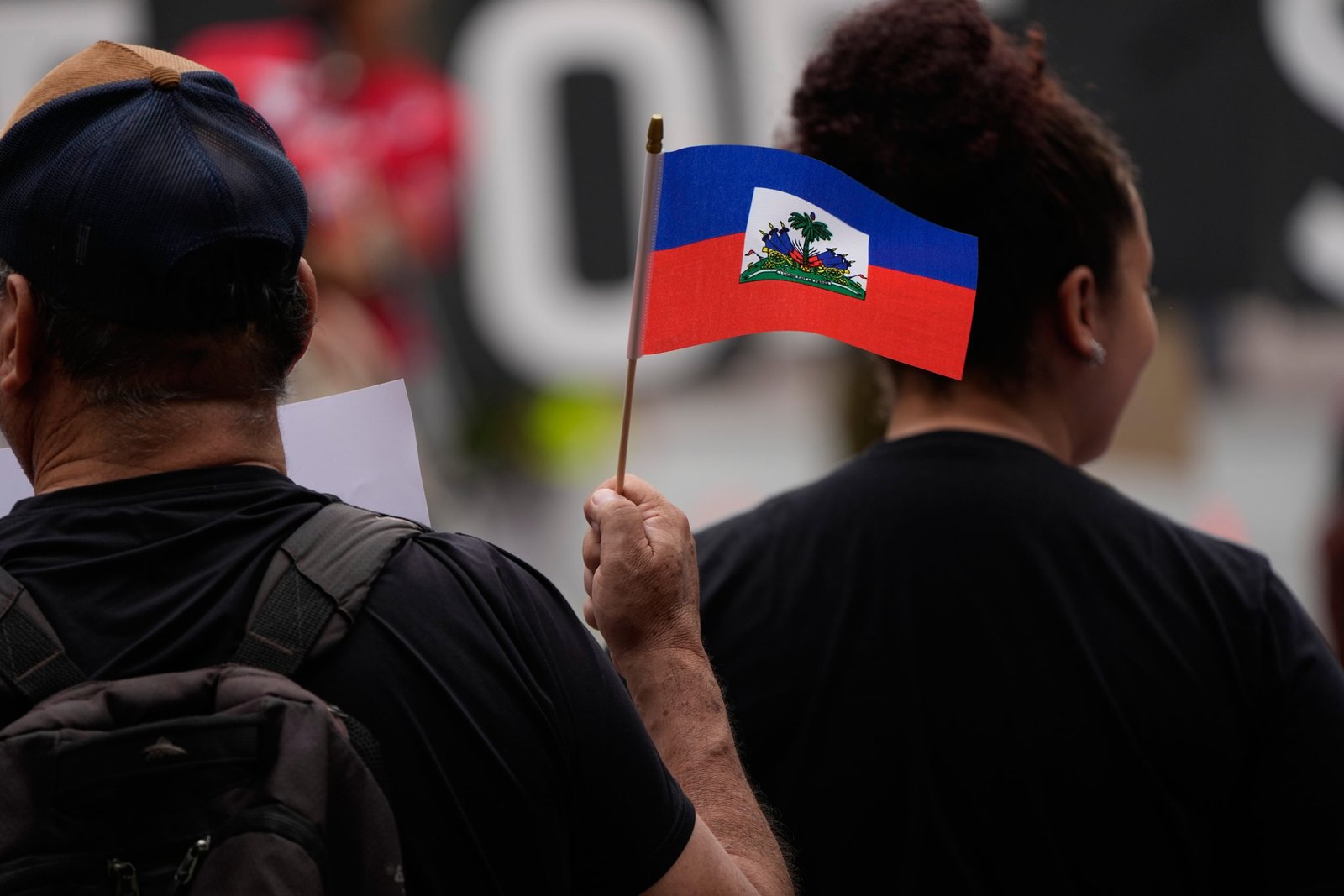
WASHINGTON – Many members of Minnesota’s Haitian community are facing a grim choice – abandon the life they’ve built in the United States and return to a dangerous, strife-torn country or go underground and risk deportation.
And many Salvadorans living in the state will face the same fate soon.
That’s because the U.S. Supreme Court recently ruled that the Trump administration can end the Temporary Protected Status (TPS) of Haitians and other immigrant groups, nullifying lower court suits that sought to extend the protection.
TPS gives nationals from countries experiencing crises like armed conflict or natural disasters protection from deportation and provides work authorization. Although the status is conferred for a specific time period, usually 18 months, previous administrations have renewed the protections several times for many nations.
Related: Immigrants fleeing gang violence see door to asylum closing at Fort Snelling
Meanwhile, a federal judge lifted a legal block last week and Somalis living in the United States also lost their TPS status. Although there is a sizable Somali population in Minnesota, only about 400 had that protection.
David Policard, a Haitian and executive director of VANSE, a nonprofit that supports Haitian immigrants in Minnesota, said calls for help have spiked since the Supreme Court ruling.
Policard said most of the Haitians who have reached out to VANSE are asking for help with housing, food and healthcare because they have lost their jobs.
And he said few are planning to return to Haiti, where armed gangs have seized control of the troubled Caribbean nation and where poverty, hunger and unemployment are rising.
“Over 95% have planned on going underground and wait (the Trump administration) out,” Policard said.
The U.S. Census says there are about 2,200 Haitians in Minnesota while other counts put that figure closer to 4,000. But it’s unclear how many had TPS status.
If they have lived in the United States for a year or less, those who lose TPS status can apply for asylum. But those applications can be denied and many applicants — while waiting for their day in court — have been fitted with ankle bracelets to monitor their movement.
Many other nations will lose their TPS designations in coming months. TPS for El Salvadoran nationals will expire Sept. 9. Designations for Sudan and Ukraine are set to expire Oct. 19. TPS for Haiti ended July 27.
The Trump administration said its termination of protections for hundreds of thousands of immigrants is justified.
“Temporary Protected Status is just that — TEMPORARY,” said DHS Secretary Markwayne Mullin on X. “If you are in our nation and your status has been terminated, you are here ILLEGALLY. You have two options: leave immediately or be swiftly deported.”
Policard said he knows of several Haitian immigrants in Minnesota who have been deported since the Supreme Court ruled last month.
“It seems that the administration wants to fast-track these people into immigration courts so they can deport them,” said Paul Hultgren, an immigration attorney in Osseo.
Singling out Haitians
Jean Perrault moved to the United States from Haiti in 1981 and is a conductor and composer who teaches in the Department of Music at the University of Minnesota Duluth.
He said even Haitians who have been living in the United States for a long time are concerned. And that it’s “mindboggling” that President Donald Trump singled out a group of people with inflammatory rhetoric — saying without proof at a campaign stop in Springfield, Ohio, that Haitians were eating cats and dogs in that city.
Perrault also said it’s ironic that the State Department has issued the most severe warning to Americans who think of traveling to Haiti but is prepared to deport tens of thousands of Haitians with productive lives in the United States to the troubled island nation
“Do not travel to Haiti for any reason,” the State Department’s warning said. “U.S. citizens are at risk due to crime, terrorism, kidnapping, unrest and limited healthcare.”
Another accomplished Haitian who lived in Minnesota has done what many of her countrymen have done — moved to Canada.
Djenane Saint Juste lived in Minnesota under TPS protection since 2014. A founder of the performing arts group Afoutayi, Saint Juste worked to bring Haitian dance to the Twin Cities, with performances at the Minnesota Opera.
Karen Quisenberry, production director of the opera, called Saint Juste a “lovely choreographer, community contributor, and human.”
But after Saint Juste was denied a green card last year, and after losing TPS protection, she moved with her mother to Canada, a nation that, like Haiti, also speaks French and where immigrant advocates are pressing for legal status for these newcomers.
Related: Explaining TPS, a little-known immigration law that’s really important to a lot of Minnesotans
Haitians in Minnesota run small businesses and are overrepresented as employees of the home healthcare, nursing home and construction businesses. Some Haitians also work in the state’s dairy farms, according to Policard.
With the support of business groups, Democrats in the U.S. House were able to pass a bill in the spring that would extend Haitian TPS protections until early 2029. But the legislation stalled in the U.S. Senate and was unlikely to secure Trump’s signature.
Impact on Salvadorans
The administration’s move to end their TPS status will ripple through several Minnesota industries. But there is likely to be a greater impact when the TPS status of immigrants from El Salvador ends next month.
There are about 17,500 Salvadorans living in Minnesota. But it’s unclear how many have TPS status.
According to the Minnesota Department of Economic Development, immigrants from El Salvador have a high employment rate, working in manufacturing, healthcare, education, construction, hospitality and food processing.
Ana Pottratz Acosta, a professor at Mitchell Hamline School of Law, said migrants from El Salvador and Venezuela, a country that lost its TPS status last year, have or had the largest TPS populations in Minnesota.
She said Minnesota’s Salvadorans and Venezuelans might be eligible to win asylum or have lived long enough in the United States to have a U.S.- born child who could provide a path to legal status.
Yet Pottratz Acosta also said there could be an increase in immigration enforcement in the state. “I would not surprise me that after termination of TPS there may be targeted enforcement,” she said.
The post Stripping TPS from Haitians, Salvadorans and others is the newest phase of Trump’s enforcement strategy appeared first on MinnPost.
Leave a Reply