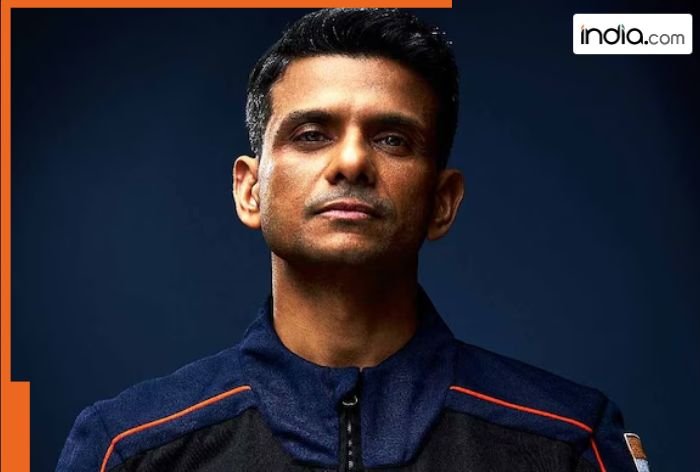
Shukla’s mission is more than just a spaceflight—it’s a symbol of India’s return to human space exploration. He carries a special swan named “Joy”, representing wisdom (India), resilience (Poland), and grace (Hungary)
On June 10, 2025, at 5:52 PM IST (8:22 AM EDT), Group Captain Shubhanshu Shukla will lift off to the International Space Station (ISS), becoming the first Indian astronaut since 1984 to undertake such a journey. As the pilot of Axiom Mission 4 (Ax-4), he will fly aboard a SpaceX Crew Dragon spacecraft, launched on a Falcon 9 rocket from NASA’s Kennedy Space Center in Florida. After approximately 28 hours of travel, the crew is expected to dock with the ISS by 10:00 PM IST on June 11, 2025.
Shukla joins an elite international crew: Commander Peggy Whitson (USA, Axiom Space), and Mission Specialists Sławosz Uznański-Wiśniewski (Poland, ESA) and Tibor Kapu (Hungary, Hunor Programme). The team will spend up to 14 days aboard the ISS, conducting over 60 scientific experiments from 31 countries, including seven from India, such as research on plant growth in microgravity, muscle regeneration, and tardigrade resilience.
Born on October 10, 1985, in Lucknow, Shukla is a decorated Indian Air Force test pilot with over 2,000 flight hours. He has undergone rigorous astronaut training in Russia and at SpaceX facilities in the US, and will assist in spacecraft navigation, docking, and emergency procedures during the mission. But beyond his technical role, Shukla carries India’s cultural pride into space—bringing along items designed by National Institute of Design (NID) students, performing yoga in microgravity, sharing Indian delicacies like mango nectar and moong dal halwa, and planning live interactions with Indian school children and possibly Prime Minister Narendra Modi.
SpaceX has revolutionized space travel economics. While NASA pays around $55 million per seat under its commercial crew program, private clients like Axiom Space are charged $52–55 million per seat, excluding stay-related fees. NASA charges $35,000 per night per astronaut for use of the ISS. India’s investment for Shukla’s mission seat is around ₹548 crore (approximately $65 million), while the total private mission cost per astronaut can go up to $100 million, including training and logistics. In comparison, Russia’s Soyuz costs around $80–86 million per seat, Boeing’s Starliner costs about $90 million, and the now-retired Space Shuttle had a cost of approximately $170 million per astronaut. For reference, cargo missions on SpaceX’s Dragon cost anywhere between $21,000 and $89,000 per kg, while human missions are far costlier due to added life support and safety systems.
Shukla’s mission is more than just a spaceflight—it’s a symbol of India’s return to human space exploration. He carries a special swan named “Joy”, representing wisdom (India), resilience (Poland), and grace (Hungary). The scientific experiments onboard are expected to contribute to India’s ambition of establishing a space station by 2035 and support its moon mission goals set for 2047. This mission also strengthens international space ties, especially between India and the US, following commitments made during PM Modi’s 2023 visit.
In every sense, Group Captain Shubhanshu Shukla’s journey aboard the human-rated Falcon 9 rocket is a giant leap for India—both in science and symbolism. With his successful flight, India not only rekindles its human spaceflight legacy after four decades but also sets the stage for greater roles in global space partnerships, cutting-edge research, and inspiration for the next generation of Indian scientists, engineers, and dreamers.
—E.O.M
(Girish Linganna is an award-winning science communicator and a Defence, Aerospace & Geopolitical Analyst.He is the Managing Director of ADD Engineering Components
India Pvt. Ltd., a subsidiary of ADD Engineering GmbH, Germany )
Topics
Leave a Reply