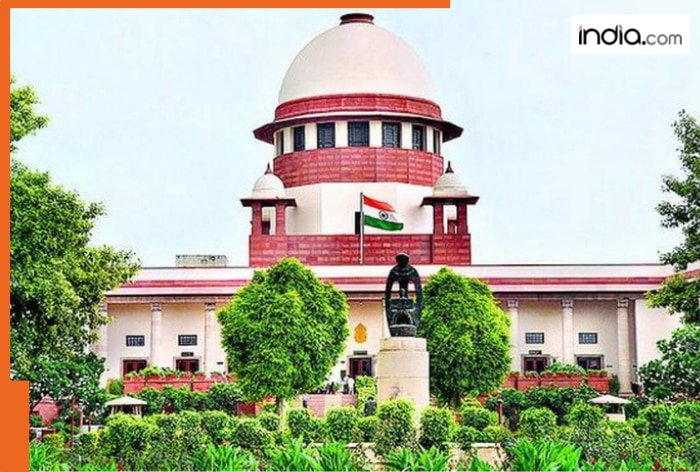
The Supreme Court on Thursday emphasized that strict laws meant to protect women’s welfare should not be used as tools to “punish, threaten, dominate, or extort” husbands. Justices BV Nagarathna and Pankaj Mithal highlighted that a Hindu marriage is considered a sacred institution, foundational for family life, and not a “commercial venture.” The Court noted that provisions such as Section 498A (cruelty), 376 (rape), 377 (unnatural sex), and 506 (criminal intimidation) of the Indian Penal Code are often used collectively in matrimonial cases to pressure husbands into meeting their wives’ demands.
The bench warned that these strict laws, designed to safeguard women, should not be used to harm or manipulate husbands. It clarified that while these provisions aim to protect and empower women, they are sometimes misused for purposes they were never intended for.
This observation was made in a case where the Court dissolved the marriage of an estranged couple due to its irretrievable breakdown. The husband was ordered to pay Rs. 12 crore as permanent alimony, which would settle all claims made by his wife.
The Court also expressed concern about cases where wives and their families use criminal complaints with serious charges to pressure husbands and their families into complying with financial demands. The bench criticized the police for sometimes acting hastily in such cases, arresting not only the husband but also his relatives, including elderly parents, with trial courts reluctant to grant bail due to the severity of the charges.
The Court acknowledged that minor disputes between couples can escalate into bitter conflicts that damage their relationship beyond repair, leaving no chance for reconciliation. In this case, the wife had filed a petition seeking to transfer a divorce case from Bhopal to Pune, while the husband sought dissolution of the marriage under Article 142(1) of the Constitution.
The bench noted that both parties and their families were involved in numerous legal battles throughout their short-lived marriage, with little to no cohabitation between the couple.
Leave a Reply