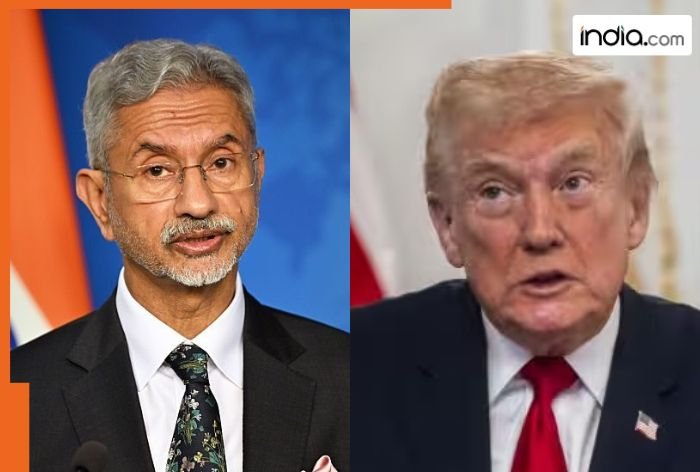
India and the US are having two parallel negotiations – one on a framework trade deal to address tariffs and another on a comprehensive trade deal.
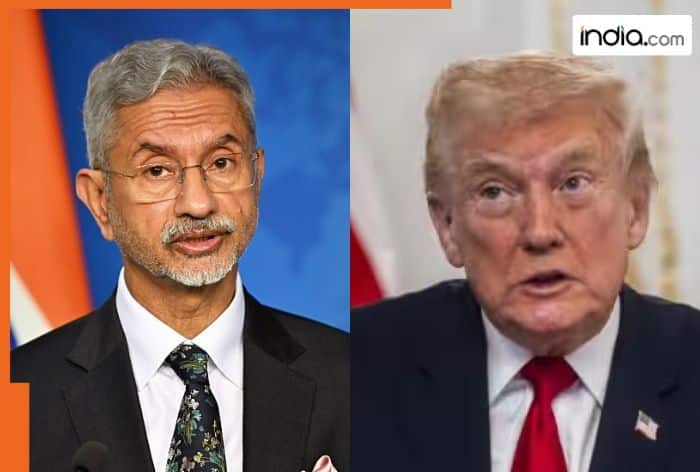
External Affairs Minister S Jaishankar on Saturday said politics increasingly “trumps” economics in the present era, and in an “uncertain world”, it is important that the country continuously diversifies supply sources to guarantee its needs, as reported by news agency PTI. Additionally, Jaishankar emphasized that the United States has set radically new terms of engagement by dealing with countries on a one-on-one basis.
He was speaking at a gathering after being conferred Honorary Doctorate by IIM-Calcutta at its campus here. The relations between New Delhi and Washington faced heat after Trump doubled tariffs on Indian goods to a whopping 50 per cent, including a 25 per cent additional duty for India’s purchase of Russian crude oil. India described the US action as “unfair, unjustified and unreasonable”.
Jaishankar further noted that India has been making efforts towards becoming self-sufficient and has developed a strong manufacturing capacity for various industries.
“This is an era where politics increasingly trumps economics… and that is not a pun… In an uncertain world, it is all the more important that we continuously diversify supply sources to guarantee our national needs,” External Affairs Minister S Jaishankar was quoted as saying by news agency PTI. Furthermore, he added,”The United States, long the underwriter of the contemporary system, has set radically new terms of engagement. It is doing so by dealing with countries on a one-on-one basis.”

India and the US are having two parallel negotiations – one on a framework trade deal to address tariffs and another on a comprehensive trade deal.
The Minister of External Affairs stated that China has “long played by its own rules”, and is doing so even now.
In the ensuing scenario, other nations are unclear whether attention should be on visible competition or the trade offs and understandings that punctuate it, he said.
As a result of this uncertainty, countries are unsure as to whether they should focus on rivalry or upon any resulting compromises and agreements.”Faced with such pulls and pressures of globalisation, of fragmentation and of supply insecurity, the rest of the world responds by hedging against all contingencies,” Jaishankar said.
India has been making exponential advancements in infrastructure as well as in latest scientific developments, he asserted.
Noting that a third of global production currently takes place in China, Jaishankar said this has put the spotlight on the “resilience and reliability” of supply chains.
“Conflicts and climate events have added to the possibility of that disruption.”
Jaishankar said India’s gap with some of the more successful Asian economies is fast narrowing in terms of infrastructure – highways, railways, aviation, ports, energy and power.
“We are now moving ahead, by any standards,” he said, maintaining that the world is taking note of the advancements being made by India.
“… With these considerations in mind, we are today endeavouring to forge new trade arrangements and promote fresh connectivity initiatives,” the minister said.
When it comes to trade, “we will naturally be guided by our people-centric vision, just as our connectivity plans will be by strategic as well as economic considerations,” he said.
Jaishankar said that as the government plans for a developed India by 2047, “the goal of foreign policy is to steadily expand our footprint beyond its current confines”.
He asserted the solidarity that India has built with the Global South creates a basis for doing so.
Jaishankar said when it comes to increasing comprehensive national power, India’s role in diplomacy is “active rather than passive”.
“A major power, that too with high aspirations like us, must have a significant industrial base,” he said.
“Promoting industrial growth and even incentivising it, is today a key economic priority,” the minister said, maintaining that emphasis on ‘Make in India’ in the last one decade speaks of a “different mindset and greater ambition”.
He said that attention is being paid to advanced technologies and advanced manufacturing so that India does not lag behind.
“We are now in the world of chips and semiconductors, electric vehicles and batteries, drones and space, or that of nanotech and bioscience. Each of them offers opportunity to leapfrog and establish unique capabilities,” Jaishankar said.
(With PTI Inputs)
Topics
Leave a Reply