India has done well in making many other defense systems, including exporting BrahMos missiles to the Philippines and air defense systems to Armenia.
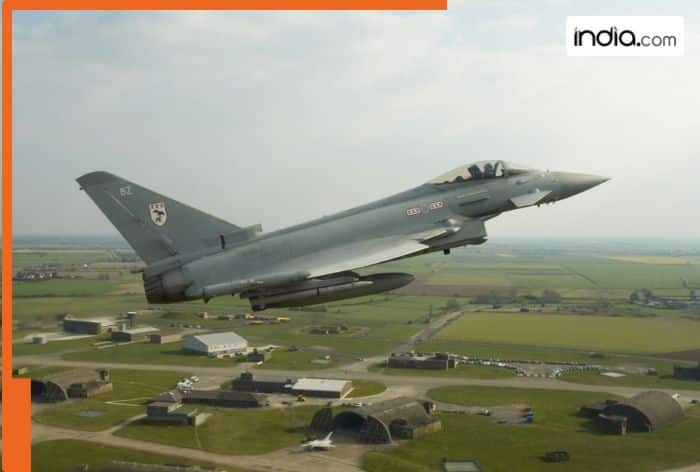
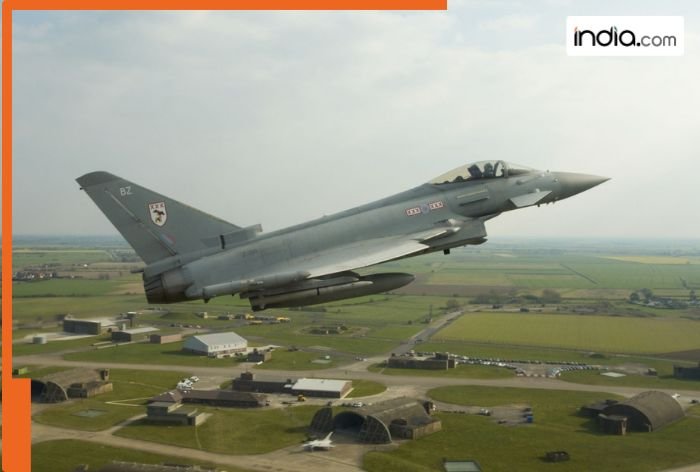
On October 17, India celebrated a major milestone when its indigenously built Tejas Mk1A fighter jet successfully completed its first flight. The achievement symbolizes India’s long journey toward modernizing its Air Force and showcasing its industrial capabilities. The test happened just weeks after India retired the last remaining MiG-21 squadrons from service, marking the end of an era for jets that once formed the backbone of India’s air defense. But behind this moment of pride lies a troubling reality that defense experts have been warning about for years.
India’s Air Force modernization is moving forward, but it’s happening slowly and irregularly. The fighter strength has now dropped to just 29 squadrons, far below the government-approved requirement of 42 squadrons. A fighter squadron typically has 18 to 20 jets, which means India is operating with a significant shortfall at a time when regional threats are actually increasing. As old jets are being retired, delays in producing new Indian aircraft and purchasing foreign jets are creating a dangerous gap in the country’s air defense capabilities. The main question facing India today is how to protect its defense readiness when neighboring threats show no signs of decreasing.
The security challenges India faces are very real and immediate. The country has ongoing border disputes with both China and Pakistan. In May 2025, India conducted Operation Sindoor to warn Pakistan after the Pahalgam terror attack. In 2020, Indian and Chinese soldiers clashed violently in Ladakh, particularly in disputed areas like Depsang, Galwan Valley, Pangong Tso and Demchok. Although India’s relationship with China has shown some improvement since 2024, both countries still maintain high troop deployments along their 3,500 kilometer border. The retirement of two MiG-21 squadrons on September 26 brought the Indian Air Force’s squadron strength to its lowest level in almost 60 years.
Air Chief Marshal A.P. Singh stated in early 2025 that the Air Force needs 35 to 40 new fighter jets every year just to cover the shortage. But this target is not being met. The shortage has reduced India’s advantage over Pakistan. According to the World Air Forces Directory 2025, India has 571 combat aircraft compared to Pakistan’s 418. The Straits Times of Singapore noted that the ideal goal for the Indian Air Force is to have enough fighter jets to fight both Pakistan and China simultaneously if needed. With only 29 squadrons, the Air Force will struggle to handle both adversaries together, especially as China rapidly modernizes its military and Pakistan continues to pose a serious threat.

These concerns became more urgent after Operation Sindoor, the four-day strike India conducted in May that destroyed Pakistan-based terror camps following the Pahalgam attack in Kashmir. The conflict demonstrated that air power is now the decisive factor in South Asian warfare, as both sides deployed missiles and drones and claimed to have shot down enemy jets. Pakistan even claimed it performed better than expected using Chinese-made J-10C jets, highlighting the risk posed by its strong defense partnership with China. Experts are clear that air power will be crucial in future wars, making the drop in squadron strength not just worrying but potentially dangerous.
The decline in squadron numbers is not a new problem, but it has become critical now. For years, delays in Indian-made fighters and limited funds have caused this situation, even though defense budgets have been rising. In 2015, India reduced its Rafale purchase plan from 126 jets to just 36 because the cost was too high and would have affected other modernization programs. After that decision, the focus shifted more heavily toward indigenous fighter projects. Defense analysts say this is the result of poor planning over decades. As one expert noted, we always knew how many squadrons we had and when they would retire, so this situation should not have come as a surprise.
India’s indigenization push has seen both failures and successes. The Tejas Mk1A is being built by Hindustan Aeronautics Limited at facilities in Bangalore and Nashik. After the test flight on October 17 in Nashik, the jet received a water cannon salute, which is the traditional celebration for first flights. Defence Minister Rajnath Singh called the jet a shining symbol of India’s self-reliance in defense production. The new aircraft has better avionics than the older Tejas Mk1, whose two squadrons have been operating since 2016 alongside Russian and French jets.
However, the smooth transition from retiring MiG-21s to inducting Tejas Mk1A has not happened as expected. Future production depends heavily on engine supply from GE Aerospace, and there have been major delays mainly due to engine availability problems. Another important reason for delay is the need to properly integrate different onboard systems like the Israeli-made AESA radar, which must pass many operational tests before the jet can be inducted. Despite these delays, the Tejas, which has been in development for almost 50 years, is planned to become the future backbone of the Indian Air Force. In 2021, the government ordered 83 Tejas Mk1A jets and added 97 more in September 2025.
But these delays have frustrated Air Force leaders. In February 2025, Air Chief Marshal Singh was seen in a video telling HAL officials that he had no confidence in HAL’s ability to finish work on time. HAL Chairman D.K. Sunil acknowledged the frustration was justified, explaining that the delay happened mainly because GE F404 engines ordered in 2021 were delivered late. In early October, GE Aerospace delivered the fourth engine for the Tejas Mk1A, and the company is now increasing its production speed.
The slow progress of Tejas production has raised a fundamental question: Can India keep up with the fast-developing technologies that other countries are creating? This is where expert opinion becomes crucial. Experts say indigenization is good, but making it the only priority can delay the goal of equipping the armed forces on time. You cannot instantly develop all the advanced technologies needed for future equipment. This balanced view suggests India needs a dual approach. While indigenous production should continue, it cannot be pursued at the expense of immediate defense needs.
India has done well in making many other defense systems, including exporting BrahMos missiles to the Philippines and air defense systems to Armenia. The country is the second-largest arms importer in the world, but imports have reduced by 9.3 percent as indigenization has increased. Exports have grown dramatically to 236 billion rupees in FY 2025 compared to below 6.86 billion rupees ten years ago.
For the Air Force, the next major step is developing the Advanced Medium Combat Aircraft, India’s indigenous 5th-generation stealth fighter jet. Seven Indian companies have submitted bids to work with DRDO to build five prototypes, expected around 2026-2027. To increase squadron strength quickly, India may also need to buy fighter jets from other countries or start joint production of advanced foreign jets inside India without delay. The government is again looking at the Air Force’s proposal to buy 114 Rafale jets from France, with most planned to be built in India.
India ranks 4th in military strength globally after the US, China and Russia, while Pakistan is placed 12th. Analysts say India must speed up both indigenous production and planned fighter jet purchases right now. Defense procurement is complex everywhere, and delays happen in many countries while developing big weapon systems. But because of India’s tough security situation, it is New Delhi’s responsibility to fix these problems quickly. The choice is not between self-reliance or foreign purchases—India needs both, and it needs them now.
(Girish Linganna is an award-winning science communicator and a Defence, Aerospace & Geopolitical Analyst. He is the Managing Director of ADD Engineering Components India Pvt. Ltd., a subsidiary of ADD Engineering GmbH, Germany.)
Leave a Reply